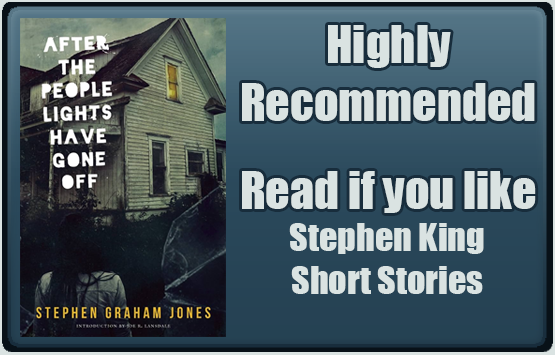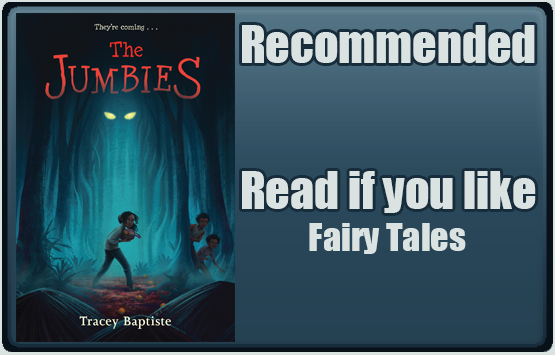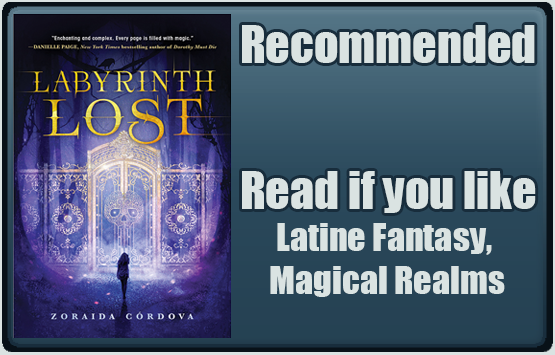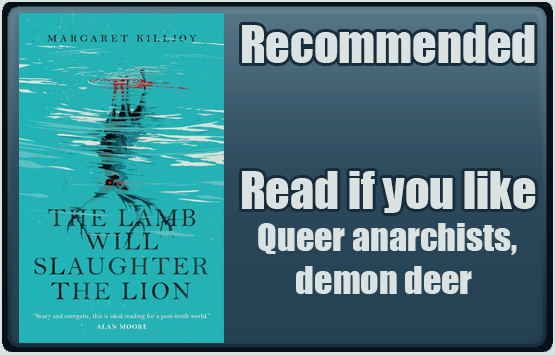
The Lamb Will Slaughter the Lion by Margaret Killjoy

The Lamb Will Slaughter the Lion by Margaret Killjoy

Formats: Print, digital

Publisher: Tor

Genre: Demon, Occult

Audience: Y/A

Diversity: Gay, lesbian, and bisexual characters,Trans character and author, Black character, Latine/Hispanic character, Character with anxiety disorder

Takes Place in: Iowa, USA

Content Warnings (Highlight to view): Animal Death, Forced Captivity, Gore, Oppression, Police Harassment, Mentions of Rape/Sexual Assault and Abuse, Suicide, Violence 

Blurb

Searching for clues about her best friend’s mysterious suicide, Danielle ventures to the squatter, utopian town of Freedom, Iowa, and witnesses a protector spirit — in the form of a blood-red, three-antlered deer — begin to turn on its summoners. She and her new friends have to act fast if they’re going to save the town — or get out alive.

I’ll admit, I really didn’t know much about Anarchism or the squatter/crusty punk/traveler lifestyle (which are all different, but overlap) before picking up The Lamb Will Slaughter the Lion. I had a vague notion that Anarchists didn’t like the government, but I always pictured them as some sort of cishet white boys, oblivious to their own privilege, who would disrupt otherwise peaceful protests by smashing windows and setting things on fire. Heck, if you google Anarchist, one of the synonyms that pops up at the top of the page is “terrorist”. Of course, I started to question my long-held prejudices when I noticed some of my Facebook friends, many of whom are minorities, identified as anarchists. These were people who frequently posted about human rights, non-violence, and green-living – a far cry from the violent images of Anarchists I’d seen in TV shows and movies. It was Margaret Killjoy’s novella that finally familiarized me with the movement and the people in it and encouraged me to do my research.

Killjoy, drawing from her own experience as a travelling Anarchist, created a diverse cast of anti-capitalists punks. The main character, Danielle, suffers from one of the most realistically portrayed anxiety attacks I’ve ever seen in fiction. Her mental illness isn’t glamorized or downplayed, nor is she depicted as a “crazy, weird girl”. She develops a crush on Brynn, a bisexual woman, who offers to snuggle with her in bed, without any sort of pressure or expectation. Vulture, a queer, black, femme trans-man, introduces himself  to Danielle by asking what pronouns she uses. Most of the anarchists depicted in the book are peaceful, only resorting to violence in cases of self-defense, and limiting their minimal criminal activity to squatting in abandoned buildings and shoplifting necessities from big box stores. They’re idealists, but they’re also flawed and human. Some of the younger characters can be heavy handed about declaring how punk/counter culture they are, still too insecure to realize they don’t need to prove anything to anyone. One of the story’s antagonists actually calls someone a poser like it’s the sickest burn in the world. Vulture is obsessed with posting everything to Instagram, while his partner behaves like he’s in some sort of dramatic art film. The characters bicker, disagree, and even get into scuffles, and it all feels incredibly genuine and authentic.

When Danielle first stumbles across the Anarchist commune where her deceased friend, Clay, was living, it seems like an Anarchists Utopia. There’s no capitalism, money, oppressive laws, or ruling bodies. Everyone helps each other out by sharing their food and resources, the town functions on trust alone, and all issues are solved through group consensus with the aid of mediators. There’s also a blood-red demon deer named Uliksi who reanimates dead animals and has a penchant for ripping out hearts. Clay co-founded Freedom with the best of intentions, but the wide-eyed idealist failed to consider the fact that any political system can be corrupted, no matter how perfect it seems. There’s a reason Utopia is based on the Greek “ou topos” which means “no place”. It’s because human nature is inherently flawed, making perfection impossible. Since the Golden Age and the Garden of Eden, somebody is always ruining paradise for everyone else, and the town of Freedom is no exception. In this case, it’s entitled fuckboys who use violence and threats to impose their will on everyone, turning the town from an Anarchist haven to a totalitarian dictatorship. Almost a year before Danielle’s arrival in Freedom, a man named Desmond took over the town, murdered those who disagreed with him, and prevented anyone from leaving. Terrified and desperate, Clay and his friends Rebecca, Anchor, and Doomsday resorted to summoning a demon named Uliski, a three-antlered deer with blood red fur, to stop the want-to-be despot. Most of you are realizing immediately that this plan will inevitably backfire because, much like trying to form a Utopian society, demon summoning never ends well.  Personally, I wouldn’t know because my wife won’t even let me summon a single adorable, little owl even though I’m pretty sure (like 80% sure) it would turn out fine, not that I’m bitter about it or anything. Anyway…. Clay and his crew figure “fuck it, we’ll deal with the consequences later” and let Uliski rip out Desmond’s heart.

First panel: I’m standing in a summoning circle with a long-legged owl demon wearing a crown and boots. My wife is reacting in horror and asking “What are you… did you just summon a demon!?!” 2nd panel: I hug the demon and ask “Can I keep him? He’ll be good! I’ll train him, and him, and feed him souls every day!” 3rd panel: My annoyed wife snaps “No! Put. It. Back.” While I plead “But we love each other! Stolas will be sad if I send him back! Pleaaaase? He’s so polite and smart! He knows all about plants, precious stones, and astronomy.” Stolas turns his head upside down.  4th panel: “Watch!” I shout enthusiastically “Prince Stolas, what star is that outside?” “That is the Sun” Stolas responds. “Good Boy! Such a smart little demon fluffy face!” My wife is not impressed. 5th panel: Stolas explains “Take mistletoe to treat an inflammation of black bile and enhance fertility” while I hug him tightly.  My wife points out “That’s not even remotely correct.”

According to the Ars Goetia, Prince Stolas is Great Prince of Hell who commands twenty-six legions of demons and imparts knowledge on those who summon him. He’s also super cute. Please do not take Mistletoe. It is very toxic.

Instead of fucking off back to the Underworld, or wherever it is endless spirits live, Uliski decides to stick around to continue his mission of hunting the vengeful and hateful who wield power over others, and reanimating animal corpses because he wasn’t already creepy enough already. At first, everyone is so glad that Desmond has been stopped and peace restored, they don’t really question the demon living in their town and even come to revere him. But Clay warns that Uliski will eventually turn on his summoners after one year, which leads us to Danielle’s arrival. She has a rather traumatic welcome after witnessing the bloodthirsty buck rip out Anchor’s heart, encountering a bunch of zombie wildlife, and dealing with town’s crazy drama, but instead of hauling ass out of the Animal Farm version of Dawn of the Dead, she resolves to stay and search for answers behind Clay’s suicide. Meanwhile, Freedom is in an uproar over whether or not their demonic protector should be dismissed, with half the town believing he’s keeping them safe and only kills when it’s justified, and the other half pointing out that murder may not be the best way to keep the peace. Once again, the town seems headed towards a Dystopian nightmare, with Uliski’s remaining summoners afraid for their lives, and a new charming and arrogant young man looking to “save” Freedom by enforcing his will on others.
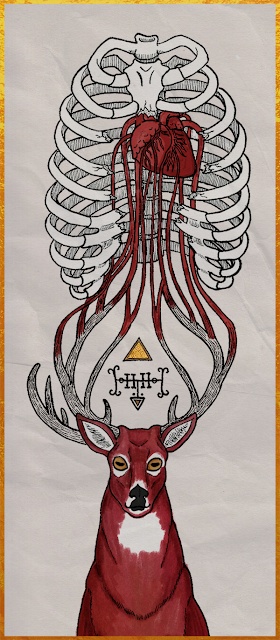
 

A gold-trimmed pen and ink drawing of a red deer with three antlers, two on the right and one on the left. The prongs of the antlers turn into veins which are connected to a human heart, surrounded by a fractured rib cage. Between the deer's antlers is the sigil for the goetic demon Furfur and the alchemical symbol for fire, painted gold.

Uliski the demon deer

This is a story about how power causes corruption, especially when it’s wielded by violent young men dripping with privilege. While the novella is very pro-Anarchist, Killjoy keeps it from feeling too much like heavy handed propaganda by presenting a balanced view of her socio-political beliefs and chooses realism (well, other than the supernatural elements of course) over romanticism. The town of Freedom is presented as both an ideal and a warning; a community based on equality and cooperation is something to strive for, but, like any system, it can easily be corrupted by selfishness and fear even when everyone has the best of intentions. Hierarchies started to form without anyone realizing, and once those hierarchies were enforced through violence Freedom went from Anarchism to Authoritarianism, much like what happened after the Russian revolution.

As much as I loved The Lamb Will Slaughter the Lion, I felt it would have worked much better as a full-length novel, rather than a novella. The world building, story set up, character development, and ending all seemed too rushed and I was left feeling underwhelmed and longing for more. The concept is so cool, a demon deer turning on its summoners as a revolution slowly brews from with the town, that I wanted to spend more time there and learn about all the characters and what brought them to Freedom. I especially wanted to see more of Danielle and Brynn’s relationship develop. These reasons are why I much prefer the sequel, The Barrow Will Send What It May. By the second book, Killjoy has already established the world and the main players in it and is able to spend more time on developing her characters, building suspense, and giving Danielle and Brynn time to explore their feelings for each other. It’s for these reasons that I strongly suggest reading the two novellas together. The Lamb Will Slaughter the Lion feels incomplete on its own, but works well as the first chapter to an overarching story, and this is why I truly hope we will see many more chapters in the Danielle Cain series. I want to read a full-length novel about a band of Anarchists travelling from town to town solving mysteries and fighting demons, Scooby-Doo and Supernatural style, even if it is separated into several short stories. Killjoy clearly has many more stories to tell, and I look forward to reading them.
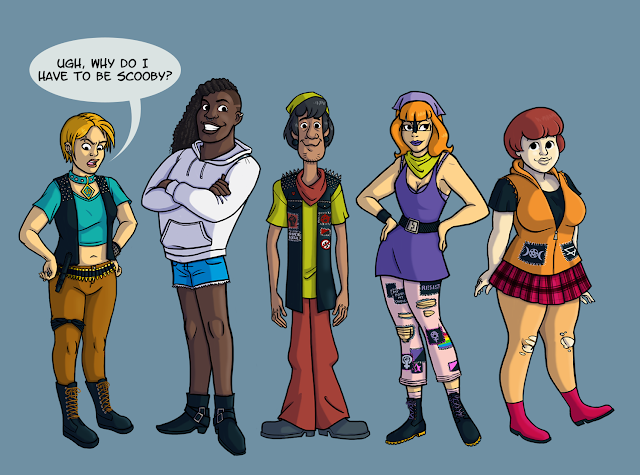
Five people in punk clothing colored to resemble the characters from Scooby-Doo. Furthest to the left is Danielle, a White woman with short, blonde hair. Next is Vulture, a tall, Black trans man with long hair and one half of his head shaved. Thursday, a Latino man in a leather vest is the middle, then Brynn, a White woman with red hair, a tattooed line on her forehead, and glasses. Her pants are covered in lgbtq, anarchist, and feminist patches. On the left is a chubby White woman, Doomsday with bobbed, brown hair.

Left to right are Danielle (as Scooby), Vulture (as Fred), Thursday (as Shaggy), Brynn (as Daphne), and Doomsday (as Velma). Anarchist Mystery Gang!
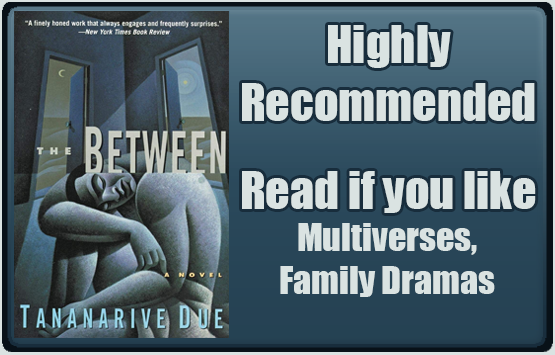
 
The Between by Tananarive Due

The Between by Tananarive Due

Formats: Print, digital

Publisher: Harper Collins

Genre: Psychological, Thriller

Audience: Adult/Mature

Diversity: Black Characters (African American and Ghanaian) and author, Hispanic/Latino character (Puerto Rican), Character with possible Mental Illness

Takes Place in: Miami, Florida, USA

Content Warnings (Highlight to view): Animal Abuse, Animal Death, Child Abuse, Child Death, Death, Drug Use/Abuse, Gaslighting, Homophobia, Mental Illness, Racism, Rape/Sexual Assault mentioned, Stalking, Slurs, Suicidal thoughts, Verbal/Emotional Abuse 

Blurb

When Hilton was just a boy, his grandmother sacrificed her life to save him from drowning. Thirty years later, he begins to suspect that he was never meant to survive that accident, and that dark forces are working to rectify that mistake.

When Hilton’s wife, the only elected African-American judge in Dade County, FL, begins to receive racist hate mail, he becomes obsessed with protecting his family. Soon, however, he begins to have horrible nightmares, more intense and disturbing than any he has ever experienced. Are the strange dreams trying to tell him something? His sense of reality begins to slip away as he battles both the psychotic threatening to destroy his family and the even more terrifying enemy stalking his sleep.

Chilling and utterly convincing, The Between follows the struggles of a man desperately trying to hold on to the people and life he loves, but may have already lost. The compelling plot holds readers in suspense until the final, profound moment of resolution.

I admit, I’m a huge Tananarive Due fan. I love her books, I love her academic work, I love reading her tweets, and I especially love how she’s always willing to share her wisdom and encourage other writers. When I was watching Black horror films for my Horror Noire timeline and Morbidly Beautiful review Due was kind enough to engage with me on Twitter and offer movie recommendations, insights, and feedback for my articles. Here was this amazing author who I admired so much not only chatting with me about our shared love of horror, but taking the time to help me out! If I ever get the chance to meet her in person, I’d probably faint. Needless to say, trying to pick a book to review by one of the most influential Black horror authors out there was a daunting task. Should I write about one of her best-known novels, My Soul to Keep from the popular African Immortals series? Or should I review my personal favorite, The Good House (which I’ve been known to throw at random friends and family members, insisting they read it)? After much back and forth, I finally decided I should start at the beginning and shine the spotlight on her very first novel which doesn’t get nearly as much recognition as it deserves: The Between. This award-winning psychological thriller stars family man Hilton as he loses his grasp on reality while watching his perfect life fall apart after his wife, Dede, receives a racist death threat at her job. In addition to being a truly creepy piece of speculative fiction, it’s also nice to see such a strong, loving, successful Black family dealing with issues like code-switching in a mostly white neighborhood, the Black community’s views on homosexuality and mental illness, and the differences in culture between Africans and Black Americans.

Before diving into the plot of Due’s very first novel, let’s have a quick physics lesson because I can’t review a sci-fi story without at least a little bit of science. Many of you may already be familiar with the many-worlds theory: an interpretation of quantum physics which essentially states that everything that could have possibly happened, but did not, has occurred in a different, alternate timeline, creating a vast multiverse where universes branch into more universes with each possible outcome. For example, flipping a coin would create two separate universes, one where it lands on heads and another where it lands on tails. Some of these universes would be nearly identical to our own, like the two timelines seen in the movie Sliding Doors, while others would hardly be recognizable, like the alternate history in The Man in the High Castle by Philip K Dick where the allies lose WWII, or the two-dimensional world from Edwin Abbott Abbott’s satirical novella, Flatland. However, we are only capable of perceiving the universe that we’re currently in. That’s the main, overly simplified, gist of it anyway. Here’s a great video that further explains this complex concept in an easy to understand way. Now you can impress your friends with your physics knowledge!

The many-worlds theory is especially popular with science and speculative fiction writers and shows up in everything from novels (Mid-World from Stephen King’s Dark Tower series) and comics (the Bizarro World in Superman) to films (Spider-Man into the Spider-Verse) and TV shows (Star Trek‘s Mirror Universe). The Between differs from most of these examples because, in true Schrödinger’s cat fashion, a multiverse may or may not play an important role in the book, and it all starts when Hilton’s grandmother dies the first time. Seven-year old Hilton James discovers his Nana’s cold, dead body on the kitchen floor and runs to get help, only to return and discover she’s alive and well. Her second, and final, death occurs when she drowns trying to save him. Struggling with survivor’s guilt, Hilton becomes obsessed with saving everyone and grows up to run a rehab clinic for low-income people suffering from drug addiction. While a noble calling, spending his every waking moment helping the less fortunate at the expense of him family puts a serious strain on Hilton’s relationship with his wife, Dede, whose jealousy causes her to suspect the worst. Worse still, Hilton is plagued by morbid nightmares in which a voice asks him “How many times do you think you can die?” Believing “we’re always closest to death when we sleep” the nightmares result in somniphobia and severe insomnia. Marriage counseling improves his relationship with his wife, and hypnotherapy helps Hilton sleep, but his nightmares soon resurface with a vengeance after Dede receives a racist, threatening letter shortly after being elected as a judge. Seemingly prophetic dreams full of his Nana’s decaying corpse, his children dying, and his own, mutilated body telling him he’s running out of time plague Hilton until he starts staying up all night, wandering the house, rather than returning to his cadaver-filled dream land. Unsurprisingly, Hilton’s mental health takes a turn for the worse.

Seemingly unsatisfied with simply haunting Hilton’s nightmares, portents of death start appearing to him during the day. After waking up with a sense of dread, Hilton insists the family go to church, only to be met with a new preacher ranting about the water of life from Revelations and meeting Jesus when you face eternity. Cheerful! The day gets worse when his young son, Jamil, is traumatized after witnessing some older boys kill a duckling. Then, Hilton accidentally rear-ends a hearse because the universe is not fucking around with the foreboding omens. A few days later, his adolescent daughter, Kaya, has her first period which Hilton’s commemorates by taking her to the hospital to meet one of his clients, Antoinette, a teenage girl dying of AIDS. I know I’m not a parent, but I feel like reminding your child of their own impending mortality is probably not the best way to celebrate their menarche. And just to make sure Hilton really gets it, because Death doesn’t do subtle, they’re stopped by a funeral procession on their way back from seeing Antoinette. Did I mention it’s raining? Of course it’s raining. I’m surprised a murder of crows didn’t fly overhead and blot out the sun while chanting “doooooooom”. No wonder Hilton becomes convinced Death is stalking him. The symbolism may seem heavy handed, and in the hands of a less talented writer would’ve come off as cheesy, but in Due’s case it works incredibly well to emphasize the depths of Hilton’s paranoia and his loosening grip on reality and set up two equally creepy explanations for what’s happening.

 
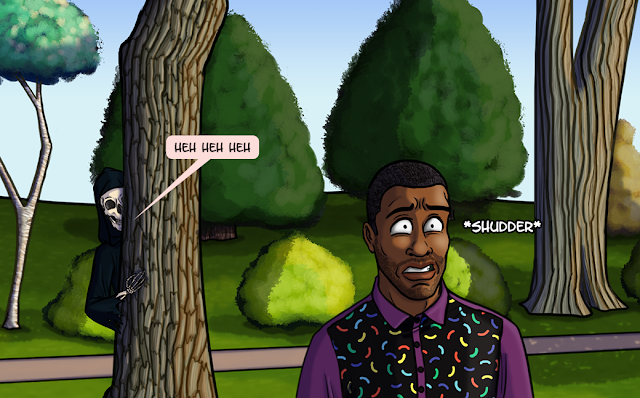
Death, represented by a skeleton wearing a dark robe, is hiding behind a tree in a park so they can spy on Hilton. Death is snickering. Hilton, a middle-aged Black man wearing a brightly colored 90’s shirt, is in the foreground looking nervous and shuddering. He doesn’t see Death, but he senses them.

What I imagined Death doing throughout the book

It’s implied that Hilton is a “traveler”, someone with the ability to escape death and bad decisions by traveling through “doorways” from his current reality to one with a more favorable outcome. It’s how he brought Nana back to life and survived drowning as a child. He does it again when he rear-ends the hearse to save his family. Of course, not every timeline he jumps into is exactly identical. Hilton begins to notice more and more inconsistencies in his everyday life, from events that repeat themselves to encounters that seemingly never occurred no matter how clearly he remembers them and even visions of deaths that never happened. On top of this, you can only cheat the system for so long before you get caught. Some unknown force, sensing that Hilton isn’t supposed to be alive, is making subtle alterations to the timeline to “correct” this. Between his menacing nightmares and threatening letters that continue to arrive at Dede’s office, and eventually their home, Hilton’s concern for his family’s safety warps into full blown paranoia. Even after putting his children under lockdown, buying a rifle, security lighting, and a guard dog, Hilton continues to see danger around every corner, thanks in no small part to his lack of sleep. He goes from his normal calm and sensitive self to a scared, angry man who lashes out at his family and friends.

Hilton may see signs that Death is lurking around every corner, but the rest of his family isn’t making the same connection between a dead duckling and their patriarch’s distracted driving. Maybe something supernatural is going on and the universe is trying to send the poor man a warning about abusing the natural order of things, but there’s also a strong argument to be made that Hilton is merely suffering from Apophenia, assigning meaning to unrelated coincidences. Apophenia is also a major symptom of paranoid schizophrenia, along with a fear that someone or something is out to get you, an inability to tell what is and isn’t real, a voice (or voices) in your head, and major changes to mood and sleeping habits, all of which Hilton has started to display. Those prone to schizophrenia can have a psychotic episode triggered by a stressful life event, like, say, having a racist stalker sending threatening letters to your wife.

Hilton is crouched behind a cement and barbed wire barrier, surrounded by security cameras and “Keep Out” signs. He’s wearing an army helmet and holding a rifle, ready to shoot any intruders. His teenage daughter stands behind him looking concerned, and asks “Dad, don’t you think you’re being a little paranoid?”

The Between is set in the 90’s, but all my memories of that particular decade seem to be either Pokémon or Harry Potter related and I don’t really remember what we were wearing back then. So I just put Hilton and his daughter in 90’s sitcom clothes and called it a day.

As we watch Hilton’s mind unravel as he desperately tries to prevent some horrible, unknown disaster he’s convinced will happen, there’s a strong sense of urgency and dread. However, it’s unclear if supernatural forces are at work and Hilton is the only person who can see the truth, or if he really is just paranoid and his visions are a result of his fears made manifest by mental illness. Are his lapses in memory and reoccurring nightmares a result of a mental illness combined with guilt, or some sort of supernatural force?  Is the racist stalker leaving poison pen letters for his wife the only thing threatening Hilton’s family, or is Death playing a drawn out game of Final Destination? Will he lose everything due to a curse, or his own actions? With the line between dreams and the real world becoming more and more blurred, it’s difficult for the reader to determine how much of what happens is in Hilton’s head, and whose version of reality is the truth until the very end. Hilton is not the most reliable of narrators, making it difficult to determine whether or not something supernatural is going on, but like The Turn of the Screw, not knowing if it’s the narrator’s sanity slippage or the work of spirits is part of the appeal and both possibilities are equally terrifying. Due hit the ground running with her very first novel and her fiction has only gotten better from there.

Horror Noire: Blacks in American Horror Films from the 1890s to Present by Robin R. Means Coleman

Formats: Print, audio, digital

Publisher: Erewhon Books

Genre: type here

Audience: Adult/Mature

Diversity: type here

Takes Place in: type here

Content Warnings (Highlight to view): content warnings

Blurb

Ji-won’s life tumbles into disarray in the wake of her Appa’s extramarital affair and subsequent departure. Her mother, distraught. Her younger sister, hurt and confused. Her college freshman grades, failing. Her dreams, horrifying… yet enticing.

In them, Ji-won walks through bloody rooms full of eyes. Succulent blue eyes. Salivatingly blue eyes. Eyes the same shape and shade as George’s, who is Umma’s obnoxious new boyfriend. George has already overstayed his welcome in her family’s claustrophobic apartment. He brags about his puffed-up consulting job, ogles Asian waitresses while dining out, and acts condescending toward Ji-won and her sister as if he deserves all of Umma’s fawning adoration. No, George doesn’t deserve anything from her family. Ji-won will make sure of that.

For no matter how many victims accumulate around her campus or how many people she must deceive and manipulate, Ji-won’s hunger and her rage deserve to be sated.

A brilliantly inventive, subversive novel about a young woman unraveling, Monika Kim’s The Eyes Are the Best Part is a story of a family falling apart and trying to find their way back to each other, marking a bold new voice in horror that will leave readers mesmerized and craving more.

To celebrate the release of the Horror Noire on Shudder last month, and the recent premiere of Jordan Peele’s sophomore film Us, I decided to read Dr. Robin R. Means Coleman’s book on which the documentary is based. I’ve already reviewed the documentary over at Morbidly Beautiful, so I won’t rehash it too much here, but suffice it to say it’s a MUST watch for any horror fan. With interviews from Black horror directors, writers, actors, and academics, it’s wonderful to see so many Black voices all sharing their experiences and voicing their opinions on famous Black horror films. The only downside is the limitations of the medium, that is, the documentary just doesn’t have the time to go into the full history of Black horror or discuss every Black horror movie. Which is why you should definitely read the book! Horror Noire: Blacks in American Horror Films from the 1890s to Present (or at least the aughts, when the book was published) gets to fully explore all the fun details that couldn’t be included in the documentary, from the birth of zombie movies to the evolution of Black women in horror from eye candy to demon slayers.

Using Dr. Coleman’s book as a basis, I’ve created a timeline of over thirty Black horror films that I feel best illustrate the evolution of Black representation in American horror films. For a more in-depth study into the topic (and a list of recommended viewing and reading), check out this great Horror Noire Syllabus created by Dr. Coleman, Tananarive Due, and the Graveyard Shift Sisters.

The Undertaker’s Daughter (1915) – The Lubin Manufacturing Company used Black actors in their horror comedy short, The Undertaker’s Daughter. Prior to this, Black characters were almost exclusively played by White men in Blackface who portrayed them as lazy, foolish, and cowardly for comedic effect. These racist caricatures, commonly known by the dehumanizing slur “coon”, were a mainstay in minstrel shows, and appeared in films produced and written by Whites for White audiences.

Birth of a Nation (1915) – In 1915 the White supremacist propaganda film Birth of a Nation was released with president Wilson’s endorsement. This time Black men were not merely portrayed as lazy buffoons, but violent, lecherous creatures who preyed on White women, a dangerous stereotype that had already resulted in the murders of thousands of Black men and children. Lynching for “eye rape” would continue well into the 1950s [1]. The image of the predatory Black man popularized by Birth of a Nation would continue to appear as a horror film “monster” for decades to come as White men lived out film fantasies of violently protecting damsels in distress.

Shadowed by the Devil (1916) –  In response to the blatantly offensive depictions of African Americans in Birth of a Nation Black-owned film studios like the Lincoln Motion Picture Company and Frederick Douglass Film Company were founded to tell positive Black stories by and for Black people. Called “race films,” these movies featured all Black casts portraying complex, realistic characters. One such race film, the now lost Shadowed by the Devil, is a frightening morality tale that focused on what it means to be a good person. Sadly, most of these studios would go under during the Great Depression.

Mercy, the Mummy Mumbled

Mercy, the Mummy Mumbled (1918) – The Ebony Film Corporation, a White-owned company, attempted to cash in on Black audiences by producing their own “race films” which included five comedy horror shorts. Unfortunately, Ebony relied on tired, racist tropes for their humor which outraged Black viewers and prompted complaints in the Chicago Defender, a popular Black newspaper.

A Son of Satan (1924) – Oscar Micheaux, founder of the Micheaux Film Corporation, was the first Black feature filmmaker in America. He made over forty films during his thirty-year career. His “fright films” more closely resembled “true” horror movies. Micheaux cleverly booked and advertised A Son of Satan without approval from the Virginia film board (who objected to scenes of Black men “carousing,” murder, and the killing the leader of “a hooded organization,” a thinly veiled allusion to the Klan), in order to avoid censorship of his movie and maximize profit.

Black Moon (1934) – From 1915 to 1934 the US military forcibly occupied Haiti. White Marines ignorantly viewed the Haitian’s religious practices as primitive and evil, and shared outlandish stories about human sacrifice, cannibalism, and raising the dead when they returned home. These fantastical accounts would inspire the “Voodoo” and jungle films of the 1930’s where “savage natives” controlled zombies and threatened the virtue of beautiful White women.  In Black Moon, the White Juanita is so corrupted by Black culture that she goes insane and her husband is forced to kill her.

Chloe, Love is Calling You

Chloe, Love is Calling You (1934) – In the Voodoo horror film Chloe, Love is Calling You the titular White-passing Chloe is cast as a tragic heroine because she’s biracial. She’s often threatened by the Black men who either want to rape or sacrifice her, and is so disgusted by her own alleged Blackness that she frequently flies into hysterics and throws herself into danger. The moment Chloe discovers she’s actually White she abandons the Black “mammy” who raised her without a second thought. Even though the film does not shy away from discussing racial violence and lynchings, it still implies Whiteness as superior and condemns any Black people who desire revenge for the treatment they’ve received.

The Devil’s Daughter (1939) – “Jungle Films” portrayed Black Americans as more intelligent, sophisticated and “loyal” to Whites than Voodoo practicing Africans and Caribbeans. The Devil’s Daughter, which was targeted towards Black audiences, pit the Jamaican daughter of a Voodooist against her Harlemite half-sister for control of their family plantation. The sister from Harlem is cosmopolitan and bourgeois, but gullible and out-of-touch with her roots, while the Jamaican sister is rough around the edges but more down-to-earth. In the end the two women come to a mutual understanding and respect.

Son of Ingagi

Son of Ingagi (1940) – The original Ingagi was a racist exploitation film billed as an African documentary that implied that Congolese women bred with gorillas to produce monstrous hybrid offspring. African American actor Spencer Williams Jr. wanted to create a film with better representation for Black audiences so he wrote and starred in Son of Ingagi, the first science fiction horror film to feature an all-Black cast [2]. Unlike its “prequel,” the gorilla in Williams’ film was just a monster, not a metaphor, and the movie’s Black stars were cast in more distinguished roles. Williams plays a detective, while actress Laura Bowman portrays Dr. Helen Jackson, a brilliant and wealthy researcher.

The Blood of Jesus (1941) –  In addition to writing and producing several race films, Spencer Williams Jr. also directed the religious morality horror movie The Blood of Jesus. In it, the pious Martha is tempted by a demon who shows her the excitement of Northern city life. She ultimately rejects the flashy clothing and jive in favor of her more modest and virtuous Southern lifestyle, thus saving her soul from damnation. The moral superiority of Southern Blacks compared to their “sinful” Northern cousins was a frequent theme in religious horror movies.

King of the Zombies

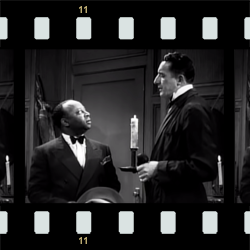
King of the Zombies (1941) – As the popularity of horror films was waning, most likely due to the very real horrors of WWII, so too were opportunities for Black actors in film. Many found themselves choosing between playing a comedic coon archetype in roles reminiscent of Minstrel Shows or going without work. Mantan Moreland was one of many Black actors who made a successful career out of playing such characters in horror comedies like King of the Zombies, and he was frequently cast in central roles, receiving top billing next to his White costars. But his fame came at the cost of furthering harmful Black stereotypes.

Monster from Green Hell (1957) – Xenophobia and Cold War fears shaped the horror films of the 1950s, which were filled with extraterrestrial invaders and science experiments gone wrong, but very few Black characters. Even though roles were scarce, Black actors like Joel Fluellen still advocated for better representation in film and TV. In Monster from Green Hell, Fluellen’s character, Arobi, is an intelligent and well-spoken African man whom the White scientists respect and consult for advice. While the film is still deeply problematic Fluellen proved that Black actors could play important roles in horror movies without relying on tired, racist tropes.

The Leech Woman (1960) – As hard as it was for Black actors to find work, it was even harder for Black actresses. It was especially rare for Black women to land a central role in a White film. In The Leech Woman, Estelle Henry plays Malla, a 152-year-old former slave whose people hold the secret to eternal youth and long life. Malla’s character was still saddled with stereotypes, being African made her “exotic” and knowledgeable about magic, but she was also progressive in her own right. A smart, tough, fierce feminist, Malla protested the ageism shown to older women and convinced a sleazy White doctor to pay for her trip back to her homeland.

Night of the Living Dead

Night of the Living Dead (1968) – The same year the Civil Rights Act was signed into law, George Romero released his revolutionary zombie film, Night of the Living Dead. The low-budget flick starred African-American actor Duane Jones as its protagonist Ben, the very first Black lead in a horror film not targeted solely to Black audiences. Ben was no frightened Stepin Fetchit or voodoo priest, but a charismatic and confident survivor whose quick thinking and coolness under pressure keep him alive until the end of the film. Equally remarkable, the zombies Ben fights aren’t the result of Voodoo or African magic, but were instead reanimated by space radiation. When Ben finally does meet his demise, it’s at the hands of a White (living) mob, an all too familiar image for Black audiences, especially during the 1960s. The film was a box office success, largely due to its popularity with Black moviegoers.[3] This would lead to a series of sequels, which also featured Black characters in important roles.

Blacula

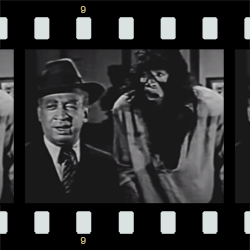
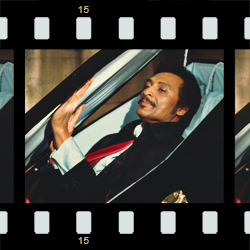
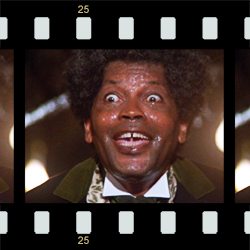
Blacula (1972) – During the 70’s a sub-genre of the exploitation film emerged called Blaxploitation. These movies, often created by White writers and directors for Black audiences, drew inspiration from Black power ideologies and frequently centered around overcoming White oppressors.  Unfortunately, the genre was also deeply homophobic, exploitative of women, and condemned by many Black organizations for its use of criminal stereotypes. Blacula was the first, and most famous blaxploitation horror film, about an erudite African prince who is transformed into a vampire and ironically begins to prey on Black communities. The film’s success lead its production company, AIP, to continue creating Black horror films.

Ganja and Hess (1973) – The art house film Ganja and Hess starred Duane Jones –of Night of the Living Dead fame — as Dr. Hess Green, a wealthy archaeologist. Dr. Green’s sophistication and elegance made him the polar opposite of the hypermasculine, violent men in Blaxploitation films who earned their money through illegal means. Despite winning the critic’s choice prize at the Cannes film festival, Ganja and Hess’ producers were unhappy with the movie and suppressed it. They had wanted something similar to Blacula, and weren’t sure what to do with a vampire story about addiction that lacked the Blaxploitation tropes with which audiences were familiar.

Scream, Blacula, Scream

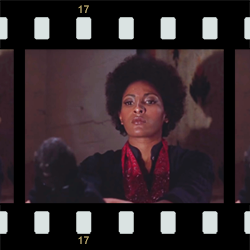
Scream, Blacula, Scream (1973) –  While White “final girls” were portrayed as virginal and pure, Black heroines were hypersexualized for a straight, male audience. So it was unusual when Pam Grier, who was frequently cast as a seductive sex idol in other Blaxploitation films like Foxy Brown and Coffy, got to play a conservatively dressed heroine named Lisa in Scream, Blacula, Scream. Lisa is elected leader of her Voodoo group, and uses her skills to try and free Blacula from the curse placed on him by the White Dracula. She is also a protector who saves her boyfriend from the angry vampire.

Abby (1974) – Abby is a low-budget Exorcist knock-off that was, as the New York Times put it, “more silly than shocking” and never quite reached the levels of cult classic that Blacula did. The titular Abby, a pious minister’s wife, becomes possessed by a being claiming to be the Yoruba Orisha, Eshu. Unlike Pazuzu from The Exorcist, Eshu seems more interested in sex and swearing than destruction, which leads to some very silly scenes. Even though the being possessing is supposedly Yoruba in origin, African religious beliefs are never condemned or portrayed as evil, and the film makers clearly put effort into their research. Eventually, the heroes use a combination of Christian and Yoruba beliefs to free Abby.

Sugar Hill

Sugar Hill (1974) – Diana “Sugar” Hill is the perfect example of the regressive treatment Black women often received in Blaxploitation films. After the murder of her boyfriend at the hands of a “Whitey” crime boss, Sugar is desperate for revenge, but unable to seek it without help. She makes a deal with Baron Samedi, the Vodou loa (god) of death and sex, offering herself in exchange for the murders of those responsible for “killing her man.” Sporting tight, revealing outfits, Sugar seduces and tempts her victims before Samedi’s zombies kill them off, wielding her sexuality like a weapon. She also spends most of the film flirting with her ex-boyfriend implying Sugar cannot be without a man.

The Shining (1980) – By the eighties, blaxploitation had fallen out of favor, and when Black actors did appear in film, they were surrounded by Whites and White culture, and paired up with White actors in “buddy films”. Horror films were no exception, and Black characters were reduced to sacrifices so their White friends could survive. An example of this is Dick Halloran, played by Scatman Crothers, in Stanley Kubrick’s The Shining who is pointlessly killed while attempting to aid the film’s White family. Even worse, Dick is also a “Magical Negro” a wise Black man with magical powers who exists only to help the White characters with their problems. Magical negroes arose from a misguided attempt by White writers and filmmakers to counter traditional racist tropes. Unfortunately, all this did is create new stereotypes.

The Thing

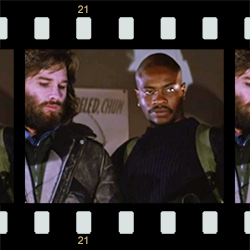
The Thing (1982) – In John Carpenter’s The Thing, Keith David’s character, Childs, shares many similarities to Ben from Night of the Living Dead. Instead of being a “scared negro” or self-sacrificing Black, both characters are distrustful, resourceful hot-heads who question the authority of the White men they’re trapped with and live to the end of the film. But while Ben has only just met his fellow zombie survivors and has no reason to trust them, Childs has presumably worked alongside and lived with his colleagues for months, yet is still cold to them. The hostility amongst the group could be explained by both racial and class tension. By the end of the film, Childs and Kurt Russell’s character, MacReady, are presumably the only two survivors and now on equal footing.

The Serpent and the Rainbow (1988) – Although The Serpent and the Rainbow does have a more accurate representation of Vodou than most movies (at least the ones not targeted to Black audiences), its portrayal of Haitians is hardly a step up from the jungle films of the 30s. Despite taking place in Haiti and centering around a Black religion, the protagonist is a White man named Dennis who plans to take “zombie powder” back to the States for a pharmaceutical company. Dennis is perfectly willing to appropriate a cultural practice for profit, which he has no intention of sharing with the Haitians who aid him, yet he’s still cast as a hero. Throughout the film “evil” Haitians use Vodou to harass and threaten Dennis in an attempt to make him return home without the drug.

People Under the Stairs

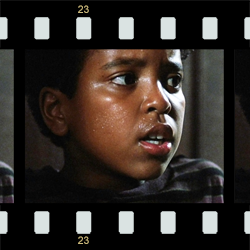
The People Under the Stairs (1991) – In the eighties, urban areas were portrayed as violent, drug stricken, impoverished, and largely inhabited by Black Americans, which led to White flight to wealthy suburbs and a new form of segregation. In Wes Craven’s The People Under the Stairs, a Black child from the ghetto becomes trapped in a suburban mansion belonging to a pair of serial killer slum lords. The incestuous couple, known only as Mom and Dad, are able to conceal their crimes and depravity because they are wealthy and White. Even when police are called to investigate the couple’s home, they perform only a precursory search and leave without suspicion, never noticing the basement full of dead bodies and kidnapped, tortured children.

Candyman (1992) – Clive Barker’s Candyman film was another movie that exploited fears of the inner city, combined with the threat of a supernatural killer like Freddy Krueger and Jason Voorhees. The Candyman, played by Tony Todd, was the vengeful spirit of a Black artist from the late 1800s who was tortured and lynched after falling in love with a White woman. Strangely, he chooses to prey on a poor, Black community rather than seek revenge on wealthy Whites like the ones who killed him. Unlike other Black monsters, Candyman was suave, sophisticated, and even sympathetic, but he still played on fears of the Black Boogeyman by lusting after the White female protagonist. Equally problematic, the White woman gets to be the film’s hero, saving the poor, Black characters who literally turn to her as a saint and savior.

Tales from the Hood

Tales from the Hood (1995) – While the name of the anthology brings to mind the campy and often humorous TV series Tales from the CryptTales from the Hood is actually a sobering, social commentary in the same vein as other morality horror films about retribution. In a subversion of the Voodoo films from the thirties, zombies and Vodou are used as protection against the real monsters, racist politicians, corrupt cops, violent gangs, and abusers. While the movie does contain plenty of strange creatures and cheesy special effects, it’s the real-world imagery that’s truly frightening; a Black man getting violently beaten and murdered by cops while Billy Holiday’s Strange Fruit plays hauntingly in the background, flashes of grainy photos showing lynchings, or a child cowering as his mother is beaten bloody by her boyfriend.

Beloved (1998) – Based on the Pulitzer prize book of the same name and boasting an all-star Black cast including Oprah Winfrey and Danny Glover, the Southern Gothic film Beloved was praised by critics and audiences alike, a rare feat for a horror film. Instead of relying on zombies or supernatural killers for cheap thrills, the movie’s terror came from its uncompromising depiction of slavery and the painful legacy it leaves. Previously, Voodoo films had simply glossed over the cruelty that had brought Blacks to America and the Caribbean, preferring to further a colonial fantasy of Whites “civilizing” Africans.

Bones (2001) – Rap music has long been influenced by, and paid tribute to, horror from Will Smith’s family friendly Nightmare on My Street in 1988 to the successful horrocore hip hop band Geto Boys in the 90’s. Rappers, like Ice-T and Coolio, even began acting in horror films.[4] So it should come as no surprise that the music genre would eventually inspire horror. One of the few hip-hop horror movies to have a theatrical release was Snoop Dogg’s Bones, directed by Ernest Dickerson of Juice fame. The movie was an homage to Blaxploitation films, and boasted Pam Grier as the love interest of Snoop’s “gentleman pimp” character, Jimmy Bones.

Alien vs Predator

Alien vs Predator (2004) – Black women were beginning to appear more frequently in horror films, and not just as the Seventies sex pots or victims, but as surviving women who fought monsters. In Tales from the Crypt: Demon Knight, another Ernest Dickerson movie, Jada Pinkett defied audience expectations by not only surviving but becoming the movie’s heroine despite pressure from the studio to cast a white actress as the “final girl.” In the first crossover film of the Alien and Predator franchises Lex, played by Sanaa Lathan, is not only a “final girl,” surviving attacks from both alien species, but a bad-ass action heroine. Lex becomes the first human in the Predator films to earn the honor of being marked as a warrior by a Predator after she helps him to kill three Xenomorphs, something not even Schwarzenegger could accomplish.

Bloodz vs Wolvez (2006) – The aughts would see the release of dozens of low-budget, direct-to-DVD hip hop horror movies. The films were aimed at younger audiences and often used postmodern spelling like Vampz or Cryptz.  In one such movie, Bloodz v. Wolvez a vampire king named Asiman is attempting to broker a peace between two rival gangs, the working class werewolves (Wolvez) and the wealthy vampires (Bloodz). The sophisticated vampires look down on the Wolvez while also envying their ability to walk in the daylight, while the werewolves view the Bloodz with contempt for assimilating with humanity and acting superior. But even with the all the wealth and power Asiman has acquired since escaping slavery centuries ago, he is still seen as “lesser” by Whites, as is highlighted when a White patron of the vampire king’s club asks him to caddy for him in a golf game.

Attack the Block

Attack the Block (2011) – At first glance it appears that John Boyega’s character in Attack the Block, Moses, will be a threatening “Black boogeyman” type character after he robs a White woman, or perhaps a Blaxploitation-style glamorized criminal. Instead, Moses is a complex, flawed character who cares deeply about his “block,” is protective of his friends, and struggles with his anger and impulsiveness. A Black girl rightfully calls Moses out for robbing an unarmed woman, but also confronts his victim about her privilege and calling the police on Black teenagers. The two end up cooperating to defeat an alien attack that threatens their impoverished neighborhood.

The Girl with all the Gifts (2016) – The film takes place in a near-future dystopia where humans have been driven underground by a pathogenic fungus that turns people into zombies called “Hungries.” A group of hybrid children, who crave living flesh like the Hungries but retain their human intelligence and emotions, are being used to create a cure. While Melanie, an especially intelligent and gifted hybrid child is initially happy to cooperate with the soldiers and scientists who hold her captive, she refuses to let herself be killed to develop a cure. While the older generation sees the hybrid children as monsters to be cured or controlled, Melanie realizes that she and the others are merely a new species, who have just as much right to live and thrive as humans. Like with Night of the Living Dead, the role of Melanie in The Girl with all the Gifts was not specifically written for a Black actor, it just so happened that Sennia Nanua had the best audition, but by casting a Black lead the film gained added social commentary.

Get Out

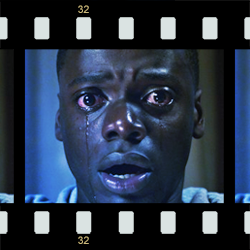
Get Out (2017) – Jordan Peele became the first Black person to win an Academy Award for Best Original Screenplay with his groundbreaking Black horror film, Get Out. Rich with imagery, the movie centers around racism in America and Black fears, making subtle references to past and present atrocities such as slave auctions, medical experimentation on Black people, and police brutality. It also turns the “Black buck” trope on its head. The protagonist, Chris, is never portrayed as sexually aggressive. Instead, it’s the sociopathic White woman who preys upon Black men by seducing them and hunts Chris down with a shotgun. This inversion of horror movie cliches is further underlined by the dead deer (aka Bucks) displayed around the White family’s luxuriant home. The film also introduced audiences to “The Sunken Place,” a literal pit of despair that leaves its victims trapped, silenced, and powerless, the perfect metaphor for the feeling of helplessness Black people experience living in a world where they’re constantly oppressed and surrounded by racism[5].

The First Purge (2018) – The Purge franchise is about a near-future totalitarian America where once a year all crime, including murder, is legal for a 12-hour period. The First Purge, the prequel to the series, focuses on the initial experiment which eventually leads to a Nationwide Purge. With echoes of the Tuskegee syphilis experiment, the detached, white scientists purposely target low income minorities for their unethical study. When the White men running the political party funding the purge sees that the Staten Island residents aren’t killing each other like they’d hoped, they send in masked mercenaries dressed as Klansmen and Nazis to slaughter the poor to make their experiment seem successful. They even enter a Black church to slaughter everyone seeking shelter inside.

Us (2019) – Jordan Peele’s sophomore film was another critical and commercial success for the director, proving once again that Black stories can be just as loved and popular as White ones. Peele not only produced another unique horror film, but demonstrated that Black horror isn’t limited to racial commentary. Black history and Black horror are inextricably linked, and many popular Black horror films like Get Out, Beloved, Tales from the Hood, etc. draw on the very real horrors of White supremacy to elicit terror from their audiences. In many ways, Black horror is a form of catharsis, vividly depicting Black pain but also showing its heroes fighting back and even defeating more tangible monsters. But limiting Black stories to tales of American racism and oppression can also be problematic. Us is still very much a Black narrative, steeped in Black culture, but without Whiteness defining the characters or story.

All the films on this list are available to own, rent and/or watch online with the exception of The Undertaker’s DaughterShadowed by the Devil, and A Son of Satan which are, sadly, lost films. Mercy, the Mummy Mumbled can be viewed on YouTube, but is badly degraded.

References
1. https://www.pbs.org/wgbh/americanexperience/features/emmett-lynching-america/
2. https://www.allmovie.com/movie/son-of-ingagi-v45617/review
3. https://www.jstor.org/stable/1225699?seq=1#page_scan_tab_contents
4. http://www.blackhorrormovies.com/rappers/
5. https://www.huffingtonpost.com/entry/get-out-what-black-america-knows-about-the-sunken_us_58c199f8e4b0c3276fb7824a

Tags:
The Mine by Arnab Ray

The Mine by Arnab Ray

Formats: Print, digital

Publisher: Westland (Indian publisher now owned by Amazon)

Genre: Blood & Guts (Gorn), Psychological Horror, Occult

Audience: Adult/Mature

Diversity: South Asian/Desi/Indian, Disabled character (uses a wheelchair due to partial paralysis, mute/Aphonia)

Takes Place in: Thar Desert, Rajasthan, India

Content Warnings (Highlight to view): Abelism, Bullying, Cannibalism, Child Abuse, Child Death, Child Endangerment, Death, Drug Use/Abuse, Forced Captivity, Illness, Gaslighting, Gore, Kidnapping, Medical Torture/Abuse, Medical Procedures, Mental Illness, Self-Harm, Rape/Sexual Assault, Sexism, Slurs, Slut-Shaming, Stalking, Suicide, Torture, Violence, Xenophobia

Blurb

At a secret mining facility somewhere in the deserts of Rajasthan, an ancient place of worship, with disturbing carvings on its dome, is discovered buried deep inside the earth. Soon the miners find themselves in the grip of terrifying waking nightmares. One tries to mutilate himself. Worse follows.

Five experts are called in to investigate these strange occurrences. Sucked into a nightmare deep underground, they embark on a perilous journey; a journey that will change them forever, bringing them face-to-face with the most shattering truth of them all…

The greatest evil lies deep inside.

Imagine combining Event Horizon with Agatha Christie’s And Then There Were None then mixing in the criminally underrated film Below. Set it in a mine deep below the Great Indian Desert and you’ll get an idea of what you’re in for in Arnab Ray’s horrifying, claustrophobic, sex-filled gore-fest of a novel about five adults and one little girl trapped underground with their guilt.

The Mine starts out with Samar, a rich recluse specializing in industrial security, wallowing in his grief after the disappearance of his daughter and the death of his wife. Yeah, Samar has shit luck. A mysterious man named Arnold Paul (whose name I kept reading as Arnold Palmer) finally bribes convinces Samar to drag his depressed butt out of bed by offering him a large sum of money to go with him and do a sketchy job, the details of which Paul/Palmer won’t reveal. Samar is apparently used to this sort of thing due to his work as a security expert/spy for secret government ops, and figures he wasn’t doing anything important anyway (except moping and sleeping) so he begrudgingly accepts the offer and heads off for the titular mine. As it turns out, greed is a great motivator because Mr. Paul/Palmer has also convinced four other experts to go to the middle of nowhere with a complete stranger, no questions asked.

Joining Samar are Dr. Karan Singh Rathore, a diplomatic and laid back older gentleman who specializes in infectious diseases; Dr. Anjali Menon, a widowed archeologist who brought her disabled daughter, Anya, along; Dr. Akshay More, an arrogant and obnoxious assistant professor in forensic toxicology; and Dr. Preeti Singh, a short-tempered psychologist with a surprising lack of people skills. The group has been brought together to give their expert opinion on a series of deadly accidents that seem to have been caused by the discovery of an ancient, creepy temple the miners are too afraid to go near. A temple that also happens to be covered in explicit carvings of naked women being tortured and killed, because whomever created the damn thing is sexist and gross. If that wasn’t ominous enough, the director of the mine is named Lilith Adams. While it’s fully possible her parents were just uncreative goths from the early 00’s, it’s far more likely that Ms. Adams just picked the most obvious evil pseudonym since Alucard and Lou C. Pher.

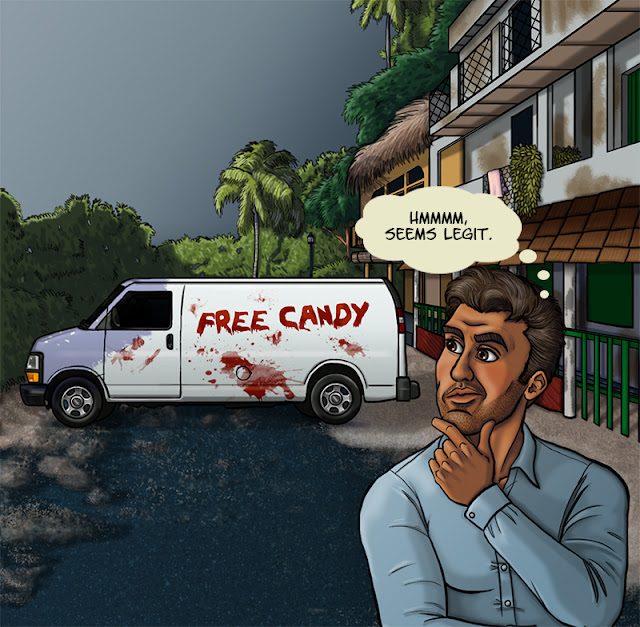
At this point, most people would’ve noped the fuck out of there, but Samar and the scientists have clearly never seen a horror movie in their lives and are too wrapped up in their own issues to notice the whole situation has more red flags than a May Day parade in Moscow. The mine could not be more obviously evil if it had “Gateway to Hell” in big florescent lights over the entrance, ominous music playing in the background, and a bunch of demons chilling in the conference room. Then again, these are people who willingly followed a creepy stranger into the middle of nowhere to visit his sketchy underground dungeon (literally, the workers are all criminals and aren’t allowed to leave until their contracts are up) because Paul/Palmer promised them candy/money. Little kids have more street smarts than this group, so I shouldn’t be surprised they’re completely oblivious to danger.

Illustration of a blood-spattered van bearing the name FREE CANDY and a South Asian man thinking

I mean, even I figured out the candy van was a trap after the first 9 or 10 times.

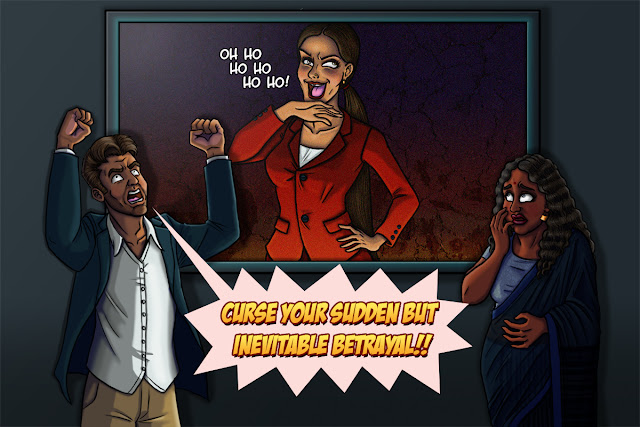
Akshay and Anjali explore the torture-porn temple and discover it depicts ironic punishments attributed to specific sins. Meanwhile, Karan and Preeti talk to the survivors, who share stories that would make Rob Zombie squeamish. Akshay makes light of the situation and acts like a jackass, Anjali does her best to ignore everyone and just do her job, Karan remains calm and reasonable, and Preeti is hostile and short-tempered. Samar checks the security and continues to have no fucks to give beyond a kind of creepy obsession with Anya, who reminds him of his dead daughter. The general consensus among the workers is that they’ve somehow opened a portal to hell and everyone in the mine is going to die horribly as a result of their dark pasts. Needless to say, company morale isn’t great. At this point, everyone finally agrees this place is super creepy and they want to collect their paychecks and GTFO. Alas, in a twist that should come as a surprise to exactly no one, Lilith turns out to be evil, and sets off an explosion that kills all the mine workers and traps the six survivors (Samar, the scientists, and Anjali’s daughter) inside while she laughs manically about the mine’s real resource being fear. Worst. Job. Ever.

Illustration of laughing woman surrounded by a man and woman. The man says

Her name is Lilith, what did you guys expect?

The explosions cause the security systems to engage, sealing the group inside with a series of death traps. Because why wouldn’t you want death traps in an already dangerous mine? On top of everything, an experimental gas that causes super human strength and insanity is being pumped through the A/C, which frankly, feels like overkill to me, but hey, they can run their portal to hell however they want. After their initial panic, presumably followed by the realization that they really should have seen all of this coming, the survivors formulate a plan to navigate the traps and make it to the surface. They’re slightly hindered by the fact they have to trust each other and work together to make it out, and most of them are deceitful, suspicious, assholes, not to mention all the stupid puzzle traps that were apparently inspired by 80s video games. One such puzzle involves trying to obtain acid vials while avoiding motion activated laser and an electrified floor, and if you succeed you’ll be rewarded with a chainsaw, which may be useful later. Unfortunately in this “game” their are no save points or extra lives.

What follows is about what you’d expect for a book about trying to escape from a possibly haunted mine with a bunch of jerks, but the predictability doesn’t make the story any less suspenseful or gripping. But face it, if you’re reading this book, you’re looking for creative deaths, not creative storytellin, and boy, does Ray deliver there. Besides, the true mystery doesn’t lie in their Aeneas-like journey through the mine, but in each character’s backstory, all of which are slowly revealed as they try to escape the subterranean deathtrap. Each of the adults has done something criminal and escaped punishment, and have been struggling with their guilt ever since. The quality of the backstories varies, with some characters (like Akshay and Preeti) getting plenty of focus, while Anjali gets very little characterization beyond “the aloof mom”. So too do their sins seem to be of differing severity. Some of the survivors have committed crimes so awful as to make them irredeemable, while others are more sympathetic and their sins, while still terrible, are still at least partly understandable. This disparity seems a little unfair as it means at least some of the group will potentially suffer a gruesome death (at least according to the carvings in the temple) over something that would normally earn them less than 15 years in prison (at least in the US, not sure about the Indian judicial system). It’s not that their crimes aren’t bad, they just don’t seem to merit a sentence of being reduced to a puddle of bloody viscera.

We never really learn if the mine is truly being controlled by a demonic entity or if the group’s guilt and paranoia (fueled by the hallucinogenic gas) is causing them to attribute bad luck to malicious forces and see things that aren’t there. Samar even suggests that the whole thing is an unethical experiment by the government to test their new gas on subjects no one will miss, as there are far too many coincidences for mere random chance, and the temple may be a fake created to amp up their fear levels. Since none of the characters are able to trust their own senses, making them unreliable narrators, arguments could be made for either scenario, making the story even more spooky and disturbing. Monsters are scary, but they’re even scarier when you can’t even tell if they’re real or simply the imaginary scapegoats of guilt-ridden, paranoid people. Even more frightening, Ray argues, are the depths of human cruelty and depravity, which are explored in each character’s backstory. Though that may just be an excuse to squeeze more gore out of the story.

The Mine does an excellent job balancing itself between psychological horror and splatterpunk. The true scares lie in the book’s creepy atmosphere, suspense, and the characters slowly succumbing to madness; the over-the-top gore is simply dessert. Unfortunately, this otherwise perfect blend of horror comes with as huge helping of misogyny. Yuck. Look, I’m fully willing to admit I’m part of the lowest common denominator who just wants to see heads exploding like overripe cherries and attractive people boning, but that doesn’t mean I like sexism. Unfortunately, more often than not, the three seem to go hand in hand, much to the frustration of female horror fans, and other, more enlightened individuals who just happen to like hot sex and lots of blood. Ray isn’t as bad some other authors out there, the violence is pretty evenly split between the genders and there aren’t any scenes of knife-wielding killers chasing half naked women. He even manages to handle the subject of sexual assault fairly well, choosing to focus more on the problematic culture of victim-blaming and men who feel entitled to women’s bodies rather than the rape itself. But he struggles with creating believable female characters, defining them by their relationships with men, and them victimizing them. Both of the female scientists have backstories that involve abuse and mistreatment at the hands of men, and instead of being written as strong, survivors, they both come off as bitter, man-haters. Apparently Ray subscribes to the theory that in order to be “strong” a woman must act rude, aloof, aggressive, and despise an entire gender, with the exception of that one special man who tames her with his magical penis. Which is why both Anjali and Pretti act like complete jerks, with Pretti especially flying off the handle at every perceived slight (she must be a great psychologist), and basically being awful to everyone except, ironically, Akshay whom she latches onto almost immediately (despite the fact that he’s literally just the worst). Despite all her bluster, Pretti still falls quickly into the role of helpless victim in need of a man’s protection at the first sign of danger. It’s really embarrassing. I guess she can’t help it because she’s an emotional female with a hysterical uterus or some such nonsense. The women in the story are all described as being gorgeous, but only one male character is described as being very attractive, the wholly unlikable Akshay, and that’s only because his appearance is supposed to reinforce how vain and materialistic he is. Many of the women are also incredibly horny, even minor characters, like Tanya the gold-digging nurse, and Ray paradoxically has no problem slut-shaming them for it (apparently enjoying sex is sinful enough to get you murdered by the mine), even though he later demonizes other characters for doing the same thing. Maybe the mine is just super slut shame-y. The unearthed temple certainly implies that someone behind the scenes hates women.

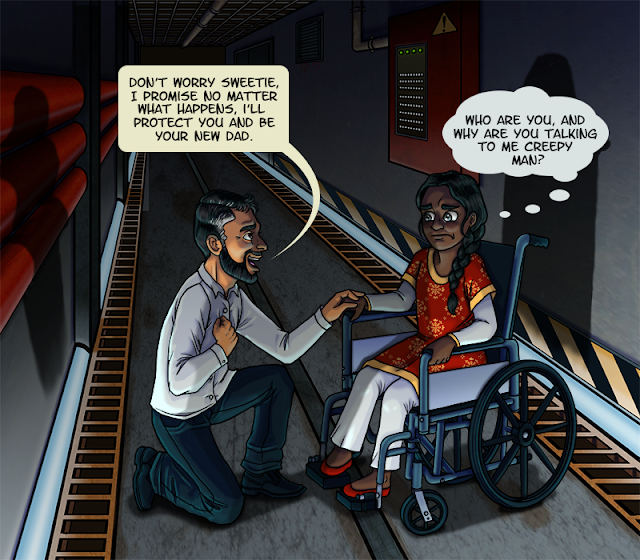
The women in the story seem less like real people and more like a weird combination of straw-feminists and male masturbatory material, with Ray putting way too much emphasis on their appearance, sex drives, and relationships with men. Then of course we have Anya, who, while thankfully not a sex object, is still treated as an object nonetheless. She barely gets any characterization, and doesn’t communicate even through sign language or writing, she’s just a blank slate for Samar to project his weird daughter obsession onto. It’s doubly problematic since Samar seems to use Anya’s disability as an excuse to treat her like a life-sized doll he can love, protect, and turn into his replacement daughter. Because she’s mute he assumes she has nothing to say, and because she doesn’t walk he thinks she’s completely helpless. We don’t even get to learn what she’s thinking, or how she feels about Samar treating her as some sort of second chance, because, unlike the other characters who all get their turn in the spotlight of the limited, third-person narrative, Anya is completely ignored. At least she gets a little bit of a role later on (which I won’t spoil). Miraculously, Lilith Adams is the only female character who is neither a victim, nor a sex fantasy, and is described only as being terrifying, intense, and very much in charge, much like her namesake.

A man kneels in front of a woman in a wheelchair. The man says

This definitely feels like a stranger danger situation.

So the female characters are about as well written as you’d expect from a male author who doesn’t know how women work, and the whole “helpless, sick wheelchair girl” trope is super problematic. It’s not the worst treatment of women I’ve seen in splatterpunk, but I’d still prefer to enjoy my blood and guts without the side of sexism. I mean, I don’t think it’s an unreasonable request. The writing is still pretty good, and it’s definitely the scariest book I’ve read so far this year. The Mine is also one of only a few Indian horror novels I’ve been able to find in English. Whether that’s enough to overshadow the book’s problem areas, however, is up to the individual reader. 

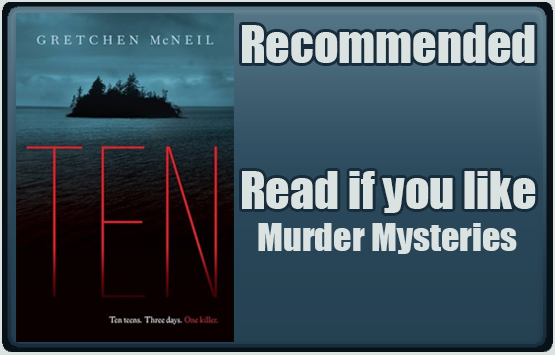
Ten by Gretchen McNeil

Ten by Gretchen McNeil

Formats: Print, audio, digital

Publisher: Harper Collins

Genre: Mystery, Psychological Horror, Killer/Slasher

Audience: Y/A

Diversity: African American character, Japanese American character, Asian American character, Samoan character, Bipolar character

Takes Place in: Seattle, USA

Content Warnings (Highlight to view):  Sexist Language, Abelist Language, Racist Language, Sexism, Mental Illness, Drug Use, Violence, Death

Blurb

SHHHH!
Don’t spread the word!
Three-day weekend. Party at White Rock House on Henry Island.
You do NOT want to miss it.

It was supposed to be the weekend of their lives—an exclusive house party on Henry Island. Best friends Meg and Minnie each have their reasons for being there (which involve T.J., the school’s most eligible bachelor) and look forward to three glorious days of boys, booze and fun-filled luxury.

But what they expect is definitely not what they get, and what starts out as fun turns dark and twisted after the discovery of a DVD with a sinister message: Vengeance is mine.

Suddenly people are dying, and with a storm raging, the teens are cut off from the outside world. No electricity, no phones, no internet, and a ferry that isn’t scheduled to return for two days. As the deaths become more violent and the teens turn on each other, can Meg find the killer before more people die? Or is the killer closer to her than she could ever imagine?

Ten is inspired by Agatha Christie’s bestselling mystery thriller, And Then There Were None, a tale of ten strangers with dark secrets trapped on an island with a killer who terminates them in ironic ways and publicly marks the deaths one by one. McNeil takes Christie’s original concept, sets it in modern times, changes the terrible, unlikeable adults into a bunch of terrible, unlikeable teens, does away with racism, xenophobia, and anti-Semitism, and replaces it with a diverse cast.

Like the original Christie novel, Ten starts off with ten (get it!?!) people gathering on a remote island under false pretenses only to discover that it was all a trick by the killer, who has kindly left them a Ringu-esque DVD (a gramophone record in the original) to inform the victims of their inevitable demises and remind them how shitty they all are (in case you started feeling bad for any of them). At first, no one believes the sketchy murder announcement is legit, at least until they start dropping like flies, and then all hell breaks loose. Both books involve distrust, everyone accusing each other, the fear of knowing there’s a wolf (or possibly wolves) hiding among the sheep, and of course, a party with a body count. Why do so many parties in these kind of stories end up with a bunch of dead guests? Does the Red Death just go around gate crashing every party in the horror genre? Why does every gathering of three or more people that involves alcohol inevitably end in someone’s demise? Being an introverted nerd who would rather gnaw off my own hand than attend most social gatherings, I honestly have no idea what happens at parties, so I’m just going to assume that it’s pretty standard for them to end in either mass murder or demon summoning (and now I wish I went to more parties).

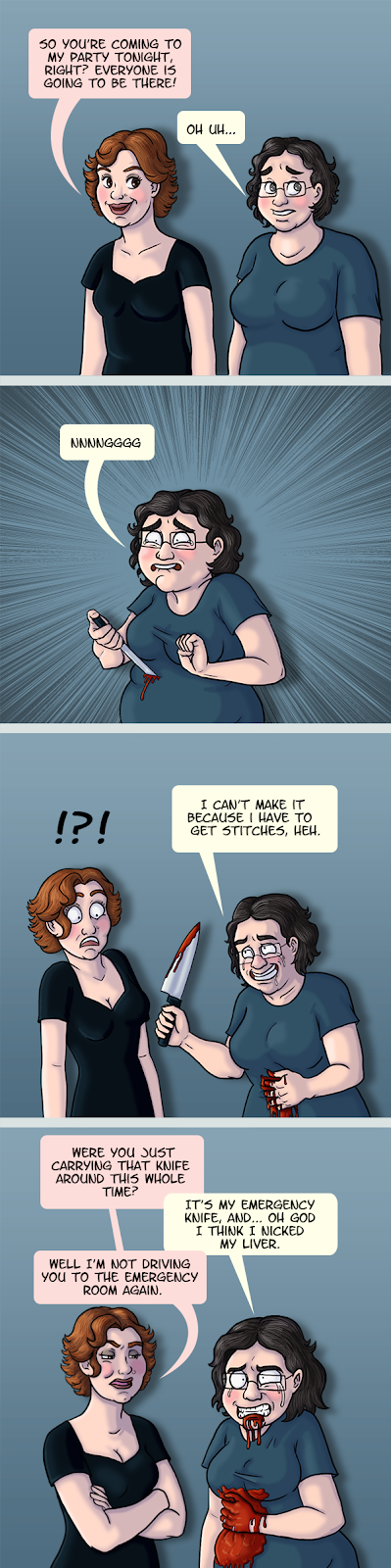
 I’m walking with a red-headed friend who cheerfully asks “So, you’re coming to my party tonight, right? Everyone is going to be there!” Apprehensive, I respond “Oh uh…” then plunge a knife into my stomach. Holding my wound and trying to smile through the pain, I respond to my shocked friend “I can’t make it because I have to go to the ER and get stiches, heh.” Irritated, she asks “Wait, were you just carrying that knife around the whole time?” Bleeding profusely, I mutter “Oh God, I think I nicked my liver.”

A liver laceration is a small price to pay to avoid social interaction.

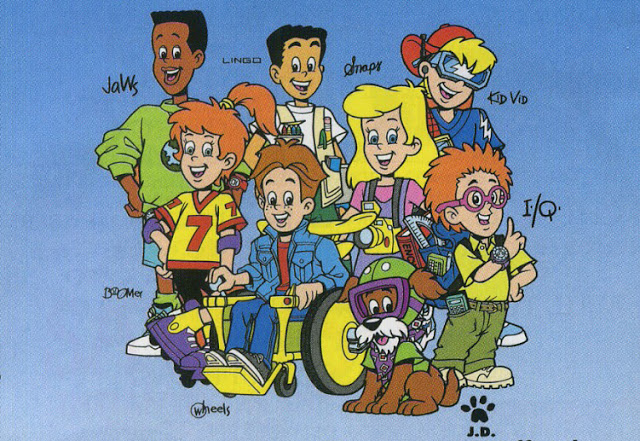
Last, but not least, is the diversity, which pretty much only applies to Ten since Agatha Christie was a racist asshole, so it’s pretty obvious who the winner is here, but let’s go over it anyway. Ten features a fairly diverse cast, with about half the characters being POC, in addition to a character with a fairly realistic depiction of bipolar disorder. Of course, most of the characters don’t get enough of a chance to develop anything close to a personality before they get offed, so they’re all pretty one-dimensional characters. There’s also a “rebellious” East-Asian girl with a rebellious blue streak in her hair, so Ten isn’t completely free of stereotypes either. But at least the diversity is there, even if it sometimes leans more towards “early 90’s kid show” diversity.

A drawing of the members of the “Burger King Kid’s Club”, a multi-ethnic group of fictional children from the 90’s. Their names are written next to them. In the front row are the dog, J.D., and a white boy in a wheel chair named “Wheels.” The second row (from left to right) shows a butch red-headed girl in sports-wear named Boomer, a femme blonde girl named “Snaps”, and a short, white boy named I/Q. The back row depicts JaWs, a black kid, a Hispanic boy named Lingo, and another white boy named “Kid Vid”.

I can just imagine Wheels being like “My name is Jordan, you insensitive, ableist jerks.” Well, at least it’s better than JaWs, his names looks like a typo. Why do none of these children have normal names?! Is their mom Gwyneth Paltrow? And how come the white kids get to be in the front?

So how does the re-imagining stand up to the original classic? In terms of writing, McNeil is a decent-ish author, but there’s just no competing with Agatha “The Queen of Crime” Christie. I mean, Agatha is the world’s best-selling mystery writer (that’s not an exaggeration, she’s actually in the Guinness Book of World Records), while Ten contains the line “The whole thing had been a perfect storm of not awesome.” So yeah…any comparison between the two would be downright unfair. However, it seems like McNeil realizes this, and isn’t trying to outdo her inspiration. Plot-wise, both books have a good mystery, although the original is unbelievably difficult to solve, and requires an extensive epilogue to explain what the hell just happened because the clues are so vague. Even knowing who the killer was on subsequent readings of And Then There Were None, I couldn’t pick up on any hints as to their identity. In fact, I’m not entirely convinced Christie didn’t just randomly pull the ending out of her ass at the last minute, but whatever, at least I couldn’t guess the culprit after a few chapters. Meanwhile Ten gives the reader enough clues to figure out the ending without being super obvious. That is, unless you’ve already read And Then There Were None in which case you’re probably going figure out the killer (or killers) almost instantly. So yeaaaaaaah, sorry about that. The scary parts of Ten are done well, but the rest of the story (especially the beginning) feel forced. All the dialogue is generic teen bickering and cookie cutter conversations about crushes, school, and beer and it only exists as a quick set up before the murder spree starts.

While Christie’s novel is a psychological thriller that focuses heavily on the characters, McNeil’s work leans more towards the classic horror genre, specifically the teenage slasher/cabin in the woods kind. The characters in both stories are awful human beings, which works fine for And Then There Were None, where they’re at least complex and interesting, and we’re more interested in solving the mystery than anyone surviving. The closest thing we have to a primary cast in Christie’s book are Vera the governess, Philip Lombard the solider, Armstrong the doctor, and Blore the private investigator. And it’s still really ambiguous if any of them are the killer until the end. Christie switches the point of view frequently, so her reader becomes just familiar enough with each character to get a basic understanding of their personality, but not so much as to clue them in to the killer’s identity. In Ten we’re given a clear and likeable protagonist to root for, the shy Meg, along with her best friend, Minnie, and their shared love interest, T.J. (ugh, love triangles). This lends itself better to a slasher story where we need at least one character whose safety we fear for, and then a bunch of cannon fodder characters to satisfy the reader’s bloodlust. (Let’s face it, if you’re reading a book like this you’re looking for a body count.) The rest of the cast is one dimensional and just needs to hurry up and die. However, this does add a wrinkle to the whole revenge thing, you can’t very well root for a main character that did something terrible, so we know the killer/killers are either overreacting or there’s been a terrible misunderstanding. It also means we can rule out Meg as the killer (and assume it’s probably not Minnie either), but there are still enough potential killers left over to fuel plenty of paranoia.

Having most of the characters know each other in Ten adds an extra layer of creepiness because no one wants to believe their friend is a murderer, and the killer is quite literally backstabbing people who trusted them. In Christie’s setup, you don’t really care who gets the ax (literally and figuratively) because everyone is awful. Lombard’s an arrogant chauvinist who left a bunch of natives to die because he barely saw them as people, Blore is an overconfident idiot who falsifies evidence, and Dr. Armstrong is a spineless alcoholic who cares more about recognition and his reputation than the patient he killed while he was drunk. The only character who is sort of sympathetic is General MacArthur, and that’s only because his victim was a world class jerk who slept with the guy’s wife, and MacArthur feels genuinely remorseful about sending him on a death mission. And that’s not even including the minor characters and all the reasons they suck. The mystery and the identity of the killer are really the only things that matter in And Then There Were None (okay, and maybe whether or not Vera survives, she’s slightly more likable than her companions), which makes it a captivating read, but not particularly scary.

Because Ten is aimed at teens, McNeil threw in a completely unnecessary love triangle (as is apparently required for any book in Y/A section) because apparently a murder spree wasn’t dramatic enough. To her credit, McNeil makes the clichéd romance slightly less terrible by actually giving Meg a legitimate reason for not wanting to upset Minnie by going after their mutual crush. Minnie suffers from bipolar disorder, and even though she’s finally getting treatment, she’s still prone to making bad decisions while manic, including turning into someone Meg didn’t recognize and lashing out when she found out her best friend was also interested in T.J. Because she’s been friends with Minnie for so long, and the mental illness is a more recent development, Meg still hasn’t quite figured out a balance between an overprotective enabler and a supportive friend when Minnie is having a depressive or manic episode. Because Minnie is still in serious denial about her Bipolar Disorder and tends to minimize the severity of her symptoms Meg also feels responsible for her best friend’s wellbeing and acts like a mother hen. It also doesn’t help that Minnie’s dad has asked Meg to “take care of his daughter” and placed an unfair burden on her unqualified shoulders. As a result, the two girls have developed a toxic, codependent relationship with Meg treating Minnie like she’s some sort of fragile doll who will shatter at the slightest hardship. Honestly their dysfunctional relationship was about 100 times more interesting than their stupid crush on T.J.

It’s still about five hundred times better than the Christie’s original novel (not that that’s saying much), which, by the way, wasn’t originally called And Then There Were None. The actual title of the novel was considered too racist for American publication, 25 years prior to the Civil Rights Act. That’s right, a country where racial segregation was totally legal was like “Whoa, Agatha, that title’s pretty offensive, don’t you think?” So she can’t even use the “oh well, attitudes were different back then” excuse, (which is a bad excuse anyway) because it was still considered fucking offensive at the time it was published. Mark Twain’s used racial slurs in The Adventures of Huckleberry Finn to make a point about the evils and ugliness of slavery, but the racism, anti-Semitism, and xenophobia in And Then There Were None have literally no reason to be there. Christie, like Lovecraft (who I complain about in detail here), is one of those writers whose obvious talent is often marred by her bigotry, which sucks because her work is otherwise really enjoyable. Of course, that’s like saying “This ice cream sundae is pretty enjoyable, except there’s a dead rat in it.” I mean, you could probably eat around it, but the experience is still going to be severely tainted by a rodent carcass.

A beautiful ice-cream sundae with strawberry, chocolate, and vanilla scoops of ice-cream, fresh sliced strawberries, three different sauce toppings, and bits of nuts and sprinkles sits in a glass dish. Lying on the ice-cream, drizzled with fudge sauce, and topped with whipped cream and a cherry, is a dead rat. The rat is lying on its back, with its little pink feet in the air, its tongue hanging out, and little red “X’s” over its eyes.

I mean, I’d probably still eat it… but I have problems.

These days, there are editions of Christie’s book that have been edited to varying degrees to make the work less jarringly racist (and before anyone starts screaming about censorship, the original, unedited version is still in print too, so you’re free to read whichever version you want), but it’s still super uncomfortable. Even in the edited versions that aren’t dropping the N-word every few pages, the ugly attitude still hangs heavy in the air throughout the story, and it’s difficult to immerse yourself in the mystery with that hanging over you. Plus, none of the anti-Semitism was edited out in the audiobook version I listened to, so I still got to “enjoy” hearing that in the first chapter. Fun! Of course, how many problematic elements you’re willing to put up with before the book becomes irredeemable depends on the individual. I liked… aspects of Christie’s book well enough, but I can understand if someone has zero desire subject themselves to 272 pages (or in my case 6 hours) of bigotry.

So, which book is better? Ten preserves some of the spirit of the original story, but does away with the blatant racism, although it leans more towards slasher horror than suspense. But And Then There Were None is considered a classic for a reason. The quality of the writing is obvious, Christie does an excellent job building the suspense, and the characters are unique and interesting (you could probably write an entire English paper on each of them). Ten isn’t a bad book, but it’s never going to be a literary classic. So, which would I recommend? Well, it really depends what you’re looking for: a fun horror story, or a classic murder mystery (and whether or not you want to deal with Christie’s racism). From a literary perspective, yes, And Then There Were None is the better work (no surprise there). But in terms of straight horror? You’ll probably get a lot more scares from reading Ten. You could always read both, like I did, just make sure to read McNeil’s book first to avoid spoilers.

The Ballad of Black Tom by Victor LaValle

The Ballad of Black Tom by Victor LaValle

Formats: Print, audio, digital

Publisher: Tor

Genre: Eldritch, Monster, Historic Horror, Occult, Sci-Fi Horror

Audience: Adult/Mature, Y/A

Diversity: Black characters (African American and Caribbean)

Takes Place in: Harlem, New York City, USA

Content Warnings (Highlight to view): Bullying, Death, Gore, Mental Illness, Medical Procedures, Oppression, Physical Abuse, Police Harassment, Racism, Torture, Verbal/Emotional Abuse, Violence, Xenophobia

Blurb

People move to New York looking for magic and nothing will convince them it isn’t there.
Charles Thomas Tester hustles to put food on the table, keep the roof over his father’s head, from Harlem to Flushing Meadows to Red Hook. He knows what magic a suit can cast, the invisibility a guitar case can provide, and the curse written on his skin that attracts the eye of wealthy white folks and their cops. But when he delivers an occult tome to a reclusive sorceress in the heart of Queens, Tom opens a door to a deeper realm of magic, and earns the attention of things best left sleeping.
A storm that might swallow the world is building in Brooklyn. Will Black Tom live to see it break?

Oh Lovecraft, you were such a great horror writer, but an absolutely terrible human being.

When it comes to Lovecraft, I have some very complicated opinions. I adore the Cthulhu mythos, cosmic horror, and the concept of forbidden knowledge that utterly destroys your sanity, but it’s hard to enjoy his writing when he liberally peppers it with his hatred for anyone who isn’t a WASP. One minute  I’m reading an enjoyable little story about a cosmic abomination and the dark secrets humanity was never meant to know, and the next it’s morphed into some sort of eugenics bullshit. Here’s a small sampling of just some of the bullshit he pulls in his stories: In the Case Of Charles Dexter Ward Lovecraft describes a woman as having “a very repulsive cast of countenance, probably due to a mixture of negro blood,” in Herbert West: Reaminator the black boxer, Buck Robinson, is compared to an ape, in The Rats in the Walls there’s a black cat named N****r Man, The Horror at Red Hook is basically just Lovecraft rambling about how much he hates immigrants and black people who he refers to as a “contagion” with “primitive half-ape savagery”, and in Medusa’s Coil he describes slavery as “a civilization and social order now sadly extinct”. Oh, and let’s not forget that poem. There’s a good reason why Lovecraft’s bust is no longer used for the World Fantasy Award trophy, the guy was a dick.

A drawing of Nnedi Okorafor wearing a dark blue dress, large red and gold earrings, and holding her World Fantasy Award, a bust of H.P. Lovecraft. Okorafor looks uncomfortable while she says “Um, Thanks, I guess? Yeah, I don’t really want this racist’s head on my mantle.”

I tried to draw Nnedi Okorafor, “tried” being the operative word. She says I got it right from the shoulders up though!

Now, before anyone uses the “Lovecraft was just a product of his time” excuse, please consider this: Yes, his active years as a writer were during the incredibly racist segregation era, but not everyone shared his shitty beliefs about people of color and Jews. Mary White OvingtonMoorfield Storey, and William English Walling were all white, but they were also supporters of  civil rights and racial equality during the same period, and even helped found the NAACP with W. E. B. Du Bois. So it’s not like every white person in the 1920s and 1930s was racist. Lovecraft would’ve at least been aware of civil rights due to Guinn v. United States, a landmark case that found racist literacy tests unconstitutional, the National Negro Business League which helped to double the number of black owned businesses, and prominent black lawyer Charles Hamilton Houston, who was fighting for civil rights in court. Hell, even his friends and family criticized the horror writer’s ignorant attitude. Lovecraft’s wife, Sonia Greene, and friend Samuel Loveman were both horrified by Lovecraft’s anti-Semitism and resented him for it. Sonia even wrote, “Whenever we found ourselves in the racially mixed crowds which characterize New York, Howard would become livid with rage… He seemed almost to lose his mind.” When Lovecraft attacked Charles D. Isaacson‘s, article on racial tolerance, In a Minor Key, in his own article titled In a Major Key (where he praised the KKK as “that noble but much maligned of Southerners who saved half our country from destruction”) he managed to piss off not just Isaacson, but his own friend James Ferdinand Morton, both of whom wrote responses attacking Lovecraft’s racism. He knew people thought he was racist, as he’d been called out multiple times and even his wife had pleaded with him to reconsider his beliefs- Lovecraft just chose to be an intolerant jerk.

There are two books. On the left is a book with a red cover written by H.P. Lovecraft. It’s titled “The Horror at Red Hook, or Why Immigrants and Minorities Ruin Everything.” On the right is a green, leather bound book with an image of a brass octopus on the cover. The title, written in gold lettering, is “Lovecraft’s Letters: About How Anyone Who Isn’t Anglo-Saxon Sucks, and Why Eugenics are Super Awesome”.

Probably real Lovecraft titles.

Luckily for us, many talented creators have taken concepts in Lovecraft’s writing and used it to create their own works, so fans can still enjoy Yog-Sothoth, the Deep Ones, and the horrors of forbidden knowledge driving men to madness- without all the bigotry. The Ballad of Black Tom is one of these works, a retelling of  Lovecraft’s incredibly racist The Horror at Red Hook from the point of view of a black man living in Harlem.

For those not familiar with Lovecraft’s original short story, The Horror at Red Hook follows police detective Thomas Malone and his pursuit of forbidden knowledge in the immigrant neighborhood of Red Hook, Brooklyn, or as Lovecraft describes it “a maze of hybrid squalor”. Because the only religions in Lovecraft’s world are either good, Anglo-Saxon Christianity or evil, bad, demon worship, all the brown people are apparently involved with the occult.  Malone is put on a case involving the wealthy and eccentric recluse, Robert Suydam because his relatives want the old man declared mentally unfit so they can have his money. During the course of the investigation Malone discovers that Suydam has been spending time with illegal immigrants and foreigners, which obviously means he’s doing something super evil, like sacrificing white babies to tentacle-faced monsters, because Lovecraft is racist and Malone is an awful detective. Suydam continues to do suspicious things, in Malone’s opinion anyway, like lose weight, work on his personal grooming, and get married. Eventually the whole thing cumulates in a police raid in Redhook, where Malone finds a bunch of creepy shit in Suydam’s basement flat which causes the police detective to lose his sanity points and pass out from sheer terror. Afterwards we discover that the buildings collapsed, killing almost everyone except Malone, who is left with PTSD and batophobia. The rest of the story is just Lovecraft whining about immigrants “ruining” New York and reads like the antiquated 8,000 word equivalent of a Trump tweet. It’s not one of his better stories. So it’s kind of a miracle that LaValle not only manages to write a version of The Horror at Red Hook that’s not just a commentary on racism, but is actually good, while still keeping all the creepiness, mind-fuckery, characters, and plot of the original. Suydam and Thomas Malone both appear as major characters in The Ballad of Black Tom, Malone serving as a deuteragonist for the second half of the story, while Suydam introduces Tommy Tester, the book’s protagonist, to the occult. There are other hidden references to Lovecraft lore throughout the book. The title, Black Tom, is an allusion to the cat from The Rats in the Walls whose name was changed from N***** Man to Black Tom when the story was reprinted in Zest magazine in the 1950s. Toward the end Robert LaValle mentions a man from Rhode Island, living in New York, who may be Lovecraft himself.

LaValle defends the minority population living in Harlem and Redhook that Lovecraft so despised by showing them as the every day folks they are, trying to get by with what little they have. Tommy even expresses disappointment after visiting the Victoria Club, when he learns that it’s not the den of debauchery and sin he had hoped for, but instead old men playing cards and women selling meals they’ve made at home. There are criminals, yes, but that’s to be expected in any impoverished area, and they’re far from a majority of the population. When Tommy discovers Suydam is associating with so many criminals, he’s terrified, and it speaks more to the rich, white man’s character than the immigrants on New York. What Malone discovers in the basement is also been changed from the original, but to reveal more would ruin the amazing ending of Black Tom. Let’s just say LaValle provides his readers with more detail on the horrors the detective discovers, and a much more satisfying ending.

The thing I found the scariest about The Ballad of Black Tom weren’t the fictional monstrosities sleeping at the bottom of the see ready to destroy humanity, it was how much LaValle’s fictionalized world reminded me of our own. The cops’ blatant racism, their harassment of black men who were simply walking down the street, and their willingness to kill at the slightest provocation felt all too familiar, as did the rampant xenophobia and anti-immigration attitudes. The story may be set in the 1920s, but it’s clear that some things still haven’t changed. Tommy’s encounters with the police were enough to give me panic attacks, as I remembered my own family’s terrifying encounters with cops. While I’m pale enough to pass as white, most of my extended family isn’t, and I grew up with horror stories about what happened to black people stalked, shot, raped, and lynched for merely existing. Tommy has learned what every young black person is still being taught: if the police stop you, appear as non-aggressive as possible, be polite, and put up with whatever harassment the cops dish out or you’ll wind up dead. We see this in all his encounters with Malone. Tommy plays dumb, looks downs, and lets them steal his money and insult him to his face without making a comment. At least for the first half of the book.

Tommy Tester starts the story as a good man. He may trick others and take on some not-so-legal work, but he’s trying to take care of his disabled father in a world that’s against him, so it’s not surprising he has to do some questionable things to survive. At least he never actively hurts others and tries to do the right thing when he can, like preventing a witch from getting her hands on forbidden knowledge, which is more than I can say for most of the people Tommy encounters. Racist cops constantly threaten and abuse him, he’s harassed by a bunch of white kids just for walking while black, and white society treats him as less than human. Even Robert Suydam, who claims to admire Tommy and gives him a large sum of money to play guitar in his home, is merely using for his own ends. As it turns out, Suydam is a white man who fetishizes POC cultures, while still viewing himself as superior to the same people he claims he wants to help. There’s a saying “you can only kick a dog so many times before it bites back” and after being attacked, abused, taunted, stolen from, threatened, and finally losing everything to cold and corrupt law enforcement, Tommy Tester realizes he has nothing left to lose and says “fuck it”. And that’s how we start the second half of the story, told from Malone’s point of view, with Tommy, now calling himself “Black Tom,” transforming himself into the most badass, brutal, and terrifying antagonist in order to exact his bloody revenge on Robert Suydam, Thomas Malone, and the xenophobic NYPD. And let me just say, it’s immensely satisfying. Gory, but satisfying.

I abhor violence in real life, and obviously don’t agree with mass slaughter and abuse, no matter how evil the victims are. The real world is more complicated than just good vs. evil, and violence and revenge just beget more of the same. That said, there’s still a violent, pissed off part of me, hurt and furious at the injustice of the world, that wants to see wicked people suffer. Not just get their richly deserved comeuppance, but really, truly suffer in the worst ways imaginable. It’s the bitter part of me that relates to all those Saturday morning cartoon villains of my past who just want to destroy everything, because the world is such a terrible, hateful place that it probably deserves it. This vengeful part of me that becomes more and more hateful every time I read the news was immensely satisfied and soothed to watch Black Tom punish a group of racists who resemble 21st century hate groups a little too closely. It’s the same anger that motivates Killmonger in the Black Panther film.


But, like I said, these are ugly thoughts I would never actually act on or hope to see happen in real life because I know how wrong they are, and I still hold on to the hope that logic and compassion will win out (so FBI, if you’re reading this, I just want to clarify, I’m not actually planning on going on any kind of bloody killing spree). When Tommy, pushed to choose between an eldritch abomination and the hateful people who hurt him again and again, he gives in to revenge and loses part of his humanity, and that’s what makes the story so bitter-sweet. Black Tom may have gotten his revenge, but at the cost of being a good man, something he will have to live with for the rest of his life. He’s compromised his most important value, being the kind of man his father would be proud of, and can no longer look his best friend in the eye. As satisfying as it is to see horrible people suffer a horrible fate, you can’t help but feel bad for Tommy who’s left to wonder if it was really worth it. 

My wife, who is wearing a blue space dress and white, over-the-knee socks has just opened the door to reveal two FBI agents, a light-skinned man, and a dark-skinned woman. My wife has her hands on her and looks irritated. She shouts, “What did you do this time!?!!” I’m in the foreground, carrying a human foot that’s been cut off below the knee. The limb is starting to decay and is wrapped in bandages. I look surprised and guilty at being caught by my wife.

The severed human leg actually has nothing to do with why the Feds are here. Though I’m sure my wife is going to ask about that too. Watch what you say on the internet kids!

How I Became a Ghost by Tim Tingle

How I Became a Ghost by Tim Tingle

Formats: Print, digital

Publisher: The Roadrunner Press

Genre: Ghosts/Haunting,  Historic Horror, Werebeast (Were-Panther/Nagual)

Audience: Children

Diversity: American Indian (Choctaw)

Takes Place in: Choctaw Nation, Mississippi, USA

Content Warnings (Highlight to view): Animal Death, Child Abuse, Child Death, Child Endangerment, Death, Forced Captivity, Illness, Kidnapping, Oppression, Physical Abuse, Racism, Self-Harm, Torture, Verbal/Emotional Abuse, Violence

Blurb

Told in the words of Isaac, a Choctaw boy who does not survive the Trail of Tears, HOW I BECAME A GHOST is a tale of innocence and resilience in the face of tragedy. From the book’s opening line, “Maybe you have never read a book written by a ghost before,” the reader is put on notice that this is no normal book. Isaac leads a remarkable foursome of Choctaw comrades: a tough-minded teenage girl, a shape-shifting panther boy, a lovable five-year-old ghost who only wants her mom and dad to be happy, and Isaac s talking dog, Jumper. The first in a trilogy, HOW I BECAME A GHOST thinly disguises an important and oft-overlooked piece of history.

I was looking through the kid’s section of the library (before I get kicked out for being the creepy adult with no children) when I stumbled upon Tim Tingle’s How I Became a Ghost. The title intrigued me, I’m always looking for books by minority authors, and I loved the cover. Then I noticed the fine print: A Choctaw Trail of Tears Story. Tingle’s book is not a simple ghost story for kids, but an important work of historical fiction about the horrors of the Indian Removal Act of 1830, which illegally forced the Chickasaw, Choctaw, Creek, Seminole, and Cherokee from their homes and resulted in the death of thousands of American Indians.

A dark-skinned father is walking with his light-skinned young son and holding his baby. They are in a children’s library full of brightly colored bookshelves and posters for “We Need Diverse Books Poster” and “Catch the Flesh Eating Reading Bacterium”. I’m hiding in one of the bookshelves like a gremlin, hissing. The boy asks his father “Daddy, what is that weird lady doing in the children’s library by herself?” The father, unconcerned, responds “Just keep walking and don’t make eye contact sweetie.”

I decided to draw a background for this picture, and quickly remembered why I hate drawing backgrounds. These are all real children’s book covers by the way. I also sneaked in a “Welcome to Night Vale” reference.

How I Became a Ghost is not a “fun” kind of scary story (though there are plenty of humorous moments- more on that later) where you can easily brush away your fear because you know it’s a work of pure fiction. The characters in the book may be fictional, but this is still a book based on true events, that caused a great deal of death, suffering, and the loss of ancestral homeland. The first half of the book is based on the real-life experiences of John Carnes, Tingle’s great-great-grandfather, who was forced to walk the Trail of Tears along with his family and lost his mother and brother to exposure and disease during their forced relocation. Tingle first recorded his account of Carnes’ life in the short story Trail of Tears for his anthology book, Walking the Choctaw Road, and would later use it as inspiration for writing How I Became a Ghost.

Tingle doesn’t shy away from descriptions of the Choctaw people cutting their flesh in mourning, being burned alive in their homes, dying from small pox infected blankets, and of course, children dying. Pretty rough stuff, but I think kids can handle it, Tingle does a great job of educating his audience about the Trail of Tears, while still keeping the content age appropriate. And as Shelley A. Welch, an Eastern Cherokee woman, wrote in her guest post for the blog American Indians in Children’s Literature:  “Some teachers will say that historical realities are too heavy for young children. Actually, it seems to be the adults that shy away from those topics …. who don’t seem to want to let go of American myths of ‘friendship and good will’ between the first settlers and the Indigenous people, a People who were once the majority and are now the smallest minority…. I can say that when children are told that one group bullied another, they are quite amazing peacemakers, acknowledging the breach of civil rights and offering cooperative resolutions. It is true, elementary-aged students aren’t developmentally ready for the specifics of genocide, but they can understand the inhumanity of racism. ” In other words, this book is loads better for children than all those Thanksgiving stories that propagate the lie of the “smiling (Wampanoag) Indian“. For kids who would prefer a non-fictional account of the Trail of Tears, there’s also Joseph Bruchac’s (author of Skeleton Manchildren’s book that he wrote for the Step-Into-Reading series. But I think there’s something to be gained from reading a more personal (albeit fictional) account when learning about history. How I Became a Ghost also educates readers about Choctaw (Chahta) culture, spirituality, vocabulary, and even has a ghostly cameo from Chief Pushmataha.How I Became a Ghost is posthumously narrated by a ten-year-old Choctaw boy named Isaac. Isaac frequently brings up his impending death, so you spend the first two thirds of the story on edge, wondering when his time will come. At first, he’s plagued by visions of other Choctaw people dying, but eventually Isaac comes to terms with his own mortality and seems to accept it, though he does worry about how his family will react. I guess when you’re surrounded by death and you know the end is coming you start to feel pretty chill about the whole thing. There are plenty of scary moments for horror lovers, a teenage girl being abused by soldiers then hiding in the bonepickers‘ wagon, under a pile of bloody bones, stands out in particular.

For a story that’s written so simply (to make it easy for young readers) How I Became a Ghost leaves quite the impact.  Something about the plain, straightforward way Isaac describes the trail of bloody footprints he leaves behind or the parents carrying their dead child really stays with you. Not everything is dark and depressing however, Tingle adds plenty of humor and hope to his book, like Isaac’s father pretending to be a snow monster and playfully chasing his sons, the other family they befriend on the Trail of Tears, and one of the Choctaw elders teasing Isaac for his clumsiness as a ghost. As a bonus, these scenes also shatter the myth of the “humorless, serious Indian” that’s frequently perpetuated by Euro-American media. I never felt like I was reading a “sad” story, more a story of survival. The ending of Isaac’s life, while tragic, is not the end of his spirit, and he continues to help and guide his friends and family as a ghost. When he dies, Isaac is cheerfully welcomed into the afterlife by the other spirits (shilombish) who continue to watch over their loved ones. Like the Choctaw Nation, Isaac continues to persevere, albeit in a different form, despite all he has suffered and lost.

I do have a few nitpicks, because of course I do, but they’re all pretty minor. Isaac’s cause of death felt like a really odd choice to me. *Spoilers* He’s killed by a wolf, even though wolves killing humans are extremely rare, and even then almost always carried out by a pack of wolves rather than a lone individual. In other words, Isaac would have had a greater chance of being killed by a lightning strike than a wolf attack. So why not have him die another, less improbable way? *End Spoilers* The whole thing seemed random and highly unlikely, though Tingle may have just chosen to take artistic license for the sake of the plot. Isacc’s dog, Jumper, also confused me. He seemed to be able to speak, but it wasn’t clear if Jumper could actually talk, or if Isaac just imagined his responses, like I do with my cats (don’t judge me). I think it’s the latter, since no one else appears to be able to “hear” Jumper, but it’s never really explained. So, there’s just this random talking dog that doesn’t really serve a purpose story-wise except to be adorable (not that I’m going to complain about a good dog, dogs make everything better).

In the first panel, I’m cheerfully talking to a short-haired tortoise-shell cat and voicing her responses: “Hi Kitty! You’re so cute and fuzzy! Cute, fuzzy, kitty butt!” “Meow, go away, I don’t like you.” “Oh kitty, why are you such a grumpy grump?” In the second panel I look less thrilled as the cat ignores me and “asks” “Why are you such a loser?” “Kitty that’s not nice!” “It’s true though! And you have a butt face and no friends and you smell.” In the last panel I’m crying while the cat purrs happily.

Cats are jerks.

There’s also a kind of odd character introduction halfway through the story, with the appearance of Joseph the were-panther. Apparently, Isaac already knows Joseph from his village, it’s just that no one bothered to mention his existence or wonder where he was prior to that point in the story, not even his own grandparents who were introduced in the first few chapters. Well, I guess it’s nice that this guy we had absolutely no knowledge of previously managed to survive? It’s also odd that Joseph turns into a black panther, and not a cougar (which is also known as a panther), a large cat that’s native to North America. At first I assumed the black panther on the cover was a stylistic choice, until Tingle describes Joseph’s feline form as having a black coat. Melanistic color variants only occur in leopards and jaguars, not cougars, and jaguars wouldn’t be found so far north. They do sometimes wander into New Mexico and Arizona, and there were even reports of jaguars in California during the 1800s (leopards are located on an entirely different continent), but having one appear in Mississippi seemed unlikely. At first I thought Joseph might be half Aztec or Olmec, since Tingle doesn’t reveal anything about his parents and both Indigenous groups have stories about people who can turn into jaguars. But it’s also likely that black, shape-shifting cougars are a part of Choctaw theology that I’m just not familiar with. Black panthers also make appearances in Tim Tingle’s House of Purple Cedar and Caleb, the latter of his works, also about a shape-shifting boy. I did try to do some further research into the matter, but with all the false information out there regarding American Indian beliefs, spirituality, and legends I wasn’t able to come up with much. There also seem to be a lot of legends in Mississippi about black panthers. Who knows?Sorry, I went off on a weird tangent there…

I’m sitting cross-legged on the ground, reading a copy of “How I Became a Ghost”. A black panther is standing behind me and reading over my shoulder. I complain “Cougars don’t have melanistic color variants!” The panther responds “You realize no one but you cares, right?”

I get really caught up on weird details, you’d think I’d be more concerned about the panther reading over my shoulder, but nope.

The writing may feel a little childish for adults and older readers, and not necessarily something I’d recommend for people in that age group (instead I’d suggest Tingle’s original Trail of Tears story, which is similar to How I Became a Ghost, but aimed at older readers and non-fictional), but kids will definitely get a kick out of the story and the epic rescue mission staged by Issac and his panther friend, and it will hopefully pique their interest in history and the Choctaw Nation. I know I’ll certainly be interested in checking out the sequel, When A Ghost Talks, Listen, when it’s released.

After the People Lights Have Gone Off by Stephen Graham Jones

After the People Lights Have Gone Off by Stephen Graham Jones

Formats: Print, audio, digital

Publisher: Dark House Press

Genre: Monster, Paranormal, Demon, Werewolf, Zombie, Killer/Slasher, Romance, Ghosts/Haunting, Sci-Fi Horror, Psychological Horror, Vampire

Audience: Adult/Mature

Diversity: American Indian (Blackfoot/Niitsitapi), Queer (Gay Men), Disability (Paraplegic)

Takes Place in: USA

Content Warnings (Highlight to view): Animal Death, Child Endangerment, Child Death, Gore, Violence, Death, Torture, Homophobia, Self-Harm, Implied Sexual Assault 

Blurb

The fifteen stories in After the People Lights Have Gone Off by Stephen Graham Jones explore the horrors and fears of the supernatural and the everyday. Included are two original stories, several rarities and out of print narratives, as well as a few “best of the year” inclusions. In “Thirteen,” horrors lurk behind the flickering images on the big screen. “Welcome to the Reptile House” reveals the secrets that hide in our flesh. In “The Black Sleeve of Destiny,” a single sweatshirt leads to unexpectedly dark adventures. And the title story, “After the People Lights Have Gone Off,” is anything but your typical haunted house story.

With an introduction by Edgar Award winner Joe R. Lansdale, and featuring fifteen full-page illustrations by Luke Spooner, After the People Lights Have Gone Off gets under your skin and stays there.

For Native American Heritage Month I’d thought I’d review a collection of short stories by one of horror’s greatest writers, Stephen Graham Jones.

Do you ever find yourself reading this awesome, interesting book, but then you get to the last chapter and go “What the fuck did I just read?” I’m not talking stories with ambiguous endings where it’s left open to interpretation, like in Inception where it’s unclear whether Cobb is still in a dream or not (and then you spend hours arguing about it on the internet), but the ending still makes sense. No, I’m referring to endings that are downright obfuscating (yay, I have a thesaurus!). Endings where you have to skip back to check if you missed some really obvious clue, only to find that no, the story really does end like that, and then you’re left wondering if you’re just not smart (or high) enough to “get it”. For example, 2001: A Space Odyssey. I know it’s this amazing, classic film, but what the hell was up with that giant space baby!?! Did the really obvious metaphor for the birth of humanity just fly over my head or did Kubrick just drop a bunch of LSD? Or both? Seriously WTF? Am I the only person who doesn’t get it?

In the first panel a TV is showing a scene from 2001: A Space Odyssey with a giant, human fetus/star child floating in the void and looking at the planet earth. The second panel reveals me watching the film, bewildered, and asking “The hell is even happening right now?”

In retrospect, I probably shouldn’t have tried watching this movie at 3 AM.

Well, Stephen Graham Jones is a master of the WTF ending. In some ways this works to his advantage, like when it highlights the confusion and mental instability of the narrator, or preys on the reader’s fear of the unknown. Subtle scares can be terrifying when done right, and when Jones gets it right, it works SO WELL, like with Second Chances where the final sentence of the story hits you like a punch in the gut. But Jones makes things too subtle you’re left scratching your head and wondering what you’re supposed to be scared of. It’s like when the creepy music starts playing in a film, you know you’re supposed to feel uneasy because something bad is about to happen, but then, when the final dissonant chord is struck, everything just sort of ends without the payoff of a monster jumping out or even a terrified scream to imply something horrible just happened. Which is, unfortunately, really not that scary. After the People Lights Have Gone Off (the short story, not the book), Uncle, Xebico and Brush Monster all have this problem. Did someone die? Was there a monster? Is the narrator hallucinating? Did anything bad even happen? Am I just not smart enough to get it? It’s especially frustrating when the rest of the story makes sense, like in Xebico, but then the ending just kind of goes off the rails.

A sad, melting snow man with ear muffs, a whale with a bowtie shooting rainbows out of its blowhole, and a rabbit with a flower in its mouth, wearing a top hat and sunglasses are floating in midair and surrounded by sparkles. Looking uncomfortable, I ask, “Ummmm, so what am I supposed to be scared of? Is it the rabbit?”

I’m pretty sure it’s the sketchy looking rabbit.

Of course, none of this makes Jones a bad writer. He’s actually incredibly talented, aside from the whole confusing ending thing which is probably due more to me being obtuse than a lack of skill on Jones’ part. Like King, Jones has a real flair for making the mundane fucking terrifying.  For example, The Black Sleeve of Destiny, which is about a Lovecraftian hoodie. That’s right, a hoodie. Well, that and some poor kid’s mild kleptomania spinning out of control until it becomes a full blown obsession, but mostly the evil hoodie that seems to act as a pocket dimension with a mind of its own. There’s also The Spider Box (such a creepy title) about a cardboard fruit box that resurrects the dead.  Somehow Jones managers to cover all the horror staples in his book (demons, ghosts, werewolves, vampires, killers, and zombies) while still making his stories seem fresh and unique. A great example of this is Welcome to the Reptile House, one of the most distinct and creative vampire stories I’ve ever read. In fact, I didn’t even know it was a vampire story when I started reading it, so, uh, sorry for the spoiler.

Septa Unella from Game of Thrones is ringing her bell and chanting “shame, shame, shame”. Annoyed, I snap “Oh my God, it was one spoiler!”

Septa Unella shows up any time someone reveals a spoiler. Or at least, she SHOULD.

But not all the stories in this collection are your traditional tales of horror, some could even be considered love stories. Albeit, really messed up, creepy love stories, but love stories nonetheless. One story is even called This is Love. Jones explores different kinds of relationships in his novel, from lovers and devoted spouses, to childhood crushes, to familial love between siblings, parents and children, and even extended family. Snow Monsters is a heartwarming tale about what a parent will sacrifice for their child, but with a supernatural twist. Doc’s Story, explores the bonds of a struggling family, and is one of the most human stories in the collection, ironic since it’s about werewolves.  In After the People Lights Have Gone Off (again, the short story, not the collection) and The Dead are Not we see examples of the complete devotion married couples have for each other, even when things get difficult and terrifying. Of course, there are also inversions, like Uncle, which is about a couple that has fallen out of love, and the husband’s feelings of guilt for not mourning his wife’s death.

Oh, and a little tip, before picking this book up I strongly recommend checking out Stephen King’s short story The Man in the Black Suit and H. F. Arnold’s The Night Wire (both of which you should read regardless because they’re awesome). Why? Well The Spindly Man is a horror story about a book group discussing King’s famous horror story (how’s that for Inception?), while Xebico is about adapting The Night Wire to the stage. And as cheesy as having a scary short story about another scary short story sounds, they’re both pretty awesome, yet another indicator of Jones’ talent.

Overall, After the People Lights Have Gone Off (this time I am referring to the book) is an amazing anthology by a talented author, as long as you’re okay with stream of consciousness writing and not always understanding what the hell you just read. Or maybe it’s just me, and the rest of you will have some deeper understanding of the stories. Jones’ work definitely makes me feel like I’m the only one at the party not getting the joke.

The Jumbies by Tracey Baptiste

The Jumbies by Tracey Baptiste

Formats: Print, audio, digital

Publisher: Algonquin Young Readers

Genre: Monster, Myths and Folklore, Supernatural

Audience: Children

Diversity: Afro-Tobagonian and Indo-Tobagonian characters, Character with Speech Disorder (selective mutisim)

Takes Place in: Trinidad and Tobago

Content Warnings (Highlight to view): Animal Death, Child Endangerment, Death

Blurb

Corinne La Mer claims she isn’t afraid of anything. Not scorpions, not the boys who tease her, and certainly not jumbies. They’re just tricksters made up by parents to frighten their children. Then one night Corinne chases an agouti all the way into the forbidden forest, and shining yellow eyes follow her to the edge of the trees. They couldn’t belong to a jumbie. Or could they?

When Corinne spots a beautiful stranger at the market the very next day, she knows something extraordinary is about to happen. When this same beauty, called Severine, turns up at Corinne’s house, danger is in the air. Severine plans to claim the entire island for the jumbies. Corinne must call on her courage and her friends and learn to use ancient magic she didn’t know she possessed to stop Severine and to save her island home.

I spent part of my childhood in St. Vincent and the Grenadines, where I frequently heard scary stories about Jumbies, the spirits that haunt the Caribbean. There were the Douens with their backwards feet and wide straw hats, the glowing eyes of the La Diablesse, and Duppies that could be kept away with salt. And while it was enough to give me nightmares as a child, being able to read a book that contained all these creepy creatures from my youth was nostalgic and wonderful.

A water color painting of two young, dark skinned girls in the Caribbean. The first girl is dressed in a green dress and a wide, green hat, and she is stepping out of the forest. Her eyes are too big and glow orange, and she smiles wickedly. The other girl, who is human, wears an orange dress and has her hands up in fear as she backs away.

Thanks for the childhood nightmares Tales of the Caribbean (published by the Wright Group)

The Jumbies is based on the Haitian fairytale, the Magic Orange Tree, and contains underlying themes of colonization, the clash of two cultures, and environmentalism. But if you’re worried about helpless princesses and ham-handed messages about not littering, never fear, Tracey Baptiste is far too talented an author to create some sort of terrible Snow White/Ferngully mishmash. Sure, there are still plenty of fun fantasy tropes, monsters, magic, and the dead mom cliché (because that’s apparently some sort of requirement for heroines in fairy tales) but there’s also a lovely lack of distressed damsels, one dimensional villains, and black and white morality. Baptiste doesn’t try to feed her young readers any sort of over-simplified nonsense about how good people are pure and beautiful and only capable of doing good things. Instead, the characters are complicated and flawed, and right and wrong aren’t always clear cut.

Five Disney heroines, Snow White, Cinderella, Belle, Ariel, and Jasmine, are having a tea party, with Corinne sitting in the middle. Over them, a banner reads “Dead Mom’s Club”. Belle exclaims “Très bon travail Corrine!” Ariel asks “Wow, you stopped the witch by yourself? My boyfriend had to save me!” and Jasmine comments “My dad was hypnotized too, by an evil guy with a snake staff.”

Okay, but seriously, what does Disney have against moms?

The main character, Corinne, is a young girl who lives with her father at the edge of a Jumbie-filled forest. Her mother died when she was very young but she left her daughter three very special gifts, her necklace, an orange tree, and a gift for growing things. Predictably, Corinne must use all three to discover the truth about herself and fight the evil threatening her home. And let me tell you, I wish I was as awesome as Corinne. She’s smart, self-sufficient, and incredibly brave. In the original fairy tale on which The Jumbies is based, the protagonist is a passive character that things just sort of happen to, but Corrine is proactive about her dire situation, and willing to fight the monsters herself instead of waiting for rescue. The helpless heroines in tales of old don’t hold a candle to the courageous Corinne. And let’s be honest “wait and hope things get better” is not the greatest message to give to kids. Don’t wait to be saved, rescue yourself.

Corrine, wearing her father’s oversized shirt, proudly tells me “Yeah, I just defeated a bunch of monsters, rescued my dad from an evil enchantress, and saved the whole island, no big deal.” Looking sheepish, I respond, “I called the doctor’s office and made an appointment all by myself…”

There’s nothing that makes me feel more inadequate than a kid 20 years my junior who’s tougher than I am.

That isn’t to say Baptiste is telling the reader to only rely on themselves. As tough as Corrine is, sometimes she needs the aid of her friends, in this case a pair of mischievous orphan brothers, Bouki and Malik, and a shy young girl named Dru. They pull her up at her lowest moment, and stand by her side when she confronts Severine. It’s a nice balance. Corrine is brave and independent, but is still able to rely on others when she needs to, while Dru, the girly-girl to Corrine’s tomboy, is shy and timid, without being weak and helpless, and learns to be braver and more independent. She may not want to handle scorpions or run into the forest by herself, but Dru’s still far from being a distressed damsel. Then there’s Bouki and Malik, who are used to relying only on each other but learn that getting help from others is a sign of strength, not weakness.

Interestingly, most of the Jumbies aren’t portrayed as being good or evil, they simply want to protect their forest home from the humans who’ve invaded it. But unlike more heavy-handed environmental stories, Baptiste takes a more nuanced approach, and doesn’t paint these issues as black and white. Think more Lorax (the book, not the film) less Captain Planet. The humans aren’t evil, selfish, or greedy, but they’re still destroying the forest homes of the Jumbies who’ve lived there for thousands of years. Nor are the Jumbies evil per se, they just want to protect their home from the human invaders. Even Severine, the big bad of the story, isn’t completely unsympathetic. As evil as she is, she clearly loved her dear sister and is hurting from her loss. Severine is lashing out for a reason, and while it by no means justifies the terrible things she does, it at least explains them.

This book is perfect for younger kids who are tired of Cinderella and Snow White, and like their stories a little spooky. It has a strong female lead, fighting to protect her father and her home, a cast of fun supporting characters, and one truly creepy villain.

Labyrinth Lost by Zoraida Córdova

Labyrinth Lost by Zoraida Córdova

Formats: Print, digital

Publisher: Sourcebooks Fire

Genre: Dark Fantasy, Occult

Audience: Y/A

Diversity: Ecuadorian author, Hispanic/Latinx characters, Puerto Rican characters, South Asian character, Bisexual characters

Takes Place in: New York City, USA

Content Warnings (Highlight to view): Abelism, Animal Death, Body Shaming, Bullying, Child Abuse, Child Endangerment, Death, Forced Captivity, Gaslighting, Gore, Kidnapping, Torture, Violence

Blurb

Nothing says Happy Birthday like summoning the spirits of your dead relatives.

Alex is a bruja, the most powerful witch in a generation…and she hates magic. At her Deathday celebration, Alex performs a spell to rid herself of her power. But it backfires. Her whole family vanishes into thin air, leaving her alone with Nova, a brujo boy she can’t trust. A boy whose intentions are as dark as the strange marks on his skin.

The only way to get her family back is to travel with Nova to Los Lagos, a land in-between, as dark as Limbo and as strange as Wonderland…

Alex is about to celebrate her Deathday, a huge party that’s thrown when a young bruja or brujo first gets their powers. Her entire extended family will be there to help her bind and control her newfound abilities. Everyone seems thrilled, especially her mother and older sister Lula; everyone that is, except for Alex. She views magic as a curse rather than a blessing, so she’s pretty upset when she discovers that, no surprise (it’s Y/A fiction after all), she’s essentially the most powerful bruja they’ve seen in generations, an encantrix whose magic is vast and broad. Most brujas are limited to one or two abilities, like healing or seeing the future, but Alex can pretty much do anything. In a misguided attempt to get rid of her power, she accidentally banishes not only all her living relatives but her dead ancestors as well to the Limbo-like land of Las Lagos. Oops.

Okay, so admittedly the whole powerful chosen one thing does sound kind of Mary Sue-ish, especially the part about not wanting her super special powers. “Oh, poor little main character, you get all these awesome powers, how awful for you!” said no reader ever. Well, Alex has a pretty good reason for hating her magic, and it’s not the typical “Oh, being perfect is so hard~” B.S. You see, magic isn’t some consequence free wish-fulfilling super power, it’s born from sacrifice. Magic drains the user and causes them physical pain. The more powerful the spell, the more you’ll suffer. Healing someone’s else’s headache means you’ll end up with a black eye. A protection spell could cause you to pass out. Some magic can even drain the life force of the user, slowly killing them. Magic is also the reason Alex’s father disappeared, destroying her family. She has to watch her mother grieve and suffer every day, trying to raise three girls on her own.  It traumatized her when she was seven and saw the re-animated corpse of her Aunt Rosaria. Magic killed her pet cat, plagues her with nightmares, and forces her to keep her best friend at arm’s length. So Alex’s aversion to her powers is understandable, I wouldn’t want to use magic either after all that.

A dark skinned girl looks traumatized in front of a destroyed kitchen. Blue, magical flame surrounds her hand and the broken dishes on the counter.

Thanks, magic!

Love triangles are another tired trope in young adult fiction that I’m sick of seeing. It’s just pointless and needless drama that derails the story. Can’t everyone just be polyamorous and get along? A threesome would clearly solve this problem. It’s especially irritating when one (or both) of the love interests is a mysterious bad boy who appears out of nowhere and seduces the main character, despite them having nothing in common. Just have a one-night stand and get it out of your system, he clearly isn’t relationship material, damn. So many problems in YA fiction could be solved by just sleeping with everyone… and I just realized why I probably shouldn’t be giving advice to teenagers. Okay, forget everything I just said. Love triangles are still stupid though, and when I first learned Labyrinth Lost had one (with a mysterious bad boy no less) I let out one of those long, exasperated groans that makes me sound like a slow-moving zombie that just discovered it’s going to have run after its prey. So, basically me as a zombie. Running is the worst. So are pointless romantic sub-plots.

I’m rolling my eyes letting out a very long, very loud groan. My wife is sitting at a table looking at her tablet and trying to ignore me. She asks “So is it a love triangle again, or are you craving brains?”

THE WORST

Nova, the smug, douchey, “bad boy” brujo who kept flirting with Alex was about as obnoxious as you’d expect, no surprise there. He was all dark and tortured and rude, bleh. But this is where Córdova surprised me. Because Nova’s romantic rival is a South Asian girl named Rishi, Alex’s longtime friend. Okay, so a multiracial, bisexual love triangle, that’s not something you see every day. And it’s not just queer baiting either! The two girls are genuinely romantically interested in each other. Plus, Rishi is so awesome; she’s brave, weird, loyal, funny–exactly the kind of person I’d want to be friends with. When Alex is in trouble she doesn’t even hesitate to dive in and rescue her, because that’s what friends do. My interest was cautiously piqued, but I was still wary. Was this going to turn into a huge drama-filled plot point that derails the story? But again Córdova exceeded my expectations, because the love triangle is barely even there. Yes, Alex ends up with one of them, and yeah, the bickering of the two suitors could be annoying, but Alex’s entire focus is on saving her family, as it should be. Yes, she has crazy teenage hormones and starts lusting after her best friend and the mysterious Nova, but her focus never wavers from the task at hand, and she pushes her romantic impulses to the side. Alex even gets irritated that Nova is wasting so much time flirting and Rishi keeps getting jealous, when there are clearly much bigger fish to fry. I don’t usually get invested in romantic subplots, and I’m almost embarrassed to admit this, but I went full on fan girl and found myself shipping Rishi and Alex the entire time (much to the chagrin of my poor wife who had to deal with my high pitched squees every few minutes). I feel like I need to write Córdova an apology letter for ever doubting her, because she has somehow managed to pull off the least annoying love triangle I’ve ever read in YA fiction. Hell, even Nova got called out for his arrogant dick act, which I was also not expecting. So, Kudos to you Córdova.

I’m reading Labyrinth Lost, looking annoyed, and comment “Ugh, I hate pointless love triangles.” In the next panel I suddenly look interested and saying “Oooooh, it’s a bisexual love triangle? That doesn’t waste time with needless drama!? And she doesn’t up with the bad boy’s douchey behavior!?!” The third panel shows me squeeing, surrounded by sparkles, with big, shiny eyes. In the final panel, someone yells off screen “Y’know, you don’t have to say every thought that pops into your head out loud”.

A love of triangle actually made me squee for the first time in history.

The whole romantic subplot, if you can even call it that, is thankfully a pretty minor story element, and the story’s main focus is on family and identity. Alex’s relationship with her sisters, mother, aunts and the other women in her family is incredibly well written and touching, and one of my favorite aspects of the book. It’s just so wonderfully refreshing to see a YA novel that focus on the bonds between women and familial love rather than girls fighting over stupid boys. Lula, her beautiful and bossy older sister is great, a force unto herself, overflowing with love and magic, and always ready to take charge. I love Lula. Her younger sister, Rose, is a psychic with the whole creepy child vibe going on, an incredibly clever and intelligent young girl with a sweet tooth and a mischievous streak. She doesn’t get as much page time, as she’s more reserved than her two sisters. And of course Alex’s mother, Carmen, a strong woman and loving parent, holds their little family together. They’re not perfect, and they might bicker, but they’re all fiercely loyal and protective of each other, and Alex’s strong connection with her family is what gives her the strength to journey through Los Lagos, and protects her from the perils of the dark, magical Limbo.

Córdova’s world building is another strong point of the story. Los Lagos is probably tied with Paheli from The Gauntlet for the coolest fantasy world I’ve read about this year. It’s enchantingly creepy, beautiful, and weird.  Interestingly, it reminds me of two other fantasies titled after the Minotaur’s legendary prison, Jim Henson’s Labyrinth and Guillermo del Toro’s Pan’s Labyrinth (with a little bit of the Wizard of Oz thrown in for good measure, even if it breaks the themed naming). The only downside to having a creative world that stands out so much is that the characters seem kind of bland in comparison. That’s not to say any of the characters are poorly written or dull, it’s just hard to hold a candle to the land of Los Lagos with its rivers of ghosts, burning forests, and creepy creatures.

Córdova’s world is inspired by Latin American religions and cultures to create the story’s mythology, magic, and gods. The bilingual bonuses and Latina influences will be fun for anyone familiar with the language and culture, but if you’re new to brujas and brujos keep in mind the ones in Labyrinth Lost resemble actual Brujeria, Santeria, and folk magic practitioners about as much as the wizards and witches in Harry Potter represent real Wiccans. For example, the Deos in the story are similar in many respects to the orixá of Santeria and the Loa form Vodou, but have no “real world” counterparts. Interestingly enough, other witches and magic users from other traditions also exist in the Labyrinth Lost universe, though we never get a chance to see them. Maybe in future Brooklyn Brujas titles.

Navigation

Social Media

Search by Tags

To learn more about the Age Group, Diversity, and Genre tags, click here.

Age Groups

Diversity

Genre

Support the Blog

Search

Links

The Lamb Will Slaughter the Lion by Margaret Killjoy

The Lamb Will Slaughter the Lion by Margaret Killjoy

Formats: Print, digital

Publisher: Tor

Genre: Demon, Occult

Audience: Y/A

Diversity: Gay, lesbian, and bisexual characters,Trans character and author, Black character, Latine/Hispanic character, Character with anxiety disorder

Takes Place in: Iowa, USA

Content Warnings (Highlight to view): Animal Death, Forced Captivity, Gore, Oppression, Police Harassment, Mentions of Rape/Sexual Assault and Abuse, Suicide, Violence 

Blurb

Searching for clues about her best friend’s mysterious suicide, Danielle ventures to the squatter, utopian town of Freedom, Iowa, and witnesses a protector spirit — in the form of a blood-red, three-antlered deer — begin to turn on its summoners. She and her new friends have to act fast if they’re going to save the town — or get out alive.

I’ll admit, I really didn’t know much about Anarchism or the squatter/crusty punk/traveler lifestyle (which are all different, but overlap) before picking up The Lamb Will Slaughter the Lion. I had a vague notion that Anarchists didn’t like the government, but I always pictured them as some sort of cishet white boys, oblivious to their own privilege, who would disrupt otherwise peaceful protests by smashing windows and setting things on fire. Heck, if you google Anarchist, one of the synonyms that pops up at the top of the page is “terrorist”. Of course, I started to question my long-held prejudices when I noticed some of my Facebook friends, many of whom are minorities, identified as anarchists. These were people who frequently posted about human rights, non-violence, and green-living – a far cry from the violent images of Anarchists I’d seen in TV shows and movies. It was Margaret Killjoy’s novella that finally familiarized me with the movement and the people in it and encouraged me to do my research.

Killjoy, drawing from her own experience as a travelling Anarchist, created a diverse cast of anti-capitalists punks. The main character, Danielle, suffers from one of the most realistically portrayed anxiety attacks I’ve ever seen in fiction. Her mental illness isn’t glamorized or downplayed, nor is she depicted as a “crazy, weird girl”. She develops a crush on Brynn, a bisexual woman, who offers to snuggle with her in bed, without any sort of pressure or expectation. Vulture, a queer, black, femme trans-man, introduces himself  to Danielle by asking what pronouns she uses. Most of the anarchists depicted in the book are peaceful, only resorting to violence in cases of self-defense, and limiting their minimal criminal activity to squatting in abandoned buildings and shoplifting necessities from big box stores. They’re idealists, but they’re also flawed and human. Some of the younger characters can be heavy handed about declaring how punk/counter culture they are, still too insecure to realize they don’t need to prove anything to anyone. One of the story’s antagonists actually calls someone a poser like it’s the sickest burn in the world. Vulture is obsessed with posting everything to Instagram, while his partner behaves like he’s in some sort of dramatic art film. The characters bicker, disagree, and even get into scuffles, and it all feels incredibly genuine and authentic.

When Danielle first stumbles across the Anarchist commune where her deceased friend, Clay, was living, it seems like an Anarchists Utopia. There’s no capitalism, money, oppressive laws, or ruling bodies. Everyone helps each other out by sharing their food and resources, the town functions on trust alone, and all issues are solved through group consensus with the aid of mediators. There’s also a blood-red demon deer named Uliksi who reanimates dead animals and has a penchant for ripping out hearts. Clay co-founded Freedom with the best of intentions, but the wide-eyed idealist failed to consider the fact that any political system can be corrupted, no matter how perfect it seems. There’s a reason Utopia is based on the Greek “ou topos” which means “no place”. It’s because human nature is inherently flawed, making perfection impossible. Since the Golden Age and the Garden of Eden, somebody is always ruining paradise for everyone else, and the town of Freedom is no exception. In this case, it’s entitled fuckboys who use violence and threats to impose their will on everyone, turning the town from an Anarchist haven to a totalitarian dictatorship. Almost a year before Danielle’s arrival in Freedom, a man named Desmond took over the town, murdered those who disagreed with him, and prevented anyone from leaving. Terrified and desperate, Clay and his friends Rebecca, Anchor, and Doomsday resorted to summoning a demon named Uliski, a three-antlered deer with blood red fur, to stop the want-to-be despot. Most of you are realizing immediately that this plan will inevitably backfire because, much like trying to form a Utopian society, demon summoning never ends well.  Personally, I wouldn’t know because my wife won’t even let me summon a single adorable, little owl even though I’m pretty sure (like 80% sure) it would turn out fine, not that I’m bitter about it or anything. Anyway…. Clay and his crew figure “fuck it, we’ll deal with the consequences later” and let Uliski rip out Desmond’s heart.

First panel: I’m standing in a summoning circle with a long-legged owl demon wearing a crown and boots. My wife is reacting in horror and asking “What are you… did you just summon a demon!?!” 2nd panel: I hug the demon and ask “Can I keep him? He’ll be good! I’ll train him, and him, and feed him souls every day!” 3rd panel: My annoyed wife snaps “No! Put. It. Back.” While I plead “But we love each other! Stolas will be sad if I send him back! Pleaaaase? He’s so polite and smart! He knows all about plants, precious stones, and astronomy.” Stolas turns his head upside down.  4th panel: “Watch!” I shout enthusiastically “Prince Stolas, what star is that outside?” “That is the Sun” Stolas responds. “Good Boy! Such a smart little demon fluffy face!” My wife is not impressed. 5th panel: Stolas explains “Take mistletoe to treat an inflammation of black bile and enhance fertility” while I hug him tightly.  My wife points out “That’s not even remotely correct.”

According to the Ars Goetia, Prince Stolas is Great Prince of Hell who commands twenty-six legions of demons and imparts knowledge on those who summon him. He’s also super cute. Please do not take Mistletoe. It is very toxic.

Instead of fucking off back to the Underworld, or wherever it is endless spirits live, Uliski decides to stick around to continue his mission of hunting the vengeful and hateful who wield power over others, and reanimating animal corpses because he wasn’t already creepy enough already. At first, everyone is so glad that Desmond has been stopped and peace restored, they don’t really question the demon living in their town and even come to revere him. But Clay warns that Uliski will eventually turn on his summoners after one year, which leads us to Danielle’s arrival. She has a rather traumatic welcome after witnessing the bloodthirsty buck rip out Anchor’s heart, encountering a bunch of zombie wildlife, and dealing with town’s crazy drama, but instead of hauling ass out of the Animal Farm version of Dawn of the Dead, she resolves to stay and search for answers behind Clay’s suicide. Meanwhile, Freedom is in an uproar over whether or not their demonic protector should be dismissed, with half the town believing he’s keeping them safe and only kills when it’s justified, and the other half pointing out that murder may not be the best way to keep the peace. Once again, the town seems headed towards a Dystopian nightmare, with Uliski’s remaining summoners afraid for their lives, and a new charming and arrogant young man looking to “save” Freedom by enforcing his will on others.


A gold-trimmed pen and ink drawing of a red deer with three antlers, two on the right and one on the left. The prongs of the antlers turn into veins which are connected to a human heart, surrounded by a fractured rib cage. Between the deer's antlers is the sigil for the goetic demon Furfur and the alchemical symbol for fire, painted gold.

Uliski the demon deer

This is a story about how power causes corruption, especially when it’s wielded by violent young men dripping with privilege. While the novella is very pro-Anarchist, Killjoy keeps it from feeling too much like heavy handed propaganda by presenting a balanced view of her socio-political beliefs and chooses realism (well, other than the supernatural elements of course) over romanticism. The town of Freedom is presented as both an ideal and a warning; a community based on equality and cooperation is something to strive for, but, like any system, it can easily be corrupted by selfishness and fear even when everyone has the best of intentions. Hierarchies started to form without anyone realizing, and once those hierarchies were enforced through violence Freedom went from Anarchism to Authoritarianism, much like what happened after the Russian revolution.

As much as I loved The Lamb Will Slaughter the Lion, I felt it would have worked much better as a full-length novel, rather than a novella. The world building, story set up, character development, and ending all seemed too rushed and I was left feeling underwhelmed and longing for more. The concept is so cool, a demon deer turning on its summoners as a revolution slowly brews from with the town, that I wanted to spend more time there and learn about all the characters and what brought them to Freedom. I especially wanted to see more of Danielle and Brynn’s relationship develop. These reasons are why I much prefer the sequel, The Barrow Will Send What It May. By the second book, Killjoy has already established the world and the main players in it and is able to spend more time on developing her characters, building suspense, and giving Danielle and Brynn time to explore their feelings for each other. It’s for these reasons that I strongly suggest reading the two novellas together. The Lamb Will Slaughter the Lion feels incomplete on its own, but works well as the first chapter to an overarching story, and this is why I truly hope we will see many more chapters in the Danielle Cain series. I want to read a full-length novel about a band of Anarchists travelling from town to town solving mysteries and fighting demons, Scooby-Doo and Supernatural style, even if it is separated into several short stories. Killjoy clearly has many more stories to tell, and I look forward to reading them.

Five people in punk clothing colored to resemble the characters from Scooby-Doo. Furthest to the left is Danielle, a White woman with short, blonde hair. Next is Vulture, a tall, Black trans man with long hair and one half of his head shaved. Thursday, a Latino man in a leather vest is the middle, then Brynn, a White woman with red hair, a tattooed line on her forehead, and glasses. Her pants are covered in lgbtq, anarchist, and feminist patches. On the left is a chubby White woman, Doomsday with bobbed, brown hair.

Left to right are Danielle (as Scooby), Vulture (as Fred), Thursday (as Shaggy), Brynn (as Daphne), and Doomsday (as Velma). Anarchist Mystery Gang!
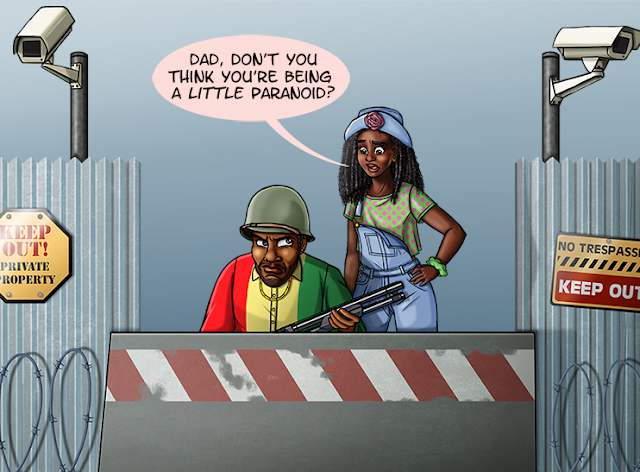
 
The Between by Tananarive Due

The Between by Tananarive Due

Formats: Print, digital

Publisher: Harper Collins

Genre: Psychological, Thriller

Audience: Adult/Mature

Diversity: Black Characters (African American and Ghanaian) and author, Hispanic/Latino character (Puerto Rican), Character with possible Mental Illness

Takes Place in: Miami, Florida, USA

Content Warnings (Highlight to view): Animal Abuse, Animal Death, Child Abuse, Child Death, Death, Drug Use/Abuse, Gaslighting, Homophobia, Mental Illness, Racism, Rape/Sexual Assault mentioned, Stalking, Slurs, Suicidal thoughts, Verbal/Emotional Abuse 

Blurb

When Hilton was just a boy, his grandmother sacrificed her life to save him from drowning. Thirty years later, he begins to suspect that he was never meant to survive that accident, and that dark forces are working to rectify that mistake.

When Hilton’s wife, the only elected African-American judge in Dade County, FL, begins to receive racist hate mail, he becomes obsessed with protecting his family. Soon, however, he begins to have horrible nightmares, more intense and disturbing than any he has ever experienced. Are the strange dreams trying to tell him something? His sense of reality begins to slip away as he battles both the psychotic threatening to destroy his family and the even more terrifying enemy stalking his sleep.

Chilling and utterly convincing, The Between follows the struggles of a man desperately trying to hold on to the people and life he loves, but may have already lost. The compelling plot holds readers in suspense until the final, profound moment of resolution.

I admit, I’m a huge Tananarive Due fan. I love her books, I love her academic work, I love reading her tweets, and I especially love how she’s always willing to share her wisdom and encourage other writers. When I was watching Black horror films for my Horror Noire timeline and Morbidly Beautiful review Due was kind enough to engage with me on Twitter and offer movie recommendations, insights, and feedback for my articles. Here was this amazing author who I admired so much not only chatting with me about our shared love of horror, but taking the time to help me out! If I ever get the chance to meet her in person, I’d probably faint. Needless to say, trying to pick a book to review by one of the most influential Black horror authors out there was a daunting task. Should I write about one of her best-known novels, My Soul to Keep from the popular African Immortals series? Or should I review my personal favorite, The Good House (which I’ve been known to throw at random friends and family members, insisting they read it)? After much back and forth, I finally decided I should start at the beginning and shine the spotlight on her very first novel which doesn’t get nearly as much recognition as it deserves: The Between. This award-winning psychological thriller stars family man Hilton as he loses his grasp on reality while watching his perfect life fall apart after his wife, Dede, receives a racist death threat at her job. In addition to being a truly creepy piece of speculative fiction, it’s also nice to see such a strong, loving, successful Black family dealing with issues like code-switching in a mostly white neighborhood, the Black community’s views on homosexuality and mental illness, and the differences in culture between Africans and Black Americans.

Before diving into the plot of Due’s very first novel, let’s have a quick physics lesson because I can’t review a sci-fi story without at least a little bit of science. Many of you may already be familiar with the many-worlds theory: an interpretation of quantum physics which essentially states that everything that could have possibly happened, but did not, has occurred in a different, alternate timeline, creating a vast multiverse where universes branch into more universes with each possible outcome. For example, flipping a coin would create two separate universes, one where it lands on heads and another where it lands on tails. Some of these universes would be nearly identical to our own, like the two timelines seen in the movie Sliding Doors, while others would hardly be recognizable, like the alternate history in The Man in the High Castle by Philip K Dick where the allies lose WWII, or the two-dimensional world from Edwin Abbott Abbott’s satirical novella, Flatland. However, we are only capable of perceiving the universe that we’re currently in. That’s the main, overly simplified, gist of it anyway. Here’s a great video that further explains this complex concept in an easy to understand way. Now you can impress your friends with your physics knowledge!

The many-worlds theory is especially popular with science and speculative fiction writers and shows up in everything from novels (Mid-World from Stephen King’s Dark Tower series) and comics (the Bizarro World in Superman) to films (Spider-Man into the Spider-Verse) and TV shows (Star Trek‘s Mirror Universe). The Between differs from most of these examples because, in true Schrödinger’s cat fashion, a multiverse may or may not play an important role in the book, and it all starts when Hilton’s grandmother dies the first time. Seven-year old Hilton James discovers his Nana’s cold, dead body on the kitchen floor and runs to get help, only to return and discover she’s alive and well. Her second, and final, death occurs when she drowns trying to save him. Struggling with survivor’s guilt, Hilton becomes obsessed with saving everyone and grows up to run a rehab clinic for low-income people suffering from drug addiction. While a noble calling, spending his every waking moment helping the less fortunate at the expense of him family puts a serious strain on Hilton’s relationship with his wife, Dede, whose jealousy causes her to suspect the worst. Worse still, Hilton is plagued by morbid nightmares in which a voice asks him “How many times do you think you can die?” Believing “we’re always closest to death when we sleep” the nightmares result in somniphobia and severe insomnia. Marriage counseling improves his relationship with his wife, and hypnotherapy helps Hilton sleep, but his nightmares soon resurface with a vengeance after Dede receives a racist, threatening letter shortly after being elected as a judge. Seemingly prophetic dreams full of his Nana’s decaying corpse, his children dying, and his own, mutilated body telling him he’s running out of time plague Hilton until he starts staying up all night, wandering the house, rather than returning to his cadaver-filled dream land. Unsurprisingly, Hilton’s mental health takes a turn for the worse.

Seemingly unsatisfied with simply haunting Hilton’s nightmares, portents of death start appearing to him during the day. After waking up with a sense of dread, Hilton insists the family go to church, only to be met with a new preacher ranting about the water of life from Revelations and meeting Jesus when you face eternity. Cheerful! The day gets worse when his young son, Jamil, is traumatized after witnessing some older boys kill a duckling. Then, Hilton accidentally rear-ends a hearse because the universe is not fucking around with the foreboding omens. A few days later, his adolescent daughter, Kaya, has her first period which Hilton’s commemorates by taking her to the hospital to meet one of his clients, Antoinette, a teenage girl dying of AIDS. I know I’m not a parent, but I feel like reminding your child of their own impending mortality is probably not the best way to celebrate their menarche. And just to make sure Hilton really gets it, because Death doesn’t do subtle, they’re stopped by a funeral procession on their way back from seeing Antoinette. Did I mention it’s raining? Of course it’s raining. I’m surprised a murder of crows didn’t fly overhead and blot out the sun while chanting “doooooooom”. No wonder Hilton becomes convinced Death is stalking him. The symbolism may seem heavy handed, and in the hands of a less talented writer would’ve come off as cheesy, but in Due’s case it works incredibly well to emphasize the depths of Hilton’s paranoia and his loosening grip on reality and set up two equally creepy explanations for what’s happening.

 
Death, represented by a skeleton wearing a dark robe, is hiding behind a tree in a park so they can spy on Hilton. Death is snickering. Hilton, a middle-aged Black man wearing a brightly colored 90’s shirt, is in the foreground looking nervous and shuddering. He doesn’t see Death, but he senses them.

What I imagined Death doing throughout the book

It’s implied that Hilton is a “traveler”, someone with the ability to escape death and bad decisions by traveling through “doorways” from his current reality to one with a more favorable outcome. It’s how he brought Nana back to life and survived drowning as a child. He does it again when he rear-ends the hearse to save his family. Of course, not every timeline he jumps into is exactly identical. Hilton begins to notice more and more inconsistencies in his everyday life, from events that repeat themselves to encounters that seemingly never occurred no matter how clearly he remembers them and even visions of deaths that never happened. On top of this, you can only cheat the system for so long before you get caught. Some unknown force, sensing that Hilton isn’t supposed to be alive, is making subtle alterations to the timeline to “correct” this. Between his menacing nightmares and threatening letters that continue to arrive at Dede’s office, and eventually their home, Hilton’s concern for his family’s safety warps into full blown paranoia. Even after putting his children under lockdown, buying a rifle, security lighting, and a guard dog, Hilton continues to see danger around every corner, thanks in no small part to his lack of sleep. He goes from his normal calm and sensitive self to a scared, angry man who lashes out at his family and friends.

Hilton may see signs that Death is lurking around every corner, but the rest of his family isn’t making the same connection between a dead duckling and their patriarch’s distracted driving. Maybe something supernatural is going on and the universe is trying to send the poor man a warning about abusing the natural order of things, but there’s also a strong argument to be made that Hilton is merely suffering from Apophenia, assigning meaning to unrelated coincidences. Apophenia is also a major symptom of paranoid schizophrenia, along with a fear that someone or something is out to get you, an inability to tell what is and isn’t real, a voice (or voices) in your head, and major changes to mood and sleeping habits, all of which Hilton has started to display. Those prone to schizophrenia can have a psychotic episode triggered by a stressful life event, like, say, having a racist stalker sending threatening letters to your wife.

Hilton is crouched behind a cement and barbed wire barrier, surrounded by security cameras and “Keep Out” signs. He’s wearing an army helmet and holding a rifle, ready to shoot any intruders. His teenage daughter stands behind him looking concerned, and asks “Dad, don’t you think you’re being a little paranoid?”

The Between is set in the 90’s, but all my memories of that particular decade seem to be either Pokémon or Harry Potter related and I don’t really remember what we were wearing back then. So I just put Hilton and his daughter in 90’s sitcom clothes and called it a day.

As we watch Hilton’s mind unravel as he desperately tries to prevent some horrible, unknown disaster he’s convinced will happen, there’s a strong sense of urgency and dread. However, it’s unclear if supernatural forces are at work and Hilton is the only person who can see the truth, or if he really is just paranoid and his visions are a result of his fears made manifest by mental illness. Are his lapses in memory and reoccurring nightmares a result of a mental illness combined with guilt, or some sort of supernatural force?  Is the racist stalker leaving poison pen letters for his wife the only thing threatening Hilton’s family, or is Death playing a drawn out game of Final Destination? Will he lose everything due to a curse, or his own actions? With the line between dreams and the real world becoming more and more blurred, it’s difficult for the reader to determine how much of what happens is in Hilton’s head, and whose version of reality is the truth until the very end. Hilton is not the most reliable of narrators, making it difficult to determine whether or not something supernatural is going on, but like The Turn of the Screw, not knowing if it’s the narrator’s sanity slippage or the work of spirits is part of the appeal and both possibilities are equally terrifying. Due hit the ground running with her very first novel and her fiction has only gotten better from there.

Horror Noire: Blacks in American Horror Films from the 1890s to Present by Robin R. Means Coleman

Formats: Print, audio, digital

Publisher: Erewhon Books

Genre: type here

Audience: Adult/Mature

Diversity: type here

Takes Place in: type here

Content Warnings (Highlight to view): content warnings

Blurb

Ji-won’s life tumbles into disarray in the wake of her Appa’s extramarital affair and subsequent departure. Her mother, distraught. Her younger sister, hurt and confused. Her college freshman grades, failing. Her dreams, horrifying… yet enticing.

In them, Ji-won walks through bloody rooms full of eyes. Succulent blue eyes. Salivatingly blue eyes. Eyes the same shape and shade as George’s, who is Umma’s obnoxious new boyfriend. George has already overstayed his welcome in her family’s claustrophobic apartment. He brags about his puffed-up consulting job, ogles Asian waitresses while dining out, and acts condescending toward Ji-won and her sister as if he deserves all of Umma’s fawning adoration. No, George doesn’t deserve anything from her family. Ji-won will make sure of that.

For no matter how many victims accumulate around her campus or how many people she must deceive and manipulate, Ji-won’s hunger and her rage deserve to be sated.

A brilliantly inventive, subversive novel about a young woman unraveling, Monika Kim’s The Eyes Are the Best Part is a story of a family falling apart and trying to find their way back to each other, marking a bold new voice in horror that will leave readers mesmerized and craving more.

To celebrate the release of the Horror Noire on Shudder last month, and the recent premiere of Jordan Peele’s sophomore film Us, I decided to read Dr. Robin R. Means Coleman’s book on which the documentary is based. I’ve already reviewed the documentary over at Morbidly Beautiful, so I won’t rehash it too much here, but suffice it to say it’s a MUST watch for any horror fan. With interviews from Black horror directors, writers, actors, and academics, it’s wonderful to see so many Black voices all sharing their experiences and voicing their opinions on famous Black horror films. The only downside is the limitations of the medium, that is, the documentary just doesn’t have the time to go into the full history of Black horror or discuss every Black horror movie. Which is why you should definitely read the book! Horror Noire: Blacks in American Horror Films from the 1890s to Present (or at least the aughts, when the book was published) gets to fully explore all the fun details that couldn’t be included in the documentary, from the birth of zombie movies to the evolution of Black women in horror from eye candy to demon slayers.

Using Dr. Coleman’s book as a basis, I’ve created a timeline of over thirty Black horror films that I feel best illustrate the evolution of Black representation in American horror films. For a more in-depth study into the topic (and a list of recommended viewing and reading), check out this great Horror Noire Syllabus created by Dr. Coleman, Tananarive Due, and the Graveyard Shift Sisters.

The Undertaker’s Daughter (1915) – The Lubin Manufacturing Company used Black actors in their horror comedy short, The Undertaker’s Daughter. Prior to this, Black characters were almost exclusively played by White men in Blackface who portrayed them as lazy, foolish, and cowardly for comedic effect. These racist caricatures, commonly known by the dehumanizing slur “coon”, were a mainstay in minstrel shows, and appeared in films produced and written by Whites for White audiences.

Birth of a Nation (1915) – In 1915 the White supremacist propaganda film Birth of a Nation was released with president Wilson’s endorsement. This time Black men were not merely portrayed as lazy buffoons, but violent, lecherous creatures who preyed on White women, a dangerous stereotype that had already resulted in the murders of thousands of Black men and children. Lynching for “eye rape” would continue well into the 1950s [1]. The image of the predatory Black man popularized by Birth of a Nation would continue to appear as a horror film “monster” for decades to come as White men lived out film fantasies of violently protecting damsels in distress.
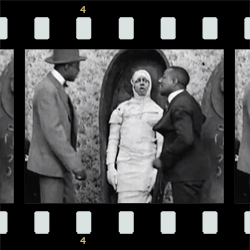
Shadowed by the Devil (1916) –  In response to the blatantly offensive depictions of African Americans in Birth of a Nation Black-owned film studios like the Lincoln Motion Picture Company and Frederick Douglass Film Company were founded to tell positive Black stories by and for Black people. Called “race films,” these movies featured all Black casts portraying complex, realistic characters. One such race film, the now lost Shadowed by the Devil, is a frightening morality tale that focused on what it means to be a good person. Sadly, most of these studios would go under during the Great Depression.

Mercy, the Mummy Mumbled

Mercy, the Mummy Mumbled (1918) – The Ebony Film Corporation, a White-owned company, attempted to cash in on Black audiences by producing their own “race films” which included five comedy horror shorts. Unfortunately, Ebony relied on tired, racist tropes for their humor which outraged Black viewers and prompted complaints in the Chicago Defender, a popular Black newspaper.

A Son of Satan (1924) – Oscar Micheaux, founder of the Micheaux Film Corporation, was the first Black feature filmmaker in America. He made over forty films during his thirty-year career. His “fright films” more closely resembled “true” horror movies. Micheaux cleverly booked and advertised A Son of Satan without approval from the Virginia film board (who objected to scenes of Black men “carousing,” murder, and the killing the leader of “a hooded organization,” a thinly veiled allusion to the Klan), in order to avoid censorship of his movie and maximize profit.

Black Moon (1934) – From 1915 to 1934 the US military forcibly occupied Haiti. White Marines ignorantly viewed the Haitian’s religious practices as primitive and evil, and shared outlandish stories about human sacrifice, cannibalism, and raising the dead when they returned home. These fantastical accounts would inspire the “Voodoo” and jungle films of the 1930’s where “savage natives” controlled zombies and threatened the virtue of beautiful White women.  In Black Moon, the White Juanita is so corrupted by Black culture that she goes insane and her husband is forced to kill her.

Chloe, Love is Calling You

Chloe, Love is Calling You (1934) – In the Voodoo horror film Chloe, Love is Calling You the titular White-passing Chloe is cast as a tragic heroine because she’s biracial. She’s often threatened by the Black men who either want to rape or sacrifice her, and is so disgusted by her own alleged Blackness that she frequently flies into hysterics and throws herself into danger. The moment Chloe discovers she’s actually White she abandons the Black “mammy” who raised her without a second thought. Even though the film does not shy away from discussing racial violence and lynchings, it still implies Whiteness as superior and condemns any Black people who desire revenge for the treatment they’ve received.

The Devil’s Daughter (1939) – “Jungle Films” portrayed Black Americans as more intelligent, sophisticated and “loyal” to Whites than Voodoo practicing Africans and Caribbeans. The Devil’s Daughter, which was targeted towards Black audiences, pit the Jamaican daughter of a Voodooist against her Harlemite half-sister for control of their family plantation. The sister from Harlem is cosmopolitan and bourgeois, but gullible and out-of-touch with her roots, while the Jamaican sister is rough around the edges but more down-to-earth. In the end the two women come to a mutual understanding and respect.

Son of Ingagi

Son of Ingagi (1940) – The original Ingagi was a racist exploitation film billed as an African documentary that implied that Congolese women bred with gorillas to produce monstrous hybrid offspring. African American actor Spencer Williams Jr. wanted to create a film with better representation for Black audiences so he wrote and starred in Son of Ingagi, the first science fiction horror film to feature an all-Black cast [2]. Unlike its “prequel,” the gorilla in Williams’ film was just a monster, not a metaphor, and the movie’s Black stars were cast in more distinguished roles. Williams plays a detective, while actress Laura Bowman portrays Dr. Helen Jackson, a brilliant and wealthy researcher.

The Blood of Jesus (1941) –  In addition to writing and producing several race films, Spencer Williams Jr. also directed the religious morality horror movie The Blood of Jesus. In it, the pious Martha is tempted by a demon who shows her the excitement of Northern city life. She ultimately rejects the flashy clothing and jive in favor of her more modest and virtuous Southern lifestyle, thus saving her soul from damnation. The moral superiority of Southern Blacks compared to their “sinful” Northern cousins was a frequent theme in religious horror movies.

King of the Zombies

King of the Zombies (1941) – As the popularity of horror films was waning, most likely due to the very real horrors of WWII, so too were opportunities for Black actors in film. Many found themselves choosing between playing a comedic coon archetype in roles reminiscent of Minstrel Shows or going without work. Mantan Moreland was one of many Black actors who made a successful career out of playing such characters in horror comedies like King of the Zombies, and he was frequently cast in central roles, receiving top billing next to his White costars. But his fame came at the cost of furthering harmful Black stereotypes.

Monster from Green Hell (1957) – Xenophobia and Cold War fears shaped the horror films of the 1950s, which were filled with extraterrestrial invaders and science experiments gone wrong, but very few Black characters. Even though roles were scarce, Black actors like Joel Fluellen still advocated for better representation in film and TV. In Monster from Green Hell, Fluellen’s character, Arobi, is an intelligent and well-spoken African man whom the White scientists respect and consult for advice. While the film is still deeply problematic Fluellen proved that Black actors could play important roles in horror movies without relying on tired, racist tropes.

The Leech Woman (1960) – As hard as it was for Black actors to find work, it was even harder for Black actresses. It was especially rare for Black women to land a central role in a White film. In The Leech Woman, Estelle Henry plays Malla, a 152-year-old former slave whose people hold the secret to eternal youth and long life. Malla’s character was still saddled with stereotypes, being African made her “exotic” and knowledgeable about magic, but she was also progressive in her own right. A smart, tough, fierce feminist, Malla protested the ageism shown to older women and convinced a sleazy White doctor to pay for her trip back to her homeland.

Night of the Living Dead

Night of the Living Dead (1968) – The same year the Civil Rights Act was signed into law, George Romero released his revolutionary zombie film, Night of the Living Dead. The low-budget flick starred African-American actor Duane Jones as its protagonist Ben, the very first Black lead in a horror film not targeted solely to Black audiences. Ben was no frightened Stepin Fetchit or voodoo priest, but a charismatic and confident survivor whose quick thinking and coolness under pressure keep him alive until the end of the film. Equally remarkable, the zombies Ben fights aren’t the result of Voodoo or African magic, but were instead reanimated by space radiation. When Ben finally does meet his demise, it’s at the hands of a White (living) mob, an all too familiar image for Black audiences, especially during the 1960s. The film was a box office success, largely due to its popularity with Black moviegoers.[3] This would lead to a series of sequels, which also featured Black characters in important roles.

Blacula

Blacula (1972) – During the 70’s a sub-genre of the exploitation film emerged called Blaxploitation. These movies, often created by White writers and directors for Black audiences, drew inspiration from Black power ideologies and frequently centered around overcoming White oppressors.  Unfortunately, the genre was also deeply homophobic, exploitative of women, and condemned by many Black organizations for its use of criminal stereotypes. Blacula was the first, and most famous blaxploitation horror film, about an erudite African prince who is transformed into a vampire and ironically begins to prey on Black communities. The film’s success lead its production company, AIP, to continue creating Black horror films.

Ganja and Hess (1973) – The art house film Ganja and Hess starred Duane Jones –of Night of the Living Dead fame — as Dr. Hess Green, a wealthy archaeologist. Dr. Green’s sophistication and elegance made him the polar opposite of the hypermasculine, violent men in Blaxploitation films who earned their money through illegal means. Despite winning the critic’s choice prize at the Cannes film festival, Ganja and Hess’ producers were unhappy with the movie and suppressed it. They had wanted something similar to Blacula, and weren’t sure what to do with a vampire story about addiction that lacked the Blaxploitation tropes with which audiences were familiar.

Scream, Blacula, Scream

Scream, Blacula, Scream (1973) –  While White “final girls” were portrayed as virginal and pure, Black heroines were hypersexualized for a straight, male audience. So it was unusual when Pam Grier, who was frequently cast as a seductive sex idol in other Blaxploitation films like Foxy Brown and Coffy, got to play a conservatively dressed heroine named Lisa in Scream, Blacula, Scream. Lisa is elected leader of her Voodoo group, and uses her skills to try and free Blacula from the curse placed on him by the White Dracula. She is also a protector who saves her boyfriend from the angry vampire.

Abby (1974) – Abby is a low-budget Exorcist knock-off that was, as the New York Times put it, “more silly than shocking” and never quite reached the levels of cult classic that Blacula did. The titular Abby, a pious minister’s wife, becomes possessed by a being claiming to be the Yoruba Orisha, Eshu. Unlike Pazuzu from The Exorcist, Eshu seems more interested in sex and swearing than destruction, which leads to some very silly scenes. Even though the being possessing is supposedly Yoruba in origin, African religious beliefs are never condemned or portrayed as evil, and the film makers clearly put effort into their research. Eventually, the heroes use a combination of Christian and Yoruba beliefs to free Abby.

Sugar Hill

Sugar Hill (1974) – Diana “Sugar” Hill is the perfect example of the regressive treatment Black women often received in Blaxploitation films. After the murder of her boyfriend at the hands of a “Whitey” crime boss, Sugar is desperate for revenge, but unable to seek it without help. She makes a deal with Baron Samedi, the Vodou loa (god) of death and sex, offering herself in exchange for the murders of those responsible for “killing her man.” Sporting tight, revealing outfits, Sugar seduces and tempts her victims before Samedi’s zombies kill them off, wielding her sexuality like a weapon. She also spends most of the film flirting with her ex-boyfriend implying Sugar cannot be without a man.

The Shining (1980) – By the eighties, blaxploitation had fallen out of favor, and when Black actors did appear in film, they were surrounded by Whites and White culture, and paired up with White actors in “buddy films”. Horror films were no exception, and Black characters were reduced to sacrifices so their White friends could survive. An example of this is Dick Halloran, played by Scatman Crothers, in Stanley Kubrick’s The Shining who is pointlessly killed while attempting to aid the film’s White family. Even worse, Dick is also a “Magical Negro” a wise Black man with magical powers who exists only to help the White characters with their problems. Magical negroes arose from a misguided attempt by White writers and filmmakers to counter traditional racist tropes. Unfortunately, all this did is create new stereotypes.

The Thing

The Thing (1982) – In John Carpenter’s The Thing, Keith David’s character, Childs, shares many similarities to Ben from Night of the Living Dead. Instead of being a “scared negro” or self-sacrificing Black, both characters are distrustful, resourceful hot-heads who question the authority of the White men they’re trapped with and live to the end of the film. But while Ben has only just met his fellow zombie survivors and has no reason to trust them, Childs has presumably worked alongside and lived with his colleagues for months, yet is still cold to them. The hostility amongst the group could be explained by both racial and class tension. By the end of the film, Childs and Kurt Russell’s character, MacReady, are presumably the only two survivors and now on equal footing.

The Serpent and the Rainbow (1988) – Although The Serpent and the Rainbow does have a more accurate representation of Vodou than most movies (at least the ones not targeted to Black audiences), its portrayal of Haitians is hardly a step up from the jungle films of the 30s. Despite taking place in Haiti and centering around a Black religion, the protagonist is a White man named Dennis who plans to take “zombie powder” back to the States for a pharmaceutical company. Dennis is perfectly willing to appropriate a cultural practice for profit, which he has no intention of sharing with the Haitians who aid him, yet he’s still cast as a hero. Throughout the film “evil” Haitians use Vodou to harass and threaten Dennis in an attempt to make him return home without the drug.

People Under the Stairs

The People Under the Stairs (1991) – In the eighties, urban areas were portrayed as violent, drug stricken, impoverished, and largely inhabited by Black Americans, which led to White flight to wealthy suburbs and a new form of segregation. In Wes Craven’s The People Under the Stairs, a Black child from the ghetto becomes trapped in a suburban mansion belonging to a pair of serial killer slum lords. The incestuous couple, known only as Mom and Dad, are able to conceal their crimes and depravity because they are wealthy and White. Even when police are called to investigate the couple’s home, they perform only a precursory search and leave without suspicion, never noticing the basement full of dead bodies and kidnapped, tortured children.

Candyman (1992) – Clive Barker’s Candyman film was another movie that exploited fears of the inner city, combined with the threat of a supernatural killer like Freddy Krueger and Jason Voorhees. The Candyman, played by Tony Todd, was the vengeful spirit of a Black artist from the late 1800s who was tortured and lynched after falling in love with a White woman. Strangely, he chooses to prey on a poor, Black community rather than seek revenge on wealthy Whites like the ones who killed him. Unlike other Black monsters, Candyman was suave, sophisticated, and even sympathetic, but he still played on fears of the Black Boogeyman by lusting after the White female protagonist. Equally problematic, the White woman gets to be the film’s hero, saving the poor, Black characters who literally turn to her as a saint and savior.

Tales from the Hood

Tales from the Hood (1995) – While the name of the anthology brings to mind the campy and often humorous TV series Tales from the CryptTales from the Hood is actually a sobering, social commentary in the same vein as other morality horror films about retribution. In a subversion of the Voodoo films from the thirties, zombies and Vodou are used as protection against the real monsters, racist politicians, corrupt cops, violent gangs, and abusers. While the movie does contain plenty of strange creatures and cheesy special effects, it’s the real-world imagery that’s truly frightening; a Black man getting violently beaten and murdered by cops while Billy Holiday’s Strange Fruit plays hauntingly in the background, flashes of grainy photos showing lynchings, or a child cowering as his mother is beaten bloody by her boyfriend.

Beloved (1998) – Based on the Pulitzer prize book of the same name and boasting an all-star Black cast including Oprah Winfrey and Danny Glover, the Southern Gothic film Beloved was praised by critics and audiences alike, a rare feat for a horror film. Instead of relying on zombies or supernatural killers for cheap thrills, the movie’s terror came from its uncompromising depiction of slavery and the painful legacy it leaves. Previously, Voodoo films had simply glossed over the cruelty that had brought Blacks to America and the Caribbean, preferring to further a colonial fantasy of Whites “civilizing” Africans.

Bones (2001) – Rap music has long been influenced by, and paid tribute to, horror from Will Smith’s family friendly Nightmare on My Street in 1988 to the successful horrocore hip hop band Geto Boys in the 90’s. Rappers, like Ice-T and Coolio, even began acting in horror films.[4] So it should come as no surprise that the music genre would eventually inspire horror. One of the few hip-hop horror movies to have a theatrical release was Snoop Dogg’s Bones, directed by Ernest Dickerson of Juice fame. The movie was an homage to Blaxploitation films, and boasted Pam Grier as the love interest of Snoop’s “gentleman pimp” character, Jimmy Bones.

Alien vs Predator

Alien vs Predator (2004) – Black women were beginning to appear more frequently in horror films, and not just as the Seventies sex pots or victims, but as surviving women who fought monsters. In Tales from the Crypt: Demon Knight, another Ernest Dickerson movie, Jada Pinkett defied audience expectations by not only surviving but becoming the movie’s heroine despite pressure from the studio to cast a white actress as the “final girl.” In the first crossover film of the Alien and Predator franchises Lex, played by Sanaa Lathan, is not only a “final girl,” surviving attacks from both alien species, but a bad-ass action heroine. Lex becomes the first human in the Predator films to earn the honor of being marked as a warrior by a Predator after she helps him to kill three Xenomorphs, something not even Schwarzenegger could accomplish.

Bloodz vs Wolvez (2006) – The aughts would see the release of dozens of low-budget, direct-to-DVD hip hop horror movies. The films were aimed at younger audiences and often used postmodern spelling like Vampz or Cryptz.  In one such movie, Bloodz v. Wolvez a vampire king named Asiman is attempting to broker a peace between two rival gangs, the working class werewolves (Wolvez) and the wealthy vampires (Bloodz). The sophisticated vampires look down on the Wolvez while also envying their ability to walk in the daylight, while the werewolves view the Bloodz with contempt for assimilating with humanity and acting superior. But even with the all the wealth and power Asiman has acquired since escaping slavery centuries ago, he is still seen as “lesser” by Whites, as is highlighted when a White patron of the vampire king’s club asks him to caddy for him in a golf game.

Attack the Block

Attack the Block (2011) – At first glance it appears that John Boyega’s character in Attack the Block, Moses, will be a threatening “Black boogeyman” type character after he robs a White woman, or perhaps a Blaxploitation-style glamorized criminal. Instead, Moses is a complex, flawed character who cares deeply about his “block,” is protective of his friends, and struggles with his anger and impulsiveness. A Black girl rightfully calls Moses out for robbing an unarmed woman, but also confronts his victim about her privilege and calling the police on Black teenagers. The two end up cooperating to defeat an alien attack that threatens their impoverished neighborhood.

The Girl with all the Gifts (2016) – The film takes place in a near-future dystopia where humans have been driven underground by a pathogenic fungus that turns people into zombies called “Hungries.” A group of hybrid children, who crave living flesh like the Hungries but retain their human intelligence and emotions, are being used to create a cure. While Melanie, an especially intelligent and gifted hybrid child is initially happy to cooperate with the soldiers and scientists who hold her captive, she refuses to let herself be killed to develop a cure. While the older generation sees the hybrid children as monsters to be cured or controlled, Melanie realizes that she and the others are merely a new species, who have just as much right to live and thrive as humans. Like with Night of the Living Dead, the role of Melanie in The Girl with all the Gifts was not specifically written for a Black actor, it just so happened that Sennia Nanua had the best audition, but by casting a Black lead the film gained added social commentary.

Get Out

Get Out (2017) – Jordan Peele became the first Black person to win an Academy Award for Best Original Screenplay with his groundbreaking Black horror film, Get Out. Rich with imagery, the movie centers around racism in America and Black fears, making subtle references to past and present atrocities such as slave auctions, medical experimentation on Black people, and police brutality. It also turns the “Black buck” trope on its head. The protagonist, Chris, is never portrayed as sexually aggressive. Instead, it’s the sociopathic White woman who preys upon Black men by seducing them and hunts Chris down with a shotgun. This inversion of horror movie cliches is further underlined by the dead deer (aka Bucks) displayed around the White family’s luxuriant home. The film also introduced audiences to “The Sunken Place,” a literal pit of despair that leaves its victims trapped, silenced, and powerless, the perfect metaphor for the feeling of helplessness Black people experience living in a world where they’re constantly oppressed and surrounded by racism[5].

The First Purge (2018) – The Purge franchise is about a near-future totalitarian America where once a year all crime, including murder, is legal for a 12-hour period. The First Purge, the prequel to the series, focuses on the initial experiment which eventually leads to a Nationwide Purge. With echoes of the Tuskegee syphilis experiment, the detached, white scientists purposely target low income minorities for their unethical study. When the White men running the political party funding the purge sees that the Staten Island residents aren’t killing each other like they’d hoped, they send in masked mercenaries dressed as Klansmen and Nazis to slaughter the poor to make their experiment seem successful. They even enter a Black church to slaughter everyone seeking shelter inside.

Us (2019) – Jordan Peele’s sophomore film was another critical and commercial success for the director, proving once again that Black stories can be just as loved and popular as White ones. Peele not only produced another unique horror film, but demonstrated that Black horror isn’t limited to racial commentary. Black history and Black horror are inextricably linked, and many popular Black horror films like Get Out, Beloved, Tales from the Hood, etc. draw on the very real horrors of White supremacy to elicit terror from their audiences. In many ways, Black horror is a form of catharsis, vividly depicting Black pain but also showing its heroes fighting back and even defeating more tangible monsters. But limiting Black stories to tales of American racism and oppression can also be problematic. Us is still very much a Black narrative, steeped in Black culture, but without Whiteness defining the characters or story.

All the films on this list are available to own, rent and/or watch online with the exception of The Undertaker’s DaughterShadowed by the Devil, and A Son of Satan which are, sadly, lost films. Mercy, the Mummy Mumbled can be viewed on YouTube, but is badly degraded.

References
1. https://www.pbs.org/wgbh/americanexperience/features/emmett-lynching-america/
2. https://www.allmovie.com/movie/son-of-ingagi-v45617/review
3. https://www.jstor.org/stable/1225699?seq=1#page_scan_tab_contents
4. http://www.blackhorrormovies.com/rappers/
5. https://www.huffingtonpost.com/entry/get-out-what-black-america-knows-about-the-sunken_us_58c199f8e4b0c3276fb7824a

Tags:
The Mine by Arnab Ray

The Mine by Arnab Ray

Formats: Print, digital

Publisher: Westland (Indian publisher now owned by Amazon)

Genre: Blood & Guts (Gorn), Psychological Horror, Occult

Audience: Adult/Mature

Diversity: South Asian/Desi/Indian, Disabled character (uses a wheelchair due to partial paralysis, mute/Aphonia)

Takes Place in: Thar Desert, Rajasthan, India

Content Warnings (Highlight to view): Abelism, Bullying, Cannibalism, Child Abuse, Child Death, Child Endangerment, Death, Drug Use/Abuse, Forced Captivity, Illness, Gaslighting, Gore, Kidnapping, Medical Torture/Abuse, Medical Procedures, Mental Illness, Self-Harm, Rape/Sexual Assault, Sexism, Slurs, Slut-Shaming, Stalking, Suicide, Torture, Violence, Xenophobia

Blurb

At a secret mining facility somewhere in the deserts of Rajasthan, an ancient place of worship, with disturbing carvings on its dome, is discovered buried deep inside the earth. Soon the miners find themselves in the grip of terrifying waking nightmares. One tries to mutilate himself. Worse follows.

Five experts are called in to investigate these strange occurrences. Sucked into a nightmare deep underground, they embark on a perilous journey; a journey that will change them forever, bringing them face-to-face with the most shattering truth of them all…

The greatest evil lies deep inside.

Imagine combining Event Horizon with Agatha Christie’s And Then There Were None then mixing in the criminally underrated film Below. Set it in a mine deep below the Great Indian Desert and you’ll get an idea of what you’re in for in Arnab Ray’s horrifying, claustrophobic, sex-filled gore-fest of a novel about five adults and one little girl trapped underground with their guilt.

The Mine starts out with Samar, a rich recluse specializing in industrial security, wallowing in his grief after the disappearance of his daughter and the death of his wife. Yeah, Samar has shit luck. A mysterious man named Arnold Paul (whose name I kept reading as Arnold Palmer) finally bribes convinces Samar to drag his depressed butt out of bed by offering him a large sum of money to go with him and do a sketchy job, the details of which Paul/Palmer won’t reveal. Samar is apparently used to this sort of thing due to his work as a security expert/spy for secret government ops, and figures he wasn’t doing anything important anyway (except moping and sleeping) so he begrudgingly accepts the offer and heads off for the titular mine. As it turns out, greed is a great motivator because Mr. Paul/Palmer has also convinced four other experts to go to the middle of nowhere with a complete stranger, no questions asked.

Joining Samar are Dr. Karan Singh Rathore, a diplomatic and laid back older gentleman who specializes in infectious diseases; Dr. Anjali Menon, a widowed archeologist who brought her disabled daughter, Anya, along; Dr. Akshay More, an arrogant and obnoxious assistant professor in forensic toxicology; and Dr. Preeti Singh, a short-tempered psychologist with a surprising lack of people skills. The group has been brought together to give their expert opinion on a series of deadly accidents that seem to have been caused by the discovery of an ancient, creepy temple the miners are too afraid to go near. A temple that also happens to be covered in explicit carvings of naked women being tortured and killed, because whomever created the damn thing is sexist and gross. If that wasn’t ominous enough, the director of the mine is named Lilith Adams. While it’s fully possible her parents were just uncreative goths from the early 00’s, it’s far more likely that Ms. Adams just picked the most obvious evil pseudonym since Alucard and Lou C. Pher.

At this point, most people would’ve noped the fuck out of there, but Samar and the scientists have clearly never seen a horror movie in their lives and are too wrapped up in their own issues to notice the whole situation has more red flags than a May Day parade in Moscow. The mine could not be more obviously evil if it had “Gateway to Hell” in big florescent lights over the entrance, ominous music playing in the background, and a bunch of demons chilling in the conference room. Then again, these are people who willingly followed a creepy stranger into the middle of nowhere to visit his sketchy underground dungeon (literally, the workers are all criminals and aren’t allowed to leave until their contracts are up) because Paul/Palmer promised them candy/money. Little kids have more street smarts than this group, so I shouldn’t be surprised they’re completely oblivious to danger.

Illustration of a blood-spattered van bearing the name FREE CANDY and a South Asian man thinking

I mean, even I figured out the candy van was a trap after the first 9 or 10 times.

Akshay and Anjali explore the torture-porn temple and discover it depicts ironic punishments attributed to specific sins. Meanwhile, Karan and Preeti talk to the survivors, who share stories that would make Rob Zombie squeamish. Akshay makes light of the situation and acts like a jackass, Anjali does her best to ignore everyone and just do her job, Karan remains calm and reasonable, and Preeti is hostile and short-tempered. Samar checks the security and continues to have no fucks to give beyond a kind of creepy obsession with Anya, who reminds him of his dead daughter. The general consensus among the workers is that they’ve somehow opened a portal to hell and everyone in the mine is going to die horribly as a result of their dark pasts. Needless to say, company morale isn’t great. At this point, everyone finally agrees this place is super creepy and they want to collect their paychecks and GTFO. Alas, in a twist that should come as a surprise to exactly no one, Lilith turns out to be evil, and sets off an explosion that kills all the mine workers and traps the six survivors (Samar, the scientists, and Anjali’s daughter) inside while she laughs manically about the mine’s real resource being fear. Worst. Job. Ever.

Illustration of laughing woman surrounded by a man and woman. The man says

Her name is Lilith, what did you guys expect?

The explosions cause the security systems to engage, sealing the group inside with a series of death traps. Because why wouldn’t you want death traps in an already dangerous mine? On top of everything, an experimental gas that causes super human strength and insanity is being pumped through the A/C, which frankly, feels like overkill to me, but hey, they can run their portal to hell however they want. After their initial panic, presumably followed by the realization that they really should have seen all of this coming, the survivors formulate a plan to navigate the traps and make it to the surface. They’re slightly hindered by the fact they have to trust each other and work together to make it out, and most of them are deceitful, suspicious, assholes, not to mention all the stupid puzzle traps that were apparently inspired by 80s video games. One such puzzle involves trying to obtain acid vials while avoiding motion activated laser and an electrified floor, and if you succeed you’ll be rewarded with a chainsaw, which may be useful later. Unfortunately in this “game” their are no save points or extra lives.

What follows is about what you’d expect for a book about trying to escape from a possibly haunted mine with a bunch of jerks, but the predictability doesn’t make the story any less suspenseful or gripping. But face it, if you’re reading this book, you’re looking for creative deaths, not creative storytellin, and boy, does Ray deliver there. Besides, the true mystery doesn’t lie in their Aeneas-like journey through the mine, but in each character’s backstory, all of which are slowly revealed as they try to escape the subterranean deathtrap. Each of the adults has done something criminal and escaped punishment, and have been struggling with their guilt ever since. The quality of the backstories varies, with some characters (like Akshay and Preeti) getting plenty of focus, while Anjali gets very little characterization beyond “the aloof mom”. So too do their sins seem to be of differing severity. Some of the survivors have committed crimes so awful as to make them irredeemable, while others are more sympathetic and their sins, while still terrible, are still at least partly understandable. This disparity seems a little unfair as it means at least some of the group will potentially suffer a gruesome death (at least according to the carvings in the temple) over something that would normally earn them less than 15 years in prison (at least in the US, not sure about the Indian judicial system). It’s not that their crimes aren’t bad, they just don’t seem to merit a sentence of being reduced to a puddle of bloody viscera.

We never really learn if the mine is truly being controlled by a demonic entity or if the group’s guilt and paranoia (fueled by the hallucinogenic gas) is causing them to attribute bad luck to malicious forces and see things that aren’t there. Samar even suggests that the whole thing is an unethical experiment by the government to test their new gas on subjects no one will miss, as there are far too many coincidences for mere random chance, and the temple may be a fake created to amp up their fear levels. Since none of the characters are able to trust their own senses, making them unreliable narrators, arguments could be made for either scenario, making the story even more spooky and disturbing. Monsters are scary, but they’re even scarier when you can’t even tell if they’re real or simply the imaginary scapegoats of guilt-ridden, paranoid people. Even more frightening, Ray argues, are the depths of human cruelty and depravity, which are explored in each character’s backstory. Though that may just be an excuse to squeeze more gore out of the story.

The Mine does an excellent job balancing itself between psychological horror and splatterpunk. The true scares lie in the book’s creepy atmosphere, suspense, and the characters slowly succumbing to madness; the over-the-top gore is simply dessert. Unfortunately, this otherwise perfect blend of horror comes with as huge helping of misogyny. Yuck. Look, I’m fully willing to admit I’m part of the lowest common denominator who just wants to see heads exploding like overripe cherries and attractive people boning, but that doesn’t mean I like sexism. Unfortunately, more often than not, the three seem to go hand in hand, much to the frustration of female horror fans, and other, more enlightened individuals who just happen to like hot sex and lots of blood. Ray isn’t as bad some other authors out there, the violence is pretty evenly split between the genders and there aren’t any scenes of knife-wielding killers chasing half naked women. He even manages to handle the subject of sexual assault fairly well, choosing to focus more on the problematic culture of victim-blaming and men who feel entitled to women’s bodies rather than the rape itself. But he struggles with creating believable female characters, defining them by their relationships with men, and them victimizing them. Both of the female scientists have backstories that involve abuse and mistreatment at the hands of men, and instead of being written as strong, survivors, they both come off as bitter, man-haters. Apparently Ray subscribes to the theory that in order to be “strong” a woman must act rude, aloof, aggressive, and despise an entire gender, with the exception of that one special man who tames her with his magical penis. Which is why both Anjali and Pretti act like complete jerks, with Pretti especially flying off the handle at every perceived slight (she must be a great psychologist), and basically being awful to everyone except, ironically, Akshay whom she latches onto almost immediately (despite the fact that he’s literally just the worst). Despite all her bluster, Pretti still falls quickly into the role of helpless victim in need of a man’s protection at the first sign of danger. It’s really embarrassing. I guess she can’t help it because she’s an emotional female with a hysterical uterus or some such nonsense. The women in the story are all described as being gorgeous, but only one male character is described as being very attractive, the wholly unlikable Akshay, and that’s only because his appearance is supposed to reinforce how vain and materialistic he is. Many of the women are also incredibly horny, even minor characters, like Tanya the gold-digging nurse, and Ray paradoxically has no problem slut-shaming them for it (apparently enjoying sex is sinful enough to get you murdered by the mine), even though he later demonizes other characters for doing the same thing. Maybe the mine is just super slut shame-y. The unearthed temple certainly implies that someone behind the scenes hates women.

The women in the story seem less like real people and more like a weird combination of straw-feminists and male masturbatory material, with Ray putting way too much emphasis on their appearance, sex drives, and relationships with men. Then of course we have Anya, who, while thankfully not a sex object, is still treated as an object nonetheless. She barely gets any characterization, and doesn’t communicate even through sign language or writing, she’s just a blank slate for Samar to project his weird daughter obsession onto. It’s doubly problematic since Samar seems to use Anya’s disability as an excuse to treat her like a life-sized doll he can love, protect, and turn into his replacement daughter. Because she’s mute he assumes she has nothing to say, and because she doesn’t walk he thinks she’s completely helpless. We don’t even get to learn what she’s thinking, or how she feels about Samar treating her as some sort of second chance, because, unlike the other characters who all get their turn in the spotlight of the limited, third-person narrative, Anya is completely ignored. At least she gets a little bit of a role later on (which I won’t spoil). Miraculously, Lilith Adams is the only female character who is neither a victim, nor a sex fantasy, and is described only as being terrifying, intense, and very much in charge, much like her namesake.

A man kneels in front of a woman in a wheelchair. The man says

This definitely feels like a stranger danger situation.

So the female characters are about as well written as you’d expect from a male author who doesn’t know how women work, and the whole “helpless, sick wheelchair girl” trope is super problematic. It’s not the worst treatment of women I’ve seen in splatterpunk, but I’d still prefer to enjoy my blood and guts without the side of sexism. I mean, I don’t think it’s an unreasonable request. The writing is still pretty good, and it’s definitely the scariest book I’ve read so far this year. The Mine is also one of only a few Indian horror novels I’ve been able to find in English. Whether that’s enough to overshadow the book’s problem areas, however, is up to the individual reader. 

Ten by Gretchen McNeil

Ten by Gretchen McNeil

Formats: Print, audio, digital

Publisher: Harper Collins

Genre: Mystery, Psychological Horror, Killer/Slasher

Audience: Y/A

Diversity: African American character, Japanese American character, Asian American character, Samoan character, Bipolar character

Takes Place in: Seattle, USA

Content Warnings (Highlight to view):  Sexist Language, Abelist Language, Racist Language, Sexism, Mental Illness, Drug Use, Violence, Death

Blurb

SHHHH!
Don’t spread the word!
Three-day weekend. Party at White Rock House on Henry Island.
You do NOT want to miss it.

It was supposed to be the weekend of their lives—an exclusive house party on Henry Island. Best friends Meg and Minnie each have their reasons for being there (which involve T.J., the school’s most eligible bachelor) and look forward to three glorious days of boys, booze and fun-filled luxury.

But what they expect is definitely not what they get, and what starts out as fun turns dark and twisted after the discovery of a DVD with a sinister message: Vengeance is mine.

Suddenly people are dying, and with a storm raging, the teens are cut off from the outside world. No electricity, no phones, no internet, and a ferry that isn’t scheduled to return for two days. As the deaths become more violent and the teens turn on each other, can Meg find the killer before more people die? Or is the killer closer to her than she could ever imagine?

Ten is inspired by Agatha Christie’s bestselling mystery thriller, And Then There Were None, a tale of ten strangers with dark secrets trapped on an island with a killer who terminates them in ironic ways and publicly marks the deaths one by one. McNeil takes Christie’s original concept, sets it in modern times, changes the terrible, unlikeable adults into a bunch of terrible, unlikeable teens, does away with racism, xenophobia, and anti-Semitism, and replaces it with a diverse cast.

Like the original Christie novel, Ten starts off with ten (get it!?!) people gathering on a remote island under false pretenses only to discover that it was all a trick by the killer, who has kindly left them a Ringu-esque DVD (a gramophone record in the original) to inform the victims of their inevitable demises and remind them how shitty they all are (in case you started feeling bad for any of them). At first, no one believes the sketchy murder announcement is legit, at least until they start dropping like flies, and then all hell breaks loose. Both books involve distrust, everyone accusing each other, the fear of knowing there’s a wolf (or possibly wolves) hiding among the sheep, and of course, a party with a body count. Why do so many parties in these kind of stories end up with a bunch of dead guests? Does the Red Death just go around gate crashing every party in the horror genre? Why does every gathering of three or more people that involves alcohol inevitably end in someone’s demise? Being an introverted nerd who would rather gnaw off my own hand than attend most social gatherings, I honestly have no idea what happens at parties, so I’m just going to assume that it’s pretty standard for them to end in either mass murder or demon summoning (and now I wish I went to more parties).

 I’m walking with a red-headed friend who cheerfully asks “So, you’re coming to my party tonight, right? Everyone is going to be there!” Apprehensive, I respond “Oh uh…” then plunge a knife into my stomach. Holding my wound and trying to smile through the pain, I respond to my shocked friend “I can’t make it because I have to go to the ER and get stiches, heh.” Irritated, she asks “Wait, were you just carrying that knife around the whole time?” Bleeding profusely, I mutter “Oh God, I think I nicked my liver.”

A liver laceration is a small price to pay to avoid social interaction.

Last, but not least, is the diversity, which pretty much only applies to Ten since Agatha Christie was a racist asshole, so it’s pretty obvious who the winner is here, but let’s go over it anyway. Ten features a fairly diverse cast, with about half the characters being POC, in addition to a character with a fairly realistic depiction of bipolar disorder. Of course, most of the characters don’t get enough of a chance to develop anything close to a personality before they get offed, so they’re all pretty one-dimensional characters. There’s also a “rebellious” East-Asian girl with a rebellious blue streak in her hair, so Ten isn’t completely free of stereotypes either. But at least the diversity is there, even if it sometimes leans more towards “early 90’s kid show” diversity.

A drawing of the members of the “Burger King Kid’s Club”, a multi-ethnic group of fictional children from the 90’s. Their names are written next to them. In the front row are the dog, J.D., and a white boy in a wheel chair named “Wheels.” The second row (from left to right) shows a butch red-headed girl in sports-wear named Boomer, a femme blonde girl named “Snaps”, and a short, white boy named I/Q. The back row depicts JaWs, a black kid, a Hispanic boy named Lingo, and another white boy named “Kid Vid”.

I can just imagine Wheels being like “My name is Jordan, you insensitive, ableist jerks.” Well, at least it’s better than JaWs, his names looks like a typo. Why do none of these children have normal names?! Is their mom Gwyneth Paltrow? And how come the white kids get to be in the front?

So how does the re-imagining stand up to the original classic? In terms of writing, McNeil is a decent-ish author, but there’s just no competing with Agatha “The Queen of Crime” Christie. I mean, Agatha is the world’s best-selling mystery writer (that’s not an exaggeration, she’s actually in the Guinness Book of World Records), while Ten contains the line “The whole thing had been a perfect storm of not awesome.” So yeah…any comparison between the two would be downright unfair. However, it seems like McNeil realizes this, and isn’t trying to outdo her inspiration. Plot-wise, both books have a good mystery, although the original is unbelievably difficult to solve, and requires an extensive epilogue to explain what the hell just happened because the clues are so vague. Even knowing who the killer was on subsequent readings of And Then There Were None, I couldn’t pick up on any hints as to their identity. In fact, I’m not entirely convinced Christie didn’t just randomly pull the ending out of her ass at the last minute, but whatever, at least I couldn’t guess the culprit after a few chapters. Meanwhile Ten gives the reader enough clues to figure out the ending without being super obvious. That is, unless you’ve already read And Then There Were None in which case you’re probably going figure out the killer (or killers) almost instantly. So yeaaaaaaah, sorry about that. The scary parts of Ten are done well, but the rest of the story (especially the beginning) feel forced. All the dialogue is generic teen bickering and cookie cutter conversations about crushes, school, and beer and it only exists as a quick set up before the murder spree starts.

While Christie’s novel is a psychological thriller that focuses heavily on the characters, McNeil’s work leans more towards the classic horror genre, specifically the teenage slasher/cabin in the woods kind. The characters in both stories are awful human beings, which works fine for And Then There Were None, where they’re at least complex and interesting, and we’re more interested in solving the mystery than anyone surviving. The closest thing we have to a primary cast in Christie’s book are Vera the governess, Philip Lombard the solider, Armstrong the doctor, and Blore the private investigator. And it’s still really ambiguous if any of them are the killer until the end. Christie switches the point of view frequently, so her reader becomes just familiar enough with each character to get a basic understanding of their personality, but not so much as to clue them in to the killer’s identity. In Ten we’re given a clear and likeable protagonist to root for, the shy Meg, along with her best friend, Minnie, and their shared love interest, T.J. (ugh, love triangles). This lends itself better to a slasher story where we need at least one character whose safety we fear for, and then a bunch of cannon fodder characters to satisfy the reader’s bloodlust. (Let’s face it, if you’re reading a book like this you’re looking for a body count.) The rest of the cast is one dimensional and just needs to hurry up and die. However, this does add a wrinkle to the whole revenge thing, you can’t very well root for a main character that did something terrible, so we know the killer/killers are either overreacting or there’s been a terrible misunderstanding. It also means we can rule out Meg as the killer (and assume it’s probably not Minnie either), but there are still enough potential killers left over to fuel plenty of paranoia.

Having most of the characters know each other in Ten adds an extra layer of creepiness because no one wants to believe their friend is a murderer, and the killer is quite literally backstabbing people who trusted them. In Christie’s setup, you don’t really care who gets the ax (literally and figuratively) because everyone is awful. Lombard’s an arrogant chauvinist who left a bunch of natives to die because he barely saw them as people, Blore is an overconfident idiot who falsifies evidence, and Dr. Armstrong is a spineless alcoholic who cares more about recognition and his reputation than the patient he killed while he was drunk. The only character who is sort of sympathetic is General MacArthur, and that’s only because his victim was a world class jerk who slept with the guy’s wife, and MacArthur feels genuinely remorseful about sending him on a death mission. And that’s not even including the minor characters and all the reasons they suck. The mystery and the identity of the killer are really the only things that matter in And Then There Were None (okay, and maybe whether or not Vera survives, she’s slightly more likable than her companions), which makes it a captivating read, but not particularly scary.

Because Ten is aimed at teens, McNeil threw in a completely unnecessary love triangle (as is apparently required for any book in Y/A section) because apparently a murder spree wasn’t dramatic enough. To her credit, McNeil makes the clichéd romance slightly less terrible by actually giving Meg a legitimate reason for not wanting to upset Minnie by going after their mutual crush. Minnie suffers from bipolar disorder, and even though she’s finally getting treatment, she’s still prone to making bad decisions while manic, including turning into someone Meg didn’t recognize and lashing out when she found out her best friend was also interested in T.J. Because she’s been friends with Minnie for so long, and the mental illness is a more recent development, Meg still hasn’t quite figured out a balance between an overprotective enabler and a supportive friend when Minnie is having a depressive or manic episode. Because Minnie is still in serious denial about her Bipolar Disorder and tends to minimize the severity of her symptoms Meg also feels responsible for her best friend’s wellbeing and acts like a mother hen. It also doesn’t help that Minnie’s dad has asked Meg to “take care of his daughter” and placed an unfair burden on her unqualified shoulders. As a result, the two girls have developed a toxic, codependent relationship with Meg treating Minnie like she’s some sort of fragile doll who will shatter at the slightest hardship. Honestly their dysfunctional relationship was about 100 times more interesting than their stupid crush on T.J.

It’s still about five hundred times better than the Christie’s original novel (not that that’s saying much), which, by the way, wasn’t originally called And Then There Were None. The actual title of the novel was considered too racist for American publication, 25 years prior to the Civil Rights Act. That’s right, a country where racial segregation was totally legal was like “Whoa, Agatha, that title’s pretty offensive, don’t you think?” So she can’t even use the “oh well, attitudes were different back then” excuse, (which is a bad excuse anyway) because it was still considered fucking offensive at the time it was published. Mark Twain’s used racial slurs in The Adventures of Huckleberry Finn to make a point about the evils and ugliness of slavery, but the racism, anti-Semitism, and xenophobia in And Then There Were None have literally no reason to be there. Christie, like Lovecraft (who I complain about in detail here), is one of those writers whose obvious talent is often marred by her bigotry, which sucks because her work is otherwise really enjoyable. Of course, that’s like saying “This ice cream sundae is pretty enjoyable, except there’s a dead rat in it.” I mean, you could probably eat around it, but the experience is still going to be severely tainted by a rodent carcass.

A beautiful ice-cream sundae with strawberry, chocolate, and vanilla scoops of ice-cream, fresh sliced strawberries, three different sauce toppings, and bits of nuts and sprinkles sits in a glass dish. Lying on the ice-cream, drizzled with fudge sauce, and topped with whipped cream and a cherry, is a dead rat. The rat is lying on its back, with its little pink feet in the air, its tongue hanging out, and little red “X’s” over its eyes.

I mean, I’d probably still eat it… but I have problems.

These days, there are editions of Christie’s book that have been edited to varying degrees to make the work less jarringly racist (and before anyone starts screaming about censorship, the original, unedited version is still in print too, so you’re free to read whichever version you want), but it’s still super uncomfortable. Even in the edited versions that aren’t dropping the N-word every few pages, the ugly attitude still hangs heavy in the air throughout the story, and it’s difficult to immerse yourself in the mystery with that hanging over you. Plus, none of the anti-Semitism was edited out in the audiobook version I listened to, so I still got to “enjoy” hearing that in the first chapter. Fun! Of course, how many problematic elements you’re willing to put up with before the book becomes irredeemable depends on the individual. I liked… aspects of Christie’s book well enough, but I can understand if someone has zero desire subject themselves to 272 pages (or in my case 6 hours) of bigotry.

So, which book is better? Ten preserves some of the spirit of the original story, but does away with the blatant racism, although it leans more towards slasher horror than suspense. But And Then There Were None is considered a classic for a reason. The quality of the writing is obvious, Christie does an excellent job building the suspense, and the characters are unique and interesting (you could probably write an entire English paper on each of them). Ten isn’t a bad book, but it’s never going to be a literary classic. So, which would I recommend? Well, it really depends what you’re looking for: a fun horror story, or a classic murder mystery (and whether or not you want to deal with Christie’s racism). From a literary perspective, yes, And Then There Were None is the better work (no surprise there). But in terms of straight horror? You’ll probably get a lot more scares from reading Ten. You could always read both, like I did, just make sure to read McNeil’s book first to avoid spoilers.

The Ballad of Black Tom by Victor LaValle

The Ballad of Black Tom by Victor LaValle

Formats: Print, audio, digital

Publisher: Tor

Genre: Eldritch, Monster, Historic Horror, Occult, Sci-Fi Horror

Audience: Adult/Mature, Y/A

Diversity: Black characters (African American and Caribbean)

Takes Place in: Harlem, New York City, USA

Content Warnings (Highlight to view): Bullying, Death, Gore, Mental Illness, Medical Procedures, Oppression, Physical Abuse, Police Harassment, Racism, Torture, Verbal/Emotional Abuse, Violence, Xenophobia

Blurb

People move to New York looking for magic and nothing will convince them it isn’t there.
Charles Thomas Tester hustles to put food on the table, keep the roof over his father’s head, from Harlem to Flushing Meadows to Red Hook. He knows what magic a suit can cast, the invisibility a guitar case can provide, and the curse written on his skin that attracts the eye of wealthy white folks and their cops. But when he delivers an occult tome to a reclusive sorceress in the heart of Queens, Tom opens a door to a deeper realm of magic, and earns the attention of things best left sleeping.
A storm that might swallow the world is building in Brooklyn. Will Black Tom live to see it break?

Oh Lovecraft, you were such a great horror writer, but an absolutely terrible human being.

When it comes to Lovecraft, I have some very complicated opinions. I adore the Cthulhu mythos, cosmic horror, and the concept of forbidden knowledge that utterly destroys your sanity, but it’s hard to enjoy his writing when he liberally peppers it with his hatred for anyone who isn’t a WASP. One minute  I’m reading an enjoyable little story about a cosmic abomination and the dark secrets humanity was never meant to know, and the next it’s morphed into some sort of eugenics bullshit. Here’s a small sampling of just some of the bullshit he pulls in his stories: In the Case Of Charles Dexter Ward Lovecraft describes a woman as having “a very repulsive cast of countenance, probably due to a mixture of negro blood,” in Herbert West: Reaminator the black boxer, Buck Robinson, is compared to an ape, in The Rats in the Walls there’s a black cat named N****r Man, The Horror at Red Hook is basically just Lovecraft rambling about how much he hates immigrants and black people who he refers to as a “contagion” with “primitive half-ape savagery”, and in Medusa’s Coil he describes slavery as “a civilization and social order now sadly extinct”. Oh, and let’s not forget that poem. There’s a good reason why Lovecraft’s bust is no longer used for the World Fantasy Award trophy, the guy was a dick.

A drawing of Nnedi Okorafor wearing a dark blue dress, large red and gold earrings, and holding her World Fantasy Award, a bust of H.P. Lovecraft. Okorafor looks uncomfortable while she says “Um, Thanks, I guess? Yeah, I don’t really want this racist’s head on my mantle.”

I tried to draw Nnedi Okorafor, “tried” being the operative word. She says I got it right from the shoulders up though!

Now, before anyone uses the “Lovecraft was just a product of his time” excuse, please consider this: Yes, his active years as a writer were during the incredibly racist segregation era, but not everyone shared his shitty beliefs about people of color and Jews. Mary White OvingtonMoorfield Storey, and William English Walling were all white, but they were also supporters of  civil rights and racial equality during the same period, and even helped found the NAACP with W. E. B. Du Bois. So it’s not like every white person in the 1920s and 1930s was racist. Lovecraft would’ve at least been aware of civil rights due to Guinn v. United States, a landmark case that found racist literacy tests unconstitutional, the National Negro Business League which helped to double the number of black owned businesses, and prominent black lawyer Charles Hamilton Houston, who was fighting for civil rights in court. Hell, even his friends and family criticized the horror writer’s ignorant attitude. Lovecraft’s wife, Sonia Greene, and friend Samuel Loveman were both horrified by Lovecraft’s anti-Semitism and resented him for it. Sonia even wrote, “Whenever we found ourselves in the racially mixed crowds which characterize New York, Howard would become livid with rage… He seemed almost to lose his mind.” When Lovecraft attacked Charles D. Isaacson‘s, article on racial tolerance, In a Minor Key, in his own article titled In a Major Key (where he praised the KKK as “that noble but much maligned of Southerners who saved half our country from destruction”) he managed to piss off not just Isaacson, but his own friend James Ferdinand Morton, both of whom wrote responses attacking Lovecraft’s racism. He knew people thought he was racist, as he’d been called out multiple times and even his wife had pleaded with him to reconsider his beliefs- Lovecraft just chose to be an intolerant jerk.

There are two books. On the left is a book with a red cover written by H.P. Lovecraft. It’s titled “The Horror at Red Hook, or Why Immigrants and Minorities Ruin Everything.” On the right is a green, leather bound book with an image of a brass octopus on the cover. The title, written in gold lettering, is “Lovecraft’s Letters: About How Anyone Who Isn’t Anglo-Saxon Sucks, and Why Eugenics are Super Awesome”.

Probably real Lovecraft titles.

Luckily for us, many talented creators have taken concepts in Lovecraft’s writing and used it to create their own works, so fans can still enjoy Yog-Sothoth, the Deep Ones, and the horrors of forbidden knowledge driving men to madness- without all the bigotry. The Ballad of Black Tom is one of these works, a retelling of  Lovecraft’s incredibly racist The Horror at Red Hook from the point of view of a black man living in Harlem.

For those not familiar with Lovecraft’s original short story, The Horror at Red Hook follows police detective Thomas Malone and his pursuit of forbidden knowledge in the immigrant neighborhood of Red Hook, Brooklyn, or as Lovecraft describes it “a maze of hybrid squalor”. Because the only religions in Lovecraft’s world are either good, Anglo-Saxon Christianity or evil, bad, demon worship, all the brown people are apparently involved with the occult.  Malone is put on a case involving the wealthy and eccentric recluse, Robert Suydam because his relatives want the old man declared mentally unfit so they can have his money. During the course of the investigation Malone discovers that Suydam has been spending time with illegal immigrants and foreigners, which obviously means he’s doing something super evil, like sacrificing white babies to tentacle-faced monsters, because Lovecraft is racist and Malone is an awful detective. Suydam continues to do suspicious things, in Malone’s opinion anyway, like lose weight, work on his personal grooming, and get married. Eventually the whole thing cumulates in a police raid in Redhook, where Malone finds a bunch of creepy shit in Suydam’s basement flat which causes the police detective to lose his sanity points and pass out from sheer terror. Afterwards we discover that the buildings collapsed, killing almost everyone except Malone, who is left with PTSD and batophobia. The rest of the story is just Lovecraft whining about immigrants “ruining” New York and reads like the antiquated 8,000 word equivalent of a Trump tweet. It’s not one of his better stories. So it’s kind of a miracle that LaValle not only manages to write a version of The Horror at Red Hook that’s not just a commentary on racism, but is actually good, while still keeping all the creepiness, mind-fuckery, characters, and plot of the original. Suydam and Thomas Malone both appear as major characters in The Ballad of Black Tom, Malone serving as a deuteragonist for the second half of the story, while Suydam introduces Tommy Tester, the book’s protagonist, to the occult. There are other hidden references to Lovecraft lore throughout the book. The title, Black Tom, is an allusion to the cat from The Rats in the Walls whose name was changed from N***** Man to Black Tom when the story was reprinted in Zest magazine in the 1950s. Toward the end Robert LaValle mentions a man from Rhode Island, living in New York, who may be Lovecraft himself.

LaValle defends the minority population living in Harlem and Redhook that Lovecraft so despised by showing them as the every day folks they are, trying to get by with what little they have. Tommy even expresses disappointment after visiting the Victoria Club, when he learns that it’s not the den of debauchery and sin he had hoped for, but instead old men playing cards and women selling meals they’ve made at home. There are criminals, yes, but that’s to be expected in any impoverished area, and they’re far from a majority of the population. When Tommy discovers Suydam is associating with so many criminals, he’s terrified, and it speaks more to the rich, white man’s character than the immigrants on New York. What Malone discovers in the basement is also been changed from the original, but to reveal more would ruin the amazing ending of Black Tom. Let’s just say LaValle provides his readers with more detail on the horrors the detective discovers, and a much more satisfying ending.

The thing I found the scariest about The Ballad of Black Tom weren’t the fictional monstrosities sleeping at the bottom of the see ready to destroy humanity, it was how much LaValle’s fictionalized world reminded me of our own. The cops’ blatant racism, their harassment of black men who were simply walking down the street, and their willingness to kill at the slightest provocation felt all too familiar, as did the rampant xenophobia and anti-immigration attitudes. The story may be set in the 1920s, but it’s clear that some things still haven’t changed. Tommy’s encounters with the police were enough to give me panic attacks, as I remembered my own family’s terrifying encounters with cops. While I’m pale enough to pass as white, most of my extended family isn’t, and I grew up with horror stories about what happened to black people stalked, shot, raped, and lynched for merely existing. Tommy has learned what every young black person is still being taught: if the police stop you, appear as non-aggressive as possible, be polite, and put up with whatever harassment the cops dish out or you’ll wind up dead. We see this in all his encounters with Malone. Tommy plays dumb, looks downs, and lets them steal his money and insult him to his face without making a comment. At least for the first half of the book.

Tommy Tester starts the story as a good man. He may trick others and take on some not-so-legal work, but he’s trying to take care of his disabled father in a world that’s against him, so it’s not surprising he has to do some questionable things to survive. At least he never actively hurts others and tries to do the right thing when he can, like preventing a witch from getting her hands on forbidden knowledge, which is more than I can say for most of the people Tommy encounters. Racist cops constantly threaten and abuse him, he’s harassed by a bunch of white kids just for walking while black, and white society treats him as less than human. Even Robert Suydam, who claims to admire Tommy and gives him a large sum of money to play guitar in his home, is merely using for his own ends. As it turns out, Suydam is a white man who fetishizes POC cultures, while still viewing himself as superior to the same people he claims he wants to help. There’s a saying “you can only kick a dog so many times before it bites back” and after being attacked, abused, taunted, stolen from, threatened, and finally losing everything to cold and corrupt law enforcement, Tommy Tester realizes he has nothing left to lose and says “fuck it”. And that’s how we start the second half of the story, told from Malone’s point of view, with Tommy, now calling himself “Black Tom,” transforming himself into the most badass, brutal, and terrifying antagonist in order to exact his bloody revenge on Robert Suydam, Thomas Malone, and the xenophobic NYPD. And let me just say, it’s immensely satisfying. Gory, but satisfying.

I abhor violence in real life, and obviously don’t agree with mass slaughter and abuse, no matter how evil the victims are. The real world is more complicated than just good vs. evil, and violence and revenge just beget more of the same. That said, there’s still a violent, pissed off part of me, hurt and furious at the injustice of the world, that wants to see wicked people suffer. Not just get their richly deserved comeuppance, but really, truly suffer in the worst ways imaginable. It’s the bitter part of me that relates to all those Saturday morning cartoon villains of my past who just want to destroy everything, because the world is such a terrible, hateful place that it probably deserves it. This vengeful part of me that becomes more and more hateful every time I read the news was immensely satisfied and soothed to watch Black Tom punish a group of racists who resemble 21st century hate groups a little too closely. It’s the same anger that motivates Killmonger in the Black Panther film.


But, like I said, these are ugly thoughts I would never actually act on or hope to see happen in real life because I know how wrong they are, and I still hold on to the hope that logic and compassion will win out (so FBI, if you’re reading this, I just want to clarify, I’m not actually planning on going on any kind of bloody killing spree). When Tommy, pushed to choose between an eldritch abomination and the hateful people who hurt him again and again, he gives in to revenge and loses part of his humanity, and that’s what makes the story so bitter-sweet. Black Tom may have gotten his revenge, but at the cost of being a good man, something he will have to live with for the rest of his life. He’s compromised his most important value, being the kind of man his father would be proud of, and can no longer look his best friend in the eye. As satisfying as it is to see horrible people suffer a horrible fate, you can’t help but feel bad for Tommy who’s left to wonder if it was really worth it. 

My wife, who is wearing a blue space dress and white, over-the-knee socks has just opened the door to reveal two FBI agents, a light-skinned man, and a dark-skinned woman. My wife has her hands on her and looks irritated. She shouts, “What did you do this time!?!!” I’m in the foreground, carrying a human foot that’s been cut off below the knee. The limb is starting to decay and is wrapped in bandages. I look surprised and guilty at being caught by my wife.

The severed human leg actually has nothing to do with why the Feds are here. Though I’m sure my wife is going to ask about that too. Watch what you say on the internet kids!

How I Became a Ghost by Tim Tingle

How I Became a Ghost by Tim Tingle

Formats: Print, digital

Publisher: The Roadrunner Press

Genre: Ghosts/Haunting,  Historic Horror, Werebeast (Were-Panther/Nagual)

Audience: Children

Diversity: American Indian (Choctaw)

Takes Place in: Choctaw Nation, Mississippi, USA

Content Warnings (Highlight to view): Animal Death, Child Abuse, Child Death, Child Endangerment, Death, Forced Captivity, Illness, Kidnapping, Oppression, Physical Abuse, Racism, Self-Harm, Torture, Verbal/Emotional Abuse, Violence

Blurb

Told in the words of Isaac, a Choctaw boy who does not survive the Trail of Tears, HOW I BECAME A GHOST is a tale of innocence and resilience in the face of tragedy. From the book’s opening line, “Maybe you have never read a book written by a ghost before,” the reader is put on notice that this is no normal book. Isaac leads a remarkable foursome of Choctaw comrades: a tough-minded teenage girl, a shape-shifting panther boy, a lovable five-year-old ghost who only wants her mom and dad to be happy, and Isaac s talking dog, Jumper. The first in a trilogy, HOW I BECAME A GHOST thinly disguises an important and oft-overlooked piece of history.

I was looking through the kid’s section of the library (before I get kicked out for being the creepy adult with no children) when I stumbled upon Tim Tingle’s How I Became a Ghost. The title intrigued me, I’m always looking for books by minority authors, and I loved the cover. Then I noticed the fine print: A Choctaw Trail of Tears Story. Tingle’s book is not a simple ghost story for kids, but an important work of historical fiction about the horrors of the Indian Removal Act of 1830, which illegally forced the Chickasaw, Choctaw, Creek, Seminole, and Cherokee from their homes and resulted in the death of thousands of American Indians.

A dark-skinned father is walking with his light-skinned young son and holding his baby. They are in a children’s library full of brightly colored bookshelves and posters for “We Need Diverse Books Poster” and “Catch the Flesh Eating Reading Bacterium”. I’m hiding in one of the bookshelves like a gremlin, hissing. The boy asks his father “Daddy, what is that weird lady doing in the children’s library by herself?” The father, unconcerned, responds “Just keep walking and don’t make eye contact sweetie.”

I decided to draw a background for this picture, and quickly remembered why I hate drawing backgrounds. These are all real children’s book covers by the way. I also sneaked in a “Welcome to Night Vale” reference.

How I Became a Ghost is not a “fun” kind of scary story (though there are plenty of humorous moments- more on that later) where you can easily brush away your fear because you know it’s a work of pure fiction. The characters in the book may be fictional, but this is still a book based on true events, that caused a great deal of death, suffering, and the loss of ancestral homeland. The first half of the book is based on the real-life experiences of John Carnes, Tingle’s great-great-grandfather, who was forced to walk the Trail of Tears along with his family and lost his mother and brother to exposure and disease during their forced relocation. Tingle first recorded his account of Carnes’ life in the short story Trail of Tears for his anthology book, Walking the Choctaw Road, and would later use it as inspiration for writing How I Became a Ghost.

Tingle doesn’t shy away from descriptions of the Choctaw people cutting their flesh in mourning, being burned alive in their homes, dying from small pox infected blankets, and of course, children dying. Pretty rough stuff, but I think kids can handle it, Tingle does a great job of educating his audience about the Trail of Tears, while still keeping the content age appropriate. And as Shelley A. Welch, an Eastern Cherokee woman, wrote in her guest post for the blog American Indians in Children’s Literature:  “Some teachers will say that historical realities are too heavy for young children. Actually, it seems to be the adults that shy away from those topics …. who don’t seem to want to let go of American myths of ‘friendship and good will’ between the first settlers and the Indigenous people, a People who were once the majority and are now the smallest minority…. I can say that when children are told that one group bullied another, they are quite amazing peacemakers, acknowledging the breach of civil rights and offering cooperative resolutions. It is true, elementary-aged students aren’t developmentally ready for the specifics of genocide, but they can understand the inhumanity of racism. ” In other words, this book is loads better for children than all those Thanksgiving stories that propagate the lie of the “smiling (Wampanoag) Indian“. For kids who would prefer a non-fictional account of the Trail of Tears, there’s also Joseph Bruchac’s (author of Skeleton Manchildren’s book that he wrote for the Step-Into-Reading series. But I think there’s something to be gained from reading a more personal (albeit fictional) account when learning about history. How I Became a Ghost also educates readers about Choctaw (Chahta) culture, spirituality, vocabulary, and even has a ghostly cameo from Chief Pushmataha.How I Became a Ghost is posthumously narrated by a ten-year-old Choctaw boy named Isaac. Isaac frequently brings up his impending death, so you spend the first two thirds of the story on edge, wondering when his time will come. At first, he’s plagued by visions of other Choctaw people dying, but eventually Isaac comes to terms with his own mortality and seems to accept it, though he does worry about how his family will react. I guess when you’re surrounded by death and you know the end is coming you start to feel pretty chill about the whole thing. There are plenty of scary moments for horror lovers, a teenage girl being abused by soldiers then hiding in the bonepickers‘ wagon, under a pile of bloody bones, stands out in particular.

For a story that’s written so simply (to make it easy for young readers) How I Became a Ghost leaves quite the impact.  Something about the plain, straightforward way Isaac describes the trail of bloody footprints he leaves behind or the parents carrying their dead child really stays with you. Not everything is dark and depressing however, Tingle adds plenty of humor and hope to his book, like Isaac’s father pretending to be a snow monster and playfully chasing his sons, the other family they befriend on the Trail of Tears, and one of the Choctaw elders teasing Isaac for his clumsiness as a ghost. As a bonus, these scenes also shatter the myth of the “humorless, serious Indian” that’s frequently perpetuated by Euro-American media. I never felt like I was reading a “sad” story, more a story of survival. The ending of Isaac’s life, while tragic, is not the end of his spirit, and he continues to help and guide his friends and family as a ghost. When he dies, Isaac is cheerfully welcomed into the afterlife by the other spirits (shilombish) who continue to watch over their loved ones. Like the Choctaw Nation, Isaac continues to persevere, albeit in a different form, despite all he has suffered and lost.

I do have a few nitpicks, because of course I do, but they’re all pretty minor. Isaac’s cause of death felt like a really odd choice to me. *Spoilers* He’s killed by a wolf, even though wolves killing humans are extremely rare, and even then almost always carried out by a pack of wolves rather than a lone individual. In other words, Isaac would have had a greater chance of being killed by a lightning strike than a wolf attack. So why not have him die another, less improbable way? *End Spoilers* The whole thing seemed random and highly unlikely, though Tingle may have just chosen to take artistic license for the sake of the plot. Isacc’s dog, Jumper, also confused me. He seemed to be able to speak, but it wasn’t clear if Jumper could actually talk, or if Isaac just imagined his responses, like I do with my cats (don’t judge me). I think it’s the latter, since no one else appears to be able to “hear” Jumper, but it’s never really explained. So, there’s just this random talking dog that doesn’t really serve a purpose story-wise except to be adorable (not that I’m going to complain about a good dog, dogs make everything better).

In the first panel, I’m cheerfully talking to a short-haired tortoise-shell cat and voicing her responses: “Hi Kitty! You’re so cute and fuzzy! Cute, fuzzy, kitty butt!” “Meow, go away, I don’t like you.” “Oh kitty, why are you such a grumpy grump?” In the second panel I look less thrilled as the cat ignores me and “asks” “Why are you such a loser?” “Kitty that’s not nice!” “It’s true though! And you have a butt face and no friends and you smell.” In the last panel I’m crying while the cat purrs happily.

Cats are jerks.

There’s also a kind of odd character introduction halfway through the story, with the appearance of Joseph the were-panther. Apparently, Isaac already knows Joseph from his village, it’s just that no one bothered to mention his existence or wonder where he was prior to that point in the story, not even his own grandparents who were introduced in the first few chapters. Well, I guess it’s nice that this guy we had absolutely no knowledge of previously managed to survive? It’s also odd that Joseph turns into a black panther, and not a cougar (which is also known as a panther), a large cat that’s native to North America. At first I assumed the black panther on the cover was a stylistic choice, until Tingle describes Joseph’s feline form as having a black coat. Melanistic color variants only occur in leopards and jaguars, not cougars, and jaguars wouldn’t be found so far north. They do sometimes wander into New Mexico and Arizona, and there were even reports of jaguars in California during the 1800s (leopards are located on an entirely different continent), but having one appear in Mississippi seemed unlikely. At first I thought Joseph might be half Aztec or Olmec, since Tingle doesn’t reveal anything about his parents and both Indigenous groups have stories about people who can turn into jaguars. But it’s also likely that black, shape-shifting cougars are a part of Choctaw theology that I’m just not familiar with. Black panthers also make appearances in Tim Tingle’s House of Purple Cedar and Caleb, the latter of his works, also about a shape-shifting boy. I did try to do some further research into the matter, but with all the false information out there regarding American Indian beliefs, spirituality, and legends I wasn’t able to come up with much. There also seem to be a lot of legends in Mississippi about black panthers. Who knows?Sorry, I went off on a weird tangent there…

I’m sitting cross-legged on the ground, reading a copy of “How I Became a Ghost”. A black panther is standing behind me and reading over my shoulder. I complain “Cougars don’t have melanistic color variants!” The panther responds “You realize no one but you cares, right?”

I get really caught up on weird details, you’d think I’d be more concerned about the panther reading over my shoulder, but nope.

The writing may feel a little childish for adults and older readers, and not necessarily something I’d recommend for people in that age group (instead I’d suggest Tingle’s original Trail of Tears story, which is similar to How I Became a Ghost, but aimed at older readers and non-fictional), but kids will definitely get a kick out of the story and the epic rescue mission staged by Issac and his panther friend, and it will hopefully pique their interest in history and the Choctaw Nation. I know I’ll certainly be interested in checking out the sequel, When A Ghost Talks, Listen, when it’s released.

After the People Lights Have Gone Off by Stephen Graham Jones

After the People Lights Have Gone Off by Stephen Graham Jones

Formats: Print, audio, digital

Publisher: Dark House Press

Genre: Monster, Paranormal, Demon, Werewolf, Zombie, Killer/Slasher, Romance, Ghosts/Haunting, Sci-Fi Horror, Psychological Horror, Vampire

Audience: Adult/Mature

Diversity: American Indian (Blackfoot/Niitsitapi), Queer (Gay Men), Disability (Paraplegic)

Takes Place in: USA

Content Warnings (Highlight to view): Animal Death, Child Endangerment, Child Death, Gore, Violence, Death, Torture, Homophobia, Self-Harm, Implied Sexual Assault 

Blurb

The fifteen stories in After the People Lights Have Gone Off by Stephen Graham Jones explore the horrors and fears of the supernatural and the everyday. Included are two original stories, several rarities and out of print narratives, as well as a few “best of the year” inclusions. In “Thirteen,” horrors lurk behind the flickering images on the big screen. “Welcome to the Reptile House” reveals the secrets that hide in our flesh. In “The Black Sleeve of Destiny,” a single sweatshirt leads to unexpectedly dark adventures. And the title story, “After the People Lights Have Gone Off,” is anything but your typical haunted house story.

With an introduction by Edgar Award winner Joe R. Lansdale, and featuring fifteen full-page illustrations by Luke Spooner, After the People Lights Have Gone Off gets under your skin and stays there.

For Native American Heritage Month I’d thought I’d review a collection of short stories by one of horror’s greatest writers, Stephen Graham Jones.

Do you ever find yourself reading this awesome, interesting book, but then you get to the last chapter and go “What the fuck did I just read?” I’m not talking stories with ambiguous endings where it’s left open to interpretation, like in Inception where it’s unclear whether Cobb is still in a dream or not (and then you spend hours arguing about it on the internet), but the ending still makes sense. No, I’m referring to endings that are downright obfuscating (yay, I have a thesaurus!). Endings where you have to skip back to check if you missed some really obvious clue, only to find that no, the story really does end like that, and then you’re left wondering if you’re just not smart (or high) enough to “get it”. For example, 2001: A Space Odyssey. I know it’s this amazing, classic film, but what the hell was up with that giant space baby!?! Did the really obvious metaphor for the birth of humanity just fly over my head or did Kubrick just drop a bunch of LSD? Or both? Seriously WTF? Am I the only person who doesn’t get it?

In the first panel a TV is showing a scene from 2001: A Space Odyssey with a giant, human fetus/star child floating in the void and looking at the planet earth. The second panel reveals me watching the film, bewildered, and asking “The hell is even happening right now?”

In retrospect, I probably shouldn’t have tried watching this movie at 3 AM.

Well, Stephen Graham Jones is a master of the WTF ending. In some ways this works to his advantage, like when it highlights the confusion and mental instability of the narrator, or preys on the reader’s fear of the unknown. Subtle scares can be terrifying when done right, and when Jones gets it right, it works SO WELL, like with Second Chances where the final sentence of the story hits you like a punch in the gut. But Jones makes things too subtle you’re left scratching your head and wondering what you’re supposed to be scared of. It’s like when the creepy music starts playing in a film, you know you’re supposed to feel uneasy because something bad is about to happen, but then, when the final dissonant chord is struck, everything just sort of ends without the payoff of a monster jumping out or even a terrified scream to imply something horrible just happened. Which is, unfortunately, really not that scary. After the People Lights Have Gone Off (the short story, not the book), Uncle, Xebico and Brush Monster all have this problem. Did someone die? Was there a monster? Is the narrator hallucinating? Did anything bad even happen? Am I just not smart enough to get it? It’s especially frustrating when the rest of the story makes sense, like in Xebico, but then the ending just kind of goes off the rails.

A sad, melting snow man with ear muffs, a whale with a bowtie shooting rainbows out of its blowhole, and a rabbit with a flower in its mouth, wearing a top hat and sunglasses are floating in midair and surrounded by sparkles. Looking uncomfortable, I ask, “Ummmm, so what am I supposed to be scared of? Is it the rabbit?”

I’m pretty sure it’s the sketchy looking rabbit.

Of course, none of this makes Jones a bad writer. He’s actually incredibly talented, aside from the whole confusing ending thing which is probably due more to me being obtuse than a lack of skill on Jones’ part. Like King, Jones has a real flair for making the mundane fucking terrifying.  For example, The Black Sleeve of Destiny, which is about a Lovecraftian hoodie. That’s right, a hoodie. Well, that and some poor kid’s mild kleptomania spinning out of control until it becomes a full blown obsession, but mostly the evil hoodie that seems to act as a pocket dimension with a mind of its own. There’s also The Spider Box (such a creepy title) about a cardboard fruit box that resurrects the dead.  Somehow Jones managers to cover all the horror staples in his book (demons, ghosts, werewolves, vampires, killers, and zombies) while still making his stories seem fresh and unique. A great example of this is Welcome to the Reptile House, one of the most distinct and creative vampire stories I’ve ever read. In fact, I didn’t even know it was a vampire story when I started reading it, so, uh, sorry for the spoiler.

Septa Unella from Game of Thrones is ringing her bell and chanting “shame, shame, shame”. Annoyed, I snap “Oh my God, it was one spoiler!”

Septa Unella shows up any time someone reveals a spoiler. Or at least, she SHOULD.

But not all the stories in this collection are your traditional tales of horror, some could even be considered love stories. Albeit, really messed up, creepy love stories, but love stories nonetheless. One story is even called This is Love. Jones explores different kinds of relationships in his novel, from lovers and devoted spouses, to childhood crushes, to familial love between siblings, parents and children, and even extended family. Snow Monsters is a heartwarming tale about what a parent will sacrifice for their child, but with a supernatural twist. Doc’s Story, explores the bonds of a struggling family, and is one of the most human stories in the collection, ironic since it’s about werewolves.  In After the People Lights Have Gone Off (again, the short story, not the collection) and The Dead are Not we see examples of the complete devotion married couples have for each other, even when things get difficult and terrifying. Of course, there are also inversions, like Uncle, which is about a couple that has fallen out of love, and the husband’s feelings of guilt for not mourning his wife’s death.

Oh, and a little tip, before picking this book up I strongly recommend checking out Stephen King’s short story The Man in the Black Suit and H. F. Arnold’s The Night Wire (both of which you should read regardless because they’re awesome). Why? Well The Spindly Man is a horror story about a book group discussing King’s famous horror story (how’s that for Inception?), while Xebico is about adapting The Night Wire to the stage. And as cheesy as having a scary short story about another scary short story sounds, they’re both pretty awesome, yet another indicator of Jones’ talent.

Overall, After the People Lights Have Gone Off (this time I am referring to the book) is an amazing anthology by a talented author, as long as you’re okay with stream of consciousness writing and not always understanding what the hell you just read. Or maybe it’s just me, and the rest of you will have some deeper understanding of the stories. Jones’ work definitely makes me feel like I’m the only one at the party not getting the joke.

The Jumbies by Tracey Baptiste

The Jumbies by Tracey Baptiste

Formats: Print, audio, digital

Publisher: Algonquin Young Readers

Genre: Monster, Myths and Folklore, Supernatural

Audience: Children

Diversity: Afro-Tobagonian and Indo-Tobagonian characters, Character with Speech Disorder (selective mutisim)

Takes Place in: Trinidad and Tobago

Content Warnings (Highlight to view): Animal Death, Child Endangerment, Death

Blurb

Corinne La Mer claims she isn’t afraid of anything. Not scorpions, not the boys who tease her, and certainly not jumbies. They’re just tricksters made up by parents to frighten their children. Then one night Corinne chases an agouti all the way into the forbidden forest, and shining yellow eyes follow her to the edge of the trees. They couldn’t belong to a jumbie. Or could they?

When Corinne spots a beautiful stranger at the market the very next day, she knows something extraordinary is about to happen. When this same beauty, called Severine, turns up at Corinne’s house, danger is in the air. Severine plans to claim the entire island for the jumbies. Corinne must call on her courage and her friends and learn to use ancient magic she didn’t know she possessed to stop Severine and to save her island home.

I spent part of my childhood in St. Vincent and the Grenadines, where I frequently heard scary stories about Jumbies, the spirits that haunt the Caribbean. There were the Douens with their backwards feet and wide straw hats, the glowing eyes of the La Diablesse, and Duppies that could be kept away with salt. And while it was enough to give me nightmares as a child, being able to read a book that contained all these creepy creatures from my youth was nostalgic and wonderful.

A water color painting of two young, dark skinned girls in the Caribbean. The first girl is dressed in a green dress and a wide, green hat, and she is stepping out of the forest. Her eyes are too big and glow orange, and she smiles wickedly. The other girl, who is human, wears an orange dress and has her hands up in fear as she backs away.

Thanks for the childhood nightmares Tales of the Caribbean (published by the Wright Group)

The Jumbies is based on the Haitian fairytale, the Magic Orange Tree, and contains underlying themes of colonization, the clash of two cultures, and environmentalism. But if you’re worried about helpless princesses and ham-handed messages about not littering, never fear, Tracey Baptiste is far too talented an author to create some sort of terrible Snow White/Ferngully mishmash. Sure, there are still plenty of fun fantasy tropes, monsters, magic, and the dead mom cliché (because that’s apparently some sort of requirement for heroines in fairy tales) but there’s also a lovely lack of distressed damsels, one dimensional villains, and black and white morality. Baptiste doesn’t try to feed her young readers any sort of over-simplified nonsense about how good people are pure and beautiful and only capable of doing good things. Instead, the characters are complicated and flawed, and right and wrong aren’t always clear cut.

Five Disney heroines, Snow White, Cinderella, Belle, Ariel, and Jasmine, are having a tea party, with Corinne sitting in the middle. Over them, a banner reads “Dead Mom’s Club”. Belle exclaims “Très bon travail Corrine!” Ariel asks “Wow, you stopped the witch by yourself? My boyfriend had to save me!” and Jasmine comments “My dad was hypnotized too, by an evil guy with a snake staff.”

Okay, but seriously, what does Disney have against moms?

The main character, Corinne, is a young girl who lives with her father at the edge of a Jumbie-filled forest. Her mother died when she was very young but she left her daughter three very special gifts, her necklace, an orange tree, and a gift for growing things. Predictably, Corinne must use all three to discover the truth about herself and fight the evil threatening her home. And let me tell you, I wish I was as awesome as Corinne. She’s smart, self-sufficient, and incredibly brave. In the original fairy tale on which The Jumbies is based, the protagonist is a passive character that things just sort of happen to, but Corrine is proactive about her dire situation, and willing to fight the monsters herself instead of waiting for rescue. The helpless heroines in tales of old don’t hold a candle to the courageous Corinne. And let’s be honest “wait and hope things get better” is not the greatest message to give to kids. Don’t wait to be saved, rescue yourself.

Corrine, wearing her father’s oversized shirt, proudly tells me “Yeah, I just defeated a bunch of monsters, rescued my dad from an evil enchantress, and saved the whole island, no big deal.” Looking sheepish, I respond, “I called the doctor’s office and made an appointment all by myself…”

There’s nothing that makes me feel more inadequate than a kid 20 years my junior who’s tougher than I am.

That isn’t to say Baptiste is telling the reader to only rely on themselves. As tough as Corrine is, sometimes she needs the aid of her friends, in this case a pair of mischievous orphan brothers, Bouki and Malik, and a shy young girl named Dru. They pull her up at her lowest moment, and stand by her side when she confronts Severine. It’s a nice balance. Corrine is brave and independent, but is still able to rely on others when she needs to, while Dru, the girly-girl to Corrine’s tomboy, is shy and timid, without being weak and helpless, and learns to be braver and more independent. She may not want to handle scorpions or run into the forest by herself, but Dru’s still far from being a distressed damsel. Then there’s Bouki and Malik, who are used to relying only on each other but learn that getting help from others is a sign of strength, not weakness.

Interestingly, most of the Jumbies aren’t portrayed as being good or evil, they simply want to protect their forest home from the humans who’ve invaded it. But unlike more heavy-handed environmental stories, Baptiste takes a more nuanced approach, and doesn’t paint these issues as black and white. Think more Lorax (the book, not the film) less Captain Planet. The humans aren’t evil, selfish, or greedy, but they’re still destroying the forest homes of the Jumbies who’ve lived there for thousands of years. Nor are the Jumbies evil per se, they just want to protect their home from the human invaders. Even Severine, the big bad of the story, isn’t completely unsympathetic. As evil as she is, she clearly loved her dear sister and is hurting from her loss. Severine is lashing out for a reason, and while it by no means justifies the terrible things she does, it at least explains them.

This book is perfect for younger kids who are tired of Cinderella and Snow White, and like their stories a little spooky. It has a strong female lead, fighting to protect her father and her home, a cast of fun supporting characters, and one truly creepy villain.

Labyrinth Lost by Zoraida Córdova

Labyrinth Lost by Zoraida Córdova

Formats: Print, digital

Publisher: Sourcebooks Fire

Genre: Dark Fantasy, Occult

Audience: Y/A

Diversity: Ecuadorian author, Hispanic/Latinx characters, Puerto Rican characters, South Asian character, Bisexual characters

Takes Place in: New York City, USA

Content Warnings (Highlight to view): Abelism, Animal Death, Body Shaming, Bullying, Child Abuse, Child Endangerment, Death, Forced Captivity, Gaslighting, Gore, Kidnapping, Torture, Violence

Blurb

Nothing says Happy Birthday like summoning the spirits of your dead relatives.

Alex is a bruja, the most powerful witch in a generation…and she hates magic. At her Deathday celebration, Alex performs a spell to rid herself of her power. But it backfires. Her whole family vanishes into thin air, leaving her alone with Nova, a brujo boy she can’t trust. A boy whose intentions are as dark as the strange marks on his skin.

The only way to get her family back is to travel with Nova to Los Lagos, a land in-between, as dark as Limbo and as strange as Wonderland…

Alex is about to celebrate her Deathday, a huge party that’s thrown when a young bruja or brujo first gets their powers. Her entire extended family will be there to help her bind and control her newfound abilities. Everyone seems thrilled, especially her mother and older sister Lula; everyone that is, except for Alex. She views magic as a curse rather than a blessing, so she’s pretty upset when she discovers that, no surprise (it’s Y/A fiction after all), she’s essentially the most powerful bruja they’ve seen in generations, an encantrix whose magic is vast and broad. Most brujas are limited to one or two abilities, like healing or seeing the future, but Alex can pretty much do anything. In a misguided attempt to get rid of her power, she accidentally banishes not only all her living relatives but her dead ancestors as well to the Limbo-like land of Las Lagos. Oops.

Okay, so admittedly the whole powerful chosen one thing does sound kind of Mary Sue-ish, especially the part about not wanting her super special powers. “Oh, poor little main character, you get all these awesome powers, how awful for you!” said no reader ever. Well, Alex has a pretty good reason for hating her magic, and it’s not the typical “Oh, being perfect is so hard~” B.S. You see, magic isn’t some consequence free wish-fulfilling super power, it’s born from sacrifice. Magic drains the user and causes them physical pain. The more powerful the spell, the more you’ll suffer. Healing someone’s else’s headache means you’ll end up with a black eye. A protection spell could cause you to pass out. Some magic can even drain the life force of the user, slowly killing them. Magic is also the reason Alex’s father disappeared, destroying her family. She has to watch her mother grieve and suffer every day, trying to raise three girls on her own.  It traumatized her when she was seven and saw the re-animated corpse of her Aunt Rosaria. Magic killed her pet cat, plagues her with nightmares, and forces her to keep her best friend at arm’s length. So Alex’s aversion to her powers is understandable, I wouldn’t want to use magic either after all that.

A dark skinned girl looks traumatized in front of a destroyed kitchen. Blue, magical flame surrounds her hand and the broken dishes on the counter.

Thanks, magic!

Love triangles are another tired trope in young adult fiction that I’m sick of seeing. It’s just pointless and needless drama that derails the story. Can’t everyone just be polyamorous and get along? A threesome would clearly solve this problem. It’s especially irritating when one (or both) of the love interests is a mysterious bad boy who appears out of nowhere and seduces the main character, despite them having nothing in common. Just have a one-night stand and get it out of your system, he clearly isn’t relationship material, damn. So many problems in YA fiction could be solved by just sleeping with everyone… and I just realized why I probably shouldn’t be giving advice to teenagers. Okay, forget everything I just said. Love triangles are still stupid though, and when I first learned Labyrinth Lost had one (with a mysterious bad boy no less) I let out one of those long, exasperated groans that makes me sound like a slow-moving zombie that just discovered it’s going to have run after its prey. So, basically me as a zombie. Running is the worst. So are pointless romantic sub-plots.

I’m rolling my eyes letting out a very long, very loud groan. My wife is sitting at a table looking at her tablet and trying to ignore me. She asks “So is it a love triangle again, or are you craving brains?”

THE WORST

Nova, the smug, douchey, “bad boy” brujo who kept flirting with Alex was about as obnoxious as you’d expect, no surprise there. He was all dark and tortured and rude, bleh. But this is where Córdova surprised me. Because Nova’s romantic rival is a South Asian girl named Rishi, Alex’s longtime friend. Okay, so a multiracial, bisexual love triangle, that’s not something you see every day. And it’s not just queer baiting either! The two girls are genuinely romantically interested in each other. Plus, Rishi is so awesome; she’s brave, weird, loyal, funny–exactly the kind of person I’d want to be friends with. When Alex is in trouble she doesn’t even hesitate to dive in and rescue her, because that’s what friends do. My interest was cautiously piqued, but I was still wary. Was this going to turn into a huge drama-filled plot point that derails the story? But again Córdova exceeded my expectations, because the love triangle is barely even there. Yes, Alex ends up with one of them, and yeah, the bickering of the two suitors could be annoying, but Alex’s entire focus is on saving her family, as it should be. Yes, she has crazy teenage hormones and starts lusting after her best friend and the mysterious Nova, but her focus never wavers from the task at hand, and she pushes her romantic impulses to the side. Alex even gets irritated that Nova is wasting so much time flirting and Rishi keeps getting jealous, when there are clearly much bigger fish to fry. I don’t usually get invested in romantic subplots, and I’m almost embarrassed to admit this, but I went full on fan girl and found myself shipping Rishi and Alex the entire time (much to the chagrin of my poor wife who had to deal with my high pitched squees every few minutes). I feel like I need to write Córdova an apology letter for ever doubting her, because she has somehow managed to pull off the least annoying love triangle I’ve ever read in YA fiction. Hell, even Nova got called out for his arrogant dick act, which I was also not expecting. So, Kudos to you Córdova.

I’m reading Labyrinth Lost, looking annoyed, and comment “Ugh, I hate pointless love triangles.” In the next panel I suddenly look interested and saying “Oooooh, it’s a bisexual love triangle? That doesn’t waste time with needless drama!? And she doesn’t up with the bad boy’s douchey behavior!?!” The third panel shows me squeeing, surrounded by sparkles, with big, shiny eyes. In the final panel, someone yells off screen “Y’know, you don’t have to say every thought that pops into your head out loud”.

A love of triangle actually made me squee for the first time in history.

The whole romantic subplot, if you can even call it that, is thankfully a pretty minor story element, and the story’s main focus is on family and identity. Alex’s relationship with her sisters, mother, aunts and the other women in her family is incredibly well written and touching, and one of my favorite aspects of the book. It’s just so wonderfully refreshing to see a YA novel that focus on the bonds between women and familial love rather than girls fighting over stupid boys. Lula, her beautiful and bossy older sister is great, a force unto herself, overflowing with love and magic, and always ready to take charge. I love Lula. Her younger sister, Rose, is a psychic with the whole creepy child vibe going on, an incredibly clever and intelligent young girl with a sweet tooth and a mischievous streak. She doesn’t get as much page time, as she’s more reserved than her two sisters. And of course Alex’s mother, Carmen, a strong woman and loving parent, holds their little family together. They’re not perfect, and they might bicker, but they’re all fiercely loyal and protective of each other, and Alex’s strong connection with her family is what gives her the strength to journey through Los Lagos, and protects her from the perils of the dark, magical Limbo.

Córdova’s world building is another strong point of the story. Los Lagos is probably tied with Paheli from The Gauntlet for the coolest fantasy world I’ve read about this year. It’s enchantingly creepy, beautiful, and weird.  Interestingly, it reminds me of two other fantasies titled after the Minotaur’s legendary prison, Jim Henson’s Labyrinth and Guillermo del Toro’s Pan’s Labyrinth (with a little bit of the Wizard of Oz thrown in for good measure, even if it breaks the themed naming). The only downside to having a creative world that stands out so much is that the characters seem kind of bland in comparison. That’s not to say any of the characters are poorly written or dull, it’s just hard to hold a candle to the land of Los Lagos with its rivers of ghosts, burning forests, and creepy creatures.

Córdova’s world is inspired by Latin American religions and cultures to create the story’s mythology, magic, and gods. The bilingual bonuses and Latina influences will be fun for anyone familiar with the language and culture, but if you’re new to brujas and brujos keep in mind the ones in Labyrinth Lost resemble actual Brujeria, Santeria, and folk magic practitioners about as much as the wizards and witches in Harry Potter represent real Wiccans. For example, the Deos in the story are similar in many respects to the orixá of Santeria and the Loa form Vodou, but have no “real world” counterparts. Interestingly enough, other witches and magic users from other traditions also exist in the Labyrinth Lost universe, though we never get a chance to see them. Maybe in future Brooklyn Brujas titles.

Navigation

Social Media

Search by Tags

To learn more about the Age Group, Diversity, and Genre tags, click here.

Age Groups

Diversity

Genre

Support the Blog

Search

Links