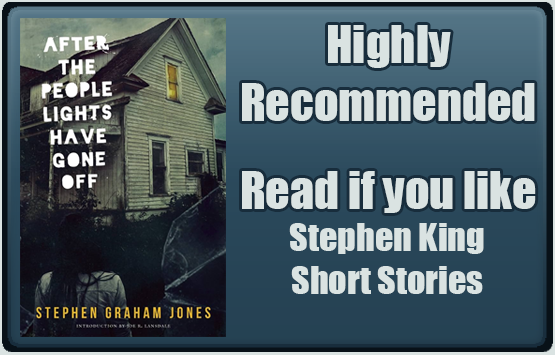
After the People Lights Have Gone Off by Stephen Graham Jones

After the People Lights Have Gone Off by Stephen Graham Jones

Formats: Print, audio, digital

Publisher: Dark House Press

Genre: Monster, Paranormal, Demon, Werewolf, Zombie, Killer/Slasher, Romance, Ghosts/Haunting, Sci-Fi Horror, Psychological Horror, Vampire

Audience: Adult/Mature

Diversity: American Indian (Blackfoot/Niitsitapi), Queer (Gay Men), Disability (Paraplegic)

Takes Place in: USA

Content Warnings (Highlight to view): Animal Death, Child Endangerment, Child Death, Gore, Violence, Death, Torture, Homophobia, Self-Harm, Implied Sexual Assault 

Blurb

The fifteen stories in After the People Lights Have Gone Off by Stephen Graham Jones explore the horrors and fears of the supernatural and the everyday. Included are two original stories, several rarities and out of print narratives, as well as a few “best of the year” inclusions. In “Thirteen,” horrors lurk behind the flickering images on the big screen. “Welcome to the Reptile House” reveals the secrets that hide in our flesh. In “The Black Sleeve of Destiny,” a single sweatshirt leads to unexpectedly dark adventures. And the title story, “After the People Lights Have Gone Off,” is anything but your typical haunted house story.

With an introduction by Edgar Award winner Joe R. Lansdale, and featuring fifteen full-page illustrations by Luke Spooner, After the People Lights Have Gone Off gets under your skin and stays there.

For Native American Heritage Month I’d thought I’d review a collection of short stories by one of horror’s greatest writers, Stephen Graham Jones.

Do you ever find yourself reading this awesome, interesting book, but then you get to the last chapter and go “What the fuck did I just read?” I’m not talking stories with ambiguous endings where it’s left open to interpretation, like in Inception where it’s unclear whether Cobb is still in a dream or not (and then you spend hours arguing about it on the internet), but the ending still makes sense. No, I’m referring to endings that are downright obfuscating (yay, I have a thesaurus!). Endings where you have to skip back to check if you missed some really obvious clue, only to find that no, the story really does end like that, and then you’re left wondering if you’re just not smart (or high) enough to “get it”. For example, 2001: A Space Odyssey. I know it’s this amazing, classic film, but what the hell was up with that giant space baby!?! Did the really obvious metaphor for the birth of humanity just fly over my head or did Kubrick just drop a bunch of LSD? Or both? Seriously WTF? Am I the only person who doesn’t get it?
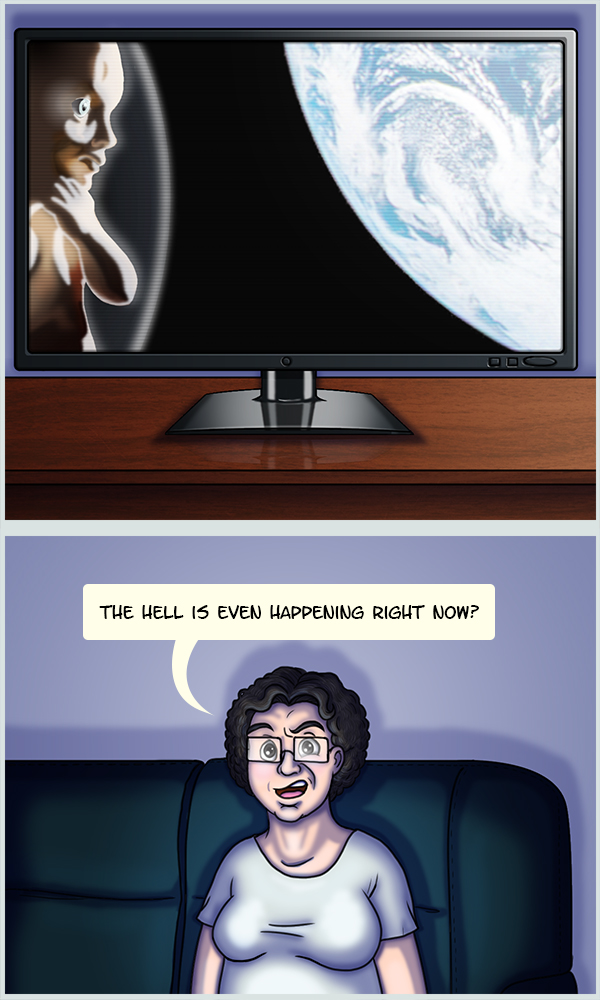
In the first panel a TV is showing a scene from 2001: A Space Odyssey with a giant, human fetus/star child floating in the void and looking at the planet earth. The second panel reveals me watching the film, bewildered, and asking “The hell is even happening right now?”

In retrospect, I probably shouldn’t have tried watching this movie at 3 AM.

Well, Stephen Graham Jones is a master of the WTF ending. In some ways this works to his advantage, like when it highlights the confusion and mental instability of the narrator, or preys on the reader’s fear of the unknown. Subtle scares can be terrifying when done right, and when Jones gets it right, it works SO WELL, like with Second Chances where the final sentence of the story hits you like a punch in the gut. But Jones makes things too subtle you’re left scratching your head and wondering what you’re supposed to be scared of. It’s like when the creepy music starts playing in a film, you know you’re supposed to feel uneasy because something bad is about to happen, but then, when the final dissonant chord is struck, everything just sort of ends without the payoff of a monster jumping out or even a terrified scream to imply something horrible just happened. Which is, unfortunately, really not that scary. After the People Lights Have Gone Off (the short story, not the book), Uncle, Xebico and Brush Monster all have this problem. Did someone die? Was there a monster? Is the narrator hallucinating? Did anything bad even happen? Am I just not smart enough to get it? It’s especially frustrating when the rest of the story makes sense, like in Xebico, but then the ending just kind of goes off the rails.
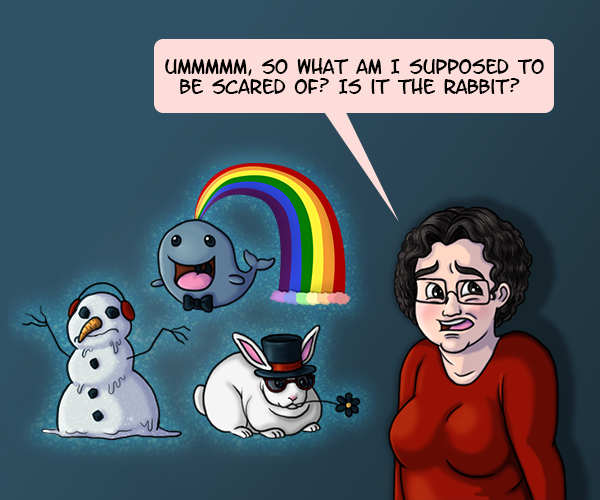
A sad, melting snow man with ear muffs, a whale with a bowtie shooting rainbows out of its blowhole, and a rabbit with a flower in its mouth, wearing a top hat and sunglasses are floating in midair and surrounded by sparkles. Looking uncomfortable, I ask, “Ummmm, so what am I supposed to be scared of? Is it the rabbit?”

I’m pretty sure it’s the sketchy looking rabbit.

Of course, none of this makes Jones a bad writer. He’s actually incredibly talented, aside from the whole confusing ending thing which is probably due more to me being obtuse than a lack of skill on Jones’ part. Like King, Jones has a real flair for making the mundane fucking terrifying.  For example, The Black Sleeve of Destiny, which is about a Lovecraftian hoodie. That’s right, a hoodie. Well, that and some poor kid’s mild kleptomania spinning out of control until it becomes a full blown obsession, but mostly the evil hoodie that seems to act as a pocket dimension with a mind of its own. There’s also The Spider Box (such a creepy title) about a cardboard fruit box that resurrects the dead.  Somehow Jones managers to cover all the horror staples in his book (demons, ghosts, werewolves, vampires, killers, and zombies) while still making his stories seem fresh and unique. A great example of this is Welcome to the Reptile House, one of the most distinct and creative vampire stories I’ve ever read. In fact, I didn’t even know it was a vampire story when I started reading it, so, uh, sorry for the spoiler.
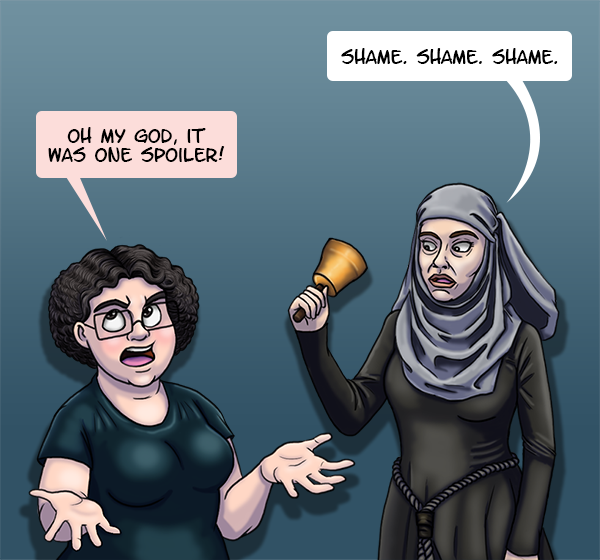
Septa Unella from Game of Thrones is ringing her bell and chanting “shame, shame, shame”. Annoyed, I snap “Oh my God, it was one spoiler!”

Septa Unella shows up any time someone reveals a spoiler. Or at least, she SHOULD.

But not all the stories in this collection are your traditional tales of horror, some could even be considered love stories. Albeit, really messed up, creepy love stories, but love stories nonetheless. One story is even called This is Love. Jones explores different kinds of relationships in his novel, from lovers and devoted spouses, to childhood crushes, to familial love between siblings, parents and children, and even extended family. Snow Monsters is a heartwarming tale about what a parent will sacrifice for their child, but with a supernatural twist. Doc’s Story, explores the bonds of a struggling family, and is one of the most human stories in the collection, ironic since it’s about werewolves.  In After the People Lights Have Gone Off (again, the short story, not the collection) and The Dead are Not we see examples of the complete devotion married couples have for each other, even when things get difficult and terrifying. Of course, there are also inversions, like Uncle, which is about a couple that has fallen out of love, and the husband’s feelings of guilt for not mourning his wife’s death.

Oh, and a little tip, before picking this book up I strongly recommend checking out Stephen King’s short story The Man in the Black Suit and H. F. Arnold’s The Night Wire (both of which you should read regardless because they’re awesome). Why? Well The Spindly Man is a horror story about a book group discussing King’s famous horror story (how’s that for Inception?), while Xebico is about adapting The Night Wire to the stage. And as cheesy as having a scary short story about another scary short story sounds, they’re both pretty awesome, yet another indicator of Jones’ talent.

Overall, After the People Lights Have Gone Off (this time I am referring to the book) is an amazing anthology by a talented author, as long as you’re okay with stream of consciousness writing and not always understanding what the hell you just read. Or maybe it’s just me, and the rest of you will have some deeper understanding of the stories. Jones’ work definitely makes me feel like I’m the only one at the party not getting the joke.
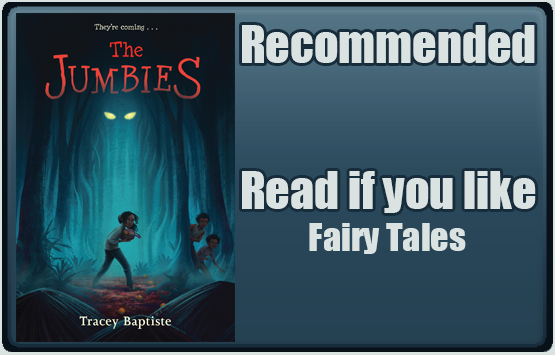
The Jumbies by Tracey Baptiste

The Jumbies by Tracey Baptiste

Formats: Print, audio, digital

Publisher: Algonquin Young Readers

Genre: Monster, Myths and Folklore, Supernatural

Audience: Children

Diversity: Afro-Tobagonian and Indo-Tobagonian characters, Character with Speech Disorder (selective mutisim)

Takes Place in: Trinidad and Tobago

Content Warnings (Highlight to view): Animal Death, Child Endangerment, Death

Blurb

Corinne La Mer claims she isn’t afraid of anything. Not scorpions, not the boys who tease her, and certainly not jumbies. They’re just tricksters made up by parents to frighten their children. Then one night Corinne chases an agouti all the way into the forbidden forest, and shining yellow eyes follow her to the edge of the trees. They couldn’t belong to a jumbie. Or could they?

When Corinne spots a beautiful stranger at the market the very next day, she knows something extraordinary is about to happen. When this same beauty, called Severine, turns up at Corinne’s house, danger is in the air. Severine plans to claim the entire island for the jumbies. Corinne must call on her courage and her friends and learn to use ancient magic she didn’t know she possessed to stop Severine and to save her island home.

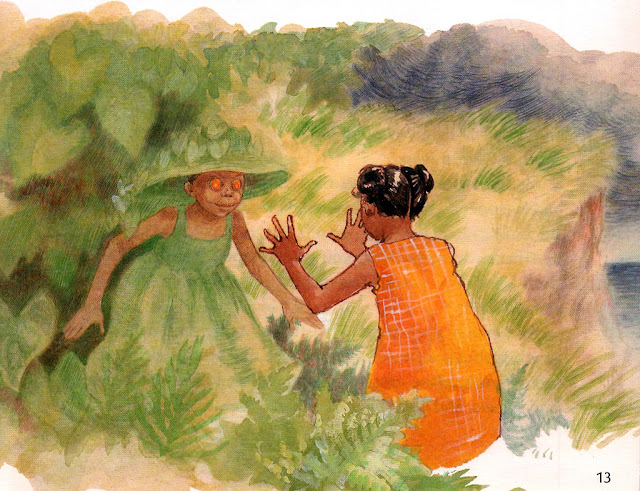
I spent part of my childhood in St. Vincent and the Grenadines, where I frequently heard scary stories about Jumbies, the spirits that haunt the Caribbean. There were the Douens with their backwards feet and wide straw hats, the glowing eyes of the La Diablesse, and Duppies that could be kept away with salt. And while it was enough to give me nightmares as a child, being able to read a book that contained all these creepy creatures from my youth was nostalgic and wonderful.

A water color painting of two young, dark skinned girls in the Caribbean. The first girl is dressed in a green dress and a wide, green hat, and she is stepping out of the forest. Her eyes are too big and glow orange, and she smiles wickedly. The other girl, who is human, wears an orange dress and has her hands up in fear as she backs away.

Thanks for the childhood nightmares Tales of the Caribbean (published by the Wright Group)

The Jumbies is based on the Haitian fairytale, the Magic Orange Tree, and contains underlying themes of colonization, the clash of two cultures, and environmentalism. But if you’re worried about helpless princesses and ham-handed messages about not littering, never fear, Tracey Baptiste is far too talented an author to create some sort of terrible Snow White/Ferngully mishmash. Sure, there are still plenty of fun fantasy tropes, monsters, magic, and the dead mom cliché (because that’s apparently some sort of requirement for heroines in fairy tales) but there’s also a lovely lack of distressed damsels, one dimensional villains, and black and white morality. Baptiste doesn’t try to feed her young readers any sort of over-simplified nonsense about how good people are pure and beautiful and only capable of doing good things. Instead, the characters are complicated and flawed, and right and wrong aren’t always clear cut.

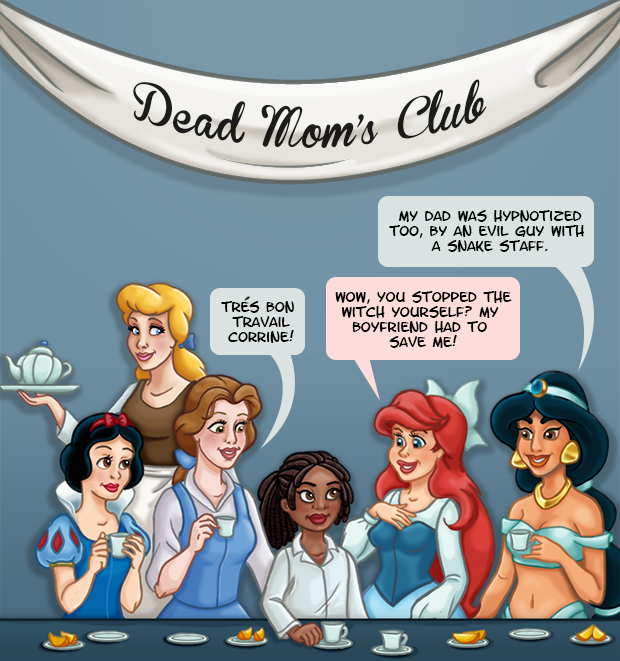
Five Disney heroines, Snow White, Cinderella, Belle, Ariel, and Jasmine, are having a tea party, with Corinne sitting in the middle. Over them, a banner reads “Dead Mom’s Club”. Belle exclaims “Très bon travail Corrine!” Ariel asks “Wow, you stopped the witch by yourself? My boyfriend had to save me!” and Jasmine comments “My dad was hypnotized too, by an evil guy with a snake staff.”

Okay, but seriously, what does Disney have against moms?

The main character, Corinne, is a young girl who lives with her father at the edge of a Jumbie-filled forest. Her mother died when she was very young but she left her daughter three very special gifts, her necklace, an orange tree, and a gift for growing things. Predictably, Corinne must use all three to discover the truth about herself and fight the evil threatening her home. And let me tell you, I wish I was as awesome as Corinne. She’s smart, self-sufficient, and incredibly brave. In the original fairy tale on which The Jumbies is based, the protagonist is a passive character that things just sort of happen to, but Corrine is proactive about her dire situation, and willing to fight the monsters herself instead of waiting for rescue. The helpless heroines in tales of old don’t hold a candle to the courageous Corinne. And let’s be honest “wait and hope things get better” is not the greatest message to give to kids. Don’t wait to be saved, rescue yourself.

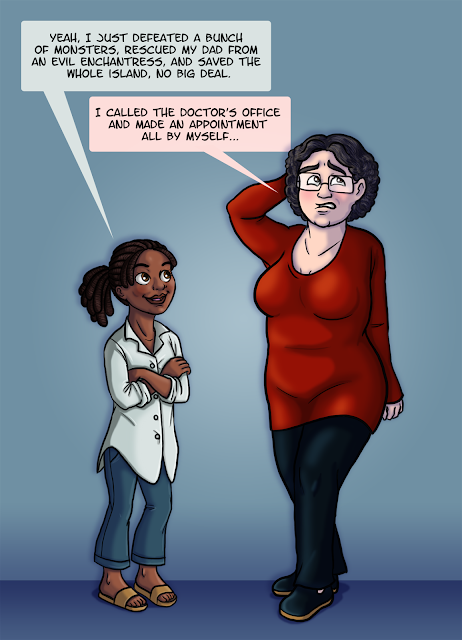
Corrine, wearing her father’s oversized shirt, proudly tells me “Yeah, I just defeated a bunch of monsters, rescued my dad from an evil enchantress, and saved the whole island, no big deal.” Looking sheepish, I respond, “I called the doctor’s office and made an appointment all by myself…”

There’s nothing that makes me feel more inadequate than a kid 20 years my junior who’s tougher than I am.

That isn’t to say Baptiste is telling the reader to only rely on themselves. As tough as Corrine is, sometimes she needs the aid of her friends, in this case a pair of mischievous orphan brothers, Bouki and Malik, and a shy young girl named Dru. They pull her up at her lowest moment, and stand by her side when she confronts Severine. It’s a nice balance. Corrine is brave and independent, but is still able to rely on others when she needs to, while Dru, the girly-girl to Corrine’s tomboy, is shy and timid, without being weak and helpless, and learns to be braver and more independent. She may not want to handle scorpions or run into the forest by herself, but Dru’s still far from being a distressed damsel. Then there’s Bouki and Malik, who are used to relying only on each other but learn that getting help from others is a sign of strength, not weakness.

Interestingly, most of the Jumbies aren’t portrayed as being good or evil, they simply want to protect their forest home from the humans who’ve invaded it. But unlike more heavy-handed environmental stories, Baptiste takes a more nuanced approach, and doesn’t paint these issues as black and white. Think more Lorax (the book, not the film) less Captain Planet. The humans aren’t evil, selfish, or greedy, but they’re still destroying the forest homes of the Jumbies who’ve lived there for thousands of years. Nor are the Jumbies evil per se, they just want to protect their home from the human invaders. Even Severine, the big bad of the story, isn’t completely unsympathetic. As evil as she is, she clearly loved her dear sister and is hurting from her loss. Severine is lashing out for a reason, and while it by no means justifies the terrible things she does, it at least explains them.

This book is perfect for younger kids who are tired of Cinderella and Snow White, and like their stories a little spooky. It has a strong female lead, fighting to protect her father and her home, a cast of fun supporting characters, and one truly creepy villain.

Shutter by Courtney Alameda

Shutter by Courtney Alameda

Formats: Print, digital

Publisher: Square Fish Books

Genre: Monster, Ghosts/Haunting, Zombie, Vampires, Blood & Guts, Thriller, Horror, Romance

Audience: Y/A

Diversity: POC (Love interest is part Aboriginal Islander, author is Latina), Disability (PTSD)

Takes Place in: type here

Content Warnings (Highlight to view): Violence, Gore, Child Death, Physical Abuse, Emotional Abuse, Child Abuse, Sexism, Sexual Harassment/Assault, Torture 

Blurb

Lock, stock, and lens, she’s in for one hell of a week.

Micheline Helsing is a tetrachromat-a girl who sees the auras of the undead in a prismatic spectrum. As one of the last descendants of the Van Helsing lineage, she has trained since childhood to destroy monsters both corporeal and spiritual: the corporeal undead go down by the bullet, the spiritual undead by the lens. With an analog SLR camera as her best weapon, Micheline exorcises ghosts by capturing their spiritual energy on film. She’s aided by her crew: Oliver, a techno-whiz and the boy who developed her camera’s technology; Jude, who can predict death; and Ryder, the boy Micheline has known and loved forever.


When a routine ghost hunt goes awry, Micheline and the boys are infected with a curse known as a soulchain. As the ghostly chains spread through their bodies, Micheline learns that if she doesn’t exorcise her entity in seven days or less, she and her friends will die. Now pursued as a renegade agent by her monster-hunting father, Leonard Helsing, she must track and destroy an entity more powerful than anything she’s faced before . . . or die trying.


Shutter by Courtney Alameda is a thrilling horror story laced with an irresistible romance.

As a 90’s kid, I grew up with some truly terrible action films. And I loved them. Mortal KombatWild Wild West, and Total Recall are all proudly displayed on my DVD shelf. So I like to think I’m pretty forgiving when it comes to plots full of holes and cookie-cutter characters, as long as the story itself is fun and entertaining. Keeping that in mind, let’s dive into Shutter, the literary equivalent of a bad action film.

We’ll start with our four, action-cliché, main characters. We’ve got the leader of the good guys, complete with her obligatory tragic backstory, the tough guy who always has her back, the smart guy who’s good with computers but not so great at fighting, and the wise cracking jackass who we’re supposed to like but just comes off as sexist and irritating. They exist to spout “clever” quips at each other, provide exposition at awkward times, and act like bad asses.

Following a standard action movie formula, the hero decides to rush off on her own without backup, and gets suspended by the boss (who’s also her abusive dad). But they go after the bad guy anyway because screw the rules, they’re action heroes! Then there’s lots of cool action scenes, explosions, some TRULY creepy shit, and a love story that gets shoehorned in there.

Okay, so the writing is “meh”, the characters are kind of flat, and the story formulaic as hell, but was it at least exciting and entertaining?  Was their nail biting suspense and horror? I’ll get to that in a minute. First, I need to address some major issues I had with story, the first being its heroine, Micheline.Micheline is a tetrachromat, able to see the invisible “ghost light” given off by the undead. As a direct descendant of Abraham Van Helsing, (because of course she is) she is sworn to protect the world from monsters, and captures and exorcises ghosts on her camera, à la Fatal Frame. Now, I’m going to give the author major props for making the lead a woman, something that doesn’t happen often in the action genre (but is slowly becoming more common). So that’s great. What’s not so great is that Micheline has this really annoying habit of having to prove what a “Strong Female Character TM” she is by running head first into danger, then needing to be rescued by the guys. Apparently nothing says “bad ass” like poor decision making and being a damsel in distress.

Micheline, is wearing her tactical, Hellsing gear and has her hair pulled back in a ponytail. She’s leaping in the air, brandishing a gun in one hand, and a camera in the other while gleefully shouting “Leerrooooy Jenkins!!!!”

Great teamwork there.

I can understand why she might want to prove herself; Micheline is struggling with PTSD and an abusive father, so it would make sense if the story was about her difficulty returning to active duty while suffering from flashbacks. Overcoming something like that is no easy task. But her trauma and strained relationship with her father seem to be their own separate thing, with little to nothing to do with her foolhardy, reckless, and selfish behavior. At least Micheline doesn’t take her grief out on everyone else, like her jerk-ass dad, she just puts their lives in danger by keeping important information from them, making everything about her, and refusing to deal with her issues. So, basically a pretty awful leader. I also got this whole “I’m not like other girls, I’m a cool girl” vibe from Micheline. Throughout the book she kept putting down other women and/or viewing them as competition for her “boys”, which was just sexist and gross. Basically, what could have been a cool, strong, female action hero was ruined by internalized sexism, bad decisions, and needing men to save her all the freaking time.

Another huge problem with Shutter was the flow of the action scenes. There is SO MUCH exposition and info dumping, and it keeps interrupting the suspenseful parts of the story. I mean, it’s wonderful how much thought Alameda put into this world, and I was certainly interested in the science behind monster hunting, but I don’t want to read a full page about how a camera works right when Micheline is about to be killed by a ghost. It’d be like pausing the duel scene between Luke and Vader to give a five minute lecture on the technology behind lightsabers. It’s cool and all, but really not the right time, and completely destroys the tension.

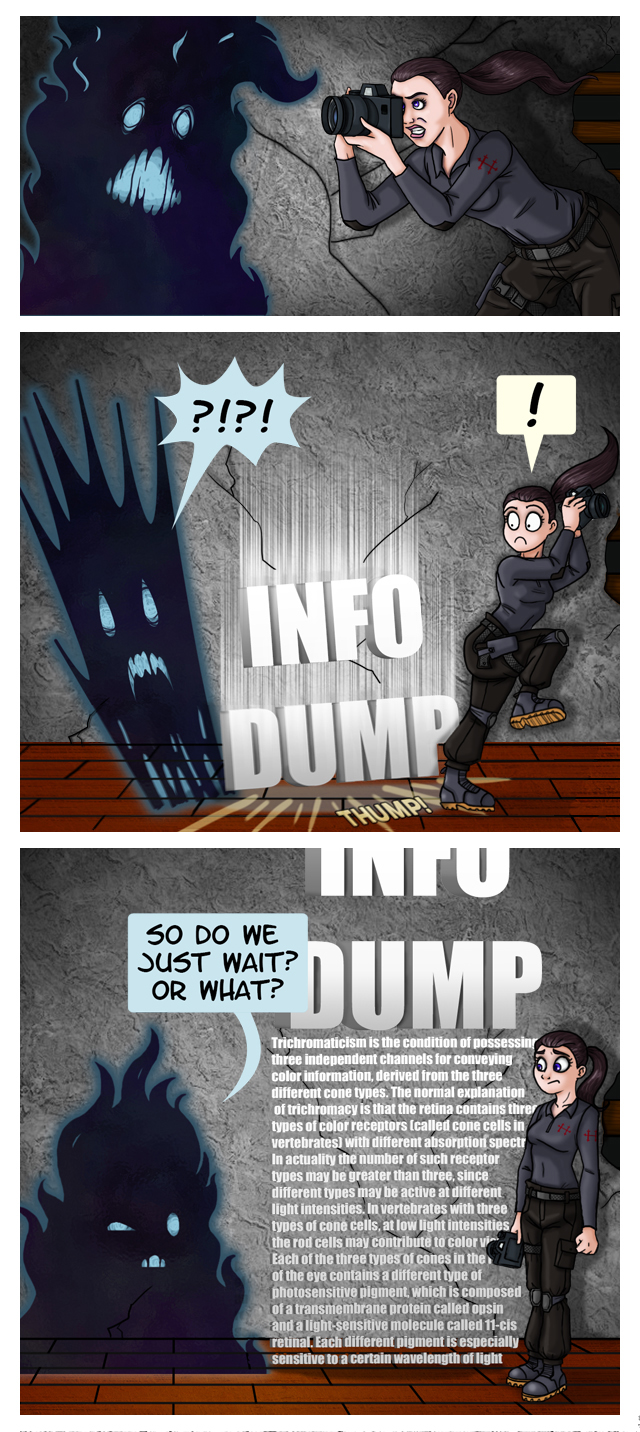
Micheline is fighting a shadowy creature with a glowing blue mouth and eyes. In the first panel she’s attempting to take its photo. In the second, both she and the monster jump out of the way in surprise as the words “INFO DUMP” fall from the sky. They both stand there awkwardly as an extensive, verbose paragraph about trichromsticism scrolls by. The shadow monsters asks “So do we just wait, or what?”

Forget the incredibly dramatic fight scene, let’s learn about trichromsticism!

Okay, so now for the moment you’ve been waiting for, was it at least entertaining? Heck yeah it was! The overall story was great, suspenseful, and fun, with some truly terrifying scenes. By the time I got to the second half of the book, I couldn’t put it down! The monsters were incredibly creative and creepy, like something out of Silent Hill, and the horror scenes were spot on. Alameda does an excellent job of building suspense and creating a creepy atmosphere (minus the random info dumps that kill the mood). It’s worth pointing out that this is the author’s debut novel, so it’s understandable that the book has flaws. Even the great Terry Pratchett’s early work was, admittedly, not that great, and he’s one of my favorite authors! So Alameda definitely has time to hone her skills and improve on her characterization and exposition. She’s already great at world building, horror, and action scenes. And honestly, it’s nice to see a horror novel written by a Latina author. The genre is severely lacking in Latine/Latina writers, and the few I know of are mostly men.

Overall, Shutter is a fun, suspenseful read, even with its flaws. If I could just take out the annoying characters, and focus on the plot, the monsters, and the fight scenes, the book would be perfect, like a horror survival game. That’s actually not a bad idea, it could be a cross between Fatal Frame and Resident Evil, where you can just explore abandoned buildings and fight monsters instead of listening to pointless dialogue. At least in a video game I can skip random info dumps.

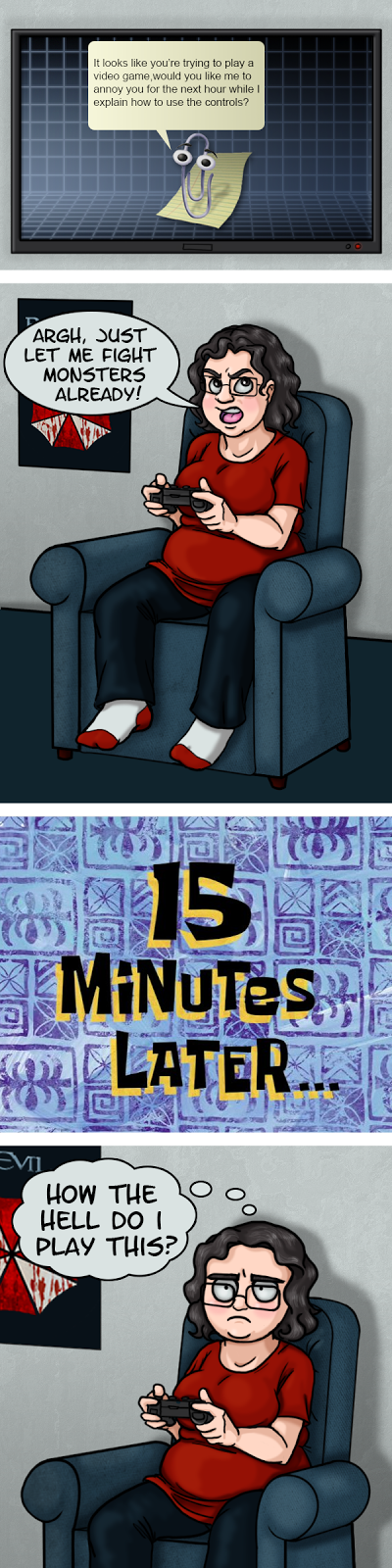
The Microsoft paperclip asks “It looks like you’re trying to play a video game, would you like me to annoy you the next hour while I explain how to use the controls?” Annoyed, I complain “Argh, just let me fight monsters already!” and skip the tutorial. 15 minutes later, I wonder to myself how the hell I’m supposed to play this game.

I just imagine all annoying video game tutorials as being done by either Navi or the Microsoft Paperclip.

I just imagine all annoying video game tutorials as being done by either Navi or the Microsoft Paperclip.

The Drowning Girl by Caitlín R. Kiernan

The Drowning Girl by Caitlín R. Kiernan

Formats: Print, audio, digital

Publisher: Penguin

Genre: Monster, Werewolf, Romance, Ghosts/Haunting, Psychological Horror, Mystery

Audience: Adult/Mature

Diversity: Lesbian characters, trans character, mentally ill character

Takes Place in: Northeastern USA

Content Warnings (Highlight to view): Mental Illness, Self-Harm, Mentions of Transphobia, Suicide, Emotional Abuse 

Please note, I found out recently that Caitlín R. Kiernan has expressed racist and Zionist views on Twitter, explored here. I will leave the reivew up for now, but can no longer reccomend her books.

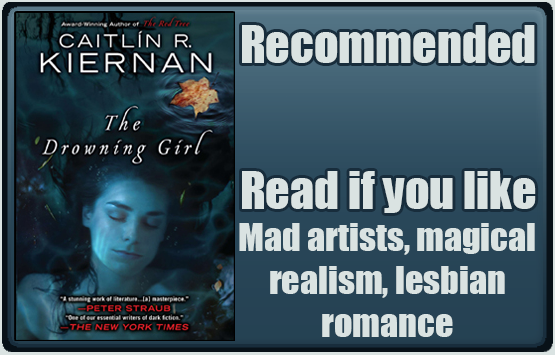
The Drowning Girl is a beautifully written, psychological horror novel about a young woman, Imp, whose schizophrenia is making it difficult for her to determine the nature of the mysterious woman haunting her. Is she a siren using her charm to lure Imp to disaster? A werewolf? A human stalker who can blur the lines of reality? Imp struggles to sort out the truth before she loses herself. Queer romance, myths, and art combine to create this award winning novel.

So did I like it? Well……. Sort of?

In theory I should have loved it. It takes place on my home turf of New England, the main character is a queer artist (like me!), she’s dating an incredibly well written trans character, the story has a creepy mystery, gorgeous imagery, and one of the best representations of mental illness I’ve ever read. But I struggled to get through the Drowning Girl. I’d pick it up, read a chapter, and then forget about it for a month. I don’t know why I didn’t devour this book as quickly as I do others, there wasn’t really anything I disliked about it, and it wasn’t boring, but it just didn’t seem to capture my attention. It reminded me of one of those award winning art films that critics love and you have to sit through in college film classes. There’s nothing bad about it per se, but you’d still rather be watching Bad Boys II, or some other equally ridiculous action flick.

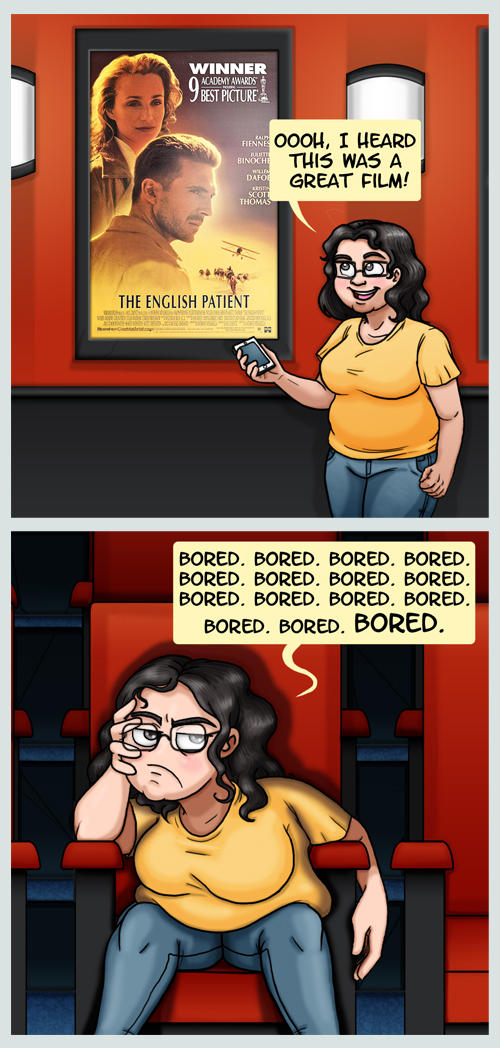
In the first panel I'm in the hallway of a movie theater looking at a poster for "The English Patient" and saying "Oooh, I heard this was a great film!" In the next panel I'm in the theater looking completely disinterested, and repeating "bored, bored, bored, bored" over and over as I suffer through the movie.

Ugh, I should’ve just watched Sharknado again.

Maybe I’m just not sophisticated enough to appreciate the non-linear, stream of conciseness (i.e. all over the place) writing, or perhaps I’m too clueless to fully comprehend the subtly and symbolism of the story. But I found it really jarring to have Imp describe her girlfriend, Abalyn, play Kingdom Hearts one minute, and then have a poetic, jumbled passage full of fairy tale metaphors the next. And I get it, the writing style is intended to represent Imp’s mental illness by showing the disorganization of her thought process, the random associations she makes where none exist, and her difficulty remembering what’s real and what’s imagined. But that doesn’t always make for an enjoyable read.

I guess I’m just incredibly picky when it comes to “artsy” prose and magical realism. When it works, it works well, but when it doesn’t, it just becomes a confusing, irritating erratic mess, and with the Drowning Girl it was kind of a crap shoot.

I'm floating upside down in blue space, surrounded by dreamlike imagery of a crow wearing a cloak, a close-up of a crescent moon, a wolf's skull, pills, a crab, and a mermaid with pale, corpse-like skin. The mermaid's human half is intact but her fish half is nothing but bone. Her organs hang out of her human torso. I look confused and mutter

WTF is going on? Did I take expired cold medicine again?

Since I’m starting to feel bad for picking on this book so much (and it’s by no means a bad book), I want to address one of the things I did really like about the story, how Imp’s mental illness was treated. It wasn’t romanticized, it was just a part of her that could make her life more challenging, but not horrible. Medication made her illness manageable, but didn’t make it disappear entirely, and she was able to continue working, date, hang out with friends, pursue hobbies, and lived on her own. She would go through rough patches, some she could handle on her own, and some she couldn’t. Her therapist was supportive, without telling Imp what to do. Overall, I felt like it was a very realistic depiction of a woman with a mental illness, which is rather uncommon in fiction where the mentally ill are usually written as either asylum inmates, criminals, or manic pixie dream girls.

Overall, I really, really wanted to love this one. It had all the right ingredients, rave reviews, a talented author, but the final result was disappointing, at least for me. It wasn’t bad, but I just couldn’t bring myself to give it a “highly recommended”. That doesn’t mean other people won’t find this book amazing, and I strongly encourage others, especially those with more sophisticated taste than mine, to give it a read. Because you may love it. Or you may find it “meh”, but at least you won’t regret reading it.

A Banquet for Hungry Ghosts by Ying Chang Compestine

A Banquet for Hungry Ghosts by Ying Chang Compestine

Formats: Print, audio, digital

Publisher: Tumbling Dumpling Media

Genre: Monster, Killer/Slasher, Crime, Ghosts/Haunting, Psychological Horror, Blood & Guts, Historic Horror, Anthology

Audience: Adult/Mature

Diversity: Chinese and Chinese American characters

Takes Place in: China

Content Warnings (Highlight to view): Physical Abuse, Animal Death, Animal Abuse, Child Endangerment, Child Death, Body shaming, Verbal/Emotional Abuse, Cannibalism, Gore, Torture, Medical Torture, Violence, Death

There are many types of Chinese ghosts, including the spirits of deceased loved ones who may bring blessing and good fortune if properly honored, vengeful specters searching for those who wronged them in life, playful and troublesome spooks, and Hungry Ghosts, unhappy spirits with insatiable appetites.  During the seventh month of the Chinese calendar, known as Ghost Month, the gates to hell are open and these spirits are able to cross over to the realm of the living. To avoid hauntings and misfortune, people will leave offerings of food in the hopes of appeasing the Hungry Ghosts who wander the streets at night. If these spirits are pleased with the food offered to them, they may leave the household in peace. But what if the Hungry Ghosts aren’t placated?

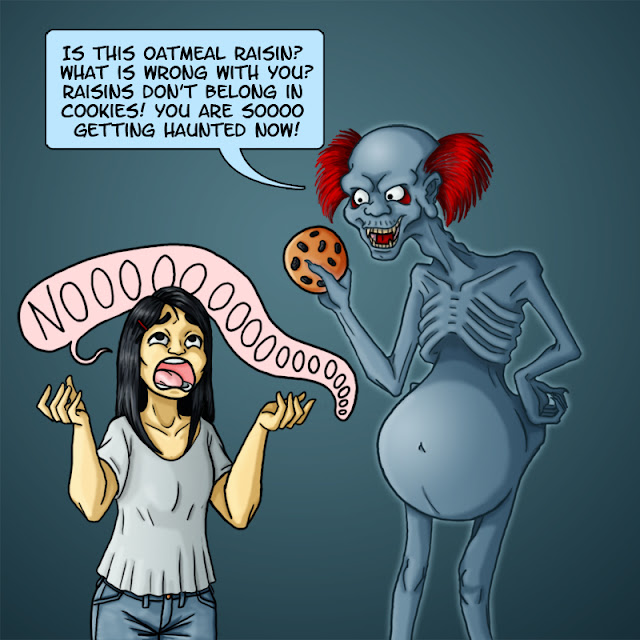
A skeletal-looking Japanese ghost with pale blue skin, flaming red hair, bulging eyes, and a distended belly is glaring at a Chinese woman who gave him a cookie and scolding "Is this Oatmeal Raisin? What is wrong with you? Raisins don't belong in cookies! You are soooo getting haunted now!" The woman yells "Nooooooooooooo!" in comical despair.

He’ll eat garbage, but he draws the line at oatmeal raisin.

He’ll eat garbage, but he draws the line at oatmeal raisin.Author Ying Chang Compestine explores both Chinese cuisine and angry spirits in her book, A Banquet for Hungry Ghosts. Ah, delicious food and gruesome horror, two of my favorite things! Admittedly, not things you’d usually think of combining, but hey, I’m not complaining. Each ghost story is dedicated to a food you might typically find in a traditional Chinese eight course banquet, and includes a recipe at the end. Okay, so maybe those with weaker stomachs may not want to try whipping up a batch of Tea Eggs right after reading about some poor guy getting disemboweled. But I’m the kind of person who can watch surgery videos while eating breakfast, so I wasn’t put off my appetite. If anything, the book made me crave cha siu bao the entire time. Oh, and by the way, the steamed dumpling recipe? Sooooooo good. I’ve got to try making the Jasmine Almond cookies next.

I'm reading "A Banquet for Hungry Ghosts" and exclaim in wonder "Woah, the inn keeper chopped people up and made them into dumplings!?" The next panel shows me biting my lip, looking conflicted, and saying "Damn it, now I want dumplings".

I also get hungry watching Hannibal. Don’t judge me.

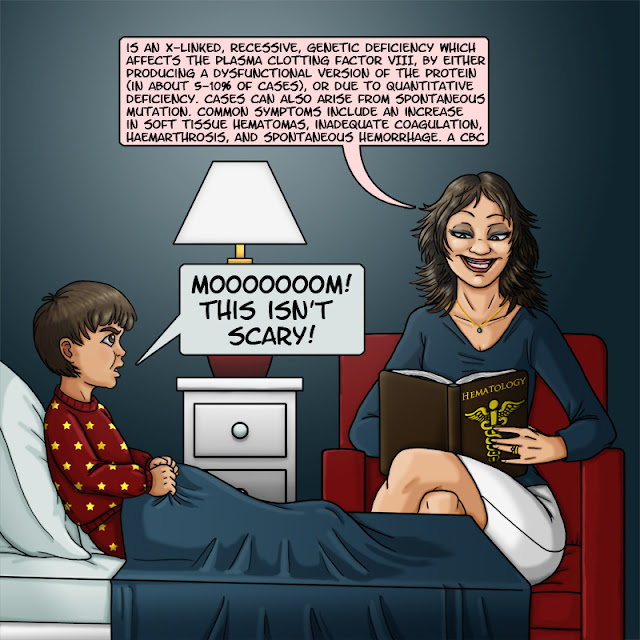
In addition to recipes, each chapter also includes an afterword that expands on aspects of Chinese culture and history discussed in the story. There’s information on the rules of Mahjong, Mantis fighting, Qingming (Tomb Sweeping Day), the Cultural Revolution, and even anecdotes from Compestine’s own life growing up in China. Also ablation surgery, arsenic poisoning, and ancient Chinese tombs containing the victims of human sacrifice. Fun, right? Hey, it’s a book of scary stories after all, it’s to be expected. Every country has its share of atrocities from the past and present, and Compestine adds even more horror to her already spooky ghost stories by including some of China’s darker practices, such as illegal organ harvesting from prisoners and corruption at Buddhist monasteries. It’s actually quite clever how Compestine addresses certain Chinese social issues by turning them into ghost stories. At least in fiction, we get the satisfaction of seeing justice done, albeit by Hungry Ghost who enact terrible, and often gruesome vengeance.As horrific as I’ve made the book sound, it is actually intended for children. Like a more educational, Chinese, epicurean version of Scary Stories to Tell in the Darkcomplete with its own gorgeous, creepy, black and white illustrations. I know the blood and guts may be too much for some children (though it’s not much worse than your standard German fairy tale or Roald Dahl story) but the gore is definitely going to appeal to others. Hey, whatever gets them to read, right? Plus, it’s educational, so that’s always good. Even adults will find the stories informative; while reading Banquet for Hungry Ghosts I frequently found myself running off to Google the construction of the Great Wall or Chinese medical practices.Although the overall stories were rich and interesting, the writing could be a little simplistic, which, unfortunately, I felt detracted from the horror and kept me from giving this book the four stars it otherwise would have earned. But, again, it is a kid’s book, and it’s difficult to write something that’s elegant, interesting, and easy to read. Children reading A Banquet for Hungry Ghosts are already going to have enough trouble trying to sound out “Hemorrhagic shock”, no need to make the writing too flowery and complex. So let’s just say I’d give the writing three stars for adults and four stars for kids.My only other complaint is that the author also tended to rely heavily on gore to create scares. Being gross and being scary are two different things, and you can’t just add blood to a story and expect it to be frightening. If that were true, I could just read a medical textbook to give myself nightmares.

A mother is reading to her son a "bed time story" out of a dull, dry, medical text book. She drones on about "an X-linked, recessive, genetic deficiency which affects the plasma clotting factor VIII, by either producing a dysfunctional version of the protein." Annoyed, the boy responds "Moooom! This isn't scary!"

What are you talking about kid? Hemorrhaging is terrifying.

Like any horror anthology, some stories are much better than others. “Tofu with Chili-Garlic Sauce”,  “Steamed Dumplings”, and “Beef Stew” were all excellent. “Long-Life Noodles” and “Jasmine Almond Cookies”? Not so much. But overall this is still a great book, and the combination of ghost stories, history, and cuisine make a fun and unique combination. A must read for both young horror fans and foodies.

Skeleton Man by Joseph Bruchac

Skeleton Man by Joseph Bruchac

Formats: Print, audio, digital

Publisher: HarperCollins

Genre: Mystery, Thriller, Crime, Monster, Myth and Folklore

Audience: Children

Diversity: American Indian (Mohawk/ Kanien’kehá:ka) characters, Black character

Takes Place in: type here

Content Warnings (Highlight to view):  Child Endangerment, Cannibalism, Gaslighting

Please note, other Natives have brought into question Bruchac’s identity as Abenaki I will leave the review up for now, but can no longer reccomend this book. 

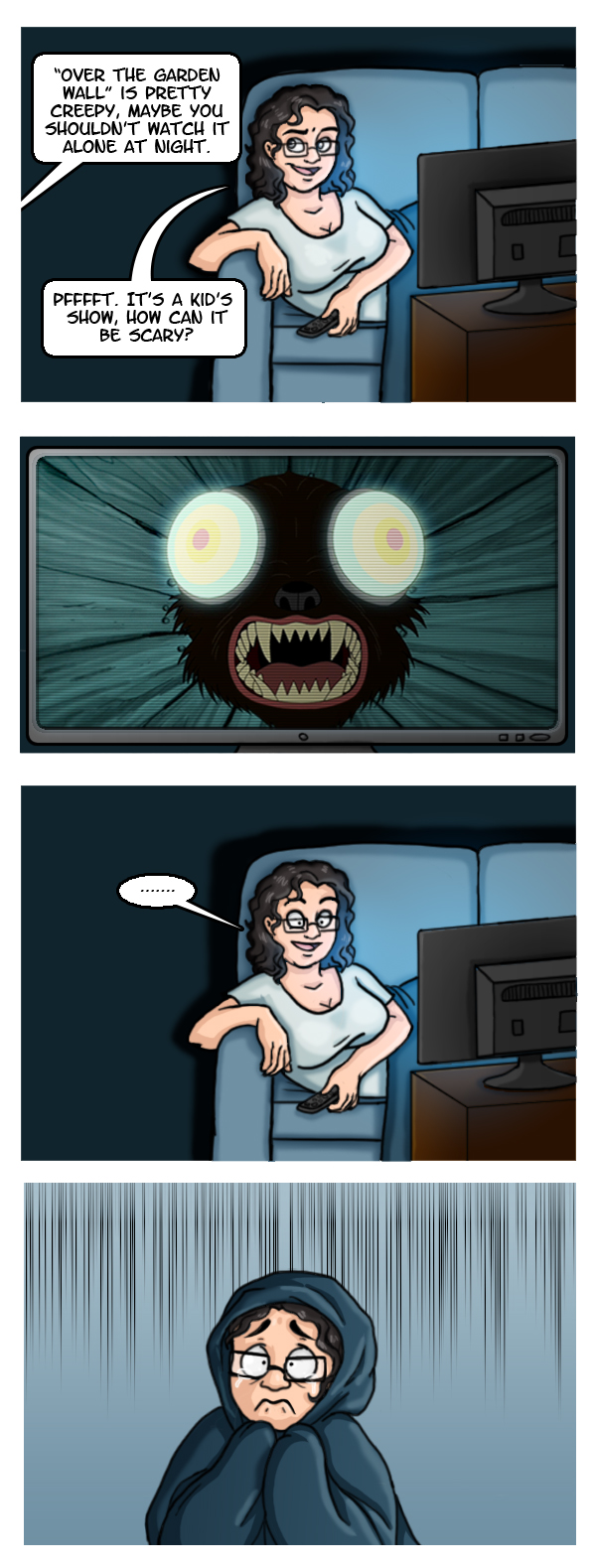
I’m so used to getting my scares from more mature media I often forget how scary “kid friendly” horror fiction can be, and get completely caught off guard. Supposedly terrifying films like JawsThe Blair Witch Project, and Poltergeist have all failed to phase me. But Return to Oz, a PG Disney film, still gives me nightmares. And don’t even get me started on the first time I saw Over the Garden Wall.  

A comic that shows me lying on the couch watching TV. My offscreen friend says 'Over the Garden Wall is pretty creepy, maybe you shouldn't watch it alone at night' to which I respond 'Pfffft. It's a kid's show, how can it be scary?' The next panel shows an image of the TV screen with a scary clip from Over the Garden Wall where a dog-like monster with giant has its face close to the camera. I pause, staring at the screen with a frozen expression. In the next panel I'm hiding under a blanket, terrified, and trying not to cry.

For children!

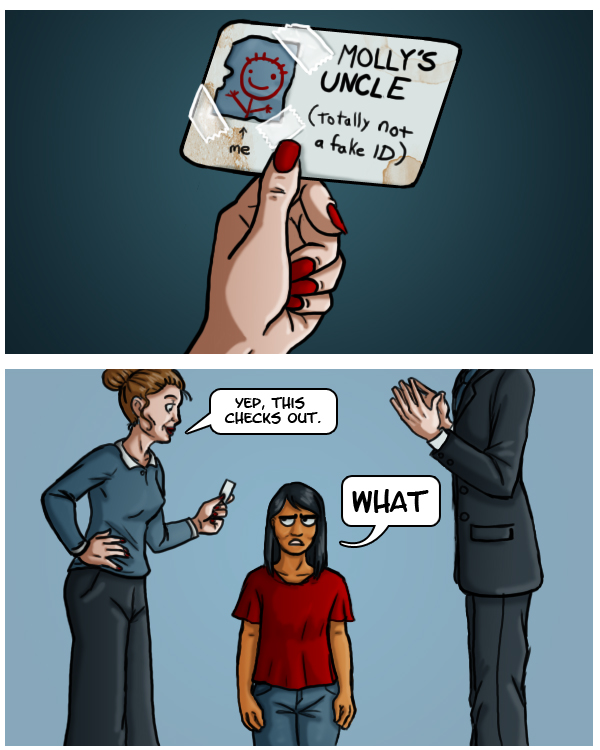
The problem is, I seem to have selective memory when it come’s to being traumatized by children’s books and television. So of course, when I picked up the young adult book Skeleton Man, by Joseph Bruchach, my first thought wasn’t “Huh, R.L. Stein says this book gave him nightmares, this might actually be scary”. Nope. It was “Tch, kids books can’t frighten me! I’ve seen all the Alien movies!” “And hey” I mused, determined to keep up my string of poor decision making, “I might as well read the whole book at night, during a thunderstorm, when I’m home alone. That seems like a good idea. Yup.”This quick, suspenseful story stars Molly, a clever and resourceful Mohawk girl, who wakes up one day to discover her parents are missing. The police seem to have no leads about their disappearances, and Molly is sent to live with a sinister man who suddenly appears, claiming to be her uncle. Soon, the events in her life begin to parallel an old Mohawk tale about the Skeleton Man, until the legend seems to bleed into reality.While the fantastical elements in the story are creepy, the truly terrifying part was the apathy shown by most of the adults in the story towards Molly’s predicament. They completely disregarded her concerns because of her age, and placed her in a dangerous situation. The sense that she was alone, helpless, and ignored by those who were supposed to help and protect her was realistic enough to make my chest tighten in fear for her. Seriously, who hands a child off to some random stranger without a proper background check?

The first panel shows a closeup of a sketchy, clearly forged ID card that has a stick figure drawing taped on instead of a photo. The ID says "Molly's Uncle (totally not fake ID). The social worker examining it cheerfully responds "Yep, this checkes out!" to a creepy man whose face can't be seen. Molly, a young native girl, is unammused and responds with an annoyed "WHAT"

Pretty much what happened.

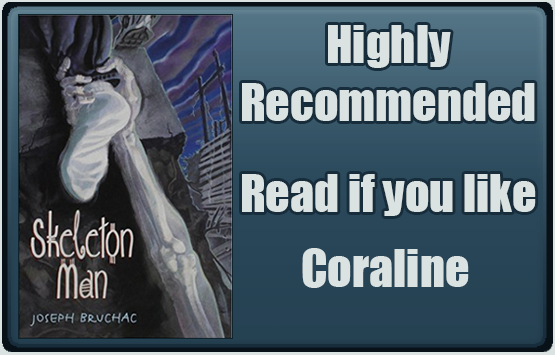
Thankfully, Molly does have one adult who listens her, her teacher, Ms. Shabbas, who provides both guidance and emotional support to the frightened young girl. Just knowing her teacher believes her and is there to help is enough to give Molly the courage to free herself and find her parents.The book reminded me a lot of Neil Gaiman’s Coraline, a creepy and atmospheric children’s story about a brave little girl who saves her parents from a monster. Except in Skeleton Man it’s never clear wether Molly’s monster is magic or mundane. And I like that. It leaves things open to interpretation and it’s a lot creepier if you don’t wether the villain is a creature from myth, or just an evil, greedy man. Either way, it’s a fun, quick, read, perfect for a dark and stormy night. Or in the middle of the day with all the lights on. You know, whichever.

Navigation

Social Media

Search by Tags

To learn more about the Age Group, Diversity, and Genre tags, click here.

Age Groups

Diversity

Genre

Support the Blog

Search

Links

After the People Lights Have Gone Off by Stephen Graham Jones

After the People Lights Have Gone Off by Stephen Graham Jones

Formats: Print, audio, digital

Publisher: Dark House Press

Genre: Monster, Paranormal, Demon, Werewolf, Zombie, Killer/Slasher, Romance, Ghosts/Haunting, Sci-Fi Horror, Psychological Horror, Vampire

Audience: Adult/Mature

Diversity: American Indian (Blackfoot/Niitsitapi), Queer (Gay Men), Disability (Paraplegic)

Takes Place in: USA

Content Warnings (Highlight to view): Animal Death, Child Endangerment, Child Death, Gore, Violence, Death, Torture, Homophobia, Self-Harm, Implied Sexual Assault 

Blurb

The fifteen stories in After the People Lights Have Gone Off by Stephen Graham Jones explore the horrors and fears of the supernatural and the everyday. Included are two original stories, several rarities and out of print narratives, as well as a few “best of the year” inclusions. In “Thirteen,” horrors lurk behind the flickering images on the big screen. “Welcome to the Reptile House” reveals the secrets that hide in our flesh. In “The Black Sleeve of Destiny,” a single sweatshirt leads to unexpectedly dark adventures. And the title story, “After the People Lights Have Gone Off,” is anything but your typical haunted house story.

With an introduction by Edgar Award winner Joe R. Lansdale, and featuring fifteen full-page illustrations by Luke Spooner, After the People Lights Have Gone Off gets under your skin and stays there.

For Native American Heritage Month I’d thought I’d review a collection of short stories by one of horror’s greatest writers, Stephen Graham Jones.

Do you ever find yourself reading this awesome, interesting book, but then you get to the last chapter and go “What the fuck did I just read?” I’m not talking stories with ambiguous endings where it’s left open to interpretation, like in Inception where it’s unclear whether Cobb is still in a dream or not (and then you spend hours arguing about it on the internet), but the ending still makes sense. No, I’m referring to endings that are downright obfuscating (yay, I have a thesaurus!). Endings where you have to skip back to check if you missed some really obvious clue, only to find that no, the story really does end like that, and then you’re left wondering if you’re just not smart (or high) enough to “get it”. For example, 2001: A Space Odyssey. I know it’s this amazing, classic film, but what the hell was up with that giant space baby!?! Did the really obvious metaphor for the birth of humanity just fly over my head or did Kubrick just drop a bunch of LSD? Or both? Seriously WTF? Am I the only person who doesn’t get it?

In the first panel a TV is showing a scene from 2001: A Space Odyssey with a giant, human fetus/star child floating in the void and looking at the planet earth. The second panel reveals me watching the film, bewildered, and asking “The hell is even happening right now?”

In retrospect, I probably shouldn’t have tried watching this movie at 3 AM.

Well, Stephen Graham Jones is a master of the WTF ending. In some ways this works to his advantage, like when it highlights the confusion and mental instability of the narrator, or preys on the reader’s fear of the unknown. Subtle scares can be terrifying when done right, and when Jones gets it right, it works SO WELL, like with Second Chances where the final sentence of the story hits you like a punch in the gut. But Jones makes things too subtle you’re left scratching your head and wondering what you’re supposed to be scared of. It’s like when the creepy music starts playing in a film, you know you’re supposed to feel uneasy because something bad is about to happen, but then, when the final dissonant chord is struck, everything just sort of ends without the payoff of a monster jumping out or even a terrified scream to imply something horrible just happened. Which is, unfortunately, really not that scary. After the People Lights Have Gone Off (the short story, not the book), Uncle, Xebico and Brush Monster all have this problem. Did someone die? Was there a monster? Is the narrator hallucinating? Did anything bad even happen? Am I just not smart enough to get it? It’s especially frustrating when the rest of the story makes sense, like in Xebico, but then the ending just kind of goes off the rails.

A sad, melting snow man with ear muffs, a whale with a bowtie shooting rainbows out of its blowhole, and a rabbit with a flower in its mouth, wearing a top hat and sunglasses are floating in midair and surrounded by sparkles. Looking uncomfortable, I ask, “Ummmm, so what am I supposed to be scared of? Is it the rabbit?”

I’m pretty sure it’s the sketchy looking rabbit.

Of course, none of this makes Jones a bad writer. He’s actually incredibly talented, aside from the whole confusing ending thing which is probably due more to me being obtuse than a lack of skill on Jones’ part. Like King, Jones has a real flair for making the mundane fucking terrifying.  For example, The Black Sleeve of Destiny, which is about a Lovecraftian hoodie. That’s right, a hoodie. Well, that and some poor kid’s mild kleptomania spinning out of control until it becomes a full blown obsession, but mostly the evil hoodie that seems to act as a pocket dimension with a mind of its own. There’s also The Spider Box (such a creepy title) about a cardboard fruit box that resurrects the dead.  Somehow Jones managers to cover all the horror staples in his book (demons, ghosts, werewolves, vampires, killers, and zombies) while still making his stories seem fresh and unique. A great example of this is Welcome to the Reptile House, one of the most distinct and creative vampire stories I’ve ever read. In fact, I didn’t even know it was a vampire story when I started reading it, so, uh, sorry for the spoiler.

Septa Unella from Game of Thrones is ringing her bell and chanting “shame, shame, shame”. Annoyed, I snap “Oh my God, it was one spoiler!”

Septa Unella shows up any time someone reveals a spoiler. Or at least, she SHOULD.

But not all the stories in this collection are your traditional tales of horror, some could even be considered love stories. Albeit, really messed up, creepy love stories, but love stories nonetheless. One story is even called This is Love. Jones explores different kinds of relationships in his novel, from lovers and devoted spouses, to childhood crushes, to familial love between siblings, parents and children, and even extended family. Snow Monsters is a heartwarming tale about what a parent will sacrifice for their child, but with a supernatural twist. Doc’s Story, explores the bonds of a struggling family, and is one of the most human stories in the collection, ironic since it’s about werewolves.  In After the People Lights Have Gone Off (again, the short story, not the collection) and The Dead are Not we see examples of the complete devotion married couples have for each other, even when things get difficult and terrifying. Of course, there are also inversions, like Uncle, which is about a couple that has fallen out of love, and the husband’s feelings of guilt for not mourning his wife’s death.

Oh, and a little tip, before picking this book up I strongly recommend checking out Stephen King’s short story The Man in the Black Suit and H. F. Arnold’s The Night Wire (both of which you should read regardless because they’re awesome). Why? Well The Spindly Man is a horror story about a book group discussing King’s famous horror story (how’s that for Inception?), while Xebico is about adapting The Night Wire to the stage. And as cheesy as having a scary short story about another scary short story sounds, they’re both pretty awesome, yet another indicator of Jones’ talent.

Overall, After the People Lights Have Gone Off (this time I am referring to the book) is an amazing anthology by a talented author, as long as you’re okay with stream of consciousness writing and not always understanding what the hell you just read. Or maybe it’s just me, and the rest of you will have some deeper understanding of the stories. Jones’ work definitely makes me feel like I’m the only one at the party not getting the joke.
The Jumbies by Tracey Baptiste

The Jumbies by Tracey Baptiste

Formats: Print, audio, digital

Publisher: Algonquin Young Readers

Genre: Monster, Myths and Folklore, Supernatural

Audience: Children

Diversity: Afro-Tobagonian and Indo-Tobagonian characters, Character with Speech Disorder (selective mutisim)

Takes Place in: Trinidad and Tobago

Content Warnings (Highlight to view): Animal Death, Child Endangerment, Death

Blurb

Corinne La Mer claims she isn’t afraid of anything. Not scorpions, not the boys who tease her, and certainly not jumbies. They’re just tricksters made up by parents to frighten their children. Then one night Corinne chases an agouti all the way into the forbidden forest, and shining yellow eyes follow her to the edge of the trees. They couldn’t belong to a jumbie. Or could they?

When Corinne spots a beautiful stranger at the market the very next day, she knows something extraordinary is about to happen. When this same beauty, called Severine, turns up at Corinne’s house, danger is in the air. Severine plans to claim the entire island for the jumbies. Corinne must call on her courage and her friends and learn to use ancient magic she didn’t know she possessed to stop Severine and to save her island home.

I spent part of my childhood in St. Vincent and the Grenadines, where I frequently heard scary stories about Jumbies, the spirits that haunt the Caribbean. There were the Douens with their backwards feet and wide straw hats, the glowing eyes of the La Diablesse, and Duppies that could be kept away with salt. And while it was enough to give me nightmares as a child, being able to read a book that contained all these creepy creatures from my youth was nostalgic and wonderful.

A water color painting of two young, dark skinned girls in the Caribbean. The first girl is dressed in a green dress and a wide, green hat, and she is stepping out of the forest. Her eyes are too big and glow orange, and she smiles wickedly. The other girl, who is human, wears an orange dress and has her hands up in fear as she backs away.

Thanks for the childhood nightmares Tales of the Caribbean (published by the Wright Group)

The Jumbies is based on the Haitian fairytale, the Magic Orange Tree, and contains underlying themes of colonization, the clash of two cultures, and environmentalism. But if you’re worried about helpless princesses and ham-handed messages about not littering, never fear, Tracey Baptiste is far too talented an author to create some sort of terrible Snow White/Ferngully mishmash. Sure, there are still plenty of fun fantasy tropes, monsters, magic, and the dead mom cliché (because that’s apparently some sort of requirement for heroines in fairy tales) but there’s also a lovely lack of distressed damsels, one dimensional villains, and black and white morality. Baptiste doesn’t try to feed her young readers any sort of over-simplified nonsense about how good people are pure and beautiful and only capable of doing good things. Instead, the characters are complicated and flawed, and right and wrong aren’t always clear cut.

Five Disney heroines, Snow White, Cinderella, Belle, Ariel, and Jasmine, are having a tea party, with Corinne sitting in the middle. Over them, a banner reads “Dead Mom’s Club”. Belle exclaims “Très bon travail Corrine!” Ariel asks “Wow, you stopped the witch by yourself? My boyfriend had to save me!” and Jasmine comments “My dad was hypnotized too, by an evil guy with a snake staff.”

Okay, but seriously, what does Disney have against moms?

The main character, Corinne, is a young girl who lives with her father at the edge of a Jumbie-filled forest. Her mother died when she was very young but she left her daughter three very special gifts, her necklace, an orange tree, and a gift for growing things. Predictably, Corinne must use all three to discover the truth about herself and fight the evil threatening her home. And let me tell you, I wish I was as awesome as Corinne. She’s smart, self-sufficient, and incredibly brave. In the original fairy tale on which The Jumbies is based, the protagonist is a passive character that things just sort of happen to, but Corrine is proactive about her dire situation, and willing to fight the monsters herself instead of waiting for rescue. The helpless heroines in tales of old don’t hold a candle to the courageous Corinne. And let’s be honest “wait and hope things get better” is not the greatest message to give to kids. Don’t wait to be saved, rescue yourself.

Corrine, wearing her father’s oversized shirt, proudly tells me “Yeah, I just defeated a bunch of monsters, rescued my dad from an evil enchantress, and saved the whole island, no big deal.” Looking sheepish, I respond, “I called the doctor’s office and made an appointment all by myself…”

There’s nothing that makes me feel more inadequate than a kid 20 years my junior who’s tougher than I am.

That isn’t to say Baptiste is telling the reader to only rely on themselves. As tough as Corrine is, sometimes she needs the aid of her friends, in this case a pair of mischievous orphan brothers, Bouki and Malik, and a shy young girl named Dru. They pull her up at her lowest moment, and stand by her side when she confronts Severine. It’s a nice balance. Corrine is brave and independent, but is still able to rely on others when she needs to, while Dru, the girly-girl to Corrine’s tomboy, is shy and timid, without being weak and helpless, and learns to be braver and more independent. She may not want to handle scorpions or run into the forest by herself, but Dru’s still far from being a distressed damsel. Then there’s Bouki and Malik, who are used to relying only on each other but learn that getting help from others is a sign of strength, not weakness.

Interestingly, most of the Jumbies aren’t portrayed as being good or evil, they simply want to protect their forest home from the humans who’ve invaded it. But unlike more heavy-handed environmental stories, Baptiste takes a more nuanced approach, and doesn’t paint these issues as black and white. Think more Lorax (the book, not the film) less Captain Planet. The humans aren’t evil, selfish, or greedy, but they’re still destroying the forest homes of the Jumbies who’ve lived there for thousands of years. Nor are the Jumbies evil per se, they just want to protect their home from the human invaders. Even Severine, the big bad of the story, isn’t completely unsympathetic. As evil as she is, she clearly loved her dear sister and is hurting from her loss. Severine is lashing out for a reason, and while it by no means justifies the terrible things she does, it at least explains them.

This book is perfect for younger kids who are tired of Cinderella and Snow White, and like their stories a little spooky. It has a strong female lead, fighting to protect her father and her home, a cast of fun supporting characters, and one truly creepy villain.

Shutter by Courtney Alameda

Shutter by Courtney Alameda

Formats: Print, digital

Publisher: Square Fish Books

Genre: Monster, Ghosts/Haunting, Zombie, Vampires, Blood & Guts, Thriller, Horror, Romance

Audience: Y/A

Diversity: POC (Love interest is part Aboriginal Islander, author is Latina), Disability (PTSD)

Takes Place in: type here

Content Warnings (Highlight to view): Violence, Gore, Child Death, Physical Abuse, Emotional Abuse, Child Abuse, Sexism, Sexual Harassment/Assault, Torture 

Blurb

Lock, stock, and lens, she’s in for one hell of a week.

Micheline Helsing is a tetrachromat-a girl who sees the auras of the undead in a prismatic spectrum. As one of the last descendants of the Van Helsing lineage, she has trained since childhood to destroy monsters both corporeal and spiritual: the corporeal undead go down by the bullet, the spiritual undead by the lens. With an analog SLR camera as her best weapon, Micheline exorcises ghosts by capturing their spiritual energy on film. She’s aided by her crew: Oliver, a techno-whiz and the boy who developed her camera’s technology; Jude, who can predict death; and Ryder, the boy Micheline has known and loved forever.


When a routine ghost hunt goes awry, Micheline and the boys are infected with a curse known as a soulchain. As the ghostly chains spread through their bodies, Micheline learns that if she doesn’t exorcise her entity in seven days or less, she and her friends will die. Now pursued as a renegade agent by her monster-hunting father, Leonard Helsing, she must track and destroy an entity more powerful than anything she’s faced before . . . or die trying.


Shutter by Courtney Alameda is a thrilling horror story laced with an irresistible romance.

As a 90’s kid, I grew up with some truly terrible action films. And I loved them. Mortal KombatWild Wild West, and Total Recall are all proudly displayed on my DVD shelf. So I like to think I’m pretty forgiving when it comes to plots full of holes and cookie-cutter characters, as long as the story itself is fun and entertaining. Keeping that in mind, let’s dive into Shutter, the literary equivalent of a bad action film.

We’ll start with our four, action-cliché, main characters. We’ve got the leader of the good guys, complete with her obligatory tragic backstory, the tough guy who always has her back, the smart guy who’s good with computers but not so great at fighting, and the wise cracking jackass who we’re supposed to like but just comes off as sexist and irritating. They exist to spout “clever” quips at each other, provide exposition at awkward times, and act like bad asses.

Following a standard action movie formula, the hero decides to rush off on her own without backup, and gets suspended by the boss (who’s also her abusive dad). But they go after the bad guy anyway because screw the rules, they’re action heroes! Then there’s lots of cool action scenes, explosions, some TRULY creepy shit, and a love story that gets shoehorned in there.

Okay, so the writing is “meh”, the characters are kind of flat, and the story formulaic as hell, but was it at least exciting and entertaining?  Was their nail biting suspense and horror? I’ll get to that in a minute. First, I need to address some major issues I had with story, the first being its heroine, Micheline.Micheline is a tetrachromat, able to see the invisible “ghost light” given off by the undead. As a direct descendant of Abraham Van Helsing, (because of course she is) she is sworn to protect the world from monsters, and captures and exorcises ghosts on her camera, à la Fatal Frame. Now, I’m going to give the author major props for making the lead a woman, something that doesn’t happen often in the action genre (but is slowly becoming more common). So that’s great. What’s not so great is that Micheline has this really annoying habit of having to prove what a “Strong Female Character TM” she is by running head first into danger, then needing to be rescued by the guys. Apparently nothing says “bad ass” like poor decision making and being a damsel in distress.

Micheline, is wearing her tactical, Hellsing gear and has her hair pulled back in a ponytail. She’s leaping in the air, brandishing a gun in one hand, and a camera in the other while gleefully shouting “Leerrooooy Jenkins!!!!”

Great teamwork there.

I can understand why she might want to prove herself; Micheline is struggling with PTSD and an abusive father, so it would make sense if the story was about her difficulty returning to active duty while suffering from flashbacks. Overcoming something like that is no easy task. But her trauma and strained relationship with her father seem to be their own separate thing, with little to nothing to do with her foolhardy, reckless, and selfish behavior. At least Micheline doesn’t take her grief out on everyone else, like her jerk-ass dad, she just puts their lives in danger by keeping important information from them, making everything about her, and refusing to deal with her issues. So, basically a pretty awful leader. I also got this whole “I’m not like other girls, I’m a cool girl” vibe from Micheline. Throughout the book she kept putting down other women and/or viewing them as competition for her “boys”, which was just sexist and gross. Basically, what could have been a cool, strong, female action hero was ruined by internalized sexism, bad decisions, and needing men to save her all the freaking time.

Another huge problem with Shutter was the flow of the action scenes. There is SO MUCH exposition and info dumping, and it keeps interrupting the suspenseful parts of the story. I mean, it’s wonderful how much thought Alameda put into this world, and I was certainly interested in the science behind monster hunting, but I don’t want to read a full page about how a camera works right when Micheline is about to be killed by a ghost. It’d be like pausing the duel scene between Luke and Vader to give a five minute lecture on the technology behind lightsabers. It’s cool and all, but really not the right time, and completely destroys the tension.

Micheline is fighting a shadowy creature with a glowing blue mouth and eyes. In the first panel she’s attempting to take its photo. In the second, both she and the monster jump out of the way in surprise as the words “INFO DUMP” fall from the sky. They both stand there awkwardly as an extensive, verbose paragraph about trichromsticism scrolls by. The shadow monsters asks “So do we just wait, or what?”

Forget the incredibly dramatic fight scene, let’s learn about trichromsticism!

Okay, so now for the moment you’ve been waiting for, was it at least entertaining? Heck yeah it was! The overall story was great, suspenseful, and fun, with some truly terrifying scenes. By the time I got to the second half of the book, I couldn’t put it down! The monsters were incredibly creative and creepy, like something out of Silent Hill, and the horror scenes were spot on. Alameda does an excellent job of building suspense and creating a creepy atmosphere (minus the random info dumps that kill the mood). It’s worth pointing out that this is the author’s debut novel, so it’s understandable that the book has flaws. Even the great Terry Pratchett’s early work was, admittedly, not that great, and he’s one of my favorite authors! So Alameda definitely has time to hone her skills and improve on her characterization and exposition. She’s already great at world building, horror, and action scenes. And honestly, it’s nice to see a horror novel written by a Latina author. The genre is severely lacking in Latine/Latina writers, and the few I know of are mostly men.

Overall, Shutter is a fun, suspenseful read, even with its flaws. If I could just take out the annoying characters, and focus on the plot, the monsters, and the fight scenes, the book would be perfect, like a horror survival game. That’s actually not a bad idea, it could be a cross between Fatal Frame and Resident Evil, where you can just explore abandoned buildings and fight monsters instead of listening to pointless dialogue. At least in a video game I can skip random info dumps.

The Microsoft paperclip asks “It looks like you’re trying to play a video game, would you like me to annoy you the next hour while I explain how to use the controls?” Annoyed, I complain “Argh, just let me fight monsters already!” and skip the tutorial. 15 minutes later, I wonder to myself how the hell I’m supposed to play this game.

I just imagine all annoying video game tutorials as being done by either Navi or the Microsoft Paperclip.

I just imagine all annoying video game tutorials as being done by either Navi or the Microsoft Paperclip.

The Drowning Girl by Caitlín R. Kiernan

The Drowning Girl by Caitlín R. Kiernan

Formats: Print, audio, digital

Publisher: Penguin

Genre: Monster, Werewolf, Romance, Ghosts/Haunting, Psychological Horror, Mystery

Audience: Adult/Mature

Diversity: Lesbian characters, trans character, mentally ill character

Takes Place in: Northeastern USA

Content Warnings (Highlight to view): Mental Illness, Self-Harm, Mentions of Transphobia, Suicide, Emotional Abuse 

Please note, I found out recently that Caitlín R. Kiernan has expressed racist and Zionist views on Twitter, explored here. I will leave the reivew up for now, but can no longer reccomend her books.

The Drowning Girl is a beautifully written, psychological horror novel about a young woman, Imp, whose schizophrenia is making it difficult for her to determine the nature of the mysterious woman haunting her. Is she a siren using her charm to lure Imp to disaster? A werewolf? A human stalker who can blur the lines of reality? Imp struggles to sort out the truth before she loses herself. Queer romance, myths, and art combine to create this award winning novel.

So did I like it? Well……. Sort of?

In theory I should have loved it. It takes place on my home turf of New England, the main character is a queer artist (like me!), she’s dating an incredibly well written trans character, the story has a creepy mystery, gorgeous imagery, and one of the best representations of mental illness I’ve ever read. But I struggled to get through the Drowning Girl. I’d pick it up, read a chapter, and then forget about it for a month. I don’t know why I didn’t devour this book as quickly as I do others, there wasn’t really anything I disliked about it, and it wasn’t boring, but it just didn’t seem to capture my attention. It reminded me of one of those award winning art films that critics love and you have to sit through in college film classes. There’s nothing bad about it per se, but you’d still rather be watching Bad Boys II, or some other equally ridiculous action flick.

In the first panel I'm in the hallway of a movie theater looking at a poster for "The English Patient" and saying "Oooh, I heard this was a great film!" In the next panel I'm in the theater looking completely disinterested, and repeating "bored, bored, bored, bored" over and over as I suffer through the movie.

Ugh, I should’ve just watched Sharknado again.

Maybe I’m just not sophisticated enough to appreciate the non-linear, stream of conciseness (i.e. all over the place) writing, or perhaps I’m too clueless to fully comprehend the subtly and symbolism of the story. But I found it really jarring to have Imp describe her girlfriend, Abalyn, play Kingdom Hearts one minute, and then have a poetic, jumbled passage full of fairy tale metaphors the next. And I get it, the writing style is intended to represent Imp’s mental illness by showing the disorganization of her thought process, the random associations she makes where none exist, and her difficulty remembering what’s real and what’s imagined. But that doesn’t always make for an enjoyable read.

I guess I’m just incredibly picky when it comes to “artsy” prose and magical realism. When it works, it works well, but when it doesn’t, it just becomes a confusing, irritating erratic mess, and with the Drowning Girl it was kind of a crap shoot.

I'm floating upside down in blue space, surrounded by dreamlike imagery of a crow wearing a cloak, a close-up of a crescent moon, a wolf's skull, pills, a crab, and a mermaid with pale, corpse-like skin. The mermaid's human half is intact but her fish half is nothing but bone. Her organs hang out of her human torso. I look confused and mutter

WTF is going on? Did I take expired cold medicine again?

Since I’m starting to feel bad for picking on this book so much (and it’s by no means a bad book), I want to address one of the things I did really like about the story, how Imp’s mental illness was treated. It wasn’t romanticized, it was just a part of her that could make her life more challenging, but not horrible. Medication made her illness manageable, but didn’t make it disappear entirely, and she was able to continue working, date, hang out with friends, pursue hobbies, and lived on her own. She would go through rough patches, some she could handle on her own, and some she couldn’t. Her therapist was supportive, without telling Imp what to do. Overall, I felt like it was a very realistic depiction of a woman with a mental illness, which is rather uncommon in fiction where the mentally ill are usually written as either asylum inmates, criminals, or manic pixie dream girls.

Overall, I really, really wanted to love this one. It had all the right ingredients, rave reviews, a talented author, but the final result was disappointing, at least for me. It wasn’t bad, but I just couldn’t bring myself to give it a “highly recommended”. That doesn’t mean other people won’t find this book amazing, and I strongly encourage others, especially those with more sophisticated taste than mine, to give it a read. Because you may love it. Or you may find it “meh”, but at least you won’t regret reading it.

A Banquet for Hungry Ghosts by Ying Chang Compestine

A Banquet for Hungry Ghosts by Ying Chang Compestine

Formats: Print, audio, digital

Publisher: Tumbling Dumpling Media

Genre: Monster, Killer/Slasher, Crime, Ghosts/Haunting, Psychological Horror, Blood & Guts, Historic Horror, Anthology

Audience: Adult/Mature

Diversity: Chinese and Chinese American characters

Takes Place in: China

Content Warnings (Highlight to view): Physical Abuse, Animal Death, Animal Abuse, Child Endangerment, Child Death, Body shaming, Verbal/Emotional Abuse, Cannibalism, Gore, Torture, Medical Torture, Violence, Death

There are many types of Chinese ghosts, including the spirits of deceased loved ones who may bring blessing and good fortune if properly honored, vengeful specters searching for those who wronged them in life, playful and troublesome spooks, and Hungry Ghosts, unhappy spirits with insatiable appetites.  During the seventh month of the Chinese calendar, known as Ghost Month, the gates to hell are open and these spirits are able to cross over to the realm of the living. To avoid hauntings and misfortune, people will leave offerings of food in the hopes of appeasing the Hungry Ghosts who wander the streets at night. If these spirits are pleased with the food offered to them, they may leave the household in peace. But what if the Hungry Ghosts aren’t placated?

A skeletal-looking Japanese ghost with pale blue skin, flaming red hair, bulging eyes, and a distended belly is glaring at a Chinese woman who gave him a cookie and scolding "Is this Oatmeal Raisin? What is wrong with you? Raisins don't belong in cookies! You are soooo getting haunted now!" The woman yells "Nooooooooooooo!" in comical despair.

He’ll eat garbage, but he draws the line at oatmeal raisin.

He’ll eat garbage, but he draws the line at oatmeal raisin.Author Ying Chang Compestine explores both Chinese cuisine and angry spirits in her book, A Banquet for Hungry Ghosts. Ah, delicious food and gruesome horror, two of my favorite things! Admittedly, not things you’d usually think of combining, but hey, I’m not complaining. Each ghost story is dedicated to a food you might typically find in a traditional Chinese eight course banquet, and includes a recipe at the end. Okay, so maybe those with weaker stomachs may not want to try whipping up a batch of Tea Eggs right after reading about some poor guy getting disemboweled. But I’m the kind of person who can watch surgery videos while eating breakfast, so I wasn’t put off my appetite. If anything, the book made me crave cha siu bao the entire time. Oh, and by the way, the steamed dumpling recipe? Sooooooo good. I’ve got to try making the Jasmine Almond cookies next.

I'm reading "A Banquet for Hungry Ghosts" and exclaim in wonder "Woah, the inn keeper chopped people up and made them into dumplings!?" The next panel shows me biting my lip, looking conflicted, and saying "Damn it, now I want dumplings".

I also get hungry watching Hannibal. Don’t judge me.

In addition to recipes, each chapter also includes an afterword that expands on aspects of Chinese culture and history discussed in the story. There’s information on the rules of Mahjong, Mantis fighting, Qingming (Tomb Sweeping Day), the Cultural Revolution, and even anecdotes from Compestine’s own life growing up in China. Also ablation surgery, arsenic poisoning, and ancient Chinese tombs containing the victims of human sacrifice. Fun, right? Hey, it’s a book of scary stories after all, it’s to be expected. Every country has its share of atrocities from the past and present, and Compestine adds even more horror to her already spooky ghost stories by including some of China’s darker practices, such as illegal organ harvesting from prisoners and corruption at Buddhist monasteries. It’s actually quite clever how Compestine addresses certain Chinese social issues by turning them into ghost stories. At least in fiction, we get the satisfaction of seeing justice done, albeit by Hungry Ghost who enact terrible, and often gruesome vengeance.As horrific as I’ve made the book sound, it is actually intended for children. Like a more educational, Chinese, epicurean version of Scary Stories to Tell in the Darkcomplete with its own gorgeous, creepy, black and white illustrations. I know the blood and guts may be too much for some children (though it’s not much worse than your standard German fairy tale or Roald Dahl story) but the gore is definitely going to appeal to others. Hey, whatever gets them to read, right? Plus, it’s educational, so that’s always good. Even adults will find the stories informative; while reading Banquet for Hungry Ghosts I frequently found myself running off to Google the construction of the Great Wall or Chinese medical practices.Although the overall stories were rich and interesting, the writing could be a little simplistic, which, unfortunately, I felt detracted from the horror and kept me from giving this book the four stars it otherwise would have earned. But, again, it is a kid’s book, and it’s difficult to write something that’s elegant, interesting, and easy to read. Children reading A Banquet for Hungry Ghosts are already going to have enough trouble trying to sound out “Hemorrhagic shock”, no need to make the writing too flowery and complex. So let’s just say I’d give the writing three stars for adults and four stars for kids.My only other complaint is that the author also tended to rely heavily on gore to create scares. Being gross and being scary are two different things, and you can’t just add blood to a story and expect it to be frightening. If that were true, I could just read a medical textbook to give myself nightmares.

A mother is reading to her son a "bed time story" out of a dull, dry, medical text book. She drones on about "an X-linked, recessive, genetic deficiency which affects the plasma clotting factor VIII, by either producing a dysfunctional version of the protein." Annoyed, the boy responds "Moooom! This isn't scary!"

What are you talking about kid? Hemorrhaging is terrifying.

Like any horror anthology, some stories are much better than others. “Tofu with Chili-Garlic Sauce”,  “Steamed Dumplings”, and “Beef Stew” were all excellent. “Long-Life Noodles” and “Jasmine Almond Cookies”? Not so much. But overall this is still a great book, and the combination of ghost stories, history, and cuisine make a fun and unique combination. A must read for both young horror fans and foodies.

Skeleton Man by Joseph Bruchac

Skeleton Man by Joseph Bruchac

Formats: Print, audio, digital

Publisher: HarperCollins

Genre: Mystery, Thriller, Crime, Monster, Myth and Folklore

Audience: Children

Diversity: American Indian (Mohawk/ Kanien’kehá:ka) characters, Black character

Takes Place in: type here

Content Warnings (Highlight to view):  Child Endangerment, Cannibalism, Gaslighting

Please note, other Natives have brought into question Bruchac’s identity as Abenaki I will leave the review up for now, but can no longer reccomend this book. 

I’m so used to getting my scares from more mature media I often forget how scary “kid friendly” horror fiction can be, and get completely caught off guard. Supposedly terrifying films like JawsThe Blair Witch Project, and Poltergeist have all failed to phase me. But Return to Oz, a PG Disney film, still gives me nightmares. And don’t even get me started on the first time I saw Over the Garden Wall.  

A comic that shows me lying on the couch watching TV. My offscreen friend says 'Over the Garden Wall is pretty creepy, maybe you shouldn't watch it alone at night' to which I respond 'Pfffft. It's a kid's show, how can it be scary?' The next panel shows an image of the TV screen with a scary clip from Over the Garden Wall where a dog-like monster with giant has its face close to the camera. I pause, staring at the screen with a frozen expression. In the next panel I'm hiding under a blanket, terrified, and trying not to cry.

For children!

The problem is, I seem to have selective memory when it come’s to being traumatized by children’s books and television. So of course, when I picked up the young adult book Skeleton Man, by Joseph Bruchach, my first thought wasn’t “Huh, R.L. Stein says this book gave him nightmares, this might actually be scary”. Nope. It was “Tch, kids books can’t frighten me! I’ve seen all the Alien movies!” “And hey” I mused, determined to keep up my string of poor decision making, “I might as well read the whole book at night, during a thunderstorm, when I’m home alone. That seems like a good idea. Yup.”This quick, suspenseful story stars Molly, a clever and resourceful Mohawk girl, who wakes up one day to discover her parents are missing. The police seem to have no leads about their disappearances, and Molly is sent to live with a sinister man who suddenly appears, claiming to be her uncle. Soon, the events in her life begin to parallel an old Mohawk tale about the Skeleton Man, until the legend seems to bleed into reality.While the fantastical elements in the story are creepy, the truly terrifying part was the apathy shown by most of the adults in the story towards Molly’s predicament. They completely disregarded her concerns because of her age, and placed her in a dangerous situation. The sense that she was alone, helpless, and ignored by those who were supposed to help and protect her was realistic enough to make my chest tighten in fear for her. Seriously, who hands a child off to some random stranger without a proper background check?

The first panel shows a closeup of a sketchy, clearly forged ID card that has a stick figure drawing taped on instead of a photo. The ID says "Molly's Uncle (totally not fake ID). The social worker examining it cheerfully responds "Yep, this checkes out!" to a creepy man whose face can't be seen. Molly, a young native girl, is unammused and responds with an annoyed "WHAT"

Pretty much what happened.

Thankfully, Molly does have one adult who listens her, her teacher, Ms. Shabbas, who provides both guidance and emotional support to the frightened young girl. Just knowing her teacher believes her and is there to help is enough to give Molly the courage to free herself and find her parents.The book reminded me a lot of Neil Gaiman’s Coraline, a creepy and atmospheric children’s story about a brave little girl who saves her parents from a monster. Except in Skeleton Man it’s never clear wether Molly’s monster is magic or mundane. And I like that. It leaves things open to interpretation and it’s a lot creepier if you don’t wether the villain is a creature from myth, or just an evil, greedy man. Either way, it’s a fun, quick, read, perfect for a dark and stormy night. Or in the middle of the day with all the lights on. You know, whichever.

Navigation

Social Media

Search by Tags

To learn more about the Age Group, Diversity, and Genre tags, click here.

Age Groups

Diversity

Genre

Support the Blog

Search

Links