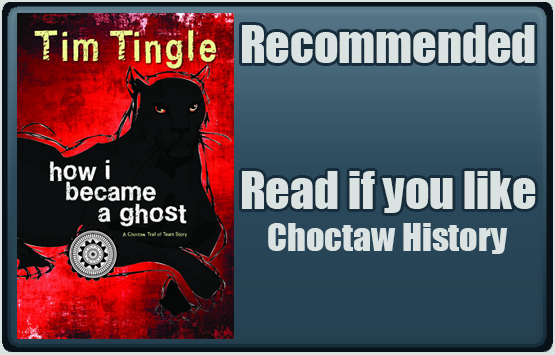
How I Became a Ghost by Tim Tingle

How I Became a Ghost by Tim Tingle

Formats: Print, digital

Publisher: The Roadrunner Press

Genre: Ghosts/Haunting,  Historic Horror, Werebeast (Were-Panther/Nagual)

Audience: Children

Diversity: American Indian (Choctaw)

Takes Place in: Choctaw Nation, Mississippi, USA

Content Warnings (Highlight to view): Animal Death, Child Abuse, Child Death, Child Endangerment, Death, Forced Captivity, Illness, Kidnapping, Oppression, Physical Abuse, Racism, Self-Harm, Torture, Verbal/Emotional Abuse, Violence

Blurb

Told in the words of Isaac, a Choctaw boy who does not survive the Trail of Tears, HOW I BECAME A GHOST is a tale of innocence and resilience in the face of tragedy. From the book’s opening line, “Maybe you have never read a book written by a ghost before,” the reader is put on notice that this is no normal book. Isaac leads a remarkable foursome of Choctaw comrades: a tough-minded teenage girl, a shape-shifting panther boy, a lovable five-year-old ghost who only wants her mom and dad to be happy, and Isaac s talking dog, Jumper. The first in a trilogy, HOW I BECAME A GHOST thinly disguises an important and oft-overlooked piece of history.

I was looking through the kid’s section of the library (before I get kicked out for being the creepy adult with no children) when I stumbled upon Tim Tingle’s How I Became a Ghost. The title intrigued me, I’m always looking for books by minority authors, and I loved the cover. Then I noticed the fine print: A Choctaw Trail of Tears Story. Tingle’s book is not a simple ghost story for kids, but an important work of historical fiction about the horrors of the Indian Removal Act of 1830, which illegally forced the Chickasaw, Choctaw, Creek, Seminole, and Cherokee from their homes and resulted in the death of thousands of American Indians.
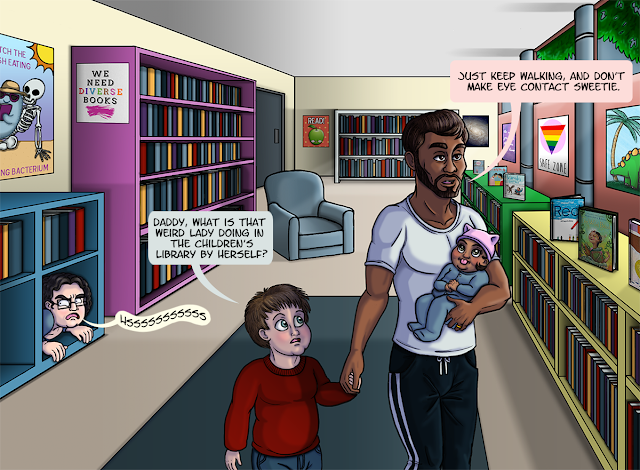
A dark-skinned father is walking with his light-skinned young son and holding his baby. They are in a children’s library full of brightly colored bookshelves and posters for “We Need Diverse Books Poster” and “Catch the Flesh Eating Reading Bacterium”. I’m hiding in one of the bookshelves like a gremlin, hissing. The boy asks his father “Daddy, what is that weird lady doing in the children’s library by herself?” The father, unconcerned, responds “Just keep walking and don’t make eye contact sweetie.”

I decided to draw a background for this picture, and quickly remembered why I hate drawing backgrounds. These are all real children’s book covers by the way. I also sneaked in a “Welcome to Night Vale” reference.

How I Became a Ghost is not a “fun” kind of scary story (though there are plenty of humorous moments- more on that later) where you can easily brush away your fear because you know it’s a work of pure fiction. The characters in the book may be fictional, but this is still a book based on true events, that caused a great deal of death, suffering, and the loss of ancestral homeland. The first half of the book is based on the real-life experiences of John Carnes, Tingle’s great-great-grandfather, who was forced to walk the Trail of Tears along with his family and lost his mother and brother to exposure and disease during their forced relocation. Tingle first recorded his account of Carnes’ life in the short story Trail of Tears for his anthology book, Walking the Choctaw Road, and would later use it as inspiration for writing How I Became a Ghost.

Tingle doesn’t shy away from descriptions of the Choctaw people cutting their flesh in mourning, being burned alive in their homes, dying from small pox infected blankets, and of course, children dying. Pretty rough stuff, but I think kids can handle it, Tingle does a great job of educating his audience about the Trail of Tears, while still keeping the content age appropriate. And as Shelley A. Welch, an Eastern Cherokee woman, wrote in her guest post for the blog American Indians in Children’s Literature:  “Some teachers will say that historical realities are too heavy for young children. Actually, it seems to be the adults that shy away from those topics …. who don’t seem to want to let go of American myths of ‘friendship and good will’ between the first settlers and the Indigenous people, a People who were once the majority and are now the smallest minority…. I can say that when children are told that one group bullied another, they are quite amazing peacemakers, acknowledging the breach of civil rights and offering cooperative resolutions. It is true, elementary-aged students aren’t developmentally ready for the specifics of genocide, but they can understand the inhumanity of racism. ” In other words, this book is loads better for children than all those Thanksgiving stories that propagate the lie of the “smiling (Wampanoag) Indian“. For kids who would prefer a non-fictional account of the Trail of Tears, there’s also Joseph Bruchac’s (author of Skeleton Manchildren’s book that he wrote for the Step-Into-Reading series. But I think there’s something to be gained from reading a more personal (albeit fictional) account when learning about history. How I Became a Ghost also educates readers about Choctaw (Chahta) culture, spirituality, vocabulary, and even has a ghostly cameo from Chief Pushmataha.How I Became a Ghost is posthumously narrated by a ten-year-old Choctaw boy named Isaac. Isaac frequently brings up his impending death, so you spend the first two thirds of the story on edge, wondering when his time will come. At first, he’s plagued by visions of other Choctaw people dying, but eventually Isaac comes to terms with his own mortality and seems to accept it, though he does worry about how his family will react. I guess when you’re surrounded by death and you know the end is coming you start to feel pretty chill about the whole thing. There are plenty of scary moments for horror lovers, a teenage girl being abused by soldiers then hiding in the bonepickers‘ wagon, under a pile of bloody bones, stands out in particular.

For a story that’s written so simply (to make it easy for young readers) How I Became a Ghost leaves quite the impact.  Something about the plain, straightforward way Isaac describes the trail of bloody footprints he leaves behind or the parents carrying their dead child really stays with you. Not everything is dark and depressing however, Tingle adds plenty of humor and hope to his book, like Isaac’s father pretending to be a snow monster and playfully chasing his sons, the other family they befriend on the Trail of Tears, and one of the Choctaw elders teasing Isaac for his clumsiness as a ghost. As a bonus, these scenes also shatter the myth of the “humorless, serious Indian” that’s frequently perpetuated by Euro-American media. I never felt like I was reading a “sad” story, more a story of survival. The ending of Isaac’s life, while tragic, is not the end of his spirit, and he continues to help and guide his friends and family as a ghost. When he dies, Isaac is cheerfully welcomed into the afterlife by the other spirits (shilombish) who continue to watch over their loved ones. Like the Choctaw Nation, Isaac continues to persevere, albeit in a different form, despite all he has suffered and lost.

I do have a few nitpicks, because of course I do, but they’re all pretty minor. Isaac’s cause of death felt like a really odd choice to me. *Spoilers* He’s killed by a wolf, even though wolves killing humans are extremely rare, and even then almost always carried out by a pack of wolves rather than a lone individual. In other words, Isaac would have had a greater chance of being killed by a lightning strike than a wolf attack. So why not have him die another, less improbable way? *End Spoilers* The whole thing seemed random and highly unlikely, though Tingle may have just chosen to take artistic license for the sake of the plot. Isacc’s dog, Jumper, also confused me. He seemed to be able to speak, but it wasn’t clear if Jumper could actually talk, or if Isaac just imagined his responses, like I do with my cats (don’t judge me). I think it’s the latter, since no one else appears to be able to “hear” Jumper, but it’s never really explained. So, there’s just this random talking dog that doesn’t really serve a purpose story-wise except to be adorable (not that I’m going to complain about a good dog, dogs make everything better).
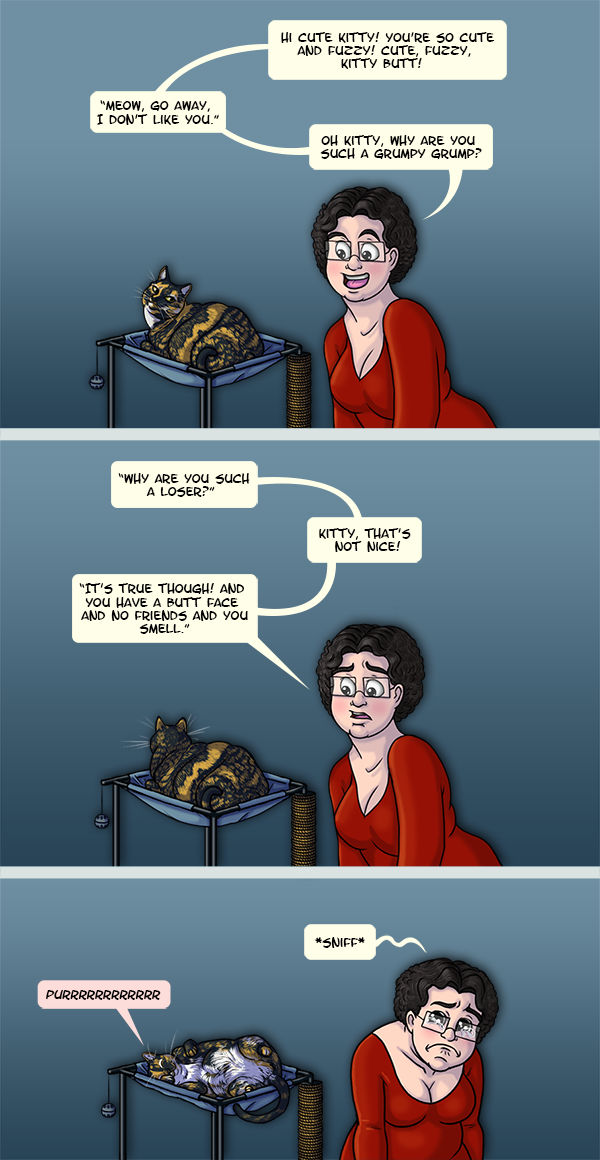
In the first panel, I’m cheerfully talking to a short-haired tortoise-shell cat and voicing her responses: “Hi Kitty! You’re so cute and fuzzy! Cute, fuzzy, kitty butt!” “Meow, go away, I don’t like you.” “Oh kitty, why are you such a grumpy grump?” In the second panel I look less thrilled as the cat ignores me and “asks” “Why are you such a loser?” “Kitty that’s not nice!” “It’s true though! And you have a butt face and no friends and you smell.” In the last panel I’m crying while the cat purrs happily.

Cats are jerks.

There’s also a kind of odd character introduction halfway through the story, with the appearance of Joseph the were-panther. Apparently, Isaac already knows Joseph from his village, it’s just that no one bothered to mention his existence or wonder where he was prior to that point in the story, not even his own grandparents who were introduced in the first few chapters. Well, I guess it’s nice that this guy we had absolutely no knowledge of previously managed to survive? It’s also odd that Joseph turns into a black panther, and not a cougar (which is also known as a panther), a large cat that’s native to North America. At first I assumed the black panther on the cover was a stylistic choice, until Tingle describes Joseph’s feline form as having a black coat. Melanistic color variants only occur in leopards and jaguars, not cougars, and jaguars wouldn’t be found so far north. They do sometimes wander into New Mexico and Arizona, and there were even reports of jaguars in California during the 1800s (leopards are located on an entirely different continent), but having one appear in Mississippi seemed unlikely. At first I thought Joseph might be half Aztec or Olmec, since Tingle doesn’t reveal anything about his parents and both Indigenous groups have stories about people who can turn into jaguars. But it’s also likely that black, shape-shifting cougars are a part of Choctaw theology that I’m just not familiar with. Black panthers also make appearances in Tim Tingle’s House of Purple Cedar and Caleb, the latter of his works, also about a shape-shifting boy. I did try to do some further research into the matter, but with all the false information out there regarding American Indian beliefs, spirituality, and legends I wasn’t able to come up with much. There also seem to be a lot of legends in Mississippi about black panthers. Who knows?Sorry, I went off on a weird tangent there…
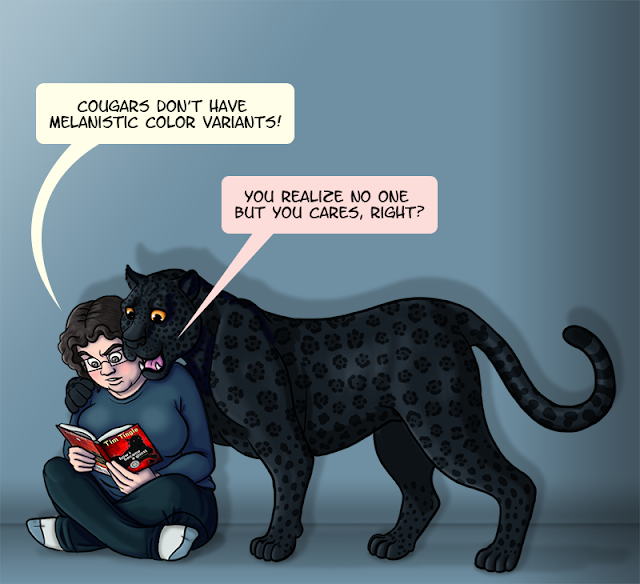
I’m sitting cross-legged on the ground, reading a copy of “How I Became a Ghost”. A black panther is standing behind me and reading over my shoulder. I complain “Cougars don’t have melanistic color variants!” The panther responds “You realize no one but you cares, right?”

I get really caught up on weird details, you’d think I’d be more concerned about the panther reading over my shoulder, but nope.

The writing may feel a little childish for adults and older readers, and not necessarily something I’d recommend for people in that age group (instead I’d suggest Tingle’s original Trail of Tears story, which is similar to How I Became a Ghost, but aimed at older readers and non-fictional), but kids will definitely get a kick out of the story and the epic rescue mission staged by Issac and his panther friend, and it will hopefully pique their interest in history and the Choctaw Nation. I know I’ll certainly be interested in checking out the sequel, When A Ghost Talks, Listen, when it’s released.
After the People Lights Have Gone Off by Stephen Graham Jones

After the People Lights Have Gone Off by Stephen Graham Jones

Formats: Print, audio, digital

Publisher: Dark House Press

Genre: Monster, Paranormal, Demon, Werewolf, Zombie, Killer/Slasher, Romance, Ghosts/Haunting, Sci-Fi Horror, Psychological Horror, Vampire

Audience: Adult/Mature

Diversity: American Indian (Blackfoot/Niitsitapi), Queer (Gay Men), Disability (Paraplegic)

Takes Place in: USA

Content Warnings (Highlight to view): Animal Death, Child Endangerment, Child Death, Gore, Violence, Death, Torture, Homophobia, Self-Harm, Implied Sexual Assault 

Blurb

The fifteen stories in After the People Lights Have Gone Off by Stephen Graham Jones explore the horrors and fears of the supernatural and the everyday. Included are two original stories, several rarities and out of print narratives, as well as a few “best of the year” inclusions. In “Thirteen,” horrors lurk behind the flickering images on the big screen. “Welcome to the Reptile House” reveals the secrets that hide in our flesh. In “The Black Sleeve of Destiny,” a single sweatshirt leads to unexpectedly dark adventures. And the title story, “After the People Lights Have Gone Off,” is anything but your typical haunted house story.

With an introduction by Edgar Award winner Joe R. Lansdale, and featuring fifteen full-page illustrations by Luke Spooner, After the People Lights Have Gone Off gets under your skin and stays there.

For Native American Heritage Month I’d thought I’d review a collection of short stories by one of horror’s greatest writers, Stephen Graham Jones.

Do you ever find yourself reading this awesome, interesting book, but then you get to the last chapter and go “What the fuck did I just read?” I’m not talking stories with ambiguous endings where it’s left open to interpretation, like in Inception where it’s unclear whether Cobb is still in a dream or not (and then you spend hours arguing about it on the internet), but the ending still makes sense. No, I’m referring to endings that are downright obfuscating (yay, I have a thesaurus!). Endings where you have to skip back to check if you missed some really obvious clue, only to find that no, the story really does end like that, and then you’re left wondering if you’re just not smart (or high) enough to “get it”. For example, 2001: A Space Odyssey. I know it’s this amazing, classic film, but what the hell was up with that giant space baby!?! Did the really obvious metaphor for the birth of humanity just fly over my head or did Kubrick just drop a bunch of LSD? Or both? Seriously WTF? Am I the only person who doesn’t get it?

In the first panel a TV is showing a scene from 2001: A Space Odyssey with a giant, human fetus/star child floating in the void and looking at the planet earth. The second panel reveals me watching the film, bewildered, and asking “The hell is even happening right now?”

In retrospect, I probably shouldn’t have tried watching this movie at 3 AM.

Well, Stephen Graham Jones is a master of the WTF ending. In some ways this works to his advantage, like when it highlights the confusion and mental instability of the narrator, or preys on the reader’s fear of the unknown. Subtle scares can be terrifying when done right, and when Jones gets it right, it works SO WELL, like with Second Chances where the final sentence of the story hits you like a punch in the gut. But Jones makes things too subtle you’re left scratching your head and wondering what you’re supposed to be scared of. It’s like when the creepy music starts playing in a film, you know you’re supposed to feel uneasy because something bad is about to happen, but then, when the final dissonant chord is struck, everything just sort of ends without the payoff of a monster jumping out or even a terrified scream to imply something horrible just happened. Which is, unfortunately, really not that scary. After the People Lights Have Gone Off (the short story, not the book), Uncle, Xebico and Brush Monster all have this problem. Did someone die? Was there a monster? Is the narrator hallucinating? Did anything bad even happen? Am I just not smart enough to get it? It’s especially frustrating when the rest of the story makes sense, like in Xebico, but then the ending just kind of goes off the rails.

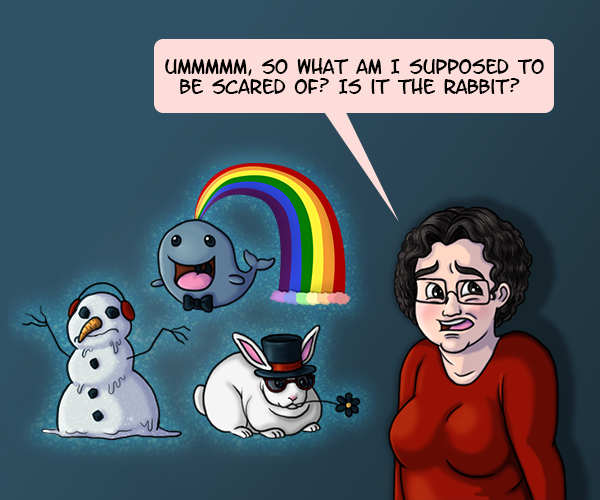
A sad, melting snow man with ear muffs, a whale with a bowtie shooting rainbows out of its blowhole, and a rabbit with a flower in its mouth, wearing a top hat and sunglasses are floating in midair and surrounded by sparkles. Looking uncomfortable, I ask, “Ummmm, so what am I supposed to be scared of? Is it the rabbit?”

I’m pretty sure it’s the sketchy looking rabbit.

Of course, none of this makes Jones a bad writer. He’s actually incredibly talented, aside from the whole confusing ending thing which is probably due more to me being obtuse than a lack of skill on Jones’ part. Like King, Jones has a real flair for making the mundane fucking terrifying.  For example, The Black Sleeve of Destiny, which is about a Lovecraftian hoodie. That’s right, a hoodie. Well, that and some poor kid’s mild kleptomania spinning out of control until it becomes a full blown obsession, but mostly the evil hoodie that seems to act as a pocket dimension with a mind of its own. There’s also The Spider Box (such a creepy title) about a cardboard fruit box that resurrects the dead.  Somehow Jones managers to cover all the horror staples in his book (demons, ghosts, werewolves, vampires, killers, and zombies) while still making his stories seem fresh and unique. A great example of this is Welcome to the Reptile House, one of the most distinct and creative vampire stories I’ve ever read. In fact, I didn’t even know it was a vampire story when I started reading it, so, uh, sorry for the spoiler.

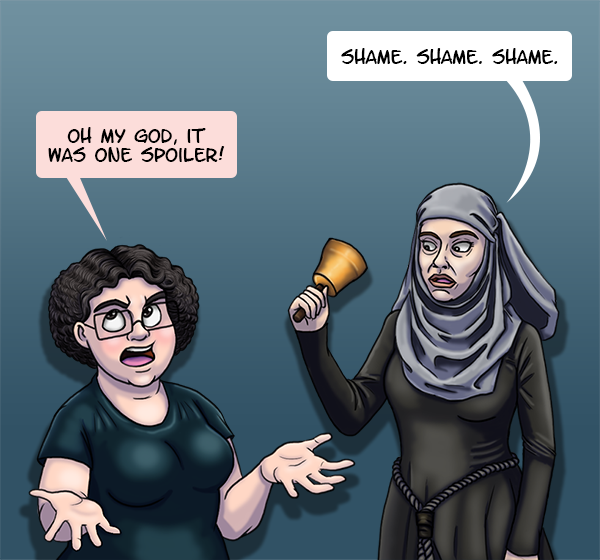
Septa Unella from Game of Thrones is ringing her bell and chanting “shame, shame, shame”. Annoyed, I snap “Oh my God, it was one spoiler!”

Septa Unella shows up any time someone reveals a spoiler. Or at least, she SHOULD.

But not all the stories in this collection are your traditional tales of horror, some could even be considered love stories. Albeit, really messed up, creepy love stories, but love stories nonetheless. One story is even called This is Love. Jones explores different kinds of relationships in his novel, from lovers and devoted spouses, to childhood crushes, to familial love between siblings, parents and children, and even extended family. Snow Monsters is a heartwarming tale about what a parent will sacrifice for their child, but with a supernatural twist. Doc’s Story, explores the bonds of a struggling family, and is one of the most human stories in the collection, ironic since it’s about werewolves.  In After the People Lights Have Gone Off (again, the short story, not the collection) and The Dead are Not we see examples of the complete devotion married couples have for each other, even when things get difficult and terrifying. Of course, there are also inversions, like Uncle, which is about a couple that has fallen out of love, and the husband’s feelings of guilt for not mourning his wife’s death.

Oh, and a little tip, before picking this book up I strongly recommend checking out Stephen King’s short story The Man in the Black Suit and H. F. Arnold’s The Night Wire (both of which you should read regardless because they’re awesome). Why? Well The Spindly Man is a horror story about a book group discussing King’s famous horror story (how’s that for Inception?), while Xebico is about adapting The Night Wire to the stage. And as cheesy as having a scary short story about another scary short story sounds, they’re both pretty awesome, yet another indicator of Jones’ talent.

Overall, After the People Lights Have Gone Off (this time I am referring to the book) is an amazing anthology by a talented author, as long as you’re okay with stream of consciousness writing and not always understanding what the hell you just read. Or maybe it’s just me, and the rest of you will have some deeper understanding of the stories. Jones’ work definitely makes me feel like I’m the only one at the party not getting the joke.

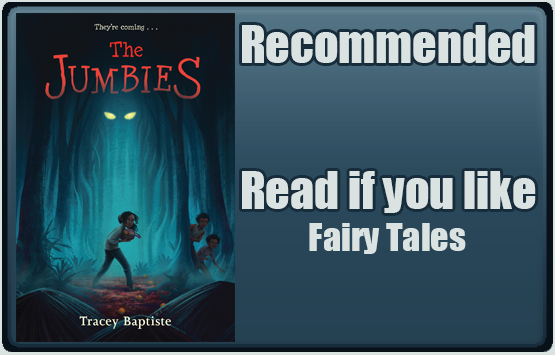
The Jumbies by Tracey Baptiste

The Jumbies by Tracey Baptiste

Formats: Print, audio, digital

Publisher: Algonquin Young Readers

Genre: Monster, Myths and Folklore, Supernatural

Audience: Children

Diversity: Afro-Tobagonian and Indo-Tobagonian characters, Character with Speech Disorder (selective mutisim)

Takes Place in: Trinidad and Tobago

Content Warnings (Highlight to view): Animal Death, Child Endangerment, Death

Blurb

Corinne La Mer claims she isn’t afraid of anything. Not scorpions, not the boys who tease her, and certainly not jumbies. They’re just tricksters made up by parents to frighten their children. Then one night Corinne chases an agouti all the way into the forbidden forest, and shining yellow eyes follow her to the edge of the trees. They couldn’t belong to a jumbie. Or could they?

When Corinne spots a beautiful stranger at the market the very next day, she knows something extraordinary is about to happen. When this same beauty, called Severine, turns up at Corinne’s house, danger is in the air. Severine plans to claim the entire island for the jumbies. Corinne must call on her courage and her friends and learn to use ancient magic she didn’t know she possessed to stop Severine and to save her island home.

I spent part of my childhood in St. Vincent and the Grenadines, where I frequently heard scary stories about Jumbies, the spirits that haunt the Caribbean. There were the Douens with their backwards feet and wide straw hats, the glowing eyes of the La Diablesse, and Duppies that could be kept away with salt. And while it was enough to give me nightmares as a child, being able to read a book that contained all these creepy creatures from my youth was nostalgic and wonderful.

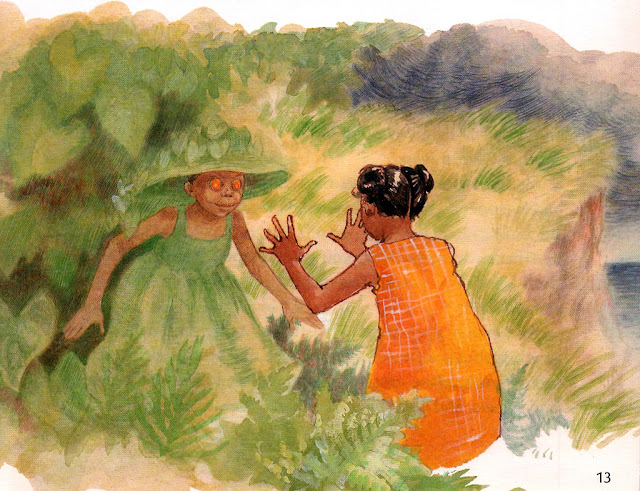
A water color painting of two young, dark skinned girls in the Caribbean. The first girl is dressed in a green dress and a wide, green hat, and she is stepping out of the forest. Her eyes are too big and glow orange, and she smiles wickedly. The other girl, who is human, wears an orange dress and has her hands up in fear as she backs away.

Thanks for the childhood nightmares Tales of the Caribbean (published by the Wright Group)

The Jumbies is based on the Haitian fairytale, the Magic Orange Tree, and contains underlying themes of colonization, the clash of two cultures, and environmentalism. But if you’re worried about helpless princesses and ham-handed messages about not littering, never fear, Tracey Baptiste is far too talented an author to create some sort of terrible Snow White/Ferngully mishmash. Sure, there are still plenty of fun fantasy tropes, monsters, magic, and the dead mom cliché (because that’s apparently some sort of requirement for heroines in fairy tales) but there’s also a lovely lack of distressed damsels, one dimensional villains, and black and white morality. Baptiste doesn’t try to feed her young readers any sort of over-simplified nonsense about how good people are pure and beautiful and only capable of doing good things. Instead, the characters are complicated and flawed, and right and wrong aren’t always clear cut.

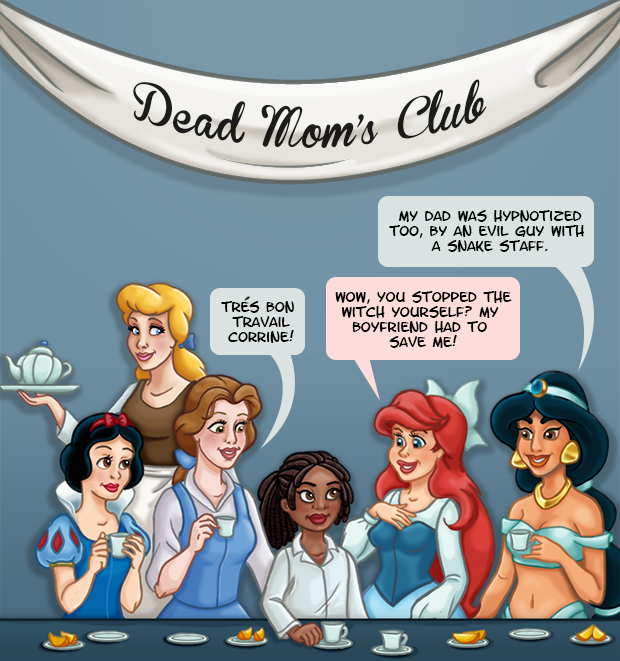
Five Disney heroines, Snow White, Cinderella, Belle, Ariel, and Jasmine, are having a tea party, with Corinne sitting in the middle. Over them, a banner reads “Dead Mom’s Club”. Belle exclaims “Très bon travail Corrine!” Ariel asks “Wow, you stopped the witch by yourself? My boyfriend had to save me!” and Jasmine comments “My dad was hypnotized too, by an evil guy with a snake staff.”

Okay, but seriously, what does Disney have against moms?

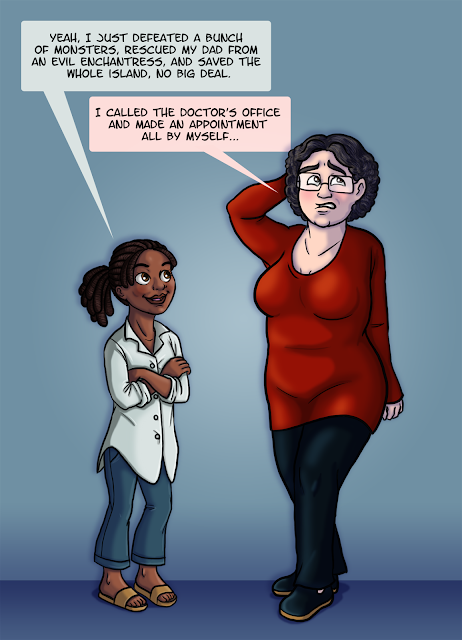
The main character, Corinne, is a young girl who lives with her father at the edge of a Jumbie-filled forest. Her mother died when she was very young but she left her daughter three very special gifts, her necklace, an orange tree, and a gift for growing things. Predictably, Corinne must use all three to discover the truth about herself and fight the evil threatening her home. And let me tell you, I wish I was as awesome as Corinne. She’s smart, self-sufficient, and incredibly brave. In the original fairy tale on which The Jumbies is based, the protagonist is a passive character that things just sort of happen to, but Corrine is proactive about her dire situation, and willing to fight the monsters herself instead of waiting for rescue. The helpless heroines in tales of old don’t hold a candle to the courageous Corinne. And let’s be honest “wait and hope things get better” is not the greatest message to give to kids. Don’t wait to be saved, rescue yourself.

Corrine, wearing her father’s oversized shirt, proudly tells me “Yeah, I just defeated a bunch of monsters, rescued my dad from an evil enchantress, and saved the whole island, no big deal.” Looking sheepish, I respond, “I called the doctor’s office and made an appointment all by myself…”

There’s nothing that makes me feel more inadequate than a kid 20 years my junior who’s tougher than I am.

That isn’t to say Baptiste is telling the reader to only rely on themselves. As tough as Corrine is, sometimes she needs the aid of her friends, in this case a pair of mischievous orphan brothers, Bouki and Malik, and a shy young girl named Dru. They pull her up at her lowest moment, and stand by her side when she confronts Severine. It’s a nice balance. Corrine is brave and independent, but is still able to rely on others when she needs to, while Dru, the girly-girl to Corrine’s tomboy, is shy and timid, without being weak and helpless, and learns to be braver and more independent. She may not want to handle scorpions or run into the forest by herself, but Dru’s still far from being a distressed damsel. Then there’s Bouki and Malik, who are used to relying only on each other but learn that getting help from others is a sign of strength, not weakness.

Interestingly, most of the Jumbies aren’t portrayed as being good or evil, they simply want to protect their forest home from the humans who’ve invaded it. But unlike more heavy-handed environmental stories, Baptiste takes a more nuanced approach, and doesn’t paint these issues as black and white. Think more Lorax (the book, not the film) less Captain Planet. The humans aren’t evil, selfish, or greedy, but they’re still destroying the forest homes of the Jumbies who’ve lived there for thousands of years. Nor are the Jumbies evil per se, they just want to protect their home from the human invaders. Even Severine, the big bad of the story, isn’t completely unsympathetic. As evil as she is, she clearly loved her dear sister and is hurting from her loss. Severine is lashing out for a reason, and while it by no means justifies the terrible things she does, it at least explains them.

This book is perfect for younger kids who are tired of Cinderella and Snow White, and like their stories a little spooky. It has a strong female lead, fighting to protect her father and her home, a cast of fun supporting characters, and one truly creepy villain.

Labyrinth Lost by Zoraida Córdova

Labyrinth Lost by Zoraida Córdova

Formats: Print, digital

Publisher: Sourcebooks Fire

Genre: Dark Fantasy, Occult

Audience: Y/A

Diversity: Ecuadorian author, Hispanic/Latinx characters, Puerto Rican characters, South Asian character, Bisexual characters

Takes Place in: New York City, USA

Content Warnings (Highlight to view): Abelism, Animal Death, Body Shaming, Bullying, Child Abuse, Child Endangerment, Death, Forced Captivity, Gaslighting, Gore, Kidnapping, Torture, Violence

Blurb

Nothing says Happy Birthday like summoning the spirits of your dead relatives.

Alex is a bruja, the most powerful witch in a generation…and she hates magic. At her Deathday celebration, Alex performs a spell to rid herself of her power. But it backfires. Her whole family vanishes into thin air, leaving her alone with Nova, a brujo boy she can’t trust. A boy whose intentions are as dark as the strange marks on his skin.

The only way to get her family back is to travel with Nova to Los Lagos, a land in-between, as dark as Limbo and as strange as Wonderland…

Alex is about to celebrate her Deathday, a huge party that’s thrown when a young bruja or brujo first gets their powers. Her entire extended family will be there to help her bind and control her newfound abilities. Everyone seems thrilled, especially her mother and older sister Lula; everyone that is, except for Alex. She views magic as a curse rather than a blessing, so she’s pretty upset when she discovers that, no surprise (it’s Y/A fiction after all), she’s essentially the most powerful bruja they’ve seen in generations, an encantrix whose magic is vast and broad. Most brujas are limited to one or two abilities, like healing or seeing the future, but Alex can pretty much do anything. In a misguided attempt to get rid of her power, she accidentally banishes not only all her living relatives but her dead ancestors as well to the Limbo-like land of Las Lagos. Oops.

Okay, so admittedly the whole powerful chosen one thing does sound kind of Mary Sue-ish, especially the part about not wanting her super special powers. “Oh, poor little main character, you get all these awesome powers, how awful for you!” said no reader ever. Well, Alex has a pretty good reason for hating her magic, and it’s not the typical “Oh, being perfect is so hard~” B.S. You see, magic isn’t some consequence free wish-fulfilling super power, it’s born from sacrifice. Magic drains the user and causes them physical pain. The more powerful the spell, the more you’ll suffer. Healing someone’s else’s headache means you’ll end up with a black eye. A protection spell could cause you to pass out. Some magic can even drain the life force of the user, slowly killing them. Magic is also the reason Alex’s father disappeared, destroying her family. She has to watch her mother grieve and suffer every day, trying to raise three girls on her own.  It traumatized her when she was seven and saw the re-animated corpse of her Aunt Rosaria. Magic killed her pet cat, plagues her with nightmares, and forces her to keep her best friend at arm’s length. So Alex’s aversion to her powers is understandable, I wouldn’t want to use magic either after all that.

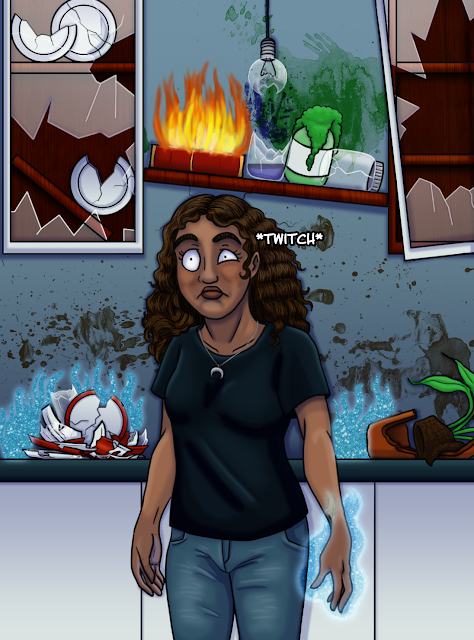
A dark skinned girl looks traumatized in front of a destroyed kitchen. Blue, magical flame surrounds her hand and the broken dishes on the counter.

Thanks, magic!

Love triangles are another tired trope in young adult fiction that I’m sick of seeing. It’s just pointless and needless drama that derails the story. Can’t everyone just be polyamorous and get along? A threesome would clearly solve this problem. It’s especially irritating when one (or both) of the love interests is a mysterious bad boy who appears out of nowhere and seduces the main character, despite them having nothing in common. Just have a one-night stand and get it out of your system, he clearly isn’t relationship material, damn. So many problems in YA fiction could be solved by just sleeping with everyone… and I just realized why I probably shouldn’t be giving advice to teenagers. Okay, forget everything I just said. Love triangles are still stupid though, and when I first learned Labyrinth Lost had one (with a mysterious bad boy no less) I let out one of those long, exasperated groans that makes me sound like a slow-moving zombie that just discovered it’s going to have run after its prey. So, basically me as a zombie. Running is the worst. So are pointless romantic sub-plots.

I’m rolling my eyes letting out a very long, very loud groan. My wife is sitting at a table looking at her tablet and trying to ignore me. She asks “So is it a love triangle again, or are you craving brains?”

THE WORST

Nova, the smug, douchey, “bad boy” brujo who kept flirting with Alex was about as obnoxious as you’d expect, no surprise there. He was all dark and tortured and rude, bleh. But this is where Córdova surprised me. Because Nova’s romantic rival is a South Asian girl named Rishi, Alex’s longtime friend. Okay, so a multiracial, bisexual love triangle, that’s not something you see every day. And it’s not just queer baiting either! The two girls are genuinely romantically interested in each other. Plus, Rishi is so awesome; she’s brave, weird, loyal, funny–exactly the kind of person I’d want to be friends with. When Alex is in trouble she doesn’t even hesitate to dive in and rescue her, because that’s what friends do. My interest was cautiously piqued, but I was still wary. Was this going to turn into a huge drama-filled plot point that derails the story? But again Córdova exceeded my expectations, because the love triangle is barely even there. Yes, Alex ends up with one of them, and yeah, the bickering of the two suitors could be annoying, but Alex’s entire focus is on saving her family, as it should be. Yes, she has crazy teenage hormones and starts lusting after her best friend and the mysterious Nova, but her focus never wavers from the task at hand, and she pushes her romantic impulses to the side. Alex even gets irritated that Nova is wasting so much time flirting and Rishi keeps getting jealous, when there are clearly much bigger fish to fry. I don’t usually get invested in romantic subplots, and I’m almost embarrassed to admit this, but I went full on fan girl and found myself shipping Rishi and Alex the entire time (much to the chagrin of my poor wife who had to deal with my high pitched squees every few minutes). I feel like I need to write Córdova an apology letter for ever doubting her, because she has somehow managed to pull off the least annoying love triangle I’ve ever read in YA fiction. Hell, even Nova got called out for his arrogant dick act, which I was also not expecting. So, Kudos to you Córdova.

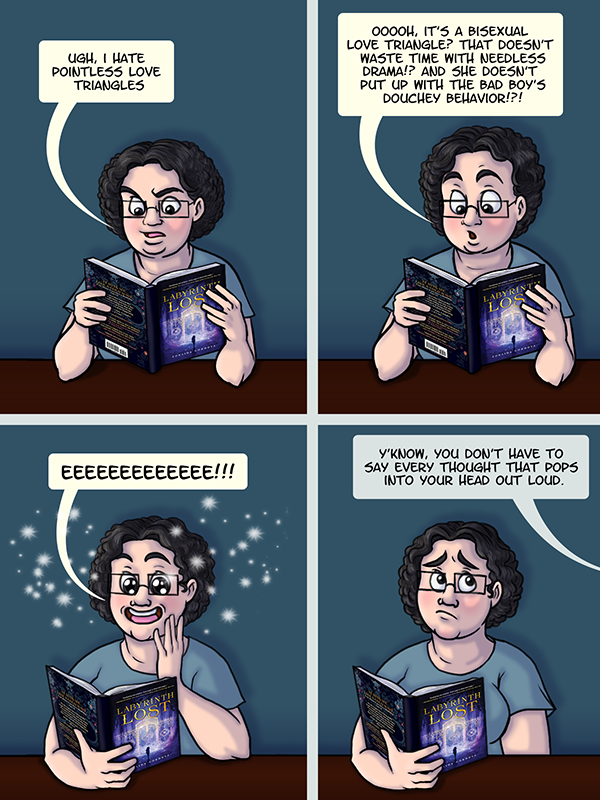
I’m reading Labyrinth Lost, looking annoyed, and comment “Ugh, I hate pointless love triangles.” In the next panel I suddenly look interested and saying “Oooooh, it’s a bisexual love triangle? That doesn’t waste time with needless drama!? And she doesn’t up with the bad boy’s douchey behavior!?!” The third panel shows me squeeing, surrounded by sparkles, with big, shiny eyes. In the final panel, someone yells off screen “Y’know, you don’t have to say every thought that pops into your head out loud”.

A love of triangle actually made me squee for the first time in history.

The whole romantic subplot, if you can even call it that, is thankfully a pretty minor story element, and the story’s main focus is on family and identity. Alex’s relationship with her sisters, mother, aunts and the other women in her family is incredibly well written and touching, and one of my favorite aspects of the book. It’s just so wonderfully refreshing to see a YA novel that focus on the bonds between women and familial love rather than girls fighting over stupid boys. Lula, her beautiful and bossy older sister is great, a force unto herself, overflowing with love and magic, and always ready to take charge. I love Lula. Her younger sister, Rose, is a psychic with the whole creepy child vibe going on, an incredibly clever and intelligent young girl with a sweet tooth and a mischievous streak. She doesn’t get as much page time, as she’s more reserved than her two sisters. And of course Alex’s mother, Carmen, a strong woman and loving parent, holds their little family together. They’re not perfect, and they might bicker, but they’re all fiercely loyal and protective of each other, and Alex’s strong connection with her family is what gives her the strength to journey through Los Lagos, and protects her from the perils of the dark, magical Limbo.

Córdova’s world building is another strong point of the story. Los Lagos is probably tied with Paheli from The Gauntlet for the coolest fantasy world I’ve read about this year. It’s enchantingly creepy, beautiful, and weird.  Interestingly, it reminds me of two other fantasies titled after the Minotaur’s legendary prison, Jim Henson’s Labyrinth and Guillermo del Toro’s Pan’s Labyrinth (with a little bit of the Wizard of Oz thrown in for good measure, even if it breaks the themed naming). The only downside to having a creative world that stands out so much is that the characters seem kind of bland in comparison. That’s not to say any of the characters are poorly written or dull, it’s just hard to hold a candle to the land of Los Lagos with its rivers of ghosts, burning forests, and creepy creatures.

Córdova’s world is inspired by Latin American religions and cultures to create the story’s mythology, magic, and gods. The bilingual bonuses and Latina influences will be fun for anyone familiar with the language and culture, but if you’re new to brujas and brujos keep in mind the ones in Labyrinth Lost resemble actual Brujeria, Santeria, and folk magic practitioners about as much as the wizards and witches in Harry Potter represent real Wiccans. For example, the Deos in the story are similar in many respects to the orixá of Santeria and the Loa form Vodou, but have no “real world” counterparts. Interestingly enough, other witches and magic users from other traditions also exist in the Labyrinth Lost universe, though we never get a chance to see them. Maybe in future Brooklyn Brujas titles.

Shutter by Courtney Alameda

Shutter by Courtney Alameda

Formats: Print, digital

Publisher: Square Fish Books

Genre: Monster, Ghosts/Haunting, Zombie, Vampires, Blood & Guts, Thriller, Horror, Romance

Audience: Y/A

Diversity: POC (Love interest is part Aboriginal Islander, author is Latina), Disability (PTSD)

Takes Place in: type here

Content Warnings (Highlight to view): Violence, Gore, Child Death, Physical Abuse, Emotional Abuse, Child Abuse, Sexism, Sexual Harassment/Assault, Torture 

Blurb

Lock, stock, and lens, she’s in for one hell of a week.

Micheline Helsing is a tetrachromat-a girl who sees the auras of the undead in a prismatic spectrum. As one of the last descendants of the Van Helsing lineage, she has trained since childhood to destroy monsters both corporeal and spiritual: the corporeal undead go down by the bullet, the spiritual undead by the lens. With an analog SLR camera as her best weapon, Micheline exorcises ghosts by capturing their spiritual energy on film. She’s aided by her crew: Oliver, a techno-whiz and the boy who developed her camera’s technology; Jude, who can predict death; and Ryder, the boy Micheline has known and loved forever.


When a routine ghost hunt goes awry, Micheline and the boys are infected with a curse known as a soulchain. As the ghostly chains spread through their bodies, Micheline learns that if she doesn’t exorcise her entity in seven days or less, she and her friends will die. Now pursued as a renegade agent by her monster-hunting father, Leonard Helsing, she must track and destroy an entity more powerful than anything she’s faced before . . . or die trying.


Shutter by Courtney Alameda is a thrilling horror story laced with an irresistible romance.

As a 90’s kid, I grew up with some truly terrible action films. And I loved them. Mortal KombatWild Wild West, and Total Recall are all proudly displayed on my DVD shelf. So I like to think I’m pretty forgiving when it comes to plots full of holes and cookie-cutter characters, as long as the story itself is fun and entertaining. Keeping that in mind, let’s dive into Shutter, the literary equivalent of a bad action film.

We’ll start with our four, action-cliché, main characters. We’ve got the leader of the good guys, complete with her obligatory tragic backstory, the tough guy who always has her back, the smart guy who’s good with computers but not so great at fighting, and the wise cracking jackass who we’re supposed to like but just comes off as sexist and irritating. They exist to spout “clever” quips at each other, provide exposition at awkward times, and act like bad asses.

Following a standard action movie formula, the hero decides to rush off on her own without backup, and gets suspended by the boss (who’s also her abusive dad). But they go after the bad guy anyway because screw the rules, they’re action heroes! Then there’s lots of cool action scenes, explosions, some TRULY creepy shit, and a love story that gets shoehorned in there.

Okay, so the writing is “meh”, the characters are kind of flat, and the story formulaic as hell, but was it at least exciting and entertaining?  Was their nail biting suspense and horror? I’ll get to that in a minute. First, I need to address some major issues I had with story, the first being its heroine, Micheline.Micheline is a tetrachromat, able to see the invisible “ghost light” given off by the undead. As a direct descendant of Abraham Van Helsing, (because of course she is) she is sworn to protect the world from monsters, and captures and exorcises ghosts on her camera, à la Fatal Frame. Now, I’m going to give the author major props for making the lead a woman, something that doesn’t happen often in the action genre (but is slowly becoming more common). So that’s great. What’s not so great is that Micheline has this really annoying habit of having to prove what a “Strong Female Character TM” she is by running head first into danger, then needing to be rescued by the guys. Apparently nothing says “bad ass” like poor decision making and being a damsel in distress.

Micheline, is wearing her tactical, Hellsing gear and has her hair pulled back in a ponytail. She’s leaping in the air, brandishing a gun in one hand, and a camera in the other while gleefully shouting “Leerrooooy Jenkins!!!!”

Great teamwork there.

I can understand why she might want to prove herself; Micheline is struggling with PTSD and an abusive father, so it would make sense if the story was about her difficulty returning to active duty while suffering from flashbacks. Overcoming something like that is no easy task. But her trauma and strained relationship with her father seem to be their own separate thing, with little to nothing to do with her foolhardy, reckless, and selfish behavior. At least Micheline doesn’t take her grief out on everyone else, like her jerk-ass dad, she just puts their lives in danger by keeping important information from them, making everything about her, and refusing to deal with her issues. So, basically a pretty awful leader. I also got this whole “I’m not like other girls, I’m a cool girl” vibe from Micheline. Throughout the book she kept putting down other women and/or viewing them as competition for her “boys”, which was just sexist and gross. Basically, what could have been a cool, strong, female action hero was ruined by internalized sexism, bad decisions, and needing men to save her all the freaking time.

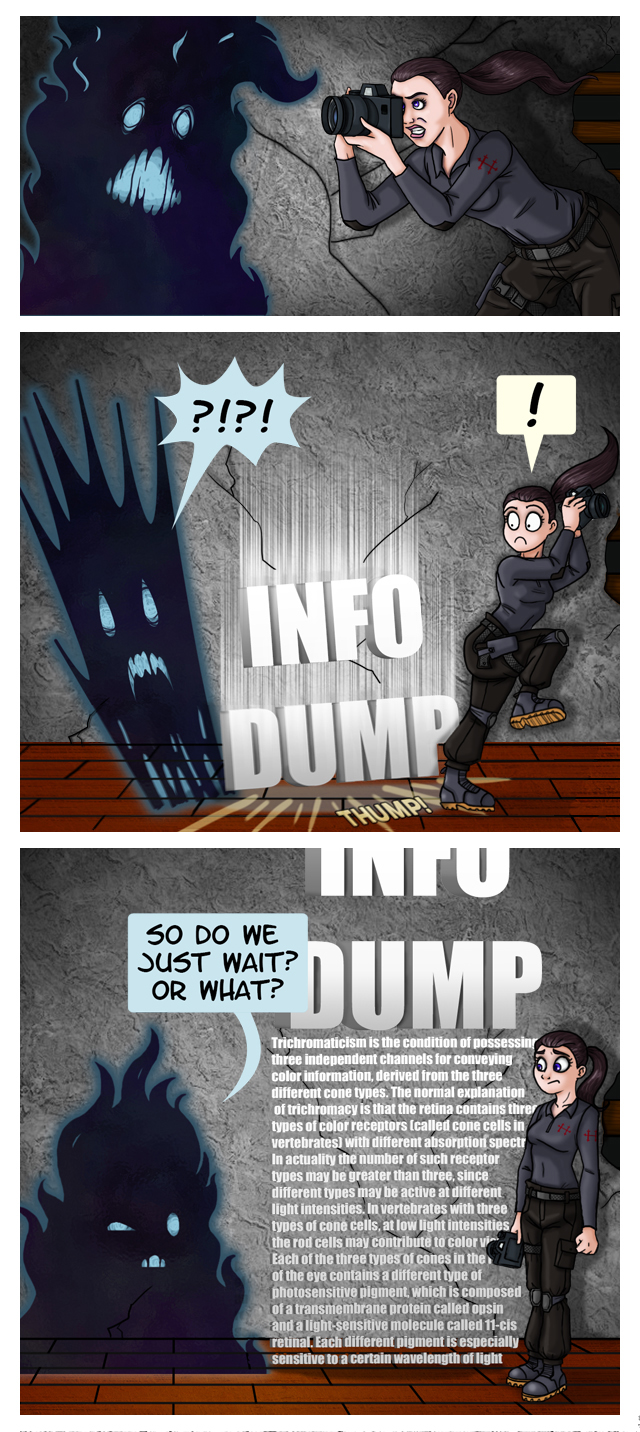
Another huge problem with Shutter was the flow of the action scenes. There is SO MUCH exposition and info dumping, and it keeps interrupting the suspenseful parts of the story. I mean, it’s wonderful how much thought Alameda put into this world, and I was certainly interested in the science behind monster hunting, but I don’t want to read a full page about how a camera works right when Micheline is about to be killed by a ghost. It’d be like pausing the duel scene between Luke and Vader to give a five minute lecture on the technology behind lightsabers. It’s cool and all, but really not the right time, and completely destroys the tension.

Micheline is fighting a shadowy creature with a glowing blue mouth and eyes. In the first panel she’s attempting to take its photo. In the second, both she and the monster jump out of the way in surprise as the words “INFO DUMP” fall from the sky. They both stand there awkwardly as an extensive, verbose paragraph about trichromsticism scrolls by. The shadow monsters asks “So do we just wait, or what?”

Forget the incredibly dramatic fight scene, let’s learn about trichromsticism!

Okay, so now for the moment you’ve been waiting for, was it at least entertaining? Heck yeah it was! The overall story was great, suspenseful, and fun, with some truly terrifying scenes. By the time I got to the second half of the book, I couldn’t put it down! The monsters were incredibly creative and creepy, like something out of Silent Hill, and the horror scenes were spot on. Alameda does an excellent job of building suspense and creating a creepy atmosphere (minus the random info dumps that kill the mood). It’s worth pointing out that this is the author’s debut novel, so it’s understandable that the book has flaws. Even the great Terry Pratchett’s early work was, admittedly, not that great, and he’s one of my favorite authors! So Alameda definitely has time to hone her skills and improve on her characterization and exposition. She’s already great at world building, horror, and action scenes. And honestly, it’s nice to see a horror novel written by a Latina author. The genre is severely lacking in Latine/Latina writers, and the few I know of are mostly men.

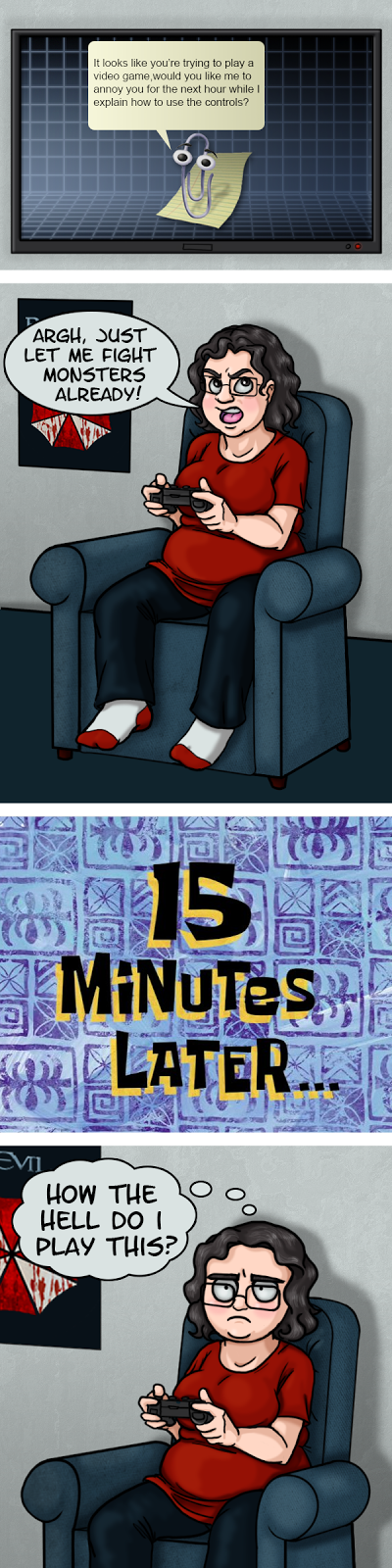
Overall, Shutter is a fun, suspenseful read, even with its flaws. If I could just take out the annoying characters, and focus on the plot, the monsters, and the fight scenes, the book would be perfect, like a horror survival game. That’s actually not a bad idea, it could be a cross between Fatal Frame and Resident Evil, where you can just explore abandoned buildings and fight monsters instead of listening to pointless dialogue. At least in a video game I can skip random info dumps.

The Microsoft paperclip asks “It looks like you’re trying to play a video game, would you like me to annoy you the next hour while I explain how to use the controls?” Annoyed, I complain “Argh, just let me fight monsters already!” and skip the tutorial. 15 minutes later, I wonder to myself how the hell I’m supposed to play this game.

I just imagine all annoying video game tutorials as being done by either Navi or the Microsoft Paperclip.

I just imagine all annoying video game tutorials as being done by either Navi or the Microsoft Paperclip.

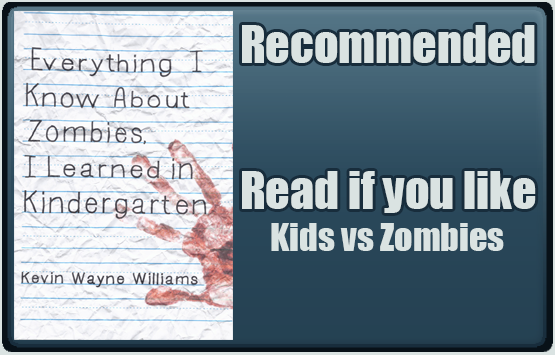
Everything I Know About Zombies I Learned in Kindergarten by Kevin Wayne Williams

Everything I Know About Zombies I Learned in Kindergarten by Kevin Wayne Williams

Formats: Print, digital

Publisher: Mott Haven Books

Genre: Apocalypse/Disaster, Blood & Guts, Zombie

Audience: Adult/Mature

Diversity: Black/African American/Caribbean American characters, Trinidad, Jamacian, Hispanic/Latinx characters

Takes Place in: New York City, USA

Content Warnings (Highlight to view): Abelism, Animal Abuse, Animal Death, Body Shaming, Bullying, Cannibalism, Child Death, Child Endangerment, Death, Drug Use/Abuse, Forced Captivity, Gore,  Medical Procedures, Miscarriage, Racism, Rape/Sexual Assault, Slurs, Suicide, Violence

Blurb

Finalist for Foreword Reviews’ IndieFab Novel of the Year for Multicultural fiction and Horror. Even before the apocalypse, nine-year-old Letitia Johnson’s life had never been simple. Shuttled from foster home to foster home in the impoverished neighborhood of Mott Haven, it was all she could do to keep track of her little sister. When the apocalypse came, she tried to keep her sister’s kindergarten safe by locking them all in a tiny school bathroom, hiding while they waited for a rescue that never came. For five days, they hid. They hid while their teachers were being eaten, while their classmates were being killed. They hid while the Bronx was being evacuated. Now, there’s no one left to help them. There’s no place left to hide. It’s just her, one ax, twelve kindergarteners, twelve garden stakes, and a will to live.

While the cast of this novel is primarily children, the book is intended for adults and contains material unsuitable for younger readers.

When it comes to horror, kids come in two types. Either they’re sweet, innocent, completely helpless victims the protagonist needs to protect at all costs, or they’re evil little bastards that will send you into the cornfield, control you with their telepathic powers, or just straight up murder you because they’re the spawn ofSatan. The children in Everything I Know About Zombies I Learned in Kindergarten somehow land right dab in the middle of the victim/villain scale. They’re neither helpless nor innocent after being forced to go through things no child should go through, nor are they actively malicious, only killing for survival. They also don’t seem to possess the immunity to handle situations that most children do in horror stories. Kids get eaten by Zombies, shot, torn apart, and baby zombies get spiked in the head. So if you can’t stomach minors getting killed in fiction, I recommend staying far, far away from this book.

 Letitia, the nine-year-old protagonist, is easily the most competent, clever, and practical character in the book, organizing her little sister’s kindergartners into a unit of efficient zombie killers and quickly picking up survival skills. Growing up with a drug addicted mom, Letitia is used to taking charge and picking up adults’ slack, in addition to becoming wary of the world at a young age. In the early chapters, they try to look for the childrens’ parents, eager to be rid of such a heavy responsibility, only to discover their dickbag guardians all evacuated without them. (Who the hell just leaves their kid behind during a disaster? You’d think they’d at least make some effort to save them, damn.) The adult survivors actually pose more of a threat than the zombies (or cucos, as the children call them), their greed and despair claiming far more lives than the undead do. It’s weird, even though the children are far from innocent, having become skilled killers, the adults are the ones who’ve become morally bankrupt. The few who do manage to hold on to their optimism and naivety don’t last long, foolishly trusting the wrong people or refusing to admit the world, and the rules, have changed. The kids might be depressingly cynical and violent now, but they’re merely adapting to their new reality, and are much more practical than their grown counterparts. It’s no wonder the adults are so unnerved by them.

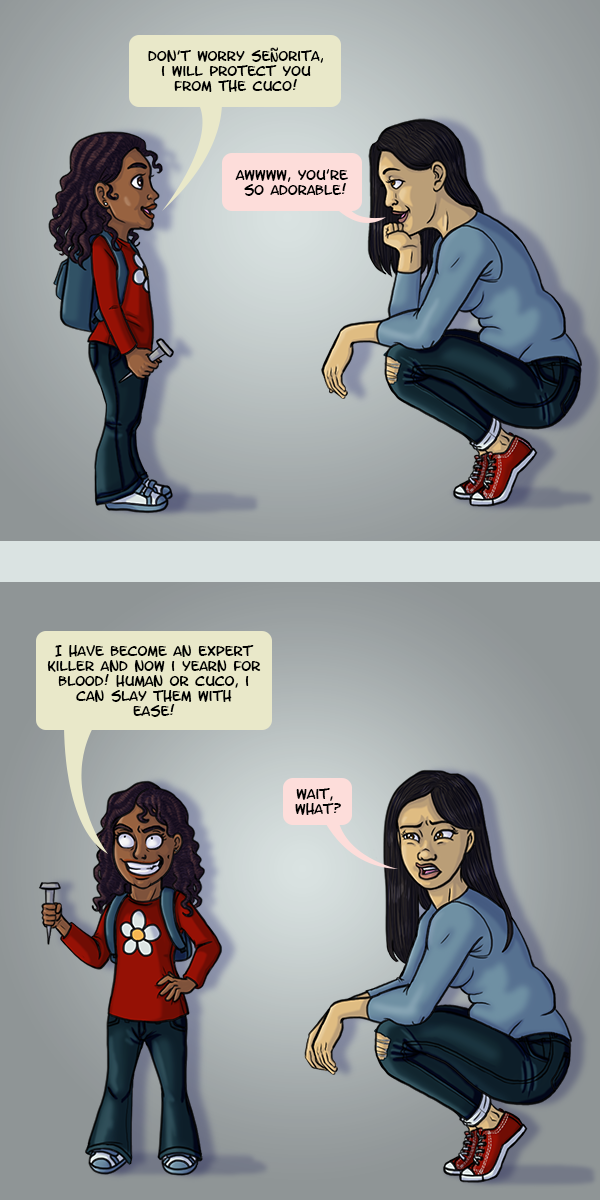
In the top panel, a little girl holding a spike is telling a grown woman “Don’t worry Señorita, I will protect you from the cuco!” The woman, bemused, responds “Awwww, you’re so adorable!” In the next panel the little girl brandishes her spike with a crazed grin and responds “I have become an expert killer and now I yearn for blood! Human or cuco, I can slay them with ease!” The woman, confused and concerned, asks “Wait, what?”

Some of the kids enjoy killing a little too much.

I was expecting the children being eaten by the undead to be the most disturbing part, until the book turned out to be about the death of innocence, and children being forced to adapt to a situation no child should ever go through. It’s one thing to read about fantastical monsters like Zombies attacking a bunch of helpless kids, but quite another when they’re dying from gun violence, or growing up in crushing poverty. In the first, the situation is pure fiction, no real child is ever going to be attacked by the undead, and you can feel safe in that knowledge. But it hits close to home when it comes to real world problems. Even if the children in the story are fictional, you know millions of real kids out there right now who are surrounded by abuse, violence, and probably living without basic necessities, and that’s super depressing. So basically, it’s a story about how kids with rough lives can’t rely on adults (because they’re either malicious, incompetent, or ignorant) and have to take charge of their own safety and survival, which probably would’ve ended up happening with or without undead hordes overtaking the city. I know zombie apocalypse stories are generally bleak, but damn.

 The zombies in the story are pretty much your typical Romero zombies, slow-moving and stupid, and not too difficult to kill as long as there aren’t a lot of them and their brains are destroyed, a feat which the children usually accomplish by stabbing them in the eye with garden stakes. Unfortunately, everyone becomes zombified upon death, regardless of how they die, so the undead multiply even if they can’t bite anyone. Letitia quickly figures out that the zombies are attracted to movement and sound, and is smart enough to stick to quiet, secluded areas, while the adults continue to attract the undead with the buzz of their emergency generators and gun fire (because the adults are somehow less competent than grade schoolers, another reason Letitia avoids them).

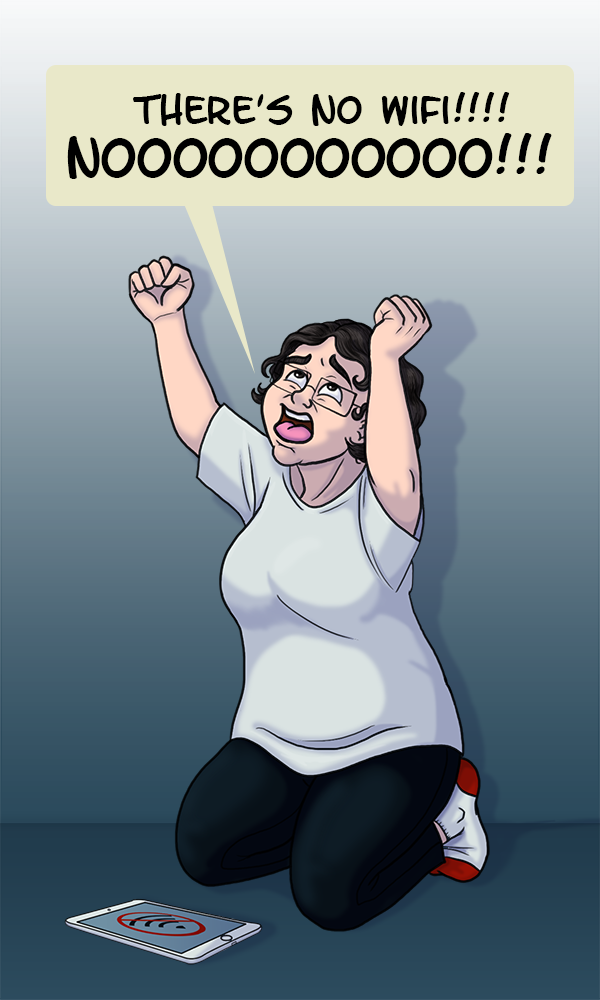
 Unfortunately for me, most of the book is dedicated to the practically of surviving in an abandoned New York City, wandering around and looting mini-marts for supplies…which made for less than stimulating reading. I’m going to admit right now, I don’t like camping or fishing, or any form of “roughing it,” and I don’t like reading about it, either. I’m pretty sure I’d die if I went for more than 40 minutes without WiFi.  So I’ve long ago accepted the fact that I would probably be the first person to die in a zombie apocalypse type situation due to my dependence on modern conveniences and comfort, and I’m okay with that. I’m sure some people will find all the survivor type stuff super interesting, as is evident from Discovery Channel’s programming, but I was hoping for way more suspense and undead violence, and less foraging and guinea pig farming. Speaking of which, there’s a decent amount of animal death too, apparently Zombies like to eat puppies as much as they like to eat little kids.

I’m on my knees, fists raised above my head, screaming at the sky in despair “There’s no Wi-Fi! Noooooooooooooooooooo!” A tablet lies in front of me displaying a large “no Wi-Fi” symbol on the screen.

I would not last long in an Apocalypse, or even a dead zone. How did I even function back in the 80’s?

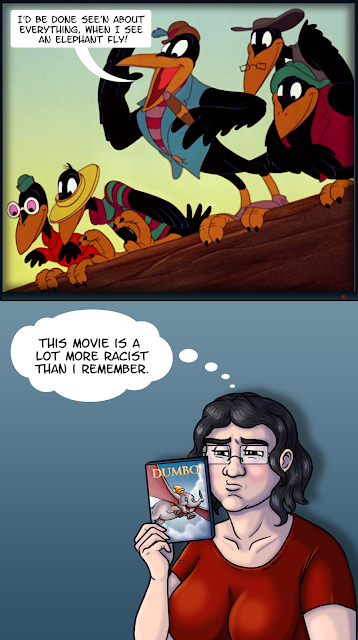
Stepping away from the story for a moment, I feel it’s worth mentioning that while this book was a finalist for a multicultural fiction award, and has a very diverse cast, it was written by a white guy. Obviously, I prefer Own Voices books, but I’ve reviewed non-minority authors writing about minority characters on here before, and I probably wouldn’t even be mentioning the author’s race except for one thing that was bothering me. For the most part Williams does do a pretty decent job at representing a very racially diverse cast, and has clearly put a lot of effort into making the children’s voices seem authentic. But the way the protagonist, Letitia, spoke came off as iffy to me, and I found myself side-eyeing like I always do when white people try to replicate the slang and speech patterns used by people of color within their communities. Now, it’s totally possible Letitia is completely accurate to how Caribbean children speak, and I’m just super ignorant. It’s just as possible Williams was trying to portray the way an average nine-year-old speaks, and Letitia’s ethnicity had nothing to do with it. I mean, I have no idea what children are supposed to sound like, and my mom was a grammar obsessed English major so I probably sounded like an overly-formal weirdo at that age. (No one says “to whom are you referring” or “may I please”, when they’re in Kindergarten mom, GOD.) I honestly don’t know, so I’m afraid I’m going to have to leave that distinction to someone more qualified. And if I am jumping to conclusions, well, blame it on all the racist pidgin I’ve heard spouted by characters like Long Duk Dong and the Crows from Dumbo (did you know the main crow’s name is Jim? Damn, Disney…) over the years making me super wary.

In the top panel, a TV screen displays an image of the five crows from Disney’s Dumbo. The leader shouts “I’d be done see’n about everything, when I see an elephant fly!” In the second panel I’m squinting suspiciously at the Dumbo DVD case thinking “This movie is a lot more racist than I remember.”

Seriously, Jim Crow! WTF were you thinking Disney!?! At least they’re not as bad as Sunflower from Fantasia.

Everything I Know About Zombies I Learned in Kindergarten definitely has flaws, most of the adults (and a few of the kids) get so little characterization it’s hard to figure out who’s who, the action scenes are confusing, and Williams spends way too much time on boring minutiae, but it’s still an enjoyable read. The horror is less the gory, run away from the monster kind like I was expecting, and more a slow building horror at the nature of humanity and how adults kind of suck.

Panic by Sharon Draper

Panic by Sharon Draper

Formats: Print, digital

Publisher: Atheneum Books for Young Readers

Genre: thriller

Audience: Y/A

Diversity: POC (Black, Asian American)

Takes Place in: Western USA

Content Warnings (Highlight to view): Rape/Sexual Assault, Sexual Abuse, Physical Abuse, Verbal/Emotional Abuse, Child Endangerment, Self-Harm, Kidnapping, Forced Captivity, Homophobia, Ableism, Sexism, Misogyny, Body Shaming, Slurs, Gaslighting, Violence, Death

Blurb

This gripping, chillingly realistic novel from New York Times bestselling author Sharon Draper, “by turns pulse-pounding and inspiring” (Kirkus Reviews), shows that all it takes is one bad decision for a dream to become a nightmare.

Diamond knows not to get into a car with a stranger.

But what if the stranger is well-dressed and handsome? On his way to meet his wife and daughter? And casting a movie that very night—a movie in need of a star dancer? What then?

Then Diamond might make the wrong decision.

It’s a nightmare come true: Diamond Landers has been kidnapped. She was at the mall with a friend, alone for only a few brief minutes—and now she’s being held captive, forced to endure horrors beyond what she ever could have dreamed, while her family and friends experience their own torments and wait desperately for any bit of news.

From New York Times bestselling author Sharon Draper, this is a riveting exploration of power: how quickly we can lose it—and how we can take it back.

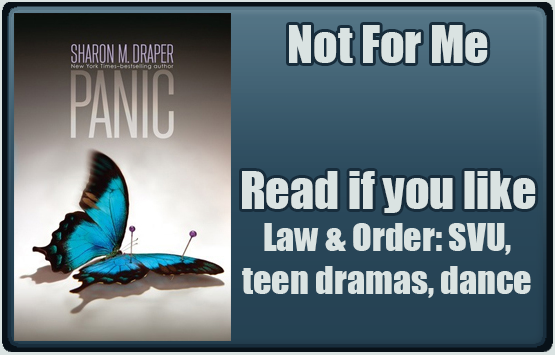
Here’s the thing about Panic. The first time read it, I hated it. I thought it was preachy, poorly-written, and out of touch. The book advertises itself as a crime-thriller about the abduction of the teenage dancer, Diamond, and the ordeals she goes through while in captivity. And I’ll tell you right now, those parts of the story are deeply disturbing. Stop here if you don’t want to read about the abduction and sexual assault of a fictional minor. But that’s only a very small part of the story. In fact, most of the book focuses on what Diamond’s fellow dancers go through, especially a young woman named Layla who’s entwined in an abusive relationship. And that’s not what I signed up for when I started reading Panic. We have this abducted girl who’s being drugged and brutalized, and you feel so scared for her, but instead the story chooses to focus on her whiny fellow dancers. WTF?! And that bugged me, because it felt like Diamond’s rape and exploitation wasn’t important enough to focus on, so instead Draper squeezed in some insipid love triangle, and some extra drama about a dad in jail and an abusive relationship. BUT, I’ll admit, after a second reading, I initially rushed to judgment and missed the point of the book.

Despite what the book jacket said, this isn’t a story about a girl who gets kidnapped by a pedophile. I mean, that does happen, but it’s not the story’s main focus. This is a book about a bunch of kids trying to cope with the tragedy of their friend’s abduction, and expressing their fear and frustration through dance. It’s also about abuse victims, and how anyone can become one. And honestly, Panic was a lot better the second time around. I still didn’t like it, but at least I’ve now figured out why I had so many issues with the story the first time around.

Draper has definitely done her research when it comes to sexual assault and abuse. Although abductions by strangers are uncommon (most are committed by a family member or acquaintance), Diamond’s kidnapper, Thane, is just the sort of person who would lure a girl into sex trafficking. He’s not some sketchy guy driving a refrigerator van, like the ones we’re taught to fear. Instead, Thane is well dressed, friendly, and charming. He approaches Diamond in a well-lit, public food court in the mall. He’s able to back up his claims with photographs, offers to let her call her mom, and convinces her to get into his car of her own free will. This is more accurate to real life, where the people who “recruit” teens into prostitution and porn usually work out in the open. They make promises of a glamorous (or at least marginally better) lifestyle, and come off as legitimate businessmen and women. They spend time gaining their victim’s trust and learn how to manipulate them. It’s similar to other abusive relationships, like Layla’s, where the abuser presents themselves as charming and kind, and only reveals their true nature bit by bit, after they’ve developed control over their victim. Likewise, Layla’s awful boyfriend, Donovan, keeps her by his side by giving her the love she desperately craves (since her father is in jail and her mother’s never around), picking away at her self-esteem so she thinks she’s “lucky” to have him, and always tearfully apologizing whenever he hurts her. Obviously Draper knows her stuff, and is able to approach sensitive topics in an honest way. She never blames the victims (even if some of the characters do), both Thane and Donovan are clearly at fault for everything that happened to Diamond and Layla. Although, I find it ironic that Draper includes one of Chris Brown’s songs in her book about women being abused, especially since Panic was written around 2011-2012, then published in 2013, so Draper should have been aware of Brown’s domestic abuse allegations, which happened back in ’09. So yeah…

While Draper seems to be a pretty talented author, as is obvious from her descriptions of her character’s dancing, the quality of the writing in Panic varies wildly, almost as if Draper was struggling to find the right voice for a teenage audience. Sometimes the lines are elegant and poignant, while others made me feel like I was reading a “My First Chapter Book”. Except the subject matter probably isn’t appropriate for anyone in the easy reader audience (I think, I dunno what the kids are reading these days).

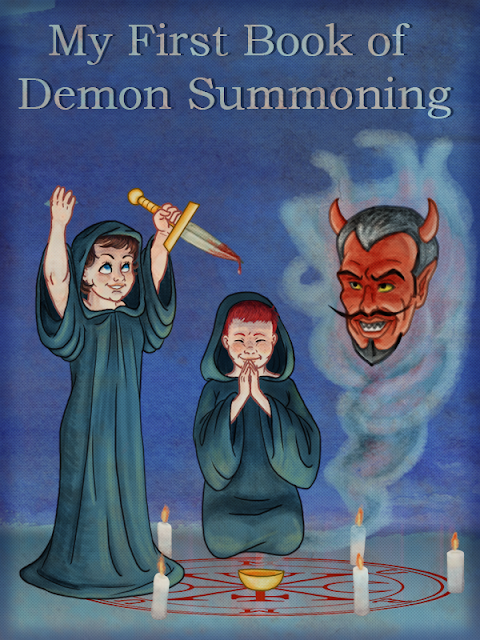
A fake vintage children’s book cover entitled “My First Book of Demon Summoning”. Two cheerful, Dick and Jane-esque children are wearing dark robes, the boy is on the ground praying and the girl is holding a blood dagger over her head. They’re standing in a demonic circle, surrounded by candles, with a gold bowl in the middle. Smoke rises out of the bowl revealing a very stereotypical red devil face, complete with pointed ears, horns, a moustache and goatee.

I mean, I’d let a kid read this, so I’m probably not the best judge…

Just when I’m starting to actually enjoy the story, along comes a cringe-worthy line like “This is the only place where I feel like I can really kick it.” And “OMG, the show is gonna be off the chain!” or “Nice ‘fit today… I gotta get out my shades to combat the shine you’re bouncing.” Who talks like that? NO ONE. NO ONE TALKS LIKE THAT. It’s like how old people who believe that sex bracelets are a real thing think teenagers speak. It reeks of embarrassing adult trying to be hip. Worse, it makes scenes that were intended to be moving come off as cheesy or forced. Draper also feels the need to fill her book with “current” slang, pop culture references, and mentions of popular songs from 2011, which I’m sure in no way is going to make this book seem incredibly dated in a few years. And this is what ruined the book for me. Because even though Panic isn’t actually preachy or condescending with its subject matter, the dialogue and attempts to come off as “cool” and “relevant” conjure up images of every patronizing, poorly researched, and vaguely racist PSA I was forced to sit through as a schoolchild in the 90’s. So of course that’s all I could think about the entire time I was reading Panic, those crappy drug-free programs that told naïve school children their faces would melt like the guy from Raiders if they so much as thought about smoking a joint, which led to me judging the book unfairly.

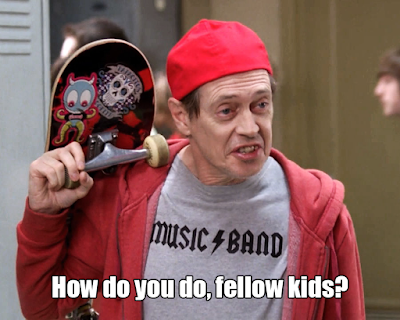
A photo of a fifty-something Steve Buschemi wearing a backwards baseball hat, a T-shirt that says “Music Band” with lightning bolt in the middle (similar to the AC/DC logo), and a red hoodie. He has a skateboard slung over his shoulder and you can see high school lockers in the background. The photo says “How do you do, fellow kids?” at the bottom.

Now I’m going to sit in my chair backwards to show you how “rad” I am.

Well, not entirely unfairly. Like I said, even if the final result is decent, the quality of the writing is pretty bad in some spots, and the dialogue is god awful. And here’s another issue: Panic is fairly short, like, less than 300 pages in large print, but the book is divided between four points of view, meaning it’s hard to get a feel for any of the characters. And truthfully, they’re all kind of generic and bland. We get to know Layla better than the others, and the ballet teacher stands out as the wise adult, but everyone else just seems to be interchangeable, generic kids who respond to everything with “true dat” and “you trippin” (I’m not kidding, that’s like 20% of their dialogue. There’s clearly a lot of tripping going on). The worst of the bunch is ZiZi, who I guess is supposed to be the comic relief, but is incredibly annoying and awkwardly written, like the ballet version of Jar Jar Binks (and now you have that mental image, you’re welcome). Actually all the “humor” included in the novel falls pretty flat. Like when Mercedes (one of the four main characters) tells Layla her yellow butterfly shirt looks like a butterfly about to land in some butter. Ha ha? I guess? Panic needs an audience laugh track so I can know where the jokes are. At least the scary parts are actually scary. Then there are just random annoyances, like all the fat shaming and how a supposedly non-religious dance troupe says a Christian prayer before each performance. It’s not that I have a problem with religious characters or prayer, it just seems weird that they’re ALL the same religion in a supposedly diverse group. Is this like a dance tradition I don’t know about?

Jar Jar Binks, from Star Wars Episode 1, is wearing a silky white ballet outfit and standing en pointe, with his arms raised gracefully above his head. His tutu is covered in sparkles and he’s wearing stain blue shoes on his oddly human looking feet (I basically just put Jar Jar’s torso on top of some human legs).

Enjoy this image in your head.

I know it has won awards, I know it has fans, and I know it’s not that bad, and yes, I even know a lot of my complaints are really nitpicky, but I just can’t get myself to like Panic. Instead, I’d recommend curious readers pick up Pointe by Brandy Colbert, which deals with similar themes, but actually gives us time to get to know the characters and their feelings. It’s about a black ballet dancer trying to cope with childhood sexual abuse after the reappearance of her best friend, who was kidnapped years ago. While it’s not a thriller like Panic, it does have a compelling mystery. Pointe focuses more on the aftermath of the main character’s abuse, rather than abuse itself, and how she learns to deal with what happened. Her path to recovery is a difficult one, but the story ends on a hopeful note.

Girl, Stolen by April Henry

Girl, Stolen by April Henry

Formats: Print, audio, digital

Genre: Thriller

Audience: Y/A

Diversity: Disability (Vision Impairment, Cognitive, Learning Disability)

Takes Place in: Oregon, USA

Content Warnings (Highlight to view):  Abelism, Alcohol Abuse, Animal Abuse, Animal Death, Bullying, Child Abuse, Death, Drug Use/Abuse, Forced Captivity, Gaslighting, Illness, Medical Procedures, Physical Abuse, Mentions of Rape/Sexual, Slurs, Verbal/Emotional Abuse, Violence

Blurb

Sixteen-year-old Cheyenne Wilder is sleeping in the back of the car while her step mom fills a prescription for antibiotics. Before Cheyenne realizes what’s happening, the car is being stolen.

Griffin hadn’t meant to kidnap Cheyenne and once he finds out that not only does she have pneumonia, but that she’s blind, he really doesn’t know what to do. When his dad finds out that Cheyenne’s father is the president of a powerful corporation, everything changes–now there’s a reason to keep her.

How will Cheyenne survive this nightmare?

As you can probably guess, Cheyenne is not having a good day. Though her kidnapper’s, Griffin, isn’t going much better. The story alternates between the points of view of these two main characters, as they anxiously stumble their way through a bad situation. Cheyenne, who has been blind for about three years following a car accident, describes her world in sounds, smells, and sensations. Sick, feverish, and stranded without her guide dog and cane, she does her best to outwit her captors and survive her terrifying ordeal. Meanwhile, Griffin, who’s almost as panicked as Cheyenne, struggles between listening to his conscience and obeying his abusive, criminal father. You can sense his denial, born from years of abuse, his desperation for love and acceptance, and the fear that’s holding him back. The two characters, both trapped in terrible situations, form an unlikely bond as they nervously wait for Griffin’s father to make a decision.

Not having any sort of severe visual impairment myself (other than my corrective lenses), I can’t say how accurate April Henry’s depiction of a blind/low vision person is. But Cheyenne’s disability does seem to be well pretty researched, as far as I can tell anyway. For example, Cheyenne still has some of her peripheral vision in one eye, a nice touch since about 85% of legally blind people have at least some light and/or form perception, and complete blindness is relatively rare. And the description of how a guide dog and its owner work together sounded pretty accurate, at least from what I’ve read. She doesn’t fall victim to any of the common blindness tropes either. Then there’s this reviewer, who is herself blind, and says the portrayal of Cheyenne’s visual impairment is pretty spot on, and relatable. So there you go.

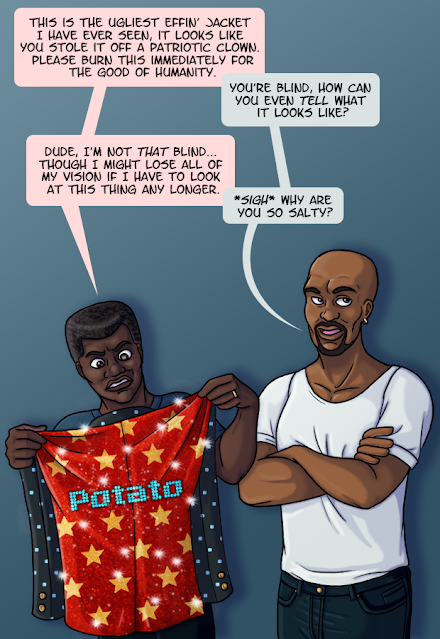
A blind/low vision man examining a hideous jacket and tells his friend “this is the ugliest effin’ jacket I have ever seen, it looks like you stole it off a patriotic clown. Please burn this immediately for the good of humanity.” Annoyed, his friend responds “You’re blind, how can you even tell what it looks like?” “Dude, I’m not that blind, though I might lose all of my vision if I have to look at this thing any longer.” “Why are you so salty?”

He’s salty because people keep accusing him of “faking” his blindness just because he can sort of see things six inches from his face with one of his eyes.

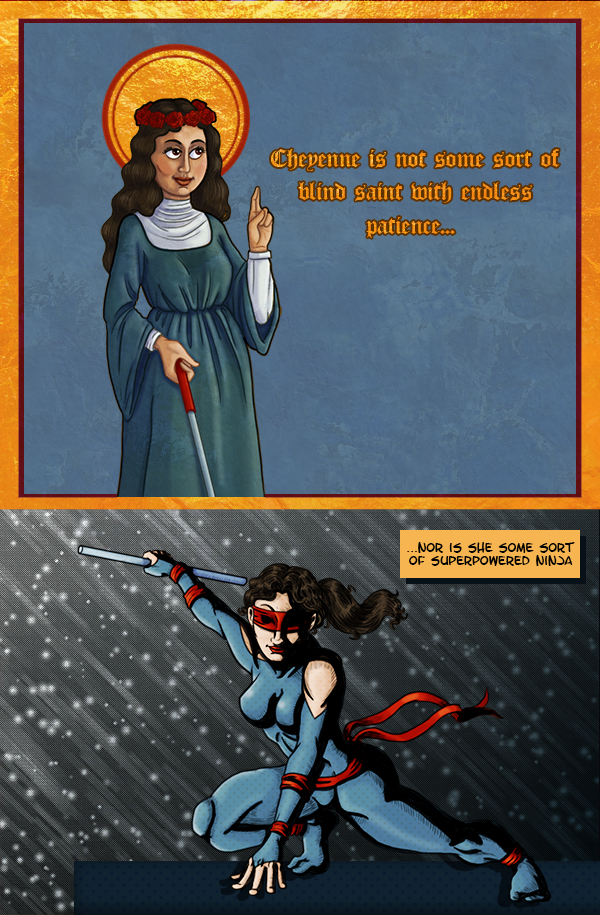
Henry could have easily made her heroine a broken bird that readers pitied, or turned the story into inspiration porn, but she doesn’t. Instead, Cheyenne is characterized as a young woman who went through a traumatic event, which understandably caused her to grieve, and then has to adapt to a completely different way of interacting with the world which is challenging, but certainly not anything extraordinary. Cheyenne works with her therapist and teachers to pull herself out of her depression and learn a new skill set, all without becoming a “feel good” story for sighted readers. She isn’t sweet and chipper about it either, our heroine gets frustrated, feels sorry for herself, lashes out, and gets grumpy. She’s allowed to be a flawed person, instead of some sort of blind saint who forgives the ableists. Although she now relies much more on sound, smell, and touch to function, her senses are the same as before, Cheyenne just learns to pay more attention to them, as oppose to getting magically heightened senses that turn her into a ninja. And yes, Cheyenne is feeling weak and helpless after being kidnapped, but this is due to being severely ill with pneumonia, not her low vision. And even sick and terrified, she’s still a tough, resourceful character.

Speaking of blind ninjas, did you know Daredevil and the Teenage Mutant Ninja Turtles share an origin story? It has nothing to do with Girl, Stolen, it’s just cool.

Griffin, meanwhile, is complex and interesting. You can’t help but feel bad for the guy, even if Cheyenne isn’t in a position to be sympathetic, and Henry doesn’t try to excuse his actions by invoking pity in the reader (Henry never tries to get you to feel sorry for the characters, she just presents the facts of their lives). Poor Griffin’s mom left when he was young, his dad is an abusive alcoholic who forces him into a life of crime, and he has basically zero support system. We find out later that he’s Dyslexic, though unaware of it, and was forced to drop out of school because he struggles with reading. It’s an interesting contrast to Cheyenne, who comes from a wealthy background and goes to a private school that’s able to accommodate her. After her accident she had private nurses who cared for her in her home. Her father sent her to a special program where she learned how to function independently without her vision. They’re able to afford a guide dog so Cheyenne can get around. Ideally, all people with disabilities would have the same access to accommodations that Cheyenne does, but unfortunately that’s simply not the case, especially for people with low incomes or living in poverty. Griffin is one of those kids who slips through the cracks. He was never tested for Dyslexia, and his teachers and father apparently wrote him off, he gets zero help with his reading skills and is forced to drop out of school, believing his only option in life is to be a criminal like his father. Although Henry isn’t heavy handed about it, she makes clear what a world of difference it makes when people have access to proper accommodations, a constant source of frustration for anyone with a disability. Seriously, go on any disability website, and you will see a legion of posts about the daily frustration and obstacles that able-bodied and neurotypical people don’t even notice, not to mention the constant struggles with health insurance and trying to get accommodations approved at school and work.

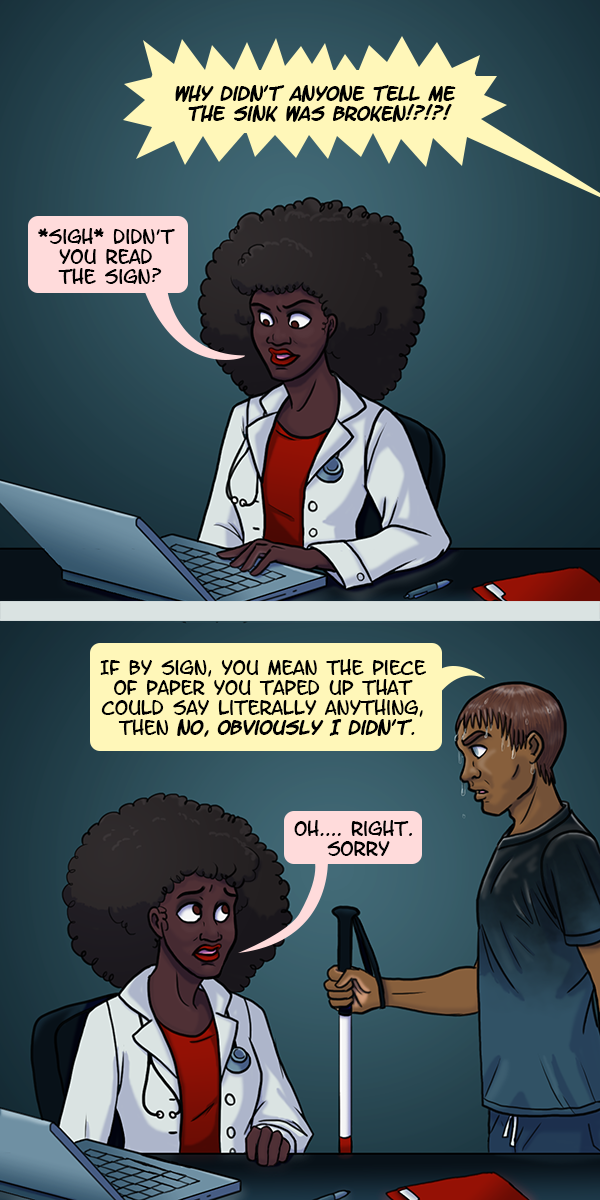
In the first panel, a doctor is looking at her laptop when she hears a nurse yell off screen “Why didn’t anyone tell me the sink was broken!?!?!” Irritated, she responds, “*sigh* didn’t you read the sign?” In the second panel we see the nurse, who is blind and holding a cane, soaking wet from the malfunctioning sink. He snaps “If by sign, you mean the piece of paper you taped up that could say literally anything, then NO, OBVIOUSLY I DIDN’T.” Sheepish, the doctor says “Oh.... right. Sorry.”

Other pet peeves of the visually impaired include the little stickers on fruit and people who ask them to guess who they are by their voice. Seriously, don’t do that.

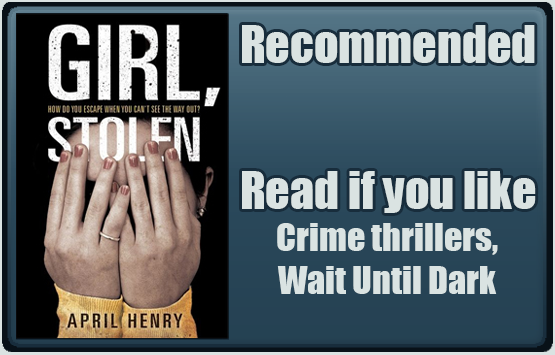
As for the story itself, it’s definitely a thriller, and a well written one. I couldn’t put Girl, Stolen down and ended up finishing it in only a few sittings (and that’s only because I was interrupted by annoying grown up responsibilities). Yeah, I know I haven’t gone over the writing that much, but honestly, I can’t really get into the plot without also going into spoiler territory, and part of what makes this story so great is the suspense. Of course, there are still a few flaws. Usually Henry is able to blend the backstory of the characters smoothly into the story, but it does get bogged down by random info dumps in a few places. I like when I learn new things from books, but not when they’re awkwardly shoehorned in. You don’t need to stop the story to explain what vehicle identification numbers are, I could have just Googled “VIN” if I didn’t know.  Nor do we need a completely unnecessary explanation of what the Nike company is. In fact, why even bother using a real company in your book if you then have to explain what they do? Thankfully these instances are few and far between. The two main characters were interesting and well written, but everyone else was pretty bland, especially Griffin’s one-dimensional, evil father. 


Oh, and for any readers who are visually impaired, the audiobook narrator, Kate Rudd does a pretty good job, though she does seem to struggle with male voices (some of them sound pretty silly), which can be distracting during a suspenseful scene. But for the most part it’s well acted; Cheyenne sounds great, and Rudd really makes the listener feel the tension. A sequel, Count all her Bones, came out this past May.

The Gauntlet by Karuna Riazi

The Gauntlet by Karuna Riazi

Formats: Print, audio, digital

Publisher: Salaam Reads

Genre: Dark Fantasy, Demon

Audience: Children

Diversity: South Asian characters, Bangladeshi characters, Middle Eastern characters,  character with a Cognitive/Learning Disability/ADHD

Takes Place in: New York City, USA

Content Warnings (Highlight to view): Child Endangerment, Forced Captivity, Gaslighting, Violence 

Blurb

A trio of friends from New York City find themselves trapped inside a mechanical board game that they must dismantle in order to save themselves and generations of other children in this action-packed debut that’s a steampunk Jumanji with a Middle Eastern flair.

When twelve-year-old Farah and her two best friends get sucked into a mechanical board game called The Gauntlet of Blood and Sand—a puzzle game akin to a large Rubik’s cube—they know it’s up to them to defeat the game’s diabolical architect in order to save themselves and those who are trapped inside, including her baby brother Ahmed. But first they have to figure out how.

Under the tutelage of a lizard guide named Henrietta Peel and an aeronaut Vijay, Farah and her friends battle camel spiders, red scorpions, grease monkeys, and sand cats as they prepare to face off with the maniacal Lord Amari, the man behind the machine. Can they defeat Amari at his own game…or will they, like the children who came before them, become cogs in the machine?

Belated Eid Mubarak! I hope all my Muslim readers had a happy Eid Al-Fitr, and that Ramadan brought you peace and prosperity. In the spirit of the holiday I decided to review this gorgeous children’s chapter book from Salaam Reads. Like the blurb said, The Gauntlet is basically a Middle Eastern steampunk Jumanji, and it’s SO cool. The story is overflowing with creative ideas: clockwork monkeys, liquid moonlight, giant games of Mancala played in the graveyard, the dream gardens, and the dark carnival Lailat (Arabic for “nights”). It reminded me of the Wizard of Oz combined with the PC adventure puzzle games from my childhood. It’s educational, but in a fun way that doesn’t break the flow of the story. I found myself frequently running to Google so I could learn more about Islam, or Bangladeshi and Middle Eastern cultures, or to look up what chenna murki was (and now I want to eat it). And there were even fun little references to Labyrinth and the Bollywood film, Paheli snuck in there. The book is bursting with creativity and originality, and has so much potential, but it could have been a lot better. Maybe this is a nitpicky complaint, but everything in the book felt too rushed, and it seriously marred an otherwise flawless novel. To be fair, this is Riazi’s first book, so it’s understandable that it still has some rough spots, and I have no doubt we’ll see even more amazing work from her as she hones her craft. But for now, Riazi’s work still needs more polishing and refinement before it can really shine.

The first image shows a rough, green gem and has been labeled “Rough Draft” in fancy gold lettering. The second image is of the same green gem, now polished labeled “The Gauntlet”. The final image shows a bird’s eye view of the green gem, finally cut into a “round brilliant” shape. This is labeled “Riazi’s future work?”

When I say everything felt rushed I don’t mean in a thrilling, “we have to retrieve the McGuffin before time runs out” sort of way. Instead, it’s more “Riazi had a rapidly approaching deadline and had to cut out half of the story to meet it”. Which sucks, because I really wanted to spend more time appreciating all the little details put into the world of Paheli (which is Hindi for “riddle”). There were all these amazing ideas in the story that never got to be fully explored or realized, and it’s really unfortunate. For example, the book’s description mentions “Sand Cats”, but they never make an appearance in the story itself. What gives? Was it cut out at the last minute? And everything in the story went by so fast it made some parts difficult to follow, and never gave the suspense a chance to build. Farah and her friends solved each challenge before I even got a chance to think “Oh no, will they make it?” Even the editing seems rushed. At one point “tail” is written as “tale”, words will frequently get repeated as if the author changed a sentence without deleting the old one, and there are some grammar errors. It’s not Cacy and Kiara bad, but there are enough mistakes that it makes me wonder how closely the editor reviewed The Gauntlet before publication. So it’s reasonable to assume many of the book’s problems may have been due to a looming deadline rather than Riazi’s writing, but that will only be revealed by reading her future work (and oh man, I hope this book gets a sequel). That, or the walrus who edited Cacy and Kiara somehow got involved.

A native Hawaiian woman in a red dress grabs her hair in frustration while looking at a stack of papers. There is a walrus wearing a hat sitting next to her. He has a goofy grin, unfocused eyes, and his tongue is hanging out with drool dripping from it. The exasperated woman yells “Wait, did you just submit this? It’s only the second draft, I wasn’t done editing it, why would you send this to production?!?” The walrus happily blows a raspberry. The woman scolds him “bad walrus, bad!”

I just assume all bad editing decisions are made by walruses.

Another issue with having a story that feels rushed is that there’s not enough time to get to know the characters, and the characters all seemed really interesting too! Well, except for Farah’s little brother, Ahmed. His character just seemed unnecessary and annoying. So, SO annoying. Like, D.W. from Arthur, but less entertaining. Farah and her friends could have just as easily gotten sucked into the game on their own, and there’s already enough suspense trying to survive and complete the challenges in Paheli that forcing Farah to try and find her little brother on top of that just seems excessive.  It’s also hard to feel any sympathy for a character, when nearly every memory Farah has of her little brother involves him being obnoxious and bratty. So kudos to her. If I had to deal with Ahmed, I would’ve fed the little brat to a mechanical camel spider or whatever, or left his butt in the middle of the desert. But hey, that’s why I’m not a Y/A protagonist. Lucky for Ahmed, Farah has much more patience than I do.

I’m reclining on a red chaise longue, drinking from a crystal goblet and casually flipping through a magazine. I’m barefoot and wearing sunglasses, shorts, and a tank top. A child screams off screen “I’m being eaten by a giant spider, help!!!” To which I apathetically respond “Eh, I would… but that sounds like a lot of effort, plus it’s really hot and my back kind of hurts…” At this point the child yells “Ahhhhhhh!” and I complain “Ugh, why are you so noisy?”

I’m sure he’ll be fine.

Now, in all likelihood, my strong dislike of Ahmed is due to my own bias. I was the oldest of four, and I HATED taking care of my younger siblings with the fiery passion of a thousand blue giant stars (Y’know, because blue stars are hotter than our yellow sun? Look, if I had to learn all these useless facts then so do you!) To this day, I’d still rather get a root canal with a rusty drill from Dr. Szell (okay… no one in this book’s age group has seen that film, have they? I’m just vomiting random trivia at this point) than watch someone’s kid. So the idea of taking care of a bratty younger brother without being forced and not hating every minute of it is completely foreign to me. I mean, my version of “watching” my siblings was to basically go “Meh, there are enough of you that mom probably won’t miss one or two kids. I’m going to go take a nap.” (They all managed to survive to adulthood by the way.) So it’s more than possible my disbelief stems from not being able to relate to someone who’s actually a good older sister. But I still think Farah just has an unnatural amount of patience. Even Sara, from Labyrinth, wanted the Goblin King to take her baby brother, and he wasn’t nearly as annoying as Ahmed.Other than being weirdly tolerant of Ahmed, Farah is a pretty awesome character. She’s brave, resourceful, and incredibly clever, totally the kind of girl you’d want with you on a dangerous adventure. She acts as a balance between her friends, the impulsive Essie and the overly cautious Alex, the Ego to their Id and Superego. Finding good representations of Muslim characters in horror and fantasy is hard, which is sad considering Islam is one of the most widely practiced religions, and there are 3.3 million Muslims in the US alone. Seriously, do you know how hard it is to find a Muslim, Middle Eastern, or North African character in an English language horror novel? In fact, it’s nearly impossible to find Muslim main characters in fiction at all, unless the book is about war, forced marriage, or dealing with Islamaphobia. Not that these aren’t all serious issues worthy of being written about, but it seems unfair that that’s ALL there is. Why can’t Muslim kids enjoy fun, escapist fiction where they get to be the hero? Thank goodness Farrah is joining Ms. Marvel as another butt-kicking Muslim heroine in a genre that desperately needs them!Yes, the book has problems, but frankly, I don’t care. I freaking loved it. I wanted to get lost in the world of The Gauntlet, and the book left me craving more. I’m really looking forward to seeing more from the talented Ms. Riazi, and I sincerely hope she has a sequel in the works.

Bleeding Earth by Kaitlin Ward

Bleeding Earth by Kaitlin Ward

Formats: Print, digital

Publisher: Adaptive Studios

Genre: Blood & Guts, Apocalypse/Disaster, Psychological Horror, Romance

Audience: Y/A

Diversity: Lesbian characters, Hispanic/Latine character

Takes Place in: New Hampshire, USA

Content Warnings (Highlight to view): Alcohol Abuse, Bullying, Child Abuse, Child Death, Child Endangerment, Death, Forced Captivity, Gore, Homophobia, Mental Illness, Racism, Suicide, Verbal/Emotional Abuse, Violence

Blurb

Between Mother Nature and human nature, disasters are inevitable. 

Lea was in a cemetery when the earth started bleeding. Within twenty-four hours, the blood made international news. All over the world, blood oozed out of the ground, even through the concrete, even in the water. Then the earth started growing hair and bones.
Lea wishes she could ignore the blood. She wishes she could spend time with her new girlfriend, Aracely, in public, if only Aracely wasn’t so afraid of her father. Lea wants to be a regular teen again, but the blood has made her a prisoner in her own home. Fear for her social life turns into fear for her sanity, and Lea must save herself and her girlfriend however she can.

Happy Pride month! Here’s something fun for queer horror fans, after Netflix accidently featured the Australian indie horror film, The Babadook, on their LGBT movie page, the titular creature has quickly become a Pride meme and it’s wonderful. If you haven’t seen the film, it’s awesome, go watch it.

A tall, dark, creepy creature with long fingers and a white face is wearing a top hat with a rainbow button, rainbow suspenders, a purple feather boa, sparkly pink flamingo glasses, and a belly shirt that says “Get Ready to be Babashook.”

Artwork by Muffin Pines at http://muffinpines.tumblr.com/

For June I’ll be reviewing two horror stories with queer characters, the first of which is Bleeding Earth. And oh man, did this book mess me up good. I was expecting a gory, end of the world sort of book, and instead I got a heartbreaking survival story about love, family, and humanity (yes I know how cheesy that sounds, shut up). It gave me so much anxiety, and so many emotions, and I’m still trying to process what the hell I just read. But I know it was good. It was really freaking good. And there was so much blood. Blood, and bones, and hair. I love blood. And bones. Not wads of hair though, I have my limits.

In the first caption I’m wearing a light pink dress and covered in blood. I’m clearly enjoying the blood dripping through my hair and down my shoulders because I’m smearing it on my ecstatic face while sighing “Mmmmmm, So much blood.” In the next panel I’m screaming “OH GROSS, HAIR!”  in disgust and pulling away from a wad of bloody hair I’ve just noticed.

I was going for a “Carrie at the Prom” kind of look.

Lea, the novel’s protagonist and narrator, is enjoying the blossoming relationship she shares with her girlfriend, Aracely, when the blood first appears. Now, normally teen romances in dystopias and apocalyptic fiction seems tacked on and out of place. I mean, who worries about crushes when their life is on the line? But in Bleeding Earth, it works beautifully. Surrounded by chaos and despair, Lea wants to hold onto one of the few good things she has left to keep her going, because no one knows how long they have left. The girls are still in their honeymoon phase, so everything still feels wonderful and new, a sharp contrast to the reality around them. When Lea starts experiencing night terrors and hallucinations from stress and isolation, talking to her girlfriend on the phone is the only thing that helps her. And when she wants to give up, it’s Aracely that keeps her going. And I just can’t bring myself to begrudge her that one little bit of happiness. Who wouldn’t want to spend time with someone who makes you feel safe and lets you forget your problems for a while? It gave my cold, little heart all the feels.The scariest thing about Bleeding Earth isn’t the blood, hair, and bones seeping up from the ground. It’s the feeling of isolation, uncertainty, and powerlessness. At least with zombies, aliens, and diseases there’s always something you can do, a safe zone to flee to, a cure, an end in sight. But with the blood there’s nowhere to escape, no way to fight back, and no stopping the blood. No one knows what’s causing it, or if it will ever end. There are no answers or explanations to soothe the scared populace. And while I normally hate it when a story doesn’t give me an explanation, here it actually works. It’s so much more frightening when you don’t know what’s happening, and there’s literally nothing you can do about it. Will things get better? Is this the end of the world? Did humanity piss off the earth so much it’s finally rejecting them? Even at the start of the bleeding, when everyone is still doing their best to “keep calm and carry on,” fear is already causing people to take desperate actions. Lea’s mom obsessively measures their water and screams at her friends when they drink some, her father nails boards over all the windows so they’re in complete darkness, a man attacks Aracely with a bone over a breathing mask, and some jerks at an Apocalypse party try to get an inebriated girl to drink the blood. It starts with fights over tampons in the grocery store, then looting Home Depot, to violence and riots, and it only gets worse from there. Much, MUCH worse.Now, I know poor decision making seems to be a staple of Y/A fiction (one that annoys me to no end), but here, it makes sense. Everyone is absolutely terrified, struggling with isolation and the horror of what’s happening around them, while still trying their damnedest to pretend like everything is going to be fine. And scared, stressed people do not behave in a rational manner. At various points the teenagers in the story become so desperate for normalcy and human contact they’re willing to brave the blood and all its dangers just to be together. Is this a good idea? No, absolutely not. But is it understandable? Completely. Humans are social creatures, so much so that isolation can actually be deadly. And here’s the original research to back it up. I’m an introvert who prefers a quiet night at home, and even I felt stressed and nauseous when poor Lea described being trapped in her boarded up home for weeks on end, with little to no outside communication. Honestly, if I had to go through a bloodpocalypse, I probably would’ve snapped after a few hours indoors and gone blood hydroplaning (hemiaplaning?) in a stolen car while throwing human skulls at pedestrians. And that’s speaking as someone who willingly goes for days without human contact, I can’t imagine what a non-homebody extrovert would go through. So kudos to Lea for keeping it together as long as she did! If you’re probably going to die anyway, it’s better to die among friends and go out with a bang.

A close up of me driving a car through blood while leaning out the window. I’m holding a human skull out the window while waves of blood are being splashed up by the car. I’m dressed like one of the War Boys from Mad Max: Fury Road, with corpse pain covering my face. I gleefully shout “Oh what a day… What a lovely day!”

I showed this drawing to my wife, and now I’m not allowed to drive her car.

While I really enjoyed Bleeding Earth, it did have some problems that got to me, and kept me from giving it the full five stars. Like Lea’s dad. He learns that the mom has become unhinged, and Lea fears for their safety, but instead of going to help his wife and child, he tells his frightened daughter to get her unstable mom, slip through the looters and people willing to kill for water, and come to him. So of course a ton of horrible things happen because Lea can’t get her sick mother to leave the house, and her dad is apparently too lazy to drive the 40 minutes to help her. Like, I get they need everyone they can get to keep the power going, but for fuck’s sake man, you can take an hour to go rescue your wife and daughter. He’s just so frustratingly blasé about the whole thing. And then there were a bunch of weird little plot points that didn’t go anywhere. Like Lea’s hallucinations. Ingesting the blood is discovered to cause hallucinations, night terrors, lost time, and mental breaks. Lea starts to have horrible nightmares, imagining blood in the house, but it’s unclear if it’s an effect from the blood or the isolation. While she does spend part of the book questioning her sanity, and it’s definitely stressful and unsettling, it doesn’t really go anywhere. Was she infected by the blood? Yeah, we never get an answer for that one either.

A frightened teen is on the phone with her dad. “Hey, dad? Looters keep trying to get in the house, I haven’t seen the sun in over a week, and I think mom’s gone off the deep end and she’s possibly planning to kill someone. Could you come get us?” Her dad is seen doing Sudoku in his office and tells her “That’s nice honey, but I’m just swamped at work right now, can I call you back later? Tell your mom I said “Hi”. “Dad are you even listening!? Screw your work and get your ass back here!”

Hey, Sudoku IS work!

The lack of explanations will be a major turn off for a lot of readers, and I can understand that. But honestly, I didn’t feel like it was needed, because that really isn’t the point of the story. This isn’t a sci-fi novel with an omniscient narrator about a world-wide disaster. This is Lea’s story. It’s about her fears, her loneliness, her confusion, and her crush on Aracely. She’s terrified and frustrated because she doesn’t know what will happen, her parents can’t reassure her, and she just wants to be able to take comfort in something. It’s a sweet, sad story of survival, isolation, and just trying to enjoy a simple teen crush in a world that’s gone to hell.

Navigation

Social Media

Search by Tags

To learn more about the Age Group, Diversity, and Genre tags, click here.

Age Groups

Diversity

Genre

Support the Blog

Search

Links

How I Became a Ghost by Tim Tingle

How I Became a Ghost by Tim Tingle

Formats: Print, digital

Publisher: The Roadrunner Press

Genre: Ghosts/Haunting,  Historic Horror, Werebeast (Were-Panther/Nagual)

Audience: Children

Diversity: American Indian (Choctaw)

Takes Place in: Choctaw Nation, Mississippi, USA

Content Warnings (Highlight to view): Animal Death, Child Abuse, Child Death, Child Endangerment, Death, Forced Captivity, Illness, Kidnapping, Oppression, Physical Abuse, Racism, Self-Harm, Torture, Verbal/Emotional Abuse, Violence

Blurb

Told in the words of Isaac, a Choctaw boy who does not survive the Trail of Tears, HOW I BECAME A GHOST is a tale of innocence and resilience in the face of tragedy. From the book’s opening line, “Maybe you have never read a book written by a ghost before,” the reader is put on notice that this is no normal book. Isaac leads a remarkable foursome of Choctaw comrades: a tough-minded teenage girl, a shape-shifting panther boy, a lovable five-year-old ghost who only wants her mom and dad to be happy, and Isaac s talking dog, Jumper. The first in a trilogy, HOW I BECAME A GHOST thinly disguises an important and oft-overlooked piece of history.

I was looking through the kid’s section of the library (before I get kicked out for being the creepy adult with no children) when I stumbled upon Tim Tingle’s How I Became a Ghost. The title intrigued me, I’m always looking for books by minority authors, and I loved the cover. Then I noticed the fine print: A Choctaw Trail of Tears Story. Tingle’s book is not a simple ghost story for kids, but an important work of historical fiction about the horrors of the Indian Removal Act of 1830, which illegally forced the Chickasaw, Choctaw, Creek, Seminole, and Cherokee from their homes and resulted in the death of thousands of American Indians.

A dark-skinned father is walking with his light-skinned young son and holding his baby. They are in a children’s library full of brightly colored bookshelves and posters for “We Need Diverse Books Poster” and “Catch the Flesh Eating Reading Bacterium”. I’m hiding in one of the bookshelves like a gremlin, hissing. The boy asks his father “Daddy, what is that weird lady doing in the children’s library by herself?” The father, unconcerned, responds “Just keep walking and don’t make eye contact sweetie.”

I decided to draw a background for this picture, and quickly remembered why I hate drawing backgrounds. These are all real children’s book covers by the way. I also sneaked in a “Welcome to Night Vale” reference.

How I Became a Ghost is not a “fun” kind of scary story (though there are plenty of humorous moments- more on that later) where you can easily brush away your fear because you know it’s a work of pure fiction. The characters in the book may be fictional, but this is still a book based on true events, that caused a great deal of death, suffering, and the loss of ancestral homeland. The first half of the book is based on the real-life experiences of John Carnes, Tingle’s great-great-grandfather, who was forced to walk the Trail of Tears along with his family and lost his mother and brother to exposure and disease during their forced relocation. Tingle first recorded his account of Carnes’ life in the short story Trail of Tears for his anthology book, Walking the Choctaw Road, and would later use it as inspiration for writing How I Became a Ghost.

Tingle doesn’t shy away from descriptions of the Choctaw people cutting their flesh in mourning, being burned alive in their homes, dying from small pox infected blankets, and of course, children dying. Pretty rough stuff, but I think kids can handle it, Tingle does a great job of educating his audience about the Trail of Tears, while still keeping the content age appropriate. And as Shelley A. Welch, an Eastern Cherokee woman, wrote in her guest post for the blog American Indians in Children’s Literature:  “Some teachers will say that historical realities are too heavy for young children. Actually, it seems to be the adults that shy away from those topics …. who don’t seem to want to let go of American myths of ‘friendship and good will’ between the first settlers and the Indigenous people, a People who were once the majority and are now the smallest minority…. I can say that when children are told that one group bullied another, they are quite amazing peacemakers, acknowledging the breach of civil rights and offering cooperative resolutions. It is true, elementary-aged students aren’t developmentally ready for the specifics of genocide, but they can understand the inhumanity of racism. ” In other words, this book is loads better for children than all those Thanksgiving stories that propagate the lie of the “smiling (Wampanoag) Indian“. For kids who would prefer a non-fictional account of the Trail of Tears, there’s also Joseph Bruchac’s (author of Skeleton Manchildren’s book that he wrote for the Step-Into-Reading series. But I think there’s something to be gained from reading a more personal (albeit fictional) account when learning about history. How I Became a Ghost also educates readers about Choctaw (Chahta) culture, spirituality, vocabulary, and even has a ghostly cameo from Chief Pushmataha.How I Became a Ghost is posthumously narrated by a ten-year-old Choctaw boy named Isaac. Isaac frequently brings up his impending death, so you spend the first two thirds of the story on edge, wondering when his time will come. At first, he’s plagued by visions of other Choctaw people dying, but eventually Isaac comes to terms with his own mortality and seems to accept it, though he does worry about how his family will react. I guess when you’re surrounded by death and you know the end is coming you start to feel pretty chill about the whole thing. There are plenty of scary moments for horror lovers, a teenage girl being abused by soldiers then hiding in the bonepickers‘ wagon, under a pile of bloody bones, stands out in particular.

For a story that’s written so simply (to make it easy for young readers) How I Became a Ghost leaves quite the impact.  Something about the plain, straightforward way Isaac describes the trail of bloody footprints he leaves behind or the parents carrying their dead child really stays with you. Not everything is dark and depressing however, Tingle adds plenty of humor and hope to his book, like Isaac’s father pretending to be a snow monster and playfully chasing his sons, the other family they befriend on the Trail of Tears, and one of the Choctaw elders teasing Isaac for his clumsiness as a ghost. As a bonus, these scenes also shatter the myth of the “humorless, serious Indian” that’s frequently perpetuated by Euro-American media. I never felt like I was reading a “sad” story, more a story of survival. The ending of Isaac’s life, while tragic, is not the end of his spirit, and he continues to help and guide his friends and family as a ghost. When he dies, Isaac is cheerfully welcomed into the afterlife by the other spirits (shilombish) who continue to watch over their loved ones. Like the Choctaw Nation, Isaac continues to persevere, albeit in a different form, despite all he has suffered and lost.

I do have a few nitpicks, because of course I do, but they’re all pretty minor. Isaac’s cause of death felt like a really odd choice to me. *Spoilers* He’s killed by a wolf, even though wolves killing humans are extremely rare, and even then almost always carried out by a pack of wolves rather than a lone individual. In other words, Isaac would have had a greater chance of being killed by a lightning strike than a wolf attack. So why not have him die another, less improbable way? *End Spoilers* The whole thing seemed random and highly unlikely, though Tingle may have just chosen to take artistic license for the sake of the plot. Isacc’s dog, Jumper, also confused me. He seemed to be able to speak, but it wasn’t clear if Jumper could actually talk, or if Isaac just imagined his responses, like I do with my cats (don’t judge me). I think it’s the latter, since no one else appears to be able to “hear” Jumper, but it’s never really explained. So, there’s just this random talking dog that doesn’t really serve a purpose story-wise except to be adorable (not that I’m going to complain about a good dog, dogs make everything better).

In the first panel, I’m cheerfully talking to a short-haired tortoise-shell cat and voicing her responses: “Hi Kitty! You’re so cute and fuzzy! Cute, fuzzy, kitty butt!” “Meow, go away, I don’t like you.” “Oh kitty, why are you such a grumpy grump?” In the second panel I look less thrilled as the cat ignores me and “asks” “Why are you such a loser?” “Kitty that’s not nice!” “It’s true though! And you have a butt face and no friends and you smell.” In the last panel I’m crying while the cat purrs happily.

Cats are jerks.

There’s also a kind of odd character introduction halfway through the story, with the appearance of Joseph the were-panther. Apparently, Isaac already knows Joseph from his village, it’s just that no one bothered to mention his existence or wonder where he was prior to that point in the story, not even his own grandparents who were introduced in the first few chapters. Well, I guess it’s nice that this guy we had absolutely no knowledge of previously managed to survive? It’s also odd that Joseph turns into a black panther, and not a cougar (which is also known as a panther), a large cat that’s native to North America. At first I assumed the black panther on the cover was a stylistic choice, until Tingle describes Joseph’s feline form as having a black coat. Melanistic color variants only occur in leopards and jaguars, not cougars, and jaguars wouldn’t be found so far north. They do sometimes wander into New Mexico and Arizona, and there were even reports of jaguars in California during the 1800s (leopards are located on an entirely different continent), but having one appear in Mississippi seemed unlikely. At first I thought Joseph might be half Aztec or Olmec, since Tingle doesn’t reveal anything about his parents and both Indigenous groups have stories about people who can turn into jaguars. But it’s also likely that black, shape-shifting cougars are a part of Choctaw theology that I’m just not familiar with. Black panthers also make appearances in Tim Tingle’s House of Purple Cedar and Caleb, the latter of his works, also about a shape-shifting boy. I did try to do some further research into the matter, but with all the false information out there regarding American Indian beliefs, spirituality, and legends I wasn’t able to come up with much. There also seem to be a lot of legends in Mississippi about black panthers. Who knows?Sorry, I went off on a weird tangent there…

I’m sitting cross-legged on the ground, reading a copy of “How I Became a Ghost”. A black panther is standing behind me and reading over my shoulder. I complain “Cougars don’t have melanistic color variants!” The panther responds “You realize no one but you cares, right?”

I get really caught up on weird details, you’d think I’d be more concerned about the panther reading over my shoulder, but nope.

The writing may feel a little childish for adults and older readers, and not necessarily something I’d recommend for people in that age group (instead I’d suggest Tingle’s original Trail of Tears story, which is similar to How I Became a Ghost, but aimed at older readers and non-fictional), but kids will definitely get a kick out of the story and the epic rescue mission staged by Issac and his panther friend, and it will hopefully pique their interest in history and the Choctaw Nation. I know I’ll certainly be interested in checking out the sequel, When A Ghost Talks, Listen, when it’s released.
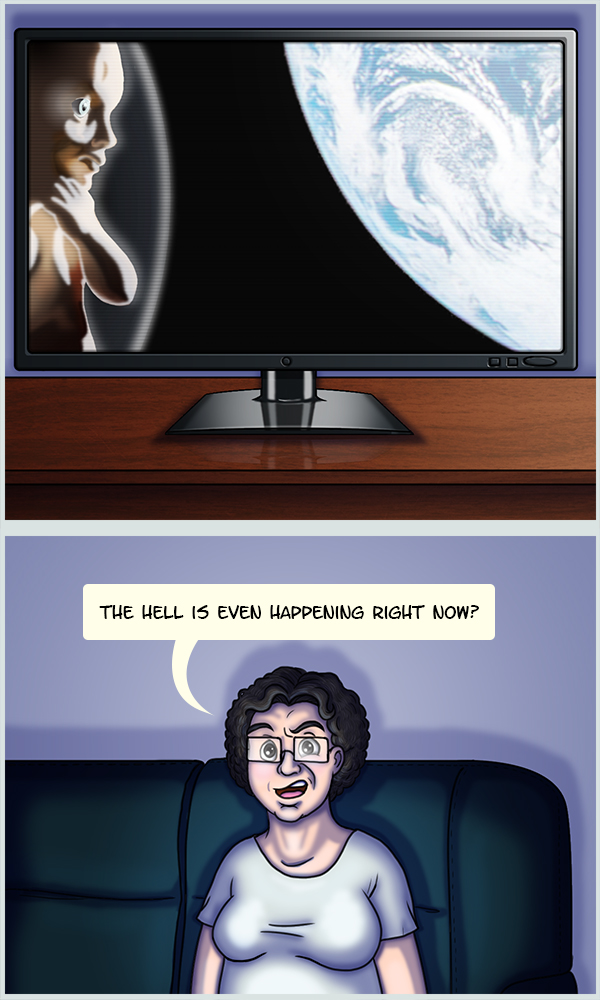
After the People Lights Have Gone Off by Stephen Graham Jones

After the People Lights Have Gone Off by Stephen Graham Jones

Formats: Print, audio, digital

Publisher: Dark House Press

Genre: Monster, Paranormal, Demon, Werewolf, Zombie, Killer/Slasher, Romance, Ghosts/Haunting, Sci-Fi Horror, Psychological Horror, Vampire

Audience: Adult/Mature

Diversity: American Indian (Blackfoot/Niitsitapi), Queer (Gay Men), Disability (Paraplegic)

Takes Place in: USA

Content Warnings (Highlight to view): Animal Death, Child Endangerment, Child Death, Gore, Violence, Death, Torture, Homophobia, Self-Harm, Implied Sexual Assault 

Blurb

The fifteen stories in After the People Lights Have Gone Off by Stephen Graham Jones explore the horrors and fears of the supernatural and the everyday. Included are two original stories, several rarities and out of print narratives, as well as a few “best of the year” inclusions. In “Thirteen,” horrors lurk behind the flickering images on the big screen. “Welcome to the Reptile House” reveals the secrets that hide in our flesh. In “The Black Sleeve of Destiny,” a single sweatshirt leads to unexpectedly dark adventures. And the title story, “After the People Lights Have Gone Off,” is anything but your typical haunted house story.

With an introduction by Edgar Award winner Joe R. Lansdale, and featuring fifteen full-page illustrations by Luke Spooner, After the People Lights Have Gone Off gets under your skin and stays there.

For Native American Heritage Month I’d thought I’d review a collection of short stories by one of horror’s greatest writers, Stephen Graham Jones.

Do you ever find yourself reading this awesome, interesting book, but then you get to the last chapter and go “What the fuck did I just read?” I’m not talking stories with ambiguous endings where it’s left open to interpretation, like in Inception where it’s unclear whether Cobb is still in a dream or not (and then you spend hours arguing about it on the internet), but the ending still makes sense. No, I’m referring to endings that are downright obfuscating (yay, I have a thesaurus!). Endings where you have to skip back to check if you missed some really obvious clue, only to find that no, the story really does end like that, and then you’re left wondering if you’re just not smart (or high) enough to “get it”. For example, 2001: A Space Odyssey. I know it’s this amazing, classic film, but what the hell was up with that giant space baby!?! Did the really obvious metaphor for the birth of humanity just fly over my head or did Kubrick just drop a bunch of LSD? Or both? Seriously WTF? Am I the only person who doesn’t get it?

In the first panel a TV is showing a scene from 2001: A Space Odyssey with a giant, human fetus/star child floating in the void and looking at the planet earth. The second panel reveals me watching the film, bewildered, and asking “The hell is even happening right now?”

In retrospect, I probably shouldn’t have tried watching this movie at 3 AM.

Well, Stephen Graham Jones is a master of the WTF ending. In some ways this works to his advantage, like when it highlights the confusion and mental instability of the narrator, or preys on the reader’s fear of the unknown. Subtle scares can be terrifying when done right, and when Jones gets it right, it works SO WELL, like with Second Chances where the final sentence of the story hits you like a punch in the gut. But Jones makes things too subtle you’re left scratching your head and wondering what you’re supposed to be scared of. It’s like when the creepy music starts playing in a film, you know you’re supposed to feel uneasy because something bad is about to happen, but then, when the final dissonant chord is struck, everything just sort of ends without the payoff of a monster jumping out or even a terrified scream to imply something horrible just happened. Which is, unfortunately, really not that scary. After the People Lights Have Gone Off (the short story, not the book), Uncle, Xebico and Brush Monster all have this problem. Did someone die? Was there a monster? Is the narrator hallucinating? Did anything bad even happen? Am I just not smart enough to get it? It’s especially frustrating when the rest of the story makes sense, like in Xebico, but then the ending just kind of goes off the rails.
A sad, melting snow man with ear muffs, a whale with a bowtie shooting rainbows out of its blowhole, and a rabbit with a flower in its mouth, wearing a top hat and sunglasses are floating in midair and surrounded by sparkles. Looking uncomfortable, I ask, “Ummmm, so what am I supposed to be scared of? Is it the rabbit?”

I’m pretty sure it’s the sketchy looking rabbit.

Of course, none of this makes Jones a bad writer. He’s actually incredibly talented, aside from the whole confusing ending thing which is probably due more to me being obtuse than a lack of skill on Jones’ part. Like King, Jones has a real flair for making the mundane fucking terrifying.  For example, The Black Sleeve of Destiny, which is about a Lovecraftian hoodie. That’s right, a hoodie. Well, that and some poor kid’s mild kleptomania spinning out of control until it becomes a full blown obsession, but mostly the evil hoodie that seems to act as a pocket dimension with a mind of its own. There’s also The Spider Box (such a creepy title) about a cardboard fruit box that resurrects the dead.  Somehow Jones managers to cover all the horror staples in his book (demons, ghosts, werewolves, vampires, killers, and zombies) while still making his stories seem fresh and unique. A great example of this is Welcome to the Reptile House, one of the most distinct and creative vampire stories I’ve ever read. In fact, I didn’t even know it was a vampire story when I started reading it, so, uh, sorry for the spoiler.

Septa Unella from Game of Thrones is ringing her bell and chanting “shame, shame, shame”. Annoyed, I snap “Oh my God, it was one spoiler!”

Septa Unella shows up any time someone reveals a spoiler. Or at least, she SHOULD.

But not all the stories in this collection are your traditional tales of horror, some could even be considered love stories. Albeit, really messed up, creepy love stories, but love stories nonetheless. One story is even called This is Love. Jones explores different kinds of relationships in his novel, from lovers and devoted spouses, to childhood crushes, to familial love between siblings, parents and children, and even extended family. Snow Monsters is a heartwarming tale about what a parent will sacrifice for their child, but with a supernatural twist. Doc’s Story, explores the bonds of a struggling family, and is one of the most human stories in the collection, ironic since it’s about werewolves.  In After the People Lights Have Gone Off (again, the short story, not the collection) and The Dead are Not we see examples of the complete devotion married couples have for each other, even when things get difficult and terrifying. Of course, there are also inversions, like Uncle, which is about a couple that has fallen out of love, and the husband’s feelings of guilt for not mourning his wife’s death.

Oh, and a little tip, before picking this book up I strongly recommend checking out Stephen King’s short story The Man in the Black Suit and H. F. Arnold’s The Night Wire (both of which you should read regardless because they’re awesome). Why? Well The Spindly Man is a horror story about a book group discussing King’s famous horror story (how’s that for Inception?), while Xebico is about adapting The Night Wire to the stage. And as cheesy as having a scary short story about another scary short story sounds, they’re both pretty awesome, yet another indicator of Jones’ talent.

Overall, After the People Lights Have Gone Off (this time I am referring to the book) is an amazing anthology by a talented author, as long as you’re okay with stream of consciousness writing and not always understanding what the hell you just read. Or maybe it’s just me, and the rest of you will have some deeper understanding of the stories. Jones’ work definitely makes me feel like I’m the only one at the party not getting the joke.

The Jumbies by Tracey Baptiste

The Jumbies by Tracey Baptiste

Formats: Print, audio, digital

Publisher: Algonquin Young Readers

Genre: Monster, Myths and Folklore, Supernatural

Audience: Children

Diversity: Afro-Tobagonian and Indo-Tobagonian characters, Character with Speech Disorder (selective mutisim)

Takes Place in: Trinidad and Tobago

Content Warnings (Highlight to view): Animal Death, Child Endangerment, Death

Blurb

Corinne La Mer claims she isn’t afraid of anything. Not scorpions, not the boys who tease her, and certainly not jumbies. They’re just tricksters made up by parents to frighten their children. Then one night Corinne chases an agouti all the way into the forbidden forest, and shining yellow eyes follow her to the edge of the trees. They couldn’t belong to a jumbie. Or could they?

When Corinne spots a beautiful stranger at the market the very next day, she knows something extraordinary is about to happen. When this same beauty, called Severine, turns up at Corinne’s house, danger is in the air. Severine plans to claim the entire island for the jumbies. Corinne must call on her courage and her friends and learn to use ancient magic she didn’t know she possessed to stop Severine and to save her island home.

I spent part of my childhood in St. Vincent and the Grenadines, where I frequently heard scary stories about Jumbies, the spirits that haunt the Caribbean. There were the Douens with their backwards feet and wide straw hats, the glowing eyes of the La Diablesse, and Duppies that could be kept away with salt. And while it was enough to give me nightmares as a child, being able to read a book that contained all these creepy creatures from my youth was nostalgic and wonderful.

A water color painting of two young, dark skinned girls in the Caribbean. The first girl is dressed in a green dress and a wide, green hat, and she is stepping out of the forest. Her eyes are too big and glow orange, and she smiles wickedly. The other girl, who is human, wears an orange dress and has her hands up in fear as she backs away.

Thanks for the childhood nightmares Tales of the Caribbean (published by the Wright Group)

The Jumbies is based on the Haitian fairytale, the Magic Orange Tree, and contains underlying themes of colonization, the clash of two cultures, and environmentalism. But if you’re worried about helpless princesses and ham-handed messages about not littering, never fear, Tracey Baptiste is far too talented an author to create some sort of terrible Snow White/Ferngully mishmash. Sure, there are still plenty of fun fantasy tropes, monsters, magic, and the dead mom cliché (because that’s apparently some sort of requirement for heroines in fairy tales) but there’s also a lovely lack of distressed damsels, one dimensional villains, and black and white morality. Baptiste doesn’t try to feed her young readers any sort of over-simplified nonsense about how good people are pure and beautiful and only capable of doing good things. Instead, the characters are complicated and flawed, and right and wrong aren’t always clear cut.

Five Disney heroines, Snow White, Cinderella, Belle, Ariel, and Jasmine, are having a tea party, with Corinne sitting in the middle. Over them, a banner reads “Dead Mom’s Club”. Belle exclaims “Très bon travail Corrine!” Ariel asks “Wow, you stopped the witch by yourself? My boyfriend had to save me!” and Jasmine comments “My dad was hypnotized too, by an evil guy with a snake staff.”

Okay, but seriously, what does Disney have against moms?

The main character, Corinne, is a young girl who lives with her father at the edge of a Jumbie-filled forest. Her mother died when she was very young but she left her daughter three very special gifts, her necklace, an orange tree, and a gift for growing things. Predictably, Corinne must use all three to discover the truth about herself and fight the evil threatening her home. And let me tell you, I wish I was as awesome as Corinne. She’s smart, self-sufficient, and incredibly brave. In the original fairy tale on which The Jumbies is based, the protagonist is a passive character that things just sort of happen to, but Corrine is proactive about her dire situation, and willing to fight the monsters herself instead of waiting for rescue. The helpless heroines in tales of old don’t hold a candle to the courageous Corinne. And let’s be honest “wait and hope things get better” is not the greatest message to give to kids. Don’t wait to be saved, rescue yourself.

Corrine, wearing her father’s oversized shirt, proudly tells me “Yeah, I just defeated a bunch of monsters, rescued my dad from an evil enchantress, and saved the whole island, no big deal.” Looking sheepish, I respond, “I called the doctor’s office and made an appointment all by myself…”

There’s nothing that makes me feel more inadequate than a kid 20 years my junior who’s tougher than I am.

That isn’t to say Baptiste is telling the reader to only rely on themselves. As tough as Corrine is, sometimes she needs the aid of her friends, in this case a pair of mischievous orphan brothers, Bouki and Malik, and a shy young girl named Dru. They pull her up at her lowest moment, and stand by her side when she confronts Severine. It’s a nice balance. Corrine is brave and independent, but is still able to rely on others when she needs to, while Dru, the girly-girl to Corrine’s tomboy, is shy and timid, without being weak and helpless, and learns to be braver and more independent. She may not want to handle scorpions or run into the forest by herself, but Dru’s still far from being a distressed damsel. Then there’s Bouki and Malik, who are used to relying only on each other but learn that getting help from others is a sign of strength, not weakness.

Interestingly, most of the Jumbies aren’t portrayed as being good or evil, they simply want to protect their forest home from the humans who’ve invaded it. But unlike more heavy-handed environmental stories, Baptiste takes a more nuanced approach, and doesn’t paint these issues as black and white. Think more Lorax (the book, not the film) less Captain Planet. The humans aren’t evil, selfish, or greedy, but they’re still destroying the forest homes of the Jumbies who’ve lived there for thousands of years. Nor are the Jumbies evil per se, they just want to protect their home from the human invaders. Even Severine, the big bad of the story, isn’t completely unsympathetic. As evil as she is, she clearly loved her dear sister and is hurting from her loss. Severine is lashing out for a reason, and while it by no means justifies the terrible things she does, it at least explains them.

This book is perfect for younger kids who are tired of Cinderella and Snow White, and like their stories a little spooky. It has a strong female lead, fighting to protect her father and her home, a cast of fun supporting characters, and one truly creepy villain.

Labyrinth Lost by Zoraida Córdova

Labyrinth Lost by Zoraida Córdova

Formats: Print, digital

Publisher: Sourcebooks Fire

Genre: Dark Fantasy, Occult

Audience: Y/A

Diversity: Ecuadorian author, Hispanic/Latinx characters, Puerto Rican characters, South Asian character, Bisexual characters

Takes Place in: New York City, USA

Content Warnings (Highlight to view): Abelism, Animal Death, Body Shaming, Bullying, Child Abuse, Child Endangerment, Death, Forced Captivity, Gaslighting, Gore, Kidnapping, Torture, Violence

Blurb

Nothing says Happy Birthday like summoning the spirits of your dead relatives.

Alex is a bruja, the most powerful witch in a generation…and she hates magic. At her Deathday celebration, Alex performs a spell to rid herself of her power. But it backfires. Her whole family vanishes into thin air, leaving her alone with Nova, a brujo boy she can’t trust. A boy whose intentions are as dark as the strange marks on his skin.

The only way to get her family back is to travel with Nova to Los Lagos, a land in-between, as dark as Limbo and as strange as Wonderland…

Alex is about to celebrate her Deathday, a huge party that’s thrown when a young bruja or brujo first gets their powers. Her entire extended family will be there to help her bind and control her newfound abilities. Everyone seems thrilled, especially her mother and older sister Lula; everyone that is, except for Alex. She views magic as a curse rather than a blessing, so she’s pretty upset when she discovers that, no surprise (it’s Y/A fiction after all), she’s essentially the most powerful bruja they’ve seen in generations, an encantrix whose magic is vast and broad. Most brujas are limited to one or two abilities, like healing or seeing the future, but Alex can pretty much do anything. In a misguided attempt to get rid of her power, she accidentally banishes not only all her living relatives but her dead ancestors as well to the Limbo-like land of Las Lagos. Oops.

Okay, so admittedly the whole powerful chosen one thing does sound kind of Mary Sue-ish, especially the part about not wanting her super special powers. “Oh, poor little main character, you get all these awesome powers, how awful for you!” said no reader ever. Well, Alex has a pretty good reason for hating her magic, and it’s not the typical “Oh, being perfect is so hard~” B.S. You see, magic isn’t some consequence free wish-fulfilling super power, it’s born from sacrifice. Magic drains the user and causes them physical pain. The more powerful the spell, the more you’ll suffer. Healing someone’s else’s headache means you’ll end up with a black eye. A protection spell could cause you to pass out. Some magic can even drain the life force of the user, slowly killing them. Magic is also the reason Alex’s father disappeared, destroying her family. She has to watch her mother grieve and suffer every day, trying to raise three girls on her own.  It traumatized her when she was seven and saw the re-animated corpse of her Aunt Rosaria. Magic killed her pet cat, plagues her with nightmares, and forces her to keep her best friend at arm’s length. So Alex’s aversion to her powers is understandable, I wouldn’t want to use magic either after all that.

A dark skinned girl looks traumatized in front of a destroyed kitchen. Blue, magical flame surrounds her hand and the broken dishes on the counter.

Thanks, magic!

Love triangles are another tired trope in young adult fiction that I’m sick of seeing. It’s just pointless and needless drama that derails the story. Can’t everyone just be polyamorous and get along? A threesome would clearly solve this problem. It’s especially irritating when one (or both) of the love interests is a mysterious bad boy who appears out of nowhere and seduces the main character, despite them having nothing in common. Just have a one-night stand and get it out of your system, he clearly isn’t relationship material, damn. So many problems in YA fiction could be solved by just sleeping with everyone… and I just realized why I probably shouldn’t be giving advice to teenagers. Okay, forget everything I just said. Love triangles are still stupid though, and when I first learned Labyrinth Lost had one (with a mysterious bad boy no less) I let out one of those long, exasperated groans that makes me sound like a slow-moving zombie that just discovered it’s going to have run after its prey. So, basically me as a zombie. Running is the worst. So are pointless romantic sub-plots.

I’m rolling my eyes letting out a very long, very loud groan. My wife is sitting at a table looking at her tablet and trying to ignore me. She asks “So is it a love triangle again, or are you craving brains?”

THE WORST

Nova, the smug, douchey, “bad boy” brujo who kept flirting with Alex was about as obnoxious as you’d expect, no surprise there. He was all dark and tortured and rude, bleh. But this is where Córdova surprised me. Because Nova’s romantic rival is a South Asian girl named Rishi, Alex’s longtime friend. Okay, so a multiracial, bisexual love triangle, that’s not something you see every day. And it’s not just queer baiting either! The two girls are genuinely romantically interested in each other. Plus, Rishi is so awesome; she’s brave, weird, loyal, funny–exactly the kind of person I’d want to be friends with. When Alex is in trouble she doesn’t even hesitate to dive in and rescue her, because that’s what friends do. My interest was cautiously piqued, but I was still wary. Was this going to turn into a huge drama-filled plot point that derails the story? But again Córdova exceeded my expectations, because the love triangle is barely even there. Yes, Alex ends up with one of them, and yeah, the bickering of the two suitors could be annoying, but Alex’s entire focus is on saving her family, as it should be. Yes, she has crazy teenage hormones and starts lusting after her best friend and the mysterious Nova, but her focus never wavers from the task at hand, and she pushes her romantic impulses to the side. Alex even gets irritated that Nova is wasting so much time flirting and Rishi keeps getting jealous, when there are clearly much bigger fish to fry. I don’t usually get invested in romantic subplots, and I’m almost embarrassed to admit this, but I went full on fan girl and found myself shipping Rishi and Alex the entire time (much to the chagrin of my poor wife who had to deal with my high pitched squees every few minutes). I feel like I need to write Córdova an apology letter for ever doubting her, because she has somehow managed to pull off the least annoying love triangle I’ve ever read in YA fiction. Hell, even Nova got called out for his arrogant dick act, which I was also not expecting. So, Kudos to you Córdova.

I’m reading Labyrinth Lost, looking annoyed, and comment “Ugh, I hate pointless love triangles.” In the next panel I suddenly look interested and saying “Oooooh, it’s a bisexual love triangle? That doesn’t waste time with needless drama!? And she doesn’t up with the bad boy’s douchey behavior!?!” The third panel shows me squeeing, surrounded by sparkles, with big, shiny eyes. In the final panel, someone yells off screen “Y’know, you don’t have to say every thought that pops into your head out loud”.

A love of triangle actually made me squee for the first time in history.

The whole romantic subplot, if you can even call it that, is thankfully a pretty minor story element, and the story’s main focus is on family and identity. Alex’s relationship with her sisters, mother, aunts and the other women in her family is incredibly well written and touching, and one of my favorite aspects of the book. It’s just so wonderfully refreshing to see a YA novel that focus on the bonds between women and familial love rather than girls fighting over stupid boys. Lula, her beautiful and bossy older sister is great, a force unto herself, overflowing with love and magic, and always ready to take charge. I love Lula. Her younger sister, Rose, is a psychic with the whole creepy child vibe going on, an incredibly clever and intelligent young girl with a sweet tooth and a mischievous streak. She doesn’t get as much page time, as she’s more reserved than her two sisters. And of course Alex’s mother, Carmen, a strong woman and loving parent, holds their little family together. They’re not perfect, and they might bicker, but they’re all fiercely loyal and protective of each other, and Alex’s strong connection with her family is what gives her the strength to journey through Los Lagos, and protects her from the perils of the dark, magical Limbo.

Córdova’s world building is another strong point of the story. Los Lagos is probably tied with Paheli from The Gauntlet for the coolest fantasy world I’ve read about this year. It’s enchantingly creepy, beautiful, and weird.  Interestingly, it reminds me of two other fantasies titled after the Minotaur’s legendary prison, Jim Henson’s Labyrinth and Guillermo del Toro’s Pan’s Labyrinth (with a little bit of the Wizard of Oz thrown in for good measure, even if it breaks the themed naming). The only downside to having a creative world that stands out so much is that the characters seem kind of bland in comparison. That’s not to say any of the characters are poorly written or dull, it’s just hard to hold a candle to the land of Los Lagos with its rivers of ghosts, burning forests, and creepy creatures.

Córdova’s world is inspired by Latin American religions and cultures to create the story’s mythology, magic, and gods. The bilingual bonuses and Latina influences will be fun for anyone familiar with the language and culture, but if you’re new to brujas and brujos keep in mind the ones in Labyrinth Lost resemble actual Brujeria, Santeria, and folk magic practitioners about as much as the wizards and witches in Harry Potter represent real Wiccans. For example, the Deos in the story are similar in many respects to the orixá of Santeria and the Loa form Vodou, but have no “real world” counterparts. Interestingly enough, other witches and magic users from other traditions also exist in the Labyrinth Lost universe, though we never get a chance to see them. Maybe in future Brooklyn Brujas titles.

Shutter by Courtney Alameda

Shutter by Courtney Alameda

Formats: Print, digital

Publisher: Square Fish Books

Genre: Monster, Ghosts/Haunting, Zombie, Vampires, Blood & Guts, Thriller, Horror, Romance

Audience: Y/A

Diversity: POC (Love interest is part Aboriginal Islander, author is Latina), Disability (PTSD)

Takes Place in: type here

Content Warnings (Highlight to view): Violence, Gore, Child Death, Physical Abuse, Emotional Abuse, Child Abuse, Sexism, Sexual Harassment/Assault, Torture 

Blurb

Lock, stock, and lens, she’s in for one hell of a week.

Micheline Helsing is a tetrachromat-a girl who sees the auras of the undead in a prismatic spectrum. As one of the last descendants of the Van Helsing lineage, she has trained since childhood to destroy monsters both corporeal and spiritual: the corporeal undead go down by the bullet, the spiritual undead by the lens. With an analog SLR camera as her best weapon, Micheline exorcises ghosts by capturing their spiritual energy on film. She’s aided by her crew: Oliver, a techno-whiz and the boy who developed her camera’s technology; Jude, who can predict death; and Ryder, the boy Micheline has known and loved forever.


When a routine ghost hunt goes awry, Micheline and the boys are infected with a curse known as a soulchain. As the ghostly chains spread through their bodies, Micheline learns that if she doesn’t exorcise her entity in seven days or less, she and her friends will die. Now pursued as a renegade agent by her monster-hunting father, Leonard Helsing, she must track and destroy an entity more powerful than anything she’s faced before . . . or die trying.


Shutter by Courtney Alameda is a thrilling horror story laced with an irresistible romance.

As a 90’s kid, I grew up with some truly terrible action films. And I loved them. Mortal KombatWild Wild West, and Total Recall are all proudly displayed on my DVD shelf. So I like to think I’m pretty forgiving when it comes to plots full of holes and cookie-cutter characters, as long as the story itself is fun and entertaining. Keeping that in mind, let’s dive into Shutter, the literary equivalent of a bad action film.

We’ll start with our four, action-cliché, main characters. We’ve got the leader of the good guys, complete with her obligatory tragic backstory, the tough guy who always has her back, the smart guy who’s good with computers but not so great at fighting, and the wise cracking jackass who we’re supposed to like but just comes off as sexist and irritating. They exist to spout “clever” quips at each other, provide exposition at awkward times, and act like bad asses.

Following a standard action movie formula, the hero decides to rush off on her own without backup, and gets suspended by the boss (who’s also her abusive dad). But they go after the bad guy anyway because screw the rules, they’re action heroes! Then there’s lots of cool action scenes, explosions, some TRULY creepy shit, and a love story that gets shoehorned in there.

Okay, so the writing is “meh”, the characters are kind of flat, and the story formulaic as hell, but was it at least exciting and entertaining?  Was their nail biting suspense and horror? I’ll get to that in a minute. First, I need to address some major issues I had with story, the first being its heroine, Micheline.Micheline is a tetrachromat, able to see the invisible “ghost light” given off by the undead. As a direct descendant of Abraham Van Helsing, (because of course she is) she is sworn to protect the world from monsters, and captures and exorcises ghosts on her camera, à la Fatal Frame. Now, I’m going to give the author major props for making the lead a woman, something that doesn’t happen often in the action genre (but is slowly becoming more common). So that’s great. What’s not so great is that Micheline has this really annoying habit of having to prove what a “Strong Female Character TM” she is by running head first into danger, then needing to be rescued by the guys. Apparently nothing says “bad ass” like poor decision making and being a damsel in distress.

Micheline, is wearing her tactical, Hellsing gear and has her hair pulled back in a ponytail. She’s leaping in the air, brandishing a gun in one hand, and a camera in the other while gleefully shouting “Leerrooooy Jenkins!!!!”

Great teamwork there.

I can understand why she might want to prove herself; Micheline is struggling with PTSD and an abusive father, so it would make sense if the story was about her difficulty returning to active duty while suffering from flashbacks. Overcoming something like that is no easy task. But her trauma and strained relationship with her father seem to be their own separate thing, with little to nothing to do with her foolhardy, reckless, and selfish behavior. At least Micheline doesn’t take her grief out on everyone else, like her jerk-ass dad, she just puts their lives in danger by keeping important information from them, making everything about her, and refusing to deal with her issues. So, basically a pretty awful leader. I also got this whole “I’m not like other girls, I’m a cool girl” vibe from Micheline. Throughout the book she kept putting down other women and/or viewing them as competition for her “boys”, which was just sexist and gross. Basically, what could have been a cool, strong, female action hero was ruined by internalized sexism, bad decisions, and needing men to save her all the freaking time.

Another huge problem with Shutter was the flow of the action scenes. There is SO MUCH exposition and info dumping, and it keeps interrupting the suspenseful parts of the story. I mean, it’s wonderful how much thought Alameda put into this world, and I was certainly interested in the science behind monster hunting, but I don’t want to read a full page about how a camera works right when Micheline is about to be killed by a ghost. It’d be like pausing the duel scene between Luke and Vader to give a five minute lecture on the technology behind lightsabers. It’s cool and all, but really not the right time, and completely destroys the tension.

Micheline is fighting a shadowy creature with a glowing blue mouth and eyes. In the first panel she’s attempting to take its photo. In the second, both she and the monster jump out of the way in surprise as the words “INFO DUMP” fall from the sky. They both stand there awkwardly as an extensive, verbose paragraph about trichromsticism scrolls by. The shadow monsters asks “So do we just wait, or what?”

Forget the incredibly dramatic fight scene, let’s learn about trichromsticism!

Okay, so now for the moment you’ve been waiting for, was it at least entertaining? Heck yeah it was! The overall story was great, suspenseful, and fun, with some truly terrifying scenes. By the time I got to the second half of the book, I couldn’t put it down! The monsters were incredibly creative and creepy, like something out of Silent Hill, and the horror scenes were spot on. Alameda does an excellent job of building suspense and creating a creepy atmosphere (minus the random info dumps that kill the mood). It’s worth pointing out that this is the author’s debut novel, so it’s understandable that the book has flaws. Even the great Terry Pratchett’s early work was, admittedly, not that great, and he’s one of my favorite authors! So Alameda definitely has time to hone her skills and improve on her characterization and exposition. She’s already great at world building, horror, and action scenes. And honestly, it’s nice to see a horror novel written by a Latina author. The genre is severely lacking in Latine/Latina writers, and the few I know of are mostly men.

Overall, Shutter is a fun, suspenseful read, even with its flaws. If I could just take out the annoying characters, and focus on the plot, the monsters, and the fight scenes, the book would be perfect, like a horror survival game. That’s actually not a bad idea, it could be a cross between Fatal Frame and Resident Evil, where you can just explore abandoned buildings and fight monsters instead of listening to pointless dialogue. At least in a video game I can skip random info dumps.

The Microsoft paperclip asks “It looks like you’re trying to play a video game, would you like me to annoy you the next hour while I explain how to use the controls?” Annoyed, I complain “Argh, just let me fight monsters already!” and skip the tutorial. 15 minutes later, I wonder to myself how the hell I’m supposed to play this game.

I just imagine all annoying video game tutorials as being done by either Navi or the Microsoft Paperclip.

I just imagine all annoying video game tutorials as being done by either Navi or the Microsoft Paperclip.

Everything I Know About Zombies I Learned in Kindergarten by Kevin Wayne Williams

Everything I Know About Zombies I Learned in Kindergarten by Kevin Wayne Williams

Formats: Print, digital

Publisher: Mott Haven Books

Genre: Apocalypse/Disaster, Blood & Guts, Zombie

Audience: Adult/Mature

Diversity: Black/African American/Caribbean American characters, Trinidad, Jamacian, Hispanic/Latinx characters

Takes Place in: New York City, USA

Content Warnings (Highlight to view): Abelism, Animal Abuse, Animal Death, Body Shaming, Bullying, Cannibalism, Child Death, Child Endangerment, Death, Drug Use/Abuse, Forced Captivity, Gore,  Medical Procedures, Miscarriage, Racism, Rape/Sexual Assault, Slurs, Suicide, Violence

Blurb

Finalist for Foreword Reviews’ IndieFab Novel of the Year for Multicultural fiction and Horror. Even before the apocalypse, nine-year-old Letitia Johnson’s life had never been simple. Shuttled from foster home to foster home in the impoverished neighborhood of Mott Haven, it was all she could do to keep track of her little sister. When the apocalypse came, she tried to keep her sister’s kindergarten safe by locking them all in a tiny school bathroom, hiding while they waited for a rescue that never came. For five days, they hid. They hid while their teachers were being eaten, while their classmates were being killed. They hid while the Bronx was being evacuated. Now, there’s no one left to help them. There’s no place left to hide. It’s just her, one ax, twelve kindergarteners, twelve garden stakes, and a will to live.

While the cast of this novel is primarily children, the book is intended for adults and contains material unsuitable for younger readers.

When it comes to horror, kids come in two types. Either they’re sweet, innocent, completely helpless victims the protagonist needs to protect at all costs, or they’re evil little bastards that will send you into the cornfield, control you with their telepathic powers, or just straight up murder you because they’re the spawn ofSatan. The children in Everything I Know About Zombies I Learned in Kindergarten somehow land right dab in the middle of the victim/villain scale. They’re neither helpless nor innocent after being forced to go through things no child should go through, nor are they actively malicious, only killing for survival. They also don’t seem to possess the immunity to handle situations that most children do in horror stories. Kids get eaten by Zombies, shot, torn apart, and baby zombies get spiked in the head. So if you can’t stomach minors getting killed in fiction, I recommend staying far, far away from this book.

 Letitia, the nine-year-old protagonist, is easily the most competent, clever, and practical character in the book, organizing her little sister’s kindergartners into a unit of efficient zombie killers and quickly picking up survival skills. Growing up with a drug addicted mom, Letitia is used to taking charge and picking up adults’ slack, in addition to becoming wary of the world at a young age. In the early chapters, they try to look for the childrens’ parents, eager to be rid of such a heavy responsibility, only to discover their dickbag guardians all evacuated without them. (Who the hell just leaves their kid behind during a disaster? You’d think they’d at least make some effort to save them, damn.) The adult survivors actually pose more of a threat than the zombies (or cucos, as the children call them), their greed and despair claiming far more lives than the undead do. It’s weird, even though the children are far from innocent, having become skilled killers, the adults are the ones who’ve become morally bankrupt. The few who do manage to hold on to their optimism and naivety don’t last long, foolishly trusting the wrong people or refusing to admit the world, and the rules, have changed. The kids might be depressingly cynical and violent now, but they’re merely adapting to their new reality, and are much more practical than their grown counterparts. It’s no wonder the adults are so unnerved by them.

In the top panel, a little girl holding a spike is telling a grown woman “Don’t worry Señorita, I will protect you from the cuco!” The woman, bemused, responds “Awwww, you’re so adorable!” In the next panel the little girl brandishes her spike with a crazed grin and responds “I have become an expert killer and now I yearn for blood! Human or cuco, I can slay them with ease!” The woman, confused and concerned, asks “Wait, what?”

Some of the kids enjoy killing a little too much.

I was expecting the children being eaten by the undead to be the most disturbing part, until the book turned out to be about the death of innocence, and children being forced to adapt to a situation no child should ever go through. It’s one thing to read about fantastical monsters like Zombies attacking a bunch of helpless kids, but quite another when they’re dying from gun violence, or growing up in crushing poverty. In the first, the situation is pure fiction, no real child is ever going to be attacked by the undead, and you can feel safe in that knowledge. But it hits close to home when it comes to real world problems. Even if the children in the story are fictional, you know millions of real kids out there right now who are surrounded by abuse, violence, and probably living without basic necessities, and that’s super depressing. So basically, it’s a story about how kids with rough lives can’t rely on adults (because they’re either malicious, incompetent, or ignorant) and have to take charge of their own safety and survival, which probably would’ve ended up happening with or without undead hordes overtaking the city. I know zombie apocalypse stories are generally bleak, but damn.

 The zombies in the story are pretty much your typical Romero zombies, slow-moving and stupid, and not too difficult to kill as long as there aren’t a lot of them and their brains are destroyed, a feat which the children usually accomplish by stabbing them in the eye with garden stakes. Unfortunately, everyone becomes zombified upon death, regardless of how they die, so the undead multiply even if they can’t bite anyone. Letitia quickly figures out that the zombies are attracted to movement and sound, and is smart enough to stick to quiet, secluded areas, while the adults continue to attract the undead with the buzz of their emergency generators and gun fire (because the adults are somehow less competent than grade schoolers, another reason Letitia avoids them).

 Unfortunately for me, most of the book is dedicated to the practically of surviving in an abandoned New York City, wandering around and looting mini-marts for supplies…which made for less than stimulating reading. I’m going to admit right now, I don’t like camping or fishing, or any form of “roughing it,” and I don’t like reading about it, either. I’m pretty sure I’d die if I went for more than 40 minutes without WiFi.  So I’ve long ago accepted the fact that I would probably be the first person to die in a zombie apocalypse type situation due to my dependence on modern conveniences and comfort, and I’m okay with that. I’m sure some people will find all the survivor type stuff super interesting, as is evident from Discovery Channel’s programming, but I was hoping for way more suspense and undead violence, and less foraging and guinea pig farming. Speaking of which, there’s a decent amount of animal death too, apparently Zombies like to eat puppies as much as they like to eat little kids.

I’m on my knees, fists raised above my head, screaming at the sky in despair “There’s no Wi-Fi! Noooooooooooooooooooo!” A tablet lies in front of me displaying a large “no Wi-Fi” symbol on the screen.

I would not last long in an Apocalypse, or even a dead zone. How did I even function back in the 80’s?

Stepping away from the story for a moment, I feel it’s worth mentioning that while this book was a finalist for a multicultural fiction award, and has a very diverse cast, it was written by a white guy. Obviously, I prefer Own Voices books, but I’ve reviewed non-minority authors writing about minority characters on here before, and I probably wouldn’t even be mentioning the author’s race except for one thing that was bothering me. For the most part Williams does do a pretty decent job at representing a very racially diverse cast, and has clearly put a lot of effort into making the children’s voices seem authentic. But the way the protagonist, Letitia, spoke came off as iffy to me, and I found myself side-eyeing like I always do when white people try to replicate the slang and speech patterns used by people of color within their communities. Now, it’s totally possible Letitia is completely accurate to how Caribbean children speak, and I’m just super ignorant. It’s just as possible Williams was trying to portray the way an average nine-year-old speaks, and Letitia’s ethnicity had nothing to do with it. I mean, I have no idea what children are supposed to sound like, and my mom was a grammar obsessed English major so I probably sounded like an overly-formal weirdo at that age. (No one says “to whom are you referring” or “may I please”, when they’re in Kindergarten mom, GOD.) I honestly don’t know, so I’m afraid I’m going to have to leave that distinction to someone more qualified. And if I am jumping to conclusions, well, blame it on all the racist pidgin I’ve heard spouted by characters like Long Duk Dong and the Crows from Dumbo (did you know the main crow’s name is Jim? Damn, Disney…) over the years making me super wary.

In the top panel, a TV screen displays an image of the five crows from Disney’s Dumbo. The leader shouts “I’d be done see’n about everything, when I see an elephant fly!” In the second panel I’m squinting suspiciously at the Dumbo DVD case thinking “This movie is a lot more racist than I remember.”

Seriously, Jim Crow! WTF were you thinking Disney!?! At least they’re not as bad as Sunflower from Fantasia.

Everything I Know About Zombies I Learned in Kindergarten definitely has flaws, most of the adults (and a few of the kids) get so little characterization it’s hard to figure out who’s who, the action scenes are confusing, and Williams spends way too much time on boring minutiae, but it’s still an enjoyable read. The horror is less the gory, run away from the monster kind like I was expecting, and more a slow building horror at the nature of humanity and how adults kind of suck.

Panic by Sharon Draper

Panic by Sharon Draper

Formats: Print, digital

Publisher: Atheneum Books for Young Readers

Genre: thriller

Audience: Y/A

Diversity: POC (Black, Asian American)

Takes Place in: Western USA

Content Warnings (Highlight to view): Rape/Sexual Assault, Sexual Abuse, Physical Abuse, Verbal/Emotional Abuse, Child Endangerment, Self-Harm, Kidnapping, Forced Captivity, Homophobia, Ableism, Sexism, Misogyny, Body Shaming, Slurs, Gaslighting, Violence, Death

Blurb

This gripping, chillingly realistic novel from New York Times bestselling author Sharon Draper, “by turns pulse-pounding and inspiring” (Kirkus Reviews), shows that all it takes is one bad decision for a dream to become a nightmare.

Diamond knows not to get into a car with a stranger.

But what if the stranger is well-dressed and handsome? On his way to meet his wife and daughter? And casting a movie that very night—a movie in need of a star dancer? What then?

Then Diamond might make the wrong decision.

It’s a nightmare come true: Diamond Landers has been kidnapped. She was at the mall with a friend, alone for only a few brief minutes—and now she’s being held captive, forced to endure horrors beyond what she ever could have dreamed, while her family and friends experience their own torments and wait desperately for any bit of news.

From New York Times bestselling author Sharon Draper, this is a riveting exploration of power: how quickly we can lose it—and how we can take it back.

Here’s the thing about Panic. The first time read it, I hated it. I thought it was preachy, poorly-written, and out of touch. The book advertises itself as a crime-thriller about the abduction of the teenage dancer, Diamond, and the ordeals she goes through while in captivity. And I’ll tell you right now, those parts of the story are deeply disturbing. Stop here if you don’t want to read about the abduction and sexual assault of a fictional minor. But that’s only a very small part of the story. In fact, most of the book focuses on what Diamond’s fellow dancers go through, especially a young woman named Layla who’s entwined in an abusive relationship. And that’s not what I signed up for when I started reading Panic. We have this abducted girl who’s being drugged and brutalized, and you feel so scared for her, but instead the story chooses to focus on her whiny fellow dancers. WTF?! And that bugged me, because it felt like Diamond’s rape and exploitation wasn’t important enough to focus on, so instead Draper squeezed in some insipid love triangle, and some extra drama about a dad in jail and an abusive relationship. BUT, I’ll admit, after a second reading, I initially rushed to judgment and missed the point of the book.

Despite what the book jacket said, this isn’t a story about a girl who gets kidnapped by a pedophile. I mean, that does happen, but it’s not the story’s main focus. This is a book about a bunch of kids trying to cope with the tragedy of their friend’s abduction, and expressing their fear and frustration through dance. It’s also about abuse victims, and how anyone can become one. And honestly, Panic was a lot better the second time around. I still didn’t like it, but at least I’ve now figured out why I had so many issues with the story the first time around.

Draper has definitely done her research when it comes to sexual assault and abuse. Although abductions by strangers are uncommon (most are committed by a family member or acquaintance), Diamond’s kidnapper, Thane, is just the sort of person who would lure a girl into sex trafficking. He’s not some sketchy guy driving a refrigerator van, like the ones we’re taught to fear. Instead, Thane is well dressed, friendly, and charming. He approaches Diamond in a well-lit, public food court in the mall. He’s able to back up his claims with photographs, offers to let her call her mom, and convinces her to get into his car of her own free will. This is more accurate to real life, where the people who “recruit” teens into prostitution and porn usually work out in the open. They make promises of a glamorous (or at least marginally better) lifestyle, and come off as legitimate businessmen and women. They spend time gaining their victim’s trust and learn how to manipulate them. It’s similar to other abusive relationships, like Layla’s, where the abuser presents themselves as charming and kind, and only reveals their true nature bit by bit, after they’ve developed control over their victim. Likewise, Layla’s awful boyfriend, Donovan, keeps her by his side by giving her the love she desperately craves (since her father is in jail and her mother’s never around), picking away at her self-esteem so she thinks she’s “lucky” to have him, and always tearfully apologizing whenever he hurts her. Obviously Draper knows her stuff, and is able to approach sensitive topics in an honest way. She never blames the victims (even if some of the characters do), both Thane and Donovan are clearly at fault for everything that happened to Diamond and Layla. Although, I find it ironic that Draper includes one of Chris Brown’s songs in her book about women being abused, especially since Panic was written around 2011-2012, then published in 2013, so Draper should have been aware of Brown’s domestic abuse allegations, which happened back in ’09. So yeah…

While Draper seems to be a pretty talented author, as is obvious from her descriptions of her character’s dancing, the quality of the writing in Panic varies wildly, almost as if Draper was struggling to find the right voice for a teenage audience. Sometimes the lines are elegant and poignant, while others made me feel like I was reading a “My First Chapter Book”. Except the subject matter probably isn’t appropriate for anyone in the easy reader audience (I think, I dunno what the kids are reading these days).

A fake vintage children’s book cover entitled “My First Book of Demon Summoning”. Two cheerful, Dick and Jane-esque children are wearing dark robes, the boy is on the ground praying and the girl is holding a blood dagger over her head. They’re standing in a demonic circle, surrounded by candles, with a gold bowl in the middle. Smoke rises out of the bowl revealing a very stereotypical red devil face, complete with pointed ears, horns, a moustache and goatee.

I mean, I’d let a kid read this, so I’m probably not the best judge…

Just when I’m starting to actually enjoy the story, along comes a cringe-worthy line like “This is the only place where I feel like I can really kick it.” And “OMG, the show is gonna be off the chain!” or “Nice ‘fit today… I gotta get out my shades to combat the shine you’re bouncing.” Who talks like that? NO ONE. NO ONE TALKS LIKE THAT. It’s like how old people who believe that sex bracelets are a real thing think teenagers speak. It reeks of embarrassing adult trying to be hip. Worse, it makes scenes that were intended to be moving come off as cheesy or forced. Draper also feels the need to fill her book with “current” slang, pop culture references, and mentions of popular songs from 2011, which I’m sure in no way is going to make this book seem incredibly dated in a few years. And this is what ruined the book for me. Because even though Panic isn’t actually preachy or condescending with its subject matter, the dialogue and attempts to come off as “cool” and “relevant” conjure up images of every patronizing, poorly researched, and vaguely racist PSA I was forced to sit through as a schoolchild in the 90’s. So of course that’s all I could think about the entire time I was reading Panic, those crappy drug-free programs that told naïve school children their faces would melt like the guy from Raiders if they so much as thought about smoking a joint, which led to me judging the book unfairly.

A photo of a fifty-something Steve Buschemi wearing a backwards baseball hat, a T-shirt that says “Music Band” with lightning bolt in the middle (similar to the AC/DC logo), and a red hoodie. He has a skateboard slung over his shoulder and you can see high school lockers in the background. The photo says “How do you do, fellow kids?” at the bottom.

Now I’m going to sit in my chair backwards to show you how “rad” I am.

Well, not entirely unfairly. Like I said, even if the final result is decent, the quality of the writing is pretty bad in some spots, and the dialogue is god awful. And here’s another issue: Panic is fairly short, like, less than 300 pages in large print, but the book is divided between four points of view, meaning it’s hard to get a feel for any of the characters. And truthfully, they’re all kind of generic and bland. We get to know Layla better than the others, and the ballet teacher stands out as the wise adult, but everyone else just seems to be interchangeable, generic kids who respond to everything with “true dat” and “you trippin” (I’m not kidding, that’s like 20% of their dialogue. There’s clearly a lot of tripping going on). The worst of the bunch is ZiZi, who I guess is supposed to be the comic relief, but is incredibly annoying and awkwardly written, like the ballet version of Jar Jar Binks (and now you have that mental image, you’re welcome). Actually all the “humor” included in the novel falls pretty flat. Like when Mercedes (one of the four main characters) tells Layla her yellow butterfly shirt looks like a butterfly about to land in some butter. Ha ha? I guess? Panic needs an audience laugh track so I can know where the jokes are. At least the scary parts are actually scary. Then there are just random annoyances, like all the fat shaming and how a supposedly non-religious dance troupe says a Christian prayer before each performance. It’s not that I have a problem with religious characters or prayer, it just seems weird that they’re ALL the same religion in a supposedly diverse group. Is this like a dance tradition I don’t know about?

Jar Jar Binks, from Star Wars Episode 1, is wearing a silky white ballet outfit and standing en pointe, with his arms raised gracefully above his head. His tutu is covered in sparkles and he’s wearing stain blue shoes on his oddly human looking feet (I basically just put Jar Jar’s torso on top of some human legs).

Enjoy this image in your head.

I know it has won awards, I know it has fans, and I know it’s not that bad, and yes, I even know a lot of my complaints are really nitpicky, but I just can’t get myself to like Panic. Instead, I’d recommend curious readers pick up Pointe by Brandy Colbert, which deals with similar themes, but actually gives us time to get to know the characters and their feelings. It’s about a black ballet dancer trying to cope with childhood sexual abuse after the reappearance of her best friend, who was kidnapped years ago. While it’s not a thriller like Panic, it does have a compelling mystery. Pointe focuses more on the aftermath of the main character’s abuse, rather than abuse itself, and how she learns to deal with what happened. Her path to recovery is a difficult one, but the story ends on a hopeful note.

Girl, Stolen by April Henry

Girl, Stolen by April Henry

Formats: Print, audio, digital

Genre: Thriller

Audience: Y/A

Diversity: Disability (Vision Impairment, Cognitive, Learning Disability)

Takes Place in: Oregon, USA

Content Warnings (Highlight to view):  Abelism, Alcohol Abuse, Animal Abuse, Animal Death, Bullying, Child Abuse, Death, Drug Use/Abuse, Forced Captivity, Gaslighting, Illness, Medical Procedures, Physical Abuse, Mentions of Rape/Sexual, Slurs, Verbal/Emotional Abuse, Violence

Blurb

Sixteen-year-old Cheyenne Wilder is sleeping in the back of the car while her step mom fills a prescription for antibiotics. Before Cheyenne realizes what’s happening, the car is being stolen.

Griffin hadn’t meant to kidnap Cheyenne and once he finds out that not only does she have pneumonia, but that she’s blind, he really doesn’t know what to do. When his dad finds out that Cheyenne’s father is the president of a powerful corporation, everything changes–now there’s a reason to keep her.

How will Cheyenne survive this nightmare?

As you can probably guess, Cheyenne is not having a good day. Though her kidnapper’s, Griffin, isn’t going much better. The story alternates between the points of view of these two main characters, as they anxiously stumble their way through a bad situation. Cheyenne, who has been blind for about three years following a car accident, describes her world in sounds, smells, and sensations. Sick, feverish, and stranded without her guide dog and cane, she does her best to outwit her captors and survive her terrifying ordeal. Meanwhile, Griffin, who’s almost as panicked as Cheyenne, struggles between listening to his conscience and obeying his abusive, criminal father. You can sense his denial, born from years of abuse, his desperation for love and acceptance, and the fear that’s holding him back. The two characters, both trapped in terrible situations, form an unlikely bond as they nervously wait for Griffin’s father to make a decision.

Not having any sort of severe visual impairment myself (other than my corrective lenses), I can’t say how accurate April Henry’s depiction of a blind/low vision person is. But Cheyenne’s disability does seem to be well pretty researched, as far as I can tell anyway. For example, Cheyenne still has some of her peripheral vision in one eye, a nice touch since about 85% of legally blind people have at least some light and/or form perception, and complete blindness is relatively rare. And the description of how a guide dog and its owner work together sounded pretty accurate, at least from what I’ve read. She doesn’t fall victim to any of the common blindness tropes either. Then there’s this reviewer, who is herself blind, and says the portrayal of Cheyenne’s visual impairment is pretty spot on, and relatable. So there you go.

A blind/low vision man examining a hideous jacket and tells his friend “this is the ugliest effin’ jacket I have ever seen, it looks like you stole it off a patriotic clown. Please burn this immediately for the good of humanity.” Annoyed, his friend responds “You’re blind, how can you even tell what it looks like?” “Dude, I’m not that blind, though I might lose all of my vision if I have to look at this thing any longer.” “Why are you so salty?”

He’s salty because people keep accusing him of “faking” his blindness just because he can sort of see things six inches from his face with one of his eyes.

Henry could have easily made her heroine a broken bird that readers pitied, or turned the story into inspiration porn, but she doesn’t. Instead, Cheyenne is characterized as a young woman who went through a traumatic event, which understandably caused her to grieve, and then has to adapt to a completely different way of interacting with the world which is challenging, but certainly not anything extraordinary. Cheyenne works with her therapist and teachers to pull herself out of her depression and learn a new skill set, all without becoming a “feel good” story for sighted readers. She isn’t sweet and chipper about it either, our heroine gets frustrated, feels sorry for herself, lashes out, and gets grumpy. She’s allowed to be a flawed person, instead of some sort of blind saint who forgives the ableists. Although she now relies much more on sound, smell, and touch to function, her senses are the same as before, Cheyenne just learns to pay more attention to them, as oppose to getting magically heightened senses that turn her into a ninja. And yes, Cheyenne is feeling weak and helpless after being kidnapped, but this is due to being severely ill with pneumonia, not her low vision. And even sick and terrified, she’s still a tough, resourceful character.

Speaking of blind ninjas, did you know Daredevil and the Teenage Mutant Ninja Turtles share an origin story? It has nothing to do with Girl, Stolen, it’s just cool.

Griffin, meanwhile, is complex and interesting. You can’t help but feel bad for the guy, even if Cheyenne isn’t in a position to be sympathetic, and Henry doesn’t try to excuse his actions by invoking pity in the reader (Henry never tries to get you to feel sorry for the characters, she just presents the facts of their lives). Poor Griffin’s mom left when he was young, his dad is an abusive alcoholic who forces him into a life of crime, and he has basically zero support system. We find out later that he’s Dyslexic, though unaware of it, and was forced to drop out of school because he struggles with reading. It’s an interesting contrast to Cheyenne, who comes from a wealthy background and goes to a private school that’s able to accommodate her. After her accident she had private nurses who cared for her in her home. Her father sent her to a special program where she learned how to function independently without her vision. They’re able to afford a guide dog so Cheyenne can get around. Ideally, all people with disabilities would have the same access to accommodations that Cheyenne does, but unfortunately that’s simply not the case, especially for people with low incomes or living in poverty. Griffin is one of those kids who slips through the cracks. He was never tested for Dyslexia, and his teachers and father apparently wrote him off, he gets zero help with his reading skills and is forced to drop out of school, believing his only option in life is to be a criminal like his father. Although Henry isn’t heavy handed about it, she makes clear what a world of difference it makes when people have access to proper accommodations, a constant source of frustration for anyone with a disability. Seriously, go on any disability website, and you will see a legion of posts about the daily frustration and obstacles that able-bodied and neurotypical people don’t even notice, not to mention the constant struggles with health insurance and trying to get accommodations approved at school and work.

In the first panel, a doctor is looking at her laptop when she hears a nurse yell off screen “Why didn’t anyone tell me the sink was broken!?!?!” Irritated, she responds, “*sigh* didn’t you read the sign?” In the second panel we see the nurse, who is blind and holding a cane, soaking wet from the malfunctioning sink. He snaps “If by sign, you mean the piece of paper you taped up that could say literally anything, then NO, OBVIOUSLY I DIDN’T.” Sheepish, the doctor says “Oh.... right. Sorry.”

Other pet peeves of the visually impaired include the little stickers on fruit and people who ask them to guess who they are by their voice. Seriously, don’t do that.

As for the story itself, it’s definitely a thriller, and a well written one. I couldn’t put Girl, Stolen down and ended up finishing it in only a few sittings (and that’s only because I was interrupted by annoying grown up responsibilities). Yeah, I know I haven’t gone over the writing that much, but honestly, I can’t really get into the plot without also going into spoiler territory, and part of what makes this story so great is the suspense. Of course, there are still a few flaws. Usually Henry is able to blend the backstory of the characters smoothly into the story, but it does get bogged down by random info dumps in a few places. I like when I learn new things from books, but not when they’re awkwardly shoehorned in. You don’t need to stop the story to explain what vehicle identification numbers are, I could have just Googled “VIN” if I didn’t know.  Nor do we need a completely unnecessary explanation of what the Nike company is. In fact, why even bother using a real company in your book if you then have to explain what they do? Thankfully these instances are few and far between. The two main characters were interesting and well written, but everyone else was pretty bland, especially Griffin’s one-dimensional, evil father. 


Oh, and for any readers who are visually impaired, the audiobook narrator, Kate Rudd does a pretty good job, though she does seem to struggle with male voices (some of them sound pretty silly), which can be distracting during a suspenseful scene. But for the most part it’s well acted; Cheyenne sounds great, and Rudd really makes the listener feel the tension. A sequel, Count all her Bones, came out this past May.

The Gauntlet by Karuna Riazi

The Gauntlet by Karuna Riazi

Formats: Print, audio, digital

Publisher: Salaam Reads

Genre: Dark Fantasy, Demon

Audience: Children

Diversity: South Asian characters, Bangladeshi characters, Middle Eastern characters,  character with a Cognitive/Learning Disability/ADHD

Takes Place in: New York City, USA

Content Warnings (Highlight to view): Child Endangerment, Forced Captivity, Gaslighting, Violence 

Blurb

A trio of friends from New York City find themselves trapped inside a mechanical board game that they must dismantle in order to save themselves and generations of other children in this action-packed debut that’s a steampunk Jumanji with a Middle Eastern flair.

When twelve-year-old Farah and her two best friends get sucked into a mechanical board game called The Gauntlet of Blood and Sand—a puzzle game akin to a large Rubik’s cube—they know it’s up to them to defeat the game’s diabolical architect in order to save themselves and those who are trapped inside, including her baby brother Ahmed. But first they have to figure out how.

Under the tutelage of a lizard guide named Henrietta Peel and an aeronaut Vijay, Farah and her friends battle camel spiders, red scorpions, grease monkeys, and sand cats as they prepare to face off with the maniacal Lord Amari, the man behind the machine. Can they defeat Amari at his own game…or will they, like the children who came before them, become cogs in the machine?

Belated Eid Mubarak! I hope all my Muslim readers had a happy Eid Al-Fitr, and that Ramadan brought you peace and prosperity. In the spirit of the holiday I decided to review this gorgeous children’s chapter book from Salaam Reads. Like the blurb said, The Gauntlet is basically a Middle Eastern steampunk Jumanji, and it’s SO cool. The story is overflowing with creative ideas: clockwork monkeys, liquid moonlight, giant games of Mancala played in the graveyard, the dream gardens, and the dark carnival Lailat (Arabic for “nights”). It reminded me of the Wizard of Oz combined with the PC adventure puzzle games from my childhood. It’s educational, but in a fun way that doesn’t break the flow of the story. I found myself frequently running to Google so I could learn more about Islam, or Bangladeshi and Middle Eastern cultures, or to look up what chenna murki was (and now I want to eat it). And there were even fun little references to Labyrinth and the Bollywood film, Paheli snuck in there. The book is bursting with creativity and originality, and has so much potential, but it could have been a lot better. Maybe this is a nitpicky complaint, but everything in the book felt too rushed, and it seriously marred an otherwise flawless novel. To be fair, this is Riazi’s first book, so it’s understandable that it still has some rough spots, and I have no doubt we’ll see even more amazing work from her as she hones her craft. But for now, Riazi’s work still needs more polishing and refinement before it can really shine.

The first image shows a rough, green gem and has been labeled “Rough Draft” in fancy gold lettering. The second image is of the same green gem, now polished labeled “The Gauntlet”. The final image shows a bird’s eye view of the green gem, finally cut into a “round brilliant” shape. This is labeled “Riazi’s future work?”

When I say everything felt rushed I don’t mean in a thrilling, “we have to retrieve the McGuffin before time runs out” sort of way. Instead, it’s more “Riazi had a rapidly approaching deadline and had to cut out half of the story to meet it”. Which sucks, because I really wanted to spend more time appreciating all the little details put into the world of Paheli (which is Hindi for “riddle”). There were all these amazing ideas in the story that never got to be fully explored or realized, and it’s really unfortunate. For example, the book’s description mentions “Sand Cats”, but they never make an appearance in the story itself. What gives? Was it cut out at the last minute? And everything in the story went by so fast it made some parts difficult to follow, and never gave the suspense a chance to build. Farah and her friends solved each challenge before I even got a chance to think “Oh no, will they make it?” Even the editing seems rushed. At one point “tail” is written as “tale”, words will frequently get repeated as if the author changed a sentence without deleting the old one, and there are some grammar errors. It’s not Cacy and Kiara bad, but there are enough mistakes that it makes me wonder how closely the editor reviewed The Gauntlet before publication. So it’s reasonable to assume many of the book’s problems may have been due to a looming deadline rather than Riazi’s writing, but that will only be revealed by reading her future work (and oh man, I hope this book gets a sequel). That, or the walrus who edited Cacy and Kiara somehow got involved.

A native Hawaiian woman in a red dress grabs her hair in frustration while looking at a stack of papers. There is a walrus wearing a hat sitting next to her. He has a goofy grin, unfocused eyes, and his tongue is hanging out with drool dripping from it. The exasperated woman yells “Wait, did you just submit this? It’s only the second draft, I wasn’t done editing it, why would you send this to production?!?” The walrus happily blows a raspberry. The woman scolds him “bad walrus, bad!”

I just assume all bad editing decisions are made by walruses.

Another issue with having a story that feels rushed is that there’s not enough time to get to know the characters, and the characters all seemed really interesting too! Well, except for Farah’s little brother, Ahmed. His character just seemed unnecessary and annoying. So, SO annoying. Like, D.W. from Arthur, but less entertaining. Farah and her friends could have just as easily gotten sucked into the game on their own, and there’s already enough suspense trying to survive and complete the challenges in Paheli that forcing Farah to try and find her little brother on top of that just seems excessive.  It’s also hard to feel any sympathy for a character, when nearly every memory Farah has of her little brother involves him being obnoxious and bratty. So kudos to her. If I had to deal with Ahmed, I would’ve fed the little brat to a mechanical camel spider or whatever, or left his butt in the middle of the desert. But hey, that’s why I’m not a Y/A protagonist. Lucky for Ahmed, Farah has much more patience than I do.

I’m reclining on a red chaise longue, drinking from a crystal goblet and casually flipping through a magazine. I’m barefoot and wearing sunglasses, shorts, and a tank top. A child screams off screen “I’m being eaten by a giant spider, help!!!” To which I apathetically respond “Eh, I would… but that sounds like a lot of effort, plus it’s really hot and my back kind of hurts…” At this point the child yells “Ahhhhhhh!” and I complain “Ugh, why are you so noisy?”

I’m sure he’ll be fine.

Now, in all likelihood, my strong dislike of Ahmed is due to my own bias. I was the oldest of four, and I HATED taking care of my younger siblings with the fiery passion of a thousand blue giant stars (Y’know, because blue stars are hotter than our yellow sun? Look, if I had to learn all these useless facts then so do you!) To this day, I’d still rather get a root canal with a rusty drill from Dr. Szell (okay… no one in this book’s age group has seen that film, have they? I’m just vomiting random trivia at this point) than watch someone’s kid. So the idea of taking care of a bratty younger brother without being forced and not hating every minute of it is completely foreign to me. I mean, my version of “watching” my siblings was to basically go “Meh, there are enough of you that mom probably won’t miss one or two kids. I’m going to go take a nap.” (They all managed to survive to adulthood by the way.) So it’s more than possible my disbelief stems from not being able to relate to someone who’s actually a good older sister. But I still think Farah just has an unnatural amount of patience. Even Sara, from Labyrinth, wanted the Goblin King to take her baby brother, and he wasn’t nearly as annoying as Ahmed.Other than being weirdly tolerant of Ahmed, Farah is a pretty awesome character. She’s brave, resourceful, and incredibly clever, totally the kind of girl you’d want with you on a dangerous adventure. She acts as a balance between her friends, the impulsive Essie and the overly cautious Alex, the Ego to their Id and Superego. Finding good representations of Muslim characters in horror and fantasy is hard, which is sad considering Islam is one of the most widely practiced religions, and there are 3.3 million Muslims in the US alone. Seriously, do you know how hard it is to find a Muslim, Middle Eastern, or North African character in an English language horror novel? In fact, it’s nearly impossible to find Muslim main characters in fiction at all, unless the book is about war, forced marriage, or dealing with Islamaphobia. Not that these aren’t all serious issues worthy of being written about, but it seems unfair that that’s ALL there is. Why can’t Muslim kids enjoy fun, escapist fiction where they get to be the hero? Thank goodness Farrah is joining Ms. Marvel as another butt-kicking Muslim heroine in a genre that desperately needs them!Yes, the book has problems, but frankly, I don’t care. I freaking loved it. I wanted to get lost in the world of The Gauntlet, and the book left me craving more. I’m really looking forward to seeing more from the talented Ms. Riazi, and I sincerely hope she has a sequel in the works.

Bleeding Earth by Kaitlin Ward

Bleeding Earth by Kaitlin Ward

Formats: Print, digital

Publisher: Adaptive Studios

Genre: Blood & Guts, Apocalypse/Disaster, Psychological Horror, Romance

Audience: Y/A

Diversity: Lesbian characters, Hispanic/Latine character

Takes Place in: New Hampshire, USA

Content Warnings (Highlight to view): Alcohol Abuse, Bullying, Child Abuse, Child Death, Child Endangerment, Death, Forced Captivity, Gore, Homophobia, Mental Illness, Racism, Suicide, Verbal/Emotional Abuse, Violence

Blurb

Between Mother Nature and human nature, disasters are inevitable. 

Lea was in a cemetery when the earth started bleeding. Within twenty-four hours, the blood made international news. All over the world, blood oozed out of the ground, even through the concrete, even in the water. Then the earth started growing hair and bones.
Lea wishes she could ignore the blood. She wishes she could spend time with her new girlfriend, Aracely, in public, if only Aracely wasn’t so afraid of her father. Lea wants to be a regular teen again, but the blood has made her a prisoner in her own home. Fear for her social life turns into fear for her sanity, and Lea must save herself and her girlfriend however she can.

Happy Pride month! Here’s something fun for queer horror fans, after Netflix accidently featured the Australian indie horror film, The Babadook, on their LGBT movie page, the titular creature has quickly become a Pride meme and it’s wonderful. If you haven’t seen the film, it’s awesome, go watch it.

A tall, dark, creepy creature with long fingers and a white face is wearing a top hat with a rainbow button, rainbow suspenders, a purple feather boa, sparkly pink flamingo glasses, and a belly shirt that says “Get Ready to be Babashook.”

Artwork by Muffin Pines at http://muffinpines.tumblr.com/

For June I’ll be reviewing two horror stories with queer characters, the first of which is Bleeding Earth. And oh man, did this book mess me up good. I was expecting a gory, end of the world sort of book, and instead I got a heartbreaking survival story about love, family, and humanity (yes I know how cheesy that sounds, shut up). It gave me so much anxiety, and so many emotions, and I’m still trying to process what the hell I just read. But I know it was good. It was really freaking good. And there was so much blood. Blood, and bones, and hair. I love blood. And bones. Not wads of hair though, I have my limits.

In the first caption I’m wearing a light pink dress and covered in blood. I’m clearly enjoying the blood dripping through my hair and down my shoulders because I’m smearing it on my ecstatic face while sighing “Mmmmmm, So much blood.” In the next panel I’m screaming “OH GROSS, HAIR!”  in disgust and pulling away from a wad of bloody hair I’ve just noticed.

I was going for a “Carrie at the Prom” kind of look.

Lea, the novel’s protagonist and narrator, is enjoying the blossoming relationship she shares with her girlfriend, Aracely, when the blood first appears. Now, normally teen romances in dystopias and apocalyptic fiction seems tacked on and out of place. I mean, who worries about crushes when their life is on the line? But in Bleeding Earth, it works beautifully. Surrounded by chaos and despair, Lea wants to hold onto one of the few good things she has left to keep her going, because no one knows how long they have left. The girls are still in their honeymoon phase, so everything still feels wonderful and new, a sharp contrast to the reality around them. When Lea starts experiencing night terrors and hallucinations from stress and isolation, talking to her girlfriend on the phone is the only thing that helps her. And when she wants to give up, it’s Aracely that keeps her going. And I just can’t bring myself to begrudge her that one little bit of happiness. Who wouldn’t want to spend time with someone who makes you feel safe and lets you forget your problems for a while? It gave my cold, little heart all the feels.The scariest thing about Bleeding Earth isn’t the blood, hair, and bones seeping up from the ground. It’s the feeling of isolation, uncertainty, and powerlessness. At least with zombies, aliens, and diseases there’s always something you can do, a safe zone to flee to, a cure, an end in sight. But with the blood there’s nowhere to escape, no way to fight back, and no stopping the blood. No one knows what’s causing it, or if it will ever end. There are no answers or explanations to soothe the scared populace. And while I normally hate it when a story doesn’t give me an explanation, here it actually works. It’s so much more frightening when you don’t know what’s happening, and there’s literally nothing you can do about it. Will things get better? Is this the end of the world? Did humanity piss off the earth so much it’s finally rejecting them? Even at the start of the bleeding, when everyone is still doing their best to “keep calm and carry on,” fear is already causing people to take desperate actions. Lea’s mom obsessively measures their water and screams at her friends when they drink some, her father nails boards over all the windows so they’re in complete darkness, a man attacks Aracely with a bone over a breathing mask, and some jerks at an Apocalypse party try to get an inebriated girl to drink the blood. It starts with fights over tampons in the grocery store, then looting Home Depot, to violence and riots, and it only gets worse from there. Much, MUCH worse.Now, I know poor decision making seems to be a staple of Y/A fiction (one that annoys me to no end), but here, it makes sense. Everyone is absolutely terrified, struggling with isolation and the horror of what’s happening around them, while still trying their damnedest to pretend like everything is going to be fine. And scared, stressed people do not behave in a rational manner. At various points the teenagers in the story become so desperate for normalcy and human contact they’re willing to brave the blood and all its dangers just to be together. Is this a good idea? No, absolutely not. But is it understandable? Completely. Humans are social creatures, so much so that isolation can actually be deadly. And here’s the original research to back it up. I’m an introvert who prefers a quiet night at home, and even I felt stressed and nauseous when poor Lea described being trapped in her boarded up home for weeks on end, with little to no outside communication. Honestly, if I had to go through a bloodpocalypse, I probably would’ve snapped after a few hours indoors and gone blood hydroplaning (hemiaplaning?) in a stolen car while throwing human skulls at pedestrians. And that’s speaking as someone who willingly goes for days without human contact, I can’t imagine what a non-homebody extrovert would go through. So kudos to Lea for keeping it together as long as she did! If you’re probably going to die anyway, it’s better to die among friends and go out with a bang.

A close up of me driving a car through blood while leaning out the window. I’m holding a human skull out the window while waves of blood are being splashed up by the car. I’m dressed like one of the War Boys from Mad Max: Fury Road, with corpse pain covering my face. I gleefully shout “Oh what a day… What a lovely day!”

I showed this drawing to my wife, and now I’m not allowed to drive her car.

While I really enjoyed Bleeding Earth, it did have some problems that got to me, and kept me from giving it the full five stars. Like Lea’s dad. He learns that the mom has become unhinged, and Lea fears for their safety, but instead of going to help his wife and child, he tells his frightened daughter to get her unstable mom, slip through the looters and people willing to kill for water, and come to him. So of course a ton of horrible things happen because Lea can’t get her sick mother to leave the house, and her dad is apparently too lazy to drive the 40 minutes to help her. Like, I get they need everyone they can get to keep the power going, but for fuck’s sake man, you can take an hour to go rescue your wife and daughter. He’s just so frustratingly blasé about the whole thing. And then there were a bunch of weird little plot points that didn’t go anywhere. Like Lea’s hallucinations. Ingesting the blood is discovered to cause hallucinations, night terrors, lost time, and mental breaks. Lea starts to have horrible nightmares, imagining blood in the house, but it’s unclear if it’s an effect from the blood or the isolation. While she does spend part of the book questioning her sanity, and it’s definitely stressful and unsettling, it doesn’t really go anywhere. Was she infected by the blood? Yeah, we never get an answer for that one either.

A frightened teen is on the phone with her dad. “Hey, dad? Looters keep trying to get in the house, I haven’t seen the sun in over a week, and I think mom’s gone off the deep end and she’s possibly planning to kill someone. Could you come get us?” Her dad is seen doing Sudoku in his office and tells her “That’s nice honey, but I’m just swamped at work right now, can I call you back later? Tell your mom I said “Hi”. “Dad are you even listening!? Screw your work and get your ass back here!”

Hey, Sudoku IS work!

The lack of explanations will be a major turn off for a lot of readers, and I can understand that. But honestly, I didn’t feel like it was needed, because that really isn’t the point of the story. This isn’t a sci-fi novel with an omniscient narrator about a world-wide disaster. This is Lea’s story. It’s about her fears, her loneliness, her confusion, and her crush on Aracely. She’s terrified and frustrated because she doesn’t know what will happen, her parents can’t reassure her, and she just wants to be able to take comfort in something. It’s a sweet, sad story of survival, isolation, and just trying to enjoy a simple teen crush in a world that’s gone to hell.

Navigation

Social Media

Search by Tags

To learn more about the Age Group, Diversity, and Genre tags, click here.

Age Groups

Diversity

Genre

Support the Blog

Search

Links