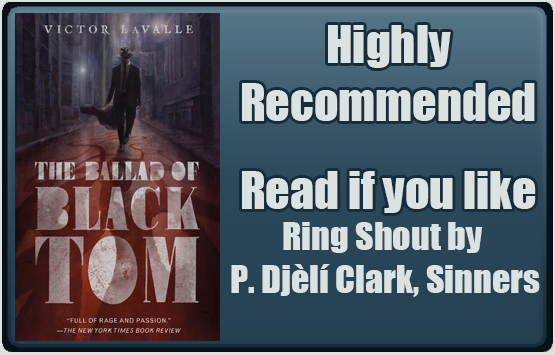
The Ballad of Black Tom by Victor LaValle

The Ballad of Black Tom by Victor LaValle

Formats: Print, audio, digital

Publisher: Tor

Genre: Eldritch, Monster, Historic Horror, Occult, Sci-Fi Horror

Audience: Adult/Mature, Y/A

Diversity: Black characters (African American and Caribbean)

Takes Place in: Harlem, New York City, USA

Content Warnings (Highlight to view): Bullying, Death, Gore, Mental Illness, Medical Procedures, Oppression, Physical Abuse, Police Harassment, Racism, Torture, Verbal/Emotional Abuse, Violence, Xenophobia

Blurb

People move to New York looking for magic and nothing will convince them it isn’t there.
Charles Thomas Tester hustles to put food on the table, keep the roof over his father’s head, from Harlem to Flushing Meadows to Red Hook. He knows what magic a suit can cast, the invisibility a guitar case can provide, and the curse written on his skin that attracts the eye of wealthy white folks and their cops. But when he delivers an occult tome to a reclusive sorceress in the heart of Queens, Tom opens a door to a deeper realm of magic, and earns the attention of things best left sleeping.
A storm that might swallow the world is building in Brooklyn. Will Black Tom live to see it break?

Oh Lovecraft, you were such a great horror writer, but an absolutely terrible human being.

When it comes to Lovecraft, I have some very complicated opinions. I adore the Cthulhu mythos, cosmic horror, and the concept of forbidden knowledge that utterly destroys your sanity, but it’s hard to enjoy his writing when he liberally peppers it with his hatred for anyone who isn’t a WASP. One minute  I’m reading an enjoyable little story about a cosmic abomination and the dark secrets humanity was never meant to know, and the next it’s morphed into some sort of eugenics bullshit. Here’s a small sampling of just some of the bullshit he pulls in his stories: In the Case Of Charles Dexter Ward Lovecraft describes a woman as having “a very repulsive cast of countenance, probably due to a mixture of negro blood,” in Herbert West: Reaminator the black boxer, Buck Robinson, is compared to an ape, in The Rats in the Walls there’s a black cat named N****r Man, The Horror at Red Hook is basically just Lovecraft rambling about how much he hates immigrants and black people who he refers to as a “contagion” with “primitive half-ape savagery”, and in Medusa’s Coil he describes slavery as “a civilization and social order now sadly extinct”. Oh, and let’s not forget that poem. There’s a good reason why Lovecraft’s bust is no longer used for the World Fantasy Award trophy, the guy was a dick.

A drawing of Nnedi Okorafor wearing a dark blue dress, large red and gold earrings, and holding her World Fantasy Award, a bust of H.P. Lovecraft. Okorafor looks uncomfortable while she says “Um, Thanks, I guess? Yeah, I don’t really want this racist’s head on my mantle.”

I tried to draw Nnedi Okorafor, “tried” being the operative word. She says I got it right from the shoulders up though!
Now, before anyone uses the “Lovecraft was just a product of his time” excuse, please consider this: Yes, his active years as a writer were during the incredibly racist segregation era, but not everyone shared his shitty beliefs about people of color and Jews. Mary White OvingtonMoorfield Storey, and William English Walling were all white, but they were also supporters of  civil rights and racial equality during the same period, and even helped found the NAACP with W. E. B. Du Bois. So it’s not like every white person in the 1920s and 1930s was racist. Lovecraft would’ve at least been aware of civil rights due to Guinn v. United States, a landmark case that found racist literacy tests unconstitutional, the National Negro Business League which helped to double the number of black owned businesses, and prominent black lawyer Charles Hamilton Houston, who was fighting for civil rights in court. Hell, even his friends and family criticized the horror writer’s ignorant attitude. Lovecraft’s wife, Sonia Greene, and friend Samuel Loveman were both horrified by Lovecraft’s anti-Semitism and resented him for it. Sonia even wrote, “Whenever we found ourselves in the racially mixed crowds which characterize New York, Howard would become livid with rage… He seemed almost to lose his mind.” When Lovecraft attacked Charles D. Isaacson‘s, article on racial tolerance, In a Minor Key, in his own article titled In a Major Key (where he praised the KKK as “that noble but much maligned of Southerners who saved half our country from destruction”) he managed to piss off not just Isaacson, but his own friend James Ferdinand Morton, both of whom wrote responses attacking Lovecraft’s racism. He knew people thought he was racist, as he’d been called out multiple times and even his wife had pleaded with him to reconsider his beliefs- Lovecraft just chose to be an intolerant jerk.

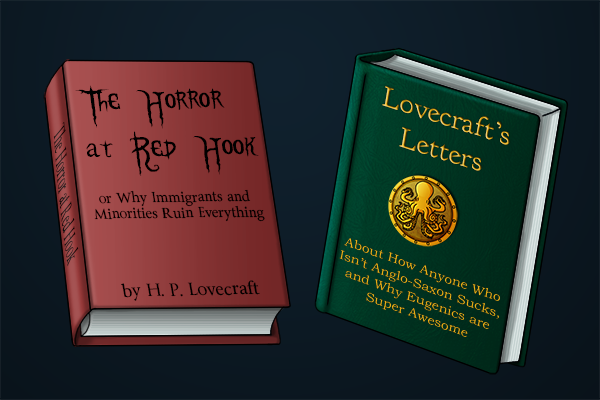
There are two books. On the left is a book with a red cover written by H.P. Lovecraft. It’s titled “The Horror at Red Hook, or Why Immigrants and Minorities Ruin Everything.” On the right is a green, leather bound book with an image of a brass octopus on the cover. The title, written in gold lettering, is “Lovecraft’s Letters: About How Anyone Who Isn’t Anglo-Saxon Sucks, and Why Eugenics are Super Awesome”.

Probably real Lovecraft titles.

Luckily for us, many talented creators have taken concepts in Lovecraft’s writing and used it to create their own works, so fans can still enjoy Yog-Sothoth, the Deep Ones, and the horrors of forbidden knowledge driving men to madness- without all the bigotry. The Ballad of Black Tom is one of these works, a retelling of  Lovecraft’s incredibly racist The Horror at Red Hook from the point of view of a black man living in Harlem.

For those not familiar with Lovecraft’s original short story, The Horror at Red Hook follows police detective Thomas Malone and his pursuit of forbidden knowledge in the immigrant neighborhood of Red Hook, Brooklyn, or as Lovecraft describes it “a maze of hybrid squalor”. Because the only religions in Lovecraft’s world are either good, Anglo-Saxon Christianity or evil, bad, demon worship, all the brown people are apparently involved with the occult.  Malone is put on a case involving the wealthy and eccentric recluse, Robert Suydam because his relatives want the old man declared mentally unfit so they can have his money. During the course of the investigation Malone discovers that Suydam has been spending time with illegal immigrants and foreigners, which obviously means he’s doing something super evil, like sacrificing white babies to tentacle-faced monsters, because Lovecraft is racist and Malone is an awful detective. Suydam continues to do suspicious things, in Malone’s opinion anyway, like lose weight, work on his personal grooming, and get married. Eventually the whole thing cumulates in a police raid in Redhook, where Malone finds a bunch of creepy shit in Suydam’s basement flat which causes the police detective to lose his sanity points and pass out from sheer terror. Afterwards we discover that the buildings collapsed, killing almost everyone except Malone, who is left with PTSD and batophobia. The rest of the story is just Lovecraft whining about immigrants “ruining” New York and reads like the antiquated 8,000 word equivalent of a Trump tweet. It’s not one of his better stories. So it’s kind of a miracle that LaValle not only manages to write a version of The Horror at Red Hook that’s not just a commentary on racism, but is actually good, while still keeping all the creepiness, mind-fuckery, characters, and plot of the original. Suydam and Thomas Malone both appear as major characters in The Ballad of Black Tom, Malone serving as a deuteragonist for the second half of the story, while Suydam introduces Tommy Tester, the book’s protagonist, to the occult. There are other hidden references to Lovecraft lore throughout the book. The title, Black Tom, is an allusion to the cat from The Rats in the Walls whose name was changed from N***** Man to Black Tom when the story was reprinted in Zest magazine in the 1950s. Toward the end Robert LaValle mentions a man from Rhode Island, living in New York, who may be Lovecraft himself.

LaValle defends the minority population living in Harlem and Redhook that Lovecraft so despised by showing them as the every day folks they are, trying to get by with what little they have. Tommy even expresses disappointment after visiting the Victoria Club, when he learns that it’s not the den of debauchery and sin he had hoped for, but instead old men playing cards and women selling meals they’ve made at home. There are criminals, yes, but that’s to be expected in any impoverished area, and they’re far from a majority of the population. When Tommy discovers Suydam is associating with so many criminals, he’s terrified, and it speaks more to the rich, white man’s character than the immigrants on New York. What Malone discovers in the basement is also been changed from the original, but to reveal more would ruin the amazing ending of Black Tom. Let’s just say LaValle provides his readers with more detail on the horrors the detective discovers, and a much more satisfying ending.

The thing I found the scariest about The Ballad of Black Tom weren’t the fictional monstrosities sleeping at the bottom of the see ready to destroy humanity, it was how much LaValle’s fictionalized world reminded me of our own. The cops’ blatant racism, their harassment of black men who were simply walking down the street, and their willingness to kill at the slightest provocation felt all too familiar, as did the rampant xenophobia and anti-immigration attitudes. The story may be set in the 1920s, but it’s clear that some things still haven’t changed. Tommy’s encounters with the police were enough to give me panic attacks, as I remembered my own family’s terrifying encounters with cops. While I’m pale enough to pass as white, most of my extended family isn’t, and I grew up with horror stories about what happened to black people stalked, shot, raped, and lynched for merely existing. Tommy has learned what every young black person is still being taught: if the police stop you, appear as non-aggressive as possible, be polite, and put up with whatever harassment the cops dish out or you’ll wind up dead. We see this in all his encounters with Malone. Tommy plays dumb, looks downs, and lets them steal his money and insult him to his face without making a comment. At least for the first half of the book.

Tommy Tester starts the story as a good man. He may trick others and take on some not-so-legal work, but he’s trying to take care of his disabled father in a world that’s against him, so it’s not surprising he has to do some questionable things to survive. At least he never actively hurts others and tries to do the right thing when he can, like preventing a witch from getting her hands on forbidden knowledge, which is more than I can say for most of the people Tommy encounters. Racist cops constantly threaten and abuse him, he’s harassed by a bunch of white kids just for walking while black, and white society treats him as less than human. Even Robert Suydam, who claims to admire Tommy and gives him a large sum of money to play guitar in his home, is merely using for his own ends. As it turns out, Suydam is a white man who fetishizes POC cultures, while still viewing himself as superior to the same people he claims he wants to help. There’s a saying “you can only kick a dog so many times before it bites back” and after being attacked, abused, taunted, stolen from, threatened, and finally losing everything to cold and corrupt law enforcement, Tommy Tester realizes he has nothing left to lose and says “fuck it”. And that’s how we start the second half of the story, told from Malone’s point of view, with Tommy, now calling himself “Black Tom,” transforming himself into the most badass, brutal, and terrifying antagonist in order to exact his bloody revenge on Robert Suydam, Thomas Malone, and the xenophobic NYPD. And let me just say, it’s immensely satisfying. Gory, but satisfying.

I abhor violence in real life, and obviously don’t agree with mass slaughter and abuse, no matter how evil the victims are. The real world is more complicated than just good vs. evil, and violence and revenge just beget more of the same. That said, there’s still a violent, pissed off part of me, hurt and furious at the injustice of the world, that wants to see wicked people suffer. Not just get their richly deserved comeuppance, but really, truly suffer in the worst ways imaginable. It’s the bitter part of me that relates to all those Saturday morning cartoon villains of my past who just want to destroy everything, because the world is such a terrible, hateful place that it probably deserves it. This vengeful part of me that becomes more and more hateful every time I read the news was immensely satisfied and soothed to watch Black Tom punish a group of racists who resemble 21st century hate groups a little too closely. It’s the same anger that motivates Killmonger in the Black Panther film.


But, like I said, these are ugly thoughts I would never actually act on or hope to see happen in real life because I know how wrong they are, and I still hold on to the hope that logic and compassion will win out (so FBI, if you’re reading this, I just want to clarify, I’m not actually planning on going on any kind of bloody killing spree). When Tommy, pushed to choose between an eldritch abomination and the hateful people who hurt him again and again, he gives in to revenge and loses part of his humanity, and that’s what makes the story so bitter-sweet. Black Tom may have gotten his revenge, but at the cost of being a good man, something he will have to live with for the rest of his life. He’s compromised his most important value, being the kind of man his father would be proud of, and can no longer look his best friend in the eye. As satisfying as it is to see horrible people suffer a horrible fate, you can’t help but feel bad for Tommy who’s left to wonder if it was really worth it. 

My wife, who is wearing a blue space dress and white, over-the-knee socks has just opened the door to reveal two FBI agents, a light-skinned man, and a dark-skinned woman. My wife has her hands on her and looks irritated. She shouts, “What did you do this time!?!!” I’m in the foreground, carrying a human foot that’s been cut off below the knee. The limb is starting to decay and is wrapped in bandages. I look surprised and guilty at being caught by my wife.

The severed human leg actually has nothing to do with why the Feds are here. Though I’m sure my wife is going to ask about that too. Watch what you say on the internet kids!
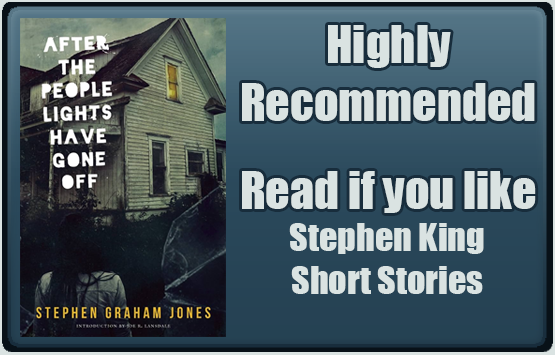
After the People Lights Have Gone Off by Stephen Graham Jones

After the People Lights Have Gone Off by Stephen Graham Jones

Formats: Print, audio, digital

Publisher: Dark House Press

Genre: Monster, Paranormal, Demon, Werewolf, Zombie, Killer/Slasher, Romance, Ghosts/Haunting, Sci-Fi Horror, Psychological Horror, Vampire

Audience: Adult/Mature

Diversity: American Indian (Blackfoot/Niitsitapi), Queer (Gay Men), Disability (Paraplegic)

Takes Place in: USA

Content Warnings (Highlight to view): Animal Death, Child Endangerment, Child Death, Gore, Violence, Death, Torture, Homophobia, Self-Harm, Implied Sexual Assault 

Blurb

The fifteen stories in After the People Lights Have Gone Off by Stephen Graham Jones explore the horrors and fears of the supernatural and the everyday. Included are two original stories, several rarities and out of print narratives, as well as a few “best of the year” inclusions. In “Thirteen,” horrors lurk behind the flickering images on the big screen. “Welcome to the Reptile House” reveals the secrets that hide in our flesh. In “The Black Sleeve of Destiny,” a single sweatshirt leads to unexpectedly dark adventures. And the title story, “After the People Lights Have Gone Off,” is anything but your typical haunted house story.

With an introduction by Edgar Award winner Joe R. Lansdale, and featuring fifteen full-page illustrations by Luke Spooner, After the People Lights Have Gone Off gets under your skin and stays there.

For Native American Heritage Month I’d thought I’d review a collection of short stories by one of horror’s greatest writers, Stephen Graham Jones.

Do you ever find yourself reading this awesome, interesting book, but then you get to the last chapter and go “What the fuck did I just read?” I’m not talking stories with ambiguous endings where it’s left open to interpretation, like in Inception where it’s unclear whether Cobb is still in a dream or not (and then you spend hours arguing about it on the internet), but the ending still makes sense. No, I’m referring to endings that are downright obfuscating (yay, I have a thesaurus!). Endings where you have to skip back to check if you missed some really obvious clue, only to find that no, the story really does end like that, and then you’re left wondering if you’re just not smart (or high) enough to “get it”. For example, 2001: A Space Odyssey. I know it’s this amazing, classic film, but what the hell was up with that giant space baby!?! Did the really obvious metaphor for the birth of humanity just fly over my head or did Kubrick just drop a bunch of LSD? Or both? Seriously WTF? Am I the only person who doesn’t get it?

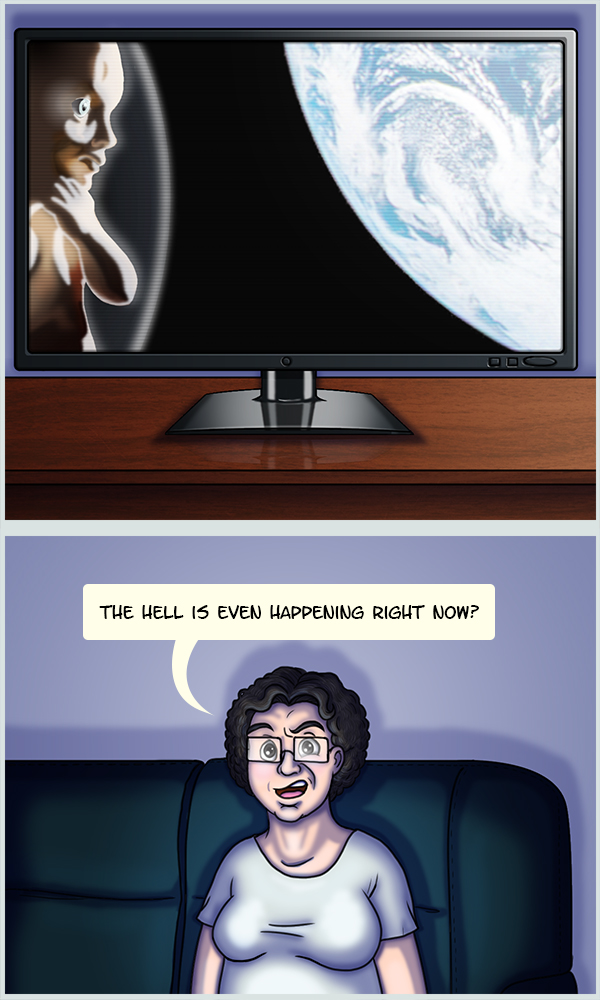
In the first panel a TV is showing a scene from 2001: A Space Odyssey with a giant, human fetus/star child floating in the void and looking at the planet earth. The second panel reveals me watching the film, bewildered, and asking “The hell is even happening right now?”

In retrospect, I probably shouldn’t have tried watching this movie at 3 AM.

Well, Stephen Graham Jones is a master of the WTF ending. In some ways this works to his advantage, like when it highlights the confusion and mental instability of the narrator, or preys on the reader’s fear of the unknown. Subtle scares can be terrifying when done right, and when Jones gets it right, it works SO WELL, like with Second Chances where the final sentence of the story hits you like a punch in the gut. But Jones makes things too subtle you’re left scratching your head and wondering what you’re supposed to be scared of. It’s like when the creepy music starts playing in a film, you know you’re supposed to feel uneasy because something bad is about to happen, but then, when the final dissonant chord is struck, everything just sort of ends without the payoff of a monster jumping out or even a terrified scream to imply something horrible just happened. Which is, unfortunately, really not that scary. After the People Lights Have Gone Off (the short story, not the book), Uncle, Xebico and Brush Monster all have this problem. Did someone die? Was there a monster? Is the narrator hallucinating? Did anything bad even happen? Am I just not smart enough to get it? It’s especially frustrating when the rest of the story makes sense, like in Xebico, but then the ending just kind of goes off the rails.

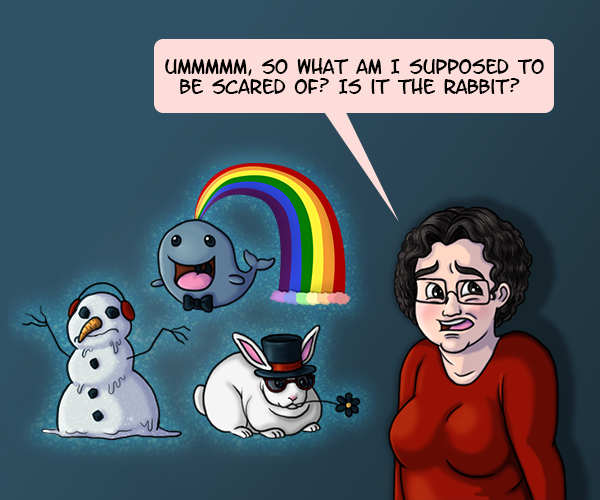
A sad, melting snow man with ear muffs, a whale with a bowtie shooting rainbows out of its blowhole, and a rabbit with a flower in its mouth, wearing a top hat and sunglasses are floating in midair and surrounded by sparkles. Looking uncomfortable, I ask, “Ummmm, so what am I supposed to be scared of? Is it the rabbit?”

I’m pretty sure it’s the sketchy looking rabbit.

Of course, none of this makes Jones a bad writer. He’s actually incredibly talented, aside from the whole confusing ending thing which is probably due more to me being obtuse than a lack of skill on Jones’ part. Like King, Jones has a real flair for making the mundane fucking terrifying.  For example, The Black Sleeve of Destiny, which is about a Lovecraftian hoodie. That’s right, a hoodie. Well, that and some poor kid’s mild kleptomania spinning out of control until it becomes a full blown obsession, but mostly the evil hoodie that seems to act as a pocket dimension with a mind of its own. There’s also The Spider Box (such a creepy title) about a cardboard fruit box that resurrects the dead.  Somehow Jones managers to cover all the horror staples in his book (demons, ghosts, werewolves, vampires, killers, and zombies) while still making his stories seem fresh and unique. A great example of this is Welcome to the Reptile House, one of the most distinct and creative vampire stories I’ve ever read. In fact, I didn’t even know it was a vampire story when I started reading it, so, uh, sorry for the spoiler.

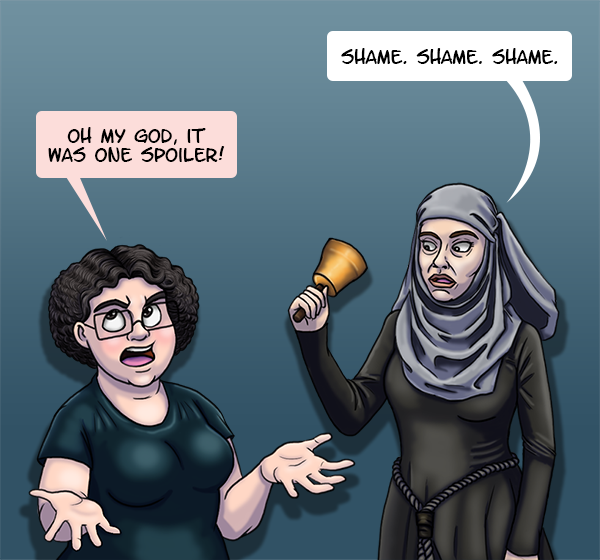
Septa Unella from Game of Thrones is ringing her bell and chanting “shame, shame, shame”. Annoyed, I snap “Oh my God, it was one spoiler!”

Septa Unella shows up any time someone reveals a spoiler. Or at least, she SHOULD.

But not all the stories in this collection are your traditional tales of horror, some could even be considered love stories. Albeit, really messed up, creepy love stories, but love stories nonetheless. One story is even called This is Love. Jones explores different kinds of relationships in his novel, from lovers and devoted spouses, to childhood crushes, to familial love between siblings, parents and children, and even extended family. Snow Monsters is a heartwarming tale about what a parent will sacrifice for their child, but with a supernatural twist. Doc’s Story, explores the bonds of a struggling family, and is one of the most human stories in the collection, ironic since it’s about werewolves.  In After the People Lights Have Gone Off (again, the short story, not the collection) and The Dead are Not we see examples of the complete devotion married couples have for each other, even when things get difficult and terrifying. Of course, there are also inversions, like Uncle, which is about a couple that has fallen out of love, and the husband’s feelings of guilt for not mourning his wife’s death.

Oh, and a little tip, before picking this book up I strongly recommend checking out Stephen King’s short story The Man in the Black Suit and H. F. Arnold’s The Night Wire (both of which you should read regardless because they’re awesome). Why? Well The Spindly Man is a horror story about a book group discussing King’s famous horror story (how’s that for Inception?), while Xebico is about adapting The Night Wire to the stage. And as cheesy as having a scary short story about another scary short story sounds, they’re both pretty awesome, yet another indicator of Jones’ talent.

Overall, After the People Lights Have Gone Off (this time I am referring to the book) is an amazing anthology by a talented author, as long as you’re okay with stream of consciousness writing and not always understanding what the hell you just read. Or maybe it’s just me, and the rest of you will have some deeper understanding of the stories. Jones’ work definitely makes me feel like I’m the only one at the party not getting the joke.

Everything I Know About Zombies I Learned in Kindergarten by Kevin Wayne Williams

Everything I Know About Zombies I Learned in Kindergarten by Kevin Wayne Williams

Formats: Print, digital

Publisher: Mott Haven Books

Genre: Apocalypse/Disaster, Blood & Guts, Zombie

Audience: Adult/Mature

Diversity: Black/African American/Caribbean American characters, Trinidad, Jamacian, Hispanic/Latinx characters

Takes Place in: New York City, USA

Content Warnings (Highlight to view): Abelism, Animal Abuse, Animal Death, Body Shaming, Bullying, Cannibalism, Child Death, Child Endangerment, Death, Drug Use/Abuse, Forced Captivity, Gore,  Medical Procedures, Miscarriage, Racism, Rape/Sexual Assault, Slurs, Suicide, Violence

Blurb

Finalist for Foreword Reviews’ IndieFab Novel of the Year for Multicultural fiction and Horror. Even before the apocalypse, nine-year-old Letitia Johnson’s life had never been simple. Shuttled from foster home to foster home in the impoverished neighborhood of Mott Haven, it was all she could do to keep track of her little sister. When the apocalypse came, she tried to keep her sister’s kindergarten safe by locking them all in a tiny school bathroom, hiding while they waited for a rescue that never came. For five days, they hid. They hid while their teachers were being eaten, while their classmates were being killed. They hid while the Bronx was being evacuated. Now, there’s no one left to help them. There’s no place left to hide. It’s just her, one ax, twelve kindergarteners, twelve garden stakes, and a will to live.

While the cast of this novel is primarily children, the book is intended for adults and contains material unsuitable for younger readers.

When it comes to horror, kids come in two types. Either they’re sweet, innocent, completely helpless victims the protagonist needs to protect at all costs, or they’re evil little bastards that will send you into the cornfield, control you with their telepathic powers, or just straight up murder you because they’re the spawn ofSatan. The children in Everything I Know About Zombies I Learned in Kindergarten somehow land right dab in the middle of the victim/villain scale. They’re neither helpless nor innocent after being forced to go through things no child should go through, nor are they actively malicious, only killing for survival. They also don’t seem to possess the immunity to handle situations that most children do in horror stories. Kids get eaten by Zombies, shot, torn apart, and baby zombies get spiked in the head. So if you can’t stomach minors getting killed in fiction, I recommend staying far, far away from this book.

 Letitia, the nine-year-old protagonist, is easily the most competent, clever, and practical character in the book, organizing her little sister’s kindergartners into a unit of efficient zombie killers and quickly picking up survival skills. Growing up with a drug addicted mom, Letitia is used to taking charge and picking up adults’ slack, in addition to becoming wary of the world at a young age. In the early chapters, they try to look for the childrens’ parents, eager to be rid of such a heavy responsibility, only to discover their dickbag guardians all evacuated without them. (Who the hell just leaves their kid behind during a disaster? You’d think they’d at least make some effort to save them, damn.) The adult survivors actually pose more of a threat than the zombies (or cucos, as the children call them), their greed and despair claiming far more lives than the undead do. It’s weird, even though the children are far from innocent, having become skilled killers, the adults are the ones who’ve become morally bankrupt. The few who do manage to hold on to their optimism and naivety don’t last long, foolishly trusting the wrong people or refusing to admit the world, and the rules, have changed. The kids might be depressingly cynical and violent now, but they’re merely adapting to their new reality, and are much more practical than their grown counterparts. It’s no wonder the adults are so unnerved by them.

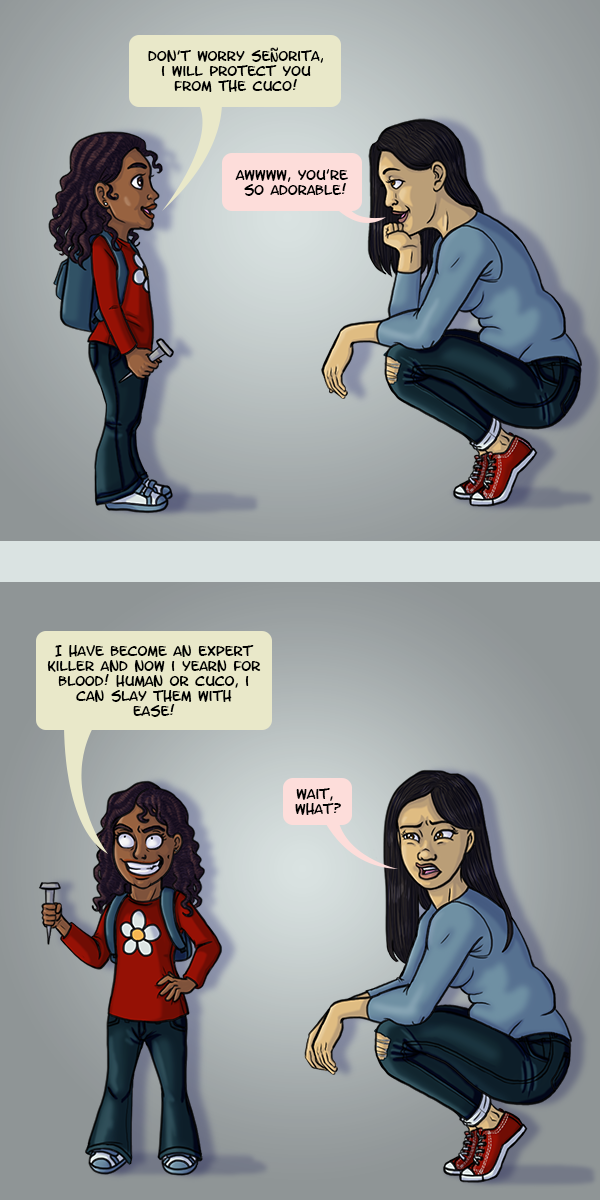
In the top panel, a little girl holding a spike is telling a grown woman “Don’t worry Señorita, I will protect you from the cuco!” The woman, bemused, responds “Awwww, you’re so adorable!” In the next panel the little girl brandishes her spike with a crazed grin and responds “I have become an expert killer and now I yearn for blood! Human or cuco, I can slay them with ease!” The woman, confused and concerned, asks “Wait, what?”

Some of the kids enjoy killing a little too much.

I was expecting the children being eaten by the undead to be the most disturbing part, until the book turned out to be about the death of innocence, and children being forced to adapt to a situation no child should ever go through. It’s one thing to read about fantastical monsters like Zombies attacking a bunch of helpless kids, but quite another when they’re dying from gun violence, or growing up in crushing poverty. In the first, the situation is pure fiction, no real child is ever going to be attacked by the undead, and you can feel safe in that knowledge. But it hits close to home when it comes to real world problems. Even if the children in the story are fictional, you know millions of real kids out there right now who are surrounded by abuse, violence, and probably living without basic necessities, and that’s super depressing. So basically, it’s a story about how kids with rough lives can’t rely on adults (because they’re either malicious, incompetent, or ignorant) and have to take charge of their own safety and survival, which probably would’ve ended up happening with or without undead hordes overtaking the city. I know zombie apocalypse stories are generally bleak, but damn.

 The zombies in the story are pretty much your typical Romero zombies, slow-moving and stupid, and not too difficult to kill as long as there aren’t a lot of them and their brains are destroyed, a feat which the children usually accomplish by stabbing them in the eye with garden stakes. Unfortunately, everyone becomes zombified upon death, regardless of how they die, so the undead multiply even if they can’t bite anyone. Letitia quickly figures out that the zombies are attracted to movement and sound, and is smart enough to stick to quiet, secluded areas, while the adults continue to attract the undead with the buzz of their emergency generators and gun fire (because the adults are somehow less competent than grade schoolers, another reason Letitia avoids them).

 Unfortunately for me, most of the book is dedicated to the practically of surviving in an abandoned New York City, wandering around and looting mini-marts for supplies…which made for less than stimulating reading. I’m going to admit right now, I don’t like camping or fishing, or any form of “roughing it,” and I don’t like reading about it, either. I’m pretty sure I’d die if I went for more than 40 minutes without WiFi.  So I’ve long ago accepted the fact that I would probably be the first person to die in a zombie apocalypse type situation due to my dependence on modern conveniences and comfort, and I’m okay with that. I’m sure some people will find all the survivor type stuff super interesting, as is evident from Discovery Channel’s programming, but I was hoping for way more suspense and undead violence, and less foraging and guinea pig farming. Speaking of which, there’s a decent amount of animal death too, apparently Zombies like to eat puppies as much as they like to eat little kids.

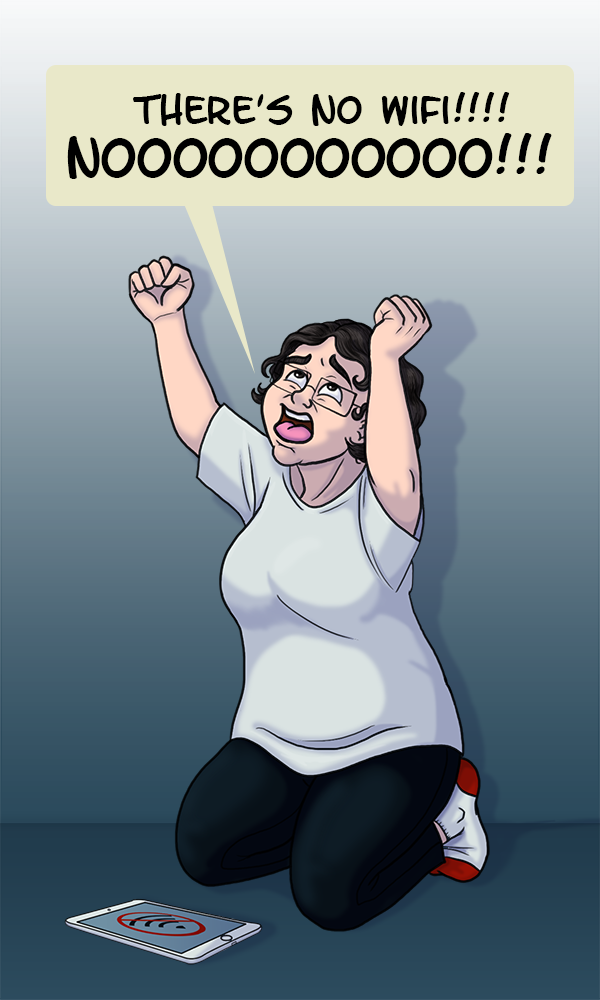
I’m on my knees, fists raised above my head, screaming at the sky in despair “There’s no Wi-Fi! Noooooooooooooooooooo!” A tablet lies in front of me displaying a large “no Wi-Fi” symbol on the screen.

I would not last long in an Apocalypse, or even a dead zone. How did I even function back in the 80’s?

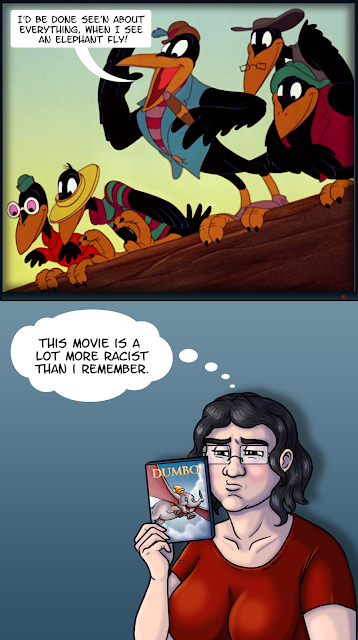
Stepping away from the story for a moment, I feel it’s worth mentioning that while this book was a finalist for a multicultural fiction award, and has a very diverse cast, it was written by a white guy. Obviously, I prefer Own Voices books, but I’ve reviewed non-minority authors writing about minority characters on here before, and I probably wouldn’t even be mentioning the author’s race except for one thing that was bothering me. For the most part Williams does do a pretty decent job at representing a very racially diverse cast, and has clearly put a lot of effort into making the children’s voices seem authentic. But the way the protagonist, Letitia, spoke came off as iffy to me, and I found myself side-eyeing like I always do when white people try to replicate the slang and speech patterns used by people of color within their communities. Now, it’s totally possible Letitia is completely accurate to how Caribbean children speak, and I’m just super ignorant. It’s just as possible Williams was trying to portray the way an average nine-year-old speaks, and Letitia’s ethnicity had nothing to do with it. I mean, I have no idea what children are supposed to sound like, and my mom was a grammar obsessed English major so I probably sounded like an overly-formal weirdo at that age. (No one says “to whom are you referring” or “may I please”, when they’re in Kindergarten mom, GOD.) I honestly don’t know, so I’m afraid I’m going to have to leave that distinction to someone more qualified. And if I am jumping to conclusions, well, blame it on all the racist pidgin I’ve heard spouted by characters like Long Duk Dong and the Crows from Dumbo (did you know the main crow’s name is Jim? Damn, Disney…) over the years making me super wary.

In the top panel, a TV screen displays an image of the five crows from Disney’s Dumbo. The leader shouts “I’d be done see’n about everything, when I see an elephant fly!” In the second panel I’m squinting suspiciously at the Dumbo DVD case thinking “This movie is a lot more racist than I remember.”

Seriously, Jim Crow! WTF were you thinking Disney!?! At least they’re not as bad as Sunflower from Fantasia.

Everything I Know About Zombies I Learned in Kindergarten definitely has flaws, most of the adults (and a few of the kids) get so little characterization it’s hard to figure out who’s who, the action scenes are confusing, and Williams spends way too much time on boring minutiae, but it’s still an enjoyable read. The horror is less the gory, run away from the monster kind like I was expecting, and more a slow building horror at the nature of humanity and how adults kind of suck.

The Graveyard Apartment by Mariko Koike, translated by Deborah Boliver Boehm

The Graveyard Apartment by Mariko Koike, translated by Deborah Boliver Boehm

Formats: Print

Publisher: St. Martin’s Press

Genre: Ghosts/Haunting, Thriller

Audience: Adult/Mature

Diversity: Japanese characters

Takes Place in: Japan

Content Warnings (Highlight to view): Animal Death, Child Death, Child Endangerment, Suicide, Verbal/Emotional Abuse, Forced Captivity

Blurb

A terrifying tale of a young family who move into an apartment building next to a graveyard and the horrors that are unleashed upon them.

One of the most popular writers working in Japan today, Mariko Koike is a recognized master of detective fiction and horror writing. Known in particular for her hybrid works that blend these styles with elements of romance, The Graveyard Apartment is arguably Koike’s masterpiece. Originally published in Japan in 1986, Koike’s novel is the suspenseful tale of a young family that believes it has found the perfect home to grow in to, only to realize that the apartment’s idyllic setting harbors the specter of evil and that longer they stay, the more trapped they become.

This tale of a young married couple who are harboring a dark secret is packed with dread and terror, as they and their daughter move into a brand new apartment building built next to a graveyard. As strange and terrifying occurrences begin to pile up, people in the building begin to move out one by one, until the young family is left alone with someone… or something… lurking in the basement. The psychological horror builds moment after moment, scene after scene, culminating with a conclusion that will make you think twice before ever going into a basement again.

Next up for Asian and Pacific American heritage month, is a new translation of Mariko Koike’s popular 1986 horror novel, The Graveyard Apartment.The Graveyard Apartment had a great premise; a married couple and their young daughter move into a haunted apartment near a cemetery and creepy shit keeps happening, but they’re unwilling to move due to their financial situation, societal pressure to appear normal, and the husband’s deep denial that anything is wrong. The book explores their feelings of emptiness and isolation and their struggle with their fears, both mundane and supernatural. But what should have been amazing ended up being very, well, “meh”. So how exactly does one manage to fuck up what should have been a fool proof haunted house formula? 

To be completely fair, much of the awkward writing present in the English version could very well be due to translation problems. But unless the translator of The Graveyard Apartment pulled a 4KIDs Entertainment and just started making up random shit and cutting out half the story, there’s only so much you can blame on her. The problems with the book go far beyond a language barrier issue. The biggest setback is that half the story seems pointless (maybe the translator should have cut some of it out after all). Koike spends more time on random details, like what her main character, Misao, is wearing, than she does on the evil entity haunting the building. There’s even an entire chapter, later on in the book, dedicated to visiting a realtor’s office and looking at new apartments. Can you handle the terror as her husband, Teppei, walks their daughter to school? Shiver as the doomed couple look at rental listings within their budget!

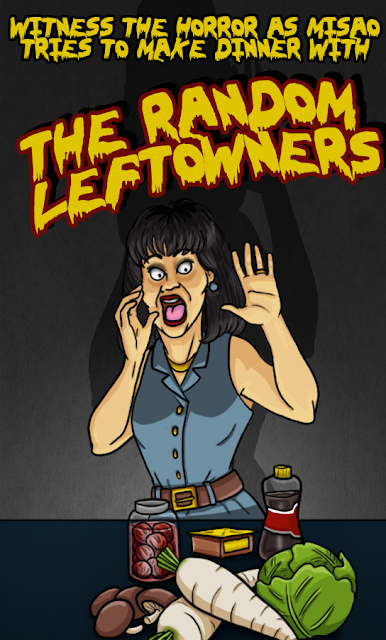
A picture draw in the style of a vintage horror movie posters shows a Japanese woman with poofy, 80’s hair screaming in horror at a random assortment of leftovers (daikon radish, red bean paste, pickled umeboshi plums, lettuce, soy sauce, and mushrooms) in front of her. In creepy looking, dripping, front across the top it says “Witness the horror as Misao tries to make dinner with ‘The Random Leftovers!’

The story takes place in the 80’s so I tried to give her poofy 80’s hair. I was not successful.

And even when Koike does finally get to the creepy stuff, it’s a crapshoot whether or not it actually has anything do with the plot or just more random detailing. For example; early on in the book we discover Teppei’s first wife, Reiko, committed suicide because he was cheating on her with Misao. So you’d think that Reiko’s vengeful spirit would somehow be involved in the plot. Well, you’d be wrong. The suicide backstory serves no purpose other than highlighting what a remorseless dick Teppei is. We also learn that at one point there were plans to build an underground shopping center, but they were abandoned after the initial tunnel was built. So maybe the project disturbed the graves above and angered the spirits? Nope. The project was abandoned because people didn’t want the cemetery relocated, so the graves were pretty much left alone. Actually we never learn why the ghosts (or demons, or monsters, or whatever) are such huge assholes. Usually ghosts haunt the living because they’re pissed off about being murdered or moved, or having a Taco Bell built over their remains, but these entities just like to lock doors, mess with the elevators, and put handprints on the glass, because…. reasons. I dunno, maybe they just really hate whoever does the building maintenance, or they’re a bunch of drunk frat boys.

The comic shows the annoying ghost of a frat boy, sticking out his tongue and waking up another man by screaming “Woooo! Bro, let’s play some beer pong!” The ghost is muscular, holding a Solo cup, and is wearing a Polo shirt with a popped collar, a backwards baseball hat, and a Puka shell necklace. The man he has just woken up is shirtless, with two subcutaneous mastectomy scars on his chest. Irritated, he responds “Can’t you just rattle chains and make the lights flicker like a normal ghost?”

Not so much evil as incredibly irritating.

The story and characters are well written enough, it just isn’t scary. Well, except for the ending, where all the horror gets crammed into the last few chapters of the book. It’s like Koike suddenly went “Shit! I’ve got four chapters left, and the scariest things in the book so far are a creepy basement and being forced to into awkward social situations!” (Granted, awkward social situations are much scarier than any demonic entity). So then the ghosts (or demons, or whatever) go from mildly irritating to eldritch abominations with god damn superpowers and a lust for blood.Oh, and just as the story is starting to get scary and suspenseful? It finishes with a vague, open ending and we STILL don’t know what the fuck is wrong with the building! To top it off, the ending isn’t even part of the actual story, it’s a freaking epilogue! WHAT? There was all this slow buildup up for the most underwhelming payoff ever. Way to get my hopes up, Koike! Look, The Graveyard Apartment isn’t a bad book overall, which is why I didn’t knock it down to “not recommended”, it just doesn’t work as a haunted house story.

The Drowning Girl by Caitlín R. Kiernan

The Drowning Girl by Caitlín R. Kiernan

Formats: Print, audio, digital

Publisher: Penguin

Genre: Monster, Werewolf, Romance, Ghosts/Haunting, Psychological Horror, Mystery

Audience: Adult/Mature

Diversity: Lesbian characters, trans character, mentally ill character

Takes Place in: Northeastern USA

Content Warnings (Highlight to view): Mental Illness, Self-Harm, Mentions of Transphobia, Suicide, Emotional Abuse 

Please note, I found out recently that Caitlín R. Kiernan has expressed racist and Zionist views on Twitter, explored here. I will leave the reivew up for now, but can no longer reccomend her books.

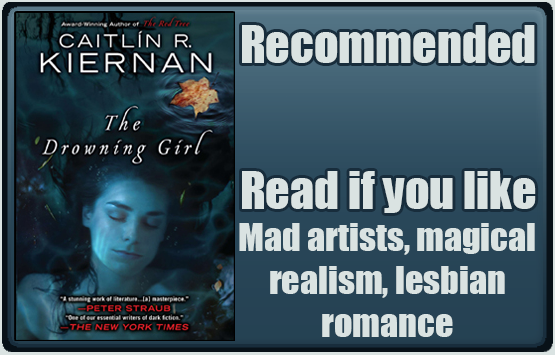
The Drowning Girl is a beautifully written, psychological horror novel about a young woman, Imp, whose schizophrenia is making it difficult for her to determine the nature of the mysterious woman haunting her. Is she a siren using her charm to lure Imp to disaster? A werewolf? A human stalker who can blur the lines of reality? Imp struggles to sort out the truth before she loses herself. Queer romance, myths, and art combine to create this award winning novel.

So did I like it? Well……. Sort of?

In theory I should have loved it. It takes place on my home turf of New England, the main character is a queer artist (like me!), she’s dating an incredibly well written trans character, the story has a creepy mystery, gorgeous imagery, and one of the best representations of mental illness I’ve ever read. But I struggled to get through the Drowning Girl. I’d pick it up, read a chapter, and then forget about it for a month. I don’t know why I didn’t devour this book as quickly as I do others, there wasn’t really anything I disliked about it, and it wasn’t boring, but it just didn’t seem to capture my attention. It reminded me of one of those award winning art films that critics love and you have to sit through in college film classes. There’s nothing bad about it per se, but you’d still rather be watching Bad Boys II, or some other equally ridiculous action flick.

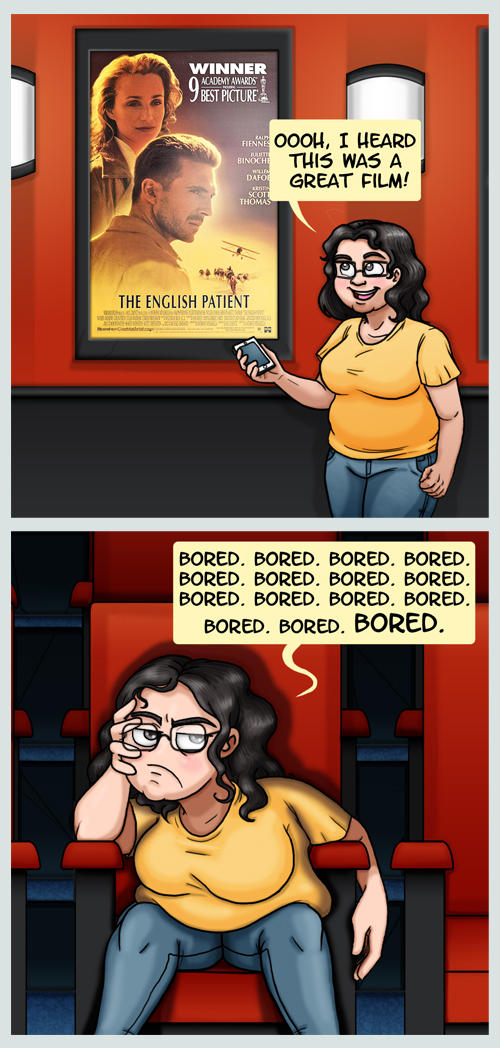
In the first panel I'm in the hallway of a movie theater looking at a poster for "The English Patient" and saying "Oooh, I heard this was a great film!" In the next panel I'm in the theater looking completely disinterested, and repeating "bored, bored, bored, bored" over and over as I suffer through the movie.

Ugh, I should’ve just watched Sharknado again.

Maybe I’m just not sophisticated enough to appreciate the non-linear, stream of conciseness (i.e. all over the place) writing, or perhaps I’m too clueless to fully comprehend the subtly and symbolism of the story. But I found it really jarring to have Imp describe her girlfriend, Abalyn, play Kingdom Hearts one minute, and then have a poetic, jumbled passage full of fairy tale metaphors the next. And I get it, the writing style is intended to represent Imp’s mental illness by showing the disorganization of her thought process, the random associations she makes where none exist, and her difficulty remembering what’s real and what’s imagined. But that doesn’t always make for an enjoyable read.

I guess I’m just incredibly picky when it comes to “artsy” prose and magical realism. When it works, it works well, but when it doesn’t, it just becomes a confusing, irritating erratic mess, and with the Drowning Girl it was kind of a crap shoot.

I'm floating upside down in blue space, surrounded by dreamlike imagery of a crow wearing a cloak, a close-up of a crescent moon, a wolf's skull, pills, a crab, and a mermaid with pale, corpse-like skin. The mermaid's human half is intact but her fish half is nothing but bone. Her organs hang out of her human torso. I look confused and mutter

WTF is going on? Did I take expired cold medicine again?

Since I’m starting to feel bad for picking on this book so much (and it’s by no means a bad book), I want to address one of the things I did really like about the story, how Imp’s mental illness was treated. It wasn’t romanticized, it was just a part of her that could make her life more challenging, but not horrible. Medication made her illness manageable, but didn’t make it disappear entirely, and she was able to continue working, date, hang out with friends, pursue hobbies, and lived on her own. She would go through rough patches, some she could handle on her own, and some she couldn’t. Her therapist was supportive, without telling Imp what to do. Overall, I felt like it was a very realistic depiction of a woman with a mental illness, which is rather uncommon in fiction where the mentally ill are usually written as either asylum inmates, criminals, or manic pixie dream girls.

Overall, I really, really wanted to love this one. It had all the right ingredients, rave reviews, a talented author, but the final result was disappointing, at least for me. It wasn’t bad, but I just couldn’t bring myself to give it a “highly recommended”. That doesn’t mean other people won’t find this book amazing, and I strongly encourage others, especially those with more sophisticated taste than mine, to give it a read. Because you may love it. Or you may find it “meh”, but at least you won’t regret reading it.

Navigation

Social Media

Search by Tags

To learn more about the Age Group, Diversity, and Genre tags, click here.

Age Groups

Diversity

Genre

Support the Blog

Search

Links

The Ballad of Black Tom by Victor LaValle

The Ballad of Black Tom by Victor LaValle

Formats: Print, audio, digital

Publisher: Tor

Genre: Eldritch, Monster, Historic Horror, Occult, Sci-Fi Horror

Audience: Adult/Mature, Y/A

Diversity: Black characters (African American and Caribbean)

Takes Place in: Harlem, New York City, USA

Content Warnings (Highlight to view): Bullying, Death, Gore, Mental Illness, Medical Procedures, Oppression, Physical Abuse, Police Harassment, Racism, Torture, Verbal/Emotional Abuse, Violence, Xenophobia

Blurb

People move to New York looking for magic and nothing will convince them it isn’t there.
Charles Thomas Tester hustles to put food on the table, keep the roof over his father’s head, from Harlem to Flushing Meadows to Red Hook. He knows what magic a suit can cast, the invisibility a guitar case can provide, and the curse written on his skin that attracts the eye of wealthy white folks and their cops. But when he delivers an occult tome to a reclusive sorceress in the heart of Queens, Tom opens a door to a deeper realm of magic, and earns the attention of things best left sleeping.
A storm that might swallow the world is building in Brooklyn. Will Black Tom live to see it break?

Oh Lovecraft, you were such a great horror writer, but an absolutely terrible human being.

When it comes to Lovecraft, I have some very complicated opinions. I adore the Cthulhu mythos, cosmic horror, and the concept of forbidden knowledge that utterly destroys your sanity, but it’s hard to enjoy his writing when he liberally peppers it with his hatred for anyone who isn’t a WASP. One minute  I’m reading an enjoyable little story about a cosmic abomination and the dark secrets humanity was never meant to know, and the next it’s morphed into some sort of eugenics bullshit. Here’s a small sampling of just some of the bullshit he pulls in his stories: In the Case Of Charles Dexter Ward Lovecraft describes a woman as having “a very repulsive cast of countenance, probably due to a mixture of negro blood,” in Herbert West: Reaminator the black boxer, Buck Robinson, is compared to an ape, in The Rats in the Walls there’s a black cat named N****r Man, The Horror at Red Hook is basically just Lovecraft rambling about how much he hates immigrants and black people who he refers to as a “contagion” with “primitive half-ape savagery”, and in Medusa’s Coil he describes slavery as “a civilization and social order now sadly extinct”. Oh, and let’s not forget that poem. There’s a good reason why Lovecraft’s bust is no longer used for the World Fantasy Award trophy, the guy was a dick.

A drawing of Nnedi Okorafor wearing a dark blue dress, large red and gold earrings, and holding her World Fantasy Award, a bust of H.P. Lovecraft. Okorafor looks uncomfortable while she says “Um, Thanks, I guess? Yeah, I don’t really want this racist’s head on my mantle.”

I tried to draw Nnedi Okorafor, “tried” being the operative word. She says I got it right from the shoulders up though!

Now, before anyone uses the “Lovecraft was just a product of his time” excuse, please consider this: Yes, his active years as a writer were during the incredibly racist segregation era, but not everyone shared his shitty beliefs about people of color and Jews. Mary White OvingtonMoorfield Storey, and William English Walling were all white, but they were also supporters of  civil rights and racial equality during the same period, and even helped found the NAACP with W. E. B. Du Bois. So it’s not like every white person in the 1920s and 1930s was racist. Lovecraft would’ve at least been aware of civil rights due to Guinn v. United States, a landmark case that found racist literacy tests unconstitutional, the National Negro Business League which helped to double the number of black owned businesses, and prominent black lawyer Charles Hamilton Houston, who was fighting for civil rights in court. Hell, even his friends and family criticized the horror writer’s ignorant attitude. Lovecraft’s wife, Sonia Greene, and friend Samuel Loveman were both horrified by Lovecraft’s anti-Semitism and resented him for it. Sonia even wrote, “Whenever we found ourselves in the racially mixed crowds which characterize New York, Howard would become livid with rage… He seemed almost to lose his mind.” When Lovecraft attacked Charles D. Isaacson‘s, article on racial tolerance, In a Minor Key, in his own article titled In a Major Key (where he praised the KKK as “that noble but much maligned of Southerners who saved half our country from destruction”) he managed to piss off not just Isaacson, but his own friend James Ferdinand Morton, both of whom wrote responses attacking Lovecraft’s racism. He knew people thought he was racist, as he’d been called out multiple times and even his wife had pleaded with him to reconsider his beliefs- Lovecraft just chose to be an intolerant jerk.

There are two books. On the left is a book with a red cover written by H.P. Lovecraft. It’s titled “The Horror at Red Hook, or Why Immigrants and Minorities Ruin Everything.” On the right is a green, leather bound book with an image of a brass octopus on the cover. The title, written in gold lettering, is “Lovecraft’s Letters: About How Anyone Who Isn’t Anglo-Saxon Sucks, and Why Eugenics are Super Awesome”.

Probably real Lovecraft titles.

Luckily for us, many talented creators have taken concepts in Lovecraft’s writing and used it to create their own works, so fans can still enjoy Yog-Sothoth, the Deep Ones, and the horrors of forbidden knowledge driving men to madness- without all the bigotry. The Ballad of Black Tom is one of these works, a retelling of  Lovecraft’s incredibly racist The Horror at Red Hook from the point of view of a black man living in Harlem.

For those not familiar with Lovecraft’s original short story, The Horror at Red Hook follows police detective Thomas Malone and his pursuit of forbidden knowledge in the immigrant neighborhood of Red Hook, Brooklyn, or as Lovecraft describes it “a maze of hybrid squalor”. Because the only religions in Lovecraft’s world are either good, Anglo-Saxon Christianity or evil, bad, demon worship, all the brown people are apparently involved with the occult.  Malone is put on a case involving the wealthy and eccentric recluse, Robert Suydam because his relatives want the old man declared mentally unfit so they can have his money. During the course of the investigation Malone discovers that Suydam has been spending time with illegal immigrants and foreigners, which obviously means he’s doing something super evil, like sacrificing white babies to tentacle-faced monsters, because Lovecraft is racist and Malone is an awful detective. Suydam continues to do suspicious things, in Malone’s opinion anyway, like lose weight, work on his personal grooming, and get married. Eventually the whole thing cumulates in a police raid in Redhook, where Malone finds a bunch of creepy shit in Suydam’s basement flat which causes the police detective to lose his sanity points and pass out from sheer terror. Afterwards we discover that the buildings collapsed, killing almost everyone except Malone, who is left with PTSD and batophobia. The rest of the story is just Lovecraft whining about immigrants “ruining” New York and reads like the antiquated 8,000 word equivalent of a Trump tweet. It’s not one of his better stories. So it’s kind of a miracle that LaValle not only manages to write a version of The Horror at Red Hook that’s not just a commentary on racism, but is actually good, while still keeping all the creepiness, mind-fuckery, characters, and plot of the original. Suydam and Thomas Malone both appear as major characters in The Ballad of Black Tom, Malone serving as a deuteragonist for the second half of the story, while Suydam introduces Tommy Tester, the book’s protagonist, to the occult. There are other hidden references to Lovecraft lore throughout the book. The title, Black Tom, is an allusion to the cat from The Rats in the Walls whose name was changed from N***** Man to Black Tom when the story was reprinted in Zest magazine in the 1950s. Toward the end Robert LaValle mentions a man from Rhode Island, living in New York, who may be Lovecraft himself.

LaValle defends the minority population living in Harlem and Redhook that Lovecraft so despised by showing them as the every day folks they are, trying to get by with what little they have. Tommy even expresses disappointment after visiting the Victoria Club, when he learns that it’s not the den of debauchery and sin he had hoped for, but instead old men playing cards and women selling meals they’ve made at home. There are criminals, yes, but that’s to be expected in any impoverished area, and they’re far from a majority of the population. When Tommy discovers Suydam is associating with so many criminals, he’s terrified, and it speaks more to the rich, white man’s character than the immigrants on New York. What Malone discovers in the basement is also been changed from the original, but to reveal more would ruin the amazing ending of Black Tom. Let’s just say LaValle provides his readers with more detail on the horrors the detective discovers, and a much more satisfying ending.

The thing I found the scariest about The Ballad of Black Tom weren’t the fictional monstrosities sleeping at the bottom of the see ready to destroy humanity, it was how much LaValle’s fictionalized world reminded me of our own. The cops’ blatant racism, their harassment of black men who were simply walking down the street, and their willingness to kill at the slightest provocation felt all too familiar, as did the rampant xenophobia and anti-immigration attitudes. The story may be set in the 1920s, but it’s clear that some things still haven’t changed. Tommy’s encounters with the police were enough to give me panic attacks, as I remembered my own family’s terrifying encounters with cops. While I’m pale enough to pass as white, most of my extended family isn’t, and I grew up with horror stories about what happened to black people stalked, shot, raped, and lynched for merely existing. Tommy has learned what every young black person is still being taught: if the police stop you, appear as non-aggressive as possible, be polite, and put up with whatever harassment the cops dish out or you’ll wind up dead. We see this in all his encounters with Malone. Tommy plays dumb, looks downs, and lets them steal his money and insult him to his face without making a comment. At least for the first half of the book.

Tommy Tester starts the story as a good man. He may trick others and take on some not-so-legal work, but he’s trying to take care of his disabled father in a world that’s against him, so it’s not surprising he has to do some questionable things to survive. At least he never actively hurts others and tries to do the right thing when he can, like preventing a witch from getting her hands on forbidden knowledge, which is more than I can say for most of the people Tommy encounters. Racist cops constantly threaten and abuse him, he’s harassed by a bunch of white kids just for walking while black, and white society treats him as less than human. Even Robert Suydam, who claims to admire Tommy and gives him a large sum of money to play guitar in his home, is merely using for his own ends. As it turns out, Suydam is a white man who fetishizes POC cultures, while still viewing himself as superior to the same people he claims he wants to help. There’s a saying “you can only kick a dog so many times before it bites back” and after being attacked, abused, taunted, stolen from, threatened, and finally losing everything to cold and corrupt law enforcement, Tommy Tester realizes he has nothing left to lose and says “fuck it”. And that’s how we start the second half of the story, told from Malone’s point of view, with Tommy, now calling himself “Black Tom,” transforming himself into the most badass, brutal, and terrifying antagonist in order to exact his bloody revenge on Robert Suydam, Thomas Malone, and the xenophobic NYPD. And let me just say, it’s immensely satisfying. Gory, but satisfying.

I abhor violence in real life, and obviously don’t agree with mass slaughter and abuse, no matter how evil the victims are. The real world is more complicated than just good vs. evil, and violence and revenge just beget more of the same. That said, there’s still a violent, pissed off part of me, hurt and furious at the injustice of the world, that wants to see wicked people suffer. Not just get their richly deserved comeuppance, but really, truly suffer in the worst ways imaginable. It’s the bitter part of me that relates to all those Saturday morning cartoon villains of my past who just want to destroy everything, because the world is such a terrible, hateful place that it probably deserves it. This vengeful part of me that becomes more and more hateful every time I read the news was immensely satisfied and soothed to watch Black Tom punish a group of racists who resemble 21st century hate groups a little too closely. It’s the same anger that motivates Killmonger in the Black Panther film.


But, like I said, these are ugly thoughts I would never actually act on or hope to see happen in real life because I know how wrong they are, and I still hold on to the hope that logic and compassion will win out (so FBI, if you’re reading this, I just want to clarify, I’m not actually planning on going on any kind of bloody killing spree). When Tommy, pushed to choose between an eldritch abomination and the hateful people who hurt him again and again, he gives in to revenge and loses part of his humanity, and that’s what makes the story so bitter-sweet. Black Tom may have gotten his revenge, but at the cost of being a good man, something he will have to live with for the rest of his life. He’s compromised his most important value, being the kind of man his father would be proud of, and can no longer look his best friend in the eye. As satisfying as it is to see horrible people suffer a horrible fate, you can’t help but feel bad for Tommy who’s left to wonder if it was really worth it. 

My wife, who is wearing a blue space dress and white, over-the-knee socks has just opened the door to reveal two FBI agents, a light-skinned man, and a dark-skinned woman. My wife has her hands on her and looks irritated. She shouts, “What did you do this time!?!!” I’m in the foreground, carrying a human foot that’s been cut off below the knee. The limb is starting to decay and is wrapped in bandages. I look surprised and guilty at being caught by my wife.

The severed human leg actually has nothing to do with why the Feds are here. Though I’m sure my wife is going to ask about that too. Watch what you say on the internet kids!
After the People Lights Have Gone Off by Stephen Graham Jones

After the People Lights Have Gone Off by Stephen Graham Jones

Formats: Print, audio, digital

Publisher: Dark House Press

Genre: Monster, Paranormal, Demon, Werewolf, Zombie, Killer/Slasher, Romance, Ghosts/Haunting, Sci-Fi Horror, Psychological Horror, Vampire

Audience: Adult/Mature

Diversity: American Indian (Blackfoot/Niitsitapi), Queer (Gay Men), Disability (Paraplegic)

Takes Place in: USA

Content Warnings (Highlight to view): Animal Death, Child Endangerment, Child Death, Gore, Violence, Death, Torture, Homophobia, Self-Harm, Implied Sexual Assault 

Blurb

The fifteen stories in After the People Lights Have Gone Off by Stephen Graham Jones explore the horrors and fears of the supernatural and the everyday. Included are two original stories, several rarities and out of print narratives, as well as a few “best of the year” inclusions. In “Thirteen,” horrors lurk behind the flickering images on the big screen. “Welcome to the Reptile House” reveals the secrets that hide in our flesh. In “The Black Sleeve of Destiny,” a single sweatshirt leads to unexpectedly dark adventures. And the title story, “After the People Lights Have Gone Off,” is anything but your typical haunted house story.

With an introduction by Edgar Award winner Joe R. Lansdale, and featuring fifteen full-page illustrations by Luke Spooner, After the People Lights Have Gone Off gets under your skin and stays there.

For Native American Heritage Month I’d thought I’d review a collection of short stories by one of horror’s greatest writers, Stephen Graham Jones.

Do you ever find yourself reading this awesome, interesting book, but then you get to the last chapter and go “What the fuck did I just read?” I’m not talking stories with ambiguous endings where it’s left open to interpretation, like in Inception where it’s unclear whether Cobb is still in a dream or not (and then you spend hours arguing about it on the internet), but the ending still makes sense. No, I’m referring to endings that are downright obfuscating (yay, I have a thesaurus!). Endings where you have to skip back to check if you missed some really obvious clue, only to find that no, the story really does end like that, and then you’re left wondering if you’re just not smart (or high) enough to “get it”. For example, 2001: A Space Odyssey. I know it’s this amazing, classic film, but what the hell was up with that giant space baby!?! Did the really obvious metaphor for the birth of humanity just fly over my head or did Kubrick just drop a bunch of LSD? Or both? Seriously WTF? Am I the only person who doesn’t get it?

In the first panel a TV is showing a scene from 2001: A Space Odyssey with a giant, human fetus/star child floating in the void and looking at the planet earth. The second panel reveals me watching the film, bewildered, and asking “The hell is even happening right now?”

In retrospect, I probably shouldn’t have tried watching this movie at 3 AM.

Well, Stephen Graham Jones is a master of the WTF ending. In some ways this works to his advantage, like when it highlights the confusion and mental instability of the narrator, or preys on the reader’s fear of the unknown. Subtle scares can be terrifying when done right, and when Jones gets it right, it works SO WELL, like with Second Chances where the final sentence of the story hits you like a punch in the gut. But Jones makes things too subtle you’re left scratching your head and wondering what you’re supposed to be scared of. It’s like when the creepy music starts playing in a film, you know you’re supposed to feel uneasy because something bad is about to happen, but then, when the final dissonant chord is struck, everything just sort of ends without the payoff of a monster jumping out or even a terrified scream to imply something horrible just happened. Which is, unfortunately, really not that scary. After the People Lights Have Gone Off (the short story, not the book), Uncle, Xebico and Brush Monster all have this problem. Did someone die? Was there a monster? Is the narrator hallucinating? Did anything bad even happen? Am I just not smart enough to get it? It’s especially frustrating when the rest of the story makes sense, like in Xebico, but then the ending just kind of goes off the rails.

A sad, melting snow man with ear muffs, a whale with a bowtie shooting rainbows out of its blowhole, and a rabbit with a flower in its mouth, wearing a top hat and sunglasses are floating in midair and surrounded by sparkles. Looking uncomfortable, I ask, “Ummmm, so what am I supposed to be scared of? Is it the rabbit?”

I’m pretty sure it’s the sketchy looking rabbit.

Of course, none of this makes Jones a bad writer. He’s actually incredibly talented, aside from the whole confusing ending thing which is probably due more to me being obtuse than a lack of skill on Jones’ part. Like King, Jones has a real flair for making the mundane fucking terrifying.  For example, The Black Sleeve of Destiny, which is about a Lovecraftian hoodie. That’s right, a hoodie. Well, that and some poor kid’s mild kleptomania spinning out of control until it becomes a full blown obsession, but mostly the evil hoodie that seems to act as a pocket dimension with a mind of its own. There’s also The Spider Box (such a creepy title) about a cardboard fruit box that resurrects the dead.  Somehow Jones managers to cover all the horror staples in his book (demons, ghosts, werewolves, vampires, killers, and zombies) while still making his stories seem fresh and unique. A great example of this is Welcome to the Reptile House, one of the most distinct and creative vampire stories I’ve ever read. In fact, I didn’t even know it was a vampire story when I started reading it, so, uh, sorry for the spoiler.

Septa Unella from Game of Thrones is ringing her bell and chanting “shame, shame, shame”. Annoyed, I snap “Oh my God, it was one spoiler!”

Septa Unella shows up any time someone reveals a spoiler. Or at least, she SHOULD.

But not all the stories in this collection are your traditional tales of horror, some could even be considered love stories. Albeit, really messed up, creepy love stories, but love stories nonetheless. One story is even called This is Love. Jones explores different kinds of relationships in his novel, from lovers and devoted spouses, to childhood crushes, to familial love between siblings, parents and children, and even extended family. Snow Monsters is a heartwarming tale about what a parent will sacrifice for their child, but with a supernatural twist. Doc’s Story, explores the bonds of a struggling family, and is one of the most human stories in the collection, ironic since it’s about werewolves.  In After the People Lights Have Gone Off (again, the short story, not the collection) and The Dead are Not we see examples of the complete devotion married couples have for each other, even when things get difficult and terrifying. Of course, there are also inversions, like Uncle, which is about a couple that has fallen out of love, and the husband’s feelings of guilt for not mourning his wife’s death.

Oh, and a little tip, before picking this book up I strongly recommend checking out Stephen King’s short story The Man in the Black Suit and H. F. Arnold’s The Night Wire (both of which you should read regardless because they’re awesome). Why? Well The Spindly Man is a horror story about a book group discussing King’s famous horror story (how’s that for Inception?), while Xebico is about adapting The Night Wire to the stage. And as cheesy as having a scary short story about another scary short story sounds, they’re both pretty awesome, yet another indicator of Jones’ talent.

Overall, After the People Lights Have Gone Off (this time I am referring to the book) is an amazing anthology by a talented author, as long as you’re okay with stream of consciousness writing and not always understanding what the hell you just read. Or maybe it’s just me, and the rest of you will have some deeper understanding of the stories. Jones’ work definitely makes me feel like I’m the only one at the party not getting the joke.

Everything I Know About Zombies I Learned in Kindergarten by Kevin Wayne Williams

Everything I Know About Zombies I Learned in Kindergarten by Kevin Wayne Williams

Formats: Print, digital

Publisher: Mott Haven Books

Genre: Apocalypse/Disaster, Blood & Guts, Zombie

Audience: Adult/Mature

Diversity: Black/African American/Caribbean American characters, Trinidad, Jamacian, Hispanic/Latinx characters

Takes Place in: New York City, USA

Content Warnings (Highlight to view): Abelism, Animal Abuse, Animal Death, Body Shaming, Bullying, Cannibalism, Child Death, Child Endangerment, Death, Drug Use/Abuse, Forced Captivity, Gore,  Medical Procedures, Miscarriage, Racism, Rape/Sexual Assault, Slurs, Suicide, Violence

Blurb

Finalist for Foreword Reviews’ IndieFab Novel of the Year for Multicultural fiction and Horror. Even before the apocalypse, nine-year-old Letitia Johnson’s life had never been simple. Shuttled from foster home to foster home in the impoverished neighborhood of Mott Haven, it was all she could do to keep track of her little sister. When the apocalypse came, she tried to keep her sister’s kindergarten safe by locking them all in a tiny school bathroom, hiding while they waited for a rescue that never came. For five days, they hid. They hid while their teachers were being eaten, while their classmates were being killed. They hid while the Bronx was being evacuated. Now, there’s no one left to help them. There’s no place left to hide. It’s just her, one ax, twelve kindergarteners, twelve garden stakes, and a will to live.

While the cast of this novel is primarily children, the book is intended for adults and contains material unsuitable for younger readers.

When it comes to horror, kids come in two types. Either they’re sweet, innocent, completely helpless victims the protagonist needs to protect at all costs, or they’re evil little bastards that will send you into the cornfield, control you with their telepathic powers, or just straight up murder you because they’re the spawn ofSatan. The children in Everything I Know About Zombies I Learned in Kindergarten somehow land right dab in the middle of the victim/villain scale. They’re neither helpless nor innocent after being forced to go through things no child should go through, nor are they actively malicious, only killing for survival. They also don’t seem to possess the immunity to handle situations that most children do in horror stories. Kids get eaten by Zombies, shot, torn apart, and baby zombies get spiked in the head. So if you can’t stomach minors getting killed in fiction, I recommend staying far, far away from this book.

 Letitia, the nine-year-old protagonist, is easily the most competent, clever, and practical character in the book, organizing her little sister’s kindergartners into a unit of efficient zombie killers and quickly picking up survival skills. Growing up with a drug addicted mom, Letitia is used to taking charge and picking up adults’ slack, in addition to becoming wary of the world at a young age. In the early chapters, they try to look for the childrens’ parents, eager to be rid of such a heavy responsibility, only to discover their dickbag guardians all evacuated without them. (Who the hell just leaves their kid behind during a disaster? You’d think they’d at least make some effort to save them, damn.) The adult survivors actually pose more of a threat than the zombies (or cucos, as the children call them), their greed and despair claiming far more lives than the undead do. It’s weird, even though the children are far from innocent, having become skilled killers, the adults are the ones who’ve become morally bankrupt. The few who do manage to hold on to their optimism and naivety don’t last long, foolishly trusting the wrong people or refusing to admit the world, and the rules, have changed. The kids might be depressingly cynical and violent now, but they’re merely adapting to their new reality, and are much more practical than their grown counterparts. It’s no wonder the adults are so unnerved by them.

In the top panel, a little girl holding a spike is telling a grown woman “Don’t worry Señorita, I will protect you from the cuco!” The woman, bemused, responds “Awwww, you’re so adorable!” In the next panel the little girl brandishes her spike with a crazed grin and responds “I have become an expert killer and now I yearn for blood! Human or cuco, I can slay them with ease!” The woman, confused and concerned, asks “Wait, what?”

Some of the kids enjoy killing a little too much.

I was expecting the children being eaten by the undead to be the most disturbing part, until the book turned out to be about the death of innocence, and children being forced to adapt to a situation no child should ever go through. It’s one thing to read about fantastical monsters like Zombies attacking a bunch of helpless kids, but quite another when they’re dying from gun violence, or growing up in crushing poverty. In the first, the situation is pure fiction, no real child is ever going to be attacked by the undead, and you can feel safe in that knowledge. But it hits close to home when it comes to real world problems. Even if the children in the story are fictional, you know millions of real kids out there right now who are surrounded by abuse, violence, and probably living without basic necessities, and that’s super depressing. So basically, it’s a story about how kids with rough lives can’t rely on adults (because they’re either malicious, incompetent, or ignorant) and have to take charge of their own safety and survival, which probably would’ve ended up happening with or without undead hordes overtaking the city. I know zombie apocalypse stories are generally bleak, but damn.

 The zombies in the story are pretty much your typical Romero zombies, slow-moving and stupid, and not too difficult to kill as long as there aren’t a lot of them and their brains are destroyed, a feat which the children usually accomplish by stabbing them in the eye with garden stakes. Unfortunately, everyone becomes zombified upon death, regardless of how they die, so the undead multiply even if they can’t bite anyone. Letitia quickly figures out that the zombies are attracted to movement and sound, and is smart enough to stick to quiet, secluded areas, while the adults continue to attract the undead with the buzz of their emergency generators and gun fire (because the adults are somehow less competent than grade schoolers, another reason Letitia avoids them).

 Unfortunately for me, most of the book is dedicated to the practically of surviving in an abandoned New York City, wandering around and looting mini-marts for supplies…which made for less than stimulating reading. I’m going to admit right now, I don’t like camping or fishing, or any form of “roughing it,” and I don’t like reading about it, either. I’m pretty sure I’d die if I went for more than 40 minutes without WiFi.  So I’ve long ago accepted the fact that I would probably be the first person to die in a zombie apocalypse type situation due to my dependence on modern conveniences and comfort, and I’m okay with that. I’m sure some people will find all the survivor type stuff super interesting, as is evident from Discovery Channel’s programming, but I was hoping for way more suspense and undead violence, and less foraging and guinea pig farming. Speaking of which, there’s a decent amount of animal death too, apparently Zombies like to eat puppies as much as they like to eat little kids.

I’m on my knees, fists raised above my head, screaming at the sky in despair “There’s no Wi-Fi! Noooooooooooooooooooo!” A tablet lies in front of me displaying a large “no Wi-Fi” symbol on the screen.

I would not last long in an Apocalypse, or even a dead zone. How did I even function back in the 80’s?

Stepping away from the story for a moment, I feel it’s worth mentioning that while this book was a finalist for a multicultural fiction award, and has a very diverse cast, it was written by a white guy. Obviously, I prefer Own Voices books, but I’ve reviewed non-minority authors writing about minority characters on here before, and I probably wouldn’t even be mentioning the author’s race except for one thing that was bothering me. For the most part Williams does do a pretty decent job at representing a very racially diverse cast, and has clearly put a lot of effort into making the children’s voices seem authentic. But the way the protagonist, Letitia, spoke came off as iffy to me, and I found myself side-eyeing like I always do when white people try to replicate the slang and speech patterns used by people of color within their communities. Now, it’s totally possible Letitia is completely accurate to how Caribbean children speak, and I’m just super ignorant. It’s just as possible Williams was trying to portray the way an average nine-year-old speaks, and Letitia’s ethnicity had nothing to do with it. I mean, I have no idea what children are supposed to sound like, and my mom was a grammar obsessed English major so I probably sounded like an overly-formal weirdo at that age. (No one says “to whom are you referring” or “may I please”, when they’re in Kindergarten mom, GOD.) I honestly don’t know, so I’m afraid I’m going to have to leave that distinction to someone more qualified. And if I am jumping to conclusions, well, blame it on all the racist pidgin I’ve heard spouted by characters like Long Duk Dong and the Crows from Dumbo (did you know the main crow’s name is Jim? Damn, Disney…) over the years making me super wary.

In the top panel, a TV screen displays an image of the five crows from Disney’s Dumbo. The leader shouts “I’d be done see’n about everything, when I see an elephant fly!” In the second panel I’m squinting suspiciously at the Dumbo DVD case thinking “This movie is a lot more racist than I remember.”

Seriously, Jim Crow! WTF were you thinking Disney!?! At least they’re not as bad as Sunflower from Fantasia.

Everything I Know About Zombies I Learned in Kindergarten definitely has flaws, most of the adults (and a few of the kids) get so little characterization it’s hard to figure out who’s who, the action scenes are confusing, and Williams spends way too much time on boring minutiae, but it’s still an enjoyable read. The horror is less the gory, run away from the monster kind like I was expecting, and more a slow building horror at the nature of humanity and how adults kind of suck.

The Graveyard Apartment by Mariko Koike, translated by Deborah Boliver Boehm

The Graveyard Apartment by Mariko Koike, translated by Deborah Boliver Boehm

Formats: Print

Publisher: St. Martin’s Press

Genre: Ghosts/Haunting, Thriller

Audience: Adult/Mature

Diversity: Japanese characters

Takes Place in: Japan

Content Warnings (Highlight to view): Animal Death, Child Death, Child Endangerment, Suicide, Verbal/Emotional Abuse, Forced Captivity

Blurb

A terrifying tale of a young family who move into an apartment building next to a graveyard and the horrors that are unleashed upon them.

One of the most popular writers working in Japan today, Mariko Koike is a recognized master of detective fiction and horror writing. Known in particular for her hybrid works that blend these styles with elements of romance, The Graveyard Apartment is arguably Koike’s masterpiece. Originally published in Japan in 1986, Koike’s novel is the suspenseful tale of a young family that believes it has found the perfect home to grow in to, only to realize that the apartment’s idyllic setting harbors the specter of evil and that longer they stay, the more trapped they become.

This tale of a young married couple who are harboring a dark secret is packed with dread and terror, as they and their daughter move into a brand new apartment building built next to a graveyard. As strange and terrifying occurrences begin to pile up, people in the building begin to move out one by one, until the young family is left alone with someone… or something… lurking in the basement. The psychological horror builds moment after moment, scene after scene, culminating with a conclusion that will make you think twice before ever going into a basement again.

Next up for Asian and Pacific American heritage month, is a new translation of Mariko Koike’s popular 1986 horror novel, The Graveyard Apartment.The Graveyard Apartment had a great premise; a married couple and their young daughter move into a haunted apartment near a cemetery and creepy shit keeps happening, but they’re unwilling to move due to their financial situation, societal pressure to appear normal, and the husband’s deep denial that anything is wrong. The book explores their feelings of emptiness and isolation and their struggle with their fears, both mundane and supernatural. But what should have been amazing ended up being very, well, “meh”. So how exactly does one manage to fuck up what should have been a fool proof haunted house formula? 

To be completely fair, much of the awkward writing present in the English version could very well be due to translation problems. But unless the translator of The Graveyard Apartment pulled a 4KIDs Entertainment and just started making up random shit and cutting out half the story, there’s only so much you can blame on her. The problems with the book go far beyond a language barrier issue. The biggest setback is that half the story seems pointless (maybe the translator should have cut some of it out after all). Koike spends more time on random details, like what her main character, Misao, is wearing, than she does on the evil entity haunting the building. There’s even an entire chapter, later on in the book, dedicated to visiting a realtor’s office and looking at new apartments. Can you handle the terror as her husband, Teppei, walks their daughter to school? Shiver as the doomed couple look at rental listings within their budget!

A picture draw in the style of a vintage horror movie posters shows a Japanese woman with poofy, 80’s hair screaming in horror at a random assortment of leftovers (daikon radish, red bean paste, pickled umeboshi plums, lettuce, soy sauce, and mushrooms) in front of her. In creepy looking, dripping, front across the top it says “Witness the horror as Misao tries to make dinner with ‘The Random Leftovers!’

The story takes place in the 80’s so I tried to give her poofy 80’s hair. I was not successful.

And even when Koike does finally get to the creepy stuff, it’s a crapshoot whether or not it actually has anything do with the plot or just more random detailing. For example; early on in the book we discover Teppei’s first wife, Reiko, committed suicide because he was cheating on her with Misao. So you’d think that Reiko’s vengeful spirit would somehow be involved in the plot. Well, you’d be wrong. The suicide backstory serves no purpose other than highlighting what a remorseless dick Teppei is. We also learn that at one point there were plans to build an underground shopping center, but they were abandoned after the initial tunnel was built. So maybe the project disturbed the graves above and angered the spirits? Nope. The project was abandoned because people didn’t want the cemetery relocated, so the graves were pretty much left alone. Actually we never learn why the ghosts (or demons, or monsters, or whatever) are such huge assholes. Usually ghosts haunt the living because they’re pissed off about being murdered or moved, or having a Taco Bell built over their remains, but these entities just like to lock doors, mess with the elevators, and put handprints on the glass, because…. reasons. I dunno, maybe they just really hate whoever does the building maintenance, or they’re a bunch of drunk frat boys.

The comic shows the annoying ghost of a frat boy, sticking out his tongue and waking up another man by screaming “Woooo! Bro, let’s play some beer pong!” The ghost is muscular, holding a Solo cup, and is wearing a Polo shirt with a popped collar, a backwards baseball hat, and a Puka shell necklace. The man he has just woken up is shirtless, with two subcutaneous mastectomy scars on his chest. Irritated, he responds “Can’t you just rattle chains and make the lights flicker like a normal ghost?”

Not so much evil as incredibly irritating.

The story and characters are well written enough, it just isn’t scary. Well, except for the ending, where all the horror gets crammed into the last few chapters of the book. It’s like Koike suddenly went “Shit! I’ve got four chapters left, and the scariest things in the book so far are a creepy basement and being forced to into awkward social situations!” (Granted, awkward social situations are much scarier than any demonic entity). So then the ghosts (or demons, or whatever) go from mildly irritating to eldritch abominations with god damn superpowers and a lust for blood.Oh, and just as the story is starting to get scary and suspenseful? It finishes with a vague, open ending and we STILL don’t know what the fuck is wrong with the building! To top it off, the ending isn’t even part of the actual story, it’s a freaking epilogue! WHAT? There was all this slow buildup up for the most underwhelming payoff ever. Way to get my hopes up, Koike! Look, The Graveyard Apartment isn’t a bad book overall, which is why I didn’t knock it down to “not recommended”, it just doesn’t work as a haunted house story.

The Drowning Girl by Caitlín R. Kiernan

The Drowning Girl by Caitlín R. Kiernan

Formats: Print, audio, digital

Publisher: Penguin

Genre: Monster, Werewolf, Romance, Ghosts/Haunting, Psychological Horror, Mystery

Audience: Adult/Mature

Diversity: Lesbian characters, trans character, mentally ill character

Takes Place in: Northeastern USA

Content Warnings (Highlight to view): Mental Illness, Self-Harm, Mentions of Transphobia, Suicide, Emotional Abuse 

Please note, I found out recently that Caitlín R. Kiernan has expressed racist and Zionist views on Twitter, explored here. I will leave the reivew up for now, but can no longer reccomend her books.

The Drowning Girl is a beautifully written, psychological horror novel about a young woman, Imp, whose schizophrenia is making it difficult for her to determine the nature of the mysterious woman haunting her. Is she a siren using her charm to lure Imp to disaster? A werewolf? A human stalker who can blur the lines of reality? Imp struggles to sort out the truth before she loses herself. Queer romance, myths, and art combine to create this award winning novel.

So did I like it? Well……. Sort of?

In theory I should have loved it. It takes place on my home turf of New England, the main character is a queer artist (like me!), she’s dating an incredibly well written trans character, the story has a creepy mystery, gorgeous imagery, and one of the best representations of mental illness I’ve ever read. But I struggled to get through the Drowning Girl. I’d pick it up, read a chapter, and then forget about it for a month. I don’t know why I didn’t devour this book as quickly as I do others, there wasn’t really anything I disliked about it, and it wasn’t boring, but it just didn’t seem to capture my attention. It reminded me of one of those award winning art films that critics love and you have to sit through in college film classes. There’s nothing bad about it per se, but you’d still rather be watching Bad Boys II, or some other equally ridiculous action flick.

In the first panel I'm in the hallway of a movie theater looking at a poster for "The English Patient" and saying "Oooh, I heard this was a great film!" In the next panel I'm in the theater looking completely disinterested, and repeating "bored, bored, bored, bored" over and over as I suffer through the movie.

Ugh, I should’ve just watched Sharknado again.

Maybe I’m just not sophisticated enough to appreciate the non-linear, stream of conciseness (i.e. all over the place) writing, or perhaps I’m too clueless to fully comprehend the subtly and symbolism of the story. But I found it really jarring to have Imp describe her girlfriend, Abalyn, play Kingdom Hearts one minute, and then have a poetic, jumbled passage full of fairy tale metaphors the next. And I get it, the writing style is intended to represent Imp’s mental illness by showing the disorganization of her thought process, the random associations she makes where none exist, and her difficulty remembering what’s real and what’s imagined. But that doesn’t always make for an enjoyable read.

I guess I’m just incredibly picky when it comes to “artsy” prose and magical realism. When it works, it works well, but when it doesn’t, it just becomes a confusing, irritating erratic mess, and with the Drowning Girl it was kind of a crap shoot.

I'm floating upside down in blue space, surrounded by dreamlike imagery of a crow wearing a cloak, a close-up of a crescent moon, a wolf's skull, pills, a crab, and a mermaid with pale, corpse-like skin. The mermaid's human half is intact but her fish half is nothing but bone. Her organs hang out of her human torso. I look confused and mutter

WTF is going on? Did I take expired cold medicine again?

Since I’m starting to feel bad for picking on this book so much (and it’s by no means a bad book), I want to address one of the things I did really like about the story, how Imp’s mental illness was treated. It wasn’t romanticized, it was just a part of her that could make her life more challenging, but not horrible. Medication made her illness manageable, but didn’t make it disappear entirely, and she was able to continue working, date, hang out with friends, pursue hobbies, and lived on her own. She would go through rough patches, some she could handle on her own, and some she couldn’t. Her therapist was supportive, without telling Imp what to do. Overall, I felt like it was a very realistic depiction of a woman with a mental illness, which is rather uncommon in fiction where the mentally ill are usually written as either asylum inmates, criminals, or manic pixie dream girls.

Overall, I really, really wanted to love this one. It had all the right ingredients, rave reviews, a talented author, but the final result was disappointing, at least for me. It wasn’t bad, but I just couldn’t bring myself to give it a “highly recommended”. That doesn’t mean other people won’t find this book amazing, and I strongly encourage others, especially those with more sophisticated taste than mine, to give it a read. Because you may love it. Or you may find it “meh”, but at least you won’t regret reading it.

Navigation

Social Media

Search by Tags

To learn more about the Age Group, Diversity, and Genre tags, click here.

Age Groups

Diversity

Genre

Support the Blog

Search

Links