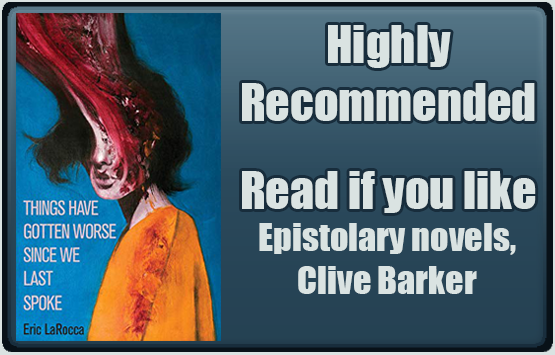
Things Have Gotten Worse Since We Last Spoke by Eric LaRocca

Things Have Gotten Worse Since We Last Spoke by Eric LaRocca

Formats: Print, audio, digital

Publisher: Weirdpunk Books

Genre: Body Horror, Psychological Horror, Romance

Audience: Adult/Mature

Diversity: Gay author, lesbian main characters

Content Warnings (Highlight to view): Animal Death, Death, Mental Illness, Gaslighting, Homophobia, Suicide, Verbal/Emotional Abuse

Blurb

Sadomasochism. Obsession. Death.

A whirlpool of darkness churns at the heart of a macabre ballet between two lonely young women in an internet chat room in the early 2000s—a darkness that threatens to forever transform them once they finally succumb to their most horrific desires.

What have you done today to deserve your eyes?

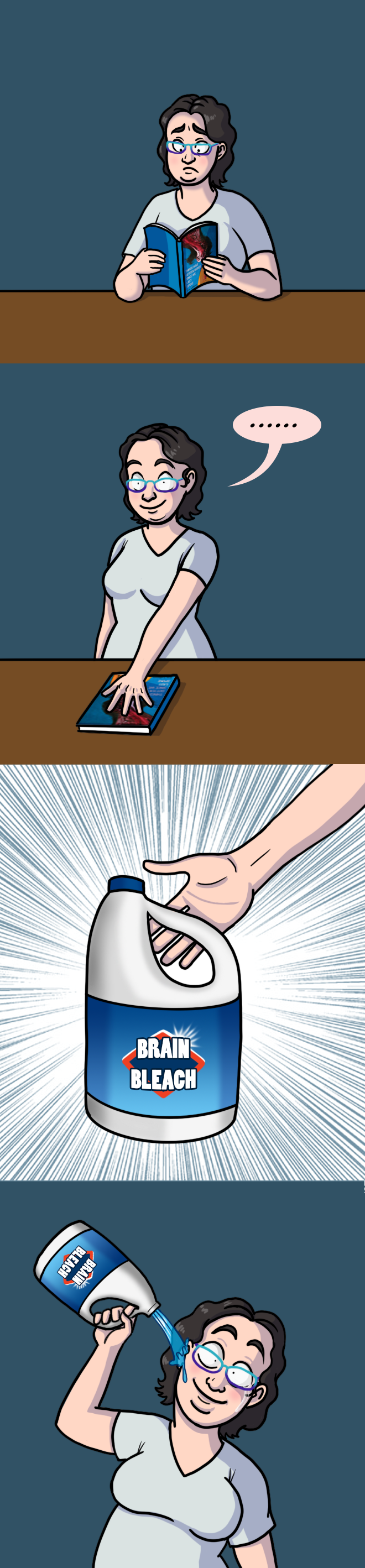
Holy shit…this book. Definitely shouldn’t have read it at 1 am.

This epistolary novella starts out innocently enough. It’s the early 2000s and a young woman named Agnes is selling her antique apple peeler on a LGBTQ+ message board. Another young woman, Zoe, offers to buy the apple peeler. The two email back and forth and start up a friendship. Agnes is having a really tough time and Zoe does something incredibly kind and generous to help her out. Awwww. It also turns out both women are gay and developing feelings for each other. Sounds like a sappy Hallmark Christmas movie doesn’t it (if Hallmark ever aired anything that wasn’t incredibly heteronormative)? Except then things start getting kind of weird (so more like a Lifetime Christmas movie). Agnes, who’s life honestly kind of sucks, is beholden of her “guardian angel” and a little too willing to please her. Zoe wants to push Agnes out of her comfort zone and asks her “What have you done today to deserve your eyes?” Super creepy, although nothing necessarily sinister yet. Still, relationship red flags are starting to pop up. As the two grow ever closer, Zoe suggests they enter a BDSM/sugar mama relationship which Agnes immediately agrees to. Zoe will email tasks which Agnes must complete to please her “sponsor” (Kudos to LaRocca for using sponsor/drudge instead of master/slave which can have racist connotations). Things start going downhill rapidly as both women prove how emotionally unstable they really are.

Twitter User @daveaddey noticed something interesting about Hallmark Christmas movie posters. Namely that they all look like they’ll eat your soul.

BDSM is not inherently harmful. Even when it’s meant to cause pain and discomfort, it shouldn’t result in any permanent physical, emotional, or mental harm; every act should be consensual, not coerced and when I say consensual, I mean enthusiastic consent, not the lack of a “no” or safeword. But like with all things, there are people who take it too far. Doms are supposed to prioritize the safety and well-being of their submissive, but Zoe is more interested in seeing how far she can push her new toy before it breaks. She doesn’t listen when Agnes tells her she’s uncomfortable and ignores the fact that a desperately lonely Agnes in not in the right headspace to make informed decisions. Zoe even makes her perform acts that threaten Agnes’ ability to function in everyday life and takes control of her finances (which is a big red flag). That’s when things start to get really disturbing. Yes, it gets even worse. I won’t reveal any spoilers, suffice it to say this book is not for the squeamish or anyone triggered by depictions of psychologically abusive relationships.

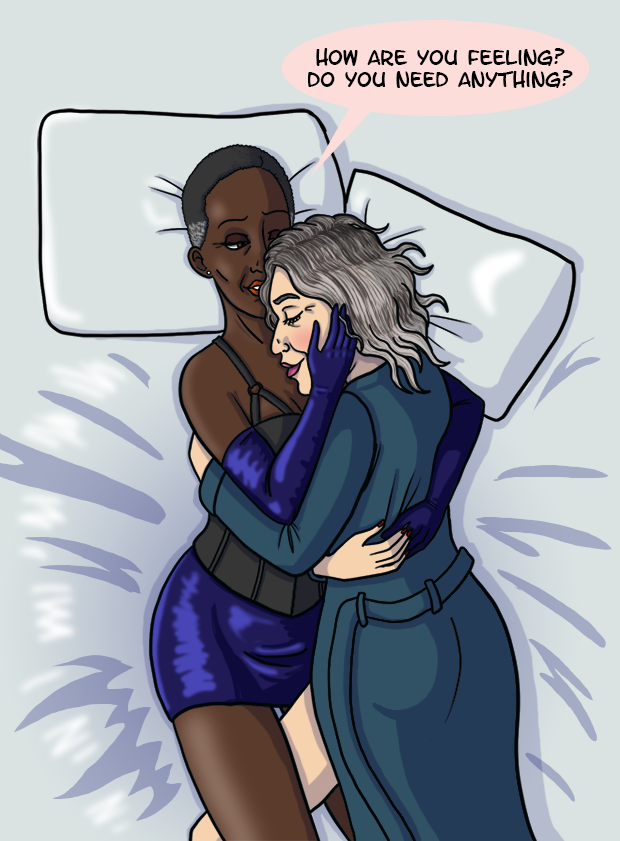
Aftercare is important.

Things Have Gotten Worse Since We Last Spoke is one of the most uncomfortable and disturbing books I’ve read all year. I spent the final third of the novella squirming and distressed, muttering “Oh no, oh no, oh no” to myself. Watching an abusive relationship develop as a lonely young woman’s mental health declines is incredibly upsetting. The warning signs in the relationship are subtle and easily missed if you don’t know what to look for, at least until it’s too late.  And the body horror pairs perfectly with the psychological horror, making the story even more unsettling. This novella may only take an hour to read, but the dread will stay with you for days. So, what have you done today to deserve your eyes?

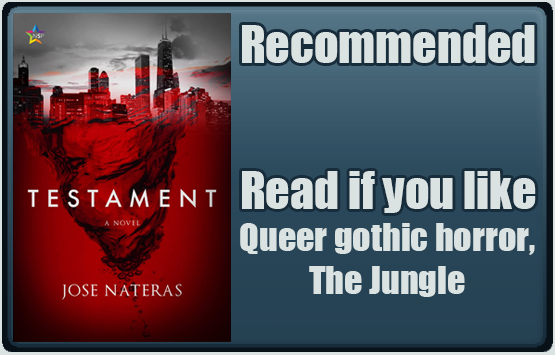
Testament by Jose Nateras

Testament by Jose Nateras

Formats: Print, digital

Publisher: NineStar Press

Genre: Ghosts/Haunting, Psychological Horror

Audience: Adult/Mature

Diversity: Gay Main character and side characters, Bisexual side character, Hispanic/Latinx (Mexican American) Main Character, Asian-American side character, Black side character

Takes Place in: Chicago, IL, USA

Content Warnings (Highlight to view): Gaslighting, Homophobia, Mental Illness, Racism, Rape/Sexual Assault, Self-Harm, Suicide

Blurb

Gabe Espinosa, is trying to dig himself out of the darkness. Struggling with the emotional fallout of a breakup with his ex-boyfriend, Gabe returns to his job at The Rosebriar Room; the fine dining restaurant at the historic Sentinel Club Chicago Hotel. Already haunted by the ghosts of his severed relationship, he’s drastically unprepared for the ghosts of The Sentinel Club to focus their attentions on him as well.

I received this product for free in return for providing an honest and unbiased review. I received no other compensation. I am disclosing this in accordance with the Federal Trade Commission’s 16 CFR, Part 255: Guides Concerning the Use of Endorsements and Testimonials in Advertising.

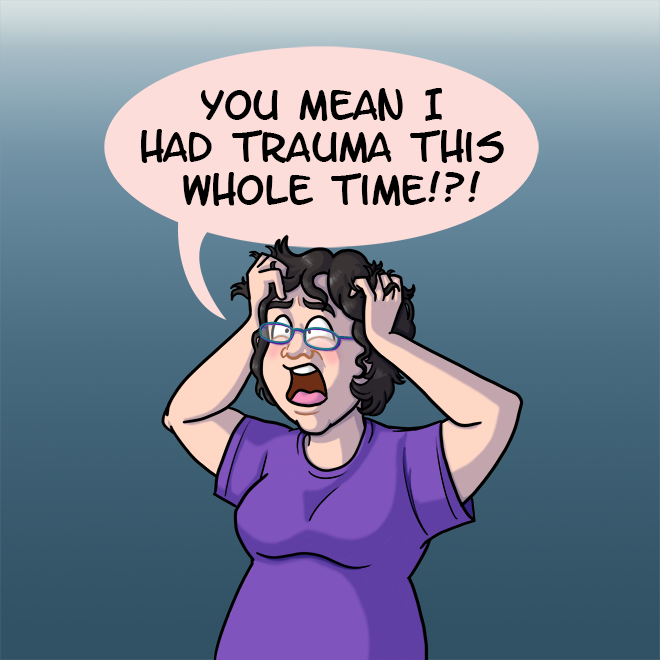
Once upon a time during a LGBTQ+ group therapy session, someone dropped one of those truth bombs that totally changed my perspective on things. “If you’re a minority in American you have trauma. You may not even be aware of it, but it’s there.” Holy. Shit. Suddenly the fact that I always felt stressed, anxious, and depressed made sense. I realized the headaches, stomach problems, chronic fatigue, and back and neck pain (for which I’d spent thousands of dollars seeing specialists only to be told they didn’t know what was wrong with me) were all due to minority stress. Well fuck.

Comic-style illustration of woman holding head and saying

Mind. Blown.

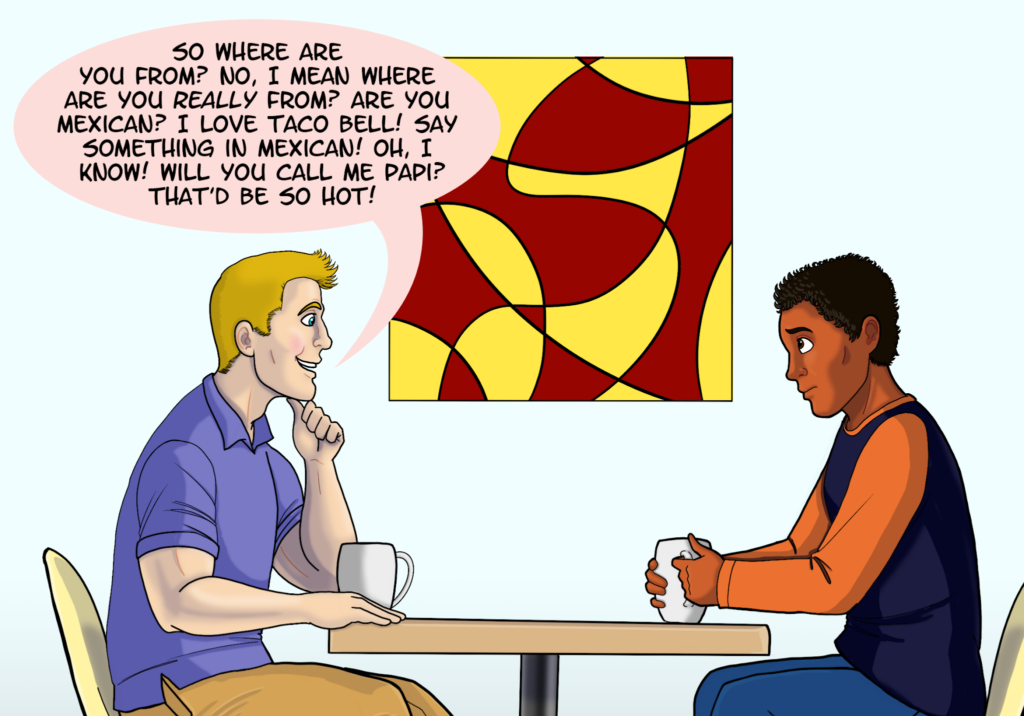
Testament is a horror story about trauma and minority stress, and the protagonist Gabe’s struggles were achingly familiar.  He worries about how to let new people know he’s gay in a way that feels natural, finding a boyfriend who doesn’t see him as “exotic” or call him “papi,” and working around a bunch of rich White people. And poor Gabe works in rich douche central, a swanky hotel that once functioned as a members-only men’s club called The Sentinel Club. As if working around so many White folk isn’t unnerving enough, the hotel also seems to be home to something supernatural and sinister. Something that has its attentions turned on Gabe.

**trigger warning: discussion of suicide and mental health**

Reeling from a suicide attempt after a bad breakup Gabe is not in the best place mentally. He’s incredibly hard on himself, constantly calling himself “worthless” and “pathetic.” He pushes people away assuming they don’t care and refuses to ask for help. As someone who has had their own battles with depression, this also felt achingly familiar. It was also incredibly well done. Writers tend to portray depression as someone staying in bed for days in a state of ennui and despair, unable to move and refusing to eat. But that kind of severe depressive episode is hardly commonplace. Most folks suffering from depression are still (at least partially) functional and go to great lengths to hide their illness in front of others, which is why it’s so difficult to recognize when someone’s actually depressed. Gabe gets dressed, goes to work and forces himself to smile and act like everything is fine while his brain screams insults at him and everything reminds him of his ex. 

**end of trigger warning **

What’s especially brilliant is how Nateras uses Gabe’s haunting to mimic his mental state. Gabe is trapped both by his past and the entity that latches on to him and follows him everywhere. It will seemingly disappear before suddenly and violently announcing its presence, much like his depression and PTSD. In fact, most of the horror in the story comes from Gabe wrestling with his inner demons rather than the outer ones. It’s not quite gothic fiction, but I’d definitely call it gothic-adjacent with its slow burn horror and tumultuous emotions. Of course, if you dislike the slower pace of gothic horror and its focus on the characters rather than the haunting, you may not enjoy Testament. Fortunately, it’s a quick read, so even if you get bored quickly like I do you’ll probably be fine. 

There’s a lot of discussion about the evils of privilege, power, and money. And they are evil. They corrupt and hurt those without. And while no, not all White people are evil, there’s no way of telling the good from the bad with a glance, and a lifetime of negative experiences sets off every alarm bell in my head. There’s nothing quite like the fear you experience when you realize you’re the only person of color in a sea of privileged White folk, even if they’re the “nice” liberal kind. Such situations immediately make me uncomfortable and anxious, even as a White-passing Black person. I jokingly call it that Get Out feeling. There’s a particular scene in the book I found especially frightening when Gabe gets on a subway car, discovers he’s the only non-White person there, and he’s surrounded by wealthy-looking men. It’s terrifying. Nateras knows it and uses the scene to make the book even scarier. He does it so well I want to shove Testament into White people’s faces and yell “See? This. This is how I feel all the time.”

Sadly not the worst date he’s been on with a White guy

I could go on and on about how the book uses minority stress to create horror and how the haunting is a metaphor for privileged White men who hurt BIPOC, but it would get into spoiler territory and I really want you to read this book. So, I’ll end it here with a warning, beware of White gentleman’s clubs because you never know what kind of evil lurks there.

Children of Chicago by Cynthia Pelayo

Children of Chicago by Cynthia Pelayo

Formats: Print, audio, digital

Publisher: Agora

Genre: Dark Fantasy, Demon, Killer/Slasher, Myth and Folklore, Thriller

Audience: Adult/Mature

Diversity: Bisexual main character, Puerto Rican main character and author, Latine characters

Takes Place in: Chicago, IL, USA

Content Warnings (Highlight to view): Alcohol Abuse, Child Death, Death, Forced Captivity, Gaslighting, Illness, Kidnapping, Mental Illness, Physical Abuse, Police Harassment, Suicide, Violence

Blurb

This horrifying retelling of the Pied Piper fairytale set in present-day Chicago is an edge of your seat, chills up the spine, thrill ride. ‪ When Detective Lauren Medina sees the calling card at a murder scene in Chicago’s Humboldt Park neighborhood, she knows the Pied Piper has returned. When another teenager is brutally murdered at the same lagoon where her sister’s body was found floating years before, she is certain that the Pied Piper is not just back, he’s looking for payment he’s owed from her. Lauren’s torn between protecting the city she has sworn to keep safe, and keeping a promise she made long ago with her sister’s murderer. She may have to ruin her life by exposing her secrets and lies to stop the Pied Piper before he collects.

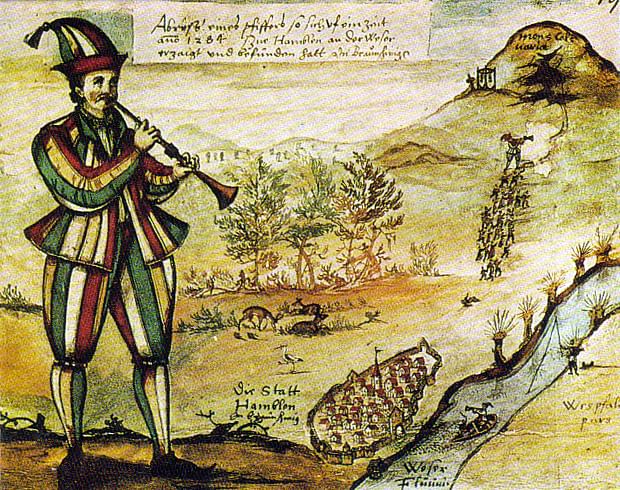
And I chiefly use my charm
On creatures that do people harm,
The mole and toad and newt and viper;
And people call me the Pied Piper.
The Pied Piper of Hamelin by Robert Browning (1812-1889)

“The Pied Piper of Hamelin”by Augustin von Mörsperg, 1592

My dad was born and raised on the Southside Chicago and will tell anyone who will listen that his birthplace is the best city in the world. My wife, on the other hand, firmly believes Chicago is akin to LA in the ‘90s. When I did finally manage to lure her there with the promise of deep-dish pizza and the Museum of Science and Industry she did admit the Windy City was a pretty cool place and not at scary as she was expecting (even after we stumbled onto an illegal street race). Although the crime rate there is higher than the national average, Chicago is hardly the crime and drug filled dystopia my wife and other outsiders seem to believe it is. In fact, its violent crime rates are far lower than those of Anchorage, Wichita, and Milwaukee. The dangerous reputation may have come from Chicago’s fascinating history of crime, gangsters, and serial killers or even the many tragedies that have befallen the White City in the past. Modern-day boogiemen like the Lipstick Killer, John Wayne Gacy, the Ripper Crew, and Richard Speck all called Chicago their home. The Blue Beard-esque H. H. Holmes built his murder castle in Englewood. The city’s most notorious gangster, Al Capone, has morphed into something of a folk hero and tragedies like the Great Chicago Fire and the Haymarket affair have taken on almost a legendary status. Dark rumors surround the abandoned Edgewater Medical Center. Stories like these have shaped Chicago’s history and how it’s perceived by the rest of the country: a gothic city haunted by the past. But darkness and death aren’t all the city has to offer.

Fairy tales, at least the original versions and not the Disney-fied ones, are often a child’s first introduction to the world of horror. Beautiful and sinister stories full of threats of death and assault, mutilation, hungry wolves, and dark forests have been used to frighten children for generations. Fairy tales are beautiful roses and sharp thorns, poisonous treats, beauty and blood. They also share many of the same elements as gothic fiction. Sometime in the distant past, a helpless woman is placed in a dark and dangerous setting (now a castle instead of a forest), where she is threatened by supernatural forces until rescued by the hero. Orphans and peasant girls are made to suffer before finally coming into riches. Animals no longer speak, but still bring portents of doom. Nature is wild, dangerous, and unpredictable. Both have themes of revenge, isolation, rags to riches, abuse, and women who are under constant threat as the men in her life fight over her body. Bluebeard, and other versions of the Aarne–Thompson type 312 tale, are the perfect example of a gothic fairy tale. In the story a woman leaves her family to marry a mysterious stranger and goes to live in his isolated and lonely castle. But locked away in a castle is a dark and dangerous secret. The wife can go in any room, but one, which contains the bodies of the stranger’s previous, murdered wives.

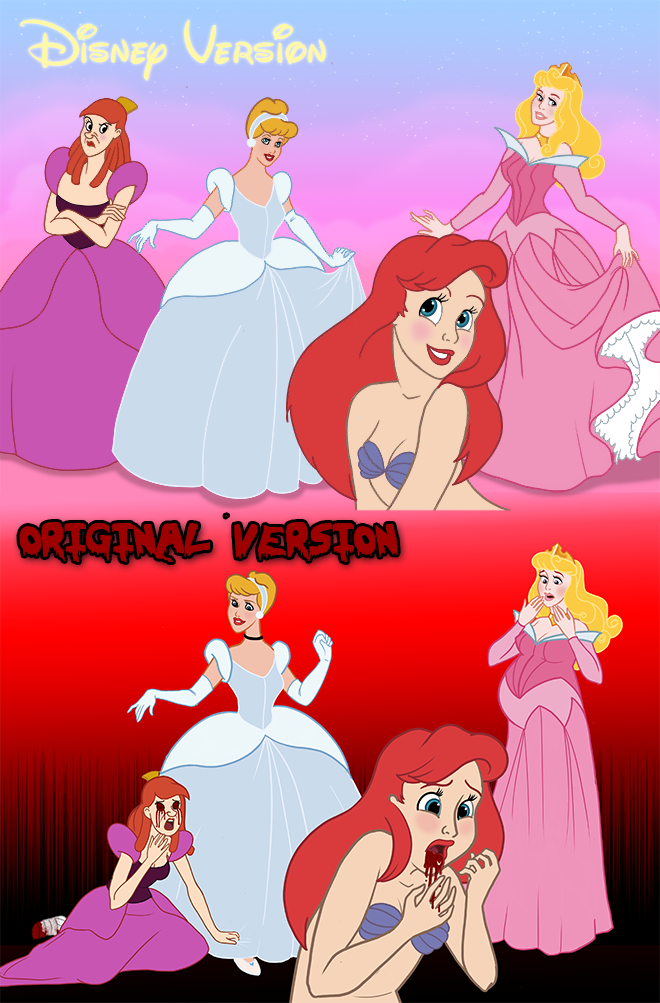
In the original version of Cinderella, the Little Mermaid, and Sleeping Beauty, the step sisters cut off parts of their feet and birds pecked out their eyes, the mermaid’s tongue was cut out and every step she took on land was agony, and Sleeping Beauty was raped and impregnated with twins by a married king while she slept.

Cynthia Pelayo draws on the city’s history to create her gothic urban fairy tale, Children of Chicago. The city stands in for the dark forest, a vaguely supernatural setting where unwary children disappear and gang members prowl the street like big bad wolves. The book follows recently orphaned Lauren Medina, a deeply troubled police detective hunting a serial killer known only as The Pied Piper– a shadowy boogeyman who preys on children then vanishes into the night. It’s rumored he can be summoned by burning a black candle and speaking a spell in front of a mirror. Throughout the story, Lauren is unstable and brimming over with barely-contained emotion, a staple of any good Gothic tale, as she wrestles with her missing memories of her sister’s death. Lauren breaks the typical female fairy tale mold where women were relegated to witches, wise women, virginal damsels, and evil stepmothers. She’s not exactly evil, but she isn’t pure and heroic either, instead she’s but a rare example of a female Byronic hero intentionally written to be tragic, unlikeable, morally gray, and hiding a dark past, much like the heroes found in gothic horror. In fact, few of the women in the story fall into any of the aforementioned roles. Stepmothers aren’t necessarily evil, even if their angry stepdaughters perceive them as such. Damsels in distress may possess more agency than they seem to, and villainous women can also be victims. I genuinely enjoyed seeing a female character (who wasn’t intended to be liked) embrace her darkness and struggle with her morality. Just as much horror came from Lauren’s psychological trauma and instability as it did from the threat of the supernatural.

While Lauren initially came across as “the young female cop with a dark past and something to prove” trope (aka Jodie Foster in Silence of the Lambs), it soon became clear that unlike Clarice Starling, we’re not necessarily supposed to root for her. And unlike every maverick detective in an ‘80s buddy-cop comedy, Lauren’s flagrant disregard for the rules in order to get her guy aren’t justified, but instead dangerous and unjust. Though, much like police in the real world, she’s able to get away with it. I appreciate that Pelayo avoided turning her crime drama into “copaganda” by making Lauren a protagonist, but not a hero. I admit I used to enjoy shows like Brooklyn 99Lucifer, and Law & Order SVU (yes, I’m old) even though I recognized how incredibly problematic they were. But ever since 2020 I’ve more or less lost my taste for any media that portrays a corrupt system as a heroic force for good, justified in flouting the law. It no longer feels like harmless fantasy when you realize how many people actually believe that cop shows reflect real life and officers only target “bad guys” as oppose to anyone they don’t like (mostly BIPOC, the poor, and the mentally ill). So, reading a crime story where the police weren’t heroes was a relief. In fact, Lauren’s only redeeming quality is that she has a soft spot for troubled teens, ever since the mysterious death of her own sister.

Brimming with references to Chicago’s history, it’s clear that Pelayo loves her home while still recognizing its flaws. In fact, the novel feels just as much a crime story as it does a guide to the dark and fantastical parts of the Windy City. She holds a Master of Fine Arts in Writing from The School of the Art Institute of Chicago and it shows in her writing. Throughout Children of Chicago Pelayo references the original, dark versions of famous and not-so famous fairytales, from Cinderella to the Singing Bone, adding to her own story’s dark atmosphere balancing on the edge of reality and fantasy. Pelayo’s novel is full of missing mothers, an unjust society where the most vulnerable suffer, magic mirrors, plenty of gore, spells, and a moral message. But overall, it’s a subversion of the classic fairy tale formula where the good are rewarded, the evil are punished, and morality is clearly defined. In Children of Chicago the “heroes” are neither pure-hearted nor moral, evil escapes justice while the innocent suffer, and no one is getting a happy ending.

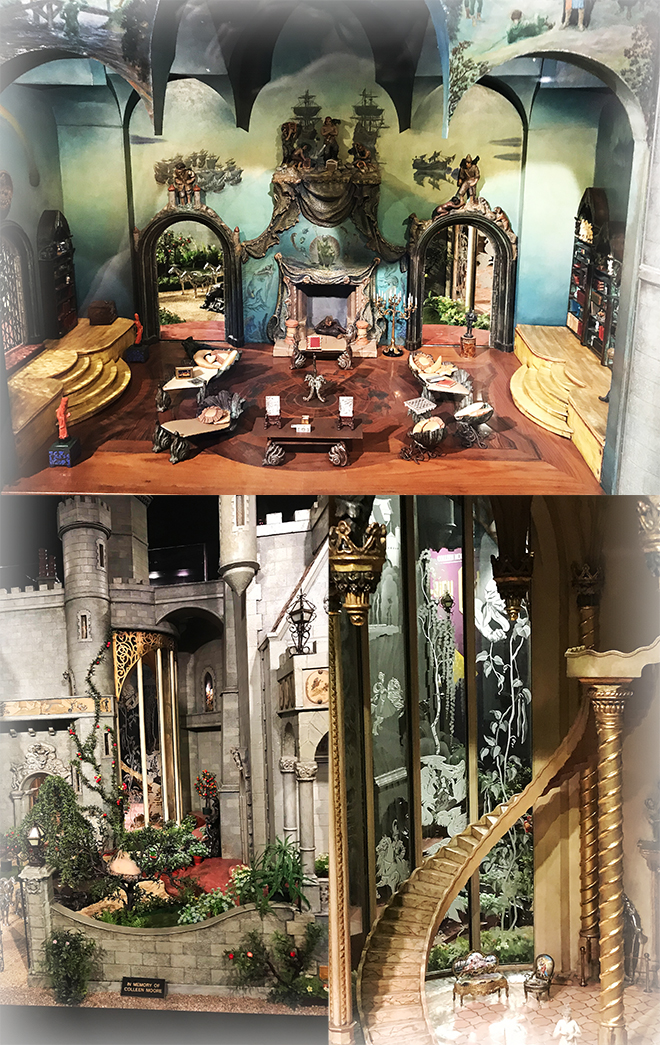
It’s unfortunate that the darkest parts of Chicago’s history have shaped so much of its reputation when the Windy City has so much to offer. As my wife soon discovered on her first visit, the city is full or art, beauty, and wonder. Pelayo doesn’t just show the city’s dark side, she shows its magic as well. “Fairy tales are in our blood as Chicagoans” one of the books characters explains. Walt DisneyL. Frank BaumRay Bradbury, and Gwnedolyn Brooks were all inspired by the city to create their own fairy tales. Colleen Moore created her famous Fairy Castle and donated it to The Chicago Museum of Science and Industry. Children gathered pennies to create the Rock-a-Bye Lady from Eugene Field’s poem. The haunting beauty of the SheddAquarium feels like you’ve stepped into another world. The city even has a secret Little Mermaid inspired bar! It’s this beauty, contrasted with the allure of danger, that makes Chicago as wonderous as any fairytale.

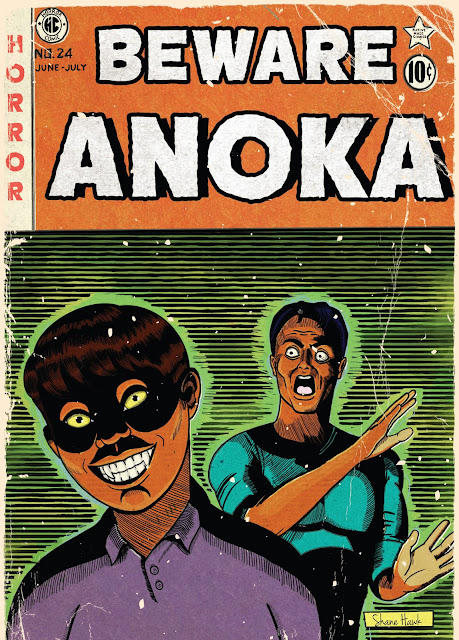
Anoka by Shane Hawk

Anoka by Shane Hawk

Formats: Print, audio, digital

Publisher: Self-Published

Genre: Body Horror, Folk Horror, Monster, Myth and Folklore, Occult, Werewolf

Audience: Adult/Mature

Diversity: Biracial Cheyenne author, Dakota characters, non-binary character

Takes Place in: Anoka, Minnesota, USA

Content Warnings (Highlight to view): Alcohol Abuse, Cannibalism, Child Death, Death, Drug Use/Abuse, Gore, Racism, Rape/Sexual Assault, Self-Harm, Sexual Abuse, Slurs, Suicide, Verbal/Emotional Abuse, Violence

Blurb

Welcome to Anoka, Minnesota, a small city just outside of the Twin Cities dubbed “The Halloween Capital of the World” since 1937. Here before you lie several tales involving bone collectors, pagan witches, werewolves, skeletal bison, and cloned children. It is up to you to decipher between fact and fiction as the author has woven historical facts into his narratives. With his debut horror collection, Cheyenne & Arapaho author Shane Hawk explores themes of family, grief, loneliness, and identity through the lens of indigenous life.

I received this product for free in return for providing an honest and unbiased review. I received no other compensation. I am disclosing this in accordance with the Federal Trade Commission’s 16 CFR, Part 255: Guides Concerning the Use of Endorsements and Testimonials in Advertising.

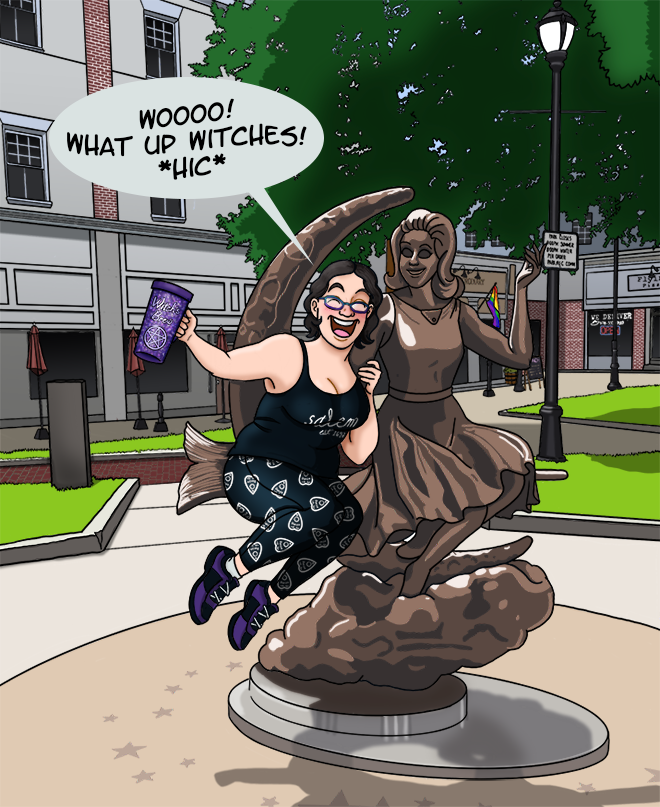
Apparently Anoka, Minnesota is the “Halloween Capital of the World” because they’ve been having giant Halloween parades since 1920. Out of civic pride, I want to argue that Salem is the Halloween Capital and our town is better because we have real witches and Salem Horror Fest and the oldest candy company in America. On the other hand, I would also like tourists to stop blocking the traffic, drunkenly climbing on the witch statue, and crowding my favorite restaurants every October (that’s my job), so maybe it would be better if they all headed to Anoka instead. I don’t think anyone will want to go anywhere near the Minnesota city after reading Shane Hawk’s Indigenous horror anthology of the same name, though. The stories in Anoka are loosely tied together by their location in an alternative version of the town where dark magic and monsters lurk. An evil tome known simply as “the book” and strange green swirls also make multiple appearances throughout the anthology.

A comic of a person hanging off a statue of a witch saying

Hawk gives a different and unique voice to each of his characters so every story feels different from the others. His writing reminded me of a talented artist who can draw in multiple styles and shift easily from realism to the simple lines of a cartoon. My favorite thing about his book is how so many of the stories felt like pre-comics code horror anthology comics like Eerie, Black Cat, and The Haunt of Fear or modern-day creepypastas with terrifying twists. Some stories were fun and weird, others tragic reflections of human nature. But all of them were creepy, the kind of creepy that makes you aware of how many noises an old house makes at night or has you shouting out loud at the characters not to go into the room where the monster is waiting.

American Indians tragically have the highest infant mortality rate in the U.S. (again due to trauma, poverty and a lack of adequate healthcare), so much of Hawk’s anthology touches on themes of child death and the trauma that goes with such a great loss. In two stories, Orange and Wounded, the death of a child in the past moves the main characters to do something terrible. Soilborne is a metaphor for the loss of the child-parent connection and how devastating that can be. In Imitate, the protagonist has to rush to save his son, Tate, from an unknown horror that’s taken his form. There’s no way of knowing if Tate is even still alive, and the whole story is exceedingly stressful to read. Honestly, Imitate would have worked just fine as microfiction and Hawk could have easily ended it after the first page or so. But instead, he decides to pile on even more terror by turning it into a suspenseful short story where we’re forced to watch a father slowly lose his mind. It’s definitely one of the anthology’s stronger and spookier tales.

My absolute favorite story in the collection is Dead America about a writer named Chaska whose family is followed by death. This is sadly not uncommon for Native families as generational trauma, poverty, and a lack of adequate healthcare has lead to poor health and high death rates from heart disease, diabetes, and suicide. The story gets its name from Chaska’s hobo nickel which depicts the skull of a dead Indian chief in full headdress on one side and Columbus’ three ships on the other. “When betting a coin offers someone a fifty-fifty chance of winning and losing. The nickel was a metaphor for the predicament of Indian existence: fucked no matter which side the coin landed on” the author explains. He’s about to find out how right he is when Asibikaashi the Spider Woman decides to make the Dakota author suffer for his sins.

This story is SCARY. All of my notes for Dead America consist of “nope, nope, nopeity-nope nope, fuck this, nope.” I’m not someone who’s usually bothered by spiders under normal circumstances. I think they’re kind of cute and I love that they eat any bugs that get into the house, but Chaska’s punishment left me terrified of arachnids. If you have any form of arachnophobia, I can guarantee you’ll be in for some nasty nightmares and might want to skip this story entirely. But if you’re feeling brave, it’s one of the strongest stories in the collection and worth checking out. The story also touches on themes of profiting off the personal stories of others, very similar to how Ward ChurchillAsa Earl Carter, Mary Summer Rain and others pretended to be Native for fame and money.

It’s important to note that in Ojibwe stories Asibikaashi, aka Grandmother Spider, is a benevolent deity and helper of humanity whose spiderweb charms, popularly known as “Dream Catchers“, were woven by women as a form of protection for infants. I couldn’t find any references to her punishing the wicked (of course I couldn’t find many references to her at all that weren’t written by White new agers).

Hawk’s final story, Transformation, is about a non-binary werewolf who hunts for her community and runs into trouble at Anoka’s annual Halloween parade. Having a trans werewolf feels perfect because werewolves are the ideal metaphor for someone with a fluid identity. Sometimes you’re a wolf, others a human, and occasionally you’re something in between, but you’re always a werewolf regardless of what form you take that day. Just because I’m femme one day, it doesn’t negate the fact that I’m non-binary; I’m still an enby when I’m feeling more trans-masculine. Like the story title, werewolves can also represent transition. The wolf can be seen as the true self, hidden under a dull human skin that’s forced to conform to society’s rigid standards. Becoming the wolves gives you the opportunity to experience freedom. If that transformation is unwanted, it can be compared to a menstrual cycle that causes dysphoria each month or unwanted body hair. “Jenny” a transwoman who identifies with werewolves is quoted on the queer horror blog, Gender Terror“The titanic proportion of my body and the hair that I continually fight back terrify me, and makes me the target of many suspicious onlookers. And just like werewolves, I have no control over what my body does. Feeling like a prisoner to how your body changes is a special torment I think a lot of transgender people share with werewolves.” So is it any wonder writers like Hal SchrieveAllison MoonSuzanne Walker,  Ashlynn Barker, and numerous self-published erotic authors like Noah Harris have all explored the idea of a trans werewolf? Heck “were-woman” is slang for someone who “transforms” into a woman at night (though this terminology can be problematic). Hawk’s non-binary werewolf character seemed so cool I was disappointed that their story wasn’t longer. There was so much going on in Transformation it felt like it would’ve worked much better as a novella rather than a short story. Honestly, I’d read a full novel about the nostalgic werewolf, Halloween parades, and Wendigo. That’s my one major complaint about Anoka: it’s too short! The concept was so cool I was disappointed we didn’t get to explore more of Hawk’s alternate universe. I wanted to learn more about The Book and the creepy town filled with dark magic and monsters.

A comic-style illustration of a werewolf wearing underwear made from the trans flag colors.

What impressed me the most about the story collection is how Hawk was able to handle the subjects of child losssexual assaultsubstance abuse and missing and murdered Indigenous women, especially in his story Wounded, in a way that felt respectful rather than exploitative. Anoka is a fun, frightening ride that draws attention to many of the issues plaguing American Indians today, and I hope we’ll get to hear even more stories from the spooky little town in Hawk’s future books.

The Luminous Dead by Caitlin Starling

The Luminous Dead by Caitlin Starling

Formats: Print, audio, digital

Publisher: Harper Voyager

Genre: Psychological Horror, Sci-Fi Horror, Thriller

Audience: Adult/Mature

Diversity: Lesbian/queer characters and author, Biracial Black character 

Takes Place in: another planet

Content Warnings (Highlight to view): Death, Drug Use/Abuse, Forced Captivity, Gaslighting, Medical Torture/Abuse, Medical Procedures, Mental Illness,  Self-Harm, Attempted Suicide, Verbal/Emotional Abuse

Blurb

“This claustrophobic, horror-leaning tour de force is highly recommended for fans of Jeff VanderMeer’s Annihilation and Andy Weir’s The Martian.” — Publishers Weekly (starred review)
***

A thrilling, atmospheric debut with the intensive drive of The Martian and Gravity and the creeping dread of Annihilation, in which a caver on a foreign planet finds herself on a terrifying psychological and emotional journey for survival.

When Gyre Price lied her way into this expedition, she thought she’d be mapping mineral deposits, and that her biggest problems would be cave collapses and gear malfunctions. She also thought that the fat paycheck—enough to get her off-planet and on the trail of her mother—meant she’d get a skilled surface team, monitoring her suit and environment, keeping her safe. Keeping her sane.

Instead, she got Em.
Em sees nothing wrong with controlling Gyre’s body with drugs or withholding critical information to “ensure the smooth operation” of her expedition. Em knows all about Gyre’s falsified credentials, and has no qualms using them as a leash—and a lash. And Em has secrets, too . . .
As Gyre descends, little inconsistencies—missing supplies, unexpected changes in the route, and, worst of all, shifts in Em’s motivations—drive her out of her depths. Lost and disoriented, Gyre finds her sense of control giving way to paranoia and anger. On her own in this mysterious, deadly place, surrounded by darkness and the unknown, Gyre must overcome more than just the dangerous terrain and the Tunneler which calls underground its home if she wants to make it out alive—she must confront the ghosts in her own head.

But how come she can’t shake the feeling she’s being followed?

The Luminous Dead is a survival horror story with only two characters, one location, and no antagonist. It’s also one of the most stressful horror stories I’ve ever read. Starling is a master of playing with the reader’s paranoia, building up the suspense and atmosphere until you’re jumping at every sound and shadow. Ironically, The Luminous Dead also managed to calm me down considerably when I was dealing with my own stressful situation (horror is great for anxiety): spending the night in the ER awaiting an emergency cholecystectomy (after my wife told me it was nothing and we weren’t spending $4,000 at the ER just because I had stomach cramps that were probably just from drinking milk, and why hadn’t I just taken the Lactaid tablets she bought me). After managing to survive a severely infected gallbladder, I assumed that 2020 could only be uphill from there. Poor, naïve past me.  

In the first panel I'm lying in a hospital bed looking worn out. "Well at least 2020 can't be any worse than 2019." I say. In the second panel I'm sleeping peacfully, when suddenly I'm woken up in the third panel by evil laughter. In the 4th panel the demonic laughing continues while I hide under the blankets and ask "Where is that laughing coming from?"

Well at least none of my organs exploded in 2020, so there’s that…

In the future, humanity has spread out across the stars, but sadly it’s not the socialist utopia dreamed of in Star Trek. Gyre lives on a barren, back-water mining planet where poverty is rampant and the only escape is to take a job as a caver for wealthy mining companies. It’s not a pleasant job. On top of spending days or even weeks in a self-contained suit with little human interaction, breathing recycled air, and being fed through a stomach stoma, these subterranean explorers have to contend with falls, cave-ins, and underground flooding. Worst of all are the Tunnelers – giant alien worms that burrow through solid stone. Not many cavers survive, but those who do can expect a huge payout. In Gyre’s case, it’s enough to get her off-world to find the mother who abandoned her as a child. Desperate, uncertified, and inexperienced, she accepts an especially sketchy caving job that doesn’t ask too many questions. It’s not until Gyre has already begun her descent into the subterranean labyrinth she’s been hired to explore that she discovers she may have made a grave mistake. Instead of having an entire team topside to monitor her vitals, feed her info, and watch her while she sleeps, which is the standard, she has only one woman, Em. Cold, efficient, controlling, and stingy with details, Em is not above obfuscating data and manipulating her cavers to get the job done. Not exactly someone you want to trust with your life. Em seems to genuinely want to protect Gyre even if her methods are questionable, but that hardly excuses the lying and manipulation which only serve to exacerbate the young caver’s trust issues. Not that Gyre is much better. Her desperation means she’s willing to make some morally questionable decisions, and her stubbornness leads to her making bad ones.

A drawing of Gyre in her suit. She's in the cave and is looking at two skulls on the ground, horrified. Em is on the intercom saying "Don't worry Gyre, it's perfectly safe. Trust me!"

The background is from a cave in the Dominican Republic I visited back in February 2020. There weren’t any skulls in it though. *sigh* I miss travel.

As if paranoia, isolation, and giant monsters aren’t scary enough, Starling adds another twist: there may or may not be something sinister going on in the cave as Gyre’s senses start to play tricks on her. Maybe it’s another one of Em’s deceptions. For most of the book, you’re genuinely unsure of where the biggest threat is coming from: the cave, Em, or Gyre’s own mindknowing she’s all alone in the dark unknown (or is she?) with only one less-than-trustworthy guide. Although Gyre never fully trusts Em, the two begin to form a distrustful, dysfunctional relationship over time as they reveal and struggle with past traumas. And yes, their trauma bond is just as maladjusted as it sounds. It’s both fascinating and horrifying to watch these two deeply flawed, fucked up people grow closer. Part of me was rooting for Gyre and Em because, when everything is awful, people deserve every bit of happiness they can get. But the more rational part of me was horrified. Shared suffering does not mean two people will be compatible and without trust issues, and on top of Em’s willingness to put Gyre in danger, there are the hallmarks of a toxic relationship. To Starling’s credit, she doesn’t try to create an idealized romance, or even imply that their bond is healthy like certain romance books that will remain nameless tend to do *cough*Twilight*cough*. Instead she aims to create two realistic, flawed characters who are doing their best in a bad situation. I’m a huge fan of antiheroes and morally gray characters in fiction (in real life they’re just assholes) because they’re rarely bland or boring, and Gyre and Em are anything but dull. Watching a caver with trust issues put her life in the hands of a woman who lies just makes the story all the more suspenseful.

Part of the reason Gyre acts the way she does is because she grew up in survival mode. Living in a barren, capitalist hellhole will do that to a person. Like any good work of science fiction, The Luminous Dead uses fictional characters in a fictional setting to draw attention to some very real-world ethical dilemmas. In this case, it’s the exploitation of the poor and vulnerable in a Capitalist society. Dubbed 3K jobs in Japan (kitanai, kiken, kitsui or dirty, dangerous, and difficult in English) this sort of work has traditionally been given to immigrants, migrant workers, and other vulnerable populations who have few options available to earn a living and are less likely to complain about unsafe working environments. Dangerous jobs that require specialized skills and training, such as construction and steel working jobs, pay better salaries and are more likely to be OSHA compliant, but rarely pay enough to offset the risk. Sex work can be a 3K job that pays well, but leaves sex workers open to arrest, abuse, and disease without legal protections in place. While workers aren’t being forced into these jobs per se (as opposed to victims of trafficking, domestic servitude, debt bondage, and other forms of slavery) they’re not usually done by people who have other options available. In The Luminous Dead, caver jobs are only ever taken by those in poverty (the wealthy would never risk their lives doing such dangerous work) and no one continues caving after they’ve made enough to escape. So is it really a choice when you’re between Scylla and Charybdis?

A drawing of Odysseus' ship passing between Scylla (a monstrous woman with six dog's heads around her waist and six serpents head's with shark's teeth coming out of her back) and Charybdis (a giant whirlpool). Someone on the ship is saying "FML".

Scylla wasn’t that big but she’s also not real so I can draw her however I want lol

I can’t describe much more of the plot, as spoilers would ruin the suspense Starling worked so hard to create, but suffice it to say that The Luminous Dead is, at its core, about the trauma of losing a mother, whether from abandonment or death, and how anger and grief can destroy you. If you love isolation horror, definitely pick up a copy of your own.

The House of Erzulie by Kirsten Imani Kasai

The House of Erzulie by Kirsten Imani Kasai

Formats: Print, audio, digital

Publisher: Shade Mountain Press

Genre: Gothic, Historic Horror, Myth and Folklore

Audience: Adult/Mature

Diversity: Black/biracial main characters and author, mentally ill main characters

Takes Place in: Philadelphia and New Orleans, USA

Content Warnings (Highlight to view): Alcohol Abuse, Animal Death, Body Shaming, Child Abuse, Child Death, Death, Drug Use/Abuse, Forced Captivity, Gaslighting, Illness, Kidnapping, Medical Torture/Abuse, Medical Procedures, Miscarriage, Mental Illness, Oppression, Pedophilia, Physical Abuse, Racism, Rape/Sexual Assault, Self-Harm, Sexism, Sexual Abuse, Slurs, Slut-Shaming, Torture, Verbal/Emotional Abuse, Violence, Xenophobia 

Blurb

The House of Erzulie tells the eerily intertwined stories of an ill-fated young couple in the 1850s and the troubled historian who discovers their writings in the present day. Emilie St. Ange, the daughter of a Creole slaveowning family in Louisiana, rebels against her parents’ values by embracing spiritualism, women’s rights, and the abolition of slavery. Isidore, her biracial, French-born husband, is an educated man who is horrified by the brutalities of plantation life and becomes unhinged by an obsessive affair with a notorious New Orleans voodou practitioner. Emilie’s and Isidore’s letters and journals are interspersed with sections narrated by Lydia Mueller, an architectural historian whose fragile mental health further deteriorates as she reads. Imbued with a sense of the uncanny and the surreal, The House of Erzulie also alludes to the very real horrors of slavery, and makes a significant contribution to the literature of the U.S. South, particularly the tradition of the African-American Gothic novel.

I received this product for free in return for providing an honest and unbiased review. I received no other compensation. I am disclosing this in accordance with the Federal Trade Commission’s 16 CFR, Part 255: Guides Concerning the Use of Endorsements and Testimonials in Advertising.

The House of Erzulie is an exquisitely written, thought-provoking work of Southern Gothic fiction that explores themes of identity, love, obsession, and oppression while blurring the line between reality and the supernatural. Kasai’s book also forced me to acknowledge and confront my own complicated feelings and insecurities about my identity as a light-skinned, biracial Black person and reflect on the colorism within the Black community.

Lydia is a professor of history trapped in a bad marriage with her former advisor Lance, a selfish, serial philanderer who prefers his women young, docile, and naive. Their teenage son is emotionally distant and rarely home. Struggling with depression and a desire to self-harm, Lydia tries to cope with her emotional pain and feelings of isolation by throwing herself into her job, the one area of her life that isn’t falling apart. Ironically, it’s her work, the last vestige of stability in Lydia’s life, that finally destroys her fragile mental health.

At first Lydia thinks nothing of the journals she receives in a packet of historical documents belonging to the once grand Bilodeau plantation in New Orleans. After all, she’s been hired to aid in the restoration of the dilapidated building, even if she finds the monument to slavery distasteful. It’s only on a whim that she chooses to peruse the diaries of Emilie Bilodeau, the progressive daughter of a slave-owning family, and her husband Isidore Saint-Ange, a free-born biracial Frenchman. But as she learns more about the tragic couple’s lives Lydia finds herself strongly empathizing with Emilie’s loneliness and crumbling marriage. But it is Isidore’s journal that finally pushes her over the edge. Once logical and purely scientific in his approach to the world, Isidore becomes increasingly paranoid as a series of poor decisions and bad luck destroy his life. Eventually succumbing to madness, Isidore is imprisoned in an insane asylum convinced he is the victim of supernatural forces. As her own life turns to chaos, Lydia finds herself mirroring Isidore’s destructive actions.

The House of Erzulie has all the elements of a first-rate Gothic story; a distressed heroine kept trapped and powerless. A passionate but ultimately doomed romance. Hints of the supernatural in the form of spirits, curses, and prophetic nightmares that may or may not be products of the antihero’s imagination. A once great home falling into ruin as disease, death, and madness ravage its inhabitants, all set against the backdrop of one of America’s greatest atrocities. Kasai is careful to emphasize how appalling and inhumane the practice of chattel slavery is without using a historical tragedy for cheap scares or trauma porn. Instead Isidore’s rapidly declining mental state reflected in the plantation’s decay and the multiple misfortunes befalling the Bilodeaus is what makes the novel so frightening. I must admit I found it incredibly satisfying to watch such unsympathetic characters suffer karmic retribution (Emilie being the exception) the more gruesome and agonizing the better though I’m sure not all readers will share my taste for schadenfreude. Kasai’s writing is superb, her carefully crafted prose flows like poetry and evoked strong emotions in me. I’ll share one of my favorite passages here:

They say “love is not a cup of sugar that gets used up” but it is. Spoonful by spoonful, grain by grain, the greedy, the needy, and the hungry consume it and demand more until the bowl is empty. Then they run away, jonesing for a fix from another source. Each betrayal, every insult or injury depletes the loving cup and leaves the holder bitter. It’s a bitterness I can taste, and it sits on my tongue like the foulest medicine.

Kasai also did extensive research for her novel, as is obvious from the story’s numerous references to historical events and the accuracy with which mid-19th century healthcare is depicted. The Spiritualist movement (which Kasai notes provided one of the few public platforms for women at the time), the yellow fever epidemic of 1853, and the anti-Spanish riots of 1851 all make appearances in The House of Erzulie. But it’s the lives of her gens de couleur libres, or “free people of color” characters that deserve special attention. While I was initially disappointed by how little attention the narrative paid to the stories and voices of the slaves, it was a nice change of pace to read a novel that focused on the lives of free Black characters. Despite the significant role they played in US history, wealthy, free Blacks in the antebellum South rarely make an appearance in historical fiction.

The majority of the novel is set in Louisiana, once home to the largest population of gens de couleur libres in the US. Forming an intermediate class below White colonizers but above slaves, free Blacks achieved more rights, wealth, and education in the French settlement than in any of the British colonies. Professor Amy R. Sumpter notes in her article Segregation of the Free People of Color and the Construction of Race in Antebellum New Orleans that before the state currently called Louisiana was stolen “acquired” by the US in 1803 “the cultural blending of French, Spanish, and African traditions… created an atmosphere of racial openness in Louisiana and particularly New Orleans that stood apart from much of the rest of the South. Aspects of the unique racial atmosphere included a tripartite racial structure and racial fluidity.” Much of this was due to the Code Noir, an edict originally issued by King Louis XIV in 1724 that defined the legal status of both slaves and free blacks and imposed regulations on slave ownership. While no less cruel and inhumane than any of the other laws governing the enslavement of human beings, the code did make allowances not found in the rest of country.

The US followed a strict “one drop” rule that classified anyone with Black ancestry as Black. Mixed raced individuals were given offensive labels depending on their percentage of “Black blood”. “Mulattos” were biracial with one Black parent and one White. “Quadroons” were a quarter Black, “octoroons”(also called “mustees”) one-eighth, and “quintroons” (or “mustefinos”) one-sixteenth. In her acclaimed essay Whiteness as Property civil rights professor Cheryl Harris explains that this complicated system was “designed to accomplish what mere observation could not: That even Blacks who did not look Black were kept in their place.” English colonies also practiced partus sequitur ventrem (Latin for “the offspring follows the womb”) a law that gave a child the same legal status as their mother. So a mixed-race child born to an enslaved mother would be born into slavery, while the child of a free woman would also be free.

An old daguerreotype photo depicting a light-skinned boy with European features. A large American flag is draped off to the left of the image, covering the floor and the stool the boy is sitting on. Under the photo the following has been typed: Freedom's Banner, CHARLEY, A Slave Boy from New Orleans.

Charley Taylor was the “quadroon” son of White slave-owner Alexander Scott Withers and a biracial slave named Lucy Taylor. Because his mother was a slave Charley was also born into slavery and sold by his father to a New Orleans plantation. Abolitionists often used images of White-passing slaves to elicit sympathy as White audiences were more likely to be identify with the suffering of people who looked like them.

Most of the main characters in The House of Eruzile are upper class gens de couleur libres all of whom approach their Blackness and privilege differently. Emilie’s father, Monsieur Bilodeau, is a willing and enthusiastic participant in the slave economy and chooses to idolize Whiteness, despite having a Black grandmother. It’s a sad fact that some free Blacks became slave owners themselves, and many of them lived in Louisiana. While I can’t pretend to know the motivations of long-dead men, Kasai makes it clear that M. Bilodeau does it because he’s greedy, racist scum, a twisted amalgamation of Uncle Tom and Simon Legree. Isidore is shocked and disgusted by the treatment of the slaves on his in-laws plantation (slavery would’ve just been abolished in France), but is unwilling to risk his own privilege and wealth by objecting or leaving. Well-educated and used to a comfortable existence Isidore married into the Bilodeau family so he could continue enjoying a life of leisure rather than be forced to get a job. He does his best to ignore the suffering of the plantation’s slaves, as if this will somehow absolve him of his participation in a racist and inhumane system. Emilie, on the other hand, uses what little power she has to advocate for her family’s slaves, including her great-great-aunt Clothilde (yup, her dad wouldn’t even free his own family-members) and becomes involved in the abolitionist movement. She does her best to try to convince her husband to move North and free the Bilodeau slaves once they inherit the plantation but is always shot down. Finally, there’s P’tite Marie, the light-skinned daughter of Marie Laveau, a free-woman with significant influence.

While Kasai is undoubtedly a talented writer, I was troubled by the way she portrayed P’tite Marie as a one-dimensional Jezebel who uses voodoo to literally enchant her lovers. Her characterization is in sharp contrast to Emilie’s role as the virtuous mother, bringing to mind the deeply problematic Madonna/whore dichotomy. P’tite Marie would certainly have been exploited by men who fetishized free Black women, as is evident from the stories of Quadroon Ballsplaçages and “fancy maids,” so implying that she is sort of succubus who takes advantage of men didn’t sit right with me. Admittedly, we only get to view P’tite Marie through the lens of an unreliable, misogynist narrator who is seemingly incapable of accepting responsibility for his own actions and who is quick to blame her for his philandering. Still, it would’ve been nice to learn more about P’tite Marie as a person rather than a sexual fantasy. Personally, I would have much preferred if P’tite Marie and Emilie had realized that all the men in their lives were awful and decide to run away together.

The house in the background is based on the Oak Alley Plantation in New Orleans. Now a museum, Oak Alley boasts tours of the facility, a beautiful venue for weddings and reunions, a well-reviewed restaurant, and overnight cottages. What could be more relaxing than sipping mint juleps at the site of significant human right’s abuses and suffering? Maybe Auschwitz should start doing weddings.

Emilie was another character I took issue with. I found her naivety grating rather than endearing, and it concerned me that the Whitest character in the book was written to be the most sympathetic. To Kasai’s credit she does a wonderful job creating a mixed-race Gothic heroine without making her a tragic mulatta. Emilie is still a tragic character, but none of that is related to her identity. She is not ashamed of being mixed and is astutely aware of her good fortune. She uses her privilege to help others and would gladly give up her wealth if it meant freedom for the Bilodeau’s slaves. Instead of lamenting the “single drop of midnight in her veins” Emilie’s greatest source of ignominy is her family’s arrogance and lack of empathy. As she matures, she begins pushing back more aggressively against the injustices she perceives. And yet, I still deeply disliked her. But more on that in a moment.

Emilie was not the only character that inspired a strong reaction from me. Lydia, like many mixed race folks, has a complicated relationship with the White grandparents who raised her, and her family problems resonated deeply with me. I don’t even know most of my White family, nor do I want to, as they’re racists who disowned my mother for marrying my Black father. My mother is amazing and dedicated to anti-racism work, but I feel nothing but contempt for the biological family that labeled me a “jigaboo baby.” Meanwhile Isidore and M. Bilodeau reminded me of the worse aspects of the mixed community; those who choose inaction, thereby becoming complicit in the system of White supremacy, and the self-hating Blacks who reject their race and actively promote racism and colorism to get ahead. I could easily imagine the reprehensible M. Bilodeau in a blue vein society wearing a “Make America Great Again” hat while defending voter suppression and laughing at racist jokes. Emilie’s father is clearly an irredeemable villain who has no qualms about abusing his slaves, while Isidore is given more complexity and a conscience. Unfortunately, his guilt has no effect on his actions, and I was hard-pressed to dredge up even a shred of sympathy for Isidore and his hypocrisy. This is a perfect example of why intent doesn’t matter. While Isidore may not be an unrepentant racist like his father-in-law both men selfishly used their privilege for their own benefit at the expense of other Black people. It’s hard to say if his inaction makes him more or less morally reprehensible that his monstrous father-in-law.

I suspect that the reason I felt so much animosity towards Emilie, even though Isidore and M. Bilodeau are much more reprehensible, may stem from my own experience and insecurities as a White-passing Black person. I struggle daily with the guilt and resentment I feel knowing that while I’m undoubtedly oppressed by a White supremacist system, it also gives me an unearned advantage over others. I, and others like me, enjoy higher wages and are perceived as more intelligent while those with darker skin are given longer prison sentences, are three times more likely to be suspended from school and struggle to find partners. My grandfather could join Black fraternities that implemented paper bag tests, and probably used his light complexion to secure jobs as a physician. His grandparents were house slaves (and the children of their owner) like the ones described by James Stirling in The Life of Plantation Field Hands and Malcom X in his Message to Grassroots speech. Not only am I treated better by Whites (who were responsible for this racist caste system in the first place) but even the black community puts a high-value on my pale skin. Colorism is so deeply ingrained in society that skin-whitening creams are a $20 billion industry. My Black grandmother used to keep my father and his sister out of the sun so they wouldn’t be “too dark.” There’s a #Teamlightskin hashtag on Twitter. A color-struck, light-skinned manager at Applebee’s called his darker skinned employee racist slurs and suggested he bleach his skin. My passing privilege (most people assume I’m Jewish, Italian or Latinx until I correct them) and proximity to Whiteness means I can easily avoid the racist aggression the rest of my family experiences on a daily basis.

This a fake graph, but it’s based on actual data.

Because Emilie is so White, I instinctively questioned whether she could even be considered Black, just as my own melanin-deficient skin often makes others question my identity. While I can easily dismiss comments of “you’re not really Black” from Whites who are pissed I told them not to say the n-word (I could be Whiter than Conan O’Brien and you still can’t fucking say it Karen), it’s a lot harder when the remarks come from other Black people who make it clear they don’t want me in their spaces. But as much as I’m tempted to self-indulgently sulk, I can’t ignore the very valid concerns of darker skinned Black folk who are frequently pushed aside in favor of people like me. Yes, I, and other light-skinned BIPOC may deal with frequent microaggressions and sometimes even outright hostility, but we’re still much more welcomed by a racist society then we would be if our skin were darker. Given all this it’s no wonder my intrusion on BIPOC spaces is often called into question. Yes, I have racial trauma, but is it right for me to complain to those who are clearly dealing with so much more? It would be like crying about having my purse stolen to someone whose had their home burnt down and lost everything. Denying that I have privilege is incredibly harmful to the Black community as are comments like “we’re all Black, why are we dividing ourselves even more?”  Tonya Pennington does an excellent job encapsulating my feelings on the matter in their article for The Black Youth Project:

…despite my empathy for [Ayesha Curry], I disagree with her conclusion for why she isn’t accepted by the Black community. Both of us are light-skinned, and we know light-skinned Black people are often considered more desirable than dark skin Black women because of colorism. As much as she may have been picked on for being “different,” like me, it’s inevitable that she also experienced a host of privileges both within and outside the Black community for the same thing.

To be clear, in my personal experience most other Black people have been extremely welcoming to me and are sympathetic to the unique challenges of being mixed race. I am eternally grateful to everyone who has shown me such support and compassion, even when dealing with their own problems. They didn’t need to, and it was incredibly kind. I try my best to avoid demanding pity, taking over conversations, or otherwise making things about me when I’m in Black spaces. To do otherwise would be reprehensible. I know I have it a lot easier that others, and it’s my responsibility to use my light-skinned privilege to combat systemic racism when I can.

As Afropunk writer Erin White explains “Light skin people have a responsibility to call out colorism and be honest about the privileges they benefit from.” Blogger Amanda Bonam, founder of The Black & Project even gives examples on how she confronts her own light-skinned privilege. Unfortunately, the best ways to oppose colorism isn’t always obvious, and even good intentions can be harmful if one isn’t cautious. Like all allies we walk a fine line, confronting colorism without speaking over those without light-skinned privilege. For instance, as a person with light-skinned privilege, I constantly worry that I’m either not doing enough, or else I’m so vocal that I’m silencing other Black voices. Like my “white-passing” guilt, I push these worries down because, again, it’s not about me and those emotions are unhelpful. But they still exist no matter how much I try to deny them, because that’s how feelings work. Which brings me back to Emilie, because in her I saw my own insecurities.

Mentally I condemned Emilie for what I saw as meager attempts to help the Bilodeau’s slaves, despite benefiting so much from colorism. When Emilie bemoaned the fact she couldn’t do more, I bristled at how she seemed to be selfishly focused on her own suffering. I cast her in the role of White savior whose negligible struggles and accomplishments were lauded above those of the Black characters. Except Emile isn’t White, at least she wouldn’t have been in 1850. Hypodescent rules would have meant she’d be labelled Black by society, and there was certainly no benefit to having a Black great-grandparent in antebellum Louisiana. And how much could she have possibly done to help the slaves? Emilie was a woman, with no power and her resources were completely controlled by the men in her life. When she spoke out she was ignored. She couldn’t purchase anyone’s freedom as Isidore had complete control of her finances. The laws were not on her side. Much of the novel’s focus is on Emilie’s feelings, but it’s also written as a diary, where she would have recorded her personal thoughts, struggles, and misgivings. There’s no indication she was putting her feelings over those of the slaves; to the contrary Emilie seems to hide her guilt and frustration from everyone save her White abolitionist friend.

So did I judge Emilie, Kasai’s heroine, unfairly because I projected so much of myself onto her? Or was I right to be critical of a light-skinned character who once again is given the spotlight over dark-skinned Black folk? As of now, that’s not an answer I can provide. Instead I encourage the reader to draw their own conclusions about Emilie. All I know is that any book that can provoke so much both emotionally and intellectually is well worth a read.

Worship Me by Craig Stewart

Worship Me by Craig Stewart

Formats: Print, audio, digital

Publisher: Hellbound Books

Genre: Blood & Guts (Gorn), Monster, Myth and Folklore, Occult

Audience: Adult/Mature

Diversity: Gay author and gay side character

Takes Place in: USA

Content Warnings (Highlight to view): Animal Death, Body Shaming, Bullying, Child Endangerment, Death, Forced Captivity,  Gaslighting, Gore, Mental Illness (depression), Physical Abuse, Sexual Assault, Self-Harm, Slut-Shaming, Suicidal Ideation, Violence

Blurb

Something is listening to the prayers of St. Paul’s United Church, but it’s not the god they asked for; it’s something much, much older. 

A quiet Sunday service turns into a living hell when this ancient entity descends upon the house of worship and claims the congregation for its own. The terrified churchgoers must now prove their loyalty to their new god by giving it one of their children or in two days time it will return and destroy them all. 

As fear rips the congregation apart, it becomes clear that if they’re to survive this untold horror, the faithful must become the faithless and enter into a battle against God itself. But as time runs out, they discover that true monsters come not from heaven or hell… 
…they come from within.

Please note, I received this product for free in return for providing an honest and unbiased review. I received no other compensation. I am disclosing this in accordance with the Federal Trade Commission’s 16 CFR, Part 255: Guides Concerning the Use of Endorsements and Testimonials in Advertising.

***
 

Worship Me is a nihilistic exploration of morality and faith presented as a gory horror story about a congregation trapped inside their church by a mysterious creature, called the Behemoth. Demanding their reverence, the beast viciously murders any who disobey and gives the group 48 hours to offer up a child sacrifice. With the safety and sanctity of their church destroyed and their beliefs thrown into question, the members of St. Paul’s United Church begin to reveal their true natures. The book boasts a large cast of characters including Dorothy, the church matron who’s desperate to feel needed, Emily, a severe and devout woman who harshly judges others, Susan, a naive and sheltered young woman who wants to save the world, and Chris, a closeted gay teen who desperately wishes his crush would acknowledge their mutual attraction, and the point of view frequently shifts as each character watches their world fall apart. But it’s Angela who comes closest to being the story’s protagonist.

Angela and her son, Alex, have been the center of church gossip ever since her husband, Rick, vanished mysteriously. Seemingly tired of the pity and Emily’s suspicious scorn Angela announces during Sunday service that she’s planning on moving away and starting fresh. That’s when a filthy Rick stumbles into the church. The congregation, who have been praying for his safe return, declares it a miracle. Angela, however, is less than thrilled. While the community sees the couple’s relationship as the perfect romance, high school sweethearts who marry young and went on to have a child, nothing could be further from the truth. Rick is an abusive and violent man who terrorizes his wife, Angela was desperate to escape his cruelty and protect her son, and his time away has made him even worse. While gone, Rick has found a new god, the Behemoth, and has apparently started some sort of Cenobite-type religion that involves torture, murder, self-mutilation, and a very aggressive recruitment strategy. Everything starts to go to hell after that.

At least I assume this is what Scientology is, but with more aliens and domestic espionage.

On the Sunday of Rick’s ill-fated return, the pastor, Don, tells his congregation about the myth of Job, a devout and righteous man whose faith is tested by hardship. For those unfamiliar with the parable, God and Satan aka “the Adversary” (“satan” literally translates to “adversary” so it’s unclear whether this is big S Satan, aka the devil, or just some random angel who’s a jerk) are hanging out in heaven and God is bragging about the super pious and awesome Job. Satan rolls his eyes and points out that Job is only “good” because he knows God blesses the righteous and punishes the wicked. He’s doing it for the rewards, not out of some deep sense of morality. God suggest they test that theory and gives Satan permission to ruin Job’s life by killing his servants and children, taking his wealth, and covering the poor man with boils. Job’s so-called “friends” also subscribe to the theory that bad things only happen to bad people, and proceed to blame the victim by telling the poor man that all his misfortune is his own fault. At this point Job is pretty miserable and wondering what the hell he did to deserve this and demands to know why an all-powerful deity would make the world so chaotic and horrible. Surprisingly God actually responds with something along the lines of “Where the hell were you when I made earth out of literally nothing!? I made a freaking universe and you people don’t even know what electricity is yet. Do you really think your stupid little monkey brain could understand all the complexities that go into running this place? I have all these plans you couldn’t even wrap your brain around, like winning a bet with this guy… never mind, the point is: I’m omnipotent, omniscient, and I work in mysterious ways. Deal with it.” Stunned, Job stammers out “Well, you didn’t really answer my question, like, at all, but you’re really scary and I don’t want an all-powerful deity angry at me so I think I’m just going to go back to being pious and throw in some groveling apologies so you don’t smite me.” God says “Yeah, you do that” and restores Job’s riches and health, and even gives him some new kids (because apparently children were easily replaced like goldfish back then), just so there are no hard feelings. The parable is meant to explain why good people suffer for seemingly no reason, though a more cynical interpretation would be that powerful beings treat mortals as mere pawns in their games and get unreasonably angry when those mortals want to know why they’re acting like jerks. While God is ranting at Job for questioning his betters, the irritable deity starts not-so-humbly bragging about how powerful they are, using the Behemoth as an example. The Behemoth, an enormous, land-dwelling beast, is so powerful that it can only be controlled by God, no mortal could ever hope to defeat it.

“Behold now behemoth, which I made with thee; he eateth grass as an ox.

Lo now, his strength is in his loins, and his force is in the navel of his belly. 
He moveth his tail like a cedar: the sinews of his stones are wrapped together. 
His bones are as strong pieces of brass; his bones are like bars of iron.

He is the chief of the ways of God: he that made him can make his sword to approach unto him.”
(Job 40: 15-19)

No, I don’t know why God spends so much time telling Job about the Behemoth’s giant genitals (“tail” was probably euphemism). Whomever wrote that particular bible story was having a really weird day. Jewish apocrypha describe the Behemoth as a primal creature that represents chaos and will battle with its aquatic and aerial counterparts, the Leviathan and Ziz, on judgement day.

An early 1800s pen and ink sketch of a bipedal demon. It has the head, legs, and tail of elephant and the torso and arms of a a human. The demon is clutching its large, bloated belly with clawed hand and looking over its right shoulder.

The Behemoth as it is depicted in the Dictionnaire Infernal where he is described as ruling over the domain of gluttony. The fictional creature may be based on a hippo or elephant. Young earth creationists and anyone else who failed grade school science think the Behemoth is a dinosaur (it’s not).

Most of the characters in Worship Me believe the Behemoth is either a fallen angel meant to test their faith or a new deity come to save them. But neither assumption is accurate because none of what happens is about any of the humans in the first place. The beast sees itself as the main character of its own story, and the congregation as mere pawns. The beast only seems god-like because humans are a weak and undeveloped species in comparison. Calling the Behemoth a false god or demon would be a gross oversimplification that implies its existence is tied inextricably to humanity. Historian Lynn Townsend White Jr. argued in his famous 1967 paper The Historical Roots of Our Ecologic Crisis “Especially in its Western form, Christianity is the most anthropocentric religion the world has seen. Man shares, in great measure, God’s transcendence of nature.” Abrahamic all but declare humanity’s superiority. In the very first book of the Torah and the Old Testament (Bereishith/Genesis) God essentially tells Adam that he is the most important living thing in the universe. “And God said, Let us make man in our image, after our likeness: and let them have dominion over the fish of the sea, and over the fowl of the air, and over the cattle, and over all the earth, and over every creeping thing that creepeth upon the earth.” (Genesis 1:26) In the Quran, even divine beings are told to bow down before the first human. “And when We told the angels, ‘Prostrate yourselves before Adam!’ they all prostrated themselves, save Iblis, who refused and gloried in his arrogance: and thus he became one of those who deny the truth.” (Surah 2:34) A relic from another time the creature’s morality cannot be defined by human parameters, and has nothing to do with any human religion. The church members, who clearly subscribe to the idea of human exceptionalism, at least in the beginning, simply assume it does.

Unfortunately for the congregations, God never does show up to control the Behemoth. A few people try to stand up to the beast at first, but all are brutally killed for their efforts and the legend of Job offers little comfort to their grieving loved ones. Some of the church members begin to wonder if there is even someone out there listening to their prayers. Even if there is, a hands-off God who lets innocent people suffer and die quickly loses their appeal when the prehistoric monster terrorizing you can promise rewards now. As they become even more frightened and desperate every adult becomes complicit in some form of depraved cruelty, whether they are active participants or merely remain silent and allow it to happen. This begs the question, if you willingly do something unspeakable to save your own skin, is the life you preserved still worth living knowing you will now have to carry the guilt of your crime? Keep in mind such philosophical questions are much easier to answer from the outside, but even the kindest and most moral person can be twisted by pain and fear and grief. While most of the heroic sacrifices made by those the Behemoth killed were merely pointless deaths (they died horribly and all it accomplished was pushing their loved ones to commit monstrous deeds to get them back), the murdered are also the only characters in the book who get to die with a clear conscience. If there is an afterlife, they’ll be the only ones joining Job in paradise.

The threat of death and suffering, especially when made against your children, are certainly excellent motivators when it comes to recruiting the unwilling, though I do have to question the decision making abilities of those members of the congregation tempted by the Behemoth’s promised “rewards”: torture (which Rick seems to be super into) and bringing Evil Dead versions of their murdered loved ones back to life. Why bother to offer a moldy, half-eaten carrot when the stick would suffice? But while no one takes them up on their offer of some old fashioned masochism, a lot of the characters fall for the “I’m going to murder someone you love then give you this evil, busted, half-assed version instead” scam Rick and his beast buddy are running. I don’t care how much you miss your kid, nobody wants a monster that makes the reanimates from Pet Sematary seem kind and cuddly by comparison, even if it does vaguely resemble a mutilated version of little Timmy. If my wife got mauled by monsters then Monkey’s Paw-ed back to life looking like something out of Resident Evil, I’d be reaching for the flamethrower, not agreeing to join some prehistoric beast’s weird torture church. Maybe if the Behemoth agreed to send my undead wife back to the cornfield or wherever I might agree to a little light beast worship, but as it stands his resurrection game needs some serious work.

My wife as a mutilated, living corpse is definitely one of the weirder things I’ve drawn. I showed this drawing to her and now she’s shuffling around the house pretending to be a zombie.

There is one other, much more significant issue I had with the book.
***Content warning for discussion of rape and sexual assault***
Among his many newfound powers, Ricks now possesses the ability to make people sexually attracted to him, whether they want to be or not. This creepy ability is first demonstrated when a heterosexual man finds himself inexplicably lusting after Rick (right before Rick kills and mutilates him). He uses it again on Angela whilst sexually assaulting her, resulting in her arousal during the assault, and the way it’s worded is pretty cringe-y:
“Her body began to revolt against every intellectual, spiritual and personal value she had tried painstakingly to uphold. This man, this creature, this demon, had violated her, beaten her, lied to her, threatened her life and the life of her child, but still her body wanted him. It ached for him, as if it would die without his touch, inside and out… She hated each and every betrayal her body made.”

This is a trope I absolutely loathe with a burning passion. Let me be perfectly clear: some people do experience an erection, lubrication, or even orgasm during a sexual assault, and there’s nothing unusual or shameful about it. It’s a purely physiological response and not an indication of enjoyment or a sign of consent. Unfortunately, the belief that any sign of arousal means the victim “wanted it” is still prevalent (and even used as a defense in court cases) and enforced in fiction like Crown of SwordsThe FountainheadGoldfingerGame of Thrones, and numerous Harlequin romancesFifty Shades of Grey actually inspired at least three different cases of sexual assault because these men couldn’t understand that fantasizing about being ravished isn’t the same thing as wanting to be assaulted (Pro tip: NO ONE wants to be raped). It’s not that people shouldn’t write about rape (The Round House by Louise Erdrich and Speak by Laurie Halse Anderson both do an excellent job dealing with such a difficult topic) or even erotic fantasies of being overpowered. It’s just that with rape culture and world being what it is, authors need to tread very, very carefully when writing about assault. TorApex MagazineWired, the Writing Reddit, and Marie Brennan’s blog all do a great job discussing how to write about sexual violence in fiction.

Worship Me isn’t nearly as bad as the previous examples I listed, Rick is portrayed as a complete monster whom Angela despises and what he does is reprehensible. I don’t think anyone reading that passage is going to think Angela wanted him to assault her, or that it was anything but a violation. But it still could have been handled a lot better and I cringed reading it.
***End of content warning***

Problems aside, Worship Me is still a well-written, and entertaining read. You would think a book where the characters spent the majority of their time trapped within a church reflecting on their personal values would get dull very quickly, but fear not. Action scenes are perfectly placed throughout the story to keep the pace going and the tension high. Even with my ADHD, Worship Me managed to hold my attention throughout the book and I only put it down when I absolutely had to (like when my wife said if I didn’t come do the dishes right now she was making me sleep in the backyard). But it’s the novel’s exploration of faith that makes Worship Me really stand out. I was very fortunate to grow up attending a Congregationalist church part of the United Church of Christ (UCC) with a strong emphasis on humanism, tolerance, science, and social justice, where my sexuality and agnosticism were readily accepted, but many people aren’t so lucky. Even churches that aren’t showing up on a Southern Poverty Law Center watch list can be intolerant towards anyone they see as breaking some obscure Biblical law from Leviticus. When a religion that’s supposed to be about love and compassion is twisted by its followers into an ugly culture of hate, judgement, and hypocrisy it drives people away. But worse than that is when people actually find that kind of message appealing. They’re attracted to the “us vs. the sinners” rhetoric and instead of loving their neighbors or respecting differences, they turn to condemnation and cruelty in a misguided attempt to please an angry god and reap the rewards they feel are promised them. And this is the heart of what makes Worship Me so terrifying. Not the monster outside who may or may not be an old god come to challenge the newer god of Abraham, but the horrible lengths people are driven to when they believe without question. Worship Me isn’t so much anti-religion as it is anti-zealous, unquestioning belief and fear-based worship. There are benefits to religion, it can offer comfort in dark times and encourage charity and compassion and a sense of community. But when the message is never questioned and when its followers lose the ability to judge right or wrong from themselves, that’s when people suffer. Churches will always make me leery. Maybe it’s because some very vocal religious types find both my sexuality and my lack of faith sinful, and are not shy about harassing anyone like me. It could also be that whole bursting into flame and vomiting black bile every time I step onto holy ground thing that happens, who knows. What I do know is the Worship Me has definitely made me think twice about visiting a house of God again, lest it hold some even darker secrets.
The Between by Tananarive Due

The Between by Tananarive Due

Formats: Print, digital

Publisher: Harper Collins

Genre: Psychological, Thriller

Audience: Adult/Mature

Diversity: Black Characters (African American and Ghanaian) and author, Hispanic/Latino character (Puerto Rican), Character with possible Mental Illness

Takes Place in: Miami, Florida, USA

Content Warnings (Highlight to view): Animal Abuse, Animal Death, Child Abuse, Child Death, Death, Drug Use/Abuse, Gaslighting, Homophobia, Mental Illness, Racism, Rape/Sexual Assault mentioned, Stalking, Slurs, Suicidal thoughts, Verbal/Emotional Abuse 

Blurb

When Hilton was just a boy, his grandmother sacrificed her life to save him from drowning. Thirty years later, he begins to suspect that he was never meant to survive that accident, and that dark forces are working to rectify that mistake.

When Hilton’s wife, the only elected African-American judge in Dade County, FL, begins to receive racist hate mail, he becomes obsessed with protecting his family. Soon, however, he begins to have horrible nightmares, more intense and disturbing than any he has ever experienced. Are the strange dreams trying to tell him something? His sense of reality begins to slip away as he battles both the psychotic threatening to destroy his family and the even more terrifying enemy stalking his sleep.

Chilling and utterly convincing, The Between follows the struggles of a man desperately trying to hold on to the people and life he loves, but may have already lost. The compelling plot holds readers in suspense until the final, profound moment of resolution.

I admit, I’m a huge Tananarive Due fan. I love her books, I love her academic work, I love reading her tweets, and I especially love how she’s always willing to share her wisdom and encourage other writers. When I was watching Black horror films for my Horror Noire timeline and Morbidly Beautiful review Due was kind enough to engage with me on Twitter and offer movie recommendations, insights, and feedback for my articles. Here was this amazing author who I admired so much not only chatting with me about our shared love of horror, but taking the time to help me out! If I ever get the chance to meet her in person, I’d probably faint. Needless to say, trying to pick a book to review by one of the most influential Black horror authors out there was a daunting task. Should I write about one of her best-known novels, My Soul to Keep from the popular African Immortals series? Or should I review my personal favorite, The Good House (which I’ve been known to throw at random friends and family members, insisting they read it)? After much back and forth, I finally decided I should start at the beginning and shine the spotlight on her very first novel which doesn’t get nearly as much recognition as it deserves: The Between. This award-winning psychological thriller stars family man Hilton as he loses his grasp on reality while watching his perfect life fall apart after his wife, Dede, receives a racist death threat at her job. In addition to being a truly creepy piece of speculative fiction, it’s also nice to see such a strong, loving, successful Black family dealing with issues like code-switching in a mostly white neighborhood, the Black community’s views on homosexuality and mental illness, and the differences in culture between Africans and Black Americans.

Before diving into the plot of Due’s very first novel, let’s have a quick physics lesson because I can’t review a sci-fi story without at least a little bit of science. Many of you may already be familiar with the many-worlds theory: an interpretation of quantum physics which essentially states that everything that could have possibly happened, but did not, has occurred in a different, alternate timeline, creating a vast multiverse where universes branch into more universes with each possible outcome. For example, flipping a coin would create two separate universes, one where it lands on heads and another where it lands on tails. Some of these universes would be nearly identical to our own, like the two timelines seen in the movie Sliding Doors, while others would hardly be recognizable, like the alternate history in The Man in the High Castle by Philip K Dick where the allies lose WWII, or the two-dimensional world from Edwin Abbott Abbott’s satirical novella, Flatland. However, we are only capable of perceiving the universe that we’re currently in. That’s the main, overly simplified, gist of it anyway. Here’s a great video that further explains this complex concept in an easy to understand way. Now you can impress your friends with your physics knowledge!

The many-worlds theory is especially popular with science and speculative fiction writers and shows up in everything from novels (Mid-World from Stephen King’s Dark Tower series) and comics (the Bizarro World in Superman) to films (Spider-Man into the Spider-Verse) and TV shows (Star Trek‘s Mirror Universe). The Between differs from most of these examples because, in true Schrödinger’s cat fashion, a multiverse may or may not play an important role in the book, and it all starts when Hilton’s grandmother dies the first time. Seven-year old Hilton James discovers his Nana’s cold, dead body on the kitchen floor and runs to get help, only to return and discover she’s alive and well. Her second, and final, death occurs when she drowns trying to save him. Struggling with survivor’s guilt, Hilton becomes obsessed with saving everyone and grows up to run a rehab clinic for low-income people suffering from drug addiction. While a noble calling, spending his every waking moment helping the less fortunate at the expense of him family puts a serious strain on Hilton’s relationship with his wife, Dede, whose jealousy causes her to suspect the worst. Worse still, Hilton is plagued by morbid nightmares in which a voice asks him “How many times do you think you can die?” Believing “we’re always closest to death when we sleep” the nightmares result in somniphobia and severe insomnia. Marriage counseling improves his relationship with his wife, and hypnotherapy helps Hilton sleep, but his nightmares soon resurface with a vengeance after Dede receives a racist, threatening letter shortly after being elected as a judge. Seemingly prophetic dreams full of his Nana’s decaying corpse, his children dying, and his own, mutilated body telling him he’s running out of time plague Hilton until he starts staying up all night, wandering the house, rather than returning to his cadaver-filled dream land. Unsurprisingly, Hilton’s mental health takes a turn for the worse.

Seemingly unsatisfied with simply haunting Hilton’s nightmares, portents of death start appearing to him during the day. After waking up with a sense of dread, Hilton insists the family go to church, only to be met with a new preacher ranting about the water of life from Revelations and meeting Jesus when you face eternity. Cheerful! The day gets worse when his young son, Jamil, is traumatized after witnessing some older boys kill a duckling. Then, Hilton accidentally rear-ends a hearse because the universe is not fucking around with the foreboding omens. A few days later, his adolescent daughter, Kaya, has her first period which Hilton’s commemorates by taking her to the hospital to meet one of his clients, Antoinette, a teenage girl dying of AIDS. I know I’m not a parent, but I feel like reminding your child of their own impending mortality is probably not the best way to celebrate their menarche. And just to make sure Hilton really gets it, because Death doesn’t do subtle, they’re stopped by a funeral procession on their way back from seeing Antoinette. Did I mention it’s raining? Of course it’s raining. I’m surprised a murder of crows didn’t fly overhead and blot out the sun while chanting “doooooooom”. No wonder Hilton becomes convinced Death is stalking him. The symbolism may seem heavy handed, and in the hands of a less talented writer would’ve come off as cheesy, but in Due’s case it works incredibly well to emphasize the depths of Hilton’s paranoia and his loosening grip on reality and set up two equally creepy explanations for what’s happening.

 
Death, represented by a skeleton wearing a dark robe, is hiding behind a tree in a park so they can spy on Hilton. Death is snickering. Hilton, a middle-aged Black man wearing a brightly colored 90’s shirt, is in the foreground looking nervous and shuddering. He doesn’t see Death, but he senses them.

What I imagined Death doing throughout the book

It’s implied that Hilton is a “traveler”, someone with the ability to escape death and bad decisions by traveling through “doorways” from his current reality to one with a more favorable outcome. It’s how he brought Nana back to life and survived drowning as a child. He does it again when he rear-ends the hearse to save his family. Of course, not every timeline he jumps into is exactly identical. Hilton begins to notice more and more inconsistencies in his everyday life, from events that repeat themselves to encounters that seemingly never occurred no matter how clearly he remembers them and even visions of deaths that never happened. On top of this, you can only cheat the system for so long before you get caught. Some unknown force, sensing that Hilton isn’t supposed to be alive, is making subtle alterations to the timeline to “correct” this. Between his menacing nightmares and threatening letters that continue to arrive at Dede’s office, and eventually their home, Hilton’s concern for his family’s safety warps into full blown paranoia. Even after putting his children under lockdown, buying a rifle, security lighting, and a guard dog, Hilton continues to see danger around every corner, thanks in no small part to his lack of sleep. He goes from his normal calm and sensitive self to a scared, angry man who lashes out at his family and friends.

Hilton may see signs that Death is lurking around every corner, but the rest of his family isn’t making the same connection between a dead duckling and their patriarch’s distracted driving. Maybe something supernatural is going on and the universe is trying to send the poor man a warning about abusing the natural order of things, but there’s also a strong argument to be made that Hilton is merely suffering from Apophenia, assigning meaning to unrelated coincidences. Apophenia is also a major symptom of paranoid schizophrenia, along with a fear that someone or something is out to get you, an inability to tell what is and isn’t real, a voice (or voices) in your head, and major changes to mood and sleeping habits, all of which Hilton has started to display. Those prone to schizophrenia can have a psychotic episode triggered by a stressful life event, like, say, having a racist stalker sending threatening letters to your wife.

Hilton is crouched behind a cement and barbed wire barrier, surrounded by security cameras and “Keep Out” signs. He’s wearing an army helmet and holding a rifle, ready to shoot any intruders. His teenage daughter stands behind him looking concerned, and asks “Dad, don’t you think you’re being a little paranoid?”

The Between is set in the 90’s, but all my memories of that particular decade seem to be either Pokémon or Harry Potter related and I don’t really remember what we were wearing back then. So I just put Hilton and his daughter in 90’s sitcom clothes and called it a day.

As we watch Hilton’s mind unravel as he desperately tries to prevent some horrible, unknown disaster he’s convinced will happen, there’s a strong sense of urgency and dread. However, it’s unclear if supernatural forces are at work and Hilton is the only person who can see the truth, or if he really is just paranoid and his visions are a result of his fears made manifest by mental illness. Are his lapses in memory and reoccurring nightmares a result of a mental illness combined with guilt, or some sort of supernatural force?  Is the racist stalker leaving poison pen letters for his wife the only thing threatening Hilton’s family, or is Death playing a drawn out game of Final Destination? Will he lose everything due to a curse, or his own actions? With the line between dreams and the real world becoming more and more blurred, it’s difficult for the reader to determine how much of what happens is in Hilton’s head, and whose version of reality is the truth until the very end. Hilton is not the most reliable of narrators, making it difficult to determine whether or not something supernatural is going on, but like The Turn of the Screw, not knowing if it’s the narrator’s sanity slippage or the work of spirits is part of the appeal and both possibilities are equally terrifying. Due hit the ground running with her very first novel and her fiction has only gotten better from there.

The Mine by Arnab Ray

The Mine by Arnab Ray

Formats: Print, digital

Publisher: Westland (Indian publisher now owned by Amazon)

Genre: Blood & Guts (Gorn), Psychological Horror, Occult

Audience: Adult/Mature

Diversity: South Asian/Desi/Indian, Disabled character (uses a wheelchair due to partial paralysis, mute/Aphonia)

Takes Place in: Thar Desert, Rajasthan, India

Content Warnings (Highlight to view): Abelism, Bullying, Cannibalism, Child Abuse, Child Death, Child Endangerment, Death, Drug Use/Abuse, Forced Captivity, Illness, Gaslighting, Gore, Kidnapping, Medical Torture/Abuse, Medical Procedures, Mental Illness, Self-Harm, Rape/Sexual Assault, Sexism, Slurs, Slut-Shaming, Stalking, Suicide, Torture, Violence, Xenophobia

Blurb

At a secret mining facility somewhere in the deserts of Rajasthan, an ancient place of worship, with disturbing carvings on its dome, is discovered buried deep inside the earth. Soon the miners find themselves in the grip of terrifying waking nightmares. One tries to mutilate himself. Worse follows.

Five experts are called in to investigate these strange occurrences. Sucked into a nightmare deep underground, they embark on a perilous journey; a journey that will change them forever, bringing them face-to-face with the most shattering truth of them all…

The greatest evil lies deep inside.

Imagine combining Event Horizon with Agatha Christie’s And Then There Were None then mixing in the criminally underrated film Below. Set it in a mine deep below the Great Indian Desert and you’ll get an idea of what you’re in for in Arnab Ray’s horrifying, claustrophobic, sex-filled gore-fest of a novel about five adults and one little girl trapped underground with their guilt.

The Mine starts out with Samar, a rich recluse specializing in industrial security, wallowing in his grief after the disappearance of his daughter and the death of his wife. Yeah, Samar has shit luck. A mysterious man named Arnold Paul (whose name I kept reading as Arnold Palmer) finally bribes convinces Samar to drag his depressed butt out of bed by offering him a large sum of money to go with him and do a sketchy job, the details of which Paul/Palmer won’t reveal. Samar is apparently used to this sort of thing due to his work as a security expert/spy for secret government ops, and figures he wasn’t doing anything important anyway (except moping and sleeping) so he begrudgingly accepts the offer and heads off for the titular mine. As it turns out, greed is a great motivator because Mr. Paul/Palmer has also convinced four other experts to go to the middle of nowhere with a complete stranger, no questions asked.

Joining Samar are Dr. Karan Singh Rathore, a diplomatic and laid back older gentleman who specializes in infectious diseases; Dr. Anjali Menon, a widowed archeologist who brought her disabled daughter, Anya, along; Dr. Akshay More, an arrogant and obnoxious assistant professor in forensic toxicology; and Dr. Preeti Singh, a short-tempered psychologist with a surprising lack of people skills. The group has been brought together to give their expert opinion on a series of deadly accidents that seem to have been caused by the discovery of an ancient, creepy temple the miners are too afraid to go near. A temple that also happens to be covered in explicit carvings of naked women being tortured and killed, because whomever created the damn thing is sexist and gross. If that wasn’t ominous enough, the director of the mine is named Lilith Adams. While it’s fully possible her parents were just uncreative goths from the early 00’s, it’s far more likely that Ms. Adams just picked the most obvious evil pseudonym since Alucard and Lou C. Pher.

At this point, most people would’ve noped the fuck out of there, but Samar and the scientists have clearly never seen a horror movie in their lives and are too wrapped up in their own issues to notice the whole situation has more red flags than a May Day parade in Moscow. The mine could not be more obviously evil if it had “Gateway to Hell” in big florescent lights over the entrance, ominous music playing in the background, and a bunch of demons chilling in the conference room. Then again, these are people who willingly followed a creepy stranger into the middle of nowhere to visit his sketchy underground dungeon (literally, the workers are all criminals and aren’t allowed to leave until their contracts are up) because Paul/Palmer promised them candy/money. Little kids have more street smarts than this group, so I shouldn’t be surprised they’re completely oblivious to danger.

Illustration of a blood-spattered van bearing the name FREE CANDY and a South Asian man thinking

I mean, even I figured out the candy van was a trap after the first 9 or 10 times.

Akshay and Anjali explore the torture-porn temple and discover it depicts ironic punishments attributed to specific sins. Meanwhile, Karan and Preeti talk to the survivors, who share stories that would make Rob Zombie squeamish. Akshay makes light of the situation and acts like a jackass, Anjali does her best to ignore everyone and just do her job, Karan remains calm and reasonable, and Preeti is hostile and short-tempered. Samar checks the security and continues to have no fucks to give beyond a kind of creepy obsession with Anya, who reminds him of his dead daughter. The general consensus among the workers is that they’ve somehow opened a portal to hell and everyone in the mine is going to die horribly as a result of their dark pasts. Needless to say, company morale isn’t great. At this point, everyone finally agrees this place is super creepy and they want to collect their paychecks and GTFO. Alas, in a twist that should come as a surprise to exactly no one, Lilith turns out to be evil, and sets off an explosion that kills all the mine workers and traps the six survivors (Samar, the scientists, and Anjali’s daughter) inside while she laughs manically about the mine’s real resource being fear. Worst. Job. Ever.

Illustration of laughing woman surrounded by a man and woman. The man says

Her name is Lilith, what did you guys expect?

The explosions cause the security systems to engage, sealing the group inside with a series of death traps. Because why wouldn’t you want death traps in an already dangerous mine? On top of everything, an experimental gas that causes super human strength and insanity is being pumped through the A/C, which frankly, feels like overkill to me, but hey, they can run their portal to hell however they want. After their initial panic, presumably followed by the realization that they really should have seen all of this coming, the survivors formulate a plan to navigate the traps and make it to the surface. They’re slightly hindered by the fact they have to trust each other and work together to make it out, and most of them are deceitful, suspicious, assholes, not to mention all the stupid puzzle traps that were apparently inspired by 80s video games. One such puzzle involves trying to obtain acid vials while avoiding motion activated laser and an electrified floor, and if you succeed you’ll be rewarded with a chainsaw, which may be useful later. Unfortunately in this “game” their are no save points or extra lives.

What follows is about what you’d expect for a book about trying to escape from a possibly haunted mine with a bunch of jerks, but the predictability doesn’t make the story any less suspenseful or gripping. But face it, if you’re reading this book, you’re looking for creative deaths, not creative storytellin, and boy, does Ray deliver there. Besides, the true mystery doesn’t lie in their Aeneas-like journey through the mine, but in each character’s backstory, all of which are slowly revealed as they try to escape the subterranean deathtrap. Each of the adults has done something criminal and escaped punishment, and have been struggling with their guilt ever since. The quality of the backstories varies, with some characters (like Akshay and Preeti) getting plenty of focus, while Anjali gets very little characterization beyond “the aloof mom”. So too do their sins seem to be of differing severity. Some of the survivors have committed crimes so awful as to make them irredeemable, while others are more sympathetic and their sins, while still terrible, are still at least partly understandable. This disparity seems a little unfair as it means at least some of the group will potentially suffer a gruesome death (at least according to the carvings in the temple) over something that would normally earn them less than 15 years in prison (at least in the US, not sure about the Indian judicial system). It’s not that their crimes aren’t bad, they just don’t seem to merit a sentence of being reduced to a puddle of bloody viscera.

We never really learn if the mine is truly being controlled by a demonic entity or if the group’s guilt and paranoia (fueled by the hallucinogenic gas) is causing them to attribute bad luck to malicious forces and see things that aren’t there. Samar even suggests that the whole thing is an unethical experiment by the government to test their new gas on subjects no one will miss, as there are far too many coincidences for mere random chance, and the temple may be a fake created to amp up their fear levels. Since none of the characters are able to trust their own senses, making them unreliable narrators, arguments could be made for either scenario, making the story even more spooky and disturbing. Monsters are scary, but they’re even scarier when you can’t even tell if they’re real or simply the imaginary scapegoats of guilt-ridden, paranoid people. Even more frightening, Ray argues, are the depths of human cruelty and depravity, which are explored in each character’s backstory. Though that may just be an excuse to squeeze more gore out of the story.

The Mine does an excellent job balancing itself between psychological horror and splatterpunk. The true scares lie in the book’s creepy atmosphere, suspense, and the characters slowly succumbing to madness; the over-the-top gore is simply dessert. Unfortunately, this otherwise perfect blend of horror comes with as huge helping of misogyny. Yuck. Look, I’m fully willing to admit I’m part of the lowest common denominator who just wants to see heads exploding like overripe cherries and attractive people boning, but that doesn’t mean I like sexism. Unfortunately, more often than not, the three seem to go hand in hand, much to the frustration of female horror fans, and other, more enlightened individuals who just happen to like hot sex and lots of blood. Ray isn’t as bad some other authors out there, the violence is pretty evenly split between the genders and there aren’t any scenes of knife-wielding killers chasing half naked women. He even manages to handle the subject of sexual assault fairly well, choosing to focus more on the problematic culture of victim-blaming and men who feel entitled to women’s bodies rather than the rape itself. But he struggles with creating believable female characters, defining them by their relationships with men, and them victimizing them. Both of the female scientists have backstories that involve abuse and mistreatment at the hands of men, and instead of being written as strong, survivors, they both come off as bitter, man-haters. Apparently Ray subscribes to the theory that in order to be “strong” a woman must act rude, aloof, aggressive, and despise an entire gender, with the exception of that one special man who tames her with his magical penis. Which is why both Anjali and Pretti act like complete jerks, with Pretti especially flying off the handle at every perceived slight (she must be a great psychologist), and basically being awful to everyone except, ironically, Akshay whom she latches onto almost immediately (despite the fact that he’s literally just the worst). Despite all her bluster, Pretti still falls quickly into the role of helpless victim in need of a man’s protection at the first sign of danger. It’s really embarrassing. I guess she can’t help it because she’s an emotional female with a hysterical uterus or some such nonsense. The women in the story are all described as being gorgeous, but only one male character is described as being very attractive, the wholly unlikable Akshay, and that’s only because his appearance is supposed to reinforce how vain and materialistic he is. Many of the women are also incredibly horny, even minor characters, like Tanya the gold-digging nurse, and Ray paradoxically has no problem slut-shaming them for it (apparently enjoying sex is sinful enough to get you murdered by the mine), even though he later demonizes other characters for doing the same thing. Maybe the mine is just super slut shame-y. The unearthed temple certainly implies that someone behind the scenes hates women.

The women in the story seem less like real people and more like a weird combination of straw-feminists and male masturbatory material, with Ray putting way too much emphasis on their appearance, sex drives, and relationships with men. Then of course we have Anya, who, while thankfully not a sex object, is still treated as an object nonetheless. She barely gets any characterization, and doesn’t communicate even through sign language or writing, she’s just a blank slate for Samar to project his weird daughter obsession onto. It’s doubly problematic since Samar seems to use Anya’s disability as an excuse to treat her like a life-sized doll he can love, protect, and turn into his replacement daughter. Because she’s mute he assumes she has nothing to say, and because she doesn’t walk he thinks she’s completely helpless. We don’t even get to learn what she’s thinking, or how she feels about Samar treating her as some sort of second chance, because, unlike the other characters who all get their turn in the spotlight of the limited, third-person narrative, Anya is completely ignored. At least she gets a little bit of a role later on (which I won’t spoil). Miraculously, Lilith Adams is the only female character who is neither a victim, nor a sex fantasy, and is described only as being terrifying, intense, and very much in charge, much like her namesake.

A man kneels in front of a woman in a wheelchair. The man says

This definitely feels like a stranger danger situation.

So the female characters are about as well written as you’d expect from a male author who doesn’t know how women work, and the whole “helpless, sick wheelchair girl” trope is super problematic. It’s not the worst treatment of women I’ve seen in splatterpunk, but I’d still prefer to enjoy my blood and guts without the side of sexism. I mean, I don’t think it’s an unreasonable request. The writing is still pretty good, and it’s definitely the scariest book I’ve read so far this year. The Mine is also one of only a few Indian horror novels I’ve been able to find in English. Whether that’s enough to overshadow the book’s problem areas, however, is up to the individual reader. 

My Sweet Audrina by V.C. Andrews

My Sweet Audrina by V.C. Andrews

Formats: Print, audio, digital

Genre: Gothic Horror, Romance, Thriller

Audience: Adult/Mature

Diversity: Intellectual Disability, Possible Autism, Physical Disability (bilateral above the knee amputee), Chronic Illness (Osteogenesis imperfecta/brittle bone disease), PTSD

Takes Place in: Southern USA

Content Warnings (Highlight to view): Abelism, Alcohol Abuse, Body Shaming, Bullying, Implied Cannibalism, Child Abuse, Child Death, Childbirth, Death, Forced Captivity, Gaslighting,  Illness, Emotional Incest, Medical Torture/Abuse, Miscarriage, Mental Illness, Pedophilia, Physical Abuse, Racism, Rape/Sexual Assault, Implied Self-Harm, Sexism, Sexual Abuse, Slut Shaming, Suicide Attempt, Transphobia, Verbal/Emotional Abuse

Blurb

V.C. Andrews, author of the phenomenally successful Dollanganger series, has created a fascinating new cast of characters in this haunting story of love and deceit, innocence and betrayal, and the suffocating power of parental love.
Audrina Adare wanted so to be as good as her sister. She knew her father could not love her as he loved her sister. Her sister was so special, so perfect — and dead.
Now she will come face to face with the dangerous, terrifying secret that everyone knows. Everyone except…
My Sweet Audrina

Holy fuck, this book.

I’m curled up, holding my knees to my chest, and looking shell shocked. My right eye is twitching. “WTF” I ask as I stare into the void.

This book is definitely the winner of the OMGWTFBBQ award

If you’re unfamiliar with V. C. Andrews, she wrote gothic horror novels during the eighties about really messed up, toxic, abusive, families that Lifetime loves to turn into terrible made-for-TV movies.  A standard Andrews book usually contains gas lighting, emotional and physical abuse, dark family secrets, and some of the most fucked up relationships ever put to paper that run the gambit from pedophilia to incest. Imagine if all guests on the Jerry Springer show were rich, beautiful, gothic heroines with enough skeletons in their closets to start their own ossuary, and you’ll have an idea of what you’re in for. They’re trash novels, but in the best possible way, written by a talented author who knows her audience is looking to be shocked and horrified, like splatterpunk without the gore. Her stories may be ridiculous and over-the-top at times, but never, ever dull, and of all her fucked up books, My Sweet Audrina is probably her most fucked up. It manages to contain nearly every content warning I have that doesn’t involve blood and gore (although there is a rather grisly scene where a woman miscarries and throws one of the blood clots at her mother in a fit of rage). There’s a brutal child rape, a lot of abuse by a manipulative bastard, everyone messing with Audrina’s mind, and a dead aunt who may or may not have been eaten by cannibals, so be forewarned, My Sweet Audrina is not for the squeamish.

Damian Adere, the family patriarch, is aptly named because the guy is just fucking evil. He’s greedy, immature, vain, sexist, lazy, abusive, controlling, narcissistic, and manages to destroy the lives of every woman he knows while still seeing himself  as the victim because he’s just that fucking self-centered. Yet, he continues to get away with his awful behavior because he’s handsome, charming, and extremely manipulative, which honestly makes him even more frightening. In the first few chapters he comes off as kind of a dick but still likable. His daughter, Audrina, who acts as the book’s narrator, still loves and respects him. But over the course of the story as we witness his true nature, Damian quickly goes from seemingly well-intentioned but misguided, to a full-blown asshole, then finally becomes Satan incarnate. In fact, I’m still not entirely convinced this isn’t some sort of sequel to The Omen where the Anti-Christ kid grows up to become a lazy, whiny, codependent, narcissistic asshat who gets married and lives in a dilapidated mansion that he never lets his daughter leave. Actually, comparing Damian to Satan seems unfair because even the Dark Lord isn’t that big of a flaming dick. I can just imagine the devil reading My Sweet Audrina and being utterly horrified. The other characters, save for our virtuous heroine, Audrina, aren’t a whole lot better, although a lot of their behavior can be more or less attributed to Damian’s abuse.

Satan is leaning back in his creepy dragon chair reading “My Sweet Audrina”. He has red skin, black horns, bat wings, furry goat legs, a goatee, and well-defined abs. The image is dark, and lit from below. Satan has a finger to his temple and comments “Wow, this guy is a DICK” (referring to Damian).

I just assume Satan is ripped

Audrina’s mother, Lucietta, had to give up her dream of becoming a concert pianist to marry Damian (because he didn’t want his wife to make more money than him), and now hides her misery by living in denial and drinking to numb the pain. She frequently lashes out at her sister, Ellsbeth, who has become bitter (again, thanks to Damian) and abusive, neglecting her own daughter, Vera. In turn, Vera has turned into a complete monster before the start of the book because nobody loves her and Damian (whom she sees as her father) constantly treats her like shit and compares her to his “perfect” daughter, Audrina. As horrible as Vera is (and she’s pretty fucking horrible), you can’t help but feel sorry for her. She’s forced to be the whore to Audrina’s virgin, which makes her hate and resents her cousin. She’s so desperate for love and attention that 14-year-old Vera has “sex” with an adult man (everyone acts like it’s consensual sex when it’s very clearly statutory rape), and acts seductively from a young age. Of course none of the adults think “Hey, this isn’t normal behavior for a child, maybe we should get her some help” they just decided “She’s just a slut, oh well, who cares.” Meanwhile Audrina is haunted by memories of a childhood rape, which her father keeps forcing her to remember in a sick attempt to make her “perfect” (I’m not even going to try and explain Damian’s troll logic on this one). He reinforces her role as the virgin by frequently telling his daughter that all men are evil and forcing her to cover up in old fashioned dresses lest she be attacked. Is it any wonder Audrina becomes terrified of sex and disgusted by nudity to the point that she can’t even be intimate with someone she loves without trauma? Of course Damian is totally fine with this because it means she’s less likely to have a relationship with any man that isn’t him. If that makes your skin crawl, well, it should, because even Audrina describes their relationship as being like husband and wife without the sex. Ew. At least there isn’t any actual incest like I was fearing, which is a first for a V C Andrews novel.

Even Lucietta isn’t safe from her husband’s slut shaming, as Damian flies into a rage if her outfits are too revealing and accuses her of flirting with the men at the parties he forces her to host. He wants to show off his pretty wife, but then gets ridiculously jealous when other men think she’s pretty and ends up throwing a tantrum. He loves to be surrounded by women who adore him, but doesn’t want to share, so everyone is essentially trapped in this giant, run down house where Damian can keep an eye on them, isolated from the rest of the world. Like I said, the dude is fucking evil, and doesn’t even realize it. Or maybe he does, but simply doesn’t give a shit. Basically, if there was a drinking game where you had to take a shot every time Damien pulls a dick move, no one would ever finish the book because they’d die from alcohol poisoning after a few chapters.

Now, you’re probably wondering where the diversity comes in. I chose this book because of its representation of disability which, while not ideal (especially in Sylvia’s case), was at least written by an author who herself had a physical disability for most of her life. As a teenager, Andrews developed severe arthritis and underwent multiple spinal surgeries to treat it. Andrews says this was the result of a back injury she sustained from falling on a staircase in high school, while her family claims it was something she was born with. Regardless, the resulting chronic pain required the use of a wheelchair or crutches for most of her life. Andrews lived at home, under the care of her mother, where she completed a four-year correspondence course in art, before starting her career as a writer. Her very first book, Flowers in the Attic, is about four children who are kept in the attic for years by their religious grandmother, and the toll it takes on their mental and physical well-being. Andrews said in a 1985 interview for Faces of Fear that Flowers in the Attic was based on her own feelings of frustration at being trapped at home. While accessibility for people with mobility issues still isn’t great, I can imagine it was even worse when Andrews was growing up, and she died four years prior to the passing of the Americans with Disabilities Act. This theme of feeling “trapped” continues in My Sweet Audrina, where five of the six women in the story have some kind of disability that limits their freedom, which Damien of course takes full advantage of. Even the stairs that may or may not have been the start of Andrews’ chronic pain and limited mobility feature prominently in the book. The Adere house’s staircase essentially goes on a killing spree, offing multiple family members to the point where I have to wonder if the stairs were constructed from the bones of murdered children and cursed relics. Or maybe it’s just haunted by all the ghosts of the people Damien pissed off (which I can only imagine is every person he’s ever met). Andrews’ representation of disability is definitely problematic, but also complex and extremely personal, which is what makes this story worth exploring. It’s one of the few horror novels I’ve been able to find about disability that was actually written by a disabled person.

Vera has brittle bone disease, frequently breaking an arm or leg at the slightest bump. Audrina’s younger sister, Sylvia has autism and/or an intellectual disability (it’s not handled or explained well by Andrews) that requires full time care. Lucietta seems to have a heart disease that limits her activity. Billie, the Adere’s neighbor and one of the few likable characters in the book, is a bilateral amputee following complications from diabetes. Then there’s Audrina, whose untreated PTSD leaves her too terrified to leave her yard, even though she desperately wants to go to school and have friends. Audrina is sort of a Mary Sue for Andrews, what with her violet eyes, magically color changing hair, and extraordinary beauty (seriously, WTF?). They’re both artistic, unable to leave the house, and need to rely heavily on their families to function which causes them great frustration. The depictions of women with disabilities in My Sweet Audrina aren’t particularly progressive, and can even be downright ablest at time (especially when it comes to Sylvia), but the characters are all unique with very different personalities, outlooks, and ways of dealing with their disabilities.

I’m drawing a picture of Audrina. The first panel shows a stereotypically attractive woman in a white, conservative, Victorian dress. She has large, sparkly, violet eyes, and long rainbow hair that starts as red at her scalp, and moves down the spectrum to indigo and violet at the ends of her hair. In the second panel I’m looking at my creation with horror and ask, “The fuck did I just draw?” I’m wearing a purple shirt with bats that says “spoopy” in violet glitter.

What Audrina looks like, presumable. Unrelated, but I wish I had that Spoopy shirt in real life.

Audrina desperately wishes for freedom and is frustrated by her PTSD, but without proper help and treatment she struggles to deal with her trauma (thanks a fucking lot, Damien). She does try to force herself to “get over it” a few times, and it doesn’t go well. Vera, on the other hand, seems proud of her disability, bragging about her delicate bones and teasing Audrina for having “peasant bones”, though it’s most likely an act to make herself feel better. Vera will frequently play up her disability to get out of doing chores, and even purposely hurt herself for attention, even though her mother and Damien seem fairy unconcerned by her injuries. Billie, on the other hand, is ashamed of her residual limbs, and goes to great effort to hide them. Her husband left her after her legs were amputated, and she now sees herself as “damaged” and “unlovable” despite being drop-dead gorgeous and able to function just fine with the use of a wheeled board. Although Billie continues to live her life and seems pretty happy for the most part, she’s still incredibly insecure, making her an easy target for Damien. Finally there’s Sylvia, the youngest Adare daughter, who gets ignored and insulted by pretty much everyone except Audrina, her appointed caretaker. Because why would Damien get actual help when he can just make Audrina play Occupational Therapist for free? And then everyone seems ~shocked~ that Sylvia’s not making much progress when she has a child (who only just started going to school herself) as her teacher. At least Sylvia gets some revenge on her awful family. It’s never outright confirmed, but is strongly implied that she knows more than she lets on and allows people to underestimate her abilities so she can better manipulate them (and occasionally possibly murder them). Part of me really hopes Sylvia is knowingly screwing with everyone as a sort of “fuck you” to her neurotypical family who constantly calls her really ableist slurs and compare her to an animal, because they really fucking deserve it. Now if only she’d arrange for Damien to have a little accident….

My Sweet Audrina is a combination of exploitation horror and chick lit, meant to grab your attention from the first paragraph and brand its shocking subject manner deep into your brain so that years from now you’ll still be thinking “God, that was a fucked up book.” And if you’re wondering why I would inflict this on myself, well, A) Because I’m a horror fan, that’s kind of what I do, and B) It’s just so damn enjoyable. It’s a wonderful guilty pleasure I couldn’t put down until the end, and Andrews is a talented writer who is fully aware of what she’s creating. So what if the story can sometimes read like Soap Opera fan fiction written by a fourteen-year-old?  My Sweet Audrina is especially interesting when viewed as a personal exploration of the author’s feelings of being “trapped’ by her chronic pain and mobility issues.  For fans of tragic heroines, gothic horror, and guilty pleasures, I’d definitely recommend My Sweet Audrina.

Navigation

Social Media

Search by Tags

To learn more about the Age Group, Diversity, and Genre tags, click here.

Age Groups

Diversity

Genre

Support the Blog

Search

Links

Things Have Gotten Worse Since We Last Spoke by Eric LaRocca

Things Have Gotten Worse Since We Last Spoke by Eric LaRocca

Formats: Print, audio, digital

Publisher: Weirdpunk Books

Genre: Body Horror, Psychological Horror, Romance

Audience: Adult/Mature

Diversity: Gay author, lesbian main characters

Content Warnings (Highlight to view): Animal Death, Death, Mental Illness, Gaslighting, Homophobia, Suicide, Verbal/Emotional Abuse

Blurb

Sadomasochism. Obsession. Death.

A whirlpool of darkness churns at the heart of a macabre ballet between two lonely young women in an internet chat room in the early 2000s—a darkness that threatens to forever transform them once they finally succumb to their most horrific desires.

What have you done today to deserve your eyes?

Holy shit…this book. Definitely shouldn’t have read it at 1 am.

This epistolary novella starts out innocently enough. It’s the early 2000s and a young woman named Agnes is selling her antique apple peeler on a LGBTQ+ message board. Another young woman, Zoe, offers to buy the apple peeler. The two email back and forth and start up a friendship. Agnes is having a really tough time and Zoe does something incredibly kind and generous to help her out. Awwww. It also turns out both women are gay and developing feelings for each other. Sounds like a sappy Hallmark Christmas movie doesn’t it (if Hallmark ever aired anything that wasn’t incredibly heteronormative)? Except then things start getting kind of weird (so more like a Lifetime Christmas movie). Agnes, who’s life honestly kind of sucks, is beholden of her “guardian angel” and a little too willing to please her. Zoe wants to push Agnes out of her comfort zone and asks her “What have you done today to deserve your eyes?” Super creepy, although nothing necessarily sinister yet. Still, relationship red flags are starting to pop up. As the two grow ever closer, Zoe suggests they enter a BDSM/sugar mama relationship which Agnes immediately agrees to. Zoe will email tasks which Agnes must complete to please her “sponsor” (Kudos to LaRocca for using sponsor/drudge instead of master/slave which can have racist connotations). Things start going downhill rapidly as both women prove how emotionally unstable they really are.

Twitter User @daveaddey noticed something interesting about Hallmark Christmas movie posters. Namely that they all look like they’ll eat your soul.

BDSM is not inherently harmful. Even when it’s meant to cause pain and discomfort, it shouldn’t result in any permanent physical, emotional, or mental harm; every act should be consensual, not coerced and when I say consensual, I mean enthusiastic consent, not the lack of a “no” or safeword. But like with all things, there are people who take it too far. Doms are supposed to prioritize the safety and well-being of their submissive, but Zoe is more interested in seeing how far she can push her new toy before it breaks. She doesn’t listen when Agnes tells her she’s uncomfortable and ignores the fact that a desperately lonely Agnes in not in the right headspace to make informed decisions. Zoe even makes her perform acts that threaten Agnes’ ability to function in everyday life and takes control of her finances (which is a big red flag). That’s when things start to get really disturbing. Yes, it gets even worse. I won’t reveal any spoilers, suffice it to say this book is not for the squeamish or anyone triggered by depictions of psychologically abusive relationships.

Aftercare is important.

Things Have Gotten Worse Since We Last Spoke is one of the most uncomfortable and disturbing books I’ve read all year. I spent the final third of the novella squirming and distressed, muttering “Oh no, oh no, oh no” to myself. Watching an abusive relationship develop as a lonely young woman’s mental health declines is incredibly upsetting. The warning signs in the relationship are subtle and easily missed if you don’t know what to look for, at least until it’s too late.  And the body horror pairs perfectly with the psychological horror, making the story even more unsettling. This novella may only take an hour to read, but the dread will stay with you for days. So, what have you done today to deserve your eyes?

Testament by Jose Nateras

Testament by Jose Nateras

Formats: Print, digital

Publisher: NineStar Press

Genre: Ghosts/Haunting, Psychological Horror

Audience: Adult/Mature

Diversity: Gay Main character and side characters, Bisexual side character, Hispanic/Latinx (Mexican American) Main Character, Asian-American side character, Black side character

Takes Place in: Chicago, IL, USA

Content Warnings (Highlight to view): Gaslighting, Homophobia, Mental Illness, Racism, Rape/Sexual Assault, Self-Harm, Suicide

Blurb

Gabe Espinosa, is trying to dig himself out of the darkness. Struggling with the emotional fallout of a breakup with his ex-boyfriend, Gabe returns to his job at The Rosebriar Room; the fine dining restaurant at the historic Sentinel Club Chicago Hotel. Already haunted by the ghosts of his severed relationship, he’s drastically unprepared for the ghosts of The Sentinel Club to focus their attentions on him as well.

I received this product for free in return for providing an honest and unbiased review. I received no other compensation. I am disclosing this in accordance with the Federal Trade Commission’s 16 CFR, Part 255: Guides Concerning the Use of Endorsements and Testimonials in Advertising.

Once upon a time during a LGBTQ+ group therapy session, someone dropped one of those truth bombs that totally changed my perspective on things. “If you’re a minority in American you have trauma. You may not even be aware of it, but it’s there.” Holy. Shit. Suddenly the fact that I always felt stressed, anxious, and depressed made sense. I realized the headaches, stomach problems, chronic fatigue, and back and neck pain (for which I’d spent thousands of dollars seeing specialists only to be told they didn’t know what was wrong with me) were all due to minority stress. Well fuck.

Comic-style illustration of woman holding head and saying

Mind. Blown.

Testament is a horror story about trauma and minority stress, and the protagonist Gabe’s struggles were achingly familiar.  He worries about how to let new people know he’s gay in a way that feels natural, finding a boyfriend who doesn’t see him as “exotic” or call him “papi,” and working around a bunch of rich White people. And poor Gabe works in rich douche central, a swanky hotel that once functioned as a members-only men’s club called The Sentinel Club. As if working around so many White folk isn’t unnerving enough, the hotel also seems to be home to something supernatural and sinister. Something that has its attentions turned on Gabe.

**trigger warning: discussion of suicide and mental health**

Reeling from a suicide attempt after a bad breakup Gabe is not in the best place mentally. He’s incredibly hard on himself, constantly calling himself “worthless” and “pathetic.” He pushes people away assuming they don’t care and refuses to ask for help. As someone who has had their own battles with depression, this also felt achingly familiar. It was also incredibly well done. Writers tend to portray depression as someone staying in bed for days in a state of ennui and despair, unable to move and refusing to eat. But that kind of severe depressive episode is hardly commonplace. Most folks suffering from depression are still (at least partially) functional and go to great lengths to hide their illness in front of others, which is why it’s so difficult to recognize when someone’s actually depressed. Gabe gets dressed, goes to work and forces himself to smile and act like everything is fine while his brain screams insults at him and everything reminds him of his ex. 

**end of trigger warning **

What’s especially brilliant is how Nateras uses Gabe’s haunting to mimic his mental state. Gabe is trapped both by his past and the entity that latches on to him and follows him everywhere. It will seemingly disappear before suddenly and violently announcing its presence, much like his depression and PTSD. In fact, most of the horror in the story comes from Gabe wrestling with his inner demons rather than the outer ones. It’s not quite gothic fiction, but I’d definitely call it gothic-adjacent with its slow burn horror and tumultuous emotions. Of course, if you dislike the slower pace of gothic horror and its focus on the characters rather than the haunting, you may not enjoy Testament. Fortunately, it’s a quick read, so even if you get bored quickly like I do you’ll probably be fine. 

There’s a lot of discussion about the evils of privilege, power, and money. And they are evil. They corrupt and hurt those without. And while no, not all White people are evil, there’s no way of telling the good from the bad with a glance, and a lifetime of negative experiences sets off every alarm bell in my head. There’s nothing quite like the fear you experience when you realize you’re the only person of color in a sea of privileged White folk, even if they’re the “nice” liberal kind. Such situations immediately make me uncomfortable and anxious, even as a White-passing Black person. I jokingly call it that Get Out feeling. There’s a particular scene in the book I found especially frightening when Gabe gets on a subway car, discovers he’s the only non-White person there, and he’s surrounded by wealthy-looking men. It’s terrifying. Nateras knows it and uses the scene to make the book even scarier. He does it so well I want to shove Testament into White people’s faces and yell “See? This. This is how I feel all the time.”

Sadly not the worst date he’s been on with a White guy

I could go on and on about how the book uses minority stress to create horror and how the haunting is a metaphor for privileged White men who hurt BIPOC, but it would get into spoiler territory and I really want you to read this book. So, I’ll end it here with a warning, beware of White gentleman’s clubs because you never know what kind of evil lurks there.

Children of Chicago by Cynthia Pelayo

Children of Chicago by Cynthia Pelayo

Formats: Print, audio, digital

Publisher: Agora

Genre: Dark Fantasy, Demon, Killer/Slasher, Myth and Folklore, Thriller

Audience: Adult/Mature

Diversity: Bisexual main character, Puerto Rican main character and author, Latine characters

Takes Place in: Chicago, IL, USA

Content Warnings (Highlight to view): Alcohol Abuse, Child Death, Death, Forced Captivity, Gaslighting, Illness, Kidnapping, Mental Illness, Physical Abuse, Police Harassment, Suicide, Violence

Blurb

This horrifying retelling of the Pied Piper fairytale set in present-day Chicago is an edge of your seat, chills up the spine, thrill ride. ‪ When Detective Lauren Medina sees the calling card at a murder scene in Chicago’s Humboldt Park neighborhood, she knows the Pied Piper has returned. When another teenager is brutally murdered at the same lagoon where her sister’s body was found floating years before, she is certain that the Pied Piper is not just back, he’s looking for payment he’s owed from her. Lauren’s torn between protecting the city she has sworn to keep safe, and keeping a promise she made long ago with her sister’s murderer. She may have to ruin her life by exposing her secrets and lies to stop the Pied Piper before he collects.

And I chiefly use my charm
On creatures that do people harm,
The mole and toad and newt and viper;
And people call me the Pied Piper.
The Pied Piper of Hamelin by Robert Browning (1812-1889)

“The Pied Piper of Hamelin”by Augustin von Mörsperg, 1592

My dad was born and raised on the Southside Chicago and will tell anyone who will listen that his birthplace is the best city in the world. My wife, on the other hand, firmly believes Chicago is akin to LA in the ‘90s. When I did finally manage to lure her there with the promise of deep-dish pizza and the Museum of Science and Industry she did admit the Windy City was a pretty cool place and not at scary as she was expecting (even after we stumbled onto an illegal street race). Although the crime rate there is higher than the national average, Chicago is hardly the crime and drug filled dystopia my wife and other outsiders seem to believe it is. In fact, its violent crime rates are far lower than those of Anchorage, Wichita, and Milwaukee. The dangerous reputation may have come from Chicago’s fascinating history of crime, gangsters, and serial killers or even the many tragedies that have befallen the White City in the past. Modern-day boogiemen like the Lipstick Killer, John Wayne Gacy, the Ripper Crew, and Richard Speck all called Chicago their home. The Blue Beard-esque H. H. Holmes built his murder castle in Englewood. The city’s most notorious gangster, Al Capone, has morphed into something of a folk hero and tragedies like the Great Chicago Fire and the Haymarket affair have taken on almost a legendary status. Dark rumors surround the abandoned Edgewater Medical Center. Stories like these have shaped Chicago’s history and how it’s perceived by the rest of the country: a gothic city haunted by the past. But darkness and death aren’t all the city has to offer.

Fairy tales, at least the original versions and not the Disney-fied ones, are often a child’s first introduction to the world of horror. Beautiful and sinister stories full of threats of death and assault, mutilation, hungry wolves, and dark forests have been used to frighten children for generations. Fairy tales are beautiful roses and sharp thorns, poisonous treats, beauty and blood. They also share many of the same elements as gothic fiction. Sometime in the distant past, a helpless woman is placed in a dark and dangerous setting (now a castle instead of a forest), where she is threatened by supernatural forces until rescued by the hero. Orphans and peasant girls are made to suffer before finally coming into riches. Animals no longer speak, but still bring portents of doom. Nature is wild, dangerous, and unpredictable. Both have themes of revenge, isolation, rags to riches, abuse, and women who are under constant threat as the men in her life fight over her body. Bluebeard, and other versions of the Aarne–Thompson type 312 tale, are the perfect example of a gothic fairy tale. In the story a woman leaves her family to marry a mysterious stranger and goes to live in his isolated and lonely castle. But locked away in a castle is a dark and dangerous secret. The wife can go in any room, but one, which contains the bodies of the stranger’s previous, murdered wives.

In the original version of Cinderella, the Little Mermaid, and Sleeping Beauty, the step sisters cut off parts of their feet and birds pecked out their eyes, the mermaid’s tongue was cut out and every step she took on land was agony, and Sleeping Beauty was raped and impregnated with twins by a married king while she slept.

Cynthia Pelayo draws on the city’s history to create her gothic urban fairy tale, Children of Chicago. The city stands in for the dark forest, a vaguely supernatural setting where unwary children disappear and gang members prowl the street like big bad wolves. The book follows recently orphaned Lauren Medina, a deeply troubled police detective hunting a serial killer known only as The Pied Piper– a shadowy boogeyman who preys on children then vanishes into the night. It’s rumored he can be summoned by burning a black candle and speaking a spell in front of a mirror. Throughout the story, Lauren is unstable and brimming over with barely-contained emotion, a staple of any good Gothic tale, as she wrestles with her missing memories of her sister’s death. Lauren breaks the typical female fairy tale mold where women were relegated to witches, wise women, virginal damsels, and evil stepmothers. She’s not exactly evil, but she isn’t pure and heroic either, instead she’s but a rare example of a female Byronic hero intentionally written to be tragic, unlikeable, morally gray, and hiding a dark past, much like the heroes found in gothic horror. In fact, few of the women in the story fall into any of the aforementioned roles. Stepmothers aren’t necessarily evil, even if their angry stepdaughters perceive them as such. Damsels in distress may possess more agency than they seem to, and villainous women can also be victims. I genuinely enjoyed seeing a female character (who wasn’t intended to be liked) embrace her darkness and struggle with her morality. Just as much horror came from Lauren’s psychological trauma and instability as it did from the threat of the supernatural.

While Lauren initially came across as “the young female cop with a dark past and something to prove” trope (aka Jodie Foster in Silence of the Lambs), it soon became clear that unlike Clarice Starling, we’re not necessarily supposed to root for her. And unlike every maverick detective in an ‘80s buddy-cop comedy, Lauren’s flagrant disregard for the rules in order to get her guy aren’t justified, but instead dangerous and unjust. Though, much like police in the real world, she’s able to get away with it. I appreciate that Pelayo avoided turning her crime drama into “copaganda” by making Lauren a protagonist, but not a hero. I admit I used to enjoy shows like Brooklyn 99Lucifer, and Law & Order SVU (yes, I’m old) even though I recognized how incredibly problematic they were. But ever since 2020 I’ve more or less lost my taste for any media that portrays a corrupt system as a heroic force for good, justified in flouting the law. It no longer feels like harmless fantasy when you realize how many people actually believe that cop shows reflect real life and officers only target “bad guys” as oppose to anyone they don’t like (mostly BIPOC, the poor, and the mentally ill). So, reading a crime story where the police weren’t heroes was a relief. In fact, Lauren’s only redeeming quality is that she has a soft spot for troubled teens, ever since the mysterious death of her own sister.

Brimming with references to Chicago’s history, it’s clear that Pelayo loves her home while still recognizing its flaws. In fact, the novel feels just as much a crime story as it does a guide to the dark and fantastical parts of the Windy City. She holds a Master of Fine Arts in Writing from The School of the Art Institute of Chicago and it shows in her writing. Throughout Children of Chicago Pelayo references the original, dark versions of famous and not-so famous fairytales, from Cinderella to the Singing Bone, adding to her own story’s dark atmosphere balancing on the edge of reality and fantasy. Pelayo’s novel is full of missing mothers, an unjust society where the most vulnerable suffer, magic mirrors, plenty of gore, spells, and a moral message. But overall, it’s a subversion of the classic fairy tale formula where the good are rewarded, the evil are punished, and morality is clearly defined. In Children of Chicago the “heroes” are neither pure-hearted nor moral, evil escapes justice while the innocent suffer, and no one is getting a happy ending.

It’s unfortunate that the darkest parts of Chicago’s history have shaped so much of its reputation when the Windy City has so much to offer. As my wife soon discovered on her first visit, the city is full or art, beauty, and wonder. Pelayo doesn’t just show the city’s dark side, she shows its magic as well. “Fairy tales are in our blood as Chicagoans” one of the books characters explains. Walt DisneyL. Frank BaumRay Bradbury, and Gwnedolyn Brooks were all inspired by the city to create their own fairy tales. Colleen Moore created her famous Fairy Castle and donated it to The Chicago Museum of Science and Industry. Children gathered pennies to create the Rock-a-Bye Lady from Eugene Field’s poem. The haunting beauty of the SheddAquarium feels like you’ve stepped into another world. The city even has a secret Little Mermaid inspired bar! It’s this beauty, contrasted with the allure of danger, that makes Chicago as wonderous as any fairytale.

Anoka by Shane Hawk

Anoka by Shane Hawk

Formats: Print, audio, digital

Publisher: Self-Published

Genre: Body Horror, Folk Horror, Monster, Myth and Folklore, Occult, Werewolf

Audience: Adult/Mature

Diversity: Biracial Cheyenne author, Dakota characters, non-binary character

Takes Place in: Anoka, Minnesota, USA

Content Warnings (Highlight to view): Alcohol Abuse, Cannibalism, Child Death, Death, Drug Use/Abuse, Gore, Racism, Rape/Sexual Assault, Self-Harm, Sexual Abuse, Slurs, Suicide, Verbal/Emotional Abuse, Violence

Blurb

Welcome to Anoka, Minnesota, a small city just outside of the Twin Cities dubbed “The Halloween Capital of the World” since 1937. Here before you lie several tales involving bone collectors, pagan witches, werewolves, skeletal bison, and cloned children. It is up to you to decipher between fact and fiction as the author has woven historical facts into his narratives. With his debut horror collection, Cheyenne & Arapaho author Shane Hawk explores themes of family, grief, loneliness, and identity through the lens of indigenous life.

I received this product for free in return for providing an honest and unbiased review. I received no other compensation. I am disclosing this in accordance with the Federal Trade Commission’s 16 CFR, Part 255: Guides Concerning the Use of Endorsements and Testimonials in Advertising.

Apparently Anoka, Minnesota is the “Halloween Capital of the World” because they’ve been having giant Halloween parades since 1920. Out of civic pride, I want to argue that Salem is the Halloween Capital and our town is better because we have real witches and Salem Horror Fest and the oldest candy company in America. On the other hand, I would also like tourists to stop blocking the traffic, drunkenly climbing on the witch statue, and crowding my favorite restaurants every October (that’s my job), so maybe it would be better if they all headed to Anoka instead. I don’t think anyone will want to go anywhere near the Minnesota city after reading Shane Hawk’s Indigenous horror anthology of the same name, though. The stories in Anoka are loosely tied together by their location in an alternative version of the town where dark magic and monsters lurk. An evil tome known simply as “the book” and strange green swirls also make multiple appearances throughout the anthology.

A comic of a person hanging off a statue of a witch saying

Hawk gives a different and unique voice to each of his characters so every story feels different from the others. His writing reminded me of a talented artist who can draw in multiple styles and shift easily from realism to the simple lines of a cartoon. My favorite thing about his book is how so many of the stories felt like pre-comics code horror anthology comics like Eerie, Black Cat, and The Haunt of Fear or modern-day creepypastas with terrifying twists. Some stories were fun and weird, others tragic reflections of human nature. But all of them were creepy, the kind of creepy that makes you aware of how many noises an old house makes at night or has you shouting out loud at the characters not to go into the room where the monster is waiting.

American Indians tragically have the highest infant mortality rate in the U.S. (again due to trauma, poverty and a lack of adequate healthcare), so much of Hawk’s anthology touches on themes of child death and the trauma that goes with such a great loss. In two stories, Orange and Wounded, the death of a child in the past moves the main characters to do something terrible. Soilborne is a metaphor for the loss of the child-parent connection and how devastating that can be. In Imitate, the protagonist has to rush to save his son, Tate, from an unknown horror that’s taken his form. There’s no way of knowing if Tate is even still alive, and the whole story is exceedingly stressful to read. Honestly, Imitate would have worked just fine as microfiction and Hawk could have easily ended it after the first page or so. But instead, he decides to pile on even more terror by turning it into a suspenseful short story where we’re forced to watch a father slowly lose his mind. It’s definitely one of the anthology’s stronger and spookier tales.

My absolute favorite story in the collection is Dead America about a writer named Chaska whose family is followed by death. This is sadly not uncommon for Native families as generational trauma, poverty, and a lack of adequate healthcare has lead to poor health and high death rates from heart disease, diabetes, and suicide. The story gets its name from Chaska’s hobo nickel which depicts the skull of a dead Indian chief in full headdress on one side and Columbus’ three ships on the other. “When betting a coin offers someone a fifty-fifty chance of winning and losing. The nickel was a metaphor for the predicament of Indian existence: fucked no matter which side the coin landed on” the author explains. He’s about to find out how right he is when Asibikaashi the Spider Woman decides to make the Dakota author suffer for his sins.

This story is SCARY. All of my notes for Dead America consist of “nope, nope, nopeity-nope nope, fuck this, nope.” I’m not someone who’s usually bothered by spiders under normal circumstances. I think they’re kind of cute and I love that they eat any bugs that get into the house, but Chaska’s punishment left me terrified of arachnids. If you have any form of arachnophobia, I can guarantee you’ll be in for some nasty nightmares and might want to skip this story entirely. But if you’re feeling brave, it’s one of the strongest stories in the collection and worth checking out. The story also touches on themes of profiting off the personal stories of others, very similar to how Ward ChurchillAsa Earl Carter, Mary Summer Rain and others pretended to be Native for fame and money.

It’s important to note that in Ojibwe stories Asibikaashi, aka Grandmother Spider, is a benevolent deity and helper of humanity whose spiderweb charms, popularly known as “Dream Catchers“, were woven by women as a form of protection for infants. I couldn’t find any references to her punishing the wicked (of course I couldn’t find many references to her at all that weren’t written by White new agers).

Hawk’s final story, Transformation, is about a non-binary werewolf who hunts for her community and runs into trouble at Anoka’s annual Halloween parade. Having a trans werewolf feels perfect because werewolves are the ideal metaphor for someone with a fluid identity. Sometimes you’re a wolf, others a human, and occasionally you’re something in between, but you’re always a werewolf regardless of what form you take that day. Just because I’m femme one day, it doesn’t negate the fact that I’m non-binary; I’m still an enby when I’m feeling more trans-masculine. Like the story title, werewolves can also represent transition. The wolf can be seen as the true self, hidden under a dull human skin that’s forced to conform to society’s rigid standards. Becoming the wolves gives you the opportunity to experience freedom. If that transformation is unwanted, it can be compared to a menstrual cycle that causes dysphoria each month or unwanted body hair. “Jenny” a transwoman who identifies with werewolves is quoted on the queer horror blog, Gender Terror“The titanic proportion of my body and the hair that I continually fight back terrify me, and makes me the target of many suspicious onlookers. And just like werewolves, I have no control over what my body does. Feeling like a prisoner to how your body changes is a special torment I think a lot of transgender people share with werewolves.” So is it any wonder writers like Hal SchrieveAllison MoonSuzanne Walker,  Ashlynn Barker, and numerous self-published erotic authors like Noah Harris have all explored the idea of a trans werewolf? Heck “were-woman” is slang for someone who “transforms” into a woman at night (though this terminology can be problematic). Hawk’s non-binary werewolf character seemed so cool I was disappointed that their story wasn’t longer. There was so much going on in Transformation it felt like it would’ve worked much better as a novella rather than a short story. Honestly, I’d read a full novel about the nostalgic werewolf, Halloween parades, and Wendigo. That’s my one major complaint about Anoka: it’s too short! The concept was so cool I was disappointed we didn’t get to explore more of Hawk’s alternate universe. I wanted to learn more about The Book and the creepy town filled with dark magic and monsters.

A comic-style illustration of a werewolf wearing underwear made from the trans flag colors.

What impressed me the most about the story collection is how Hawk was able to handle the subjects of child losssexual assaultsubstance abuse and missing and murdered Indigenous women, especially in his story Wounded, in a way that felt respectful rather than exploitative. Anoka is a fun, frightening ride that draws attention to many of the issues plaguing American Indians today, and I hope we’ll get to hear even more stories from the spooky little town in Hawk’s future books.

The Luminous Dead by Caitlin Starling

The Luminous Dead by Caitlin Starling

Formats: Print, audio, digital

Publisher: Harper Voyager

Genre: Psychological Horror, Sci-Fi Horror, Thriller

Audience: Adult/Mature

Diversity: Lesbian/queer characters and author, Biracial Black character 

Takes Place in: another planet

Content Warnings (Highlight to view): Death, Drug Use/Abuse, Forced Captivity, Gaslighting, Medical Torture/Abuse, Medical Procedures, Mental Illness,  Self-Harm, Attempted Suicide, Verbal/Emotional Abuse

Blurb

“This claustrophobic, horror-leaning tour de force is highly recommended for fans of Jeff VanderMeer’s Annihilation and Andy Weir’s The Martian.” — Publishers Weekly (starred review)
***

A thrilling, atmospheric debut with the intensive drive of The Martian and Gravity and the creeping dread of Annihilation, in which a caver on a foreign planet finds herself on a terrifying psychological and emotional journey for survival.

When Gyre Price lied her way into this expedition, she thought she’d be mapping mineral deposits, and that her biggest problems would be cave collapses and gear malfunctions. She also thought that the fat paycheck—enough to get her off-planet and on the trail of her mother—meant she’d get a skilled surface team, monitoring her suit and environment, keeping her safe. Keeping her sane.

Instead, she got Em.
Em sees nothing wrong with controlling Gyre’s body with drugs or withholding critical information to “ensure the smooth operation” of her expedition. Em knows all about Gyre’s falsified credentials, and has no qualms using them as a leash—and a lash. And Em has secrets, too . . .
As Gyre descends, little inconsistencies—missing supplies, unexpected changes in the route, and, worst of all, shifts in Em’s motivations—drive her out of her depths. Lost and disoriented, Gyre finds her sense of control giving way to paranoia and anger. On her own in this mysterious, deadly place, surrounded by darkness and the unknown, Gyre must overcome more than just the dangerous terrain and the Tunneler which calls underground its home if she wants to make it out alive—she must confront the ghosts in her own head.

But how come she can’t shake the feeling she’s being followed?

The Luminous Dead is a survival horror story with only two characters, one location, and no antagonist. It’s also one of the most stressful horror stories I’ve ever read. Starling is a master of playing with the reader’s paranoia, building up the suspense and atmosphere until you’re jumping at every sound and shadow. Ironically, The Luminous Dead also managed to calm me down considerably when I was dealing with my own stressful situation (horror is great for anxiety): spending the night in the ER awaiting an emergency cholecystectomy (after my wife told me it was nothing and we weren’t spending $4,000 at the ER just because I had stomach cramps that were probably just from drinking milk, and why hadn’t I just taken the Lactaid tablets she bought me). After managing to survive a severely infected gallbladder, I assumed that 2020 could only be uphill from there. Poor, naïve past me.  

In the first panel I'm lying in a hospital bed looking worn out. "Well at least 2020 can't be any worse than 2019." I say. In the second panel I'm sleeping peacfully, when suddenly I'm woken up in the third panel by evil laughter. In the 4th panel the demonic laughing continues while I hide under the blankets and ask "Where is that laughing coming from?"

Well at least none of my organs exploded in 2020, so there’s that…

In the future, humanity has spread out across the stars, but sadly it’s not the socialist utopia dreamed of in Star Trek. Gyre lives on a barren, back-water mining planet where poverty is rampant and the only escape is to take a job as a caver for wealthy mining companies. It’s not a pleasant job. On top of spending days or even weeks in a self-contained suit with little human interaction, breathing recycled air, and being fed through a stomach stoma, these subterranean explorers have to contend with falls, cave-ins, and underground flooding. Worst of all are the Tunnelers – giant alien worms that burrow through solid stone. Not many cavers survive, but those who do can expect a huge payout. In Gyre’s case, it’s enough to get her off-world to find the mother who abandoned her as a child. Desperate, uncertified, and inexperienced, she accepts an especially sketchy caving job that doesn’t ask too many questions. It’s not until Gyre has already begun her descent into the subterranean labyrinth she’s been hired to explore that she discovers she may have made a grave mistake. Instead of having an entire team topside to monitor her vitals, feed her info, and watch her while she sleeps, which is the standard, she has only one woman, Em. Cold, efficient, controlling, and stingy with details, Em is not above obfuscating data and manipulating her cavers to get the job done. Not exactly someone you want to trust with your life. Em seems to genuinely want to protect Gyre even if her methods are questionable, but that hardly excuses the lying and manipulation which only serve to exacerbate the young caver’s trust issues. Not that Gyre is much better. Her desperation means she’s willing to make some morally questionable decisions, and her stubbornness leads to her making bad ones.

A drawing of Gyre in her suit. She's in the cave and is looking at two skulls on the ground, horrified. Em is on the intercom saying "Don't worry Gyre, it's perfectly safe. Trust me!"

The background is from a cave in the Dominican Republic I visited back in February 2020. There weren’t any skulls in it though. *sigh* I miss travel.

As if paranoia, isolation, and giant monsters aren’t scary enough, Starling adds another twist: there may or may not be something sinister going on in the cave as Gyre’s senses start to play tricks on her. Maybe it’s another one of Em’s deceptions. For most of the book, you’re genuinely unsure of where the biggest threat is coming from: the cave, Em, or Gyre’s own mindknowing she’s all alone in the dark unknown (or is she?) with only one less-than-trustworthy guide. Although Gyre never fully trusts Em, the two begin to form a distrustful, dysfunctional relationship over time as they reveal and struggle with past traumas. And yes, their trauma bond is just as maladjusted as it sounds. It’s both fascinating and horrifying to watch these two deeply flawed, fucked up people grow closer. Part of me was rooting for Gyre and Em because, when everything is awful, people deserve every bit of happiness they can get. But the more rational part of me was horrified. Shared suffering does not mean two people will be compatible and without trust issues, and on top of Em’s willingness to put Gyre in danger, there are the hallmarks of a toxic relationship. To Starling’s credit, she doesn’t try to create an idealized romance, or even imply that their bond is healthy like certain romance books that will remain nameless tend to do *cough*Twilight*cough*. Instead she aims to create two realistic, flawed characters who are doing their best in a bad situation. I’m a huge fan of antiheroes and morally gray characters in fiction (in real life they’re just assholes) because they’re rarely bland or boring, and Gyre and Em are anything but dull. Watching a caver with trust issues put her life in the hands of a woman who lies just makes the story all the more suspenseful.

Part of the reason Gyre acts the way she does is because she grew up in survival mode. Living in a barren, capitalist hellhole will do that to a person. Like any good work of science fiction, The Luminous Dead uses fictional characters in a fictional setting to draw attention to some very real-world ethical dilemmas. In this case, it’s the exploitation of the poor and vulnerable in a Capitalist society. Dubbed 3K jobs in Japan (kitanai, kiken, kitsui or dirty, dangerous, and difficult in English) this sort of work has traditionally been given to immigrants, migrant workers, and other vulnerable populations who have few options available to earn a living and are less likely to complain about unsafe working environments. Dangerous jobs that require specialized skills and training, such as construction and steel working jobs, pay better salaries and are more likely to be OSHA compliant, but rarely pay enough to offset the risk. Sex work can be a 3K job that pays well, but leaves sex workers open to arrest, abuse, and disease without legal protections in place. While workers aren’t being forced into these jobs per se (as opposed to victims of trafficking, domestic servitude, debt bondage, and other forms of slavery) they’re not usually done by people who have other options available. In The Luminous Dead, caver jobs are only ever taken by those in poverty (the wealthy would never risk their lives doing such dangerous work) and no one continues caving after they’ve made enough to escape. So is it really a choice when you’re between Scylla and Charybdis?

A drawing of Odysseus' ship passing between Scylla (a monstrous woman with six dog's heads around her waist and six serpents head's with shark's teeth coming out of her back) and Charybdis (a giant whirlpool). Someone on the ship is saying "FML".

Scylla wasn’t that big but she’s also not real so I can draw her however I want lol

I can’t describe much more of the plot, as spoilers would ruin the suspense Starling worked so hard to create, but suffice it to say that The Luminous Dead is, at its core, about the trauma of losing a mother, whether from abandonment or death, and how anger and grief can destroy you. If you love isolation horror, definitely pick up a copy of your own.

The House of Erzulie by Kirsten Imani Kasai

The House of Erzulie by Kirsten Imani Kasai

Formats: Print, audio, digital

Publisher: Shade Mountain Press

Genre: Gothic, Historic Horror, Myth and Folklore

Audience: Adult/Mature

Diversity: Black/biracial main characters and author, mentally ill main characters

Takes Place in: Philadelphia and New Orleans, USA

Content Warnings (Highlight to view): Alcohol Abuse, Animal Death, Body Shaming, Child Abuse, Child Death, Death, Drug Use/Abuse, Forced Captivity, Gaslighting, Illness, Kidnapping, Medical Torture/Abuse, Medical Procedures, Miscarriage, Mental Illness, Oppression, Pedophilia, Physical Abuse, Racism, Rape/Sexual Assault, Self-Harm, Sexism, Sexual Abuse, Slurs, Slut-Shaming, Torture, Verbal/Emotional Abuse, Violence, Xenophobia 

Blurb

The House of Erzulie tells the eerily intertwined stories of an ill-fated young couple in the 1850s and the troubled historian who discovers their writings in the present day. Emilie St. Ange, the daughter of a Creole slaveowning family in Louisiana, rebels against her parents’ values by embracing spiritualism, women’s rights, and the abolition of slavery. Isidore, her biracial, French-born husband, is an educated man who is horrified by the brutalities of plantation life and becomes unhinged by an obsessive affair with a notorious New Orleans voodou practitioner. Emilie’s and Isidore’s letters and journals are interspersed with sections narrated by Lydia Mueller, an architectural historian whose fragile mental health further deteriorates as she reads. Imbued with a sense of the uncanny and the surreal, The House of Erzulie also alludes to the very real horrors of slavery, and makes a significant contribution to the literature of the U.S. South, particularly the tradition of the African-American Gothic novel.

I received this product for free in return for providing an honest and unbiased review. I received no other compensation. I am disclosing this in accordance with the Federal Trade Commission’s 16 CFR, Part 255: Guides Concerning the Use of Endorsements and Testimonials in Advertising.

The House of Erzulie is an exquisitely written, thought-provoking work of Southern Gothic fiction that explores themes of identity, love, obsession, and oppression while blurring the line between reality and the supernatural. Kasai’s book also forced me to acknowledge and confront my own complicated feelings and insecurities about my identity as a light-skinned, biracial Black person and reflect on the colorism within the Black community.

Lydia is a professor of history trapped in a bad marriage with her former advisor Lance, a selfish, serial philanderer who prefers his women young, docile, and naive. Their teenage son is emotionally distant and rarely home. Struggling with depression and a desire to self-harm, Lydia tries to cope with her emotional pain and feelings of isolation by throwing herself into her job, the one area of her life that isn’t falling apart. Ironically, it’s her work, the last vestige of stability in Lydia’s life, that finally destroys her fragile mental health.

At first Lydia thinks nothing of the journals she receives in a packet of historical documents belonging to the once grand Bilodeau plantation in New Orleans. After all, she’s been hired to aid in the restoration of the dilapidated building, even if she finds the monument to slavery distasteful. It’s only on a whim that she chooses to peruse the diaries of Emilie Bilodeau, the progressive daughter of a slave-owning family, and her husband Isidore Saint-Ange, a free-born biracial Frenchman. But as she learns more about the tragic couple’s lives Lydia finds herself strongly empathizing with Emilie’s loneliness and crumbling marriage. But it is Isidore’s journal that finally pushes her over the edge. Once logical and purely scientific in his approach to the world, Isidore becomes increasingly paranoid as a series of poor decisions and bad luck destroy his life. Eventually succumbing to madness, Isidore is imprisoned in an insane asylum convinced he is the victim of supernatural forces. As her own life turns to chaos, Lydia finds herself mirroring Isidore’s destructive actions.

The House of Erzulie has all the elements of a first-rate Gothic story; a distressed heroine kept trapped and powerless. A passionate but ultimately doomed romance. Hints of the supernatural in the form of spirits, curses, and prophetic nightmares that may or may not be products of the antihero’s imagination. A once great home falling into ruin as disease, death, and madness ravage its inhabitants, all set against the backdrop of one of America’s greatest atrocities. Kasai is careful to emphasize how appalling and inhumane the practice of chattel slavery is without using a historical tragedy for cheap scares or trauma porn. Instead Isidore’s rapidly declining mental state reflected in the plantation’s decay and the multiple misfortunes befalling the Bilodeaus is what makes the novel so frightening. I must admit I found it incredibly satisfying to watch such unsympathetic characters suffer karmic retribution (Emilie being the exception) the more gruesome and agonizing the better though I’m sure not all readers will share my taste for schadenfreude. Kasai’s writing is superb, her carefully crafted prose flows like poetry and evoked strong emotions in me. I’ll share one of my favorite passages here:

They say “love is not a cup of sugar that gets used up” but it is. Spoonful by spoonful, grain by grain, the greedy, the needy, and the hungry consume it and demand more until the bowl is empty. Then they run away, jonesing for a fix from another source. Each betrayal, every insult or injury depletes the loving cup and leaves the holder bitter. It’s a bitterness I can taste, and it sits on my tongue like the foulest medicine.

Kasai also did extensive research for her novel, as is obvious from the story’s numerous references to historical events and the accuracy with which mid-19th century healthcare is depicted. The Spiritualist movement (which Kasai notes provided one of the few public platforms for women at the time), the yellow fever epidemic of 1853, and the anti-Spanish riots of 1851 all make appearances in The House of Erzulie. But it’s the lives of her gens de couleur libres, or “free people of color” characters that deserve special attention. While I was initially disappointed by how little attention the narrative paid to the stories and voices of the slaves, it was a nice change of pace to read a novel that focused on the lives of free Black characters. Despite the significant role they played in US history, wealthy, free Blacks in the antebellum South rarely make an appearance in historical fiction.

The majority of the novel is set in Louisiana, once home to the largest population of gens de couleur libres in the US. Forming an intermediate class below White colonizers but above slaves, free Blacks achieved more rights, wealth, and education in the French settlement than in any of the British colonies. Professor Amy R. Sumpter notes in her article Segregation of the Free People of Color and the Construction of Race in Antebellum New Orleans that before the state currently called Louisiana was stolen “acquired” by the US in 1803 “the cultural blending of French, Spanish, and African traditions… created an atmosphere of racial openness in Louisiana and particularly New Orleans that stood apart from much of the rest of the South. Aspects of the unique racial atmosphere included a tripartite racial structure and racial fluidity.” Much of this was due to the Code Noir, an edict originally issued by King Louis XIV in 1724 that defined the legal status of both slaves and free blacks and imposed regulations on slave ownership. While no less cruel and inhumane than any of the other laws governing the enslavement of human beings, the code did make allowances not found in the rest of country.

The US followed a strict “one drop” rule that classified anyone with Black ancestry as Black. Mixed raced individuals were given offensive labels depending on their percentage of “Black blood”. “Mulattos” were biracial with one Black parent and one White. “Quadroons” were a quarter Black, “octoroons”(also called “mustees”) one-eighth, and “quintroons” (or “mustefinos”) one-sixteenth. In her acclaimed essay Whiteness as Property civil rights professor Cheryl Harris explains that this complicated system was “designed to accomplish what mere observation could not: That even Blacks who did not look Black were kept in their place.” English colonies also practiced partus sequitur ventrem (Latin for “the offspring follows the womb”) a law that gave a child the same legal status as their mother. So a mixed-race child born to an enslaved mother would be born into slavery, while the child of a free woman would also be free.

An old daguerreotype photo depicting a light-skinned boy with European features. A large American flag is draped off to the left of the image, covering the floor and the stool the boy is sitting on. Under the photo the following has been typed: Freedom's Banner, CHARLEY, A Slave Boy from New Orleans.

Charley Taylor was the “quadroon” son of White slave-owner Alexander Scott Withers and a biracial slave named Lucy Taylor. Because his mother was a slave Charley was also born into slavery and sold by his father to a New Orleans plantation. Abolitionists often used images of White-passing slaves to elicit sympathy as White audiences were more likely to be identify with the suffering of people who looked like them.

Most of the main characters in The House of Eruzile are upper class gens de couleur libres all of whom approach their Blackness and privilege differently. Emilie’s father, Monsieur Bilodeau, is a willing and enthusiastic participant in the slave economy and chooses to idolize Whiteness, despite having a Black grandmother. It’s a sad fact that some free Blacks became slave owners themselves, and many of them lived in Louisiana. While I can’t pretend to know the motivations of long-dead men, Kasai makes it clear that M. Bilodeau does it because he’s greedy, racist scum, a twisted amalgamation of Uncle Tom and Simon Legree. Isidore is shocked and disgusted by the treatment of the slaves on his in-laws plantation (slavery would’ve just been abolished in France), but is unwilling to risk his own privilege and wealth by objecting or leaving. Well-educated and used to a comfortable existence Isidore married into the Bilodeau family so he could continue enjoying a life of leisure rather than be forced to get a job. He does his best to ignore the suffering of the plantation’s slaves, as if this will somehow absolve him of his participation in a racist and inhumane system. Emilie, on the other hand, uses what little power she has to advocate for her family’s slaves, including her great-great-aunt Clothilde (yup, her dad wouldn’t even free his own family-members) and becomes involved in the abolitionist movement. She does her best to try to convince her husband to move North and free the Bilodeau slaves once they inherit the plantation but is always shot down. Finally, there’s P’tite Marie, the light-skinned daughter of Marie Laveau, a free-woman with significant influence.

While Kasai is undoubtedly a talented writer, I was troubled by the way she portrayed P’tite Marie as a one-dimensional Jezebel who uses voodoo to literally enchant her lovers. Her characterization is in sharp contrast to Emilie’s role as the virtuous mother, bringing to mind the deeply problematic Madonna/whore dichotomy. P’tite Marie would certainly have been exploited by men who fetishized free Black women, as is evident from the stories of Quadroon Ballsplaçages and “fancy maids,” so implying that she is sort of succubus who takes advantage of men didn’t sit right with me. Admittedly, we only get to view P’tite Marie through the lens of an unreliable, misogynist narrator who is seemingly incapable of accepting responsibility for his own actions and who is quick to blame her for his philandering. Still, it would’ve been nice to learn more about P’tite Marie as a person rather than a sexual fantasy. Personally, I would have much preferred if P’tite Marie and Emilie had realized that all the men in their lives were awful and decide to run away together.

The house in the background is based on the Oak Alley Plantation in New Orleans. Now a museum, Oak Alley boasts tours of the facility, a beautiful venue for weddings and reunions, a well-reviewed restaurant, and overnight cottages. What could be more relaxing than sipping mint juleps at the site of significant human right’s abuses and suffering? Maybe Auschwitz should start doing weddings.

Emilie was another character I took issue with. I found her naivety grating rather than endearing, and it concerned me that the Whitest character in the book was written to be the most sympathetic. To Kasai’s credit she does a wonderful job creating a mixed-race Gothic heroine without making her a tragic mulatta. Emilie is still a tragic character, but none of that is related to her identity. She is not ashamed of being mixed and is astutely aware of her good fortune. She uses her privilege to help others and would gladly give up her wealth if it meant freedom for the Bilodeau’s slaves. Instead of lamenting the “single drop of midnight in her veins” Emilie’s greatest source of ignominy is her family’s arrogance and lack of empathy. As she matures, she begins pushing back more aggressively against the injustices she perceives. And yet, I still deeply disliked her. But more on that in a moment.

Emilie was not the only character that inspired a strong reaction from me. Lydia, like many mixed race folks, has a complicated relationship with the White grandparents who raised her, and her family problems resonated deeply with me. I don’t even know most of my White family, nor do I want to, as they’re racists who disowned my mother for marrying my Black father. My mother is amazing and dedicated to anti-racism work, but I feel nothing but contempt for the biological family that labeled me a “jigaboo baby.” Meanwhile Isidore and M. Bilodeau reminded me of the worse aspects of the mixed community; those who choose inaction, thereby becoming complicit in the system of White supremacy, and the self-hating Blacks who reject their race and actively promote racism and colorism to get ahead. I could easily imagine the reprehensible M. Bilodeau in a blue vein society wearing a “Make America Great Again” hat while defending voter suppression and laughing at racist jokes. Emilie’s father is clearly an irredeemable villain who has no qualms about abusing his slaves, while Isidore is given more complexity and a conscience. Unfortunately, his guilt has no effect on his actions, and I was hard-pressed to dredge up even a shred of sympathy for Isidore and his hypocrisy. This is a perfect example of why intent doesn’t matter. While Isidore may not be an unrepentant racist like his father-in-law both men selfishly used their privilege for their own benefit at the expense of other Black people. It’s hard to say if his inaction makes him more or less morally reprehensible that his monstrous father-in-law.

I suspect that the reason I felt so much animosity towards Emilie, even though Isidore and M. Bilodeau are much more reprehensible, may stem from my own experience and insecurities as a White-passing Black person. I struggle daily with the guilt and resentment I feel knowing that while I’m undoubtedly oppressed by a White supremacist system, it also gives me an unearned advantage over others. I, and others like me, enjoy higher wages and are perceived as more intelligent while those with darker skin are given longer prison sentences, are three times more likely to be suspended from school and struggle to find partners. My grandfather could join Black fraternities that implemented paper bag tests, and probably used his light complexion to secure jobs as a physician. His grandparents were house slaves (and the children of their owner) like the ones described by James Stirling in The Life of Plantation Field Hands and Malcom X in his Message to Grassroots speech. Not only am I treated better by Whites (who were responsible for this racist caste system in the first place) but even the black community puts a high-value on my pale skin. Colorism is so deeply ingrained in society that skin-whitening creams are a $20 billion industry. My Black grandmother used to keep my father and his sister out of the sun so they wouldn’t be “too dark.” There’s a #Teamlightskin hashtag on Twitter. A color-struck, light-skinned manager at Applebee’s called his darker skinned employee racist slurs and suggested he bleach his skin. My passing privilege (most people assume I’m Jewish, Italian or Latinx until I correct them) and proximity to Whiteness means I can easily avoid the racist aggression the rest of my family experiences on a daily basis.

This a fake graph, but it’s based on actual data.

Because Emilie is so White, I instinctively questioned whether she could even be considered Black, just as my own melanin-deficient skin often makes others question my identity. While I can easily dismiss comments of “you’re not really Black” from Whites who are pissed I told them not to say the n-word (I could be Whiter than Conan O’Brien and you still can’t fucking say it Karen), it’s a lot harder when the remarks come from other Black people who make it clear they don’t want me in their spaces. But as much as I’m tempted to self-indulgently sulk, I can’t ignore the very valid concerns of darker skinned Black folk who are frequently pushed aside in favor of people like me. Yes, I, and other light-skinned BIPOC may deal with frequent microaggressions and sometimes even outright hostility, but we’re still much more welcomed by a racist society then we would be if our skin were darker. Given all this it’s no wonder my intrusion on BIPOC spaces is often called into question. Yes, I have racial trauma, but is it right for me to complain to those who are clearly dealing with so much more? It would be like crying about having my purse stolen to someone whose had their home burnt down and lost everything. Denying that I have privilege is incredibly harmful to the Black community as are comments like “we’re all Black, why are we dividing ourselves even more?”  Tonya Pennington does an excellent job encapsulating my feelings on the matter in their article for The Black Youth Project:

…despite my empathy for [Ayesha Curry], I disagree with her conclusion for why she isn’t accepted by the Black community. Both of us are light-skinned, and we know light-skinned Black people are often considered more desirable than dark skin Black women because of colorism. As much as she may have been picked on for being “different,” like me, it’s inevitable that she also experienced a host of privileges both within and outside the Black community for the same thing.

To be clear, in my personal experience most other Black people have been extremely welcoming to me and are sympathetic to the unique challenges of being mixed race. I am eternally grateful to everyone who has shown me such support and compassion, even when dealing with their own problems. They didn’t need to, and it was incredibly kind. I try my best to avoid demanding pity, taking over conversations, or otherwise making things about me when I’m in Black spaces. To do otherwise would be reprehensible. I know I have it a lot easier that others, and it’s my responsibility to use my light-skinned privilege to combat systemic racism when I can.

As Afropunk writer Erin White explains “Light skin people have a responsibility to call out colorism and be honest about the privileges they benefit from.” Blogger Amanda Bonam, founder of The Black & Project even gives examples on how she confronts her own light-skinned privilege. Unfortunately, the best ways to oppose colorism isn’t always obvious, and even good intentions can be harmful if one isn’t cautious. Like all allies we walk a fine line, confronting colorism without speaking over those without light-skinned privilege. For instance, as a person with light-skinned privilege, I constantly worry that I’m either not doing enough, or else I’m so vocal that I’m silencing other Black voices. Like my “white-passing” guilt, I push these worries down because, again, it’s not about me and those emotions are unhelpful. But they still exist no matter how much I try to deny them, because that’s how feelings work. Which brings me back to Emilie, because in her I saw my own insecurities.

Mentally I condemned Emilie for what I saw as meager attempts to help the Bilodeau’s slaves, despite benefiting so much from colorism. When Emilie bemoaned the fact she couldn’t do more, I bristled at how she seemed to be selfishly focused on her own suffering. I cast her in the role of White savior whose negligible struggles and accomplishments were lauded above those of the Black characters. Except Emile isn’t White, at least she wouldn’t have been in 1850. Hypodescent rules would have meant she’d be labelled Black by society, and there was certainly no benefit to having a Black great-grandparent in antebellum Louisiana. And how much could she have possibly done to help the slaves? Emilie was a woman, with no power and her resources were completely controlled by the men in her life. When she spoke out she was ignored. She couldn’t purchase anyone’s freedom as Isidore had complete control of her finances. The laws were not on her side. Much of the novel’s focus is on Emilie’s feelings, but it’s also written as a diary, where she would have recorded her personal thoughts, struggles, and misgivings. There’s no indication she was putting her feelings over those of the slaves; to the contrary Emilie seems to hide her guilt and frustration from everyone save her White abolitionist friend.

So did I judge Emilie, Kasai’s heroine, unfairly because I projected so much of myself onto her? Or was I right to be critical of a light-skinned character who once again is given the spotlight over dark-skinned Black folk? As of now, that’s not an answer I can provide. Instead I encourage the reader to draw their own conclusions about Emilie. All I know is that any book that can provoke so much both emotionally and intellectually is well worth a read.

Worship Me by Craig Stewart

Worship Me by Craig Stewart

Formats: Print, audio, digital

Publisher: Hellbound Books

Genre: Blood & Guts (Gorn), Monster, Myth and Folklore, Occult

Audience: Adult/Mature

Diversity: Gay author and gay side character

Takes Place in: USA

Content Warnings (Highlight to view): Animal Death, Body Shaming, Bullying, Child Endangerment, Death, Forced Captivity,  Gaslighting, Gore, Mental Illness (depression), Physical Abuse, Sexual Assault, Self-Harm, Slut-Shaming, Suicidal Ideation, Violence

Blurb

Something is listening to the prayers of St. Paul’s United Church, but it’s not the god they asked for; it’s something much, much older. 

A quiet Sunday service turns into a living hell when this ancient entity descends upon the house of worship and claims the congregation for its own. The terrified churchgoers must now prove their loyalty to their new god by giving it one of their children or in two days time it will return and destroy them all. 

As fear rips the congregation apart, it becomes clear that if they’re to survive this untold horror, the faithful must become the faithless and enter into a battle against God itself. But as time runs out, they discover that true monsters come not from heaven or hell… 
…they come from within.

Please note, I received this product for free in return for providing an honest and unbiased review. I received no other compensation. I am disclosing this in accordance with the Federal Trade Commission’s 16 CFR, Part 255: Guides Concerning the Use of Endorsements and Testimonials in Advertising.

***
 

Worship Me is a nihilistic exploration of morality and faith presented as a gory horror story about a congregation trapped inside their church by a mysterious creature, called the Behemoth. Demanding their reverence, the beast viciously murders any who disobey and gives the group 48 hours to offer up a child sacrifice. With the safety and sanctity of their church destroyed and their beliefs thrown into question, the members of St. Paul’s United Church begin to reveal their true natures. The book boasts a large cast of characters including Dorothy, the church matron who’s desperate to feel needed, Emily, a severe and devout woman who harshly judges others, Susan, a naive and sheltered young woman who wants to save the world, and Chris, a closeted gay teen who desperately wishes his crush would acknowledge their mutual attraction, and the point of view frequently shifts as each character watches their world fall apart. But it’s Angela who comes closest to being the story’s protagonist.

Angela and her son, Alex, have been the center of church gossip ever since her husband, Rick, vanished mysteriously. Seemingly tired of the pity and Emily’s suspicious scorn Angela announces during Sunday service that she’s planning on moving away and starting fresh. That’s when a filthy Rick stumbles into the church. The congregation, who have been praying for his safe return, declares it a miracle. Angela, however, is less than thrilled. While the community sees the couple’s relationship as the perfect romance, high school sweethearts who marry young and went on to have a child, nothing could be further from the truth. Rick is an abusive and violent man who terrorizes his wife, Angela was desperate to escape his cruelty and protect her son, and his time away has made him even worse. While gone, Rick has found a new god, the Behemoth, and has apparently started some sort of Cenobite-type religion that involves torture, murder, self-mutilation, and a very aggressive recruitment strategy. Everything starts to go to hell after that.

At least I assume this is what Scientology is, but with more aliens and domestic espionage.

On the Sunday of Rick’s ill-fated return, the pastor, Don, tells his congregation about the myth of Job, a devout and righteous man whose faith is tested by hardship. For those unfamiliar with the parable, God and Satan aka “the Adversary” (“satan” literally translates to “adversary” so it’s unclear whether this is big S Satan, aka the devil, or just some random angel who’s a jerk) are hanging out in heaven and God is bragging about the super pious and awesome Job. Satan rolls his eyes and points out that Job is only “good” because he knows God blesses the righteous and punishes the wicked. He’s doing it for the rewards, not out of some deep sense of morality. God suggest they test that theory and gives Satan permission to ruin Job’s life by killing his servants and children, taking his wealth, and covering the poor man with boils. Job’s so-called “friends” also subscribe to the theory that bad things only happen to bad people, and proceed to blame the victim by telling the poor man that all his misfortune is his own fault. At this point Job is pretty miserable and wondering what the hell he did to deserve this and demands to know why an all-powerful deity would make the world so chaotic and horrible. Surprisingly God actually responds with something along the lines of “Where the hell were you when I made earth out of literally nothing!? I made a freaking universe and you people don’t even know what electricity is yet. Do you really think your stupid little monkey brain could understand all the complexities that go into running this place? I have all these plans you couldn’t even wrap your brain around, like winning a bet with this guy… never mind, the point is: I’m omnipotent, omniscient, and I work in mysterious ways. Deal with it.” Stunned, Job stammers out “Well, you didn’t really answer my question, like, at all, but you’re really scary and I don’t want an all-powerful deity angry at me so I think I’m just going to go back to being pious and throw in some groveling apologies so you don’t smite me.” God says “Yeah, you do that” and restores Job’s riches and health, and even gives him some new kids (because apparently children were easily replaced like goldfish back then), just so there are no hard feelings. The parable is meant to explain why good people suffer for seemingly no reason, though a more cynical interpretation would be that powerful beings treat mortals as mere pawns in their games and get unreasonably angry when those mortals want to know why they’re acting like jerks. While God is ranting at Job for questioning his betters, the irritable deity starts not-so-humbly bragging about how powerful they are, using the Behemoth as an example. The Behemoth, an enormous, land-dwelling beast, is so powerful that it can only be controlled by God, no mortal could ever hope to defeat it.

“Behold now behemoth, which I made with thee; he eateth grass as an ox.

Lo now, his strength is in his loins, and his force is in the navel of his belly. 
He moveth his tail like a cedar: the sinews of his stones are wrapped together. 
His bones are as strong pieces of brass; his bones are like bars of iron.

He is the chief of the ways of God: he that made him can make his sword to approach unto him.”
(Job 40: 15-19)

No, I don’t know why God spends so much time telling Job about the Behemoth’s giant genitals (“tail” was probably euphemism). Whomever wrote that particular bible story was having a really weird day. Jewish apocrypha describe the Behemoth as a primal creature that represents chaos and will battle with its aquatic and aerial counterparts, the Leviathan and Ziz, on judgement day.

An early 1800s pen and ink sketch of a bipedal demon. It has the head, legs, and tail of elephant and the torso and arms of a a human. The demon is clutching its large, bloated belly with clawed hand and looking over its right shoulder.

The Behemoth as it is depicted in the Dictionnaire Infernal where he is described as ruling over the domain of gluttony. The fictional creature may be based on a hippo or elephant. Young earth creationists and anyone else who failed grade school science think the Behemoth is a dinosaur (it’s not).

Most of the characters in Worship Me believe the Behemoth is either a fallen angel meant to test their faith or a new deity come to save them. But neither assumption is accurate because none of what happens is about any of the humans in the first place. The beast sees itself as the main character of its own story, and the congregation as mere pawns. The beast only seems god-like because humans are a weak and undeveloped species in comparison. Calling the Behemoth a false god or demon would be a gross oversimplification that implies its existence is tied inextricably to humanity. Historian Lynn Townsend White Jr. argued in his famous 1967 paper The Historical Roots of Our Ecologic Crisis “Especially in its Western form, Christianity is the most anthropocentric religion the world has seen. Man shares, in great measure, God’s transcendence of nature.” Abrahamic all but declare humanity’s superiority. In the very first book of the Torah and the Old Testament (Bereishith/Genesis) God essentially tells Adam that he is the most important living thing in the universe. “And God said, Let us make man in our image, after our likeness: and let them have dominion over the fish of the sea, and over the fowl of the air, and over the cattle, and over all the earth, and over every creeping thing that creepeth upon the earth.” (Genesis 1:26) In the Quran, even divine beings are told to bow down before the first human. “And when We told the angels, ‘Prostrate yourselves before Adam!’ they all prostrated themselves, save Iblis, who refused and gloried in his arrogance: and thus he became one of those who deny the truth.” (Surah 2:34) A relic from another time the creature’s morality cannot be defined by human parameters, and has nothing to do with any human religion. The church members, who clearly subscribe to the idea of human exceptionalism, at least in the beginning, simply assume it does.

Unfortunately for the congregations, God never does show up to control the Behemoth. A few people try to stand up to the beast at first, but all are brutally killed for their efforts and the legend of Job offers little comfort to their grieving loved ones. Some of the church members begin to wonder if there is even someone out there listening to their prayers. Even if there is, a hands-off God who lets innocent people suffer and die quickly loses their appeal when the prehistoric monster terrorizing you can promise rewards now. As they become even more frightened and desperate every adult becomes complicit in some form of depraved cruelty, whether they are active participants or merely remain silent and allow it to happen. This begs the question, if you willingly do something unspeakable to save your own skin, is the life you preserved still worth living knowing you will now have to carry the guilt of your crime? Keep in mind such philosophical questions are much easier to answer from the outside, but even the kindest and most moral person can be twisted by pain and fear and grief. While most of the heroic sacrifices made by those the Behemoth killed were merely pointless deaths (they died horribly and all it accomplished was pushing their loved ones to commit monstrous deeds to get them back), the murdered are also the only characters in the book who get to die with a clear conscience. If there is an afterlife, they’ll be the only ones joining Job in paradise.

The threat of death and suffering, especially when made against your children, are certainly excellent motivators when it comes to recruiting the unwilling, though I do have to question the decision making abilities of those members of the congregation tempted by the Behemoth’s promised “rewards”: torture (which Rick seems to be super into) and bringing Evil Dead versions of their murdered loved ones back to life. Why bother to offer a moldy, half-eaten carrot when the stick would suffice? But while no one takes them up on their offer of some old fashioned masochism, a lot of the characters fall for the “I’m going to murder someone you love then give you this evil, busted, half-assed version instead” scam Rick and his beast buddy are running. I don’t care how much you miss your kid, nobody wants a monster that makes the reanimates from Pet Sematary seem kind and cuddly by comparison, even if it does vaguely resemble a mutilated version of little Timmy. If my wife got mauled by monsters then Monkey’s Paw-ed back to life looking like something out of Resident Evil, I’d be reaching for the flamethrower, not agreeing to join some prehistoric beast’s weird torture church. Maybe if the Behemoth agreed to send my undead wife back to the cornfield or wherever I might agree to a little light beast worship, but as it stands his resurrection game needs some serious work.

My wife as a mutilated, living corpse is definitely one of the weirder things I’ve drawn. I showed this drawing to her and now she’s shuffling around the house pretending to be a zombie.

There is one other, much more significant issue I had with the book.
***Content warning for discussion of rape and sexual assault***
Among his many newfound powers, Ricks now possesses the ability to make people sexually attracted to him, whether they want to be or not. This creepy ability is first demonstrated when a heterosexual man finds himself inexplicably lusting after Rick (right before Rick kills and mutilates him). He uses it again on Angela whilst sexually assaulting her, resulting in her arousal during the assault, and the way it’s worded is pretty cringe-y:
“Her body began to revolt against every intellectual, spiritual and personal value she had tried painstakingly to uphold. This man, this creature, this demon, had violated her, beaten her, lied to her, threatened her life and the life of her child, but still her body wanted him. It ached for him, as if it would die without his touch, inside and out… She hated each and every betrayal her body made.”

This is a trope I absolutely loathe with a burning passion. Let me be perfectly clear: some people do experience an erection, lubrication, or even orgasm during a sexual assault, and there’s nothing unusual or shameful about it. It’s a purely physiological response and not an indication of enjoyment or a sign of consent. Unfortunately, the belief that any sign of arousal means the victim “wanted it” is still prevalent (and even used as a defense in court cases) and enforced in fiction like Crown of SwordsThe FountainheadGoldfingerGame of Thrones, and numerous Harlequin romancesFifty Shades of Grey actually inspired at least three different cases of sexual assault because these men couldn’t understand that fantasizing about being ravished isn’t the same thing as wanting to be assaulted (Pro tip: NO ONE wants to be raped). It’s not that people shouldn’t write about rape (The Round House by Louise Erdrich and Speak by Laurie Halse Anderson both do an excellent job dealing with such a difficult topic) or even erotic fantasies of being overpowered. It’s just that with rape culture and world being what it is, authors need to tread very, very carefully when writing about assault. TorApex MagazineWired, the Writing Reddit, and Marie Brennan’s blog all do a great job discussing how to write about sexual violence in fiction.

Worship Me isn’t nearly as bad as the previous examples I listed, Rick is portrayed as a complete monster whom Angela despises and what he does is reprehensible. I don’t think anyone reading that passage is going to think Angela wanted him to assault her, or that it was anything but a violation. But it still could have been handled a lot better and I cringed reading it.
***End of content warning***

Problems aside, Worship Me is still a well-written, and entertaining read. You would think a book where the characters spent the majority of their time trapped within a church reflecting on their personal values would get dull very quickly, but fear not. Action scenes are perfectly placed throughout the story to keep the pace going and the tension high. Even with my ADHD, Worship Me managed to hold my attention throughout the book and I only put it down when I absolutely had to (like when my wife said if I didn’t come do the dishes right now she was making me sleep in the backyard). But it’s the novel’s exploration of faith that makes Worship Me really stand out. I was very fortunate to grow up attending a Congregationalist church part of the United Church of Christ (UCC) with a strong emphasis on humanism, tolerance, science, and social justice, where my sexuality and agnosticism were readily accepted, but many people aren’t so lucky. Even churches that aren’t showing up on a Southern Poverty Law Center watch list can be intolerant towards anyone they see as breaking some obscure Biblical law from Leviticus. When a religion that’s supposed to be about love and compassion is twisted by its followers into an ugly culture of hate, judgement, and hypocrisy it drives people away. But worse than that is when people actually find that kind of message appealing. They’re attracted to the “us vs. the sinners” rhetoric and instead of loving their neighbors or respecting differences, they turn to condemnation and cruelty in a misguided attempt to please an angry god and reap the rewards they feel are promised them. And this is the heart of what makes Worship Me so terrifying. Not the monster outside who may or may not be an old god come to challenge the newer god of Abraham, but the horrible lengths people are driven to when they believe without question. Worship Me isn’t so much anti-religion as it is anti-zealous, unquestioning belief and fear-based worship. There are benefits to religion, it can offer comfort in dark times and encourage charity and compassion and a sense of community. But when the message is never questioned and when its followers lose the ability to judge right or wrong from themselves, that’s when people suffer. Churches will always make me leery. Maybe it’s because some very vocal religious types find both my sexuality and my lack of faith sinful, and are not shy about harassing anyone like me. It could also be that whole bursting into flame and vomiting black bile every time I step onto holy ground thing that happens, who knows. What I do know is the Worship Me has definitely made me think twice about visiting a house of God again, lest it hold some even darker secrets.
The Between by Tananarive Due

The Between by Tananarive Due

Formats: Print, digital

Publisher: Harper Collins

Genre: Psychological, Thriller

Audience: Adult/Mature

Diversity: Black Characters (African American and Ghanaian) and author, Hispanic/Latino character (Puerto Rican), Character with possible Mental Illness

Takes Place in: Miami, Florida, USA

Content Warnings (Highlight to view): Animal Abuse, Animal Death, Child Abuse, Child Death, Death, Drug Use/Abuse, Gaslighting, Homophobia, Mental Illness, Racism, Rape/Sexual Assault mentioned, Stalking, Slurs, Suicidal thoughts, Verbal/Emotional Abuse 

Blurb

When Hilton was just a boy, his grandmother sacrificed her life to save him from drowning. Thirty years later, he begins to suspect that he was never meant to survive that accident, and that dark forces are working to rectify that mistake.

When Hilton’s wife, the only elected African-American judge in Dade County, FL, begins to receive racist hate mail, he becomes obsessed with protecting his family. Soon, however, he begins to have horrible nightmares, more intense and disturbing than any he has ever experienced. Are the strange dreams trying to tell him something? His sense of reality begins to slip away as he battles both the psychotic threatening to destroy his family and the even more terrifying enemy stalking his sleep.

Chilling and utterly convincing, The Between follows the struggles of a man desperately trying to hold on to the people and life he loves, but may have already lost. The compelling plot holds readers in suspense until the final, profound moment of resolution.

I admit, I’m a huge Tananarive Due fan. I love her books, I love her academic work, I love reading her tweets, and I especially love how she’s always willing to share her wisdom and encourage other writers. When I was watching Black horror films for my Horror Noire timeline and Morbidly Beautiful review Due was kind enough to engage with me on Twitter and offer movie recommendations, insights, and feedback for my articles. Here was this amazing author who I admired so much not only chatting with me about our shared love of horror, but taking the time to help me out! If I ever get the chance to meet her in person, I’d probably faint. Needless to say, trying to pick a book to review by one of the most influential Black horror authors out there was a daunting task. Should I write about one of her best-known novels, My Soul to Keep from the popular African Immortals series? Or should I review my personal favorite, The Good House (which I’ve been known to throw at random friends and family members, insisting they read it)? After much back and forth, I finally decided I should start at the beginning and shine the spotlight on her very first novel which doesn’t get nearly as much recognition as it deserves: The Between. This award-winning psychological thriller stars family man Hilton as he loses his grasp on reality while watching his perfect life fall apart after his wife, Dede, receives a racist death threat at her job. In addition to being a truly creepy piece of speculative fiction, it’s also nice to see such a strong, loving, successful Black family dealing with issues like code-switching in a mostly white neighborhood, the Black community’s views on homosexuality and mental illness, and the differences in culture between Africans and Black Americans.

Before diving into the plot of Due’s very first novel, let’s have a quick physics lesson because I can’t review a sci-fi story without at least a little bit of science. Many of you may already be familiar with the many-worlds theory: an interpretation of quantum physics which essentially states that everything that could have possibly happened, but did not, has occurred in a different, alternate timeline, creating a vast multiverse where universes branch into more universes with each possible outcome. For example, flipping a coin would create two separate universes, one where it lands on heads and another where it lands on tails. Some of these universes would be nearly identical to our own, like the two timelines seen in the movie Sliding Doors, while others would hardly be recognizable, like the alternate history in The Man in the High Castle by Philip K Dick where the allies lose WWII, or the two-dimensional world from Edwin Abbott Abbott’s satirical novella, Flatland. However, we are only capable of perceiving the universe that we’re currently in. That’s the main, overly simplified, gist of it anyway. Here’s a great video that further explains this complex concept in an easy to understand way. Now you can impress your friends with your physics knowledge!

The many-worlds theory is especially popular with science and speculative fiction writers and shows up in everything from novels (Mid-World from Stephen King’s Dark Tower series) and comics (the Bizarro World in Superman) to films (Spider-Man into the Spider-Verse) and TV shows (Star Trek‘s Mirror Universe). The Between differs from most of these examples because, in true Schrödinger’s cat fashion, a multiverse may or may not play an important role in the book, and it all starts when Hilton’s grandmother dies the first time. Seven-year old Hilton James discovers his Nana’s cold, dead body on the kitchen floor and runs to get help, only to return and discover she’s alive and well. Her second, and final, death occurs when she drowns trying to save him. Struggling with survivor’s guilt, Hilton becomes obsessed with saving everyone and grows up to run a rehab clinic for low-income people suffering from drug addiction. While a noble calling, spending his every waking moment helping the less fortunate at the expense of him family puts a serious strain on Hilton’s relationship with his wife, Dede, whose jealousy causes her to suspect the worst. Worse still, Hilton is plagued by morbid nightmares in which a voice asks him “How many times do you think you can die?” Believing “we’re always closest to death when we sleep” the nightmares result in somniphobia and severe insomnia. Marriage counseling improves his relationship with his wife, and hypnotherapy helps Hilton sleep, but his nightmares soon resurface with a vengeance after Dede receives a racist, threatening letter shortly after being elected as a judge. Seemingly prophetic dreams full of his Nana’s decaying corpse, his children dying, and his own, mutilated body telling him he’s running out of time plague Hilton until he starts staying up all night, wandering the house, rather than returning to his cadaver-filled dream land. Unsurprisingly, Hilton’s mental health takes a turn for the worse.

Seemingly unsatisfied with simply haunting Hilton’s nightmares, portents of death start appearing to him during the day. After waking up with a sense of dread, Hilton insists the family go to church, only to be met with a new preacher ranting about the water of life from Revelations and meeting Jesus when you face eternity. Cheerful! The day gets worse when his young son, Jamil, is traumatized after witnessing some older boys kill a duckling. Then, Hilton accidentally rear-ends a hearse because the universe is not fucking around with the foreboding omens. A few days later, his adolescent daughter, Kaya, has her first period which Hilton’s commemorates by taking her to the hospital to meet one of his clients, Antoinette, a teenage girl dying of AIDS. I know I’m not a parent, but I feel like reminding your child of their own impending mortality is probably not the best way to celebrate their menarche. And just to make sure Hilton really gets it, because Death doesn’t do subtle, they’re stopped by a funeral procession on their way back from seeing Antoinette. Did I mention it’s raining? Of course it’s raining. I’m surprised a murder of crows didn’t fly overhead and blot out the sun while chanting “doooooooom”. No wonder Hilton becomes convinced Death is stalking him. The symbolism may seem heavy handed, and in the hands of a less talented writer would’ve come off as cheesy, but in Due’s case it works incredibly well to emphasize the depths of Hilton’s paranoia and his loosening grip on reality and set up two equally creepy explanations for what’s happening.

 
Death, represented by a skeleton wearing a dark robe, is hiding behind a tree in a park so they can spy on Hilton. Death is snickering. Hilton, a middle-aged Black man wearing a brightly colored 90’s shirt, is in the foreground looking nervous and shuddering. He doesn’t see Death, but he senses them.

What I imagined Death doing throughout the book

It’s implied that Hilton is a “traveler”, someone with the ability to escape death and bad decisions by traveling through “doorways” from his current reality to one with a more favorable outcome. It’s how he brought Nana back to life and survived drowning as a child. He does it again when he rear-ends the hearse to save his family. Of course, not every timeline he jumps into is exactly identical. Hilton begins to notice more and more inconsistencies in his everyday life, from events that repeat themselves to encounters that seemingly never occurred no matter how clearly he remembers them and even visions of deaths that never happened. On top of this, you can only cheat the system for so long before you get caught. Some unknown force, sensing that Hilton isn’t supposed to be alive, is making subtle alterations to the timeline to “correct” this. Between his menacing nightmares and threatening letters that continue to arrive at Dede’s office, and eventually their home, Hilton’s concern for his family’s safety warps into full blown paranoia. Even after putting his children under lockdown, buying a rifle, security lighting, and a guard dog, Hilton continues to see danger around every corner, thanks in no small part to his lack of sleep. He goes from his normal calm and sensitive self to a scared, angry man who lashes out at his family and friends.

Hilton may see signs that Death is lurking around every corner, but the rest of his family isn’t making the same connection between a dead duckling and their patriarch’s distracted driving. Maybe something supernatural is going on and the universe is trying to send the poor man a warning about abusing the natural order of things, but there’s also a strong argument to be made that Hilton is merely suffering from Apophenia, assigning meaning to unrelated coincidences. Apophenia is also a major symptom of paranoid schizophrenia, along with a fear that someone or something is out to get you, an inability to tell what is and isn’t real, a voice (or voices) in your head, and major changes to mood and sleeping habits, all of which Hilton has started to display. Those prone to schizophrenia can have a psychotic episode triggered by a stressful life event, like, say, having a racist stalker sending threatening letters to your wife.

Hilton is crouched behind a cement and barbed wire barrier, surrounded by security cameras and “Keep Out” signs. He’s wearing an army helmet and holding a rifle, ready to shoot any intruders. His teenage daughter stands behind him looking concerned, and asks “Dad, don’t you think you’re being a little paranoid?”

The Between is set in the 90’s, but all my memories of that particular decade seem to be either Pokémon or Harry Potter related and I don’t really remember what we were wearing back then. So I just put Hilton and his daughter in 90’s sitcom clothes and called it a day.

As we watch Hilton’s mind unravel as he desperately tries to prevent some horrible, unknown disaster he’s convinced will happen, there’s a strong sense of urgency and dread. However, it’s unclear if supernatural forces are at work and Hilton is the only person who can see the truth, or if he really is just paranoid and his visions are a result of his fears made manifest by mental illness. Are his lapses in memory and reoccurring nightmares a result of a mental illness combined with guilt, or some sort of supernatural force?  Is the racist stalker leaving poison pen letters for his wife the only thing threatening Hilton’s family, or is Death playing a drawn out game of Final Destination? Will he lose everything due to a curse, or his own actions? With the line between dreams and the real world becoming more and more blurred, it’s difficult for the reader to determine how much of what happens is in Hilton’s head, and whose version of reality is the truth until the very end. Hilton is not the most reliable of narrators, making it difficult to determine whether or not something supernatural is going on, but like The Turn of the Screw, not knowing if it’s the narrator’s sanity slippage or the work of spirits is part of the appeal and both possibilities are equally terrifying. Due hit the ground running with her very first novel and her fiction has only gotten better from there.

The Mine by Arnab Ray

The Mine by Arnab Ray

Formats: Print, digital

Publisher: Westland (Indian publisher now owned by Amazon)

Genre: Blood & Guts (Gorn), Psychological Horror, Occult

Audience: Adult/Mature

Diversity: South Asian/Desi/Indian, Disabled character (uses a wheelchair due to partial paralysis, mute/Aphonia)

Takes Place in: Thar Desert, Rajasthan, India

Content Warnings (Highlight to view): Abelism, Bullying, Cannibalism, Child Abuse, Child Death, Child Endangerment, Death, Drug Use/Abuse, Forced Captivity, Illness, Gaslighting, Gore, Kidnapping, Medical Torture/Abuse, Medical Procedures, Mental Illness, Self-Harm, Rape/Sexual Assault, Sexism, Slurs, Slut-Shaming, Stalking, Suicide, Torture, Violence, Xenophobia

Blurb

At a secret mining facility somewhere in the deserts of Rajasthan, an ancient place of worship, with disturbing carvings on its dome, is discovered buried deep inside the earth. Soon the miners find themselves in the grip of terrifying waking nightmares. One tries to mutilate himself. Worse follows.

Five experts are called in to investigate these strange occurrences. Sucked into a nightmare deep underground, they embark on a perilous journey; a journey that will change them forever, bringing them face-to-face with the most shattering truth of them all…

The greatest evil lies deep inside.

Imagine combining Event Horizon with Agatha Christie’s And Then There Were None then mixing in the criminally underrated film Below. Set it in a mine deep below the Great Indian Desert and you’ll get an idea of what you’re in for in Arnab Ray’s horrifying, claustrophobic, sex-filled gore-fest of a novel about five adults and one little girl trapped underground with their guilt.

The Mine starts out with Samar, a rich recluse specializing in industrial security, wallowing in his grief after the disappearance of his daughter and the death of his wife. Yeah, Samar has shit luck. A mysterious man named Arnold Paul (whose name I kept reading as Arnold Palmer) finally bribes convinces Samar to drag his depressed butt out of bed by offering him a large sum of money to go with him and do a sketchy job, the details of which Paul/Palmer won’t reveal. Samar is apparently used to this sort of thing due to his work as a security expert/spy for secret government ops, and figures he wasn’t doing anything important anyway (except moping and sleeping) so he begrudgingly accepts the offer and heads off for the titular mine. As it turns out, greed is a great motivator because Mr. Paul/Palmer has also convinced four other experts to go to the middle of nowhere with a complete stranger, no questions asked.

Joining Samar are Dr. Karan Singh Rathore, a diplomatic and laid back older gentleman who specializes in infectious diseases; Dr. Anjali Menon, a widowed archeologist who brought her disabled daughter, Anya, along; Dr. Akshay More, an arrogant and obnoxious assistant professor in forensic toxicology; and Dr. Preeti Singh, a short-tempered psychologist with a surprising lack of people skills. The group has been brought together to give their expert opinion on a series of deadly accidents that seem to have been caused by the discovery of an ancient, creepy temple the miners are too afraid to go near. A temple that also happens to be covered in explicit carvings of naked women being tortured and killed, because whomever created the damn thing is sexist and gross. If that wasn’t ominous enough, the director of the mine is named Lilith Adams. While it’s fully possible her parents were just uncreative goths from the early 00’s, it’s far more likely that Ms. Adams just picked the most obvious evil pseudonym since Alucard and Lou C. Pher.

At this point, most people would’ve noped the fuck out of there, but Samar and the scientists have clearly never seen a horror movie in their lives and are too wrapped up in their own issues to notice the whole situation has more red flags than a May Day parade in Moscow. The mine could not be more obviously evil if it had “Gateway to Hell” in big florescent lights over the entrance, ominous music playing in the background, and a bunch of demons chilling in the conference room. Then again, these are people who willingly followed a creepy stranger into the middle of nowhere to visit his sketchy underground dungeon (literally, the workers are all criminals and aren’t allowed to leave until their contracts are up) because Paul/Palmer promised them candy/money. Little kids have more street smarts than this group, so I shouldn’t be surprised they’re completely oblivious to danger.

Illustration of a blood-spattered van bearing the name FREE CANDY and a South Asian man thinking

I mean, even I figured out the candy van was a trap after the first 9 or 10 times.

Akshay and Anjali explore the torture-porn temple and discover it depicts ironic punishments attributed to specific sins. Meanwhile, Karan and Preeti talk to the survivors, who share stories that would make Rob Zombie squeamish. Akshay makes light of the situation and acts like a jackass, Anjali does her best to ignore everyone and just do her job, Karan remains calm and reasonable, and Preeti is hostile and short-tempered. Samar checks the security and continues to have no fucks to give beyond a kind of creepy obsession with Anya, who reminds him of his dead daughter. The general consensus among the workers is that they’ve somehow opened a portal to hell and everyone in the mine is going to die horribly as a result of their dark pasts. Needless to say, company morale isn’t great. At this point, everyone finally agrees this place is super creepy and they want to collect their paychecks and GTFO. Alas, in a twist that should come as a surprise to exactly no one, Lilith turns out to be evil, and sets off an explosion that kills all the mine workers and traps the six survivors (Samar, the scientists, and Anjali’s daughter) inside while she laughs manically about the mine’s real resource being fear. Worst. Job. Ever.

Illustration of laughing woman surrounded by a man and woman. The man says

Her name is Lilith, what did you guys expect?

The explosions cause the security systems to engage, sealing the group inside with a series of death traps. Because why wouldn’t you want death traps in an already dangerous mine? On top of everything, an experimental gas that causes super human strength and insanity is being pumped through the A/C, which frankly, feels like overkill to me, but hey, they can run their portal to hell however they want. After their initial panic, presumably followed by the realization that they really should have seen all of this coming, the survivors formulate a plan to navigate the traps and make it to the surface. They’re slightly hindered by the fact they have to trust each other and work together to make it out, and most of them are deceitful, suspicious, assholes, not to mention all the stupid puzzle traps that were apparently inspired by 80s video games. One such puzzle involves trying to obtain acid vials while avoiding motion activated laser and an electrified floor, and if you succeed you’ll be rewarded with a chainsaw, which may be useful later. Unfortunately in this “game” their are no save points or extra lives.

What follows is about what you’d expect for a book about trying to escape from a possibly haunted mine with a bunch of jerks, but the predictability doesn’t make the story any less suspenseful or gripping. But face it, if you’re reading this book, you’re looking for creative deaths, not creative storytellin, and boy, does Ray deliver there. Besides, the true mystery doesn’t lie in their Aeneas-like journey through the mine, but in each character’s backstory, all of which are slowly revealed as they try to escape the subterranean deathtrap. Each of the adults has done something criminal and escaped punishment, and have been struggling with their guilt ever since. The quality of the backstories varies, with some characters (like Akshay and Preeti) getting plenty of focus, while Anjali gets very little characterization beyond “the aloof mom”. So too do their sins seem to be of differing severity. Some of the survivors have committed crimes so awful as to make them irredeemable, while others are more sympathetic and their sins, while still terrible, are still at least partly understandable. This disparity seems a little unfair as it means at least some of the group will potentially suffer a gruesome death (at least according to the carvings in the temple) over something that would normally earn them less than 15 years in prison (at least in the US, not sure about the Indian judicial system). It’s not that their crimes aren’t bad, they just don’t seem to merit a sentence of being reduced to a puddle of bloody viscera.

We never really learn if the mine is truly being controlled by a demonic entity or if the group’s guilt and paranoia (fueled by the hallucinogenic gas) is causing them to attribute bad luck to malicious forces and see things that aren’t there. Samar even suggests that the whole thing is an unethical experiment by the government to test their new gas on subjects no one will miss, as there are far too many coincidences for mere random chance, and the temple may be a fake created to amp up their fear levels. Since none of the characters are able to trust their own senses, making them unreliable narrators, arguments could be made for either scenario, making the story even more spooky and disturbing. Monsters are scary, but they’re even scarier when you can’t even tell if they’re real or simply the imaginary scapegoats of guilt-ridden, paranoid people. Even more frightening, Ray argues, are the depths of human cruelty and depravity, which are explored in each character’s backstory. Though that may just be an excuse to squeeze more gore out of the story.

The Mine does an excellent job balancing itself between psychological horror and splatterpunk. The true scares lie in the book’s creepy atmosphere, suspense, and the characters slowly succumbing to madness; the over-the-top gore is simply dessert. Unfortunately, this otherwise perfect blend of horror comes with as huge helping of misogyny. Yuck. Look, I’m fully willing to admit I’m part of the lowest common denominator who just wants to see heads exploding like overripe cherries and attractive people boning, but that doesn’t mean I like sexism. Unfortunately, more often than not, the three seem to go hand in hand, much to the frustration of female horror fans, and other, more enlightened individuals who just happen to like hot sex and lots of blood. Ray isn’t as bad some other authors out there, the violence is pretty evenly split between the genders and there aren’t any scenes of knife-wielding killers chasing half naked women. He even manages to handle the subject of sexual assault fairly well, choosing to focus more on the problematic culture of victim-blaming and men who feel entitled to women’s bodies rather than the rape itself. But he struggles with creating believable female characters, defining them by their relationships with men, and them victimizing them. Both of the female scientists have backstories that involve abuse and mistreatment at the hands of men, and instead of being written as strong, survivors, they both come off as bitter, man-haters. Apparently Ray subscribes to the theory that in order to be “strong” a woman must act rude, aloof, aggressive, and despise an entire gender, with the exception of that one special man who tames her with his magical penis. Which is why both Anjali and Pretti act like complete jerks, with Pretti especially flying off the handle at every perceived slight (she must be a great psychologist), and basically being awful to everyone except, ironically, Akshay whom she latches onto almost immediately (despite the fact that he’s literally just the worst). Despite all her bluster, Pretti still falls quickly into the role of helpless victim in need of a man’s protection at the first sign of danger. It’s really embarrassing. I guess she can’t help it because she’s an emotional female with a hysterical uterus or some such nonsense. The women in the story are all described as being gorgeous, but only one male character is described as being very attractive, the wholly unlikable Akshay, and that’s only because his appearance is supposed to reinforce how vain and materialistic he is. Many of the women are also incredibly horny, even minor characters, like Tanya the gold-digging nurse, and Ray paradoxically has no problem slut-shaming them for it (apparently enjoying sex is sinful enough to get you murdered by the mine), even though he later demonizes other characters for doing the same thing. Maybe the mine is just super slut shame-y. The unearthed temple certainly implies that someone behind the scenes hates women.

The women in the story seem less like real people and more like a weird combination of straw-feminists and male masturbatory material, with Ray putting way too much emphasis on their appearance, sex drives, and relationships with men. Then of course we have Anya, who, while thankfully not a sex object, is still treated as an object nonetheless. She barely gets any characterization, and doesn’t communicate even through sign language or writing, she’s just a blank slate for Samar to project his weird daughter obsession onto. It’s doubly problematic since Samar seems to use Anya’s disability as an excuse to treat her like a life-sized doll he can love, protect, and turn into his replacement daughter. Because she’s mute he assumes she has nothing to say, and because she doesn’t walk he thinks she’s completely helpless. We don’t even get to learn what she’s thinking, or how she feels about Samar treating her as some sort of second chance, because, unlike the other characters who all get their turn in the spotlight of the limited, third-person narrative, Anya is completely ignored. At least she gets a little bit of a role later on (which I won’t spoil). Miraculously, Lilith Adams is the only female character who is neither a victim, nor a sex fantasy, and is described only as being terrifying, intense, and very much in charge, much like her namesake.

A man kneels in front of a woman in a wheelchair. The man says

This definitely feels like a stranger danger situation.

So the female characters are about as well written as you’d expect from a male author who doesn’t know how women work, and the whole “helpless, sick wheelchair girl” trope is super problematic. It’s not the worst treatment of women I’ve seen in splatterpunk, but I’d still prefer to enjoy my blood and guts without the side of sexism. I mean, I don’t think it’s an unreasonable request. The writing is still pretty good, and it’s definitely the scariest book I’ve read so far this year. The Mine is also one of only a few Indian horror novels I’ve been able to find in English. Whether that’s enough to overshadow the book’s problem areas, however, is up to the individual reader. 

My Sweet Audrina by V.C. Andrews

My Sweet Audrina by V.C. Andrews

Formats: Print, audio, digital

Genre: Gothic Horror, Romance, Thriller

Audience: Adult/Mature

Diversity: Intellectual Disability, Possible Autism, Physical Disability (bilateral above the knee amputee), Chronic Illness (Osteogenesis imperfecta/brittle bone disease), PTSD

Takes Place in: Southern USA

Content Warnings (Highlight to view): Abelism, Alcohol Abuse, Body Shaming, Bullying, Implied Cannibalism, Child Abuse, Child Death, Childbirth, Death, Forced Captivity, Gaslighting,  Illness, Emotional Incest, Medical Torture/Abuse, Miscarriage, Mental Illness, Pedophilia, Physical Abuse, Racism, Rape/Sexual Assault, Implied Self-Harm, Sexism, Sexual Abuse, Slut Shaming, Suicide Attempt, Transphobia, Verbal/Emotional Abuse

Blurb

V.C. Andrews, author of the phenomenally successful Dollanganger series, has created a fascinating new cast of characters in this haunting story of love and deceit, innocence and betrayal, and the suffocating power of parental love.
Audrina Adare wanted so to be as good as her sister. She knew her father could not love her as he loved her sister. Her sister was so special, so perfect — and dead.
Now she will come face to face with the dangerous, terrifying secret that everyone knows. Everyone except…
My Sweet Audrina

Holy fuck, this book.

I’m curled up, holding my knees to my chest, and looking shell shocked. My right eye is twitching. “WTF” I ask as I stare into the void.

This book is definitely the winner of the OMGWTFBBQ award

If you’re unfamiliar with V. C. Andrews, she wrote gothic horror novels during the eighties about really messed up, toxic, abusive, families that Lifetime loves to turn into terrible made-for-TV movies.  A standard Andrews book usually contains gas lighting, emotional and physical abuse, dark family secrets, and some of the most fucked up relationships ever put to paper that run the gambit from pedophilia to incest. Imagine if all guests on the Jerry Springer show were rich, beautiful, gothic heroines with enough skeletons in their closets to start their own ossuary, and you’ll have an idea of what you’re in for. They’re trash novels, but in the best possible way, written by a talented author who knows her audience is looking to be shocked and horrified, like splatterpunk without the gore. Her stories may be ridiculous and over-the-top at times, but never, ever dull, and of all her fucked up books, My Sweet Audrina is probably her most fucked up. It manages to contain nearly every content warning I have that doesn’t involve blood and gore (although there is a rather grisly scene where a woman miscarries and throws one of the blood clots at her mother in a fit of rage). There’s a brutal child rape, a lot of abuse by a manipulative bastard, everyone messing with Audrina’s mind, and a dead aunt who may or may not have been eaten by cannibals, so be forewarned, My Sweet Audrina is not for the squeamish.

Damian Adere, the family patriarch, is aptly named because the guy is just fucking evil. He’s greedy, immature, vain, sexist, lazy, abusive, controlling, narcissistic, and manages to destroy the lives of every woman he knows while still seeing himself  as the victim because he’s just that fucking self-centered. Yet, he continues to get away with his awful behavior because he’s handsome, charming, and extremely manipulative, which honestly makes him even more frightening. In the first few chapters he comes off as kind of a dick but still likable. His daughter, Audrina, who acts as the book’s narrator, still loves and respects him. But over the course of the story as we witness his true nature, Damian quickly goes from seemingly well-intentioned but misguided, to a full-blown asshole, then finally becomes Satan incarnate. In fact, I’m still not entirely convinced this isn’t some sort of sequel to The Omen where the Anti-Christ kid grows up to become a lazy, whiny, codependent, narcissistic asshat who gets married and lives in a dilapidated mansion that he never lets his daughter leave. Actually, comparing Damian to Satan seems unfair because even the Dark Lord isn’t that big of a flaming dick. I can just imagine the devil reading My Sweet Audrina and being utterly horrified. The other characters, save for our virtuous heroine, Audrina, aren’t a whole lot better, although a lot of their behavior can be more or less attributed to Damian’s abuse.

Satan is leaning back in his creepy dragon chair reading “My Sweet Audrina”. He has red skin, black horns, bat wings, furry goat legs, a goatee, and well-defined abs. The image is dark, and lit from below. Satan has a finger to his temple and comments “Wow, this guy is a DICK” (referring to Damian).

I just assume Satan is ripped

Audrina’s mother, Lucietta, had to give up her dream of becoming a concert pianist to marry Damian (because he didn’t want his wife to make more money than him), and now hides her misery by living in denial and drinking to numb the pain. She frequently lashes out at her sister, Ellsbeth, who has become bitter (again, thanks to Damian) and abusive, neglecting her own daughter, Vera. In turn, Vera has turned into a complete monster before the start of the book because nobody loves her and Damian (whom she sees as her father) constantly treats her like shit and compares her to his “perfect” daughter, Audrina. As horrible as Vera is (and she’s pretty fucking horrible), you can’t help but feel sorry for her. She’s forced to be the whore to Audrina’s virgin, which makes her hate and resents her cousin. She’s so desperate for love and attention that 14-year-old Vera has “sex” with an adult man (everyone acts like it’s consensual sex when it’s very clearly statutory rape), and acts seductively from a young age. Of course none of the adults think “Hey, this isn’t normal behavior for a child, maybe we should get her some help” they just decided “She’s just a slut, oh well, who cares.” Meanwhile Audrina is haunted by memories of a childhood rape, which her father keeps forcing her to remember in a sick attempt to make her “perfect” (I’m not even going to try and explain Damian’s troll logic on this one). He reinforces her role as the virgin by frequently telling his daughter that all men are evil and forcing her to cover up in old fashioned dresses lest she be attacked. Is it any wonder Audrina becomes terrified of sex and disgusted by nudity to the point that she can’t even be intimate with someone she loves without trauma? Of course Damian is totally fine with this because it means she’s less likely to have a relationship with any man that isn’t him. If that makes your skin crawl, well, it should, because even Audrina describes their relationship as being like husband and wife without the sex. Ew. At least there isn’t any actual incest like I was fearing, which is a first for a V C Andrews novel.

Even Lucietta isn’t safe from her husband’s slut shaming, as Damian flies into a rage if her outfits are too revealing and accuses her of flirting with the men at the parties he forces her to host. He wants to show off his pretty wife, but then gets ridiculously jealous when other men think she’s pretty and ends up throwing a tantrum. He loves to be surrounded by women who adore him, but doesn’t want to share, so everyone is essentially trapped in this giant, run down house where Damian can keep an eye on them, isolated from the rest of the world. Like I said, the dude is fucking evil, and doesn’t even realize it. Or maybe he does, but simply doesn’t give a shit. Basically, if there was a drinking game where you had to take a shot every time Damien pulls a dick move, no one would ever finish the book because they’d die from alcohol poisoning after a few chapters.

Now, you’re probably wondering where the diversity comes in. I chose this book because of its representation of disability which, while not ideal (especially in Sylvia’s case), was at least written by an author who herself had a physical disability for most of her life. As a teenager, Andrews developed severe arthritis and underwent multiple spinal surgeries to treat it. Andrews says this was the result of a back injury she sustained from falling on a staircase in high school, while her family claims it was something she was born with. Regardless, the resulting chronic pain required the use of a wheelchair or crutches for most of her life. Andrews lived at home, under the care of her mother, where she completed a four-year correspondence course in art, before starting her career as a writer. Her very first book, Flowers in the Attic, is about four children who are kept in the attic for years by their religious grandmother, and the toll it takes on their mental and physical well-being. Andrews said in a 1985 interview for Faces of Fear that Flowers in the Attic was based on her own feelings of frustration at being trapped at home. While accessibility for people with mobility issues still isn’t great, I can imagine it was even worse when Andrews was growing up, and she died four years prior to the passing of the Americans with Disabilities Act. This theme of feeling “trapped” continues in My Sweet Audrina, where five of the six women in the story have some kind of disability that limits their freedom, which Damien of course takes full advantage of. Even the stairs that may or may not have been the start of Andrews’ chronic pain and limited mobility feature prominently in the book. The Adere house’s staircase essentially goes on a killing spree, offing multiple family members to the point where I have to wonder if the stairs were constructed from the bones of murdered children and cursed relics. Or maybe it’s just haunted by all the ghosts of the people Damien pissed off (which I can only imagine is every person he’s ever met). Andrews’ representation of disability is definitely problematic, but also complex and extremely personal, which is what makes this story worth exploring. It’s one of the few horror novels I’ve been able to find about disability that was actually written by a disabled person.

Vera has brittle bone disease, frequently breaking an arm or leg at the slightest bump. Audrina’s younger sister, Sylvia has autism and/or an intellectual disability (it’s not handled or explained well by Andrews) that requires full time care. Lucietta seems to have a heart disease that limits her activity. Billie, the Adere’s neighbor and one of the few likable characters in the book, is a bilateral amputee following complications from diabetes. Then there’s Audrina, whose untreated PTSD leaves her too terrified to leave her yard, even though she desperately wants to go to school and have friends. Audrina is sort of a Mary Sue for Andrews, what with her violet eyes, magically color changing hair, and extraordinary beauty (seriously, WTF?). They’re both artistic, unable to leave the house, and need to rely heavily on their families to function which causes them great frustration. The depictions of women with disabilities in My Sweet Audrina aren’t particularly progressive, and can even be downright ablest at time (especially when it comes to Sylvia), but the characters are all unique with very different personalities, outlooks, and ways of dealing with their disabilities.

I’m drawing a picture of Audrina. The first panel shows a stereotypically attractive woman in a white, conservative, Victorian dress. She has large, sparkly, violet eyes, and long rainbow hair that starts as red at her scalp, and moves down the spectrum to indigo and violet at the ends of her hair. In the second panel I’m looking at my creation with horror and ask, “The fuck did I just draw?” I’m wearing a purple shirt with bats that says “spoopy” in violet glitter.

What Audrina looks like, presumable. Unrelated, but I wish I had that Spoopy shirt in real life.

Audrina desperately wishes for freedom and is frustrated by her PTSD, but without proper help and treatment she struggles to deal with her trauma (thanks a fucking lot, Damien). She does try to force herself to “get over it” a few times, and it doesn’t go well. Vera, on the other hand, seems proud of her disability, bragging about her delicate bones and teasing Audrina for having “peasant bones”, though it’s most likely an act to make herself feel better. Vera will frequently play up her disability to get out of doing chores, and even purposely hurt herself for attention, even though her mother and Damien seem fairy unconcerned by her injuries. Billie, on the other hand, is ashamed of her residual limbs, and goes to great effort to hide them. Her husband left her after her legs were amputated, and she now sees herself as “damaged” and “unlovable” despite being drop-dead gorgeous and able to function just fine with the use of a wheeled board. Although Billie continues to live her life and seems pretty happy for the most part, she’s still incredibly insecure, making her an easy target for Damien. Finally there’s Sylvia, the youngest Adare daughter, who gets ignored and insulted by pretty much everyone except Audrina, her appointed caretaker. Because why would Damien get actual help when he can just make Audrina play Occupational Therapist for free? And then everyone seems ~shocked~ that Sylvia’s not making much progress when she has a child (who only just started going to school herself) as her teacher. At least Sylvia gets some revenge on her awful family. It’s never outright confirmed, but is strongly implied that she knows more than she lets on and allows people to underestimate her abilities so she can better manipulate them (and occasionally possibly murder them). Part of me really hopes Sylvia is knowingly screwing with everyone as a sort of “fuck you” to her neurotypical family who constantly calls her really ableist slurs and compare her to an animal, because they really fucking deserve it. Now if only she’d arrange for Damien to have a little accident….

My Sweet Audrina is a combination of exploitation horror and chick lit, meant to grab your attention from the first paragraph and brand its shocking subject manner deep into your brain so that years from now you’ll still be thinking “God, that was a fucked up book.” And if you’re wondering why I would inflict this on myself, well, A) Because I’m a horror fan, that’s kind of what I do, and B) It’s just so damn enjoyable. It’s a wonderful guilty pleasure I couldn’t put down until the end, and Andrews is a talented writer who is fully aware of what she’s creating. So what if the story can sometimes read like Soap Opera fan fiction written by a fourteen-year-old?  My Sweet Audrina is especially interesting when viewed as a personal exploration of the author’s feelings of being “trapped’ by her chronic pain and mobility issues.  For fans of tragic heroines, gothic horror, and guilty pleasures, I’d definitely recommend My Sweet Audrina.

Navigation

Social Media

Search by Tags

To learn more about the Age Group, Diversity, and Genre tags, click here.

Age Groups

Diversity

Genre

Support the Blog

Search

Links