8:59:29 by Polly Schattel

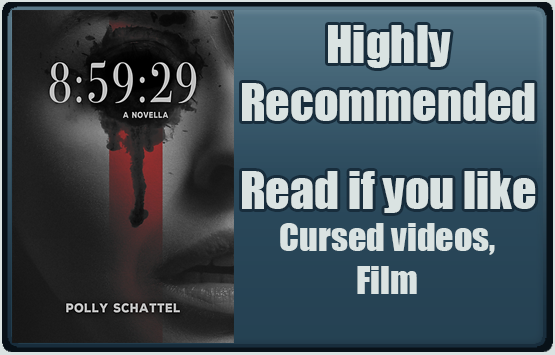
8:59:29 by Polly Schattel

Formats: Print, digital

Publisher: Trepidatio Publishing

Genre: Demon, Occult

Audience: Adult/Mature

Diversity: Trans author

Content Warnings (Highlight to view): Child Death, Death, Drug Use/Abuse, Gore

Blurb

When a disgruntled adjunct faculty teacher decides to get revenge on the head of her department, she begins a dark (and darkly comic) journey into the cracks between modern society and the secret depravity that lies underneath. She has to navigate the demons of technology, creativity, and Hell itself, but soon she must face the deepest, darkest horror of them all: her own personal failures.

I received this product for free in return for providing an honest and unbiased review. I received no other compensation. I am disclosing this in accordance with the Federal Trade Commission’s 16 CFR, Part 255: Guides Concerning the Use of Endorsements and Testimonials in Advertising.

“Film, of course, is traditionally shown at 24 frames per second, while video’s electronic fields are refreshed at 23.98, 29.97, or even 59.94 times a second… This microscopic slowdown of frames naturally causes a disparity between the measurement of real time and video time… To keep it playing at full speed, there’s a tiny blip in there—two frames every minute get eaten, dropped, overlooked.”

Hetta Salter teaches film studies for non-majors, and she hates it. She hates her low-paying adjunct professor job where she barely makes enough to scrape by, she hates her stultified students, and she especially hates the head of her department, Hensley. Hensley is the very definition of privilege. He’s a White, cishet male who comes from a wealthy background with a perfect family and a perfect home, completely unaware of how lucky he is.  To Hetta, Hensley represents everything that stands in the way of her happiness. If only he were gone she could get a better paying position, better students, a better apartment, and a better life. But then her best student, a townie named Tanner, gives her a way out. He sends her a dark web site called Voodoo Glam where Hetta discovers instructions on creating a video: a video that must filmed on a 1980s camcorder and last exactly 8 minutes, 59 seconds, and 29 frames. Whomever watches the video will be dragged to hell by the demon Andras, a great Marquis of Hell who sows discord among humans and is known to kill his summoners if they’re not extremely careful. What could possibly go wrong?

Hetta is not an entirely likeable character, but neither is she entirely unlikeable. She can be an insufferable film snob, but she’s also a woman from a low-income family who’s been beaten down by the system. Her anger is justified, but it’s also twisting her into a bitter person. At the same time, her anger has also made her sympathetic and willing to fight for those who are marginalized. Not that Hetta recognizes the drawbacks to being angry all the time. She is a villain protagonist who believes herself to be the hero fighting against an unjust world. She is as convinced of her own righteousness as she is of her genius. In short, Hetta is a fascinating character who is both repulsive and relatable. I found myself cheering for her one moment and horrified the next.

Schattel has a razor-sharp wit which she uses to poke fun at film snobs and critique the inequality inherent in academia. An adjunct professor earns between $20,000 and $25,000 annually, according to NPR. That’s less than I made working retail in college. For comparison, notoriously low-paid fast-food workers earn a mean income of $26,060 per year according the Bureau of Labor Statistics. But fast food doesn’t require an advanced degree, whereas being a professor does. Their income is so low that many adjunct professors are on some kind of public assistance. No wonder Hetta is pissed. She probably doesn’t even get benefits. Meanwhile adjunct professors like Hensley earn an annual salary starting at around $80,000 a year and can go as high as $174,000. But even tenured, Hetta would likely earn less than her male counterpart.

While Hetta is at least partially the butt of the joke (she assumes a horror film will be easy to make, ha!) Schattel, a filmmaker herself, also writes 8:59:29 as a love letter to filmmaking. Cleverly combing analog horror with more modern fears like the dark web and social media, Scahttel manages to make the whole “cursed video” plot feel new and unique instead of a Ringu rip-off. 8:59:29 is fun, twisted read perfect for film fans and anyone else who loves a good horror movie.

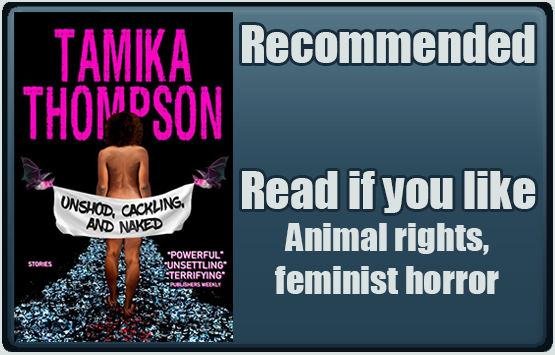
Unshod, Cackling, and Naked by Tamika Thompson

Unshod, Cackling, and Naked by Tamika Thompson

Formats: Print, digital

Publisher: Unnerving 

Genre: Apocalypse/Disaster, Killer/Slasher, Sci-Fi Horror, Werebeasts

Audience: Adult/Mature

Diversity: Black main characters and author, lesbian character, Biracial Black/Creek character

Takes Place in: LA, California

Content Warnings (Highlight to view): Alcohol Abuse, Animal Death, Body Shaming, Child Abuse, Child Death, Pedophilia, Police Harassment, Racism, Rape/Sexual Assault, Slurs, Verbal/Emotional Abuse, Violence

Blurb

A beauty pageant veteran appeases her mother by competing for one final crown, only to find herself trapped in a hand-sewn gown that cuts into her flesh. A journalist falls deeply in love with a mysterious woman but discovers his beloved can vanish and reappear hours later in the same spot, as if no time has passed at all. A cash-strapped college student agrees to work in a shop window as a mannequin but quickly learns she’s not free to break her pose. And what happens when the family pet decides it no longer wants to have ‘owners’?

In the grim and often horrific thirteen tales collected here, beauty is violent, and love and hate are the same feeling, laid bare by unbridled obsession. Entering worlds both strange and quotidian, and spanning horror landscapes both speculative and real, asks who among us is worthy of love and who deserves to die?

I received this product for free in return for providing an honest and unbiased review. I received no other compensation. I am disclosing this in accordance with the Federal Trade Commission’s 16 CFR, Part 255: Guides Concerning the Use of Endorsements and Testimonials in Advertising.

I absolutely love horror anthologies, so I was excited to receive Unshod, Cackling, and Naked by Tamika Thompson. Many of the stories in the anthology focus on the balance between humans and nature and the morality of killing, owning, and eating animals. Bridget has Disappeared takes place in a dystopian near-future with disappearing resources which lead to poverty and crime. I Will be Glorious is about coping with loss and a killer tree. The Bats and The Turn are both about diseases that seemingly spread overnight (much like COVID) that cause dogs and bats, respectively, to turn against humans and attack them. The Turn especially focuses on the humanity’s relationship with domesticated animals and describes what would happen if dogs no longer wished to be kept as pets. Similarly, And We Screamed examines humanity’s relationship with livestock, and why we choose to eat some animals and feel entitled to try and control them. It also examines the sanctity of death and dead bodies. I found this story especially interesting because I was probably the exact opposite of the target audience. I eat meat and have several pets. I used to work on a farm with livestock (some of which were being raised for food) as a child, and I volunteered at an animal hospital where I sometimes had to help euthanize sick animals in my teens. In college I majored in biology and had no qualms about dissecting dead animals, including rats and cats (despite being a huge rat and cat lover).

In And We Screamed there’s a scene where the main character refuses to dissect a cat and her classmate points out that it’s messed up because it still has a face. My first thought was “Well, how are you supposed to dissect the eyes if it doesn’t have a face?” (Which turns out to be the teacher’s argument as well.) It was intriguing to be reminded that something I consider routine and mundane was actually horrific for many people, and to see why exactly it was so frightening from their point of view.  I was able to understand and empathize with where the author, and her characters, were coming from, even if I didn’t fully agree with her conclusions. I also recognized the mental disconnect that makes me willing to dissect a rat for science while also dropping over a grand on veterinary bills for a rat I keep as a pet.  Truly a testament to Thompson’s skill as a writer.

My favorite stories in Unshod, Cackling, and Naked were the ones with feminist themes. In I Did it for You a young rape survivor tracks down creepy men and cuts off their small toe, turning them into victims who will have to carry a scar for the rest of their lives, just as she does. She points out to one cop–the one who raped her because he thought she was a prostitute–that losing a toe is nothing like losing your will to live after being sexually assaulted. I always enjoy a good rape revenge story and I appreciated that Thompson makes the sex workers in I Did it for You heroes rather than victims (like they are in most horror), and they feel like real characters rather than stereotypes.  

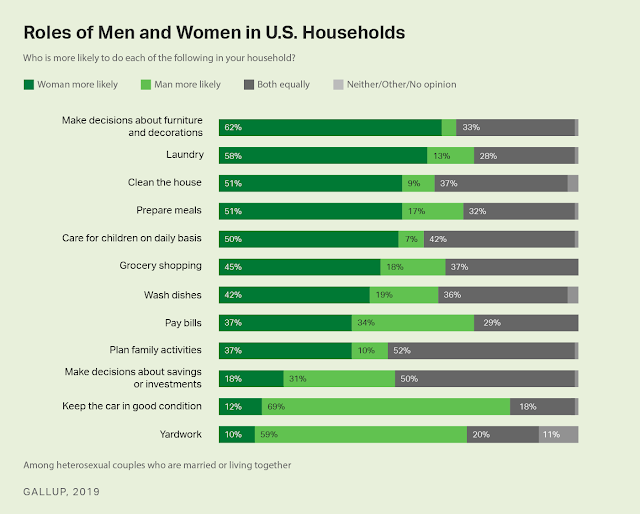
Mannequin Model is the story from which Unshod, Cackling, and Naked draws its name. In it, a woman acts as a “living doll,” modeling clothing in a store window where she’s objectified and sexually harassed. She’s treated as a literal sex object, with no voice or will, so it’s extremely satisfying when she finally rebels. But my absolute favorite story in the collection is I am Goddess. In it, a woman named Lira wants to convince her husband to pay for face treatments so she can be beautiful. Her marriage to her husband is basically every bad heterosexual relationship you’ve read about on Reddit. Lira works full time and does everything around the house. She pays the mortgage and all the bills out of her paycheck, despite earning the same amount as her husband. Her husband uses his own money to buy himself big-screen TVs and flashy new cars while telling Lira they can’t afford a washer and dryer or a car for her, so she’s stuck doing laundry by hand and taking the bus. He flirts with other women, dismisses her feelings, and ignores her unless he wants sex. But Lira puts up with it with a smile because she has been conditioned her whole like to believe she needs a man to be “complete” and that she’s lucky to have anyone at all considering her appearance. All of Lira’s accomplishments growing up are downplayed until she finds a husband. Her cousin constantly mocks her appearance and makes Lira feel inferior. No wonder she’s trapped in such a toxic relationship. But her husband’s refusal to let her get the one thing she wants, her face treatment, finally pushes Lira over the edge. She finally sees her husband for who he really is, a loser, and all her pent up anger and frustration comes pouring out. She gets even, and it’s glorious. Definitely one of the strongest stories in the collection, in my humble opinion. 

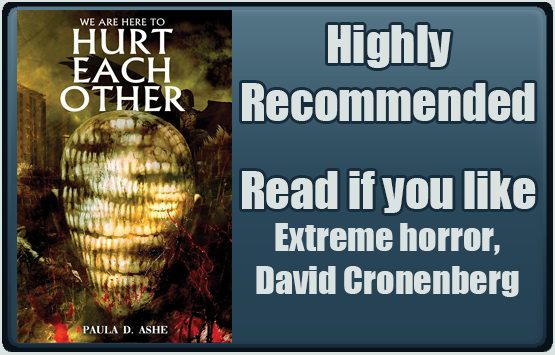
We Are Here to Hurt Each Other by Paula D. Ashe

We Are Here to Hurt Each Other by Paula D. Ashe

Formats: Print, digital

Publisher: Nictitating Books

Genre: Body Horror, Killer/Slasher, Occult, Psychological Horror

Audience: Adult/Mature

Diversity: Queer, Black author and characters

Takes Place in: Ohio

Content Warnings (Highlight to view): Child Abuse, Child Death, Child Endangerment, Death, Drug Use/Abuse, Illness, Incest, Kidnapping, Necrophilia, Mental Illness, Pedophilia, Racism, Rape/Sexual Assault, Self-Harm, Slut-Shaming, Torture, Violence

Blurb

With these twelve stories Paula D. Ashe takes you into a dark and bloody world where nothing is sacred and no one is safe. A landscape of urban decay and human degradation, this collection finds the psychic pressure points of us all, and giddily squeezes. Try to run, try to hide, but there is no escape: we are here to hurt each other.

I received this product for free in return for providing an honest and unbiased review. I received no other compensation. I am disclosing this in accordance with the Federal Trade Commission’s 16 CFR, Part 255: Guides Concerning the Use of Endorsements and Testimonials in Advertising.

If you’ve ever thought “Gee, I’m feeling too mentally and emotionally healthy. I should read something so disturbing and intense my therapist will finally be able to pay off their student loans from all the sessions I’m going to need,” then look no further then Paula D. Ashe’s We Are Here to Hurt Each Other. This horror is extreme. Ashe explores such taboo topics as incest, child abuse, child murders, self-harm, and religious extremism without flinching, yet it never feels like she’s making light of the subject matter. It’s extreme horror that never feels exploitative.

Interestingly, Ashe’s stories are very light on the gore (with a few exceptions). I’ve always found extreme horror that relies too much on blood and guts to be boring (blame my ultraviolent horror phase in college for making me jaded), so it was one of the things I particularly liked about the book. There are also very few examples of the supernatural in this anthology, and no supernatural antagonists. All the villains are very much human. Ashe’s work focuses on psychological horror, the terrifying in the mundane, and the terrible things the average human is capable of. What if you found out your own child was a monster? And not the furry or fanged kind, but the regular old terrible human kind? What if, to cope with abuse, you became the abuser without even realizing? What if you would do absolutely anything to keep the one you love? Ashe takes these simple, awful questions and gives us the terrifying answer, sometimes in a variety of ways. Bereft and Because you Watched, both deal with adult children dealing with their histories of extreme abuse and culpable siblings, but are two very different stories.

The stories are extremely well written, and I was impressed how each character had such a distinct voice. No two stories sound the same, but they all share Ashe’s poetic talent. We are Here to Hurt Each Other is a gripping and deeply unsettling anthology; Ashe’s skill shines through in each story, though I found Exile in ExtremisThe Mother of All Monsters, and Because you Watched to be my personal favorites. The first is an epistolary story about a drug so powerful it is said to bring back the dead and with references to the classic horror anthology The King in Yellow by Robert W. Chambers. The second is about the relationship between a mother and her son while a series of child murders take place. And the last is about the strained relationship between siblings who have witnessed the abuse of their youngest sister at the hands of their cruel parents.

We Are Here to Hurt Each Other is not an easy read, but it is an excellent one. Despite their depravity the stories are still hauntingly beautiful. You’ll find this anthology sitting with you long after you put it down.

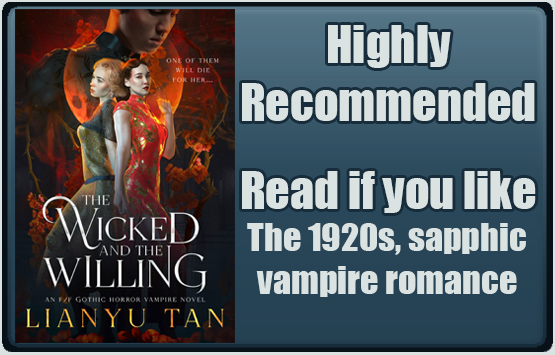
The Wicked and the Willing by Lianyu Tan

The Wicked and the Willing by Lianyu Tan

Formats: Print, audio, digital

Publisher: Shattered Scepter Press

Genre: Historic Horror, Vampire

Audience: Adult/Mature

Diversity: Lesbian, Malay, Chinese

Takes Place in: Singapore

Content Warnings (Highlight to view): Cannibalism, Child Abuse, Child Endangerment, Death, Drug Use/Abuse, Forced Captivity, Gaslighting, Gore, Kidnapping, Medical Torture/Abuse, Oppression, Pedophilia, Physical Abuse, Racism, Rape/Sexual Assault, Self-Harm, Sexism, Slut-Shaming, Suicide, Torture, Verbal/Emotional Abuse, Victim Blaming, Violence

Blurb

Love demands sacrifice. Her blood. Her body. Even her life.

Singapore, 1927.

Verity Edevane needs blood.

And not just anyone’s blood. She craves the sweet, salty rush from a young woman’s veins, the heady swirl of desire mixed with fealty—such a rarity in this foreign colony. It’s a lot to ask. But doesn’t she deserve the best?

Gean Choo needs money.

Mrs. Edevane makes her an offer Gean Choo can’t refuse. But who is her strange, alluring new mistress? What is she? And what will Gean Choo sacrifice to earn her love?

Po Lam needs absolution.

After decades of faithfully serving Mrs. Edevane, Po Lam can no longer excuse a life of bondage and murder. She needs a fresh start. A clean conscience. More than anything, she needs to save Gean Choo from a love that will destroy them all.

I received this product for free in return for providing an honest and unbiased review. I received no other compensation. I am disclosing this in accordance with the Federal Trade Commission’s 16 CFR, Part 255: Guides Concerning the Use of Endorsements and Testimonials in Advertising.

The Wicked and the Willing is a dark, supernatural romance set in Singapore in the late 1920s while it was still the Straits Settlements and under British control. The story revolves around three women: Gean Choo, Verity, and Po Lam. Gean Choo, is a young Chinese woman with no family who takes a job working for a wealthy White woman. She quickly falls in love with her employer, a beautiful, but dangerous vampire named Verity Edevane. Po Lam is Verity’s head servant, a strong and formal woman who also develops a soft spot for Gean Choo. Although, while Po Lam uses she/her pronouns, she dresses as a man and is gender non-conforming. It’s unclear if she’s very butch or if her gender is fluid. But without enough evidence to the contrary, I’m going to assume she identifies as a butch woman for the purpose of this review. Each chapter is told from a different woman’s point of view and follows the turbulent romance between Gean Choo and Verity. Po Lam struggles with whether to interfere and warn Gean Choo that she’s playing with fire, or to remain an obedient servant and stay out of it. The story touches on the power dynamics of race, age, wealth, and gender. We see this in the relationships between Verity and her servants, Verity and the Vampire leader Kalon, and the women with society.

Verity may give Gean Choo permission to use her given name, but theirs is still an imbalanced relationship. As her wealthy mistress and as a White woman, Verity holds all the power over her servants, making it difficult(if not impossible) for Gean Choo to turn down any of her requests, even when she’s uncomfortable. As an impoverished, unmarried orphan, options are for employment are limited and Gean Choo is desperate to protect her cushy position in the vampire’s household. So, while on the surface it may appear as though the two women are both willingly engaging in sadomasochism (and in the hands of a less talented writer this would certainly be the case), it’s clear that there is an issue of consent. Does Gean Choo let her mistress push her past her comfort limits because that’s what she wants as a submissive, or because she’s afraid of losing her job? Tan skillfully presents their bond as unhealthy, but alluring enough for a girl with rose-tinted glasses to miss the red flags without romanticizing it. Verity is a monster, but she hides it behind charm and extravagant displays of affection, a common trait of abusers during the “calm” or “honeymoon” stage of the abuse cycle. Contrast this with more problematic romance books like Twilightwhere an abusive relationship is passed off as romantic.

Gean Choo’s race also plays a role in their power imbalance. Verity clearly sees her as an “exotic” sexual fantasy she needs to rescue, instead of a real person. She treats her like a “China doll,” dressing her up and styling her hair, and can’t even be bothered to pronounce her name correctly.Iinstead, she calls her “Pearl” (the second charter in Gean Choo’s name is 珠 which is Hokkien for Pearl). There are similarities to the relationship in Miss Saigon, Madama Butterfly (on which Miss Saigon is based), The World of Suzie Wong, and other orientalist works of fiction, where a young, innocent (but also hypersexualized) Asian woman is taken advantage of by a White foreigner. Tan reclaims the trope by making Gean Choo a complex character who’s stronger than she thinks and uses this as another aspect of their relationship’s dysfunction. She also shows how harmful it is by having Verity literally prey on Asian women (mostly sex workers) who she views as disposable, a view shared by the British who prey on the countries they colonize. Despite all Verity’s power as a vampire and a rich White woman, she is still a second-class citizen in the eyes of society because of her gender and is forced to submit to the will of the sadistic vampire leader, Kalon.

Overall, I greatly enjoyed Tan’s violent, sexy, historical “romance.” There was plenty of gratuitous sex and violence, non-White lesbians, and commentary about colonization and abusive relationships. What I found particularly unique was Tan giving the reader two different options for the ending, one happy and one tragic depending on which romance the reader chooses for Gean Choo to embrace. Overall, the book is beautifully written. Tan has a very impressive and extensive vocabulary which she used to weave the narrative, which she manages to do without ever being sesquipedalian or descending into purple prose. I’d recommend this book to anyone who likes period horror or vampire romances where the vampire’s monstrosity is never downplayed. 

The Final Women by Pardeep Aujla

The Final Women by Pardeep Aujla

Formats: digital

Publisher: Self-Published

Genre: Demon, Killer/Slasher, Occult

Audience: Adult/Mature

Diversity: Black main character, Latina main character, Vietnamese main character, lesbian main character

Takes Place in: type here

Content Warnings (Highlight to view): Alcohol Abuse, Amputation, Bullying, Death, Drug Use/Abuse, Gore, Homophobia, Mental Illness, Racism, Self-Harm, Sexism, Suicide, Verbal/Emotional Abuse, Violence

Blurb

The mass murdering Phantom of Haven Cove is dead. For the one who killed him, however, life has never been the same.

How do you return to normality after facing such a monster? How do you live when consumed by guilt, anger, fear, and denial? How do you connect with others when no one understands what you’ve been through?

But there are others… Final girls of their own Haven Cove massacres. And now, thirty years later, they must all face a new question…

What do you do when the killer returns?

I received this product for free in return for providing an honest and unbiased review. I received no other compensation. I am disclosing this in accordance with the Federal Trade Commission’s 16 CFR, Part 255: Guides Concerning the Use of Endorsements and Testimonials in Advertising.

What happens when final girls grow up? It depends how they deal with the trauma of what happened to them the night they faced off with the masked killer, Silas Crowe. If you’re Nell James, you grow up to become a lonely and agoraphobic author who tries to turn the worst thing that ever happened to her– watching her friends get murdered one by one–into financial gain. If you’re Josie Jedford, you numb your fear with drugs. Or you could become a paranoid survivalist like Ana Gómez who transforms her badly burned body into a living weapon. Even Cassie Phong, who seems to have the perfect life what with her wealthy husband and two children, can’t escape the PTSD she developed the night she faced off with Silas Crowe. Each woman has done her best to put the past behind them, believing Crowe to be dead once and for all. That is until Camp Haven Cove reopens and a new group of teenagers goes missing. Nell realizes that Silas Crowe never died, and never will unless she, and the other three former final girls find a way to deal with him once and for all. Now well into their forties the four final woman team up to put a stop to the killings once and for all.

Slasher heroines are almost exclusively young women: teens and twenty somethings with bare breasts and flat stomachs (they’re always conventionally attractive) enjoying the prime of their lives through sex, drugs and drinking. Any woman above the age of thirty is either a mother or a side character, and if she has a few gray hairs she’s relegated to the role of a frightful hag. But as nostalgia for horror of the 80’s and 90’s breathes new life into horror franchises, Hollywood is doing something new. Instead of rebooting and recasting their heroines, they’re allowing them to grow up from Final Girls into Final Women. Sidney Prescott (Scream), Laurie Strode (Halloween), and Sally Hardesty (The Texas Chainsaw Massacre) all recently reprised their roles in their respective franchises as badass heroines over the age of forty. And as someone who will soon be saying goodbye to my thirties, it’s refreshing to see older women get their time in the slasher spotlight, and that’s one of the things I liked best about The Final Women.  Nell, Josie, Ana, and Cassie are all approaching fifty, but they all get to be the heroes of the story, and I found them much more relatable then horny, drunk teens in the woods. They’re also not written for the male gaze, which is refreshing.

Another thing I liked about the book was Aujla’s realistic depiction of PTSD. None of the women escaped Silas unscathed, they each bear their own physical and mental scars, as one would expect from anyone going up against a slasher. Nell displays avoidance of people and places that remind her of her traumatic event and might trigger a flashback. Cassie and Josie both develop substance abuse problems, alcohol and drugs respectively, a common comorbidity for people with PTSD. Ana is prone to angry outbursts and aggressive behavior and is hypervigilant. All the women struggle with nightmares and flashbacks. It’s refreshing to see a slasher actually deal with mental health and the aftermath of a traumatic event (something we’re starting to see in more recent film sequels). I genuinely cared about all the main characters, something that rarely happens in horror fiction, and I was scared to see any of them get hurt or killed. Aujla just writes them so well! It’s sweet to see these women from different walks of life bond and draw strength from each other.

The Final Women was fun in a way the best 80’s slashers are. Gory, over the top, and wickedly funny. I absolutely devoured it as I found both the story and the characters enthralling. It draws on classic horror tropes while still being wholly unique. If you’re a fan of slashers you’ll definitely want to check this one out. 

Manhunt by Gretchen Felker-Martin

Manhunt by Gretchen Felker-Martin

Formats: Print, audio, digital

Publisher: Tor Nightfire

Genre: Apocalypse/Disaster, Monster

Audience: Adult/Mature

Diversity: Trans author and characters, queer characters, Native character

Takes Place in: northeastern USA

Content Warnings (Highlight to view): Animal Death, Body Shaming, Cannibalism,  Child Death, Childbirth, Death, Drug Use/Abuse, Eating Disorder, Forced Captivity, Gore, Illness, Kidnapping, Medical Procedures, Oppression, Rape/Sexual Assault, Self-Harm, Slurs, Torture, Transphobia, Verbal/Emotional Abuse, Violence

Blurb

Y: The Last Man meets The Girl With All the Gifts in Gretchen Felker-Martin’s Manhunt, an explosive post-apocalyptic novel that follows trans women and men on a grotesque journey of survival.

Beth and Fran spend their days traveling the ravaged New England coast, hunting feral men and harvesting their organs in a gruesome effort to ensure they’ll never face the same fate.

Robbie lives by his gun and one hard-learned motto: other people aren’t safe.

After a brutal accident entwines the three of them, this found family of survivors must navigate murderous TERFs, a sociopathic billionaire bunker brat, and awkward relationship dynamics―all while outrunning packs of feral men, and their own demons.

Manhunt is a timely, powerful response to every gender-based apocalypse story that failed to consider the existence of transgender and non-binary people, from a powerful new voice in horror.

 received this product for free in return for providing an honest and unbiased review. I received no other compensation. I am disclosing this in accordance with the Federal Trade Commission’s 16 CFR, Part 255: Guides Concerning the Use of Endorsements and Testimonials in Advertising.

Have you ever wondered what happens to trans people in sex-based apocalypses like those in Y: The Last Man or Ōoku: The Inner Chambers? Gretchen Felker-Martin sets out to answer exactly that in her post-apocalypse splatterpunk novel Manhunt.

The T-rex virus transforms anyone with high levels of testosterone—mostly cis-men—into cannibalistic, sex-crazed monsters. Emboldened by the end of the world, a group of TERFs (trans-exclusionary radical “feminists”) have formed their own militia where they hunt and kill any trans women they find. It may seem like a group of militant TERFs is an exaggeration, but it feels like less of a stretch when you consider there’s already a high rate of violence against trans people. In 2021 alone, at least 56 trans and gender non-conforming people were murdered in the US. Transphobic hate crimes have quadrupled over the last five years in the UK. These fake feminists are also more fascist adjacent than they’d like to admit. As Judith Butler accurately pointed out, TERFs “have allied with rightwing attacks on gender” and “The anti-gender ideology is one of the dominant strains of fascism in our times. So, the TERFs will not be part of the contemporary struggle against fascism.” TERFs Lily Cade and Bev Jo Von Dohre have even called for the death of trans women. The fact that trans women in Manhunt can transform into monsters if they don’t have access to anti-androgen medication gives the TERFs exactly the excuse they’ve been waiting for to go from hateful rhetoric to actually destroying that which they hate most (never mind that cis-women with PCOS or congenital adrenal hyperplasia can also transform into feral beasts).

Not only do trans women have to avoid getting killed by the monstrous men, but also running into the militant TERFs who have seized control of most of the northeast. Fran and Beth are two such transwomen trying to survive in the new world, catching feral men and harvesting their testicles for their friend Indy to extract estradiol from. After running afoul of a militant group of TERFs and almost being killed by men, Fran and Beth meet a sharp-shooting trans man named Robbie, who they take on their journey with them. The trio return to Indy’s house with their testicle trophies where they learn she’s been offered a job by a spoiled rich girl who controls a luxurious bunker. But the promises of comfort the bunker offers may hide a deadly truth.

While I personally enjoyed this book, it won’t be for everyone. It is splatterpunk, after all. That means there’s lots of brutal violence (including a cis woman having her uterus cut out of her), gross content (testicle eating), and graphic sex. Everyone in Manhunt is super horny, sometimes at wildly inappropriate times, so Beth, Fran, Indy, and Robbie do a lot of fucking. The sex is hot, sometimes gross, and other times both hot and gross, much like real sex. It was nice to have sex scenes centered around trans pleasure rather than the cis-male gaze. Of course, the graphic description of genitalia might be triggering for some people who experience gender dysphoria, so be aware of that. Speaking of hot sex, a captain in the TERF army named Ramona is sleeping with a non-binary prostitute named Feather. One reviewer claimed this is unrealistic but I have to disagree. A lot of chasers are happy to sleep with trans people but won’t do anything to defend their rights or even stand up for them. Too many people with trans partners see their relationship as a shameful secret to be kept, and Ramona is no different. She’s too much of a coward to do the right thing and just goes along with the TERF army because it’s what’s easy.

Splatterpunk is very hit or miss for me, as many extreme horror books can cross over into misogynistic violence. Manhunt manages to avoid this trap, even though most of the book’s violence is against women (as all the characters, aside from Robbie, are women). Perhaps because it’s other women committing the violence, but I didn’t get that gross feeling I usually do when reading splatterpunk authored by cis men. Even the sexual assault scene didn’t feel gratuitous and was handled well. I also loved how flawed the protagonists are. Some people mistakenly assume LGBTQIA+ characters need to be perfect for it to be considered a “good” portrayal. I believe realistic is preferable to perfect, and I like my queer characters to have character flaws who sometimes do and say problematic things. Both Beth and Fran feel very human. Beth is reckless and insecure; Fran has both passing and class privilege and can sometimes be selfish. Neither of them are bad people, just realistically flawed.

My only complaint about the book (and granted, it’s minor) is that there are so many descriptions of Indi’s fat body. The way she’s described isn’t quite fatphobic, but it did make me feel uncomfortable that there was so much focus on it. I can understand that Indy is dealing with a lot of internalized fatphobia and insecurity, so it makes sense that her character would spend a lot of time focusing on her size and the limitations that come with it. When the story is told from a third-person point of view, there’s no reason for Indy’s weight to be described in such detail, especially since no one else’s body gets that much description or scrutiny. At least she’s never described as gross or unattractive, and Indi even gets to be sexually desirable, which is rare for fat characters outside of fetish porn. It was refreshing to see fat people having passionate sex scenes just like their skinny counterparts. Like I said, it’s a minor complaint and could absolutely be my own hypersensitivity.

Reading this book is like having your brain put in a blender. It’s wild, gross, horny, disgusting, tragic, and hilarious all whipped together into an extreme horror smoothie. In other words, I LOVED it. You have to be at least somewhat familiar with trans culture to fully appreciate the story, which I thought was awesome. There’s also just something extremely satisfying about trans women killing fascist TERFs: not something I’d advocate in real life, but it’s fun and cathartic in fiction. Unsurprisingly, this made a bunch of real-life TERFs very angry. They didn’t like being portrayed as bigoted assholes just because of their bigoted asshole-ish behavior and tried to review bomb Manhunt…which should just make you want to read it more.

Conquer by Edward M. Erdelac

Conquer by Edward M. Erdelac

Formats: Print, audio, digital

Publisher: Self Published 

Genre: Historic Horror, Monster, Mystery, Myth and Folklore, Occult, Vampire

Audience: Adult/Mature

Diversity: Black/African-American, Hispanic, Trans, Gay

Takes Place in: Harlem, New York, USA

Content Warnings (Highlight to view): Animal Death, Body Shaming, Child Abuse, Death, Drug Use/Abuse, Forced Captivity, Gore, Homophobia, Kidnapping, Necrophilia, Oppression, Pedophilia, Physical Abuse, Police Harassment, Racism, Rape/Sexual Assault, Sexual Abuse, Slurs, Transphobia

Blurb

In 1976 Harlem, JOHN CONQUER, P.I. is the cat you call when your hair stands up…the supernatural brother like no other. From the pages of Occult Detective Quarterly, he’s calm, he’s cool, and now he’s collected in CONQUER.

From Hoodoo doctors and Voodoo Queens,
The cat they call Conquer’s down on the scene!
With a dime on his shin and a pocket of tricks,
A gun in his coat and an eye for the chicks.
Uptown and Downton, Harlem to Brooklyn,
Wherever the brothers find trouble is brewin,’
If you’re swept with a broom, or your tracks have been crossed,
If your mojo is failin’ and all hope is lost,
Call the dude on St. Marks with the shelf fulla books,
‘Cause ain’t no haint or spirit, or evil-eye looks,
Conjured by devils, JAMF’s, or The Man,
Can stop the black magic Big John’s got on hand!

I received this product for free in return for providing an honest and unbiased review. I received no other compensation. I am disclosing this in accordance with the Federal Trade Commission’s 16 CFR, Part 255: Guides Concerning the Use of Endorsements and Testimonials in Advertising.

Conquer is the story of a Black mystical detective named John Conquer (a reference to John the Conqueror) and a homage to 70’s detective fiction and Blaxploitation films. It’s fun, well written, and full of creepiness, including a fetus monster haunting an abandoned subway station and a man shrunk down and boiled alive in a lava lamp. I greatly enjoyed the book, but like most Blaxploitation, it wasn’t without its problems.

It’s important to point out that Erdelac is a White author writing a Black story (something not uncommon in Blaxploitation). I usually prefer to promote “own voices” books, and stories by cishet White men are a rarity on this blog. After all, folks with privilege do not have the best track record when it comes to writing marginalized groups. As Irish author Kit de Waal said, “Don’t dip your pen in someone else’s blood”. Take American Dirt by Jeanine Cummins and The Help by Kathryn Stockett. They’re both terrible for numerous reasons including, but not limited to: not doing enough research, using the White Savior trope, watering down their narratives to make them palatable for White audiences, cultural appropriation, speaking over marginalized voices, etc. That’s not to say White authors shouldn’t write BIPOC characters at all. Not having any diversity in your story can be equally problematic. It just needs to be done carefully and respectfully. Very, very carefully. Yes, I know that can be a fine line to walk, but if an author can research what kind of crops people were growing in 1429 to make their book more accurate, they can research American Indians and people of color. Besides, that’s what hiring sensitivity readers and using resources like Writing with Color is for. Of course, there’s also the problem of White voices being given preferential treatment by publishers and audiences over BIPOC trying to tell their own stories.

To his credit, Erdelac has done an impressive amount of research to make his book feel authentic. John Conquer wears a dime around his ankle for protection and a mojo hand (another name for a mojo bag) for luck. His name is a reference to High John de Conqueror, a Black folk hero with magical abilities. Conquer also has one of the most accurate representations of Vodou I’ve ever seen in fiction. Hollywood “voo doo” is a pet peeve of mine, so I appreciate Erdelac’s dedication to portraying the religion and loa/lwa (the powerful spirits Vodou practitioners worship and serve) accurately. He also doesn’t try to portray an idealized version of 1970s NYC. There’s racism, anti-Semitism, homophobia, and cops and criminals spewing slurs. And while it’s jarring, it does make the story feel more authentic. The police are racist and homophobic and there’s tension between the many communities that make up 1970s New York. John Conquer’s Uncle Silas was disowned by his family for being gay, and when John is asked to solve his murder, he has to confront his own homophobia and transphobia. That doesn’t mean it always works, though. There were definitely a few times I side-eyed and wondered if a certain line really needed to be in there.

My favorite part of the book is Eldelac’s excellent world building. White vampires go up in smoke when exposed to sunlight, while vampires with more melanin are protected from the sun’s rays. Vampirism also halts a corpse’s decay, but all that rot catches up to them when they’re finally killed. Each culture has their own magical practices with distinct rules, and magic doesn’t cross cultural lines. For example, only Vodou practitioners can become zombies, and non-Christian vampires are immune to crosses. Conquer is especially powerful because he’s learned many different traditions and practices, but the catch is that this opens him to a wider variety of spiritual attacks. Street gangs utilize black magic to wage wars with each other. His work is clever, original, and something I could really get into. But…having White authors tell BIPOC stories still feels problematic to me when White authors are still so heavily favored by the publishing industry. I’ve reviewed books by White authors before, but because Conquer is based heavily on Blaxploitation it feels, well, more exploitative than those I’ve reviewed in the past. I’m still going to go ahead and recommend Eldelac’s work because—in the end—it is well written and interesting, but I can also completely understand if some of you want to skip this one.

Grievers by Adrienne Maree Brown

Grievers by Adrienne Maree Brown

Formats: Print, digital

Publisher: AK Press

Genre: Apocalypse/Disaster

Audience: Adult/Mature

Diversity: Black/African-American, Lesbian

Takes Place in: Detroit, MI, USA

Content Warnings (Highlight to view): Death, Drug Use/Abuse, Illness, Medical Procedures

Blurb

Dune’s mother is patient zero of a mysterious illness that stops people in their tracks—in mid-sentence, mid-action, mid-life—casting them into a nonresponsive state from which no one recovers. Dune must navigate poverty and the loss of her mother as Detroit’s hospitals, morgues, and graveyards begin to overflow. As the quarantined city slowly empties of life, she investigates what caused the plague, and what might end it, following in the footsteps of her late researcher father, who has a physical model of Detroit’s history and losses set up in their basement. She dusts it off and begins tracking the sick and dying, discovering patterns, finding comrades in curiosity, conspiracies for the fertile ground of the city, and the unexpected magic that emerges when the debt of grief is cleared.

I received this product for free in return for providing an honest and unbiased review. I received no other compensation. I am disclosing this in accordance with the Federal Trade Commission’s 16 CFR, Part 255: Guides Concerning the Use of Endorsements and Testimonials in Advertising.

“Grief was an amalgamation of absence narratives layered over each other”

Death positivity is the philosophy that death and grief should be spoken of openly and that treating the subject as taboo does more harm than good. It encourages people to learn about end-of-life care, make plans for their own deaths, be involved in the care of their dead loved ones, and explore their curiosity and feelings surrounding death. In a way, Grievers is a death-positive book. The story explores what it’s like to lose the people you love, care for the dying, prepare for death, and the mourning process. Most horror skims over the death of its characters, their lives nothing more than cheap fodder for the reader’s entertainment. But in Grievers, you feel the weight of every death.

A mysterious illness is sweeping Detroit and killing its Black population. Dubbed “H8”, it leaves its victims frozen in place with grief-stricken faces. A social justice activist named Kama is the first to contract the disease. Unable to afford a hospital, Dune, Kama’s only child, cares for her mother at home by feeding her, changing her, and keeping her as comfortable as she can. Dune, distrustful of the system that failed them, decides to cremate her mother herself when Kama finally passes. Dune’s act of cremating her own mother (although not something I would recommend as it’s neither safe nor legal) is described as “sacred work,” a ritual that allows her to be close to her mother one last time.

Death rituals, whether religious or secular, perform a necessary function in the grieving process. In his research on grieving rituals Michael I. Norton, a professor at Harvard Business School, discovered the following:

“Despite the variance in the form that rituals take… a common psychological mechanism underlies their effectiveness: a restoration of feelings of control that losses impair. Indeed, people who suffer losses often report feeling out of control and actively try to regain control when they feel it slipping away; feeling in control, in turn, is associated with increased well-being, physical health, and coping ability.” [1]

In the story, a group of traditional Chinese medicine practitioners perform grieving rituals believing that this will protect them from H8, a disease, they theorize, that targets the lungs where grief is held. Dune performs grief rituals to help overcome the immense sense of loss she’s experiencing. The first is cremating her mother in her backyard. The second is “telling” her dead father that her mother has passed. The third, and most important, is creating a record of everyone who has fallen ill and marking their locations with pins on her father’s model of Detroit. The last project gives her something to do, a way of combatting her sense of helplessness as the world falls apart around her. After slipping into a deep depression and shutting herself away, collecting data on the infected gives Dune a new sense of purpose and feeling of control. She organizes her data onto index cards and files them away, creating order out of chaos.

The way Brown represents grief is both beautiful and heartbreaking. Dune isolates herself from the world, too depressed to even plan a memorial service for her mother. She physically carries the weight of her grief as she gains weight during her depression. Eventually, Dune finds ways to cope with her grief. In addition to the rituals providing her with a sense of control, Dune also focuses on survival and caring for her elderly grandmother, Mama Vivian. She harvests produce from community gardens and cans them for the winter. She changes, feeds, and sings to her grandmother. She eventually reaches out to one of her mother’s activist friends for emotional support. It’s not always easy. Dune blows up at a volunteer food distributor without really knowing why, other than just needing someone to lash out at. She dips back into a depression when other people she cares about die. But she keeps surviving, and slowly things start to improve. Brown describes the feeling of slowly emerging from a deep depression perfectly: “Dune was beginning to feel aware of her own aliveness again – not quite a desire to live, just a growing, surprising awareness that she was not dead.” While this may not sound like much, it’s still a step forward in Dune’s path to healing and an improvement from the beginning of the story when “the detritus of grief became Dune’s comfort.” As someone who suffers from clinical depression themselves, I can say that just feeling alive again is such a huge step forward. At the same time, her father’s model, now thick with markers, is starting to sprout little green shoots: new life that has started to grow in the basement against all odds.

A year defined by a pandemic and protests, 2020 was especially difficult for Black Americans. Black communities were hit especially hard by Covid-19, and our anger and frustration with a racist system reached a boiling point with the murder of George Floyd by a White police officer. Grievers may be fiction, but it captures the very real feelings of pain and loss the Black community has been feeling recently. The H8 virus is a metaphor for both Covid and the pain caused by racism. “Hate” is literally killing Black people by destroying them emotionally and no one seems to be able to quell the spread of the disease. Like Covid, everyone knows someone who died from the virus. The city seems to shut down overnight as the wealthy flee and hospitals are overwhelmed.

Grievers does not follow a standard three arch story structure. There’s no antagonist to overcome, no climax, or satisfying resolution. If you’re looking for traditional storytelling, then this book isn’t for you. If you want a beautiful, heartbreaking, death-positive horror story that focuses on one woman’s battle with grief and just trying to survive a pandemic that feels all too familiar, I highly recommend Grievers.

[1] From the Journal of Experimental Psychology

Transmuted by Eve Harms

Transmuted by Eve Harms

Formats: Print, digital

Publisher: Unerving

Genre: Body Horror

Audience: Adult/Mature

Diversity: Trans main character and side character, queer main characters, Japanese-American side character

Takes Place in: Los Angeles, California, USA

Content Warnings (Highlight to view):  Body Shaming, Forced Captivity, Gore, Medical Torture/Abuse, Medical Procedures, Transphobia

Blurb

Her doctor is giving her the body of his dreams… and her nightmares. Isa is a micro-celebrity who rarely shows her face, and can’t wait to have it expertly ripped off and rearranged to look more feminine. When a successful fundraiser makes her gender affirming surgery possible, she’s overjoyed—until she has to give up all her money to save her dying father.

Crushed by gender dysphoria and the pressure of disappointing her fans who paid for a new face, she answers a sketchy ad seeking transgender women for a free, experimental feminization treatment. The grotesquely flawless Dr. Skurm has gruesome methods, but he gets unbelievable results, and Isa is finally feeling comfortable in her skin. She even gains the courage to ask out her crush: an alluring and disfigured alchemy-obsessed artist named Rayna.

But Isa’s body won’t stop changing, and she’s going from super model to super mutant. She has to discover the secret behind her metamorphosis—before the changes are irreversible, and she’s an unwanted freak forever.

Transmuted is an outrageous and unapologetically queer body horror tale that will leave you gasping, giggling, and gagging for more.

Harm excels at taking the everyday horror of living trapped in a body you don’t recognize as your own, dials it up to a hundred, then soaks it in blood, sex, and mad science.

Isa is a trans woman who struggles both with her weight and gender dysphoria. Her hormone replacement therapy (HRT) helps, but what she’d really love is to get facial feminization surgery (FFS) and it appears that her wish will soon become a reality. By raising money through her Twitch channel and charity streams, Isa has finally saved up enough to have the procedure. Everything is looking up. That is until her sister calls and all but demands the money for their shitty dad’s cancer treatment. Frankly I think the cancer is Karma for constantly misgendering his daughter and being all-around shitty to her, but despite my yelling at the pages to “not give that bastard a cent” Isa didn’t take my advice and caves under the guilt and familial pressure. Now that all the money everyone helped her raise is gone, Isa is just distraught and desperate enough to respond to a sketchy internet ad promising free and miraculous feminization treatments for trans women. As you can probably guess, this is not the wisest of decisions. as most things that sound too good to be true usually are. What follows is a bizarre and twisted journey of body horror and alchemy as Isa’s body transforms in ways she never expected.

If you’re someone who’s bugged by discussions of gender dysphoria and find the concept of passing problematic, you probably won’t enjoy this book. This is not a body positive story where the protagonist discovers her true beauty and learns to love herself. This is a book that explores what it’s like to feel disconnected from your body, like it’s some alien thing instead of part of you, and takes it to its extreme. Which honestly? I’m fine with. Body positivity is fucking hard guys. I totally support it and I’m happy for people who have learned to love their body and how they look, but for me that goal feels unattainable and it’s just too much pressure. I’m more a fan of body neutrality, which means you don’t have to love, or even like your appearance to feel good about yourself and appreciate what your body can do. We don’t live in a bubble and there’s constant pressure to appear thin, White, and cis to be considered attractive and accepted by society. Even if you understand intellectually that it’s transphobic to expect trans women to appear feminine and pass as cis and that beauty standards for women are inherently racist, sexist, and fatphobic it still wears on your self-esteem. I appreciate how Transmuted doesn’t pull any punches when examining gender dysphoria. Isa’s hatred of her appearance is painfully familiar and honest, as is her desperation to “fix” her face so she can stand to look in the mirror. It also reminds me of how one trans person, Luna, described her feelings of dysphoria “Gender dysphoria is something that is painful. It hurts. It’s… looking in the mirror and thinking, “Holy heck. Who is that person? Who am I looking at? Is that- Is that someone that’s come into my house?” And then realizing, no, that’s just- that’s just me in the mirror.”

It’s impossible to “think positive” all the time and that’s okay. Negative emotions and feelings are valid.

Despite how horribly wrong things go for Isa, this is not a warning about seeking gender affirming surgery or a lesson about being happy with what you have. It’s a horror story about unethical medical practitioners who prey on trans people, like surgeons who completely botch the surgery on their trans patients (trigger warning, graphic description of medical procedures at link), and illicit online pharmacies. Note that very few trans people regret getting gender confirmation surgery —only around 2%, compared to the 65% of people who regret getting cosmetic surgery — and most surgeries in the US are preformed by skilled surgeons who specialize in trans medicine. But there aren’t many of them, and the waiting list for their services can often be up to two hundred patients at a time. It’s incredibly difficult for trans people to access healthcare. According to LGBTQ taskforce nearly one-in-five trans people reported being denied needed health care outright because of their gender identity, 28% of trans and gender non-conforming people avoid seeking healthcare due to discrimination, and over 50% had to teach their providers about trans care. On top of the difficulty of trying to access healthcare, many trans people can’t afford it: 20% of trans people are uninsured and they’re nearly twice as likely to be living in poverty than the rest of the population. 

ALCHEMY – TREE OF THE MOON – HERMAPHRODITE Engraving from Johann Daniel Mylius, Philosophia Reformata, 1622. The presence of the Tree of the Moon, or the Arbor Argentum, along with the fact that the hermaphrodite stands on a crescent Moon, indicates that this stage is the alchemical process marking the perfection of the First Silver. The hermaphroditic merging of the King and Queen indicates that the process is not yet complete, as integration has not taken place. 

Isa’s situation is exaggerated for the purpose of making the story more horrifying, but her struggle to find healthcare isn’t. Both Isa and her best friend are part of the 10% of trans people forced to turn to the grey market for their HRT, so it’s clear that accessing trans-friendly healthcare is already a challenge for them. This is the scariest part of Transmuted to me, not the mad doctor and his twisted experiments or the bizarre mutations Isa goes through, but the knowledge that the remedy to her mental anguish is so simple, yet impossible to obtain like Tantalus reaching for the fruit tree in Tartarus, and the horror of knowing thousands of real trans people are in her situation every day.

The Butcher’s Wife by Li Ang Translated by Howard Goldblatt and Ellen Yeung

The Butcher’s Wife by Li Ang Translated by Howard Goldblatt and Ellen Yeung

Formats: Print, digital

Publisher: Peter Owens

Genre: Psychological Horror, Blood & Guts, Historic Horror

Audience: Adult/Mature

Diversity: Taiwanese characters and author

Takes Place in: Taiwan

Content Warnings (Highlight to view): Alcohol Abuse, Animal Abuse, Animal Death, Body Shaming, Bullying, Death, Gore, Illness, Sexism, Slut-Shaming, Police Harassment, Physical Abuse, Rape/Sexual Assault, Sexual Abuse, Attempted Suicide, Verbal/Emotional Abuse, Victim-Blaming, Violence

Blurb

Chen Jiangshui is a pig-butcher in a small coastal Taiwanese town. Stocky, with a paunch and deep-set beady eyes, he resembles a pig himself. His brutality towards his new young wife, Lin Shi, knows no bounds. The more she screams, the more he likes it. She is further isolated by the vicious gossip of her neighbors who condemn her for screaming aloud. As they see it, women are supposed to be tolerant and put their husbands above everything else. According to an old Chinese belief, all butchers are destined for hell—an eternity of torment by the animals they have dispatched. Lin Shi, isolated, despairing, and finally driven to madness, fittingly kills him with his own instrument—a meat cleaver. A literary sensation in the Chinese language world with its suggestion that ritual and tradition are the functions of oppression, this novel also caused widespread outrage with its unsparing portrayal of sexual violence and emotional cruelty. This tale has made a profound impact on contemporary Chinese literature and today ranks as a landmark text in both women’s studies and world literature.

Warning: the rape scenes in this book are graphic and disturbing. They’re meant to be, though not in a way that feels like a cheap scare or exploitative. t’s still incredibly hard to read. Li focuses a lot of the injuries, both physical and emotional, that her main character endures as a result.

“Among Taiwan’s third-generation writers, Li Ang is the most controversial woman writer”

– MIT biography of Li Ang

Feminist author Li Ang published the Butcher’s Wife during the White Terror, the period of martial law between May 1949 to 15 July 1987 that started with the 228 incident, notable for its harsh censorship laws. When the Communists gained complete control of Mainland China in 1949, two million refugees fled to Taiwan. The Kuomintang (KMT) party of Taiwan arrested anyone they thought to be Communist sympathizers, including members of the Chinese Nationalist Party, intellectuals, the social elite, and anyone who criticized the government. Once arrested, inmates would be subjected to horrific torture or execution. In this way the KMT was able to rid themselves of anyone who might be resistant to their propaganda. Books that were suspected of promoting communist ideas were banned, including books from the Japanese colonial era, anything that went against traditional sexual morality, depicted characters challenging authority, went against popular sentiments, or “endangered the physical and mental health of youth” (if you enjoy horror games check out Red Candle’s Detention to learn more about the White Terror). Needless to say, anything by Karl Marx was also banned, even books by authors with names that started with “M,” such as Max Weber and Mark Twain, were suppressed because their first names sounded too similar to Marx in Mandarin. Most famously writer Bo Yang was jailed for eight years for translating Popeye cartoons because the KMT felt the comic was critical of leader Chiang Kai-shek. So what Li Ang did was incredibly risky, considering her book criticized traditional gender roles, Chinese society, and included frank depictions of sex and sexual violence. Critics, government officials, and self-proclaimed “moral guardians” were outraged when the United Daily News awarded Li’s novel first place in their annual literary contest.

The Popeye cartoon that led to Bo Yang’s arrest. From the Taipei Times.

The Butcher’s Wife starts with a news article reporting Lin Shi’s murder of her abusive husband. She kills him not only to protect herself, but to avenge the countless animals he butchered (Lin Shi can’t bear to see living things suffer, and her husband would torture her by forcing her to watch him kill animals). The newspaper seems convinced Lin Shi has a secret lover, claiming her confession “defies logic and reason” since the only possible reason a wife would have for murdering her husband is because she’s unfaithful and not as an act of self-preservation against an abusive monster. Others believe Lin Shi did it because she was “mentally unbalanced” after watching him kill animals. Locals are convinced it was a case of her mother reaching for revenge beyond the grave. Lin Shi is then paraded around on the back of a truck as a warning to others, before her execution. Men complain she’s not attractive enough, and that it would have been exciting if her non-existent secret lover were found. The article then goes on to complain about women who want equality and to attend Western schools, and the decline of “womanly virtues”. “Such demands are actually little more than excuses for a woman to leave house and home and make a public spectacle of herself. They comprise a mockery of the code of womanly conduct and destroy our age-old concepts of womanhood”. Lin Shi literally tells the police why she killed her husband, and they still don’t believe her.

Lin Shi has had a rough life. Her father died when she was nine and a greedy uncle used this opportunity to throw Lin Shi and her widowed mother out of their home, the one thing they had left, so he could have it for himself. The two are then forced to wander the streets doing odd jobs. One winter, when food is scare, Lin Shi’s starving mother prostitutes herself to a solider in exchange for food. When she’s discovered, her family ties her up and beats her, then takes Lin Shi away to live with her uncle, and they never see each other again. Lin Shi is forced to work as a servant for the very same uncle who stole her home and would like nothing better than to sell her off. With no mother, Lin Shi’s menarche comes as a shock, and the neighbors laugh at her as she screams “Save me, I’m bleeding to death!” Her uncle betroths the unfortunate girl to a pig-butcher who no one else is willing to marry. He brutally rapes her on their wedding night. Lin Shi’s cries of pain are compared to a dying pig, which arouses the butcher. He gets off on humiliating and hurting women and refers to them as “sluts”, “whores”, and “cunts”. Ironically, the only woman he seems to respect is Golden Flower, a prostitute. We only get glimpses of his past and humanity when he’s with her.

In Taiwan butchers were believed to go to hell upon their death where they’re tortured by the animals they’ve killed. There’s even a shrine outside the slaughterhouse dedicated to the souls of the animals where monthly ceremonies are held. In the netherworld, wives are considered equally guilty and also punished for their husband’s crimes. Chen Jiangshui kills Lin Shi’s ducklings in a fit of drunken rage and slaughters a pregnant sow when he first starts out as a butcher. The aborted piglets give him nightmares and the other slaughterhouses workers tell Chen Jiangshui that the piglets will demand the right to live from him and cause him to die a horrible death if their spirits aren’t appeased. Despite his initial fear, he suffers no ill fate, and eventually the butcher stops believing in spirits and retribution. He is filled with anger he is unable to control, and everything seems to anger him. Fear, discomfort, confusion, conflict, all transform him to a raging monster. Chen Jiangshui conflates sex and slaughtering pigs. Plunging his knife into their throats gives him great pleasure, as does forcing his wife to scream like a dying pig when he rapes her and beating her if she doesn’t cry enough. For him, the spurting of blood has an orgasmic effect. Ironically, while he’s aroused by bloodshed in violence and death, he’s disgusted by Lin Shit’s menstrual blood which he believes brings misfortune on a man. That’s how deep his hatred of women goes.

 Like many people in abusive relationships, Lin Shi can’t leave. She has no support network, no money, and nowhere to go. She’s totally dependent on her husband for her survival. Lin Shi is pressured by her community to be a “good wife” and is blamed for anything bad that happens in the relationship.

It’s not only her husband who abuses her, Lin Shi is mocked by the other women, ones she considers friends, who look down on her for having sex so frequently (they too refuse to belief she’s being raped) and claim she’s a “slut” like her mother. They spread vicious gossip behind her back and belittle her to her face. Lin Shi is so used to mistreatment she doesn’t even try to correct them. Eventually, with no one to trust, she becomes terrified of everyone, walking with her shoulders hunched and avoiding the other women as much as possible. The one thing she loves, the ducklings she tries to raise, are killed by her husband. Auntie Ah-Wang, argues that Chen Jiangshui is a “good man” and can’t possibly be abusive since he saved her life. Lin Shi literally has no allies. The traditional patriarchal family system in Taiwan puts women in a subservient position to men. Even with updated laws to protect women, Taiwan still had a shockingly high rate of domestic abuse. “In 2016, 117,550 domestic violence cases were reported to officials in Taiwan. That is 322 each day, or one every five minutes” (source) and that’s only what’s been reported. The actual number could be much, much higher.

Li Ang’s book is a criticism of traditional patriarchal power structures and paints a stark picture of the everyday violence suffered by women not only in Taiwan, but the world over. Horrifying and beautifully written everyone owes it to themselves to read this unflinching tale of one woman’s domestic horror.

Navigation

Social Media

Search by Tags

To learn more about the Age Group, Diversity, and Genre tags, click here.

Age Groups

Diversity

Genre

Support the Blog

Search

Links

8:59:29 by Polly Schattel

8:59:29 by Polly Schattel

Formats: Print, digital

Publisher: Trepidatio Publishing

Genre: Demon, Occult

Audience: Adult/Mature

Diversity: Trans author

Content Warnings (Highlight to view): Child Death, Death, Drug Use/Abuse, Gore

Blurb

When a disgruntled adjunct faculty teacher decides to get revenge on the head of her department, she begins a dark (and darkly comic) journey into the cracks between modern society and the secret depravity that lies underneath. She has to navigate the demons of technology, creativity, and Hell itself, but soon she must face the deepest, darkest horror of them all: her own personal failures.

I received this product for free in return for providing an honest and unbiased review. I received no other compensation. I am disclosing this in accordance with the Federal Trade Commission’s 16 CFR, Part 255: Guides Concerning the Use of Endorsements and Testimonials in Advertising.

“Film, of course, is traditionally shown at 24 frames per second, while video’s electronic fields are refreshed at 23.98, 29.97, or even 59.94 times a second… This microscopic slowdown of frames naturally causes a disparity between the measurement of real time and video time… To keep it playing at full speed, there’s a tiny blip in there—two frames every minute get eaten, dropped, overlooked.”

Hetta Salter teaches film studies for non-majors, and she hates it. She hates her low-paying adjunct professor job where she barely makes enough to scrape by, she hates her stultified students, and she especially hates the head of her department, Hensley. Hensley is the very definition of privilege. He’s a White, cishet male who comes from a wealthy background with a perfect family and a perfect home, completely unaware of how lucky he is.  To Hetta, Hensley represents everything that stands in the way of her happiness. If only he were gone she could get a better paying position, better students, a better apartment, and a better life. But then her best student, a townie named Tanner, gives her a way out. He sends her a dark web site called Voodoo Glam where Hetta discovers instructions on creating a video: a video that must filmed on a 1980s camcorder and last exactly 8 minutes, 59 seconds, and 29 frames. Whomever watches the video will be dragged to hell by the demon Andras, a great Marquis of Hell who sows discord among humans and is known to kill his summoners if they’re not extremely careful. What could possibly go wrong?

Hetta is not an entirely likeable character, but neither is she entirely unlikeable. She can be an insufferable film snob, but she’s also a woman from a low-income family who’s been beaten down by the system. Her anger is justified, but it’s also twisting her into a bitter person. At the same time, her anger has also made her sympathetic and willing to fight for those who are marginalized. Not that Hetta recognizes the drawbacks to being angry all the time. She is a villain protagonist who believes herself to be the hero fighting against an unjust world. She is as convinced of her own righteousness as she is of her genius. In short, Hetta is a fascinating character who is both repulsive and relatable. I found myself cheering for her one moment and horrified the next.

Schattel has a razor-sharp wit which she uses to poke fun at film snobs and critique the inequality inherent in academia. An adjunct professor earns between $20,000 and $25,000 annually, according to NPR. That’s less than I made working retail in college. For comparison, notoriously low-paid fast-food workers earn a mean income of $26,060 per year according the Bureau of Labor Statistics. But fast food doesn’t require an advanced degree, whereas being a professor does. Their income is so low that many adjunct professors are on some kind of public assistance. No wonder Hetta is pissed. She probably doesn’t even get benefits. Meanwhile adjunct professors like Hensley earn an annual salary starting at around $80,000 a year and can go as high as $174,000. But even tenured, Hetta would likely earn less than her male counterpart.

While Hetta is at least partially the butt of the joke (she assumes a horror film will be easy to make, ha!) Schattel, a filmmaker herself, also writes 8:59:29 as a love letter to filmmaking. Cleverly combing analog horror with more modern fears like the dark web and social media, Scahttel manages to make the whole “cursed video” plot feel new and unique instead of a Ringu rip-off. 8:59:29 is fun, twisted read perfect for film fans and anyone else who loves a good horror movie.

Unshod, Cackling, and Naked by Tamika Thompson

Unshod, Cackling, and Naked by Tamika Thompson

Formats: Print, digital

Publisher: Unnerving 

Genre: Apocalypse/Disaster, Killer/Slasher, Sci-Fi Horror, Werebeasts

Audience: Adult/Mature

Diversity: Black main characters and author, lesbian character, Biracial Black/Creek character

Takes Place in: LA, California

Content Warnings (Highlight to view): Alcohol Abuse, Animal Death, Body Shaming, Child Abuse, Child Death, Pedophilia, Police Harassment, Racism, Rape/Sexual Assault, Slurs, Verbal/Emotional Abuse, Violence

Blurb

A beauty pageant veteran appeases her mother by competing for one final crown, only to find herself trapped in a hand-sewn gown that cuts into her flesh. A journalist falls deeply in love with a mysterious woman but discovers his beloved can vanish and reappear hours later in the same spot, as if no time has passed at all. A cash-strapped college student agrees to work in a shop window as a mannequin but quickly learns she’s not free to break her pose. And what happens when the family pet decides it no longer wants to have ‘owners’?

In the grim and often horrific thirteen tales collected here, beauty is violent, and love and hate are the same feeling, laid bare by unbridled obsession. Entering worlds both strange and quotidian, and spanning horror landscapes both speculative and real, asks who among us is worthy of love and who deserves to die?

I received this product for free in return for providing an honest and unbiased review. I received no other compensation. I am disclosing this in accordance with the Federal Trade Commission’s 16 CFR, Part 255: Guides Concerning the Use of Endorsements and Testimonials in Advertising.

I absolutely love horror anthologies, so I was excited to receive Unshod, Cackling, and Naked by Tamika Thompson. Many of the stories in the anthology focus on the balance between humans and nature and the morality of killing, owning, and eating animals. Bridget has Disappeared takes place in a dystopian near-future with disappearing resources which lead to poverty and crime. I Will be Glorious is about coping with loss and a killer tree. The Bats and The Turn are both about diseases that seemingly spread overnight (much like COVID) that cause dogs and bats, respectively, to turn against humans and attack them. The Turn especially focuses on the humanity’s relationship with domesticated animals and describes what would happen if dogs no longer wished to be kept as pets. Similarly, And We Screamed examines humanity’s relationship with livestock, and why we choose to eat some animals and feel entitled to try and control them. It also examines the sanctity of death and dead bodies. I found this story especially interesting because I was probably the exact opposite of the target audience. I eat meat and have several pets. I used to work on a farm with livestock (some of which were being raised for food) as a child, and I volunteered at an animal hospital where I sometimes had to help euthanize sick animals in my teens. In college I majored in biology and had no qualms about dissecting dead animals, including rats and cats (despite being a huge rat and cat lover).

In And We Screamed there’s a scene where the main character refuses to dissect a cat and her classmate points out that it’s messed up because it still has a face. My first thought was “Well, how are you supposed to dissect the eyes if it doesn’t have a face?” (Which turns out to be the teacher’s argument as well.) It was intriguing to be reminded that something I consider routine and mundane was actually horrific for many people, and to see why exactly it was so frightening from their point of view.  I was able to understand and empathize with where the author, and her characters, were coming from, even if I didn’t fully agree with her conclusions. I also recognized the mental disconnect that makes me willing to dissect a rat for science while also dropping over a grand on veterinary bills for a rat I keep as a pet.  Truly a testament to Thompson’s skill as a writer.

My favorite stories in Unshod, Cackling, and Naked were the ones with feminist themes. In I Did it for You a young rape survivor tracks down creepy men and cuts off their small toe, turning them into victims who will have to carry a scar for the rest of their lives, just as she does. She points out to one cop–the one who raped her because he thought she was a prostitute–that losing a toe is nothing like losing your will to live after being sexually assaulted. I always enjoy a good rape revenge story and I appreciated that Thompson makes the sex workers in I Did it for You heroes rather than victims (like they are in most horror), and they feel like real characters rather than stereotypes.  

Mannequin Model is the story from which Unshod, Cackling, and Naked draws its name. In it, a woman acts as a “living doll,” modeling clothing in a store window where she’s objectified and sexually harassed. She’s treated as a literal sex object, with no voice or will, so it’s extremely satisfying when she finally rebels. But my absolute favorite story in the collection is I am Goddess. In it, a woman named Lira wants to convince her husband to pay for face treatments so she can be beautiful. Her marriage to her husband is basically every bad heterosexual relationship you’ve read about on Reddit. Lira works full time and does everything around the house. She pays the mortgage and all the bills out of her paycheck, despite earning the same amount as her husband. Her husband uses his own money to buy himself big-screen TVs and flashy new cars while telling Lira they can’t afford a washer and dryer or a car for her, so she’s stuck doing laundry by hand and taking the bus. He flirts with other women, dismisses her feelings, and ignores her unless he wants sex. But Lira puts up with it with a smile because she has been conditioned her whole like to believe she needs a man to be “complete” and that she’s lucky to have anyone at all considering her appearance. All of Lira’s accomplishments growing up are downplayed until she finds a husband. Her cousin constantly mocks her appearance and makes Lira feel inferior. No wonder she’s trapped in such a toxic relationship. But her husband’s refusal to let her get the one thing she wants, her face treatment, finally pushes Lira over the edge. She finally sees her husband for who he really is, a loser, and all her pent up anger and frustration comes pouring out. She gets even, and it’s glorious. Definitely one of the strongest stories in the collection, in my humble opinion. 

We Are Here to Hurt Each Other by Paula D. Ashe

We Are Here to Hurt Each Other by Paula D. Ashe

Formats: Print, digital

Publisher: Nictitating Books

Genre: Body Horror, Killer/Slasher, Occult, Psychological Horror

Audience: Adult/Mature

Diversity: Queer, Black author and characters

Takes Place in: Ohio

Content Warnings (Highlight to view): Child Abuse, Child Death, Child Endangerment, Death, Drug Use/Abuse, Illness, Incest, Kidnapping, Necrophilia, Mental Illness, Pedophilia, Racism, Rape/Sexual Assault, Self-Harm, Slut-Shaming, Torture, Violence

Blurb

With these twelve stories Paula D. Ashe takes you into a dark and bloody world where nothing is sacred and no one is safe. A landscape of urban decay and human degradation, this collection finds the psychic pressure points of us all, and giddily squeezes. Try to run, try to hide, but there is no escape: we are here to hurt each other.

I received this product for free in return for providing an honest and unbiased review. I received no other compensation. I am disclosing this in accordance with the Federal Trade Commission’s 16 CFR, Part 255: Guides Concerning the Use of Endorsements and Testimonials in Advertising.

If you’ve ever thought “Gee, I’m feeling too mentally and emotionally healthy. I should read something so disturbing and intense my therapist will finally be able to pay off their student loans from all the sessions I’m going to need,” then look no further then Paula D. Ashe’s We Are Here to Hurt Each Other. This horror is extreme. Ashe explores such taboo topics as incest, child abuse, child murders, self-harm, and religious extremism without flinching, yet it never feels like she’s making light of the subject matter. It’s extreme horror that never feels exploitative.

Interestingly, Ashe’s stories are very light on the gore (with a few exceptions). I’ve always found extreme horror that relies too much on blood and guts to be boring (blame my ultraviolent horror phase in college for making me jaded), so it was one of the things I particularly liked about the book. There are also very few examples of the supernatural in this anthology, and no supernatural antagonists. All the villains are very much human. Ashe’s work focuses on psychological horror, the terrifying in the mundane, and the terrible things the average human is capable of. What if you found out your own child was a monster? And not the furry or fanged kind, but the regular old terrible human kind? What if, to cope with abuse, you became the abuser without even realizing? What if you would do absolutely anything to keep the one you love? Ashe takes these simple, awful questions and gives us the terrifying answer, sometimes in a variety of ways. Bereft and Because you Watched, both deal with adult children dealing with their histories of extreme abuse and culpable siblings, but are two very different stories.

The stories are extremely well written, and I was impressed how each character had such a distinct voice. No two stories sound the same, but they all share Ashe’s poetic talent. We are Here to Hurt Each Other is a gripping and deeply unsettling anthology; Ashe’s skill shines through in each story, though I found Exile in ExtremisThe Mother of All Monsters, and Because you Watched to be my personal favorites. The first is an epistolary story about a drug so powerful it is said to bring back the dead and with references to the classic horror anthology The King in Yellow by Robert W. Chambers. The second is about the relationship between a mother and her son while a series of child murders take place. And the last is about the strained relationship between siblings who have witnessed the abuse of their youngest sister at the hands of their cruel parents.

We Are Here to Hurt Each Other is not an easy read, but it is an excellent one. Despite their depravity the stories are still hauntingly beautiful. You’ll find this anthology sitting with you long after you put it down.

The Wicked and the Willing by Lianyu Tan

The Wicked and the Willing by Lianyu Tan

Formats: Print, audio, digital

Publisher: Shattered Scepter Press

Genre: Historic Horror, Vampire

Audience: Adult/Mature

Diversity: Lesbian, Malay, Chinese

Takes Place in: Singapore

Content Warnings (Highlight to view): Cannibalism, Child Abuse, Child Endangerment, Death, Drug Use/Abuse, Forced Captivity, Gaslighting, Gore, Kidnapping, Medical Torture/Abuse, Oppression, Pedophilia, Physical Abuse, Racism, Rape/Sexual Assault, Self-Harm, Sexism, Slut-Shaming, Suicide, Torture, Verbal/Emotional Abuse, Victim Blaming, Violence

Blurb

Love demands sacrifice. Her blood. Her body. Even her life.

Singapore, 1927.

Verity Edevane needs blood.

And not just anyone’s blood. She craves the sweet, salty rush from a young woman’s veins, the heady swirl of desire mixed with fealty—such a rarity in this foreign colony. It’s a lot to ask. But doesn’t she deserve the best?

Gean Choo needs money.

Mrs. Edevane makes her an offer Gean Choo can’t refuse. But who is her strange, alluring new mistress? What is she? And what will Gean Choo sacrifice to earn her love?

Po Lam needs absolution.

After decades of faithfully serving Mrs. Edevane, Po Lam can no longer excuse a life of bondage and murder. She needs a fresh start. A clean conscience. More than anything, she needs to save Gean Choo from a love that will destroy them all.

I received this product for free in return for providing an honest and unbiased review. I received no other compensation. I am disclosing this in accordance with the Federal Trade Commission’s 16 CFR, Part 255: Guides Concerning the Use of Endorsements and Testimonials in Advertising.

The Wicked and the Willing is a dark, supernatural romance set in Singapore in the late 1920s while it was still the Straits Settlements and under British control. The story revolves around three women: Gean Choo, Verity, and Po Lam. Gean Choo, is a young Chinese woman with no family who takes a job working for a wealthy White woman. She quickly falls in love with her employer, a beautiful, but dangerous vampire named Verity Edevane. Po Lam is Verity’s head servant, a strong and formal woman who also develops a soft spot for Gean Choo. Although, while Po Lam uses she/her pronouns, she dresses as a man and is gender non-conforming. It’s unclear if she’s very butch or if her gender is fluid. But without enough evidence to the contrary, I’m going to assume she identifies as a butch woman for the purpose of this review. Each chapter is told from a different woman’s point of view and follows the turbulent romance between Gean Choo and Verity. Po Lam struggles with whether to interfere and warn Gean Choo that she’s playing with fire, or to remain an obedient servant and stay out of it. The story touches on the power dynamics of race, age, wealth, and gender. We see this in the relationships between Verity and her servants, Verity and the Vampire leader Kalon, and the women with society.

Verity may give Gean Choo permission to use her given name, but theirs is still an imbalanced relationship. As her wealthy mistress and as a White woman, Verity holds all the power over her servants, making it difficult(if not impossible) for Gean Choo to turn down any of her requests, even when she’s uncomfortable. As an impoverished, unmarried orphan, options are for employment are limited and Gean Choo is desperate to protect her cushy position in the vampire’s household. So, while on the surface it may appear as though the two women are both willingly engaging in sadomasochism (and in the hands of a less talented writer this would certainly be the case), it’s clear that there is an issue of consent. Does Gean Choo let her mistress push her past her comfort limits because that’s what she wants as a submissive, or because she’s afraid of losing her job? Tan skillfully presents their bond as unhealthy, but alluring enough for a girl with rose-tinted glasses to miss the red flags without romanticizing it. Verity is a monster, but she hides it behind charm and extravagant displays of affection, a common trait of abusers during the “calm” or “honeymoon” stage of the abuse cycle. Contrast this with more problematic romance books like Twilightwhere an abusive relationship is passed off as romantic.

Gean Choo’s race also plays a role in their power imbalance. Verity clearly sees her as an “exotic” sexual fantasy she needs to rescue, instead of a real person. She treats her like a “China doll,” dressing her up and styling her hair, and can’t even be bothered to pronounce her name correctly.Iinstead, she calls her “Pearl” (the second charter in Gean Choo’s name is 珠 which is Hokkien for Pearl). There are similarities to the relationship in Miss Saigon, Madama Butterfly (on which Miss Saigon is based), The World of Suzie Wong, and other orientalist works of fiction, where a young, innocent (but also hypersexualized) Asian woman is taken advantage of by a White foreigner. Tan reclaims the trope by making Gean Choo a complex character who’s stronger than she thinks and uses this as another aspect of their relationship’s dysfunction. She also shows how harmful it is by having Verity literally prey on Asian women (mostly sex workers) who she views as disposable, a view shared by the British who prey on the countries they colonize. Despite all Verity’s power as a vampire and a rich White woman, she is still a second-class citizen in the eyes of society because of her gender and is forced to submit to the will of the sadistic vampire leader, Kalon.

Overall, I greatly enjoyed Tan’s violent, sexy, historical “romance.” There was plenty of gratuitous sex and violence, non-White lesbians, and commentary about colonization and abusive relationships. What I found particularly unique was Tan giving the reader two different options for the ending, one happy and one tragic depending on which romance the reader chooses for Gean Choo to embrace. Overall, the book is beautifully written. Tan has a very impressive and extensive vocabulary which she used to weave the narrative, which she manages to do without ever being sesquipedalian or descending into purple prose. I’d recommend this book to anyone who likes period horror or vampire romances where the vampire’s monstrosity is never downplayed. 

The Final Women by Pardeep Aujla

The Final Women by Pardeep Aujla

Formats: digital

Publisher: Self-Published

Genre: Demon, Killer/Slasher, Occult

Audience: Adult/Mature

Diversity: Black main character, Latina main character, Vietnamese main character, lesbian main character

Takes Place in: type here

Content Warnings (Highlight to view): Alcohol Abuse, Amputation, Bullying, Death, Drug Use/Abuse, Gore, Homophobia, Mental Illness, Racism, Self-Harm, Sexism, Suicide, Verbal/Emotional Abuse, Violence

Blurb

The mass murdering Phantom of Haven Cove is dead. For the one who killed him, however, life has never been the same.

How do you return to normality after facing such a monster? How do you live when consumed by guilt, anger, fear, and denial? How do you connect with others when no one understands what you’ve been through?

But there are others… Final girls of their own Haven Cove massacres. And now, thirty years later, they must all face a new question…

What do you do when the killer returns?

I received this product for free in return for providing an honest and unbiased review. I received no other compensation. I am disclosing this in accordance with the Federal Trade Commission’s 16 CFR, Part 255: Guides Concerning the Use of Endorsements and Testimonials in Advertising.

What happens when final girls grow up? It depends how they deal with the trauma of what happened to them the night they faced off with the masked killer, Silas Crowe. If you’re Nell James, you grow up to become a lonely and agoraphobic author who tries to turn the worst thing that ever happened to her– watching her friends get murdered one by one–into financial gain. If you’re Josie Jedford, you numb your fear with drugs. Or you could become a paranoid survivalist like Ana Gómez who transforms her badly burned body into a living weapon. Even Cassie Phong, who seems to have the perfect life what with her wealthy husband and two children, can’t escape the PTSD she developed the night she faced off with Silas Crowe. Each woman has done her best to put the past behind them, believing Crowe to be dead once and for all. That is until Camp Haven Cove reopens and a new group of teenagers goes missing. Nell realizes that Silas Crowe never died, and never will unless she, and the other three former final girls find a way to deal with him once and for all. Now well into their forties the four final woman team up to put a stop to the killings once and for all.

Slasher heroines are almost exclusively young women: teens and twenty somethings with bare breasts and flat stomachs (they’re always conventionally attractive) enjoying the prime of their lives through sex, drugs and drinking. Any woman above the age of thirty is either a mother or a side character, and if she has a few gray hairs she’s relegated to the role of a frightful hag. But as nostalgia for horror of the 80’s and 90’s breathes new life into horror franchises, Hollywood is doing something new. Instead of rebooting and recasting their heroines, they’re allowing them to grow up from Final Girls into Final Women. Sidney Prescott (Scream), Laurie Strode (Halloween), and Sally Hardesty (The Texas Chainsaw Massacre) all recently reprised their roles in their respective franchises as badass heroines over the age of forty. And as someone who will soon be saying goodbye to my thirties, it’s refreshing to see older women get their time in the slasher spotlight, and that’s one of the things I liked best about The Final Women.  Nell, Josie, Ana, and Cassie are all approaching fifty, but they all get to be the heroes of the story, and I found them much more relatable then horny, drunk teens in the woods. They’re also not written for the male gaze, which is refreshing.

Another thing I liked about the book was Aujla’s realistic depiction of PTSD. None of the women escaped Silas unscathed, they each bear their own physical and mental scars, as one would expect from anyone going up against a slasher. Nell displays avoidance of people and places that remind her of her traumatic event and might trigger a flashback. Cassie and Josie both develop substance abuse problems, alcohol and drugs respectively, a common comorbidity for people with PTSD. Ana is prone to angry outbursts and aggressive behavior and is hypervigilant. All the women struggle with nightmares and flashbacks. It’s refreshing to see a slasher actually deal with mental health and the aftermath of a traumatic event (something we’re starting to see in more recent film sequels). I genuinely cared about all the main characters, something that rarely happens in horror fiction, and I was scared to see any of them get hurt or killed. Aujla just writes them so well! It’s sweet to see these women from different walks of life bond and draw strength from each other.

The Final Women was fun in a way the best 80’s slashers are. Gory, over the top, and wickedly funny. I absolutely devoured it as I found both the story and the characters enthralling. It draws on classic horror tropes while still being wholly unique. If you’re a fan of slashers you’ll definitely want to check this one out. 

Manhunt by Gretchen Felker-Martin

Manhunt by Gretchen Felker-Martin

Formats: Print, audio, digital

Publisher: Tor Nightfire

Genre: Apocalypse/Disaster, Monster

Audience: Adult/Mature

Diversity: Trans author and characters, queer characters, Native character

Takes Place in: northeastern USA

Content Warnings (Highlight to view): Animal Death, Body Shaming, Cannibalism,  Child Death, Childbirth, Death, Drug Use/Abuse, Eating Disorder, Forced Captivity, Gore, Illness, Kidnapping, Medical Procedures, Oppression, Rape/Sexual Assault, Self-Harm, Slurs, Torture, Transphobia, Verbal/Emotional Abuse, Violence

Blurb

Y: The Last Man meets The Girl With All the Gifts in Gretchen Felker-Martin’s Manhunt, an explosive post-apocalyptic novel that follows trans women and men on a grotesque journey of survival.

Beth and Fran spend their days traveling the ravaged New England coast, hunting feral men and harvesting their organs in a gruesome effort to ensure they’ll never face the same fate.

Robbie lives by his gun and one hard-learned motto: other people aren’t safe.

After a brutal accident entwines the three of them, this found family of survivors must navigate murderous TERFs, a sociopathic billionaire bunker brat, and awkward relationship dynamics―all while outrunning packs of feral men, and their own demons.

Manhunt is a timely, powerful response to every gender-based apocalypse story that failed to consider the existence of transgender and non-binary people, from a powerful new voice in horror.

 received this product for free in return for providing an honest and unbiased review. I received no other compensation. I am disclosing this in accordance with the Federal Trade Commission’s 16 CFR, Part 255: Guides Concerning the Use of Endorsements and Testimonials in Advertising.

Have you ever wondered what happens to trans people in sex-based apocalypses like those in Y: The Last Man or Ōoku: The Inner Chambers? Gretchen Felker-Martin sets out to answer exactly that in her post-apocalypse splatterpunk novel Manhunt.

The T-rex virus transforms anyone with high levels of testosterone—mostly cis-men—into cannibalistic, sex-crazed monsters. Emboldened by the end of the world, a group of TERFs (trans-exclusionary radical “feminists”) have formed their own militia where they hunt and kill any trans women they find. It may seem like a group of militant TERFs is an exaggeration, but it feels like less of a stretch when you consider there’s already a high rate of violence against trans people. In 2021 alone, at least 56 trans and gender non-conforming people were murdered in the US. Transphobic hate crimes have quadrupled over the last five years in the UK. These fake feminists are also more fascist adjacent than they’d like to admit. As Judith Butler accurately pointed out, TERFs “have allied with rightwing attacks on gender” and “The anti-gender ideology is one of the dominant strains of fascism in our times. So, the TERFs will not be part of the contemporary struggle against fascism.” TERFs Lily Cade and Bev Jo Von Dohre have even called for the death of trans women. The fact that trans women in Manhunt can transform into monsters if they don’t have access to anti-androgen medication gives the TERFs exactly the excuse they’ve been waiting for to go from hateful rhetoric to actually destroying that which they hate most (never mind that cis-women with PCOS or congenital adrenal hyperplasia can also transform into feral beasts).

Not only do trans women have to avoid getting killed by the monstrous men, but also running into the militant TERFs who have seized control of most of the northeast. Fran and Beth are two such transwomen trying to survive in the new world, catching feral men and harvesting their testicles for their friend Indy to extract estradiol from. After running afoul of a militant group of TERFs and almost being killed by men, Fran and Beth meet a sharp-shooting trans man named Robbie, who they take on their journey with them. The trio return to Indy’s house with their testicle trophies where they learn she’s been offered a job by a spoiled rich girl who controls a luxurious bunker. But the promises of comfort the bunker offers may hide a deadly truth.

While I personally enjoyed this book, it won’t be for everyone. It is splatterpunk, after all. That means there’s lots of brutal violence (including a cis woman having her uterus cut out of her), gross content (testicle eating), and graphic sex. Everyone in Manhunt is super horny, sometimes at wildly inappropriate times, so Beth, Fran, Indy, and Robbie do a lot of fucking. The sex is hot, sometimes gross, and other times both hot and gross, much like real sex. It was nice to have sex scenes centered around trans pleasure rather than the cis-male gaze. Of course, the graphic description of genitalia might be triggering for some people who experience gender dysphoria, so be aware of that. Speaking of hot sex, a captain in the TERF army named Ramona is sleeping with a non-binary prostitute named Feather. One reviewer claimed this is unrealistic but I have to disagree. A lot of chasers are happy to sleep with trans people but won’t do anything to defend their rights or even stand up for them. Too many people with trans partners see their relationship as a shameful secret to be kept, and Ramona is no different. She’s too much of a coward to do the right thing and just goes along with the TERF army because it’s what’s easy.

Splatterpunk is very hit or miss for me, as many extreme horror books can cross over into misogynistic violence. Manhunt manages to avoid this trap, even though most of the book’s violence is against women (as all the characters, aside from Robbie, are women). Perhaps because it’s other women committing the violence, but I didn’t get that gross feeling I usually do when reading splatterpunk authored by cis men. Even the sexual assault scene didn’t feel gratuitous and was handled well. I also loved how flawed the protagonists are. Some people mistakenly assume LGBTQIA+ characters need to be perfect for it to be considered a “good” portrayal. I believe realistic is preferable to perfect, and I like my queer characters to have character flaws who sometimes do and say problematic things. Both Beth and Fran feel very human. Beth is reckless and insecure; Fran has both passing and class privilege and can sometimes be selfish. Neither of them are bad people, just realistically flawed.

My only complaint about the book (and granted, it’s minor) is that there are so many descriptions of Indi’s fat body. The way she’s described isn’t quite fatphobic, but it did make me feel uncomfortable that there was so much focus on it. I can understand that Indy is dealing with a lot of internalized fatphobia and insecurity, so it makes sense that her character would spend a lot of time focusing on her size and the limitations that come with it. When the story is told from a third-person point of view, there’s no reason for Indy’s weight to be described in such detail, especially since no one else’s body gets that much description or scrutiny. At least she’s never described as gross or unattractive, and Indi even gets to be sexually desirable, which is rare for fat characters outside of fetish porn. It was refreshing to see fat people having passionate sex scenes just like their skinny counterparts. Like I said, it’s a minor complaint and could absolutely be my own hypersensitivity.

Reading this book is like having your brain put in a blender. It’s wild, gross, horny, disgusting, tragic, and hilarious all whipped together into an extreme horror smoothie. In other words, I LOVED it. You have to be at least somewhat familiar with trans culture to fully appreciate the story, which I thought was awesome. There’s also just something extremely satisfying about trans women killing fascist TERFs: not something I’d advocate in real life, but it’s fun and cathartic in fiction. Unsurprisingly, this made a bunch of real-life TERFs very angry. They didn’t like being portrayed as bigoted assholes just because of their bigoted asshole-ish behavior and tried to review bomb Manhunt…which should just make you want to read it more.

Conquer by Edward M. Erdelac

Conquer by Edward M. Erdelac

Formats: Print, audio, digital

Publisher: Self Published 

Genre: Historic Horror, Monster, Mystery, Myth and Folklore, Occult, Vampire

Audience: Adult/Mature

Diversity: Black/African-American, Hispanic, Trans, Gay

Takes Place in: Harlem, New York, USA

Content Warnings (Highlight to view): Animal Death, Body Shaming, Child Abuse, Death, Drug Use/Abuse, Forced Captivity, Gore, Homophobia, Kidnapping, Necrophilia, Oppression, Pedophilia, Physical Abuse, Police Harassment, Racism, Rape/Sexual Assault, Sexual Abuse, Slurs, Transphobia

Blurb

In 1976 Harlem, JOHN CONQUER, P.I. is the cat you call when your hair stands up…the supernatural brother like no other. From the pages of Occult Detective Quarterly, he’s calm, he’s cool, and now he’s collected in CONQUER.

From Hoodoo doctors and Voodoo Queens,
The cat they call Conquer’s down on the scene!
With a dime on his shin and a pocket of tricks,
A gun in his coat and an eye for the chicks.
Uptown and Downton, Harlem to Brooklyn,
Wherever the brothers find trouble is brewin,’
If you’re swept with a broom, or your tracks have been crossed,
If your mojo is failin’ and all hope is lost,
Call the dude on St. Marks with the shelf fulla books,
‘Cause ain’t no haint or spirit, or evil-eye looks,
Conjured by devils, JAMF’s, or The Man,
Can stop the black magic Big John’s got on hand!

I received this product for free in return for providing an honest and unbiased review. I received no other compensation. I am disclosing this in accordance with the Federal Trade Commission’s 16 CFR, Part 255: Guides Concerning the Use of Endorsements and Testimonials in Advertising.

Conquer is the story of a Black mystical detective named John Conquer (a reference to John the Conqueror) and a homage to 70’s detective fiction and Blaxploitation films. It’s fun, well written, and full of creepiness, including a fetus monster haunting an abandoned subway station and a man shrunk down and boiled alive in a lava lamp. I greatly enjoyed the book, but like most Blaxploitation, it wasn’t without its problems.

It’s important to point out that Erdelac is a White author writing a Black story (something not uncommon in Blaxploitation). I usually prefer to promote “own voices” books, and stories by cishet White men are a rarity on this blog. After all, folks with privilege do not have the best track record when it comes to writing marginalized groups. As Irish author Kit de Waal said, “Don’t dip your pen in someone else’s blood”. Take American Dirt by Jeanine Cummins and The Help by Kathryn Stockett. They’re both terrible for numerous reasons including, but not limited to: not doing enough research, using the White Savior trope, watering down their narratives to make them palatable for White audiences, cultural appropriation, speaking over marginalized voices, etc. That’s not to say White authors shouldn’t write BIPOC characters at all. Not having any diversity in your story can be equally problematic. It just needs to be done carefully and respectfully. Very, very carefully. Yes, I know that can be a fine line to walk, but if an author can research what kind of crops people were growing in 1429 to make their book more accurate, they can research American Indians and people of color. Besides, that’s what hiring sensitivity readers and using resources like Writing with Color is for. Of course, there’s also the problem of White voices being given preferential treatment by publishers and audiences over BIPOC trying to tell their own stories.

To his credit, Erdelac has done an impressive amount of research to make his book feel authentic. John Conquer wears a dime around his ankle for protection and a mojo hand (another name for a mojo bag) for luck. His name is a reference to High John de Conqueror, a Black folk hero with magical abilities. Conquer also has one of the most accurate representations of Vodou I’ve ever seen in fiction. Hollywood “voo doo” is a pet peeve of mine, so I appreciate Erdelac’s dedication to portraying the religion and loa/lwa (the powerful spirits Vodou practitioners worship and serve) accurately. He also doesn’t try to portray an idealized version of 1970s NYC. There’s racism, anti-Semitism, homophobia, and cops and criminals spewing slurs. And while it’s jarring, it does make the story feel more authentic. The police are racist and homophobic and there’s tension between the many communities that make up 1970s New York. John Conquer’s Uncle Silas was disowned by his family for being gay, and when John is asked to solve his murder, he has to confront his own homophobia and transphobia. That doesn’t mean it always works, though. There were definitely a few times I side-eyed and wondered if a certain line really needed to be in there.

My favorite part of the book is Eldelac’s excellent world building. White vampires go up in smoke when exposed to sunlight, while vampires with more melanin are protected from the sun’s rays. Vampirism also halts a corpse’s decay, but all that rot catches up to them when they’re finally killed. Each culture has their own magical practices with distinct rules, and magic doesn’t cross cultural lines. For example, only Vodou practitioners can become zombies, and non-Christian vampires are immune to crosses. Conquer is especially powerful because he’s learned many different traditions and practices, but the catch is that this opens him to a wider variety of spiritual attacks. Street gangs utilize black magic to wage wars with each other. His work is clever, original, and something I could really get into. But…having White authors tell BIPOC stories still feels problematic to me when White authors are still so heavily favored by the publishing industry. I’ve reviewed books by White authors before, but because Conquer is based heavily on Blaxploitation it feels, well, more exploitative than those I’ve reviewed in the past. I’m still going to go ahead and recommend Eldelac’s work because—in the end—it is well written and interesting, but I can also completely understand if some of you want to skip this one.

Grievers by Adrienne Maree Brown

Grievers by Adrienne Maree Brown

Formats: Print, digital

Publisher: AK Press

Genre: Apocalypse/Disaster

Audience: Adult/Mature

Diversity: Black/African-American, Lesbian

Takes Place in: Detroit, MI, USA

Content Warnings (Highlight to view): Death, Drug Use/Abuse, Illness, Medical Procedures

Blurb

Dune’s mother is patient zero of a mysterious illness that stops people in their tracks—in mid-sentence, mid-action, mid-life—casting them into a nonresponsive state from which no one recovers. Dune must navigate poverty and the loss of her mother as Detroit’s hospitals, morgues, and graveyards begin to overflow. As the quarantined city slowly empties of life, she investigates what caused the plague, and what might end it, following in the footsteps of her late researcher father, who has a physical model of Detroit’s history and losses set up in their basement. She dusts it off and begins tracking the sick and dying, discovering patterns, finding comrades in curiosity, conspiracies for the fertile ground of the city, and the unexpected magic that emerges when the debt of grief is cleared.

I received this product for free in return for providing an honest and unbiased review. I received no other compensation. I am disclosing this in accordance with the Federal Trade Commission’s 16 CFR, Part 255: Guides Concerning the Use of Endorsements and Testimonials in Advertising.

“Grief was an amalgamation of absence narratives layered over each other”

Death positivity is the philosophy that death and grief should be spoken of openly and that treating the subject as taboo does more harm than good. It encourages people to learn about end-of-life care, make plans for their own deaths, be involved in the care of their dead loved ones, and explore their curiosity and feelings surrounding death. In a way, Grievers is a death-positive book. The story explores what it’s like to lose the people you love, care for the dying, prepare for death, and the mourning process. Most horror skims over the death of its characters, their lives nothing more than cheap fodder for the reader’s entertainment. But in Grievers, you feel the weight of every death.

A mysterious illness is sweeping Detroit and killing its Black population. Dubbed “H8”, it leaves its victims frozen in place with grief-stricken faces. A social justice activist named Kama is the first to contract the disease. Unable to afford a hospital, Dune, Kama’s only child, cares for her mother at home by feeding her, changing her, and keeping her as comfortable as she can. Dune, distrustful of the system that failed them, decides to cremate her mother herself when Kama finally passes. Dune’s act of cremating her own mother (although not something I would recommend as it’s neither safe nor legal) is described as “sacred work,” a ritual that allows her to be close to her mother one last time.

Death rituals, whether religious or secular, perform a necessary function in the grieving process. In his research on grieving rituals Michael I. Norton, a professor at Harvard Business School, discovered the following:

“Despite the variance in the form that rituals take… a common psychological mechanism underlies their effectiveness: a restoration of feelings of control that losses impair. Indeed, people who suffer losses often report feeling out of control and actively try to regain control when they feel it slipping away; feeling in control, in turn, is associated with increased well-being, physical health, and coping ability.” [1]

In the story, a group of traditional Chinese medicine practitioners perform grieving rituals believing that this will protect them from H8, a disease, they theorize, that targets the lungs where grief is held. Dune performs grief rituals to help overcome the immense sense of loss she’s experiencing. The first is cremating her mother in her backyard. The second is “telling” her dead father that her mother has passed. The third, and most important, is creating a record of everyone who has fallen ill and marking their locations with pins on her father’s model of Detroit. The last project gives her something to do, a way of combatting her sense of helplessness as the world falls apart around her. After slipping into a deep depression and shutting herself away, collecting data on the infected gives Dune a new sense of purpose and feeling of control. She organizes her data onto index cards and files them away, creating order out of chaos.

The way Brown represents grief is both beautiful and heartbreaking. Dune isolates herself from the world, too depressed to even plan a memorial service for her mother. She physically carries the weight of her grief as she gains weight during her depression. Eventually, Dune finds ways to cope with her grief. In addition to the rituals providing her with a sense of control, Dune also focuses on survival and caring for her elderly grandmother, Mama Vivian. She harvests produce from community gardens and cans them for the winter. She changes, feeds, and sings to her grandmother. She eventually reaches out to one of her mother’s activist friends for emotional support. It’s not always easy. Dune blows up at a volunteer food distributor without really knowing why, other than just needing someone to lash out at. She dips back into a depression when other people she cares about die. But she keeps surviving, and slowly things start to improve. Brown describes the feeling of slowly emerging from a deep depression perfectly: “Dune was beginning to feel aware of her own aliveness again – not quite a desire to live, just a growing, surprising awareness that she was not dead.” While this may not sound like much, it’s still a step forward in Dune’s path to healing and an improvement from the beginning of the story when “the detritus of grief became Dune’s comfort.” As someone who suffers from clinical depression themselves, I can say that just feeling alive again is such a huge step forward. At the same time, her father’s model, now thick with markers, is starting to sprout little green shoots: new life that has started to grow in the basement against all odds.

A year defined by a pandemic and protests, 2020 was especially difficult for Black Americans. Black communities were hit especially hard by Covid-19, and our anger and frustration with a racist system reached a boiling point with the murder of George Floyd by a White police officer. Grievers may be fiction, but it captures the very real feelings of pain and loss the Black community has been feeling recently. The H8 virus is a metaphor for both Covid and the pain caused by racism. “Hate” is literally killing Black people by destroying them emotionally and no one seems to be able to quell the spread of the disease. Like Covid, everyone knows someone who died from the virus. The city seems to shut down overnight as the wealthy flee and hospitals are overwhelmed.

Grievers does not follow a standard three arch story structure. There’s no antagonist to overcome, no climax, or satisfying resolution. If you’re looking for traditional storytelling, then this book isn’t for you. If you want a beautiful, heartbreaking, death-positive horror story that focuses on one woman’s battle with grief and just trying to survive a pandemic that feels all too familiar, I highly recommend Grievers.

[1] From the Journal of Experimental Psychology

Transmuted by Eve Harms

Transmuted by Eve Harms

Formats: Print, digital

Publisher: Unerving

Genre: Body Horror

Audience: Adult/Mature

Diversity: Trans main character and side character, queer main characters, Japanese-American side character

Takes Place in: Los Angeles, California, USA

Content Warnings (Highlight to view):  Body Shaming, Forced Captivity, Gore, Medical Torture/Abuse, Medical Procedures, Transphobia

Blurb

Her doctor is giving her the body of his dreams… and her nightmares. Isa is a micro-celebrity who rarely shows her face, and can’t wait to have it expertly ripped off and rearranged to look more feminine. When a successful fundraiser makes her gender affirming surgery possible, she’s overjoyed—until she has to give up all her money to save her dying father.

Crushed by gender dysphoria and the pressure of disappointing her fans who paid for a new face, she answers a sketchy ad seeking transgender women for a free, experimental feminization treatment. The grotesquely flawless Dr. Skurm has gruesome methods, but he gets unbelievable results, and Isa is finally feeling comfortable in her skin. She even gains the courage to ask out her crush: an alluring and disfigured alchemy-obsessed artist named Rayna.

But Isa’s body won’t stop changing, and she’s going from super model to super mutant. She has to discover the secret behind her metamorphosis—before the changes are irreversible, and she’s an unwanted freak forever.

Transmuted is an outrageous and unapologetically queer body horror tale that will leave you gasping, giggling, and gagging for more.

Harm excels at taking the everyday horror of living trapped in a body you don’t recognize as your own, dials it up to a hundred, then soaks it in blood, sex, and mad science.

Isa is a trans woman who struggles both with her weight and gender dysphoria. Her hormone replacement therapy (HRT) helps, but what she’d really love is to get facial feminization surgery (FFS) and it appears that her wish will soon become a reality. By raising money through her Twitch channel and charity streams, Isa has finally saved up enough to have the procedure. Everything is looking up. That is until her sister calls and all but demands the money for their shitty dad’s cancer treatment. Frankly I think the cancer is Karma for constantly misgendering his daughter and being all-around shitty to her, but despite my yelling at the pages to “not give that bastard a cent” Isa didn’t take my advice and caves under the guilt and familial pressure. Now that all the money everyone helped her raise is gone, Isa is just distraught and desperate enough to respond to a sketchy internet ad promising free and miraculous feminization treatments for trans women. As you can probably guess, this is not the wisest of decisions. as most things that sound too good to be true usually are. What follows is a bizarre and twisted journey of body horror and alchemy as Isa’s body transforms in ways she never expected.

If you’re someone who’s bugged by discussions of gender dysphoria and find the concept of passing problematic, you probably won’t enjoy this book. This is not a body positive story where the protagonist discovers her true beauty and learns to love herself. This is a book that explores what it’s like to feel disconnected from your body, like it’s some alien thing instead of part of you, and takes it to its extreme. Which honestly? I’m fine with. Body positivity is fucking hard guys. I totally support it and I’m happy for people who have learned to love their body and how they look, but for me that goal feels unattainable and it’s just too much pressure. I’m more a fan of body neutrality, which means you don’t have to love, or even like your appearance to feel good about yourself and appreciate what your body can do. We don’t live in a bubble and there’s constant pressure to appear thin, White, and cis to be considered attractive and accepted by society. Even if you understand intellectually that it’s transphobic to expect trans women to appear feminine and pass as cis and that beauty standards for women are inherently racist, sexist, and fatphobic it still wears on your self-esteem. I appreciate how Transmuted doesn’t pull any punches when examining gender dysphoria. Isa’s hatred of her appearance is painfully familiar and honest, as is her desperation to “fix” her face so she can stand to look in the mirror. It also reminds me of how one trans person, Luna, described her feelings of dysphoria “Gender dysphoria is something that is painful. It hurts. It’s… looking in the mirror and thinking, “Holy heck. Who is that person? Who am I looking at? Is that- Is that someone that’s come into my house?” And then realizing, no, that’s just- that’s just me in the mirror.”

It’s impossible to “think positive” all the time and that’s okay. Negative emotions and feelings are valid.

Despite how horribly wrong things go for Isa, this is not a warning about seeking gender affirming surgery or a lesson about being happy with what you have. It’s a horror story about unethical medical practitioners who prey on trans people, like surgeons who completely botch the surgery on their trans patients (trigger warning, graphic description of medical procedures at link), and illicit online pharmacies. Note that very few trans people regret getting gender confirmation surgery —only around 2%, compared to the 65% of people who regret getting cosmetic surgery — and most surgeries in the US are preformed by skilled surgeons who specialize in trans medicine. But there aren’t many of them, and the waiting list for their services can often be up to two hundred patients at a time. It’s incredibly difficult for trans people to access healthcare. According to LGBTQ taskforce nearly one-in-five trans people reported being denied needed health care outright because of their gender identity, 28% of trans and gender non-conforming people avoid seeking healthcare due to discrimination, and over 50% had to teach their providers about trans care. On top of the difficulty of trying to access healthcare, many trans people can’t afford it: 20% of trans people are uninsured and they’re nearly twice as likely to be living in poverty than the rest of the population. 

ALCHEMY – TREE OF THE MOON – HERMAPHRODITE Engraving from Johann Daniel Mylius, Philosophia Reformata, 1622. The presence of the Tree of the Moon, or the Arbor Argentum, along with the fact that the hermaphrodite stands on a crescent Moon, indicates that this stage is the alchemical process marking the perfection of the First Silver. The hermaphroditic merging of the King and Queen indicates that the process is not yet complete, as integration has not taken place. 

Isa’s situation is exaggerated for the purpose of making the story more horrifying, but her struggle to find healthcare isn’t. Both Isa and her best friend are part of the 10% of trans people forced to turn to the grey market for their HRT, so it’s clear that accessing trans-friendly healthcare is already a challenge for them. This is the scariest part of Transmuted to me, not the mad doctor and his twisted experiments or the bizarre mutations Isa goes through, but the knowledge that the remedy to her mental anguish is so simple, yet impossible to obtain like Tantalus reaching for the fruit tree in Tartarus, and the horror of knowing thousands of real trans people are in her situation every day.

The Butcher’s Wife by Li Ang Translated by Howard Goldblatt and Ellen Yeung

The Butcher’s Wife by Li Ang Translated by Howard Goldblatt and Ellen Yeung

Formats: Print, digital

Publisher: Peter Owens

Genre: Psychological Horror, Blood & Guts, Historic Horror

Audience: Adult/Mature

Diversity: Taiwanese characters and author

Takes Place in: Taiwan

Content Warnings (Highlight to view): Alcohol Abuse, Animal Abuse, Animal Death, Body Shaming, Bullying, Death, Gore, Illness, Sexism, Slut-Shaming, Police Harassment, Physical Abuse, Rape/Sexual Assault, Sexual Abuse, Attempted Suicide, Verbal/Emotional Abuse, Victim-Blaming, Violence

Blurb

Chen Jiangshui is a pig-butcher in a small coastal Taiwanese town. Stocky, with a paunch and deep-set beady eyes, he resembles a pig himself. His brutality towards his new young wife, Lin Shi, knows no bounds. The more she screams, the more he likes it. She is further isolated by the vicious gossip of her neighbors who condemn her for screaming aloud. As they see it, women are supposed to be tolerant and put their husbands above everything else. According to an old Chinese belief, all butchers are destined for hell—an eternity of torment by the animals they have dispatched. Lin Shi, isolated, despairing, and finally driven to madness, fittingly kills him with his own instrument—a meat cleaver. A literary sensation in the Chinese language world with its suggestion that ritual and tradition are the functions of oppression, this novel also caused widespread outrage with its unsparing portrayal of sexual violence and emotional cruelty. This tale has made a profound impact on contemporary Chinese literature and today ranks as a landmark text in both women’s studies and world literature.

Warning: the rape scenes in this book are graphic and disturbing. They’re meant to be, though not in a way that feels like a cheap scare or exploitative. t’s still incredibly hard to read. Li focuses a lot of the injuries, both physical and emotional, that her main character endures as a result.

“Among Taiwan’s third-generation writers, Li Ang is the most controversial woman writer”

– MIT biography of Li Ang

Feminist author Li Ang published the Butcher’s Wife during the White Terror, the period of martial law between May 1949 to 15 July 1987 that started with the 228 incident, notable for its harsh censorship laws. When the Communists gained complete control of Mainland China in 1949, two million refugees fled to Taiwan. The Kuomintang (KMT) party of Taiwan arrested anyone they thought to be Communist sympathizers, including members of the Chinese Nationalist Party, intellectuals, the social elite, and anyone who criticized the government. Once arrested, inmates would be subjected to horrific torture or execution. In this way the KMT was able to rid themselves of anyone who might be resistant to their propaganda. Books that were suspected of promoting communist ideas were banned, including books from the Japanese colonial era, anything that went against traditional sexual morality, depicted characters challenging authority, went against popular sentiments, or “endangered the physical and mental health of youth” (if you enjoy horror games check out Red Candle’s Detention to learn more about the White Terror). Needless to say, anything by Karl Marx was also banned, even books by authors with names that started with “M,” such as Max Weber and Mark Twain, were suppressed because their first names sounded too similar to Marx in Mandarin. Most famously writer Bo Yang was jailed for eight years for translating Popeye cartoons because the KMT felt the comic was critical of leader Chiang Kai-shek. So what Li Ang did was incredibly risky, considering her book criticized traditional gender roles, Chinese society, and included frank depictions of sex and sexual violence. Critics, government officials, and self-proclaimed “moral guardians” were outraged when the United Daily News awarded Li’s novel first place in their annual literary contest.

The Popeye cartoon that led to Bo Yang’s arrest. From the Taipei Times.

The Butcher’s Wife starts with a news article reporting Lin Shi’s murder of her abusive husband. She kills him not only to protect herself, but to avenge the countless animals he butchered (Lin Shi can’t bear to see living things suffer, and her husband would torture her by forcing her to watch him kill animals). The newspaper seems convinced Lin Shi has a secret lover, claiming her confession “defies logic and reason” since the only possible reason a wife would have for murdering her husband is because she’s unfaithful and not as an act of self-preservation against an abusive monster. Others believe Lin Shi did it because she was “mentally unbalanced” after watching him kill animals. Locals are convinced it was a case of her mother reaching for revenge beyond the grave. Lin Shi is then paraded around on the back of a truck as a warning to others, before her execution. Men complain she’s not attractive enough, and that it would have been exciting if her non-existent secret lover were found. The article then goes on to complain about women who want equality and to attend Western schools, and the decline of “womanly virtues”. “Such demands are actually little more than excuses for a woman to leave house and home and make a public spectacle of herself. They comprise a mockery of the code of womanly conduct and destroy our age-old concepts of womanhood”. Lin Shi literally tells the police why she killed her husband, and they still don’t believe her.

Lin Shi has had a rough life. Her father died when she was nine and a greedy uncle used this opportunity to throw Lin Shi and her widowed mother out of their home, the one thing they had left, so he could have it for himself. The two are then forced to wander the streets doing odd jobs. One winter, when food is scare, Lin Shi’s starving mother prostitutes herself to a solider in exchange for food. When she’s discovered, her family ties her up and beats her, then takes Lin Shi away to live with her uncle, and they never see each other again. Lin Shi is forced to work as a servant for the very same uncle who stole her home and would like nothing better than to sell her off. With no mother, Lin Shi’s menarche comes as a shock, and the neighbors laugh at her as she screams “Save me, I’m bleeding to death!” Her uncle betroths the unfortunate girl to a pig-butcher who no one else is willing to marry. He brutally rapes her on their wedding night. Lin Shi’s cries of pain are compared to a dying pig, which arouses the butcher. He gets off on humiliating and hurting women and refers to them as “sluts”, “whores”, and “cunts”. Ironically, the only woman he seems to respect is Golden Flower, a prostitute. We only get glimpses of his past and humanity when he’s with her.

In Taiwan butchers were believed to go to hell upon their death where they’re tortured by the animals they’ve killed. There’s even a shrine outside the slaughterhouse dedicated to the souls of the animals where monthly ceremonies are held. In the netherworld, wives are considered equally guilty and also punished for their husband’s crimes. Chen Jiangshui kills Lin Shi’s ducklings in a fit of drunken rage and slaughters a pregnant sow when he first starts out as a butcher. The aborted piglets give him nightmares and the other slaughterhouses workers tell Chen Jiangshui that the piglets will demand the right to live from him and cause him to die a horrible death if their spirits aren’t appeased. Despite his initial fear, he suffers no ill fate, and eventually the butcher stops believing in spirits and retribution. He is filled with anger he is unable to control, and everything seems to anger him. Fear, discomfort, confusion, conflict, all transform him to a raging monster. Chen Jiangshui conflates sex and slaughtering pigs. Plunging his knife into their throats gives him great pleasure, as does forcing his wife to scream like a dying pig when he rapes her and beating her if she doesn’t cry enough. For him, the spurting of blood has an orgasmic effect. Ironically, while he’s aroused by bloodshed in violence and death, he’s disgusted by Lin Shit’s menstrual blood which he believes brings misfortune on a man. That’s how deep his hatred of women goes.

 Like many people in abusive relationships, Lin Shi can’t leave. She has no support network, no money, and nowhere to go. She’s totally dependent on her husband for her survival. Lin Shi is pressured by her community to be a “good wife” and is blamed for anything bad that happens in the relationship.

It’s not only her husband who abuses her, Lin Shi is mocked by the other women, ones she considers friends, who look down on her for having sex so frequently (they too refuse to belief she’s being raped) and claim she’s a “slut” like her mother. They spread vicious gossip behind her back and belittle her to her face. Lin Shi is so used to mistreatment she doesn’t even try to correct them. Eventually, with no one to trust, she becomes terrified of everyone, walking with her shoulders hunched and avoiding the other women as much as possible. The one thing she loves, the ducklings she tries to raise, are killed by her husband. Auntie Ah-Wang, argues that Chen Jiangshui is a “good man” and can’t possibly be abusive since he saved her life. Lin Shi literally has no allies. The traditional patriarchal family system in Taiwan puts women in a subservient position to men. Even with updated laws to protect women, Taiwan still had a shockingly high rate of domestic abuse. “In 2016, 117,550 domestic violence cases were reported to officials in Taiwan. That is 322 each day, or one every five minutes” (source) and that’s only what’s been reported. The actual number could be much, much higher.

Li Ang’s book is a criticism of traditional patriarchal power structures and paints a stark picture of the everyday violence suffered by women not only in Taiwan, but the world over. Horrifying and beautifully written everyone owes it to themselves to read this unflinching tale of one woman’s domestic horror.

Navigation

Social Media

Search by Tags

To learn more about the Age Group, Diversity, and Genre tags, click here.

Age Groups

Diversity

Genre

Support the Blog

Search

Links