After the People Lights Have Gone Off by Stephen Graham Jones

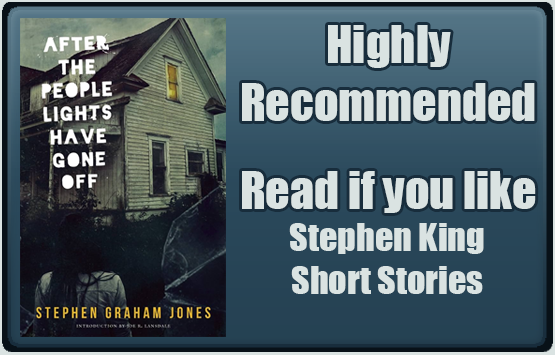
After the People Lights Have Gone Off by Stephen Graham Jones

Formats: Print, audio, digital

Publisher: Dark House Press

Genre: Monster, Paranormal, Demon, Werewolf, Zombie, Killer/Slasher, Romance, Ghosts/Haunting, Sci-Fi Horror, Psychological Horror, Vampire

Audience: Adult/Mature

Diversity: American Indian (Blackfoot/Niitsitapi), Queer (Gay Men), Disability (Paraplegic)

Takes Place in: USA

Content Warnings (Highlight to view): Animal Death, Child Endangerment, Child Death, Gore, Violence, Death, Torture, Homophobia, Self-Harm, Implied Sexual Assault 

Blurb

The fifteen stories in After the People Lights Have Gone Off by Stephen Graham Jones explore the horrors and fears of the supernatural and the everyday. Included are two original stories, several rarities and out of print narratives, as well as a few “best of the year” inclusions. In “Thirteen,” horrors lurk behind the flickering images on the big screen. “Welcome to the Reptile House” reveals the secrets that hide in our flesh. In “The Black Sleeve of Destiny,” a single sweatshirt leads to unexpectedly dark adventures. And the title story, “After the People Lights Have Gone Off,” is anything but your typical haunted house story.

With an introduction by Edgar Award winner Joe R. Lansdale, and featuring fifteen full-page illustrations by Luke Spooner, After the People Lights Have Gone Off gets under your skin and stays there.

For Native American Heritage Month I’d thought I’d review a collection of short stories by one of horror’s greatest writers, Stephen Graham Jones.

Do you ever find yourself reading this awesome, interesting book, but then you get to the last chapter and go “What the fuck did I just read?” I’m not talking stories with ambiguous endings where it’s left open to interpretation, like in Inception where it’s unclear whether Cobb is still in a dream or not (and then you spend hours arguing about it on the internet), but the ending still makes sense. No, I’m referring to endings that are downright obfuscating (yay, I have a thesaurus!). Endings where you have to skip back to check if you missed some really obvious clue, only to find that no, the story really does end like that, and then you’re left wondering if you’re just not smart (or high) enough to “get it”. For example, 2001: A Space Odyssey. I know it’s this amazing, classic film, but what the hell was up with that giant space baby!?! Did the really obvious metaphor for the birth of humanity just fly over my head or did Kubrick just drop a bunch of LSD? Or both? Seriously WTF? Am I the only person who doesn’t get it?

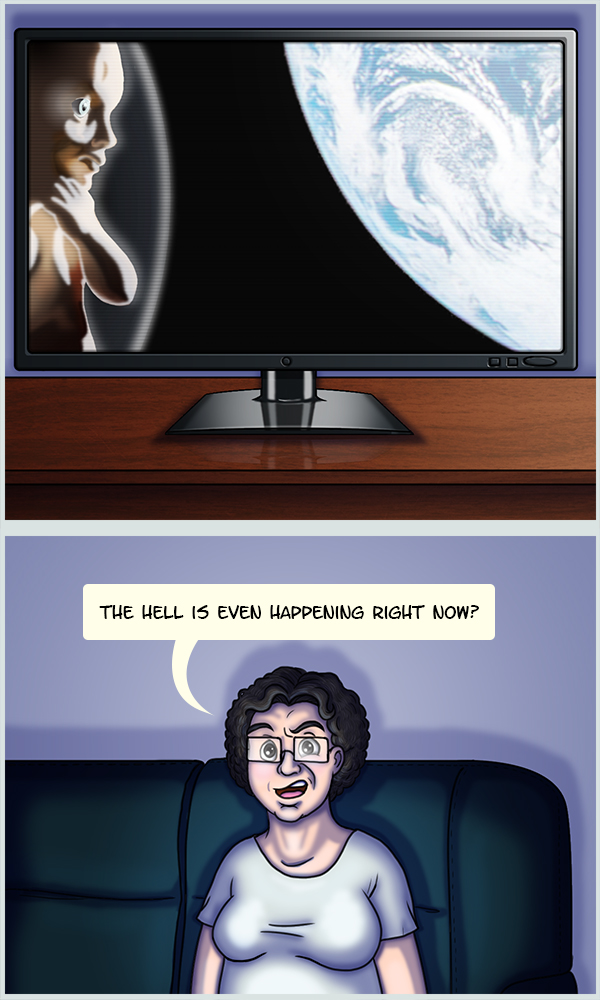
In the first panel a TV is showing a scene from 2001: A Space Odyssey with a giant, human fetus/star child floating in the void and looking at the planet earth. The second panel reveals me watching the film, bewildered, and asking “The hell is even happening right now?”

In retrospect, I probably shouldn’t have tried watching this movie at 3 AM.

Well, Stephen Graham Jones is a master of the WTF ending. In some ways this works to his advantage, like when it highlights the confusion and mental instability of the narrator, or preys on the reader’s fear of the unknown. Subtle scares can be terrifying when done right, and when Jones gets it right, it works SO WELL, like with Second Chances where the final sentence of the story hits you like a punch in the gut. But Jones makes things too subtle you’re left scratching your head and wondering what you’re supposed to be scared of. It’s like when the creepy music starts playing in a film, you know you’re supposed to feel uneasy because something bad is about to happen, but then, when the final dissonant chord is struck, everything just sort of ends without the payoff of a monster jumping out or even a terrified scream to imply something horrible just happened. Which is, unfortunately, really not that scary. After the People Lights Have Gone Off (the short story, not the book), Uncle, Xebico and Brush Monster all have this problem. Did someone die? Was there a monster? Is the narrator hallucinating? Did anything bad even happen? Am I just not smart enough to get it? It’s especially frustrating when the rest of the story makes sense, like in Xebico, but then the ending just kind of goes off the rails.

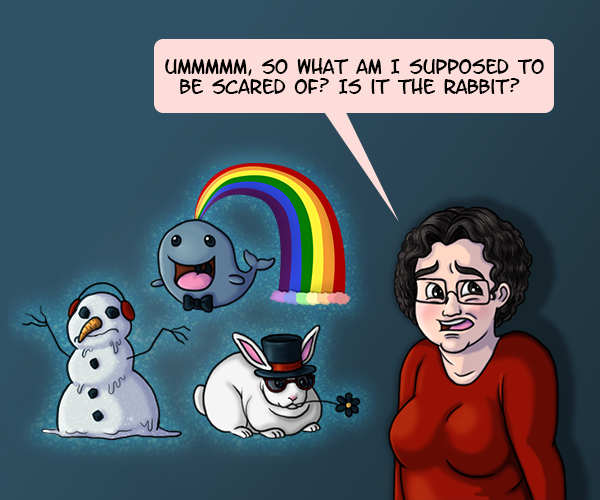
A sad, melting snow man with ear muffs, a whale with a bowtie shooting rainbows out of its blowhole, and a rabbit with a flower in its mouth, wearing a top hat and sunglasses are floating in midair and surrounded by sparkles. Looking uncomfortable, I ask, “Ummmm, so what am I supposed to be scared of? Is it the rabbit?”

I’m pretty sure it’s the sketchy looking rabbit.

Of course, none of this makes Jones a bad writer. He’s actually incredibly talented, aside from the whole confusing ending thing which is probably due more to me being obtuse than a lack of skill on Jones’ part. Like King, Jones has a real flair for making the mundane fucking terrifying.  For example, The Black Sleeve of Destiny, which is about a Lovecraftian hoodie. That’s right, a hoodie. Well, that and some poor kid’s mild kleptomania spinning out of control until it becomes a full blown obsession, but mostly the evil hoodie that seems to act as a pocket dimension with a mind of its own. There’s also The Spider Box (such a creepy title) about a cardboard fruit box that resurrects the dead.  Somehow Jones managers to cover all the horror staples in his book (demons, ghosts, werewolves, vampires, killers, and zombies) while still making his stories seem fresh and unique. A great example of this is Welcome to the Reptile House, one of the most distinct and creative vampire stories I’ve ever read. In fact, I didn’t even know it was a vampire story when I started reading it, so, uh, sorry for the spoiler.

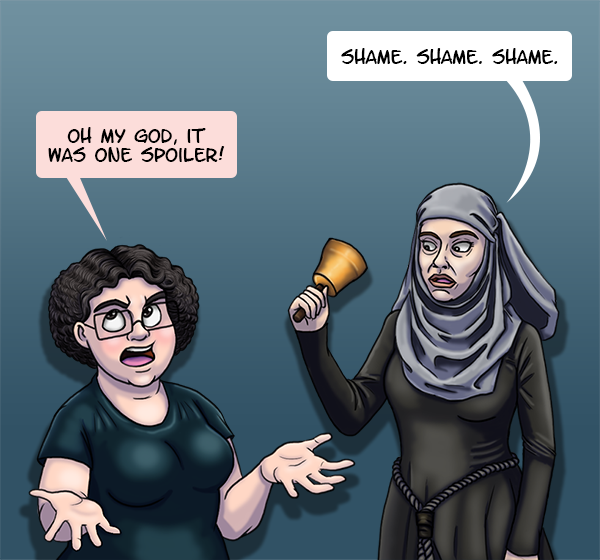
Septa Unella from Game of Thrones is ringing her bell and chanting “shame, shame, shame”. Annoyed, I snap “Oh my God, it was one spoiler!”

Septa Unella shows up any time someone reveals a spoiler. Or at least, she SHOULD.

But not all the stories in this collection are your traditional tales of horror, some could even be considered love stories. Albeit, really messed up, creepy love stories, but love stories nonetheless. One story is even called This is Love. Jones explores different kinds of relationships in his novel, from lovers and devoted spouses, to childhood crushes, to familial love between siblings, parents and children, and even extended family. Snow Monsters is a heartwarming tale about what a parent will sacrifice for their child, but with a supernatural twist. Doc’s Story, explores the bonds of a struggling family, and is one of the most human stories in the collection, ironic since it’s about werewolves.  In After the People Lights Have Gone Off (again, the short story, not the collection) and The Dead are Not we see examples of the complete devotion married couples have for each other, even when things get difficult and terrifying. Of course, there are also inversions, like Uncle, which is about a couple that has fallen out of love, and the husband’s feelings of guilt for not mourning his wife’s death.

Oh, and a little tip, before picking this book up I strongly recommend checking out Stephen King’s short story The Man in the Black Suit and H. F. Arnold’s The Night Wire (both of which you should read regardless because they’re awesome). Why? Well The Spindly Man is a horror story about a book group discussing King’s famous horror story (how’s that for Inception?), while Xebico is about adapting The Night Wire to the stage. And as cheesy as having a scary short story about another scary short story sounds, they’re both pretty awesome, yet another indicator of Jones’ talent.

Overall, After the People Lights Have Gone Off (this time I am referring to the book) is an amazing anthology by a talented author, as long as you’re okay with stream of consciousness writing and not always understanding what the hell you just read. Or maybe it’s just me, and the rest of you will have some deeper understanding of the stories. Jones’ work definitely makes me feel like I’m the only one at the party not getting the joke.

A Banquet for Hungry Ghosts by Ying Chang Compestine

A Banquet for Hungry Ghosts by Ying Chang Compestine

Formats: Print, audio, digital

Publisher: Tumbling Dumpling Media

Genre: Monster, Killer/Slasher, Crime, Ghosts/Haunting, Psychological Horror, Blood & Guts, Historic Horror, Anthology

Audience: Adult/Mature

Diversity: Chinese and Chinese American characters

Takes Place in: China

Content Warnings (Highlight to view): Physical Abuse, Animal Death, Animal Abuse, Child Endangerment, Child Death, Body shaming, Verbal/Emotional Abuse, Cannibalism, Gore, Torture, Medical Torture, Violence, Death

There are many types of Chinese ghosts, including the spirits of deceased loved ones who may bring blessing and good fortune if properly honored, vengeful specters searching for those who wronged them in life, playful and troublesome spooks, and Hungry Ghosts, unhappy spirits with insatiable appetites.  During the seventh month of the Chinese calendar, known as Ghost Month, the gates to hell are open and these spirits are able to cross over to the realm of the living. To avoid hauntings and misfortune, people will leave offerings of food in the hopes of appeasing the Hungry Ghosts who wander the streets at night. If these spirits are pleased with the food offered to them, they may leave the household in peace. But what if the Hungry Ghosts aren’t placated?

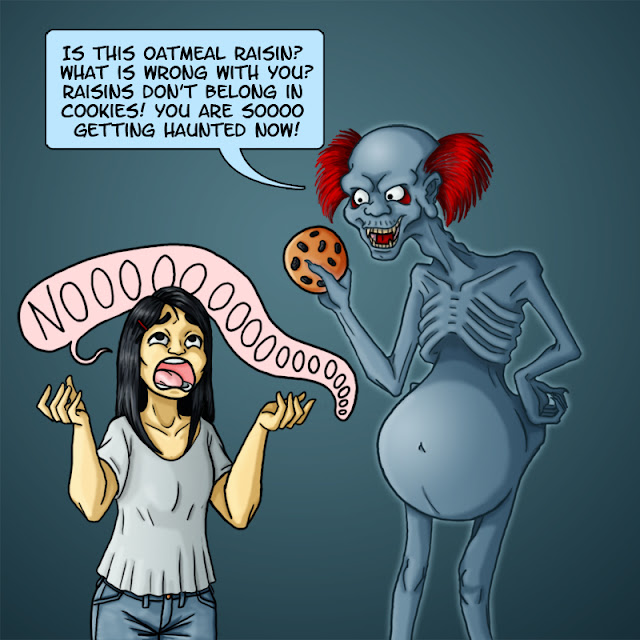
A skeletal-looking Japanese ghost with pale blue skin, flaming red hair, bulging eyes, and a distended belly is glaring at a Chinese woman who gave him a cookie and scolding "Is this Oatmeal Raisin? What is wrong with you? Raisins don't belong in cookies! You are soooo getting haunted now!" The woman yells "Nooooooooooooo!" in comical despair.

He’ll eat garbage, but he draws the line at oatmeal raisin.

He’ll eat garbage, but he draws the line at oatmeal raisin.Author Ying Chang Compestine explores both Chinese cuisine and angry spirits in her book, A Banquet for Hungry Ghosts. Ah, delicious food and gruesome horror, two of my favorite things! Admittedly, not things you’d usually think of combining, but hey, I’m not complaining. Each ghost story is dedicated to a food you might typically find in a traditional Chinese eight course banquet, and includes a recipe at the end. Okay, so maybe those with weaker stomachs may not want to try whipping up a batch of Tea Eggs right after reading about some poor guy getting disemboweled. But I’m the kind of person who can watch surgery videos while eating breakfast, so I wasn’t put off my appetite. If anything, the book made me crave cha siu bao the entire time. Oh, and by the way, the steamed dumpling recipe? Sooooooo good. I’ve got to try making the Jasmine Almond cookies next.

I'm reading "A Banquet for Hungry Ghosts" and exclaim in wonder "Woah, the inn keeper chopped people up and made them into dumplings!?" The next panel shows me biting my lip, looking conflicted, and saying "Damn it, now I want dumplings".

I also get hungry watching Hannibal. Don’t judge me.

In addition to recipes, each chapter also includes an afterword that expands on aspects of Chinese culture and history discussed in the story. There’s information on the rules of Mahjong, Mantis fighting, Qingming (Tomb Sweeping Day), the Cultural Revolution, and even anecdotes from Compestine’s own life growing up in China. Also ablation surgery, arsenic poisoning, and ancient Chinese tombs containing the victims of human sacrifice. Fun, right? Hey, it’s a book of scary stories after all, it’s to be expected. Every country has its share of atrocities from the past and present, and Compestine adds even more horror to her already spooky ghost stories by including some of China’s darker practices, such as illegal organ harvesting from prisoners and corruption at Buddhist monasteries. It’s actually quite clever how Compestine addresses certain Chinese social issues by turning them into ghost stories. At least in fiction, we get the satisfaction of seeing justice done, albeit by Hungry Ghost who enact terrible, and often gruesome vengeance.As horrific as I’ve made the book sound, it is actually intended for children. Like a more educational, Chinese, epicurean version of Scary Stories to Tell in the Darkcomplete with its own gorgeous, creepy, black and white illustrations. I know the blood and guts may be too much for some children (though it’s not much worse than your standard German fairy tale or Roald Dahl story) but the gore is definitely going to appeal to others. Hey, whatever gets them to read, right? Plus, it’s educational, so that’s always good. Even adults will find the stories informative; while reading Banquet for Hungry Ghosts I frequently found myself running off to Google the construction of the Great Wall or Chinese medical practices.Although the overall stories were rich and interesting, the writing could be a little simplistic, which, unfortunately, I felt detracted from the horror and kept me from giving this book the four stars it otherwise would have earned. But, again, it is a kid’s book, and it’s difficult to write something that’s elegant, interesting, and easy to read. Children reading A Banquet for Hungry Ghosts are already going to have enough trouble trying to sound out “Hemorrhagic shock”, no need to make the writing too flowery and complex. So let’s just say I’d give the writing three stars for adults and four stars for kids.My only other complaint is that the author also tended to rely heavily on gore to create scares. Being gross and being scary are two different things, and you can’t just add blood to a story and expect it to be frightening. If that were true, I could just read a medical textbook to give myself nightmares.

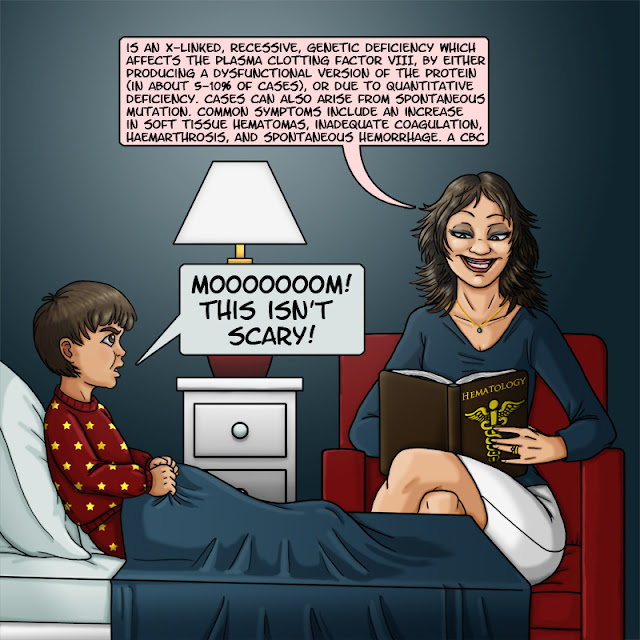
A mother is reading to her son a "bed time story" out of a dull, dry, medical text book. She drones on about "an X-linked, recessive, genetic deficiency which affects the plasma clotting factor VIII, by either producing a dysfunctional version of the protein." Annoyed, the boy responds "Moooom! This isn't scary!"

What are you talking about kid? Hemorrhaging is terrifying.

Like any horror anthology, some stories are much better than others. “Tofu with Chili-Garlic Sauce”,  “Steamed Dumplings”, and “Beef Stew” were all excellent. “Long-Life Noodles” and “Jasmine Almond Cookies”? Not so much. But overall this is still a great book, and the combination of ghost stories, history, and cuisine make a fun and unique combination. A must read for both young horror fans and foodies.

Navigation

Social Media

Search by Tags

To learn more about the Age Group, Diversity, and Genre tags, click here.

Age Groups

Diversity

Genre

Support the Blog

Search

Links

After the People Lights Have Gone Off by Stephen Graham Jones

After the People Lights Have Gone Off by Stephen Graham Jones

Formats: Print, audio, digital

Publisher: Dark House Press

Genre: Monster, Paranormal, Demon, Werewolf, Zombie, Killer/Slasher, Romance, Ghosts/Haunting, Sci-Fi Horror, Psychological Horror, Vampire

Audience: Adult/Mature

Diversity: American Indian (Blackfoot/Niitsitapi), Queer (Gay Men), Disability (Paraplegic)

Takes Place in: USA

Content Warnings (Highlight to view): Animal Death, Child Endangerment, Child Death, Gore, Violence, Death, Torture, Homophobia, Self-Harm, Implied Sexual Assault 

Blurb

The fifteen stories in After the People Lights Have Gone Off by Stephen Graham Jones explore the horrors and fears of the supernatural and the everyday. Included are two original stories, several rarities and out of print narratives, as well as a few “best of the year” inclusions. In “Thirteen,” horrors lurk behind the flickering images on the big screen. “Welcome to the Reptile House” reveals the secrets that hide in our flesh. In “The Black Sleeve of Destiny,” a single sweatshirt leads to unexpectedly dark adventures. And the title story, “After the People Lights Have Gone Off,” is anything but your typical haunted house story.

With an introduction by Edgar Award winner Joe R. Lansdale, and featuring fifteen full-page illustrations by Luke Spooner, After the People Lights Have Gone Off gets under your skin and stays there.

For Native American Heritage Month I’d thought I’d review a collection of short stories by one of horror’s greatest writers, Stephen Graham Jones.

Do you ever find yourself reading this awesome, interesting book, but then you get to the last chapter and go “What the fuck did I just read?” I’m not talking stories with ambiguous endings where it’s left open to interpretation, like in Inception where it’s unclear whether Cobb is still in a dream or not (and then you spend hours arguing about it on the internet), but the ending still makes sense. No, I’m referring to endings that are downright obfuscating (yay, I have a thesaurus!). Endings where you have to skip back to check if you missed some really obvious clue, only to find that no, the story really does end like that, and then you’re left wondering if you’re just not smart (or high) enough to “get it”. For example, 2001: A Space Odyssey. I know it’s this amazing, classic film, but what the hell was up with that giant space baby!?! Did the really obvious metaphor for the birth of humanity just fly over my head or did Kubrick just drop a bunch of LSD? Or both? Seriously WTF? Am I the only person who doesn’t get it?

In the first panel a TV is showing a scene from 2001: A Space Odyssey with a giant, human fetus/star child floating in the void and looking at the planet earth. The second panel reveals me watching the film, bewildered, and asking “The hell is even happening right now?”

In retrospect, I probably shouldn’t have tried watching this movie at 3 AM.

Well, Stephen Graham Jones is a master of the WTF ending. In some ways this works to his advantage, like when it highlights the confusion and mental instability of the narrator, or preys on the reader’s fear of the unknown. Subtle scares can be terrifying when done right, and when Jones gets it right, it works SO WELL, like with Second Chances where the final sentence of the story hits you like a punch in the gut. But Jones makes things too subtle you’re left scratching your head and wondering what you’re supposed to be scared of. It’s like when the creepy music starts playing in a film, you know you’re supposed to feel uneasy because something bad is about to happen, but then, when the final dissonant chord is struck, everything just sort of ends without the payoff of a monster jumping out or even a terrified scream to imply something horrible just happened. Which is, unfortunately, really not that scary. After the People Lights Have Gone Off (the short story, not the book), Uncle, Xebico and Brush Monster all have this problem. Did someone die? Was there a monster? Is the narrator hallucinating? Did anything bad even happen? Am I just not smart enough to get it? It’s especially frustrating when the rest of the story makes sense, like in Xebico, but then the ending just kind of goes off the rails.

A sad, melting snow man with ear muffs, a whale with a bowtie shooting rainbows out of its blowhole, and a rabbit with a flower in its mouth, wearing a top hat and sunglasses are floating in midair and surrounded by sparkles. Looking uncomfortable, I ask, “Ummmm, so what am I supposed to be scared of? Is it the rabbit?”

I’m pretty sure it’s the sketchy looking rabbit.

Of course, none of this makes Jones a bad writer. He’s actually incredibly talented, aside from the whole confusing ending thing which is probably due more to me being obtuse than a lack of skill on Jones’ part. Like King, Jones has a real flair for making the mundane fucking terrifying.  For example, The Black Sleeve of Destiny, which is about a Lovecraftian hoodie. That’s right, a hoodie. Well, that and some poor kid’s mild kleptomania spinning out of control until it becomes a full blown obsession, but mostly the evil hoodie that seems to act as a pocket dimension with a mind of its own. There’s also The Spider Box (such a creepy title) about a cardboard fruit box that resurrects the dead.  Somehow Jones managers to cover all the horror staples in his book (demons, ghosts, werewolves, vampires, killers, and zombies) while still making his stories seem fresh and unique. A great example of this is Welcome to the Reptile House, one of the most distinct and creative vampire stories I’ve ever read. In fact, I didn’t even know it was a vampire story when I started reading it, so, uh, sorry for the spoiler.

Septa Unella from Game of Thrones is ringing her bell and chanting “shame, shame, shame”. Annoyed, I snap “Oh my God, it was one spoiler!”

Septa Unella shows up any time someone reveals a spoiler. Or at least, she SHOULD.

But not all the stories in this collection are your traditional tales of horror, some could even be considered love stories. Albeit, really messed up, creepy love stories, but love stories nonetheless. One story is even called This is Love. Jones explores different kinds of relationships in his novel, from lovers and devoted spouses, to childhood crushes, to familial love between siblings, parents and children, and even extended family. Snow Monsters is a heartwarming tale about what a parent will sacrifice for their child, but with a supernatural twist. Doc’s Story, explores the bonds of a struggling family, and is one of the most human stories in the collection, ironic since it’s about werewolves.  In After the People Lights Have Gone Off (again, the short story, not the collection) and The Dead are Not we see examples of the complete devotion married couples have for each other, even when things get difficult and terrifying. Of course, there are also inversions, like Uncle, which is about a couple that has fallen out of love, and the husband’s feelings of guilt for not mourning his wife’s death.

Oh, and a little tip, before picking this book up I strongly recommend checking out Stephen King’s short story The Man in the Black Suit and H. F. Arnold’s The Night Wire (both of which you should read regardless because they’re awesome). Why? Well The Spindly Man is a horror story about a book group discussing King’s famous horror story (how’s that for Inception?), while Xebico is about adapting The Night Wire to the stage. And as cheesy as having a scary short story about another scary short story sounds, they’re both pretty awesome, yet another indicator of Jones’ talent.

Overall, After the People Lights Have Gone Off (this time I am referring to the book) is an amazing anthology by a talented author, as long as you’re okay with stream of consciousness writing and not always understanding what the hell you just read. Or maybe it’s just me, and the rest of you will have some deeper understanding of the stories. Jones’ work definitely makes me feel like I’m the only one at the party not getting the joke.

A Banquet for Hungry Ghosts by Ying Chang Compestine

A Banquet for Hungry Ghosts by Ying Chang Compestine

Formats: Print, audio, digital

Publisher: Tumbling Dumpling Media

Genre: Monster, Killer/Slasher, Crime, Ghosts/Haunting, Psychological Horror, Blood & Guts, Historic Horror, Anthology

Audience: Adult/Mature

Diversity: Chinese and Chinese American characters

Takes Place in: China

Content Warnings (Highlight to view): Physical Abuse, Animal Death, Animal Abuse, Child Endangerment, Child Death, Body shaming, Verbal/Emotional Abuse, Cannibalism, Gore, Torture, Medical Torture, Violence, Death

There are many types of Chinese ghosts, including the spirits of deceased loved ones who may bring blessing and good fortune if properly honored, vengeful specters searching for those who wronged them in life, playful and troublesome spooks, and Hungry Ghosts, unhappy spirits with insatiable appetites.  During the seventh month of the Chinese calendar, known as Ghost Month, the gates to hell are open and these spirits are able to cross over to the realm of the living. To avoid hauntings and misfortune, people will leave offerings of food in the hopes of appeasing the Hungry Ghosts who wander the streets at night. If these spirits are pleased with the food offered to them, they may leave the household in peace. But what if the Hungry Ghosts aren’t placated?

A skeletal-looking Japanese ghost with pale blue skin, flaming red hair, bulging eyes, and a distended belly is glaring at a Chinese woman who gave him a cookie and scolding "Is this Oatmeal Raisin? What is wrong with you? Raisins don't belong in cookies! You are soooo getting haunted now!" The woman yells "Nooooooooooooo!" in comical despair.

He’ll eat garbage, but he draws the line at oatmeal raisin.

He’ll eat garbage, but he draws the line at oatmeal raisin.Author Ying Chang Compestine explores both Chinese cuisine and angry spirits in her book, A Banquet for Hungry Ghosts. Ah, delicious food and gruesome horror, two of my favorite things! Admittedly, not things you’d usually think of combining, but hey, I’m not complaining. Each ghost story is dedicated to a food you might typically find in a traditional Chinese eight course banquet, and includes a recipe at the end. Okay, so maybe those with weaker stomachs may not want to try whipping up a batch of Tea Eggs right after reading about some poor guy getting disemboweled. But I’m the kind of person who can watch surgery videos while eating breakfast, so I wasn’t put off my appetite. If anything, the book made me crave cha siu bao the entire time. Oh, and by the way, the steamed dumpling recipe? Sooooooo good. I’ve got to try making the Jasmine Almond cookies next.

I'm reading "A Banquet for Hungry Ghosts" and exclaim in wonder "Woah, the inn keeper chopped people up and made them into dumplings!?" The next panel shows me biting my lip, looking conflicted, and saying "Damn it, now I want dumplings".

I also get hungry watching Hannibal. Don’t judge me.

In addition to recipes, each chapter also includes an afterword that expands on aspects of Chinese culture and history discussed in the story. There’s information on the rules of Mahjong, Mantis fighting, Qingming (Tomb Sweeping Day), the Cultural Revolution, and even anecdotes from Compestine’s own life growing up in China. Also ablation surgery, arsenic poisoning, and ancient Chinese tombs containing the victims of human sacrifice. Fun, right? Hey, it’s a book of scary stories after all, it’s to be expected. Every country has its share of atrocities from the past and present, and Compestine adds even more horror to her already spooky ghost stories by including some of China’s darker practices, such as illegal organ harvesting from prisoners and corruption at Buddhist monasteries. It’s actually quite clever how Compestine addresses certain Chinese social issues by turning them into ghost stories. At least in fiction, we get the satisfaction of seeing justice done, albeit by Hungry Ghost who enact terrible, and often gruesome vengeance.As horrific as I’ve made the book sound, it is actually intended for children. Like a more educational, Chinese, epicurean version of Scary Stories to Tell in the Darkcomplete with its own gorgeous, creepy, black and white illustrations. I know the blood and guts may be too much for some children (though it’s not much worse than your standard German fairy tale or Roald Dahl story) but the gore is definitely going to appeal to others. Hey, whatever gets them to read, right? Plus, it’s educational, so that’s always good. Even adults will find the stories informative; while reading Banquet for Hungry Ghosts I frequently found myself running off to Google the construction of the Great Wall or Chinese medical practices.Although the overall stories were rich and interesting, the writing could be a little simplistic, which, unfortunately, I felt detracted from the horror and kept me from giving this book the four stars it otherwise would have earned. But, again, it is a kid’s book, and it’s difficult to write something that’s elegant, interesting, and easy to read. Children reading A Banquet for Hungry Ghosts are already going to have enough trouble trying to sound out “Hemorrhagic shock”, no need to make the writing too flowery and complex. So let’s just say I’d give the writing three stars for adults and four stars for kids.My only other complaint is that the author also tended to rely heavily on gore to create scares. Being gross and being scary are two different things, and you can’t just add blood to a story and expect it to be frightening. If that were true, I could just read a medical textbook to give myself nightmares.

A mother is reading to her son a "bed time story" out of a dull, dry, medical text book. She drones on about "an X-linked, recessive, genetic deficiency which affects the plasma clotting factor VIII, by either producing a dysfunctional version of the protein." Annoyed, the boy responds "Moooom! This isn't scary!"

What are you talking about kid? Hemorrhaging is terrifying.

Like any horror anthology, some stories are much better than others. “Tofu with Chili-Garlic Sauce”,  “Steamed Dumplings”, and “Beef Stew” were all excellent. “Long-Life Noodles” and “Jasmine Almond Cookies”? Not so much. But overall this is still a great book, and the combination of ghost stories, history, and cuisine make a fun and unique combination. A must read for both young horror fans and foodies.

Navigation

Social Media

Search by Tags

To learn more about the Age Group, Diversity, and Genre tags, click here.

Age Groups

Diversity

Genre

Support the Blog

Search

Links